




Abstract
Aerogels are used in several areas and applications because of their properties. Study of the gel drying time by supercritical CO2 is among the attributes required for further study before these materials can be used in various applications. Drying is an important step in the synthesis of high-pressure silica of aerogel used for enzymatic immobilization. This step should keep the enzyme stable, with high enzymatic activity for its use. The aim of this work was to study the effect of the drying conditions for commercial lipase CALB immobilized in situ in aerogel. Silica gels were dried at different times, temperatures and CO2 pressure. The effects of the temperature (X1) and pressure (X2) on the CO2 drying of the immobilized lipase in aerogel was evaluated using a 32 Factorial Design. The best results for the CALB activity were with lower CO2 density and an extraction time of 30 min. This work presents a reduction in the time and drying conditions in the immobilization process in aerogel. In addition, the immobilization process is performed in situ and no further steps were required after drying the aerogel.
Introduction
Enzymes are biological catalysts that promote the transformation of different reactions occurring in biological cells under mild conditions. 1 Among the enzymes studied and applied, lipases are versatile and used in many processes. Lipases have the capacity to catalyze a number of reactions, and are used as industrial biocatalysts in chemistry, food, pharmaceuticals, agrochemicals and biotechnology. Moreover, they are successfully utilized in a variety of reactions, namely hydrolysis and esterification. 2,3
However, their application may be limited due to their short stability, unstable structure and separation costs at the end of the process. 4 These drawbacks can be mitigated by enzyme reuse and improved enzyme stability through immobilization. 5 Enzyme immobilization is the incorporation of enzyme molecules on or into structures by binding to a support, cross-linking or encapsulation. 6
The support material and incorporation mechanism used may directly affect the efficiency of the immobilization process, specifically the activity of the immobilized enzyme. In relation to lipases, different supports, forms of incorporation and mechanisms of immobilization are proposed by literature. 7
In recent years, there has been growing interest in materials that allow the incorporation of the enzyme in situ during the synthesis stage of the support. In this context, materials obtained by the sol-gel technique as xerogels 8 and silica aerogel stand out. The aerogels can be synthesized in in harsher temperature and pH conditions and also offer other advantages as supports, including low density, high porosity, high specific surface area, low dielectric constant and excellent heat insulation value. 9,10
In the case of silica aerogels—which are synthesized by gelation and aging of a silica sol (colloidal particle), followed by removal of the solvent by high pressure drying—these properties can be controlled from the alkoxide precursor (Tetramethoxysilane, TMOS or tetraethoxysilane, TEOS) and the drying conditions (gas, pressure, rate of depressurisation and density) applied during solvent removal. These materials are used in many applications, such as biocatalysts. 11,12
Aerogels are produced by drying in supercritical medium with pressurized fluid by extracting the liquid component (solvent) present in the gel. The solvent is replaced by sub or supercritical CO2, which allows the solvent to be slowly removed without causing the solid gel network to collapse due to surface tension and capillarity, which occurs in the conventional evaporation process. 13 In the present work, aerogel drying was performed using supercritical extraction conditions. In that way, the “extraction time” is related with the drying time.
In this context, the aim of this work was to study the influence of different conditions (time, pressure and temperature) on the drying of aerogel for CALB lipase immobilized in situ.
Material and Methods
Materials
The commercial lipase from Candida antarctica (CALB) was obtained from Novozymes (Bagsværd, Denmark). The chemicals used for the sol-gel synthesis were tetraethoxysilane (TEOS, Sigma-Aldrich, St. Louis, MO) as a silica precursor, ammonium hydroxide (Quimex, Geneva, Switzerland), hydrobromic acid (Vetec Química Fina Ltda., Duque de Caxias, Brazil) as a catalyst and distilled water. To determine esterification activity, ethanol (Merck & Co.), acetone (Merck & Co.), and sodium hydroxide (Merck & Co.). The substrate used in the esterification reaction was oleic acid (Aldrich) and ethanol (Merck & Co.). CO2 (Praxair) was used for the drying of the support to obtain aerogel as solvent.
Synthesis of Silica and CALB Lipase Immobilization
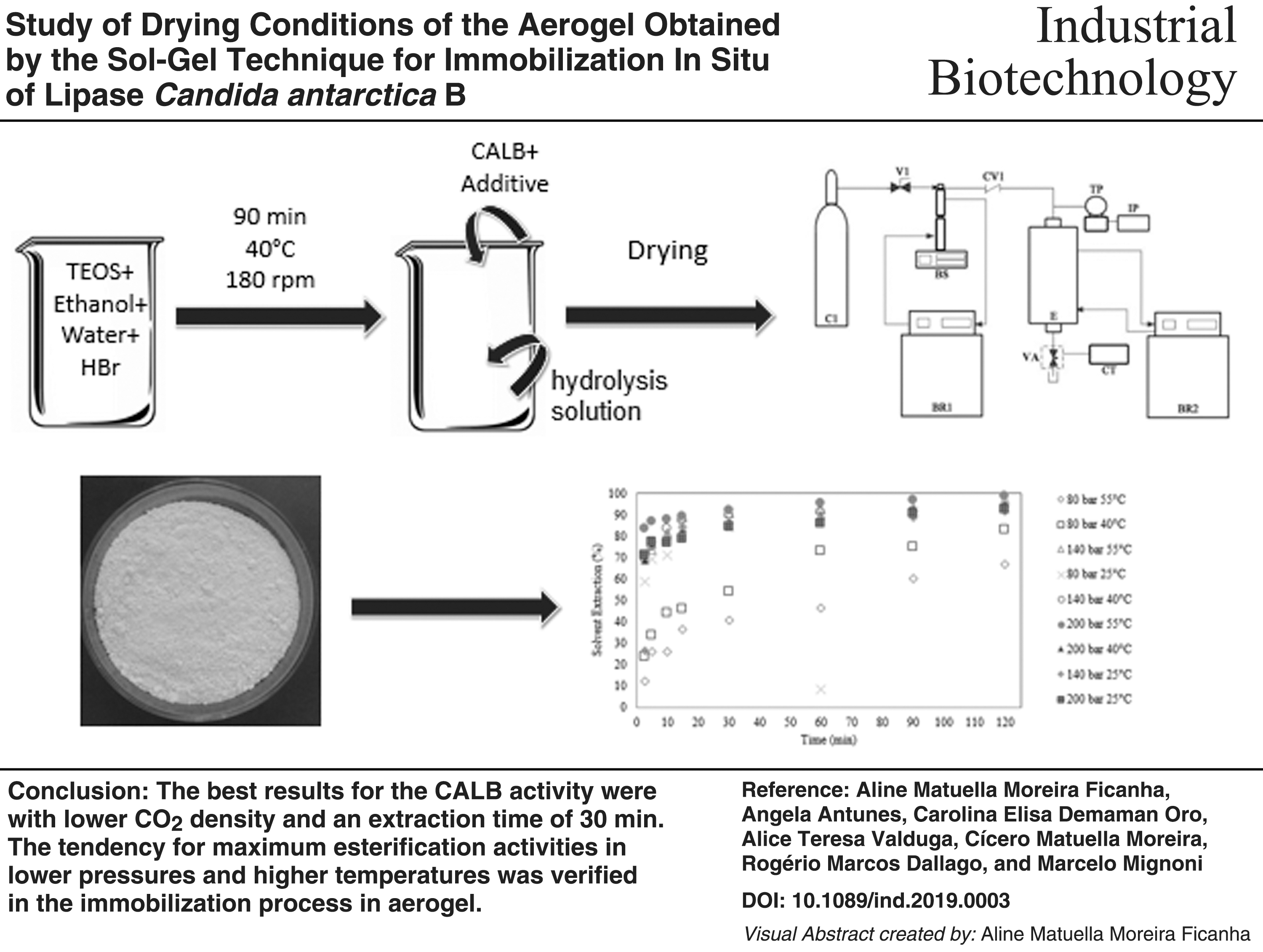
The CALB was immobilized by the sol-gel technique, with the use of TEOS as precursor of silica, according to a methodology previously established. 8 First, 5 mL of TEOS was dissolved in 5 mL of ethanol. After dissolution, 1.6 mL of distilled water and three drops of an initiator for hydrolysis (HBr) were added. The mixture was agitated (180 rpm) for 90 min at 40°C. After this, 1 mL of the enzyme solution containing 0.1 g/mL and 1.75 mL of the hydrolysis solution (ethanolic solution of ammonium hydroxide 1.0 mol/L) were added. Subsequently, the reaction system was kept under static conditions at room temperature between 20°C and 25°C for 24 h to have total reaction of the sol-gel system. After completion of this reaction step, the immobilized enzyme was subjected to a drying step using CO2 in sub and supercritical media. After drying, immobilized lipase on silica were obtained.
Drying Method for Obtaining Immobilized Lipase in Aerogel
Drying of the immobilized enzyme in the sol-gel matrix was carried out using pressurized CO2 sub and supercritical conditions. The experimental apparatus used for drying with pressurized CO2 is shown in Fig. 1.
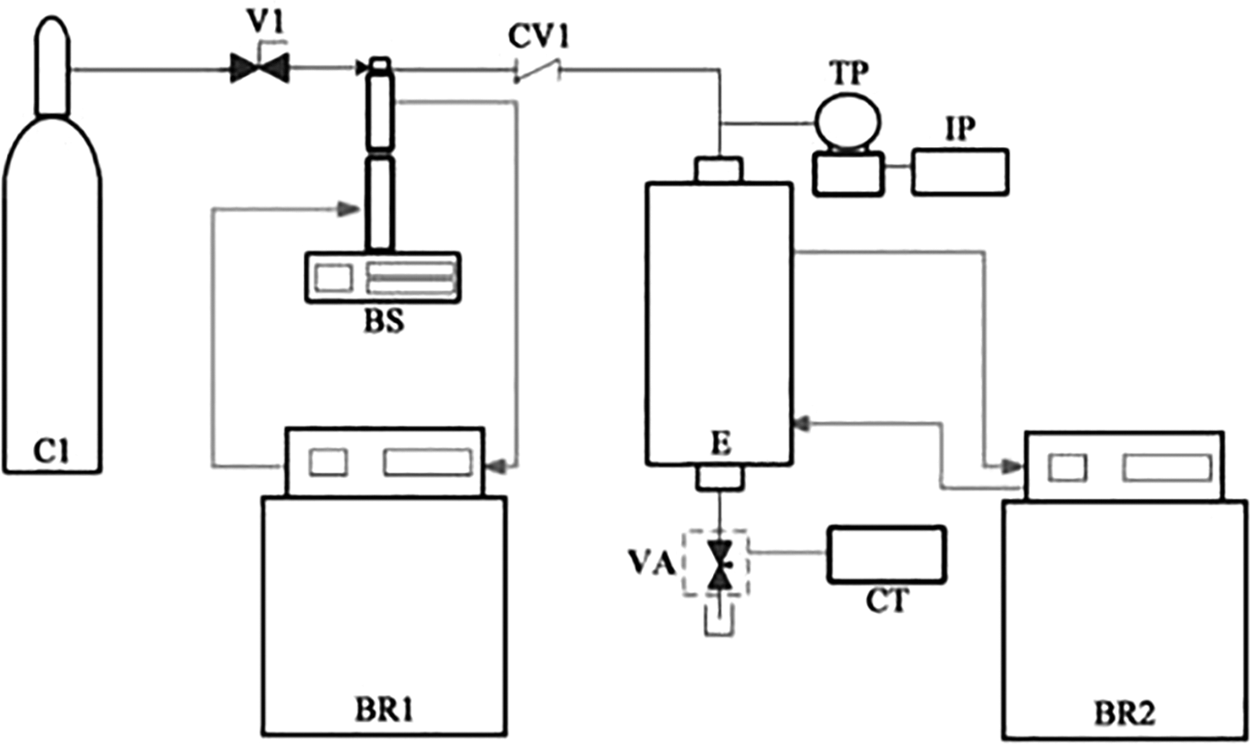
Experimental apparatus for drying using pressurized CO2.
After the polycondensation process (initial stage of immobilization), the drying was performed using sub and supercritical CO2 to remove excess water and solvents from the immobilized lipase in aerogel.
The immobilized lipase in aerogel was added to the interior of the extractor (E). The recirculation bath (BR2) was used to keep the temperature constant in the extractor. When the temperature reached the set value, the addition of the CO2 into the extractor was started with the aid of the pump (BS) up to the preset pressure. When the pressure and temperature reached the set value, the system remained static for 10 min, after which the valve (VA) was opened until a constant flow of 2 mL/min was reached. 13
Drying time (2.5, 5, 10, 15, 30, 60, 90 and 120 min) was evaluated at different pressures and temperatures to obtain the immobilized lipase in aerogel. The choice of pressure values (80 bar to 200 bar) and temperatures (25°C to 55°C) considered the CO2 density. Each temperature and pressure condition was calculated using the Peng-Robinson state equation (Equation 1).
14
The time range choice was determined considering the solvent retained and the enzyme activity after drying.
The effect of the temperature (X1) and pressure (X2) on the CO2 drying of the immobilized lipase in aerogel was evaluated using a 32 Factorial Design. The results were the esterification activity of the immobilized enzyme and the immobilization yield.
Determination of Esterification Activity
The esterification activity of the immobilized enzyme was carried out by the synthesis reaction of oleic acid and ethanol (molar ratio 1:1). First, 0.1 g of the enzyme (free or immobilized) was added to the 5 mL of substrates. The reaction was carried out at 40 °C, 160 rpm and 40 min. Aliquots of 0.5 mL were withdrawn from the medium reaction at the end of the reaction. To each sample, 15 mL of acetone-ethanol solution (1:1) (v/v) was added to stop the reaction. 8
The amount of acid consumed was determined by titration method using NaOH 0.05 mol/L until the reaction medium reached pH 11. One unit of lipase activity was defined as the amount of enzyme that consumes 1 μmol of oleic acid per minute at the established experimental conditions. All enzymatic activity determinations were replicated three times.
Yield of Immobilization
The yield of immobilization (γ) in aerogels was determined by a percentage of the ratio between the total esterification activity of the aerogel and esterification activity total of the free enzyme added on the immobilization step, according
Equation 2
.
where: γ is the yield of immobilization (in percentage), Ux is the total experimental activity of the immobilized (calculated considering the total mass of immobilized enzyme), and U 0 is the total activity of free enzyme offered to the immobilization.
Results and Discussion
Drying the Immobilized Lipase in Aerogel
Study of the gel drying time by supercritical CO2 is among the attributes required for further study before these materials can be used in various applications. Usually, in the synthesis of aerogel the drying time is estimated so that no liquid is present in the dry gel. However, for immobilization of the enzyme, it is important that a sufficient amount of water remain within the silica for the maintenance of catalytic properties and the three-dimensional structure of the lipases.
Thus, the study of drying as a function of time is the first procedure to be evaluated in the effect of immobilization on enzyme activity. This step will provide fundamental information for the formation of the immobilized lipase in aerogel, including enzymatic activity and the amount of solvent extracted. In addition, this step will allow the optimization of the process, reducing the operational time to obtain the asset under study. Figure 2 presents the effect of pressure and temperature on the values of extracted mass from the immobilized lipase in aerogel after drying with CO2 at different times.
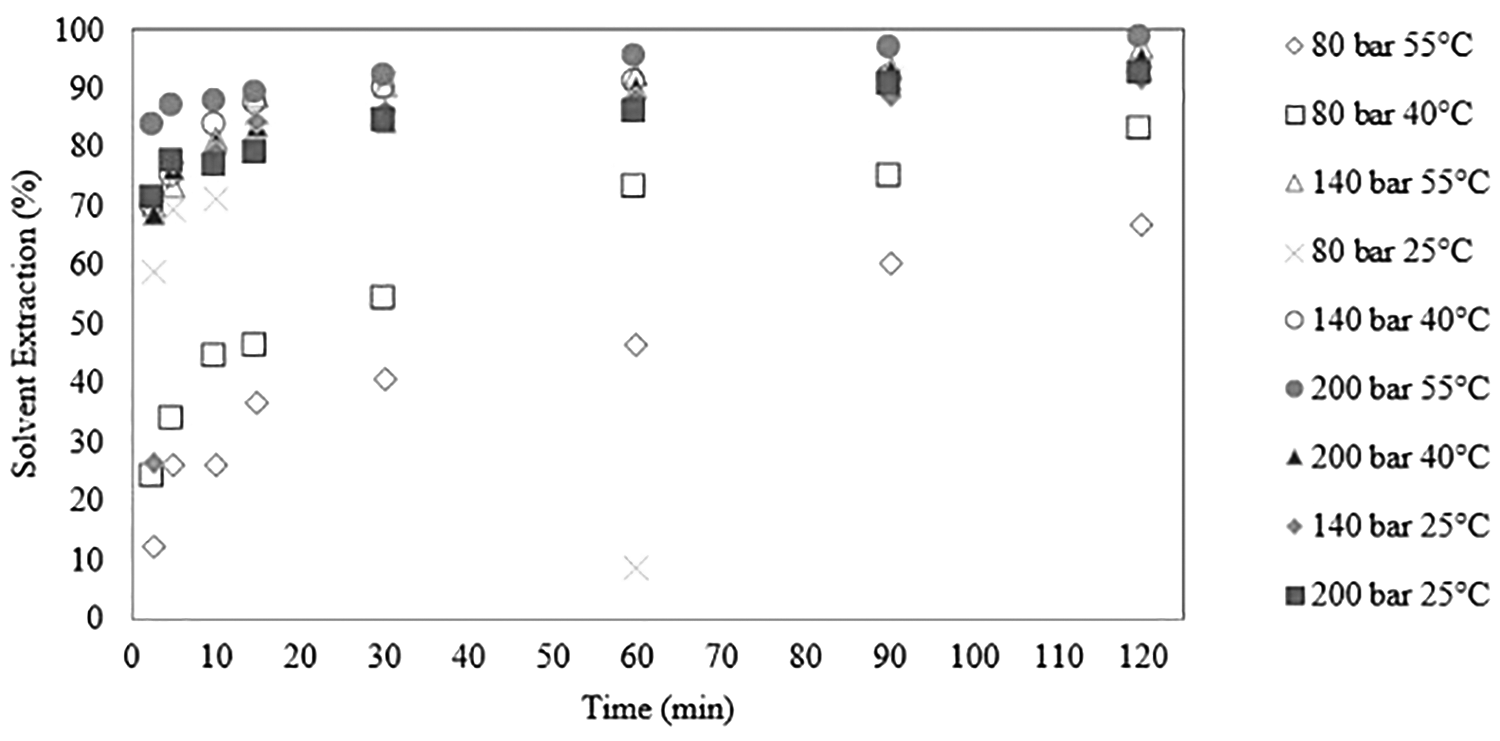
Percentage of extracted mass after drying with CO2 at different pressures, temperatures and time.
All the conditions evaluated presented the same tendency, showing an increase in the percentage of extracted mass as a function of time, with the main differences between the conditions being observed at the beginning of the process, until the initial 20 min.
Analyzing the variables independently, a positive pressure effect was observed, with the lowest pressure (80 bar), regardless of temperature, showing the lowest drying results. This was related to the increase in the system pressure favoring the diffusion of the CO2 inside the immobilized pores, and consequently, replacing the solvent, resulting in its extraction. This replacement of the solvent (alcohol) by CO2 inside the pores was studied by Hunt, who concluded that this substitution occurs because the CO2 has a higher pressure and a lower critical temperature than the alcohols. 16
In relation to the percentage of extracted mass, a tendency is also observed with the density of the gas. With the higher gas densities, it was possible to observe the largest extractions of the solvent of the immobilized support. This behavior is due to the properties of fluids, which vary with density, as a function of temperature and pressure in the supercritical region.
In relation to time, the results are promising in relation to the literature. According to Barbosa et al., drying time in the immobilization of Burkholderia cepacia in aerogel showed that for a constant CO2 flow rate of 2 mL/min, 4 h was insufficient for an efficient extraction of the solvents of the immobilized biocatalyst. 12 The esterification activity (U) of silica aerogel after drying with CO2 at different pressures, temperatures and time is presented in Fig. 3.
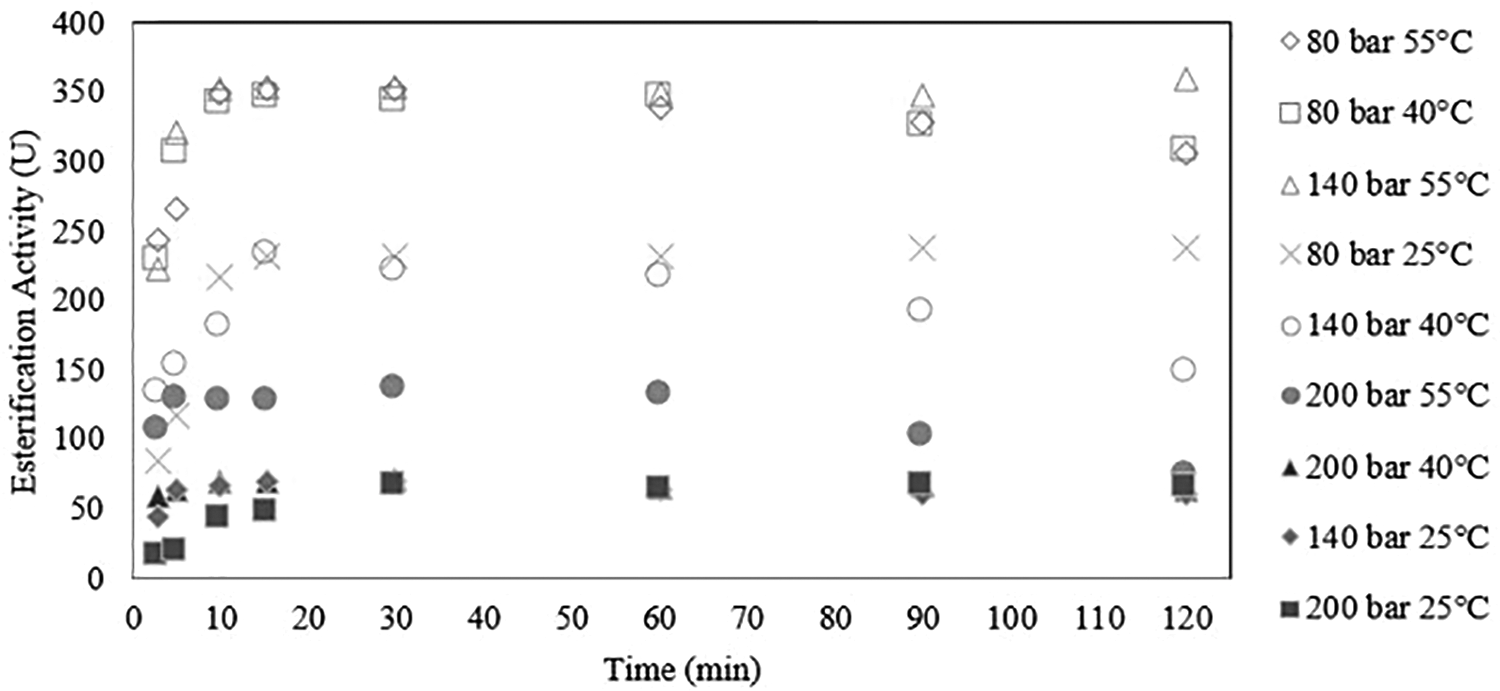
Esterification activity (U) of silica aerogel after drying with CO2 at different pressures, temperatures and time.
For the esterification activity, the same trend is observed for all immobilized lipases in aerogels, with an increase in the esterification activity as a function of the time until 30 min of drying, remaining constant until the end of the experiment, at 120 min. This is due to the extraction of solvent from the immobilized structure, thereby improving the diffusibility of the substrate to the active site of the enzyme and, consequently, esterification activity.
Also, activities are larger when the aerogels were dried at the lower gas densities (0.20, 0.29, 0.57), which correspond to pressure of 80 bar and temperatures of 55 and 40°C and 140 bar and temperature of 55°C.
When analyzing independently the variables studied, a negative effect on the esterification activity was observed for the pressure at the three temperatures studied, with the tests conducted with the lowest pressure (80 bar) showing the highest values of activity.
The observed activity trend is inversely proportional to the loss of mass, and the immobilized enzymes with smaller loss of mass show greater activity. This suggests that during the drying process, especially when conducted at high pressure, it is concomitantly entrained with the solvent and part of the enzyme present in the immobilized structure. The Tukey test (data not shown) for the esterification activity (EA) means that, when analyzing each drying time, individually, the pressure and temperature conditions used differ with the increase of the CO2 density.
Tests conducted with the smaller densities (0.2–0.57) and the larger densities (0.83–0.92) showed the same tendency, with the values of esterification activity, for most (Tukey) among their pairs. However, they differ in relation to the other density ranges. For the tests conducted with values of intermediate densities (density ± 0.72), statistic differences in activity are observed for most of the studied times, both within the intermediate range and to tests conducted at higher and lower densities.
According to the literature, the effect of exposure to pressurized fluids on enzymatic activity does not present a standard tendency, with some enzymes showing both an increase and decrease in activity after high pressure-treatment and others showing complete inactivation. 15,16
The reduction in enzymatic activity can be attributed to the enzyme-solvent interactions during the drying process with pressurized CO2. 17 According to reports in the literature, the pressurized CO2 could be responsible for the removal of water—an essential compound in the enzyme microenvironment for maintaining enzymatic activity—thus causing enzyme deactivation. 15,16,18 With the increase of the pressure and, consequently, of the gas density, this interaction is favored, contributing to a greater loss of activity (Fig. 3).
In contrast, Maury et al. allege that this immobilization method, which employs a drying step to extract solvents with supercritical fluid, avoiding capillary contractions of the silica (SiO2), tends to have a positive effect on the activity compared with other drying techniques. 20 In this sense, the stability of the enzyme in supercritical CO2 depends on both its tertiary structure and other parameters, such as exposure to high pressures and temperature during the process, which can inactivate the enzyme. 21
Aerogels are nanoporous materials with a porous structure and large specific surface area. They are synthesized using the sol–gel technique using a supercritical drying process, which is an alternative drying technique assisted by the use of supercritical fluids. Supercritical fluids drying overcomes problems well-established in conventional methods, preserving the porosity and textural properties of silica in dry form. 22,23
For the drying time, it is observed that for most of the different test conditions, there is no statistical difference (Tukey) between the means of the esterification activities after 30 min of drying. For this reason, it was decided to use this time for the process of obtaining the immobilized lipase in aerogel to ensure system stability and uniformity of the final product. From the obtained results, 32 Factorial Design was carried out to determine the tendency of the drying of the immobilized CALB in the silica aerogel. The 30 min drying time was maintained constant for the different pressure and temperature conditions. The matrix of the experiments and the responses of esterification activity and immobilization yield are presented in Table 1.
Esterification Activity and Immobilization Yield of CALB in Aerogel for 32 Factorial Design
X1: Coded and real values for temperature (°C); X2: Coded and real values for pressure (bar); EA: Esterification activity; Y: Yield. Means and standard deviation of the aerogel esterification activity immobilized followed by the same letter do not differ at 5% by the Tukey test.
Analyzing each variable independently, opposite tendencies of temperature and pressure effects on both accompanied responses are observed. An increase in temperature improves esterification and the yield of immobilization, whereas an increase in pressure leads to a decrease of both responses.
The increase in pressure facilitates the replacement of the solvent by CO2 17 and makes the drying step more efficient. It also increases the possibility of enzyme leaching out of the support, which justifies both the loss of activity and the yield of immobilization.
Another tendency observed is an increase in esterification activity and immobilization yield with the decrease of gas density. Test 7 had the lowest density (0.2093) and the highest esterification activity values (352.45 U/g) and immobilization yield (871.79 %). It should be noted that both trends observed for the variables temperature and pressure, in relation to the accompanying responses, show a direct relation to the variation of gas density observed between the tests, which tends to increase with decreased pressure and increased temperature.
For a better interpretation of the results, especially considering the effects among the variables, the results were treated statistically with confidence level of 95% (p < 0.05). Mathematical models (
Equations 3 and 4
) were validated by analysis of variance (ANOVA) for the two studied variables, which showed coefficients of determination (R
2
) of 0.86 and 0.79 for EA and yield, respectively. In addition, it showed a good performance of the F-test (calculated value 75.85 and 47.00 respectively, for EA and yield) greater than Ftable (3.40).
The regression coefficients of the temperature and pressure variables for the esterification and yield activity indicate a positive linear effect for the temperature variable and a negative linear effect for pressure for the two responses evaluated, corroborating with the trend previously observed.
The response surface and the contour curve related to the interaction between the pressure and temperature variables for both responses are presented in Fig. 4. It is observed in both that the tendency for the greatest esterification activities (Fig. 4a) and yield (Fig. 4b) are in the region of higher temperatures and lower pressures, that is, under the lowest density conditions studied. Because the means of esterification activities under the conditions of lower drying density (80 bar and 55°C; 80 bar and 40°C; 140 bar and 55°C) do not present significant differences in esterification activity at the 5% Tukey test.
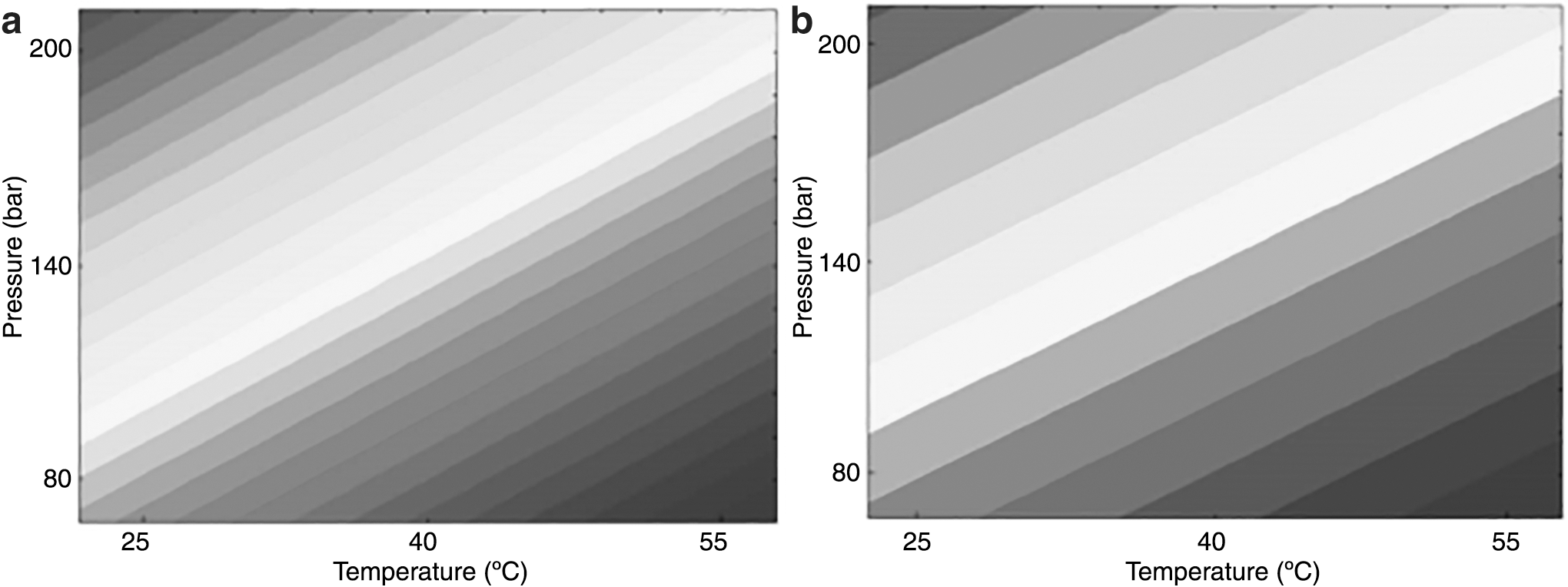
Contour curve for 32 factorial design to
Low fluid viscosity accelerates the chemical reaction kinetics in an SCF medium. A solute's solubility in a supercritical fluid is a function of the fluid density, which can be adjusted by changing operating pressure and temperature in the supercritical region. 24 –26 For a supercritical fluid, no surface tension exists in the homogenous fluid phase, due to the absence of a vapor/liquid interface in the supercritical state. 26
Lipase-catalyzed production of biodiesel has attracted great attention recently because of mild reaction conditions, environmental friendliness and wide adaptability for feedstocks. The advantage of an immobilized biocatalyst is related to the possibility of application, recovery and reuse; greater adaptability for continuous operation; less effluent problems, higher pH and thermal stability; and greater tolerance to reagents and products. 20
Conclusions
The study of the time, pressure and temperature for the drying of silica aerogel with the lipase of Candida antarctica B immobilized in situ is an important and little studied step for immobilization in aerogel. For time, the results were promising in relation to the literature. From the results obtained, the best drying time was defined as 30 min. The tendency for maximum esterification activities in lower pressures and higher temperatures (conditions of lower gas density) was also verified by factorial planning. The observed trend for esterification activity is inversely proportional to the mass extraction because during the drying process the enzyme may be entrained concomitantly with the solvent. The contribution of this work was to present a reduction in the time and the drying conditions in the immobilization process in aerogel. In addition, the immobilization process is performed in situ, so no further steps are required after drying the aerogel.
Footnotes
Acknowledgments
The authors thank URI-Erechim, CNPq, FAPERGS and CAPES by the infrastructure and financial support.
Author Disclosure Statement
No competing financial interests exist.
Funding Information
This study was financed in part by the Coordenação de Aperfeiçoamento de Pessoal de Nível Superior-Brasil (CAPES)-Finance Code 001. The authors would like to thank the Conselho Nacional de Desenvolvimento Científico e Tecnológico (CNPq) and the Research Support Foundation of the State of Rio Grande do Sul (FAPERGS).