




Abstract
Developing innovative industries in rural communities requires researching valuable finished products using local natural resources and feasible equipment and technology. Resources like seaweed are popular in today's global cosmetic ingredient and biotechnology market and are commonly found growing in remote communities, making it an ideal opportunity for rural economic development. This study focuses on the antioxidant-rich polyphenol compounds found in the seaweed species Ascophyllum nodosum, local to Québec's North Shore coastline. Different processing technologies were compared to optimize polyphenol yields, including different preservation methods as well as bioextraction techniques that are applicable and accessible to remote regions. Analyses of extracts were performed using different colorimetric assays to measure total polyphenols and phlorotannins, as well as to estimate antioxidant activity. Results from the study found that the samples immediately frozen displayed higher polyphenol concentration and the highest antioxidant activity. Analysis also showed that a microwave-assisted extraction method improved polyphenol yield efficiency for water extractions. However, the conventional solvent extraction method using 75% (v/v aq.) 1,3-propanediol solvent resulted in the highest phenolic content, totalling 9.8% (w/w) of its dry weight, and the optimal antioxidant activity.
Introduction
Seaweed harvesting and processing has been identified as an economic opportunity to establish profitable businesses and improve living conditions for coastal rural communities in developing countries. 1 The idea can also be applied to remote coastal communities within Québec to diversify and develop the local economy from the primary but unpredictable fishing industry. The production of seaweed is promising since the resource is abundant, can be harvested sustainably if well monitored, and has potential for a variety of uses, such as food additives, pet food, fertilizers, biofuel, cosmetics, and medicines. 2 –4 A lower profit is derived from producing fertilizers and animal food additives, 5 due to high volumes of biomass required for a low-value product. Some seaweed productions are used for high-value ingredients in the cosmeceutical industry, since marine algae contains polyphenol compounds, which are substances that protect the cellular structure from oxidative damage. 6
Polyphenols are commonly found in plants as secondary metabolites, which aid the plant in structural development and react to many biotic and abiotic stressors. 7 Phlorotannin compounds are a class of polyphenols found uniquely in brown algae species as secondary metabolites, 8 where it is synthesized under stress since it has the ability to absorb the UV range of radiation, repair wounds and deter herbivore grazers. 9 Phlorotannins have received much interest in recent research because of their bioactive properties 10 showing antioxidant, anti-wrinkling, anti-allergic, anti-cancer, and hair growth-promoting abilities. 11 –13 Many studies have found that the phlorotannin extracts express rich antioxidant levels, 11,14 and some research found extracts to contain anti-inflammatory, anti-senescence 15 and anti-microbial properties. 13,16 These characteristics make the brown seaweeds a useful and valuable ingredient for functional food, cosmeceutical, and nutraceutical products. 10 Value addition ensures investment return, and this will come from innovative products marketed for the benefit of human health, 17 and it would thus be beneficial to create a method of processing and extracting a small high-value product that could easily be produced within remote communities.
Ascophyllum nodosum is a brown algae species with the one of the highest concentrations of phlorotannin, a type of polyphenol. 15 The polyphenol content within Ascophyllum biomass ranges between 9–14% of its dry weight, depending on seasonal variability. 18 Phlorotannin concentration react to the algae's external conditions, such as light, temperature, and biotic stressors, as well as sample handling and preservation methods. Studies have shown that phenolic concentration monitored over a year in one brown algae species found that yields differed seasonally. 19 Considering phlorotannins are highly reactive, the method of sample preservation impacts bioactive properties efficiency and a study that compared five different preservation treatments found that freeze-dried samples resulted in the highest phlorotannin content, however the frozen samples had significantly higher antioxidant activity. 9 The preservation procedures commonly used in literature, like freeze-drying and liquid nitrogen, are not always accessible in remote locations, and other preservation techniques that can be performed on a large scale in remote territories need to be considered.
Polyphenol and antioxidant yields also vary depending on the efficiency of the extraction method. Current seaweed use for nutritional purposes uses raw cultivated seaweed or extracts performed using organic solvents. 6 However, as consumer demand shifts to more environmentally friendly materials, green technologies and natural ingredients, any possible innovative extraction methods free of organic solvents that also improve yield efficiency will be favored by cosmeceutical industries. In addition, because of isolation and shipping costs in remote coastal communities, there is great difficulty and high expenses to dispose of organic solvents properly. There is a need to find an alternative, green extraction method. More recent studies are shifting towards energy-efficient methods, such as microwave-assisted extraction, which showed a 70% increase in polyphenol yield in a brown seaweed species compared to the conventional solid-liquid extraction technique using organic solvents. 20 The microwave technique improves yield by heating the slurry mixture causing ruptures of the cells and releasing soluble compounds, while reducing the volume of solvent necessary and decreasing extraction time. 20 The aqueous solvent concentration, biomass to solvent ratio, extraction time, temperature, and microwave power are all differing factors that can be tested to find an optimal combination leading to the highest polyphenol extraction yield.
Research emphasis has been done on the extraction, optimization, and identification of phenolic content in brown seaweeds. However, little research considers the conditions of remote coastal communities and the limited methodology that can be used. With isolation and transportation costs in mind, this study focused on optimizing an extraction and processing technique using biotechnology applicable to isolated regions, which can help boost the bioeconomy in Québec's remote communities. The purpose of this research was to obtain high polyphenol and antioxidant yields from A. nodosum using environmentally-friendly and cost-efficient preservation and extraction methods. The results are intended to suggest bio-economic development for the remote populations and to offer a clean product to the cosmeceutical industry.
Materials and Methods
Raw Material Harvesting
Fresh A. nodosum samples were harvested near the processing facility in Bonne-Esperance (51°25.408N, 57°37.121W) during August and September 2017. Samples were cut 15 cm from the holdfast 21 in two sites: within a kilometer and further than three kilometers from a freshwater river outlet. Salinity and temperature measurements were taken at each site using an Onset HOBO U24 saltwater conductivity data logger (Hoskin Scientific, Canada). The algae samples were rinsed and soaked overnight in cold saltwater to remove organisms and substrates 21 and preserved immediately the following day.
Sample Preservation
From one location at one time point, four replicates of five random A. nodosum plants were preserved using four different preservation techniques to determine the effect of temperature and sun exposure on its polyphenol concentration and antioxidant activity. The first technique consisted of dehydrating seaweed samples for 8 h at 40°C 2-Zone Commercial Dehydrator (Excalibur, USA). The second preservation technique consisted of drying samples of seaweed in a conventional solar greenhouse, where the samples were dispersed thinly on mesh netting in a well-ventilated infrastructure and left to dry for two sunny days. The third preservation method consisted of freezing fresh macroalgae in a shock freezer for 24 h at a temperature of −40°C, since this is a common method used to preserve nutritional value of seafood. The final technique tested was simply freezing the seaweed samples, which was considered the control. 9 The seaweed samples were first patted dry to remove excess moisture. This freezing method was used to compare location and seasonal differences, since it is the most cost and time efficient. All samples were then placed in airtight freezer bags and stored in a freezer at −10°C until further analysis.
Milling and Blending
Dried A. nodosum samples were grinded (Thomas-Wiley Laboratory Mill, Thomas Scientific, USA) down to 1- and 2-mm sized particles, and both sizes were compared for extraction efficiency. Algae samples that were frozen immediately from fresh were blended in an extractor blender (Professional Blender, SharkNinja, USA) to create a slurry. All samples were stored in a freezer at −10°C, if extraction did not begin immediately.
Solvent Extraction
Seaweed samples underwent multiple extraction techniques to determine the optimal levels of polyphenolic content and antioxidant activity extraction. To determine the most favorable solvent choice and concentration of solvent, the samples were first extracted in water comparing the solid:liquid ratio over time in order to find the optimal combination. 8 The solid:liquid ratios of 1:100, 1:80, 1:50, 1:30, and 1:10 (dry weight:water content) were extracted in distilled water and kept in the dark at 4°C, and were tested over 24 h to determine the highest polyphenolic yield. This optimal combination was then used as a standard to compare extractions with two conventional solvents, methanol and ethanol, and two cosmetic-friendly solvents, 1,3-propanediol and 1,3-dioxolane, at 25, 50, and 75% (v/v aq) solutions.
Temperature-Assisted Extraction
To test the ability of the microwave to better penetrate cell walls and extract polyphenols, the method used the optimal solid:liquid ratio at varying temperatures and power determined as follows. Water was the only solvent used, since this had previously shown to be the optimal solvent in the micowave-assisted technique. 20 The experiments were performed using an advanced microwave synthesis system (FlexiWave, Milestone Srl, Italy) where biomass was added to 250 mL of water. Extracts were tested at 25, 50 and 75°C, for 20 min, with a 5-min ramp time to reach the desired temperature followed by a 15 min period at constant temperature. The microwave system was set at a maximum power level of 1,000W and the sample was stirred at low intensity with a magnetic stir bar. In order to determine that the microwave power was causing a better extract results than temperature, dehydrated macroalgae samples were mixed in water at the same optimal solid:liquid ratio as the microwave and placed in 25, 50 and 75°C water baths for 20 min. Immediately following extraction, all samples were filtered and the supernatants were collected and tested for polyphenol, phlorotannin and antioxidant analysis.
Dry Content Analysis
The dry content (%dw) of all treatment samples, grinded or blended, was determined after drying approximately 5 g of algae at 105°C. Weight measurements were taken daily until weight became consistent for two consecutive days. 6
Polyphenol Content Analysis
The colorimetric assay using Folin-Ciocalteu reagent adapted from Ainsworth and Gillespie 22 was used to measure total phenolic content in A. nodosum samples and were compared to phloroglucinol standards. 200 μL of diluted extracted samples were mixed with 400 μL of 10% Folin-Ciocalteu reagent with water solution and mixed thoroughly. Then, 1,600 μL of 700 mM solution of sodium carbonate in water was added to each mixture. The extract assays were incubated at room temperature for 2 h before measuring the absorbance against the blank at 765 nm (Cary 50Bio UV-visible Spectrophotometer, Varian, USA). The results were expressed as milligrams of phloroglucinol equivalents per gram of sample dry weight (mg PGE/g).
Phlorotannin Abundance Analysis
The second colorimetric assay using 2,4-dimethoxybenzaldehyde (DMBA) was used to measure phlorotannin compounds in the algae samples. 23,24 This method used a working reagent of 1:1 volume of Stock A (0.5 g DMBA in 25 mL glacial acetic acid) with Stock B (4 mL hydrochloric acid with 21 mL glacial acetic acid) mixed just prior to use. 10 μL of extracted sample was mixed with 2.5 mL of the working reagent and 10 μL of N-N dimethylformamide. 25 The mixtures were incubated at 30°C for 60 min in a dark incubator (Ecotron, Infors HT, Canada) before measuring the absorbance against the blank at 515 nm (Cary 50Bio UV-visible Spectrophotometer). The extracts were compared to phloroglucinol standard curve that was prepared using the same method but measured at 494 nm. 26 The results were expressed as milligrams of phloroglucinol equivalents per gram of sample dry weight (mg PGE/g).
DPPH Scavenging Activity Analysis
To determine the antioxidant activity of highest polyphenol and phlorotannin yielding extracts, the 1,1-diphenyl-2-picrylhydrazyl (DPPH) radical scavenging capacity assay was used.
8
A stock solution of 0.1 mg/mL of DPPH in ethanol was made just prior to testing the colorimetric assay. The sample was prepared by mixing 500 μL of extract with 500 μL DPPH stock solution and was compared to the sample blank, which is a mixture of 500 μL of extract with 500 μL of ethanol. A control was also prepared by mixing 500 μL of DPPH stock solution with 500 μL ethanol and was compared to a control blank, which was 1 mL of ethanol. All mixtures were left in the dark for a 30-minute period at room temperature before the absorbance was measured at 515 nm (Cary 50Bio UV-visible Spectrophotometer). The free radical activity will be calculated in a percent by:
Finally, the IC50 value was calculated based on the concentration (μg/ml) of extract needed to reach 50% of scavenging capability. 8 The treatment with the best antioxidant activity is deemed when 50% of its scavenging activity (IC50) is measured at the lowest concentration.
Statistical Analysis
Analysis of variances (ANOVA) were used to compare the treatments for each data set using the JMP Pro 11 Software (SAS, Cary, NC, United States). We considered p value smaller than 0.05 statistically significant.
Results and Discussion
Site Location and Seasonality Influences
To take into account seasonality and site location variability—and its influence on polyphenol concentration and antioxidant activity—extracts taken from Site 1 and 2 in August and September were analyzed and compared. Both the location and time at which seaweed samples were harvested had influenced the total phenolic concentration of the frozen samples extracted in 75% ethanol. Site 1, located within one kilometer of the river outlet, resulted in a lower phenolic concentration of 66.94 mg PGE/g in the month of August. Site 2, located approximately four kilometers away from the freshwater source, resulted in an average of 85.13 mg PGE/g in the month of August (Fig. 1).

Conventional and Cosmetic-Friendly Solvent Extractions
The total phenolic content based on the Folin-Ciocalteu analysis method showed significant differences between some of the solvent extractions and its different concentrations (Fig. 2). The phenolic content in the dehydrated algae extracts samples ranged from the highest of 98.46 mg PGE/g in the 75% 1,3-propanediol aqueous solution to the lowest abundance of 48.81 mg PGE/g in the 25% methanol aqueous solution. The highest phenolic extraction for the conventional solvents (75% ethanol aqueous solution) and cosmetic-friendly solvents (75% 1,3-propanediol aqueous solution), displayed similar high concentration of 95.39 mg PGE/g and 98.46 mg PGE/g, respectively, and were not statistically different (p > 0.05). Both organic solvents nearly doubled the polyphenol yield when compared to extraction with water alone. As predicted, the solvent extraction expressing the best antioxidant activity corresponded with the highest phenolic content, using a 75% 1,3-propanediol aqueous solution (Fig. 3). The DMBA assay results (Fig. 2) did not show statistically different results in total phlorotannin concentration (p > 0.05).
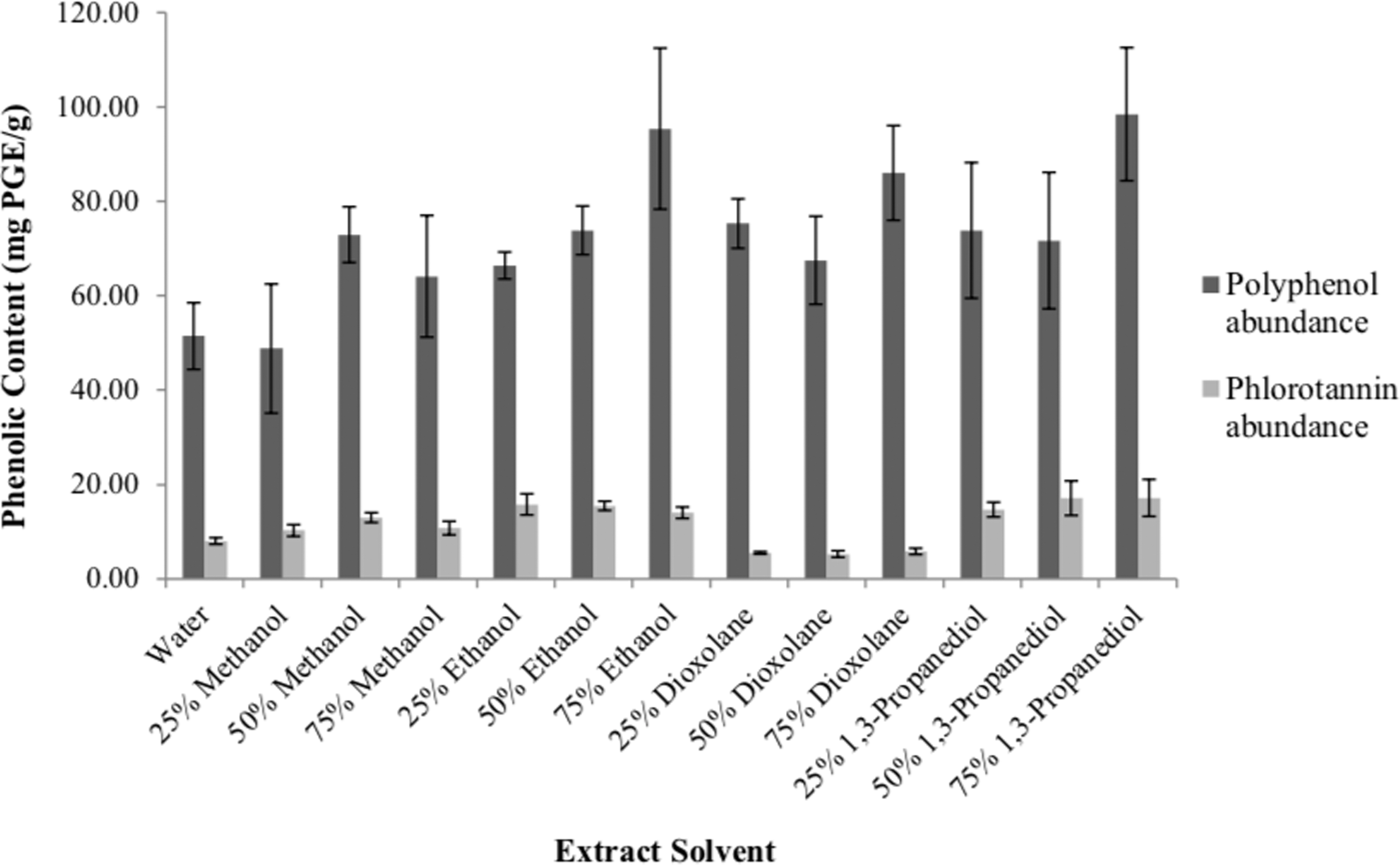
Comparison of total phenolic content and phlorotannin concentration of dehydrated A. nodosum when extracted in various solvents at differing aqueous concentrations. Data are mean ± SD, n = 3.
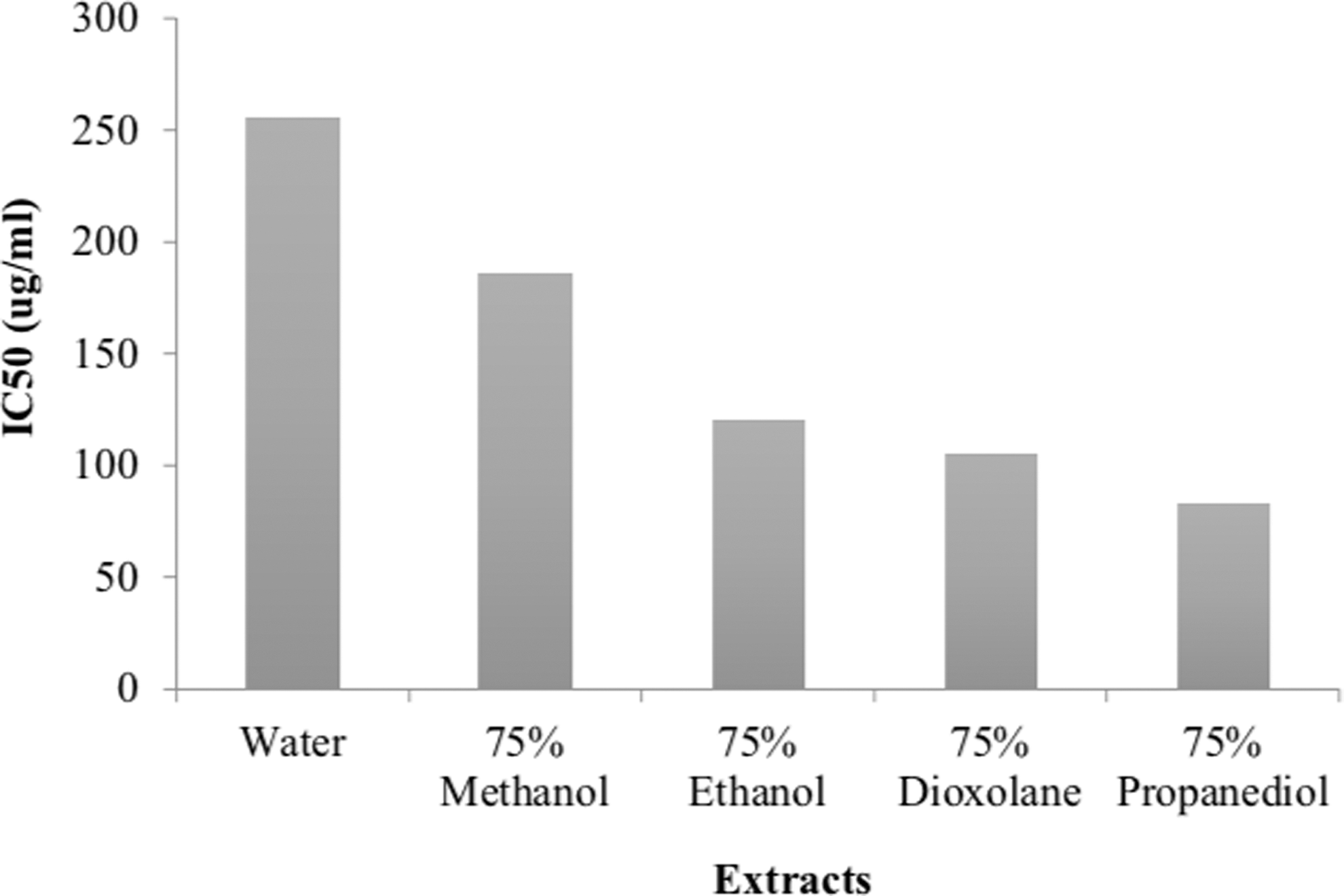
IC50 value result from DPPH radical scavenging activity test in samples of A. nodosum that undergone traditional solvent extraction using different solvents at 4°C for 24 h.
Temperature-Assisted Extractions
The dehydrated seaweed samples extracted in water decreased in phenolic concentration as temperature increased when using a conventional hot-water bath method (Fig. 4a). Extracts placed in a 75°C hot-water bath for 20 min resulted in the lowest phenolic content of 37.1 mg PGE/g, which also corresponded with the decreased antioxidant activity showed by the high IC50 value of 429 μg/mL (Fig. 5). However, seaweed samples extracted using the microwave-assisted method displayed a peak in phenolic content (Fig. 4a) when placed in apparatus at 50°C for 20 min and yielded 56.4 mg PGE/g. Analysis of polyphenol concentration displayed an overall 36% increase in efficiency when using the microwave-assisted technology over conventional methods. The DMBA assay results (Fig. 4b) did not show statistically different results in total phlorotannin concentration (p > 0.05).

Comparison of

IC50 value result from DPPH radical scavenging activity test in samples of A. nodosum that undergone different temperature-assisted extraction techniques in distilled water at 1:30 solid:liquid ratio.
Preservation Treatments
Analysis of phenolic content when extracted using both water and 75% ethanol displayed the same order of efficiency based on preservation treatments: frozen > dehydrated > greenhouse dried > blast frozen (Fig. 6a). The polyphenol concentration ranged from 89.24 mg PGE/g in the frozen samples down to 67.04 mg PGE/g in the blast frozen samples when extracted in 75% ethanol for 24 h (Fig. 6a). Statistics proved a significant difference between preservation treatments (p < 0.05). The DMBA analysis resulted in a peak of phlorotannin abundance of 23.3 mg PGE/g when samples were preserved by dehydration and extracted in 75% ethanol for 24 h (Fig. 6b), which corresponds to 26% of the total polyphenol concentration. DMBA results only displayed a significant difference between preservation treatments when extracted with water for 24 h (p < 0.05).
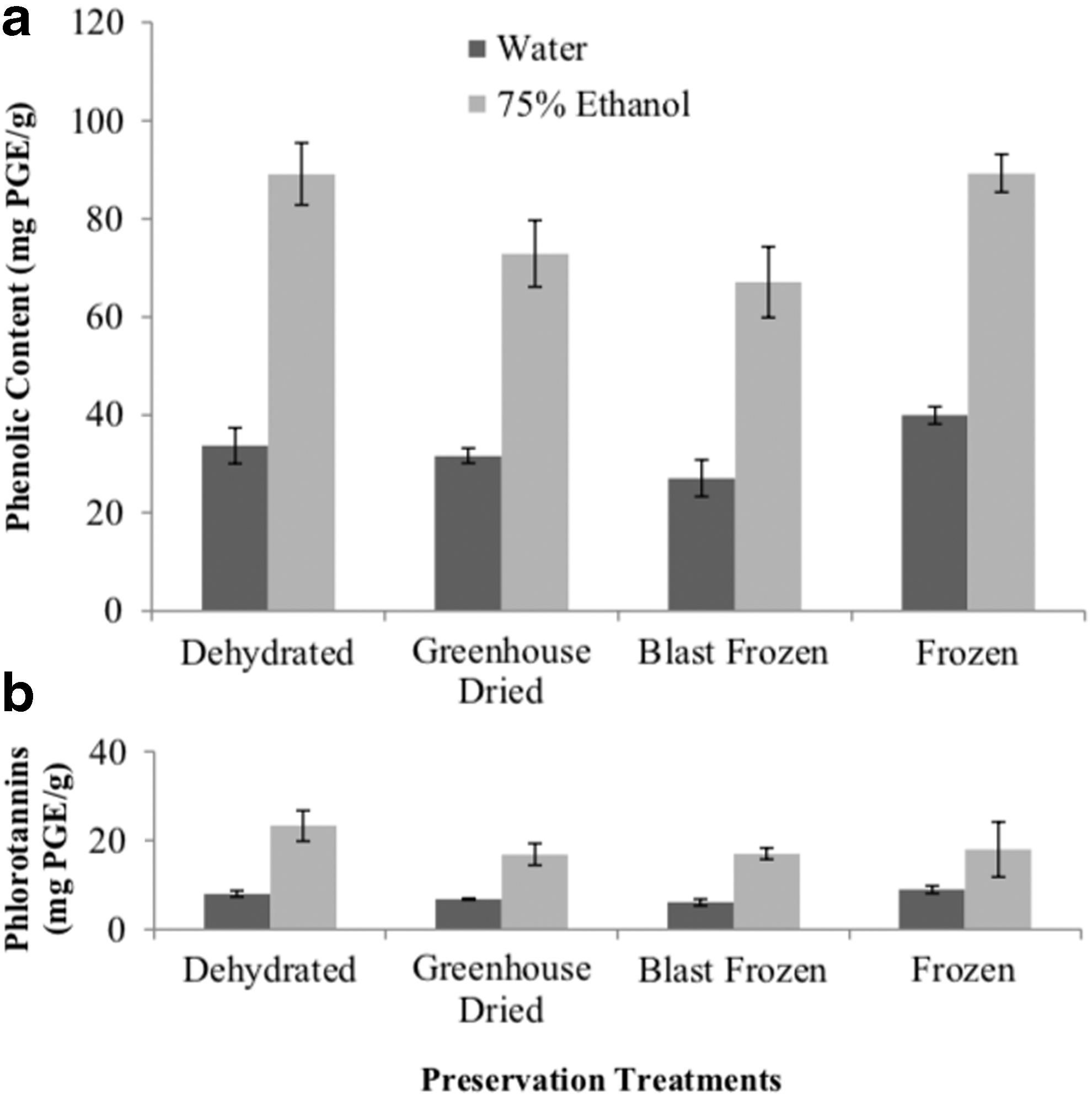
Comparison of
The preservation treatment with the best antioxidant activity were samples that had been frozen, expressing an IC50 value of 108 μg/mL, whereas the samples dried in a greenhouse caused a decrease in antioxidant activity, with an IC50 value of 213 μg/ml (Fig. 7).

IC50 value result from DPPH radical scavenging activity test in samples of A. nodosum that undergone four different preservation techniques and extracted in 75% ethanol at 1:30 solid:liquid ratio.
Discussion
Results from this study show that the preservation technique, extraction solvent, temperature and method of extraction used with A. nodosum biomass can all have significant impacts on the extracted phenolic yield and antioxidant activity.
Since 75% ethanol extraction expressed higher yields of phenolics in the seaweed samples compared to water, it was decided that this solvent mixture would be used to further compare the preservation techniques in addition to water. As predicted, the frozen samples expressed the highest phenolic yields, since the biomass is not processed following harvesting and frozen as is. However, results had shown the dehydrated samples had expressed similar results as the frozen samples when it was extracted with water alone and with 75% ethanol (v/v aq.). This could be due to the ability to grind the dry materials to a smaller particle size of 1 mm using the laboratory mill compared to the frozen material, which could only be blended to a size of 3–6 mm using a commercial extraction blender. Since the dry material had smaller particles, the solvents could more easily penetrate the surface area to extract the polyphenol compounds. As expected, the samples that were dried in a greenhouse resulted in lower phenolic yields compared to the samples that were dried in the dehydrator, since sun exposure likely causes a degradation of phlorotannins. In addition, previous studies have suggested that drying processes that require longer time lengths to dehydrate the seaweed samples tended to have a loss in phlorotannins and antioxidant capacity due to degradation and oxidation. 9,27 Both suggestions of the small particle size and minimum time duration of dehydration, likely explains why the dehydrated samples expressed the highest yield of phlorotannins using the DMBA assay.
It was unexpected to have differing best preservation treatment between the two methods, Folin-Ciocalteu and DMBA, which both quantify polyphenol yields. One study had suggested the Folin-Ciocalteu reagent to be a more reliable and precise method since the DMBA reagent is sensitive to time and temperature during the reaction period. 28 In some cases during our study, it was observed that red precipitates would form over the 60-min incubation period in 30°C, which lowered the colorimetric absorbance read in the spectrophotometer. However, it was expected to differ in quantities since the Folin-Ciocalteu method measures all polyphenolic compounds and DMBA reacts exclusively with 1,3 and 1,3,5-substituted phenols, like phloroglucinol and phlorotannins. 26
The antioxidant activity of the extracts comparing the four different preservation treatments showed the highest scavenging capacity in the frozen samples, as expected. A study looking at the effect of drying temperature on extract characteristics found that increasing drying temperatures negatively affects both the phenol content and the antioxidant activity. 6 This analysis explains how the frozen treatments expressed the highest antioxidant activity where the least amount of oxidation occurred, however it is still unknown as to why the blast frozen samples had the least phenolic content and scavenging capacity. Blast freezing is typically used to preserve foods, especially seafood, since rapid freezing at low temperatures help keep the quality of the nutritional characteristics, 28 however the very low temperature seems to have an adverse effect on the phenolic compounds in A. nodosum. Conventional freezing could have led to crystal formation, which would have broken the cell walls, making easier extraction. Blast freezing, on the other hand, may have maintained better cell integrity, hindering extraction efficiency. Further research can look more closely at the impact of a freeze-thaw cycles on the extraction yield, as this could help increase yields especially for the polyphenols that are bound to the cell wall.
Again, the results had shown that temperature has an adverse effect on the phenolic content, where extreme temperatures are causing phlorotannin degradation. In addition, the extract that was placed in lowest temperature of 4°C also showed low phenolic content due to the short time period of extraction, over only 20 min. As expected, the microwave power had the ability to penetrate the biomass, which slightly increased the phenolic yield. It is suggested that 10–15% of the total pool of polyphenols within the A. nodosum is bound to the cell wall, which cannot be separated by the conventional solid-liquid extraction technique. 29 The concentration bound to the cell wall can become accessible using the microwave-assisted technique. 20 However, results did not show a 70% increase in yields when using the microwave-technique as seen by a previous study, 20 likely because the microwave apparatus used in this study did not have the ability to control pressure and reach the same temperatures.
Conclusions
This study suggests that 75% (v/v aq.) 1,3-propanediol extraction solution in water be used as a cosmetic-friendly alternative for those products that cannot use the conventional organic solvents. Out of the four preservation treatments that can be performed within remote regions, we suggested that A. nodosum seaweed samples be frozen since it expresses high total phenolic content and high antioxidant capacity. We further propose that future studies use wet biomass in 1 mm particles to maximize phenolic extraction efficiency. Finally, we recommend the utilization of microwave-assisted methods when extracts are expected to yield high phenol abundance over a short amount of time. Alternatively, if the microwave approach is not available, we suggest extending the sample extraction over at least 72 h to achieve similar yields in terms of phenolic content and antioxidant activity.
Footnotes
Author Disclosure Statement
No competing financial interests exist.