




Abstract
Wildberries are recognized worldwide for their nutrition potential, especially for polyphenols such as anthocyanins and flavonoids, which are known as antioxidants. The crowberry, Empetrum nigrum found in northern climates, is a wildberry that has the potential to be used in natural health and cosmetics products due to its high antioxidant activity. This study is focused on antioxidant active crowberries collected from the Basse-Côte-Nord in the province of Québec. The crowberries were analyzed by techniques suitable for a remote region such as the Basse-Côte-Nord, which has limited access to chemicals, equipment and transportation. Two different extraction processes were examined: conventional methods, such as solid-liquid extraction, and unconventional extraction methods such as microwave-assisted extraction. Multiple parameters were tested, including solvent type, solvent-water ratios, liquid/solid ratios, time and temperature. The extracts were analyzed using the Folin-Ciocalteu reagent assay for total phenolic compounds, the pH differential method for total monomeric anthocyanins and the 2,2-diphenyl-1-picrylhydrazyl free radical method for antioxidant activity. The results indicated that, although the ethanol mixtures with water solvent generally gave the highest yield, water extraction gave a significant yield as well. Results also indicated that, compared to the solid-liquid extraction method, the microwave-assisted extraction method allowed for generally smaller liquid:solid ratio (75:1 mL/g compared to 25:1 mL/g with the exception of antioxidant activity) and therefore less solvent. It also allowed for less extraction time (1–5 h compared to 5 min).
Introduction
Empetrum nigrum L., commonly known as the crowberry, is a small, shiny and round fleshy fruit that appears black in color. It is an evergreen shrub that grows in acidic and infertile growing conditions mostly in the northern hemisphere but particularly in Scandinavia, Russia and Canada. 1 –3 Studies show that high amounts of antioxidants are present in the crowberry. 1,4,5 –9 The total concentration of antioxidant activity in the crowberry was reported to be similar to black currant and blackberry and greater than blueberry and raspberry. 1,10,12,13 In addition, studies show that the crowberry is a great source of anthocyanins with yields similar to the bilberry, which contains the highest amount of anthocyanin of eleven common berries examined. 13,14 Therefore, extracts from crowberries could be utilized in natural health and cosmetic products. 15
Today, most cosmetics and health products companies are looking for alternative ingredients derived from natural and organic means to replace controversial synthetic and petrochemical ingredients. 15 –18 For example, European companies such as The Innovation Company, use Nordic berries from Finland for some antioxidant components of their cosmetic products. 19 Given that Nordic berries are already used in Europe, and that there is research suggesting the crowberry contains significant amounts of polyphenolics, the crowberry has potential in cosmetic products as a natural, high-antioxidant extract.
Many fruits, such as blueberries, raspberries and grapes, display antioxidant properties. Antioxidant compounds have significant and multiple biological effects, including preventative roles in illnesses such as cancer and heart disease. 4,20 –22 In recent years, there has been numerous studies that attest to these compounds possessing anticarcinogenic, anti-inflammatory, antihepatotoxic, antibacterial, antiviral, antiallergenic, antithrombotic, and antioxidant activities as well as a role in the prevention of DNA damage. 23 –34 An example of this health benefit is the reasonable ingestion of alcohol-free red wine where the phenolic compounds in grapes have been shown to improve the antioxidant status of plasma in humans. 4,21,22
Wildberries have been shown to have the highest quantities of antioxidant activity linked with high phenolic concentrations, especially anthocyanidins. Anthocyanidins are mostly responsible for the red, blue and purple color in vegetables and fruits, especially in berries such as blueberries and raspberries, as the glycoside form known as anthocyanins. 35 The composition and content of the phenolic compounds in wildberries can fluctuate extensively based on the cultivator, climate, season and growing location. 20 Therefore, the data related to the phenolic content in wildberries can range significantly. However, there is some data that shows lowbush berries such as the blueberry contain a higher amount of anthocyanins than the highbush blueberry. 5,11,20,36 –39
Conventional extraction such as solid-liquid extraction requires the use of more solvent and energy and is time consuming. 40,41 Commercial companies strive to limit solvent use, energy and time in production processes to be more ecofriendly. Non-toxic solvents are also often preconized in the cosmetics industry. An upcoming extraction technique called microwave-assisted extraction (MAE) is based on the moisture within the plant materials. 42,43 The microwave radiation creates high temperatures and pressures, causing degradation of the cellulose, and, in turn, reduces its mechanical strength. 44,45 Once the moisture in the sample evaporates, a large amount of pressure causes the plant cell wall to rupture, and phytochemicals to leak out. 46 –48 Thus, MAE could be an innovative way to extract antioxidant active compounds such as polyphenols with reduced solvents and time.
Although there is some research on the crowberry and its antioxidant properties, there is little research that takes into account the isolation and resource limitations such as transportation, equipment and population in the northern areas where these berries are usually found. The aim of this study was to perform extractions on crowberries using conventional and MAE methods using different parameters such as time, liquid-to-solid ratios, and temperature. The parameters tested were different solvent:water ratio mixtures and water to find the best methods by comparing the yield difference. In addition, colorimetric assays and an antioxidant assay were performed to determine if polyphenolic and antioxidant compounds yield is potentially substantial enough to use in the cosmetics industry by comparing with other studies on polyphenols of fruits already used in cosmetics and health products.
Materials and Methods
Sampling
The crowberry samples were obtained from the Lower North Shore Bioproducts Solidarity Cooperative, which purchased the berries from local berry harvesters in municipalities of Bonne Esperance (51°27′34″N, 57°45′18″W) and Harrington Harbor (50°29′59″N, 59°28′59″W) on the Basse-Côte-Nord of Québec and in the municipality of Forteau (51°29′36″N, 56°57′24″W) in Labrador. The area covered by the harvesters in each municipality is approximately 250 square kilometers. Since the crowberries were harvested by local harvesters in the wild, there was no specific sampling field. The berries are generally harvested from August to October each year and were frozen for a minimum of a year, as this is the only method of preservation on the Basse-Côte-Nord. However, the method of freezing the berries before extraction is common in other studies and the difference between fresh and frozen berry samples is almost undetectable. 49 –51 Once the berries were collected by the Lower North Shore Bioproducts Solidarity Cooperative, the whole berry samples were washed, vacuumed packed, and frozen at −20°C until extraction.
Chemicals
Gallic acid and Folin-Ciocalteu reagent were obtained from Sigma-Aldrich (Darmstadt, Germany). Potassium chloride (KCl), sodium acetate (CH3CO2Na), sodium carbonate (Na2CO3) and 2,2-diphenyl-1-picrylhydrazyl (DPPH) were obtained from Sigma Chemical Co. (St. Louis, Missouri). Hydrochloric acid (HCl) and other organic solvents were obtained from Fisher Scientific (Hampton, New Hampshire).
Sample Extraction
Two types of extraction methods were used: solvent and microwave. Before beginning extractions, the samples were thawed at 4°C for 5 h and homogenized in a blender for 5 min. All extractions were performed in triplicate.
The solvent extractions were done according to the method reported by Aaby et al. 52 with some modifications. 1 g of sample was placed in different solvents at liquid-to-solid ratios of 25:1, 50:1 and 75:1 mL/g. The solvents used were ethanol:water (25%, 50% and 75%), water, and water acidified with citric acid to a pH of 2. Each mixture was extracted at 1, 2 and 5 h at both room temperature (25°C) and in a water bath (70°C). Therefore, for each liquid-to-solid ratio, 6 samples were analyzed in triplicate. Once the extraction was complete, the supernatant was recovered and stored at −20°C until analysis.
Microwave extractions were done according to the methods reported by Gharekhani et al. 53 with some modifications. The microwave-extraction system used was the flexiWAVE advanced flexible microwave synthesis platform (Milestone, Sorisole, Italy), which consists of a temperature and power control unit, microwave cavity, extraction flask, infrared temperature sensor and glass adapter and condenser. 1 g of sample was placed in different solvents at liquid-to-solid ratios of 25:1, 50:1, and 75:1 mL/g. The same liquid-to-solid ratios that were used in the conventional solvent extraction were used in the microwave extraction. Power and temperature were set at 700 watts (W) and 70°C, respectively. The extraction time was 5, 10 and 15 min. Therefore, for each liquid-to-solid ratio, 3 samples were analyzed in triplicate. Once the extraction was complete, the supernatant was recovered and stored at −20°C until analysis.
Determination of Total Phenolics
The amount of total phenolics in extracts was determined according to the Folin-Ciocalteu assay method reported by Ainsworth and Gillespie 54 with some modifications. 100 μL of the extract was added to 200 μL of 10% volume/volume percent (v/v) Folin-Ciocalteu reagent, and 800 μL of 700 mM Na2CO3 solution was added. The solution was incubated at room temperature for 2 h, and the absorbance was read at 765 nm with a Varian Cary 50 Bio UV-Visible Spectrophotometer (Agilent Technologies, Santa Clara, CA). The amount of total phenolics was expressed as mg gallic acid equivalents (GAE) per g of dry matter.
Determination of Total Monomeric Anthocyanins
The amount of total monomeric anthocyanin was determined according to the pH differential method reported by Lee et al.
55
with some modifications. A pH 1 buffer solution was prepared by adding 1.86 g of KCl with 980 mL of distilled water. The pH was adjusted to 1 with concentrated HCl and placed in a 1,000-mL volumetric flask and diluted to volume with distilled water. A pH 4.5 buffer solution was also prepared by added 54.43 g of CH3CO2Na with 960 mL of distilled water. The pH was adjusted to 4.5 with concentrated HCl and placed in a 1,000 mL volumetric flask and diluted to volume with distilled water. Using a 25-mL volumetric flask, the dilution factor was determined by diluting 5 mL of extract with the pH 1 buffer until absorbance at 520 nm is within linear rage (0.2–1.4). Once the dilution factor is determined, two dilutions of the extract were prepared, one with the pH 1 buffer and the other with the pH 4.5 buffer. The absorbance was determined for both solutions at 520 nm and 700 nm versus a blank cell filled with distilled water. The monomeric anthocyanin pigments (MAP) concentration, expressed as cyanidin-3-glucoside equivalents, was calculated as follows:
where A = (Abs520nm – Abs700nm)pH1.0 – (Abs520nm – Abs700nm)pH4.5; MW (molecular weight) = 449.2 g/mol for cyn-3-glu; DF = dilution factor; l = pathlength in cm; ɛ = 26,900 molar extinction coefficient, in L x mol−1 x cm−1, for cyanidin-3-glucoside; and 1,000 = factor for conversion from g to mg.
Determination of Antioxidant Activity
The antioxidant activity was determined according to the DPPH Radical Quenching Assay method reported by Nikolova et al.
56
with some modifications. 2.5 mL of different concentrations of extracts (10, 20, 50, 100, 200 and 300 μg/mL in 95% (v/v) ethanol) were added to 1 mL of 0.3 mM of DPPH in 95% (v/v) ethanol. The solution was incubated in the dark at room temperature for 30 min. The absorbance was measured at 517 nm and converted into the percentage antioxidant activity using the following equation:
where 1 mL of 95% (v/v) ethanol and 2.5 mL of extract were used as the blank and 1 mL of DPPH solution and 2.5 mL of 95% (v/v) ethanol were used as the control. The concentration (μg/ml) required to scavenge 50% of the DPPH reagent (IC50) was calculated. The extract with the best antioxidant activity is found when 50% of the scavenging activity is measured at the lowest concentration. 57
Statistical Analysis
The analysis results were processed using two-way analysis of variance (ANOVA) with the software JMP Pro 11 (SAS, Cary, NC, United States). Differences at p-value < 0.05 were considered to be significant. In addition, significantly different results were processed using Tukey's HSD post hoc test.
Results and Discussion
Conventional Extractions
Total phenolic content
Table 1 indicates the maximum yields obtained at 25°C using a 75:1 mL/g (water, citric acid) and 75% (ethanol) liquid-to-solid ratio at 1, 2 and 5 h for total phenolic content and a 25:1 ml/g (water, citric acid) and 25% (ethanol) liquid-to-solid ratio for total monomeric anthocyanins. The results show that, for all three solvents, the 5-h extraction time gave the highest total phenolics at 25°C (Table 1). The total phenolics after 5 h was 186.53 mg GAE/g using 75% ethanol. Water extracted the lowest amount of total phenolics at 35.98 mg GAE/g using 75:1 mL/g. This result was consistent with another study by Spigno and Faveri, where extraction yields over 5 to 24 h concluded that water extractions gently increase over time whereas alcohol extracts strongly increase over time. 58 However, in this particular study, when comparing between the 5 and 24 h, the phenolics became more unstable and fluctuated at 24 h. In most of the literature referenced for this study, extraction time was rarely more than 2 h. That is why it was important to examine extraction times that were less and greater than 2 h, because literature implies that active plant compounds could be degraded after a longer extraction time, resulting in a lower phenolic yield. 12,59,60
Total Phenolic Content (mg GAE/g) and Total Monomeric Anthocyanin Pigment (mg/g) using Conventional Extraction and Microwave-Assisted Extraction Methods with Ethanol, Water and 1% Citric Acid as Solvents
Conventional extraction method: 25°C using an extraction time of 1 to 5 h with a liquid-to-solid ratio of 75:1 mL/g for water and 1% citric acid and 75% ethanol; MAE method: 70°C using an extraction time of 5 to 15 min with a liquid-to-solid ratio of 25:1 mL/g for water and 1% citric acid and 25% ethanol
Different liquid-to-solid ratios were examined using the 5-h extraction time to determine the highest total phenolic content at 25°C. Ethanol extracted more than 4 times more compounds than water or 1% citric acid (Fig. 1). The highest total phenolic content was 186.53 mg GAE/g using 75% ethanol and water extracted the lowest, at 24.46 mg GAE/g using 25:1 mL. Most studies used alcohol solvents such as ethanol to extract plant compounds rather than water. One study suggested that using varying solvents with different polarities allowed for a higher accuracy when extracting phenolic compounds and that highly polar solvents such as alcohol solvents had a high effectiveness against antioxidants. 61 At 70°C, the heat slightly increased the total phenolic content with water and citric acid ( Fig. 1, Supplementary Table S1). However, temperature increase favors extraction by increasing the solubility of all compounds, not just phenolic compounds. Therefore it is possible that the increase seen may not just be phenolic content. 58 Also, polyphenols are heat-sensitive, so a 70°C upper temperature limit was chosen based on various temperatures reported in other studies, although some reported 50–60°C is sufficient. 62 Finally, it was observed that 75% ethanol produced slightly better total phenolic content as well as the 75:1 mL/g liquid-to-solid ratio for water and 1% citric acid, which was consistent with studies that show conventional extractions generally use more solvent in the extraction process. 53
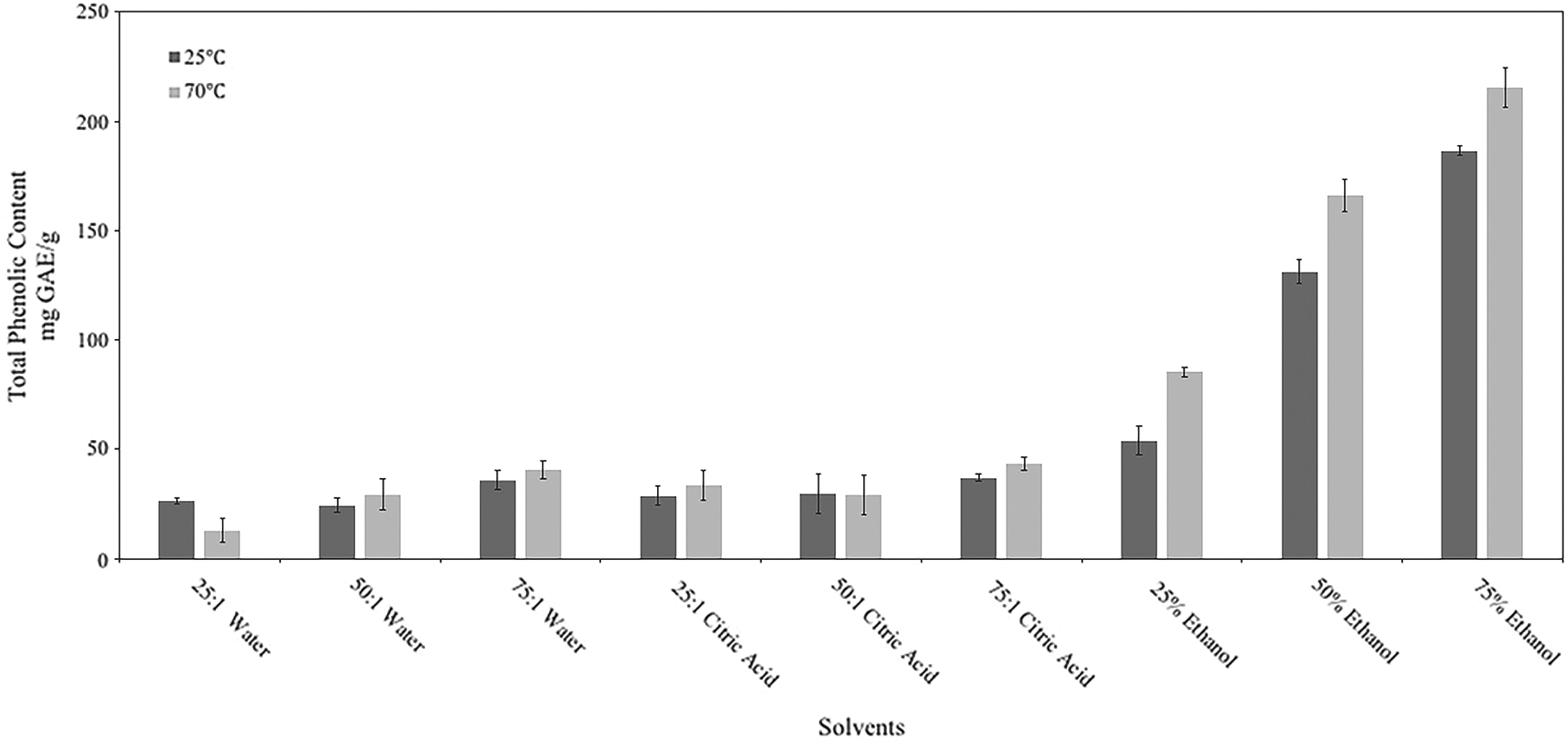
Total phenolic content (mg GAE/g) after 5-h extraction, liquid-to-solid ratios of 25:1 mL/g to 75:1 mL/g for water and 1% citric acid and 25% to 75% for ethanol at 25°C and 70°C using conventional extractions. Vertical bars indicate SD calculated among triplicate samples.
Total monomeric anthocyanins
A 2-h extraction time at 25°C produced slightly higher MAP where the highest amount of anthocyanins extracted was 20.49 mg/g using 25% (Table 1).
Ethanol extracted almost six times more anthocyanin compounds, where 20.49 mg/g MAP was extracted using 25% ethanol and 3.49 mg/g MAP was extracted using water at 25:1 mL/g liquid-to-solid ratio at 25°C (Fig. 2). The 75:1 mL/g water extraction extracted the least amount, 1.43 mg/g MAP at 25°C. The lower solvent liquid-to-solid ratio extracted better than the higher solvent liquid-to-solid ratio, which implies that to extract anthocyanins in the conventional method, less solvent can yield higher amounts of anthocyanins. Unlike the phenolic content analysis, the increase in temperature to 70°C generally produced a slightly lower yield of anthocyanins than 25°C ( Fig. 2, Table S1), which indicates the anthocyanins specifically could be degraded under higher temperatures. 59
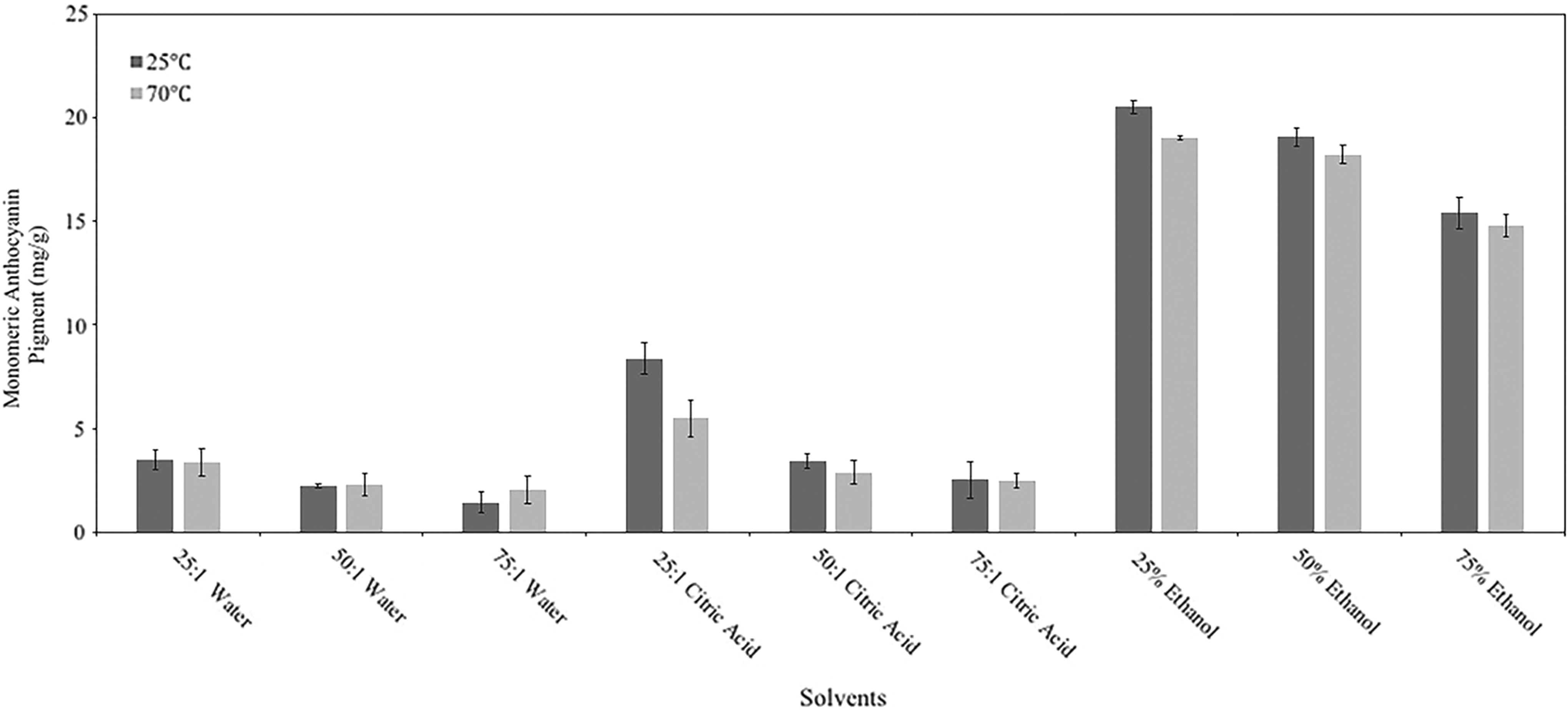
Total monomeric anthocyanin pigment (mg/g) after 2-h extraction time, liquid-to-solid ratios of 25:1 mL/g to 75:1 mL/g for water and 1% citric acid and 25% to 75% for ethanol at 25°C and 70°C using conventional extractions. Vertical bars indicate SD calculated among triplicate samples.
Antioxidant activity
In a study by Phongpaichit et al., IC50 values of greater than 250 μg/mL are inactive (meaning no antioxidants present), 100–250 μg/mL are weakly active, 50–100 μg/mL are moderately active, 10–50 μg/mL are strongly active and less than 10μg/mL are very strongly active. 63 The antioxidant findings in this section were compared to those ranges of values to better understand how antioxidant activity is classified.
A 1-h extraction time at 25°C produced the best highest antioxidant activities for all three of the solvents examined. For water, a 50:1 mL/g liquid-to-solid ratio produced the best antioxidant activity at 122.26 μg/ml (Fig. 3a). The lowest antioxidant activity produced was the 75:1 ml/g liquid-to-solid ratio after 5 h at 205.30 μg/mL. There was no significant difference in antioxidant activity between the liquid-to-solid ratios as all the antioxidant activity for the water are considered weakly active. The 1% citric acid solvent yielded higher antioxidant activity than water (Fig. 3b). The highest amount of antioxidant activity for the 1% citric acid extractions was 84.86 μg/mL using 75:1 mL/g liquid-to-solid ratio. The ethanol solvent had over five times better yields of antioxidant activity (Fig. 3c). The highest amount of antioxidant activity produced was 12.74 μg/mL with a 75% liquid-to-solid ratio. Therefore, for antioxidant activity, the 1-h extraction time was optimal because it produced the maximum yields. Also, 25°C generally produced slightly higher yields than 70°C (Fig. 3d). This is ideal because a 25°C extraction time requires less time and energy, suggesting that it is not necessary or optimal to heat the extractions. There is also no significant difference between 70 and 25°C.
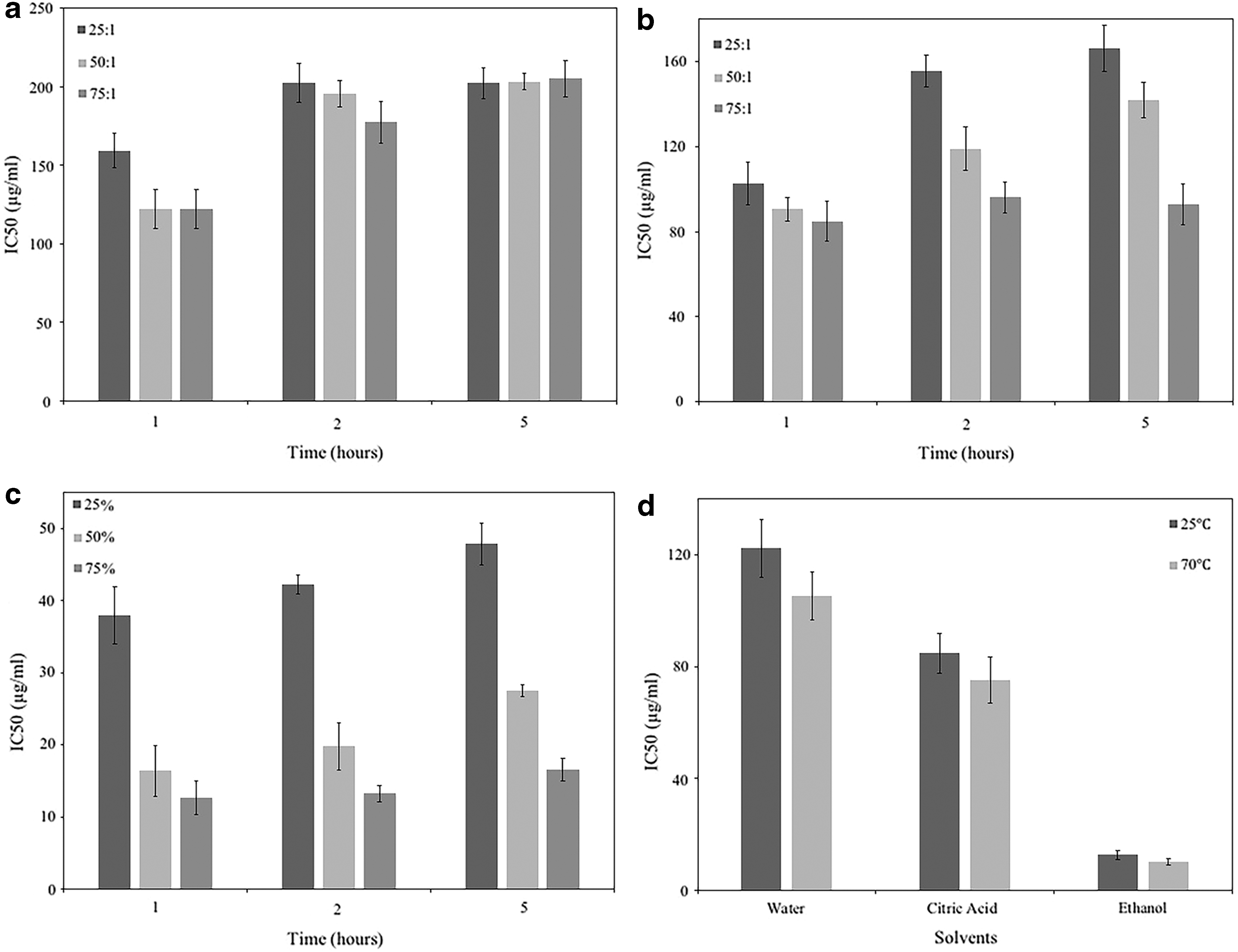
The conventional extraction methods show that the crowberries of the Basse-Côte-Nord have strong phenolic and antioxidant activity. One study stated the total phenolic content in black currant marc was 9.72 mg/g total polyphenols and 6.80 mg/g anthocyanins after 24 h compared to the 186.53 mg GAE/g phenolic content and 20.49 mg/g anthocyanins obtained in 5 h in this research. 64 Another study reports that crowberry has almost twice the antioxidant potency as the bilberry, 1 which is a high-antioxidant berry. This research showed that the crowberries of the Basse-Côte-Nord had higher yields than other studies and therefore may have a greater potential in products. This could be due to the land being remote and undeveloped, proximity to the ocean, or a number of other factors that could be researched further.
Microwave-Assisted Extractions
Total phenolic content
Table 1 indicates the maximum yields obtained at 70°C using a 25:1 mL/g (water, citric acid) and 25% (ethanol) liquid-to-solid ratios at three different times (5, 10 and 15 min) for total phenolic content and total monomeric anthocyanins. For all three solvents, the 5-min extraction time produced the highest total phenolics (Table 1).
Different liquid-to-solid ratios were examined at the 5-min extraction times to determine the highest total phenolic content at 70°C. Ethanol extracted higher phenolics at 226.41 mg GAE/g using a 25% ethanol liquid-to-solid ratio and the lowest phenolics yielded were 35.03 mg GAE/g using 75:1 mL/g 1% citric acid (Fig. 4). From previous studies, MAE generally reduced the liquid-to-solid ratio and extraction time, which is the case with the results yielded from these extractions. For example, the conventional extraction methods used 75% ethanol to get 186.53 mg GAE/g in 5 h, and MAE used 25% ethanol to get 226.41 mg GAE/g in 5 min.
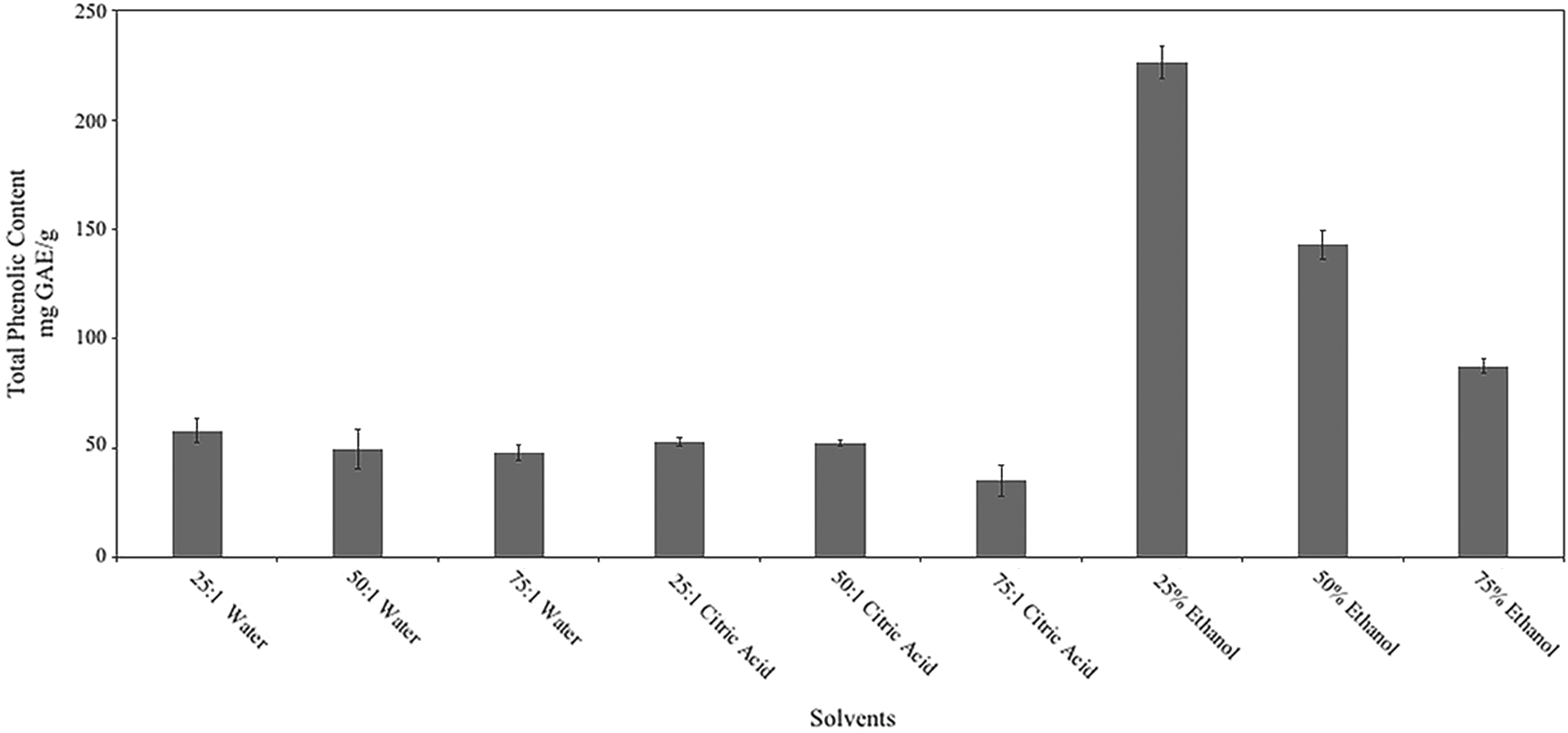
Total phenolic content (mg GAE/g) after a 5-min extraction time with liquid-to-solid ratios of 25:1 mL/g to 75:1 mL/g for water and 1% citric acid and 25% to 75% for ethanol at 70°C using the MAE method. Vertical bars indicate SD calculated among triplicate samples.
Total monomeric anthocyanins
A 5-min extraction time yielded the highest amounts of anthocyanin pigments for ethanol at 20.81 mg/g, 8.07 mg/g for citric acid and 9.72 mg/g for water (Table 1).
With the 5-min extraction time, the results indicate that ethanol extracted two times more anthocyanins than the other solvents using 25% ethanol at 20.81 mg/g and the lowest amount extracted was 3.43 mg/g using 75:1 ml/g citric acid (Fig. 5). The anthocyanin yields for the conventional extractions were 3.49, 8.38 and 20.49 mg/g for water, citric acid and ethanol respectively which were very similar yields suggesting that the MAE did not extract more anthocyanins, but the time was greatly reduced to get a similar result.

Total monomeric anthocyanin pigment (mg/g) after 5-min extraction time with liquid-to-solid ratios of 25:1 mL/g to 75:1 mL/g for water and 1% citric acid and 25% to 75% for ethanol at 70°C using the MAE method. Vertical bars indicate SD calculated among triplicate samples.
Antioxidant activity
The 5-min extraction time produced the highest antioxidant activity for all three solvents. For water, the liquid to solid ratio that yielded the highest antioxidant activity was 50:1 mL/g at 47.89 μg/mL (Fig. 6a). The MAE method improved antioxidant extraction as the conventional method with water yielded 122.26 μg/mL in 1 h and the microwave method with water yielded 47.89 μg/mL in 5 min. The results demonstrate overall higher antioxidant activity using 1% citric acid as a solvent than water; the yield was 46.09 μg/mL using 75:1 mL/g liquid-to-solid ratio (Fig. 6b). The results illustrate that ethanol was the best solvent; using a liquid-to-solid ratio of 75%, it gave an antioxidant activity yield of 7.85 μg/mL, which is considered very strongly active (Fig. 6c). Therefore, the extraction time is greatly reduced, which agreed with other studies that the MAE method had reduced extraction times when compared to more traditional extraction methods. 64,65
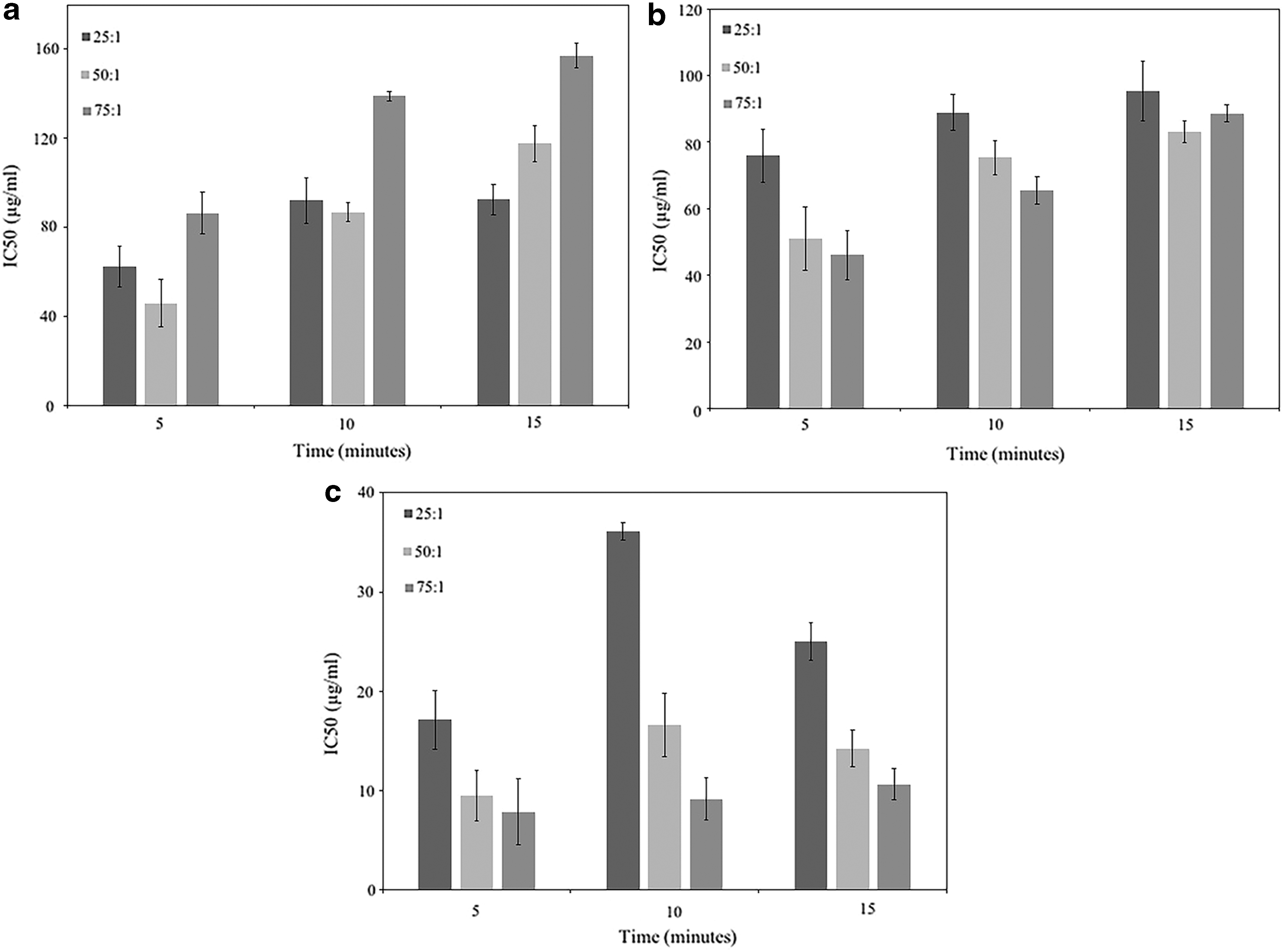
Although the microwave greatly reduced extraction time, it did not always yield the highest results with the lower amount of solvent. In the case of antioxidants, more solvent was required to get the highest yields. However, the 25:1 mL/g water and 1% citric acid and 25% ethanol are still comparable to the highest yields, are higher than yields from conventional methods, and could be deployed commercially. The optimal microwave extraction time of 5 min in this research was not consistent with other studies, which report optimal times of 10–15 min. 53,66 It is unknown why this time difference occurred, although it may be due to the different microwave apparatus. It was suggested by one study that the microwave method could increase yields by 20%, which did not occur in this research, also possibly due to the microwave apparatus used. 66
In general, the statistical results were considered significant if p < 0.05. The results from this study indicate that the ethanol solvent was significantly better than citric acid and water for both extractions methods. When comparing the two extraction methods, statistics proved a significant difference in extraction times. For the conventional extraction method, statistics proved a significant difference between liquid-to-solid ratios where the higher ratio generally produced higher yields. For the unconventional extraction method, statistics proved there was a significant difference between liquid-to-solid ratios where a lower ratio produced higher yields. Statistics also proved there was no significant difference between the two temperatures examined for the conventional method.
Conclusion
Overall, the results from the conventional and MAE methods generally correlate with other studies found comparing the two methods. MAE gave similar or higher yields using less solvent, and the extraction time is greatly reduced. Ethanol proved to be the highest-yielding extraction solvent, which was expected, as in most studies it is the traditional standard solvent to which other solvents are compared. 61,67
To conclude, this research exhibits that there is phenolic and antioxidant activity in the crowberry from the Basse-Côte-Nord and it is comparable to other fruits that are considered high in antioxidants. 1 As expected, ethanol did extract the highest yields of total phenolics, anthocyanins and antioxidant activity. Water and citric acid, which are more cosmetic-friendly and easier to implement on the Basse-Côte-Nord, did not extract as well as the ethanol. For this study, the liquid-to-solid ratios were relatively high using higher amounts of solvent, which was chosen because many studies involving the extraction of active plant compounds like polyphenols use higher liquid-to-solid ratios, including Nkhili et al., who used a 120:6 mL/g ratio. 64,66,68 Ultimately, it would be ideal to decrease the liquid-to-solid ratio and therefore decrease the amount of solvent used, especially for the production of cosmetic and natural health products as well as for economic purposes. Nevertheless, this research demonstrates that the crowberry indeed has extractable phenolic compounds. Furthermore, it would be valuable to further research other cosmetic-friendly solvents with the improved MAE methods to determine if higher yields are possible. There is also a need to analyze variability of the species in the region by working on a traceable batch from a targeted harvesting zone to compare with these first polyphenolic screenings. It would also be essential to determine if the crowberry could be cultivated for agricultural production. Although the crowberry is present on the Basse-Côte-Nord in abundance, it is classified as a wildberry in this region and there is no guarantee of a consistent supply. Thus, a crucial consideration for using crowberries in products is to ensure the consistent availability of the resource. Finally, additional work is underway to confirm the polyphenolic presence in these extracts by further quantifying and purifying the compounds clearly present in the promising northern crowberry to potentially use their extracts in commercial products.
Footnotes
Acknowledgments
This work was financially supported by MITACS, the Lower North Shore Bioproducts Solidarity Cooperative and the Coasters Association Inc. The authors are grateful to Benjamin Boëns, Isabel Desgagné-Pénix, Nathalie Boudeau, Julien Bley, Kokou Adjallé and Alain Tremblay for their assistance.
Author Disclosure Statement
No competing financial interests exists
Supplementary Material
Supplementary Table S1
References
Supplementary Material
Please find the following supplemental material available below.
For Open Access articles published under a Creative Commons License, all supplemental material carries the same license as the article it is associated with.
For non-Open Access articles published, all supplemental material carries a non-exclusive license, and permission requests for re-use of supplemental material or any part of supplemental material shall be sent directly to the copyright owner as specified in the copyright notice associated with the article.
