




Abstract
Full feedstock potential needs to be tapped to make lignocellulosic ethanol an economically viable reality. This work focuses on the Saccharomyces cerevisiae ethanol fermentation of fresh sorghum carbohydrates extracted through a mild steam-treatment process, and the subsequent Chlorella vulgaris cultivation using the generated liquid and gaseous fermentation effluents. The first section of the manuscript focuses on the effect of nutrient addition (fermentation effluent, yeast extract and urea) on the conversion efficiency of the sorghum carbohydrates to ethanol. Overall, the fermentation time was reduced to half when yeast extract and urea were supplemented to the free and hemicellulosic carbohydrate stream, accelerating the total sugar consumption time from 24 h to under 12 h. However, regarding the cellulosic carbohydrate hydrolysate, the sole addition of urea resulted in a slight improvement of the fermentation kinetics. The second half of the manuscript presents the impact of these different fermentation effluents and various process parameters (addition of yeast extract, antibiotic and CO2) on the microalgal cultivation and composition. The cellulosic hydrolysate yielded the highest concentrations of microalgal carbohydrates (507 mg/L) under a CO2-rich environment. Further cultivation scale-up assays confirmed these observations in the presence of 10% CO2 using the mixed fermentation effluents of the free and constitutive sorghum carbohydrates. Thus, an integrated sorghum-based first- (free carbohydrates), second- (constitutive carbohydrates) and third-generation (microalgal carbohydrates) ethanol production process was thoroughly investigated. This work could represent a step towards bridging the gap leading to full-scale commercialization of these advanced-biofuel technologies.
Introduction
The recently ratified Climate Change agreement (UNFCCC) aims to maintain global average temperatures below 1.5°C above pre-industrial levels. 1 Presently, transportation represents one of the highest GHG-emitting sectors worldwide with an annual global atmospheric release of around 5.5 million Gg of carbon-dioxide equivalents. 2 However, biofuels such as lignocellulosic ethanol produced from so-called second-generation substrates are considered promising alternatives. 3 Most of the current ethanol production technologies are based on the microbial fermentation of starch and sucrose carbohydrates using first-generation feedstock such as corn, sugar beet, sugar cane and even cassava. 4 These technologies are relatively straight-forward, requiring minimal feedstock pretreatment steps prior to its fermentation. On the other hand, the lignocellulosic ethanol production process represents a complex approach constituting of several subsequent carbohydrate extraction, hydrolysis and in some cases, detoxification steps prior to their fermentation. 5 The lignocellulosic matrix encasing these constitutive carbohydrates requires various invasive physical, chemical, thermal, biological or enzymatic pre-treatment steps prior to their extraction. 6 However, these sometimes severe treatment conditions can lead to the production of undesirable furans, phenolic compounds and various organic acids with inhibitory effects on the subsequent fermentation processes. 7
Among different carbohydrate extraction strategies, steam explosion could represent a suitable approach due to its straightforward use and relative flexibility. 8 The treatment severity can be fine-tuned by adjusting the cooking temperature and residence time, allowing for efficient process control. Moreover, a subsequent catalyzed steam treatment of the residual lignocellulosic fibers could allow an adequate cellulose recovery and further hydrolysis. 9 Thus, most of the free and constitutive carbohydrates could be extracted and used for fermentative ethanol production within a limited number of steps.
Numerous lignocellulosic substrates are presently being investigated for their ethanol-production potential. For instance, wheat straws, spruce, plantain peelings and trunks, maize cobs and stalks, as well as mixtures of softwood with construction and demolition wood, provided above 70% ethanol yields. 10 -12 However, the high lignin and relatively low carbohydrate content of some of these substrates often required invasive extraction approaches, which in turn generated significant fermentation inhibitors, and thus complex downstream detoxification steps. Nevertheless, the use of energy crops containing high carbohydrate and low lignin concentrations could significantly reduce the required treatment severities to produce ethanol. 13 Sorghum (Sorghum bicolor (L.) Moench) for instance is a multipurpose crop that can be cultivated in variable climates and soil conditions. This biomass is presently used mainly for forage, silage and sugar syrup production. 14 However, it could become a highly valuable energy crop due to short growth period (4–5 months) and high content of free and constitutive carbohydrates, potentially providing a smooth transition towards advanced biofuels. 15 In addition to the first- and second-generation feedstock for ethanol production, recent years have brought focus on the third-generation opportunities such as those involving microalgal biomass. Moreover, microalgae's ability to access both the inorganic (autotrophic) as well as the organic (heterotrophic) carbon present in their environment has triggered a wave of research focusing on their cultivation using organic-rich effluents. In a recent study, both liquid and gaseous brewery effluents were treated using Scenedesmus obliquus microalgae, resulting in a 61.9% chemical oxygen demand (COD) reduction. The generated algal biomass was subsequently converted to either biohydrogen and methane, or to bio-oil and bio-char in order to evaluate and compare various possible valorization pathways. 16 Another example concerns Chlorella vulgaris, which was successfully cultivated on soy whey and thin stillage effluent generated by a local corn ethanol plant, resulting in the production of 9.8 g/L of algal biomass with a 43% oil content. 17 Sreekanth and collaborators recently reported the efficient phytoremediation of dairy wastewater process using both single- and mixed-microalgal consortia in indoor as well as in outdoor systems. 18
Microalgal biomass could represent an important source of added-value compounds such as carbohydrates, fatty acids, amino acids, pigments, diols, etc. These could be recovered and used as feedstock for biofuel production (market price of around 0.5 $/kg), bulk and specialty chemicals (between 0.5–10 $/Kg) and finally, personal care products, flavors, pigments and nutraceuticals (values above 50 $/kg), just to name a few. 19 Microalgal lipids, proteins and carbohydrates have been extensively investigated for the production of biodiesel, biogas and bioethanol, respectively. As an example, Sialve and collaborators reported an integrated biodiesel and biomethane production process relying on the extraction of microalgal lipids from which the protein-rich fraction was used in an anaerobic digestion process. 20 A recent study reported on the isolation from a slaughterhouse wastewater stream of microalgae strains containing above 60% fermentable carbohydrates (dry basis), which were successfully converted to ethanol by Saccharomyces cerevisiae yeast following various extraction strategies. 21 Thus, the microalgal carbohydrates, consisting mainly of α-(1,4)-glucans, β-(1,3)-glucans, fructans and low concentrations of cellulose, indicate a high feedstock opportunity for the production of ethanol. 22 Moreover, the high costs associated with the microalgal biomass production, recovery and transportation could potentially be reduced if their cultivation and exploitation is integrated in existing processes which could ultimately provide the required cultivation substrates. 23
Most of the efforts in this direction are currently focused on using vinasse generated by various ethanol fermentation processes as substrate for anaerobic digestion. 24 However, these strategies produce CH4, considered an important GHG, and do not utilize the CO2 generated during the fermentation process. Moreover, these various integrated systems involve complex interconnected processes, which require careful finetuning among individual levels as well as the system as a whole. 25 Each processing step will impact either directly or indirectly the subsequent and even in some cases the prior stages when a closed-loop system is considered. These relationships might trigger unpredictable synergistic ripple-effects throughout the system, exponentially increasing the process complexity. Thus, extensive research is required regarding these integrated first-, second- and third-generation systems prior to their large-scale implementation.
The present work deals with the design and implementation of an integrated advanced ethanol production process using free and constitutive carbohydrates recovered from sorghum and microalgal biomass (Fig. 1). The first part of this work focused on the simultaneous extraction of both free and hemicellulosic sorghum carbohydrates, as well as the subsequent production of glucose monomers from the hydrolysis of the residual lignocellulosic fibers. Furthermore, the effect of nutrient addition (liquid fermentation effluent, yeast extract and urea) on the carbohydrate-conversion efficiency to ethanol during S. cerevisiae fermentation, was investigated. The second part of the manuscript focused on the impact of various process parameters (addition of yeast extract, antibiotic and CO2) on the cultivation and composition of C. vulgaris microalgae using the fermentation effluents obtained during the first part. Finally, the subsequent scale-up and confirmation essays using the operating conditions previously-determined as adequate, proved the opportunity of this approach. To the best of our knowledge, this work represents the first time an integrated first-, second- and third- generation ethanol production process is reported using sweet sorghum as initial feedstock and C. vulgaris subsequently cultivated on the liquid and gaseous lignocellulosic fermentation effluents.
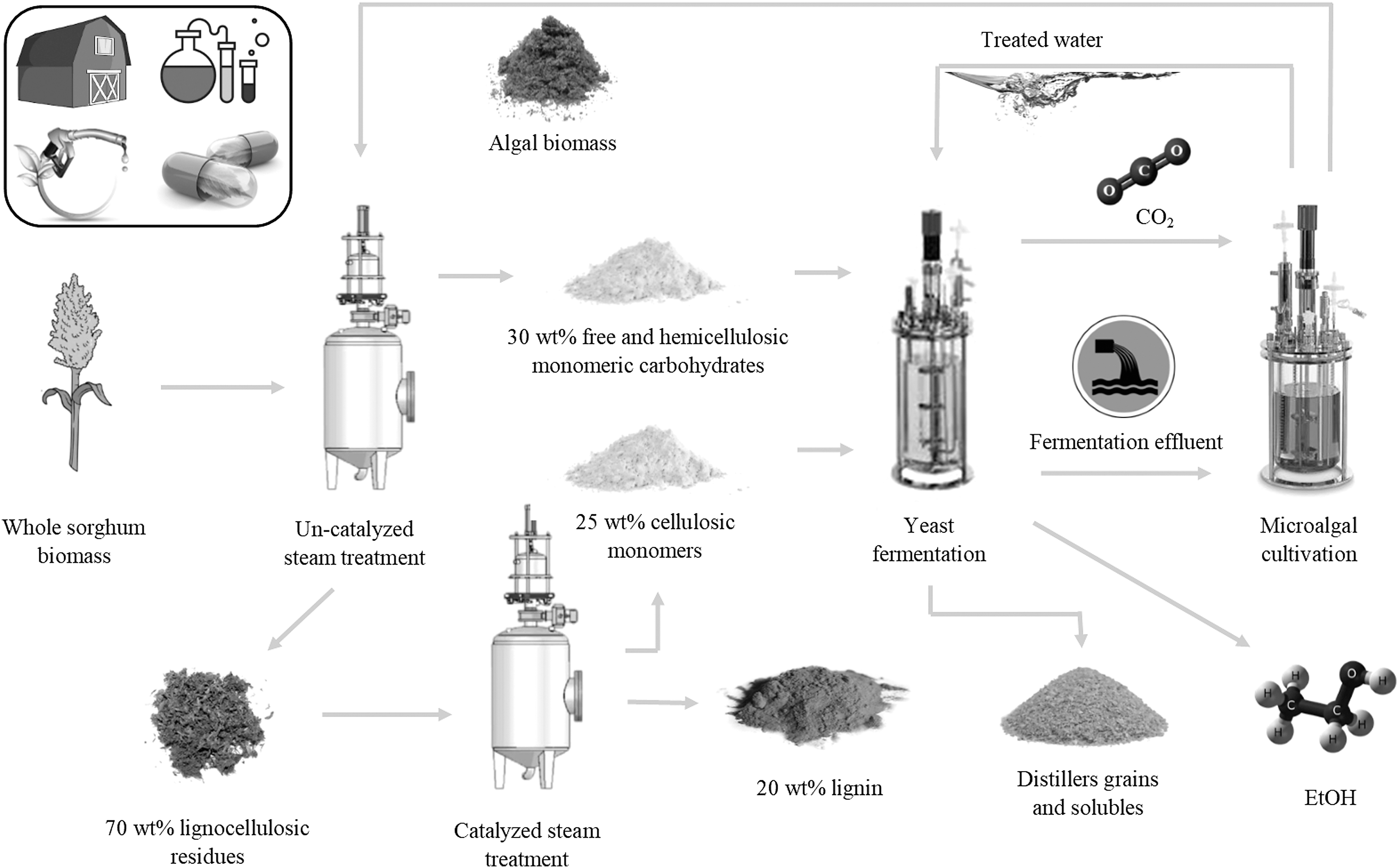
Conceptual scheme for process-integration highlighting key whole sorghum feedstock conversion elements integrating the two-step extraction of free and constitutive carbohydrates as well as their fermentation and subsequent microalgal cultivation using the liquid and gaseous fermentation effluents. Some potential applications of the main process products (ethanol, lignin and distillers grains and solubles) are represented as well.
Materials and Methods
Sweet Sorghum Hydrolysates
The sweet sorghum biomass, Della cultivar (Virginia Polytechnic Institute, USA) was provided by the CEROM research center, Saint-Mathieu-de-Beloeil (Québec, Canada). Stems were hand harvested at an average height of 293 cm, 137 days after seeding. The full green stems, with leaves and panicles, were coarsely ground to a final size of about 2–10 cm. The initial moisture content of the fresh sweet sorghum was tested in triplicate and determined at 74.0 ± 2.2%. The ground biomass was subjected to uncatalyzed steam-treatment allowing the simultaneous recovery of free and hemicellulosic carbohydrates as previously described.
26
Process temperature and cooking are considered important factors related to biomass fractionation and subsequent hydrolysis of the hemicelluloses.
27
Thus, in order to enable an easy comparison and reproducibility, the temperature (T) and cooking time (t) were used to calculate the severity factor (S0) of the steam treatment using the following equations:
28
In brief, 3295 ± 199 g of fresh sweet sorghum (corresponding to 857 ± 52 g of dried material) were cooked at 160°C for 1 min. for a severity factor of 1.77. The biomass was depressurized in 25 kg of water, filtered and pressed for 5 min at 100 psi. The cellulose was recovered from the lignocellulosic steam-treatment residues and the fermentable carbohydrates subsequently extracted using the Sulfuric Acid Cellulose Hydrolysis (SACH) process. 9 In brief, 100 g of lignocellulose (dry basis) was impregnated with an 8% sodium hydroxide solution for 20 min at a solid:liquid ratio of 1:10. Subsequently, the lignocellulose was pressed for 5 min at 100 psi prior to a steam-explosion treatment at 2 min cooking time and 200°C, for a severity factor of 3.24. The cellulose fibers were separated by the solubilized lignin thorough filtration, dried at 50°C for 5 days and ground to a final size of about 1 mm. The first hydrolysis was performed with concentrated sulfuric acid 72% (w/w) at a mass ratio of pure H2SO4/dry cellulose of 4. The mixture was agitated at 60 rpm and 30°C for 1 h 22 min after which the acid content was diluted to 4 % (w/w) and transferred to the autoclave for a post-hydrolysis step at 117°C during 2 h 11 min. The cellulose hydrolysate was neutralized with Ba(OH)2 and filtered using a 0.2 μm filter.
Ethanol Fermentation
The carbohydrate broths were subjected to fermentation essays using S. cerevisiae yeast. The free and constitutive carbohydrate broths were further neutralized using CaCO3 to a pH of 5 and subsequently concentrated using a Rotavapor (Buchi, Switzerland) at 60°C. S. cerevisiae yeast inoculum was prepared using 5 g/L of Thermosacc Dry® Active Dry Yeast (Lallemand Biofuels & Distilled Spirits, Canada) cultivated in yeast growth media (glucose, 100 g/L; urea, 1 g/L; yeast extract, 50 g/L; peptone, 10 g/L; and lactrol, 0.1 g/L) at 30°C and at a pH of 5.2. The yeast inoculum was incubated at 30°C and 180 rpm for a period of 5 h prior to inoculation. The fermentation experiments were performed in 50 mL serum vials using 20 mL of carbohydrate hydrolysate and 1 mL of yeast inoculum with various nutrient additions (5% v/v fermentation effluent, 10 g/L yeast extract, or 0.5 g/L urea). After inoculation, the bottles were capped with rubber septum stoppers and aluminum rings and flushed with N2 for 4 min. Incubation was performed at 30°C and 140 rpm for a period of 36 h. After fermentation, the yeast cells were removed from the effluents through filtration (0.2 μm) and the ethanol recovered through vacuum evaporation using the Rotavapor at 40°C.
Microalgal Cultivation
Freshwater C. vulgaris microalgae were obtained from the Canadian Phycological Culture Center (CPCC). The microalgal inoculum was prepared by cultivating C. vulgaris in 500 mL Bold's Basal Medium (BBM), consisting of (g/L): NaNO3 (0.25), K2HPO4 (0.075), KH2PO4 (0.175), NaCl (0.025), CaCl2·2H2O (0.025), MgSO4·7H2O (0.075), EDTA·2Na (0.05), KOH (0.031), FeSO4·7H2O (0.005), H3BO3 (0.008), ZnSO4·7H2O (0.0015), MnCl2·4H2O (0.0003), MoO3 (0.00025), CuSO4·5H2O (0.0003), Co(NO3)2·6H2O (0.0001). After 30 days of incubation under continuous illumination at an intensity of 70 μmol/m2/s (LI-250 light meter, LI-COR, USA), the inoculum was centrifuged at 2,000 rpm for 10 min. Cell pellets were washed twice with sterile Milli-Q water and re-suspended. Prior to cultivation, the initial pH was adjusted to 7.0 using a 1 N NaOH solution. All the cultivation tests were carried out in 50 mL serum vials using an effluent volume of 20 mL and 0.2 mL of microalgal inoculum. The effect of nutrients (yeast extract, 0.5 g/L), antibiotic (Lactrol, 0.5 g/L) and CO2 (20% for 20 min) were evaluated using orbital shakers at red and blue LED illumination rate of 70 μmol/m2/s under 12h/12h dark/light cycles. These illumination conditions were used to direct the microalgal metabolism towards a mixotrophic regime, favorizing both CO2 uptake through photosynthesis as well as bioaccumulation of carbohydrates during the absence of light. The cultivation tests were performed in triplicate for 6 days at room temperature. Confirmation and scale-up assays were performed during 10 days in 1,000 mL Erlenmeyer flask using 450 mL mixed sorghum carbohydrate fermentation effluents and 4.5 mL of microalgal inoculum. The cellulosic and hemicellulosic hydrolysates were mixed together under the 1.83:1 ratio (Vcellulosic:Vhemicellulosic), commonly found in the sorghum biomass, and autoclaved at 121°C for 1 h. 10% of CO2 was continuously sparged in the effluent at a 150 mL/min flowrate.
Analytical Methods
The organic acids, furan aldehydes and ethanol were quantified using an Agilent 1100 series HPLC (High Performance Liquid Chromatography) equipped with a G1362A Refractive Index Detector (temperature was set to 40°C) and ROA-Organic Acid H+ (8%) analysis column as described previously. 5 Quantification of monomeric carbohydrates was performed using a Dionex ICS-5000+ ion chromatography system equipped with a KOH eluent generator and a Dionex CarboPac SA10-4μM column set at 45°C. 26 The microalgal phytoremediation potential was evaluated by measuring the total organic carbon concentration of the liquid supernatant using a total organic carbon analyzer (Shimadzu TOC-Ve, Japan). The microalgal growth was evaluated through optical density (OD) at 680 nm using a microplate reader (Synergy HT, BioTek Instruments, USA). The specific growth rate (μ, d−1) was calculated after 2 days of cultivation according the following equation:
μ = ln (OD2 – OD1 ) / (t2 – t1 ) (Equation 3)
where OD2 et OD1 were respectively the OD at the end (t2 ) and at the beginning of the of the exponential phase (t1 ).
The microalgal nitrogen content was measured using a Flash 2000 Organic Elemental Analyzer (ThermoFischer Scientific). The total protein content was estimated from the nitrogen content value using microalgae nitrogen to protein conversion factor of 4.44, 29 while the lipids were extracted using a simplified Folch method. 30 The total microalgal carbohydrates were extracted using a modified version of the two-step hydrolysis of the microalgal biomass. 31 Briefly, the wet biomass harvested at the end of the cultivation essays was hydrolyzed at 30°C for 1h using 500 μL of concentrated H2SO4 95 % (w/w). Subsequently, a post-hydrolysis step was performed by adding 14 mL of Milli-Q water to the mixture and placing it in the autoclave at 121 for 1h°C. The dry biomass was gravimetrically determined by the difference in weight after 1 h at 105°C.
Results and Discussion
Integrated approaches often suffer from a series of cascading and sometimes amplifying issues, which can trigger ripple effects on the downstream and even upstream steps whenever process effluents or products are recirculated back into the system. Thus, in the context of advanced biofuels, intensive investigations are required at each of the critical constitutive steps, such as the alcoholic fermentation of the lignocellulosic carbohydrates and the subsequent microalgal cultivation using the generated effluents. The individual as well as the combined effects of these various steps on the first-, second- and third-generation ethanol production systems were thus described. Moreover, novel and less-expensive nutrient alternatives such as recycled liquid fermentation effluents were investigated during the alcoholic fermentation assays. The work was concluded with the analysis of the impact of these fermentation streams and various process parameters on the cultivation and composition of the microalgal biomass.
Alcoholic Fermentation of Lignocellulosic Carbohydrates
The sorghum hydrolysate containing the mixture of free and hemicellulosic carbohydrates represents a heterogenous substrate rich in various pentoses and hexoses as well as other compounds such as organic acids, phenolic compounds and furan aldehydes, which impact differently the fermentation process. The cellulosic hydrolysates on the other hand are generally less recalcitrant, containing mostly glucose monomers and only traces of fermentation inhibitors. However, the yeast conversion to ethanol of both substrates could considerably benefit from the addition of external nutrients to compensate for their slight toxicity. Thus, the impact of adding fermentation effluent (backset), yeast extract and urea on the free and constitutive sorghum carbohydrate conversion to ethanol using S. cerevisiae yeast was investigated. The fermentation experiments were performed for 36 h with regular monitoring of the carbohydrate uptake and production of various metabolites.
An enhancement of kinetics was observed when the external nutrients were added to the free and hemicellulosic hydrolysate mixture (Fig. 2). Adding yeast extract and urea for instance led to the complete consumption of the monomeric carbohydrates in the first 12 h of fermentation. This is a noticeable improvement compared to when no additional nutrients were provided, where around 3 g/L of fructose could still be detected after the first 12 h of fermentation. However, the addition of fermentation effluent (backset) did not led to the complete consumption of these carbohydrates during the first 12 h of fermentation, with 0.5 g/L of fructose still present in the system. Moreover, no noteworthy improvements were observed with regards to the ethanol production yields. In all cases, the ethanol concentration was quantified to be around 40 g/L after the first 12 h of fermentation. A slightly higher concentration (41 g/l) of ethanol was identified after 12 h of fermentation when the sorghum steam treatment hydrolysate was supplemented with urea. The higher glycerol concentration of around 5 g/L further confirms a more active overall yeast metabolic activity under urea supplementation. However, the use of external nutrient sources requires careful consideration due to the additional costs involved. Thus, considering the promising results obtained when yeast extract was supplemented, alternative sources, such as part of the yeast recovered and separated from the fermentation effluent (backset), should be further investigated. This could avoid the reintroduction into the system of fermentation metabolites which could limit the benefits of this alternative nutrient source, as seen when the raw backset was used.
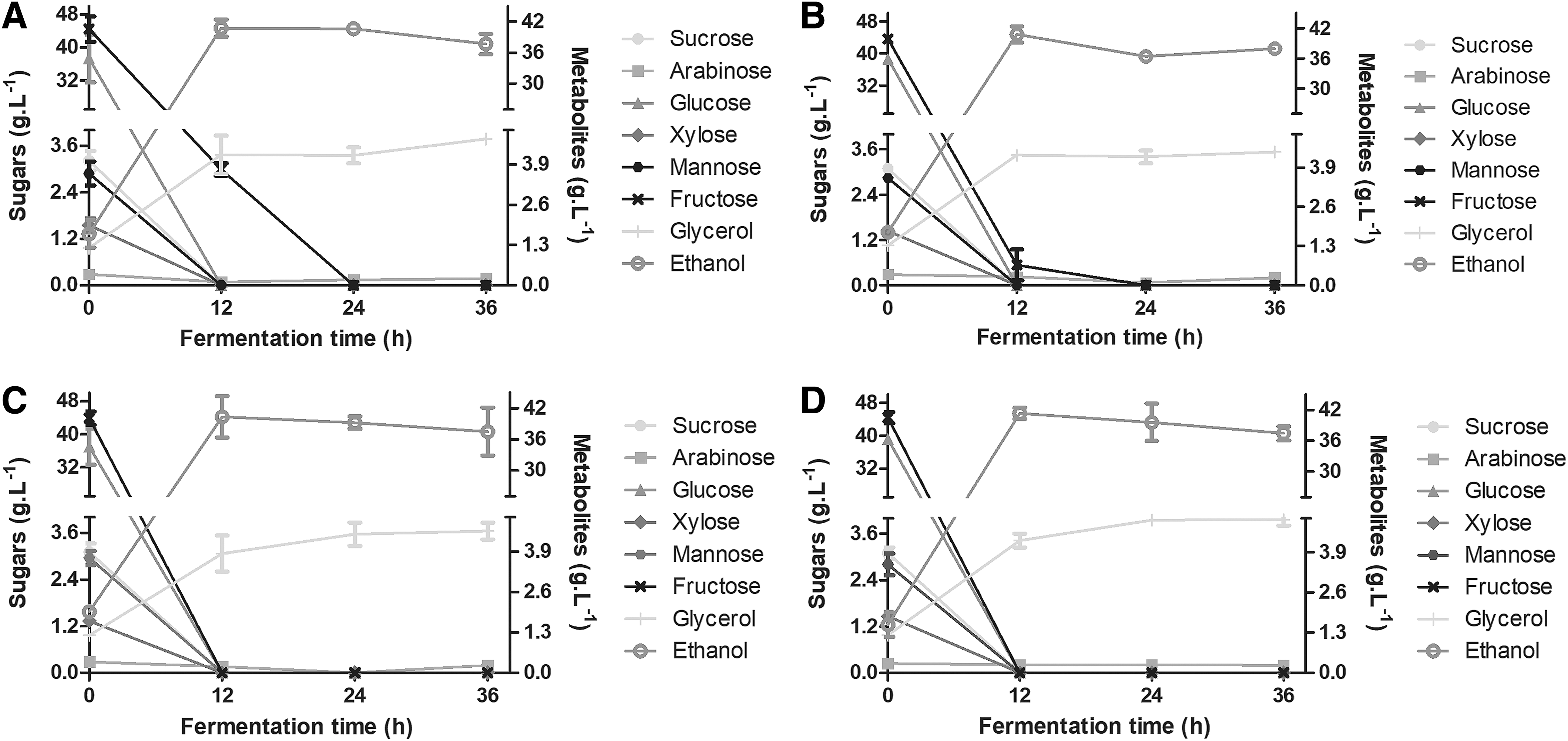
Evolution of carbohydrate and metabolite concentrations during the S. cerevisiae yeast fermentation of the free and hemicellulosic hydrolysate mixture extracted through the steam treatment of the whole sweet sorghum biomass.
Results show that none of the additional nutrient sources seemed to improve the ethanol production kinetics and yields during the alcoholic fermentation of the cellulosic hydrolysates (Fig. 3). The highest ethanol concentration was determined to be slightly above 10 g/L after 24 h of fermentation when an untreated cellulose hydrolysate was used. The backset addition seemed to slightly inhibit the fermentation process, producing a maximum ethanol concentration below 10 g/L. The addition of yeast extract and urea slowed slightly the process kinetics, registering their maximum ethanol concentrations of 10 g/L only after 36 h of fermentation. The overall lower detected ethanol concentrations, as compared to the those observed during the fermentation of free and hemicellulosic hydrolysates, are directly corelated with the limited concentration of initial hexoses. In addition to these, pentoses such as arabinose and xylose, which are not consumed by S. cerevisiae yeast under normal conditions, are well represented due to the unhydrolyzed hemicelluloses still present in the residual lignocellulosic fibers.
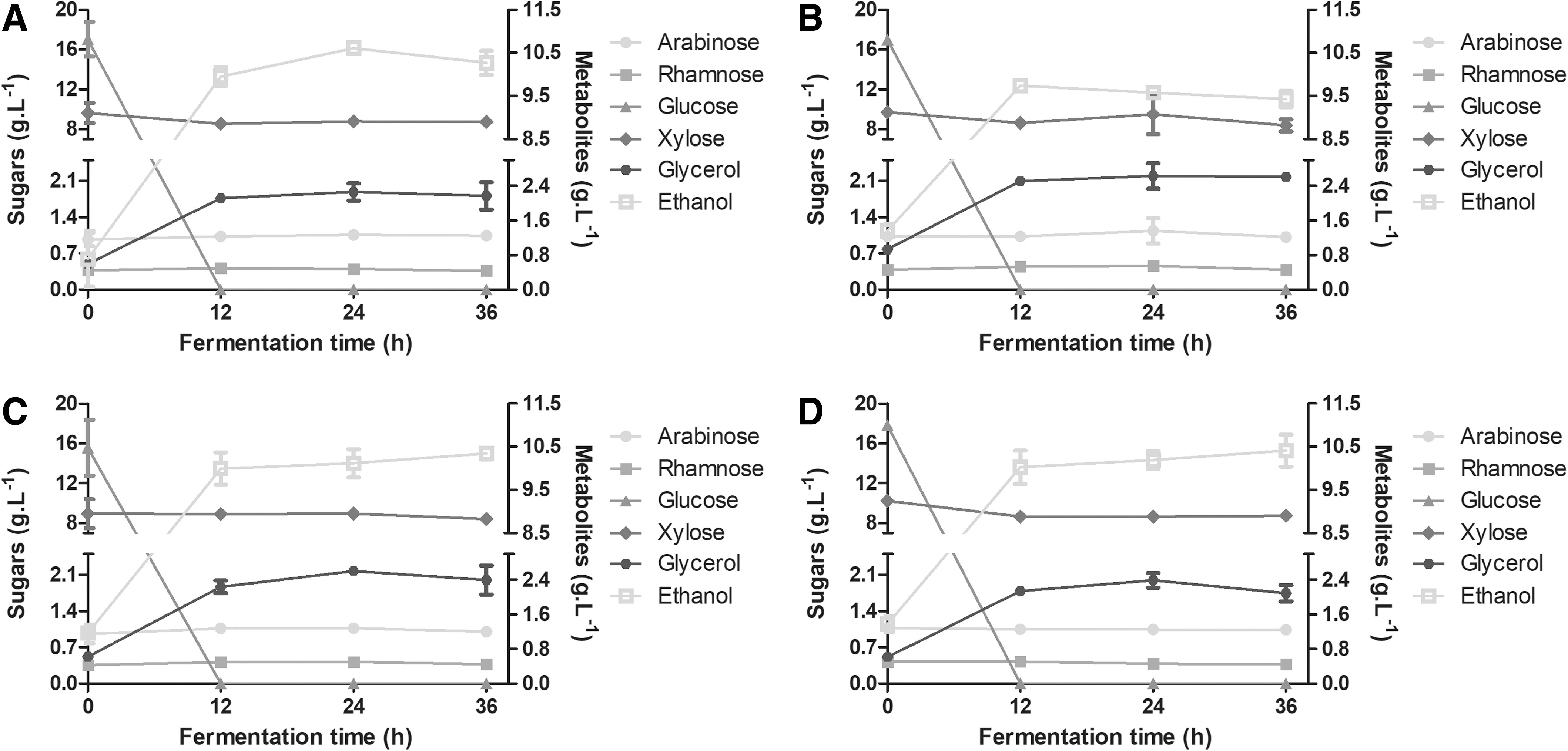
Evolution of carbohydrate and metabolite concentrations during the S. cerevisiae yeast fermentation of cellulosic hydrolysates generated from the sweet sorghum residual lignocellulosic fibers.
The addition of nutrients (mostly yeast extract and urea) to the free and hemicellulosic hydrolysate mixtures could have reduced the yeast cells' acclimatization phase, thus resulting in improved fermentation kinetics and leading to a twofold decrease of the required process time. Regarding the addition of backset as an alternative nutrient source, it contains, after the removal of ethanol, important quantities of carbohydrates, organic acids, minerals, free amino nitrogen (FAN) and yeast lysates, as well as fermentation inhibitors and various metabolites. The latter components might explain the slightly reduced process improvements observed when it was used. It is possible that extraction of the yeast cells from the fermentation effluent prior to using them as an alternative nutrient source could avoid the buildup of these inhibitors. Moreover, the apparent lack of influence of the investigated nutrient sources on the overall ethanol yields could be explained by the fact that most of the hexoses were converted to ethanol under all process conditions, even when these nutrients were not added. Concerning the fermentation of the cellulosic hydrolysates, no noticeable kinetics improvements were observed when external nutrients were added. This might be explained by the low substrate toxicity generally associated with cellulosic streams due to the reduced presence of free carbohydrates in the residual lignocellulosic fibers. Thus, the overall yeast adaptation phase is reduced to a minimum, with no significant room for improvement.
The fermentation assays performed on both the free and hemicellulosic hydrolysate mixtures as well as on the cellulosic hydrolysates (with or without the addition of various nutrient sources), revealed different system behaviors. This further emphasized the importance of treating these components as separate entities for thorough investigations, prior to system integration assays. Thus, the fermentation effluents from both hydrolysates were further explored for their potential use as microalgal cultivation substrates after both yeast and ethanol were recovered.
Microalgal Biomass Production
Recalcitrant streams such as fermentation effluents have high concentrations of residual organic compounds, mostly organic acids, unconsumed carbohydrates and glycerol. These molecules could be used by microalgae during their mixotrophic growth, boosting the cultivation efficiency and indirectly detoxifying these effluents. Consequently, both free and hemicellulosic mixture hydrolysates as well as the cellulosic ones were evaluated for their potential as growth substrate for C. vulgaris after their prior ethanol fermentation. The effects of three process parameters (addition of CO2, yeast extract and antibiotic) on the microalgal biomass production and composition were investigated.
The microalgae were able to proliferate in both of the investigated fermentation effluents (Fig. 4). However, noticeable differences were observed among their cultivation on the two streams as well as the supplementation with various components. For instance, higher growth rates were obtained when the microalgae were cultivated in the cellulosic fermentation effluents as compared with the free and hemicellulosic mixed ones. Moreover, the addition of yeast extract and CO2 in the cellulosic stream slightly improved the microalgal cultivation, with specific growth rates of 0.75 and 0.77 d−1 respectively. However, none of the investigated additives apparently improved the microalgal proliferation in the mixed free and hemicellulosic fermentation effluent, resulting in growth rates of around 0.53 d−1 across the board.
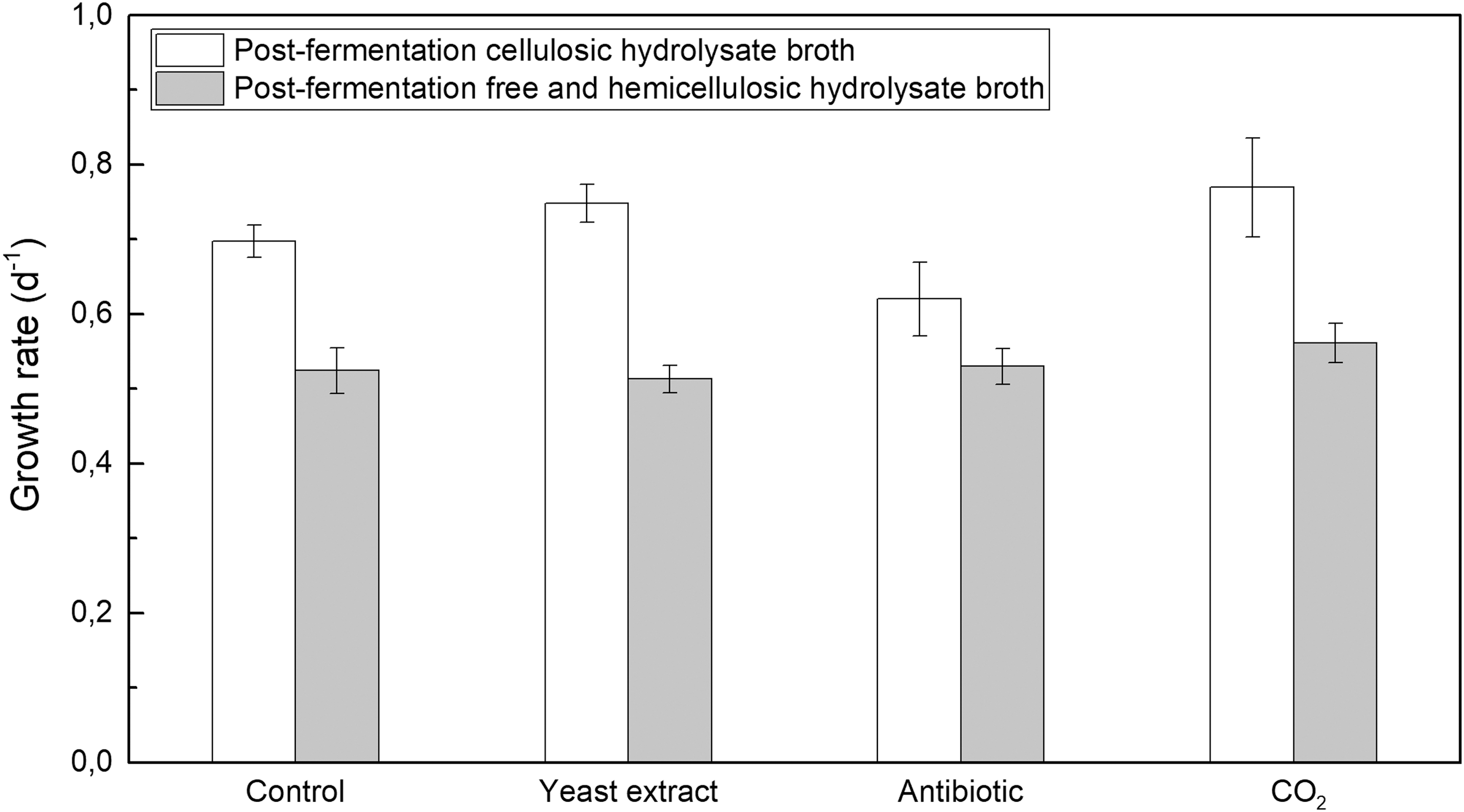
Growth rate of C. vulgaris cultivated for 6 days in the post-fermentation cellulosic hydrolysis broth as well as the fermented free and hemicellulosic hydrolysate mixture.
In addition, the cultivation substrates and additives impacted considerably the carbohydrate content of the microalgal biomass (Fig. 5). The cellulosic fermentation effluent promoted higher accumulation of carbohydrates in the microalgae compared to the free and hemicellulosic mixture. The highest production of microalgal carbohydrates (507 mg/L) was obtained when CO2 was purged during their cultivation on the cellulosic effluent. Even if the overall carbohydrate production was lower in the microalgal biomass cultivated using the post-fermentation free and hemicellulosic hydrolysate broth, slightly higher levels were obtained under yeast extract and CO2 supplementation. The harvested biomass was mainly composed of hexoses such as glucose and rhamnose. However, the proportion of each individual carbohydrate was affected by the cultivation conditions. For instance, the addition of CO2 in the fermented cellulosic stream enhanced the production of mannose in the microalgal biomass.
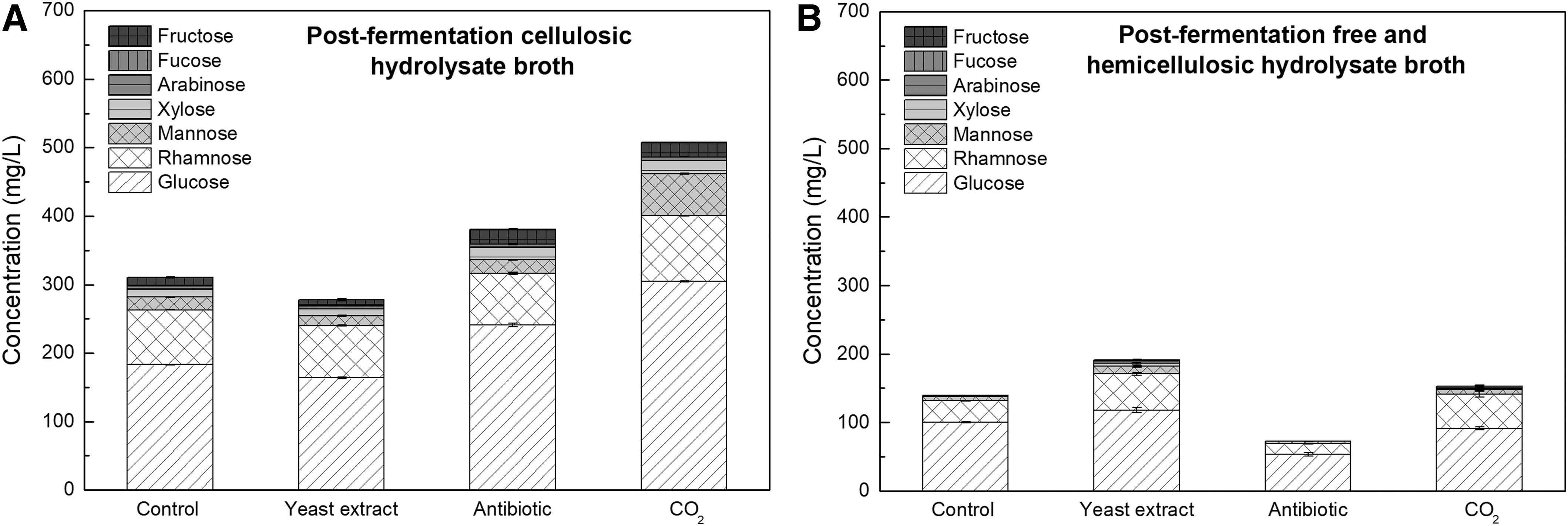
Carbohydrates profiles of the microalgal biomass harvested after 6 days of cultivation using
The obtained results suggest that both the post-fermentation free and hemicellulosic hydrolysate broth as well as the cellulosic one could be used to cultivate microalgal cells, even in the absence of nutrients and antibiotics. As in the case of the previous fermentation step, the cellulosic stream was considerably more suited for the microalgal biomass production, probably due to its reduced toxicity. The investigated additives manifested their most notable impact on the carbohydrate profiles, suggesting their direct effect on the microalgal metabolic pathways. These observations were also suggested by a recent study where a gradual accumulation of carbohydrates was observed when higher concentrations of CO2 (from 0.03% to 20%) were supplemented to a Scenedesmus obtusus culture. 32 Moreover, the positive impact of CO2 supplementation on the biomass and carbohydrate production suggests the potential of directly using the one generated through the ethanol fermentation in an integrated approach. However, consideration must be given to the differences among the two processes where the EtOH fermentation time is around 36 h while the microalgal cultivation could surpass one week. Designing modular reactors and carefully selecting the microalgal trophic strategies could successfully negate these issues.
Process Confirmation and Scale-Up
In the context of process simplification and integration, the mixture of the two separately obtained carbohydrate streams should also be investigated as potential microalgal cultivation substrate after their fermentative conversion to ethanol. Thus, the free and hemicellulosic hydrolysate as well as the cellulosic hydrolysate streams were extracted from the whole sorghum biomass and subsequently fermented separately before being mixed in the same ratio in which they are present in the sorghum biomass. These free and constitutive carbohydrate hydrolysates were used after the removal of the yeast cells and EtOH as microalgal cultivation substrate in scaled-up conditions. Moreover, a continuous air flow containing 10% CO2 was provided due to its positive impact on the microalgal biomass production and composition as well as aiming to mitigate the fermentative CO2 produced by the first- and second-generation ethanol industry, potentially leading to an overall carbon negative process. Microalgal growth, biomass, biochemical characteristics and phytoremediation potential were determined during the cultivation essays.
The mixture of the free and hemicellulosic hydrolysates as well as the cellulosic ones supported the microalgal growth (Fig. 6A). The total organic carbon concentration of the mixed effluent decreased from 19.5 g/L to 13.5 g/L after 10 days of cultivation (Fig. 6A). The removal of organic compounds observed between day 4 and 6 matched with the end of the microalgal exponential growth phase. After the 6th day of cultivation, the microalgal growth reached a stable phase and the total organic carbon concentration remained constant. 0.2 g of C. vulgaris (dry biomass) microalgae were obtained per liter of post-fermentation mixed free and constitutive sorghum carbohydrates broth at a total carbohydrate concentration of 238 mg/L (Fig. 6B). This value was found to be between the concentrations obtained in the hemicellulosic (153 mg/L) and cellulosic (507 mg/L) streams. However, the carbohydrate profiles of the microalgal biomass indicated a noteworthy proportion of glucose and mannose, with concentration of 135 mg/L and 67 mg/L, respectively. In addition, the biochemical composition of the microalgal biomass showed an accumulation of 33% (w/w) of proteins and 18% (w/w) of lipids.
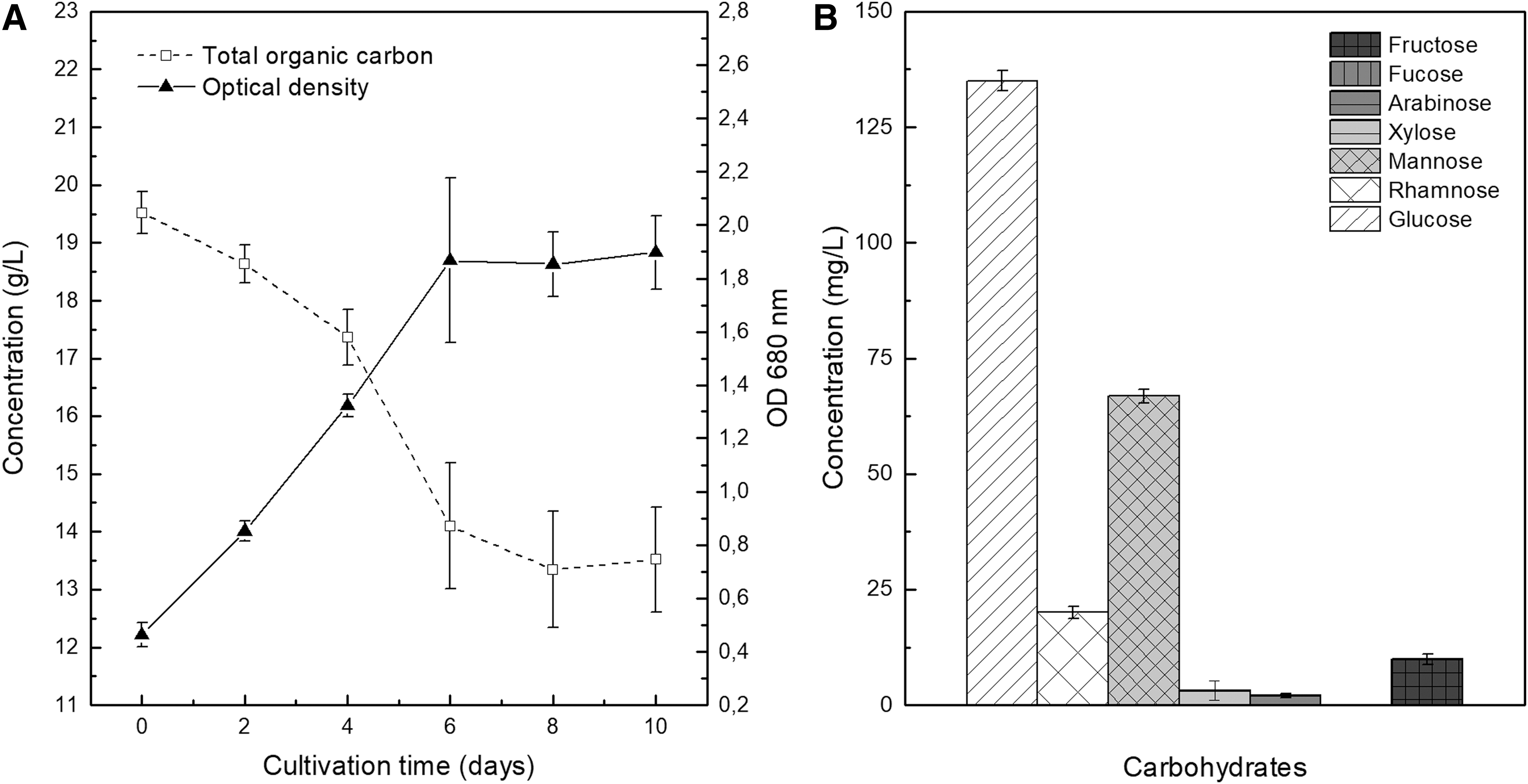
Evolution of
A 22.5-fold scale-up experimental tests suggested the opportunity of producing microalgal biomass using combined fermentation effluents from the free and constitutive sorghum carbohydrates under CO2-rich atmosphere. Furthermore, the decrease of the total organic carbon from the cultivation substrate advocates the use of microalgae to uptake residual organic molecules such as organic acids, glycerol and non-fermentable sugars through their mixotrophic growth. The predominant hexoses quantified in the microalgal biomass make this a suitable feedstock to produce third-generation ethanol by returning them into the system preferably through a combined fermentation including both sorghum and microalgal carbohydrates. The protein content detected in the microalgae cells could be valorized as nutrient source due to the rich fraction of amino acids and nitrogen while the lipids could be used as feedstock for the production of biodiesel, further emphasizing the potential of an integrated microalgal-based process. 33 Mixing the fermentation effluents of free and constitutive sorghum carbohydrates can reduce the number of steps in the microalgal cultivation as well as the slightly higher toxicity manifested by the free and hemicellulosic hydrolysate mixtures. Moreover, the CO2 co-produced during the fermentation process could be directly injected to the microalgal photobioreactors, boosting their performance and limiting the undesirable co-products of the overall process.
Conclusions
The potential of an integrated sorghum- and microalgal-based first-, second- and third-generation ethanol production process was thoroughly discussed for the first time. Important differences were determined during the fermentation assays of the free and hemicellulosic hydrolysate mixtures as well as the cellulosic hydrolysates. Moreover, these substrates responded differently to the addition of nutrients, with kinetic improvements noted in the case of the first substrate (mostly when supplemented with yeast extract or urea), and less obvious in the case of the latter. The microalgal cultivation experiments revealed a preference for the cellulosic fermentation effluent, which generated more biomass and a higher content of carbohydrates. Supplementing the microalgal growth with CO2 resulted in an even higher biomass and carbohydrate production. Scaling-up the cultivation process using a mixture of fermented free and constitutive sorghum carbohydrates confirmed these observations and suggested the opportunity of designing an integrated process with limited operations and undesired co-products.
Footnotes
Acknowledgments
The authors are grateful to the Biomass Technology Laboratory (BTL) of the Université de Sherbrooke and especially its sponsors, The Ministère de l'Énergie et des Ressources Naturelles du Québec (MERNQ), the Natural Sciences and Engineering Research Council of Canada (NSERC, Grant No. EGP 487206-15), CRB Innovations, Enerkem and GreenField Global Inc. The authors would also like to thank MITACS (Grant No. IT03931) for Dr. Iulian-Zoltan Boboescu, Jérémie Damay, Xavier Duret and Jean-Baptiste Beigbeder's grants. Further acknowledgements go to Sophie Beauchemin from BTL Analytical Chemistry Laboratory for her valuable support regarding various sample analysis.
Author Disclosure Statement
No competing financial interests exist.