




Abstract
This study aimed to explore the efficacy of mild water-soluble protein extraction procedures on black soldier fly larvae (BSFL), a potential alternative and sustainable protein source for food. Different conditions were tested for extraction of water-soluble proteins including phosphate buffered saline (PBS) and Tris-HCl buffer in a pH range from 7.0 to 9.0. The total protein content and the water-soluble protein content were measured by Lowry BioRad DC™ protein assay. The molecular weight distribution of water-soluble proteins was characterized using SDS-PAGE. The black soldier fly larvae contained 42.3% protein on a dry matter basis, which is comparable to other studies. After extraction, the water-soluble protein fraction ranged from 5.5 to 17.2%, dependent on the buffer conditions, and total protein content and discoloration of the supernatant was observed, which could be an indication of oxidation. Moreover, the SDS-PAGE method allowed the determination of molecular weight distribution of the protein fraction showing no protein degradation with discrete bands and the most intensive band <75 kDa was observed. The extraction of water-soluble BSFL proteins was mild, easy, fast and in agreement with other studies. Further research should focus on the characterization and techno-functional properties of the aqueous protein extracts as food ingredient alternative.
Introduction
At present, an increasing interest in insects as a sustainable and secure source of animal-based proteins for the human diet and for animal feed has been observed. 1 –6 In many developing countries and regions, large portions of the human population consume insects as a regular part of their diet, and the insects are often considered delicacies. 7 More than 2,000 insect species in different life stages, like eggs, larvae, pupae and adults, are consumed by humans. 8
In general, edible insects are a good source of amino acids, fatty acids, 9–10 vitamins 11 and micronutrients. 12–13 Several insect species can be reared using organic side streams and on an industrial scale, making these particularly suited to contributing to the globally increasing demand for protein in a sustainable and safe way. The larvae of black soldier fly larvae (BSFL), Hermetia illucens, is a beneficial insect commonly found in temperate to tropical zones worldwide and can be reared using restaurant waste, fruit and vegetable waste, and even manure from livestock. 14
Most people in Western countries are reluctant to even consider eating insects and often associate this practice with feelings of disgust and primitive behavior. 15 This perception and the prejudice against eating insects can be overcome easier, and food habits changed, if the insects are available in less recognizable forms such as water-soluble proteins incorporated into a range of food products. 15 Moreover, these soluble proteins might have interesting foaming and gelation properties when added as food additives, as protein sources from other insects showed the ability to form gels. 16 Protein solubility is the first functional property usually determined during the development and testing of new protein ingredients. 17 Solubility of proteins from the Yellow mealworm (Tenebrio molitor), Superworm (Zophobas morio), Lesser mealworm (Alphitobius diaperinus), House cricket (Acheta domesticus) and the Dubia cockroach (Blaptica dubia) have been evaluated, 15 but data are currently not available for BSFL.
The three fundamental steps in sample preparation are cell disintegration, solubilization of proteins in aqueous solutions and prevention of protein oxidation. The cell disintegration can be achieved by grinding with or without liquid nitrogen, freeze-thaw cycles, enzymatic treatment, osmotic lysis, sonication, high-pressure homogenization or rotating blade homogenization. The release of aqueous soluble proteins from insects brings some drawbacks because proteins are extremely heterogeneous and fragile biological macromolecules. Some factors should be considered to secure the solubility and functionality of water-soluble protein such as selection of an appropriate buffer, temperature and optimum pH of the protein's activity. 18 A few widely compatible and therefore commonly used buffer solutions include Tris-HCl, HEPES-NaOH and sodium dihydrogen phosphate-disodium hydrogen phosphate. For the simultaneous assessment of extracted protein, the biocompatible buffers should be selected to prevent extracted proteins from oxidation. Thus, another important factor to control is the oxidation process, which begins immediately after tissue disintegration, by the addition of additives (e.g. EDTA, reducing agent) to these biocompatible buffers to avoid the loss of protein activity. 19 The selection of buffer systems and additives for protein extraction is an important step needed to obtain functional proteins that can be used as food additives. Otherwise the proteins will denature and cannot be applied anymore as high value-added components in food (e.g., meat replacers, dairy products) and will then be more used for lower-value products in animal feed.
This study focuses on the extraction of water-soluble proteins from BSFL and the specific extraction problems. Different aqueous buffers have been examined to improve the extraction yield of soluble proteins and to keep their functional state, which is of high importance when the intended use is food additives. The total protein concentration of BSFL and aqueous soluble protein concentration were evaluated. In addition, the molecular weight distribution was characterized.
Materials and Methods
Black Soldier Fly Larvae
Black soldier fly larvae were kindly provided by Koppert Biological Systems (Berkel en Rodenrijs, The Netherlands). The BSFL were washed with demi water on a metal filter screen (1.25 mm) to remove growing substrate residues and excreta, dried with a towel and stored frozen (-20°C). Frozen insects were freeze-dried to a constant weight after which the last remnants of growing substrate were manually removed. Cleaned insects were ground using an ultra-centrifugal mill at 10,000 rpm without a sieve (ZM100, Retch BV, Ochten, The Netherlands). The obtained BSFL meal was stored at −20°C until further use.
Protein Extraction Procedure
For protein extraction, BSFL meal was ground to a fine powder in liquid nitrogen using a pre-chilled mortar and pestle. For extraction, different buffers were used, namely phosphate buffered saline (PBS) pH 7.0; PBS, 1 mM EDTA pH 7.0; PBS, 5 mM EDTA pH 7.0; PBS pH 8.0; PBS, 1 mM EDTA pH 8.0; Tris-HCl, 1 mM EDTA pH 9.0 and Tris-HCl pH 9.0. Different amounts of dry matter BSFL, namely 5, 8 and 225 g, and the buffers in ratio 1:4 were shaken during 5 cycles for 1 min with breaks of 4 min between cycles. The mixtures were centrifuged (20 min, 15,400 × g), and the supernatant was filtered through a 20-μm Nylon filter (Millipore, Billerica, MA). The supernatant was stored at −80°C for further analysis.
Protein Analysis
The Lowry BioRad DC™ protein assay (Bio-Rad, Philadelphia, PA) described by Postma et al. 20 was used to measure the total protein content on dry matter basis and the soluble protein content of BSFL extracts. In short, for total protein content, 6 mg of dry matter BSFL was added to 1 mL of lysis buffer I (60 mM Tris, 2% SDS, pH 9.0) in lysing matrix E tubes (6914-500, MP Biomedicals Europe). The tubes were bead beaten (Precellys 24, Bertin Technologies) during 3 cycles at 6,500 rpm for 60 s with 120 s breaks between cycles. For determination of the soluble protein content in the supernatant after extraction, the samples were diluted 2 times using lysis buffer II (120 mM Tris, 4% SDS, pH 9.0). The samples for total and soluble protein content were incubated for 30 min at 100°C. Bovine serum albumin (Sigma-Aldrich A7030, St. Louis, MO) was used as protein standard in the protein quantification assay. Absorbance was measured at 750 nm using a microplate reader (Infinite M200, Tecan, Männedorf, Switzerland) in 96-well plates (Grenier Bio-One 655101, Kremsmünster, Austria).
SDS-PAGE
Sodium dodecyl sulphate-polyacrylamide gel electrophoresis (SDS-PAGE) was used to determine the molecular weight distribution of the BSFL protein fraction. For the detection of the supernatant fraction, Criterion XT Bis/Tris Gels 12% was used. 25 μL of XT sample buffer, 5 μl of XT reducing agent and 70 μL of supernatant (diluted 10 × , 20 × and 40 × ) were mixed and then incubated at 95°C for 5 min in block heater before applying to the gel. The gel ran for 60 min at 200 V constant and then was stained with Coomasie brilliant blue (CBB). Prestained protein ladder (10–250 kDa) was used as a molecular weight marker in the gel.
Results and Discussion
The BSFL total protein content was 42.3% on dry matter basis, which was similar to values in several studies (42.1 to 45%), 14,21 –23 higher than the 36.2% described by Barroso et al., 9 and lower than that reported by Marono et al (49.9%). 24 The variation in protein content depends on the strain, environmental rearing conditions (e.g., humidity, incident solar radiation, season), developmental stage of larvae at time of harvest, feeding rate and feed source. 23 Furthermore, the protein content values in the present literature were calculated from the total nitrogen content (i.e., N × 6.25). 23 Those calculated crude protein contents, however, might overestimate the actual protein content due the presence of chitin in insects, which is a polymer of N-acetylglucosamine. Thus, the value of the crude protein content of insects should be corrected for the N-containing chitin, which represents 5–20% of insect biomass. 25 For BSFL this is 5.4% based on dry matter (Finke et al.). 26 When BSFL contains 42% crude protein then the total nitrogen content would be 6.72% N. If BSFL contains 5.4% chitin and chitin contains 6.8% N then this adds 0.3672% N so that the actual (chitin-corrected) crude protein is 39.7%. However, the Lowry method used in our study does not lead to an overestimation in protein content due to the presence of chitin in insects, as the reagents in the Lowry method interacts only with the protein peptide bonds.
The next step consisted of mild extraction of water-soluble protein from BSFL. A wide variety of studies focused on the optimum protein-extraction methods from plants, 28 –30 and few described the extraction of proteins from insects. 16,31 The soluble protein concentrations of the extracts are presented in the Table 1.
Values of Protein Concentration Obtained for Different Extracts Attained at the Indicated Conditions
Based on total protein content from BSFL.
After the first set of experiments using PBS pH 7.0, PBS pH 8.0 and Tris-HCl pH 9.0, the percentage of soluble protein extracted was low for those three buffers used, ranging from 5.82 ± 0.03% to 6.12 ± 0.18% from the total protein content. This low amount of extracted water-soluble protein could be the result of the difficulties in extracting proteins from cellular fragments such as those present in structural cell parts or the presence of more hydrophobic proteins not able to dissolve in aqueous buffer systems. It could also be due to the low buffer concentration, 5 mM, which did not release enough soluble proteins, or the presence of non-protein contaminants such as polyphenols, lipids and pigments that might prohibit efficient protein extraction as well. 32
After extraction, the color of the supernatants became dark brown, indicating possible protein modification whereby enzymatic activities play a role in browning reactions such as phenol oxidase. 33,34 Another possibility may be the presence of oxidized fats, because unsaturated fatty acids present in tissue are susceptible to oxidation. Targovnik et al. 35 also described that the homogenate becomes black in 3–5 min due to a melanization process. This process involves the activation of the serine protease cascade where many proteins and lipids condense into a dark black mesh. To prevent the oxidation process in the second set of experiments, the extraction buffers contained 1 mM EDTA, which is a chelating agent permitted for use in the food industry as a chemical preservative. Adding this agent resulted in a slight improvement in color but no improvement on soluble protein content. This coloration could probably be related to the oxidation of chemical components in the protein extract (e.g., cofactors, metabolites) and might not have an influence on the functionality of the protein fraction, only on the color of the protein solution. The amount of soluble protein obtained from BSFL with three buffers was not significantly different.
To improve the extraction of soluble protein, the next extractions were performed using a stronger buffer, 50 mM PBS pH 7.0, to which 5 mM EDTA was added. Protein extraction improved with recoveries ranging from 10.27% in 225 g BSFL to 17.16% in 8 g BSFL, which is more in the range of the approximately 20% found for the other insect species Yellow mealworm, Superworm, Lesser mealworm, House cricket and Dubia cockroach. 16 This difference might be caused by the complexity involved in extracting proteins out of the insects; the hydrophobicity of proteins, which are not easily soluble in aqueous buffer systems and remain bound to the solid cellular material; or that different organelles (e.g., mitochondria, lysosomes, endoplasmic reticulum) remain intact as well and could prevent the extraction of proteins. Other alternatives that could aid in the extraction of less aqueous soluble functional proteins would be the use of Aqueous Two Phase Extraction (ATPE) using, for instance, polyethylene glycol (PEG) to extract greater amounts of less soluble proteins out of the BSFL by solubilization of proteins from the different organelles and the cell membrane. However, it should be taken in account that some of the total proteins are hydrophobic and present in the cell membrane; these proteins are insoluble in aqueous solutions, so a 40% yield is not feasible at all and a reasonable recovery of approximately 20% 16 is feasible and quite close to our results. When these membrane-bound proteins are solubilized, they probably will denature as the lipid environment has disappeared, exposing these proteins to less ideal solutions. Moreover, other extraction methods such as acid/base extractions 36 or the use of organic solvents will denature the water-soluble protein fraction and are not feasible options for extracting functional water-soluble proteins as food ingredient alternatives.
Despite a low water-soluble protein content and the presence of protein oxidation due to coloration of the protein fraction, the SDS-PAGE in Fig. 1 shows clear protein bands and no protein degradation patterns. The presence of clear bands is an indicator of no protein degradation and may result in extraction of functional proteins with these mild extraction methods and interesting alternative ingredients in food applications.
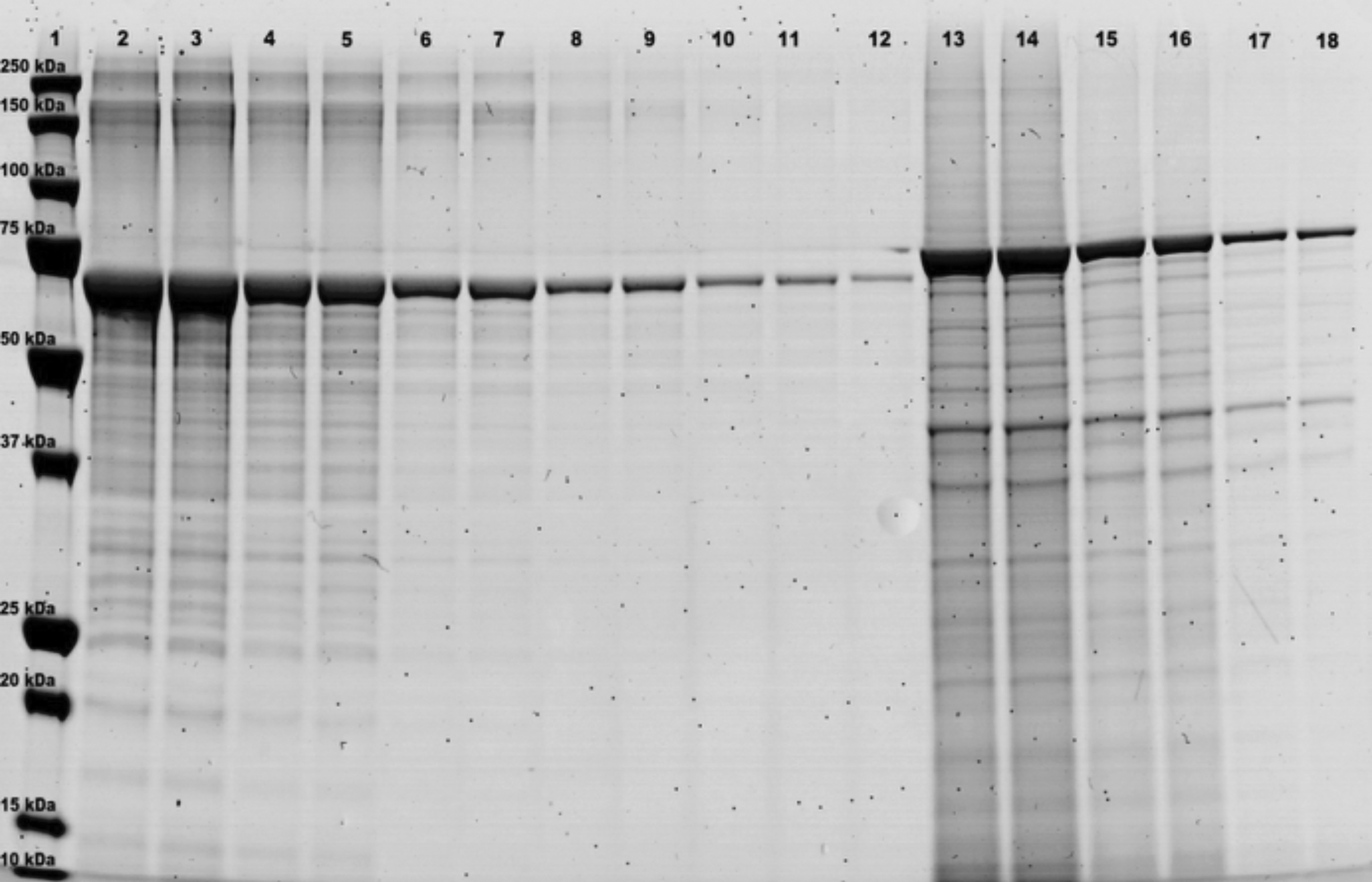
Molecular weight distribution of BSFL protein fraction determined by SDS-PAGE.
The most prominent protein band could be distinguished just below 75 kDa, AND based on the staining method other clear protein bands could be observed, namely 25–37 kDa, 37–50 kDa and 50–75 kDa. This indicates that the proteins are not degraded, otherwise proteins might dissociate into fragments/subunits (large smear of proteins in the SDS-PAGE gel) or form large aggregates (band on top of the gel) so that the protein integrity is affected and the protein fraction is more useful for animal feed and not for high-value applications in food.
Conclusions
The protein content evaluated in BSFL was 42.3% on dry matter basis. The extraction method for aqueous soluble proteins was easy, fast and feasible to apply. Also, the content of proteins extracted was lower compared to total protein content with a maximal recovery of 17.2% and the supernatant color was dark brown. The reason for the lower protein content is probably due to the complexity of extracting proteins out of the insects or to the hydrophobicity of proteins, which are not easily soluble in aqueous buffer systems and remain bound to the solid cellular material. The dark brown color can be reduced with the addition of 5 mM EDTA, although complete prevention of this colorization was not feasible. The coloration might be due the presence of enzymatic modifications of proteins. Besides, the use of SDS-PAGE allowed the characterization of the proteins in extracts, and no degraded proteins were observed. The most intensive protein band was observed just below 75 kDa. However, further fractionations are needed to establish the protein composition of BSFL (e.g., protein profile, amino acid composition) using different chromatographic separation techniques (e.g., ionic exchange chromatography, size-exclusion chromatography) followed by a more detailed analytical characterization (e.g., mass spectrometry).
Overall, the water-soluble protein extract could be an attractive alternative as food ingredients.
Footnotes
Author Disclosure Statement
No competing financial interests exist.
Funding Information
No funding was received for this article.