




Abstract
A focus group survey was conducted to investigate how consumers from western cultures can be convinced to eating insect-based foods regularly. The survey suggested that consumer demands include more recipes for use, nutritional information, lower prices and insect-based products that are not snacks but elements of main meals. They also suggested that the insects should be added to well-known products such as bread or meat products. A Quantitative Descriptive Sensory Analysis was conducted to describe the flavor profile of three different insect flours: House cricket (Acheta domesticus), Buffalo larvae (Alphitobius diaperinus) and Common Mealworm (Tenebrio molitor). It revealed that insect flour has a unique flavor profile with three primary groups of taste notes: Protein/meat, cereal/bread and mature/old. The flour most neutral in taste was Tenebrio, and it was selected for further investigations. The functionality of Tenebrio flour was investigated in meat, bread and mayonnaise model systems. No significant effects were found on emulsifying and baking capacity. Based on the results of the consumer survey and functionality tests, an innovation process was started, and four new products were developed. Four meat products with 100% replacement of meat with Tenebrio flour and vegetable ingredients were developed. The best results were achieved in products that required no functionality of the meat (chili con carne and spring rolls). In products demanding functionality of meat proteins (pate and meatballs), more development is necessary to achieve a satisfactory texture.
Introduction
In western countries, insects have not been a significant part of food culture for at least a thousand years or more. 1 However, environmental and nutritional aspects could be drivers for modern consumers to start eating insects, even though there is still a dislike of insects as foods. 2 Yet, recent research indicates that this dislike is not biologically rooted and that it can be altered sociologically, 3 suggesting that food culture and perceived social norms play a substantial role in Westerners' disgust to insects as food. Also, numerous consumer surveys point toward the fact that younger generations, e.g., millennials, are opting for sustainable food products. 4 Hence, there is cause for optimism regarding the introduction of insects back into Western food culture.
Manufacturers can adjust different parameters in their product communication and design to increase consumer tolerance of a new product, including insect-based foods. For instance, they can provide desired and detailed information on the package, improve the package design, change the product, or adapt the price level. 2
In this study, our main aim was to examine how manufacturers of foods containing insects could increase the sale of their products by improving selected product parameters identified according to a consumer survey. Secondly, we wanted to assess the inclusion of insect flour into foods of more significant nutritional importance than the snack products that dominate the western market for insect-based foods at present.
Materials and Methods
Focus Group Survey
A total of 14 focus group interviews were completed to collect qualitative data about consumer acceptance of insects in foods. Every group consisted of eight persons, and in total 112 individuals participated. All participants selected were 18–35 years old, and all lived in the Western part of Denmark (post code 7400), which is partly urban and partly rural. Before joining the groups, it was determined whether the participants had a neutral opinion about eating insects to ensure that they had not yet decided on the topic.
The purpose of the focus groups was to describe how insect-based foods can be more acceptable for the consumers. The questionnaire was based on collecting ideas for actions the manufacturers of insect-based food could subsequently implement in their sales and marketing strategy. The questionnaire consisted of the following four topics: What should constitute the product information? How could design of the package support better sales? How much should the insects be processed; and what would be an acceptable price level for insect-based foods? All participants were introduced to a variety of insect-based products from the Danish online retail shop DinInsektButik (
Sensory Analysis
Training and sensory analyses were planned and carried out according to international standard recommendations. 5 The panel used for the sensory profile test consisted of 10 selected and trained assessors. 5 The sensory profile analysis was carried out as a Quantitative Descriptive profile according to international standards. 6 The panel was involved in developing the terminology of the descriptors. 6 Based on tasting of three different insect flours, 75 attributes that described the taste of insect flour (Table 1) were generated. Following, the 75 attributes were reduced to 10 key attributes ( Table 1, bold) and a common list of attributes was developed. The panel was then trained in the use of the common list for assessments. The 10 assessors participated in the final taste assessments, 6 and all samples were assessed four times. The samples were served in a randomized order one at a time in small neutral plastic trays, coded with random three-digit numbers. The samples were evaluated using a 15-cm unstructured linear scale. The products tasted were dried flour of the common mealworm (Tenebrio molitor) (hereafter Tenebrio flour), house cricket (Acheta domesticus, hereafter Cricket flour) produced by Micronutris (France), and buffalo larvae (Alphitobius diaperinus, hereafter Buffalo flour) produced by Protifarm (The Netherlands).
Words entered in the development of descriptive attributes for the sensory analysis
In
Functionality of Tenebrio Flour in Food Systems
To test if the insect flour had a functional effect in food systems, Tenebrio flour was added to three different standardized food systems: Meat, bread, and mayonnaise.
Meat
A meat system consisting of 50% pork meat (bare meat), 25% lard, 24% iced water, 1% salt (NaCl) and 0.04% phosphate (a mixture of tetra-sodium-diphosphate and penta-sodium-triphosphate, Abastol 305, Lot C62737A, Solina) was minced, stuffed into cans and cooked to 75°C. After cooking, the firmness was measured as max force with a Texture Analyzer (Stable Micro systems XT2i – TVT6700 25 kg load Cell) using a 70 mm probe compressing the product 30 mm with a test speed of 2 mm/sec. The test was repeated 8 times. In the model meat system 10%, 15%, 20%, and 25% Tenebrio flour were added, replacing meat. In another test the same amounts of Tenebrio flour were added and additionally 0%, 5%, 10% and 15% extra water was added, also replacing the meat.
Bread
For testing Tenebrio flour functionality in bread systems, model buns were baked containing 54.8% wheat flour, 30.5% water, 8% rapeseed oil, 3% yeast, 3% sugar and 0.7% salt (NaCl). The dough was raised for 30 min, portioned into 65-g buns, and raised for another 15 min before being baked at 200°C for 15 min. The volume of the buns was tested in a Perten MVM6610 Volume Meter. A Texture Analyzer (Stable Micro systems XT2i – TVT6700 25 kg load Cell) was used to determine the firmness of the buns, using a 35 mm compression plate as probe that compressed the buns by 40% with a test speed of 1.7 mm/sec. The firmness was registered as 25% of the max force and the test was repeated five times. The wheat flour was replaced by 10%, 20% 30%, and 40% Tenebrio flour.
Mayonnaise
For testing the emulsifying capacity of Tenebrio flour, a model system of mayonnaise was produced containing 80% oil, 16% egg yolk, 2% vinegar (containing 5% acetic acid by volume), and 2% salt (NaCl). The stability of the emulsions was observed, and the consistency of the mayonnaise was measured on a Texture Analyzer (Stable Micro systems XT2i – TVT6700 25 kg load Cell). A 35 mm compression plate was used as probe, compressing the sample 50 mm with a test speed of 1 mm/sec. The max force was registered, and the test was repeated three times. The egg yolk was replaced by 6.25%, 12.50%, and 18.75% Tenebrio flour.
Statistical Methods
The results of the sensory profile were analyzed with a two-way ANOVA. The two factors were the products and the rating of the judges. Where interaction was found, the variation of the product was tested against the interaction as suggested in the ISO Standard. 6 A one-sided ANOVA was used to evaluate the results of volume and texture measurements. All confidence intervals were calculated to a significance level of P < 0.05.
Innovation of Non-Snack Products Containing Tenebrio Flour
Based on the results of the functionality tests, an innovation process was performed. A total number of 15 innovators first joined an innovation camp based on the principles of The Creative Platform 7 using the following methods for ideation: Picture Association, Perspective from different character's, Brain Writing and Reversed Brainstorming. 8 The focus question used was, How can we develop non-snack insect-based food products to be served on the dinner tables? After the camp, four development teams continued working on four ideas generated during the camp. The product concepts were developed using personas descriptions. The outcome of the long prototype development process that followed was four complete concept and documented recipes. The Tenebrio flour used for the prototype development was commercially produced dried flour acquired from Micronutrients (Indianapolis, IL, lot: 15171218).
Results and Discussion
Focus Group Survey
Respondents 18–35 years of age were selected as a segment that was expected to be more positive to new foods such as insects compared to other segments. All consumers participating in the focus group survey were non-insect-eaters before the survey and 95% tasted both insect chips and snacks of whole larvae during the interview. There was consensus amongst them that they preferred processed insect products over products containing whole insects.
The respondents had very little knowledge about insects as food before the survey was conducted and they listed the following three most important pieces of information they needed about insect products before they would purchase them: How-to-use information, nutritional- and health information, and environmental information. The respondents found that information about how to use insect products in their food was the most important one. They suggested that recipes should be accessible on the packaging, in small cookbooks in the store, or with a QR code linking to a homepage with recipes. The respondents also agreed that more information about health and nutritional benefits on the packaging would increase their willingness to buy. They suggested manufacturers claim high protein and vitamin content on the packaging. This idea can be difficult for the manufacturers to fulfill because EU legislation has very strict regulation on the use of health- and nutritional claims; 9 however, it is legal to declare the actual content of nutrients. 10 Information about the insects' environmental and sustainable properties were of secondary interest to the respondents. On the other hand, they wanted a better correlation between the package material and the climate-friendly image of the products. They wondered why the products were packed in glass and plastic, which was not considered sustainable materials. Some of the participants also found that the packaging design looked too expensive for them to buy.
The respondents likewise found that pictures of insects on the packaging had a deterrent effect—they preferred drawings of insects. When it came to the name of the products, they suggested that the producers should use “IN” as a prefix to a well-known name or “bug” instead of “insect” as that would give the name a more modern touch. They also wanted to know exactly what kind of insect was in the product, e.g., “Buffalo Larvae” instead of merely “insect.”
It was intriguing to learn that producers of insect-based foods can enhance their sales by changing only a small amount of their communication with the customers. They should focus more on the use of the products and less on the ideological perspective of eating insects. This seems strange in times where climate discussions are more predominant than ever and vegan products are getting more and more attention. We speculate whether this might be due to a limited knowledge of insects and their sustainable production methods in the segment surveyed.
The focus groups that were introduced to the products mostly considered insect-based foods snacks and luxury products. They called for more products that could fit into daily, main meals such as breakfast, lunch and dinner. They suggested using insects in meat products or in bread instead of wheat flour, and they also thought that insect flour could be used as protein and vitamin enrichment or as a spice. They found that the products they had been presented tasted mostly of the spices they were roasted in and highlighted that the insect products should be marketed based on their own unique taste.
During the survey, the respondents were asked to choose one insect product each and try to guess the sales price. The price level surprised them, and they estimated the price 30–50% lower than the actual sales price. They found pricing to be the major obstacle regarding using insect products in the future. If they should replace meat with alternative products, they preferred plant-based products because they found them to be cheaper. Hence, manufacturers of insect-based foods should consider changing their pricing strategy and decide if it should be competition-oriented, value-based or marketing-based in the future, instead of cost-oriented as it is now.
Sensory Profile of Insects
The sensory panel found 75 attributes to describe the different insect flours (Table 1). The panel grouped them into three primary flavor notes: protein/meat note (collagen, pork scratching, umami, salt), a cereal/bread note (roasted cereals, mash, rye, Bugles®, crispbread, hay) and a note of old foods (rancid, mold, rotten, old, fish feed, zoo). The old attributes are not necessarily negative attributes, they just describe the unique flavor profile of insect products.
In selecting attributes for the sensory profile tests, we focused on flavor (taste, smell and after taste) attributes, as the insect flours are supposed to be integrated in other food systems that would mask their texture and visible appearance.
Table 2 shows that the panel could not distinguish between the three insect flours regarding the taste of roasted rye bread, collagen, fish feed and old taste. Although, of those four parameters, the roasted rye bread and collagen were the most distinct. Figure 1 shows that Cricket flour had a grainier texture than the Tenebrio and Buffalo flours. This probably originates from the crickets' cuticula (exoskeleton), which can be almost impossible to grind. Figure 1 also shows that Tenebrio flour had a milder and more balanced sensory profile than Cricket and Buffalo flour.
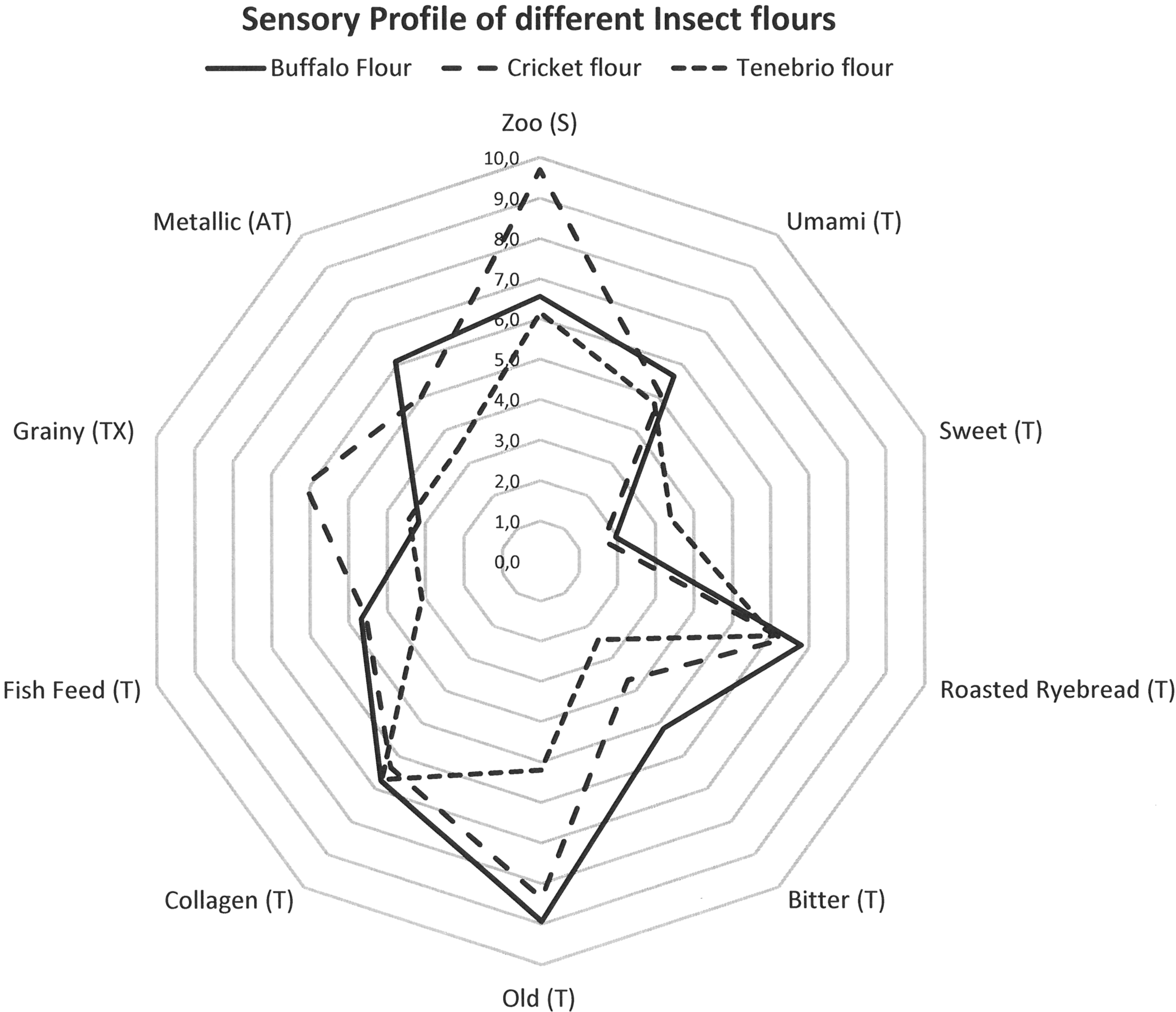
Evaluation of taste (T), smell (S), texture (TX) and after taste (AT), comparing Buffalo flour, Cricket flour and Tenebrio flour.
Rating of the insect flours from the sensory panel
Data are given as averages. Different letters (a, b) denote a statistically significant difference with at least P < 0.05.
Funtionality of Tenebrio Flour in Model Food Products
As suggested by the consumer panel, replacing meat with insects in well-known meat products can produce more sustainable products. To do that, it is important to determine if the insect flour has any of the functional properties of meat proteins. 11 We replaced the meat with 100% Tenebrio flour, and in another trial, with a mixture of Tenebrio flour and water, to achieve the same protein/dry matter content in all the products. A decrease in firmness was observed when the meat was replaced by a mix of water and insect flour ( Fig. 2 ). This can be explained by insufficient water-binding capacity of the insect flour compared to meat proteins. 11 When meat was replaced by insect flour only, firmness increased as the amount of insect flour was increased probably due to a higher dry matter level of the products with high content of insect flour ( Fig. 3 ).

The firmness of meat systems when meat is replaced with Tenebrio flour and water. Results with different letters (a,b) are significantly different. Data is given as mean with confidence intervals (P < 0.05; n = 8).
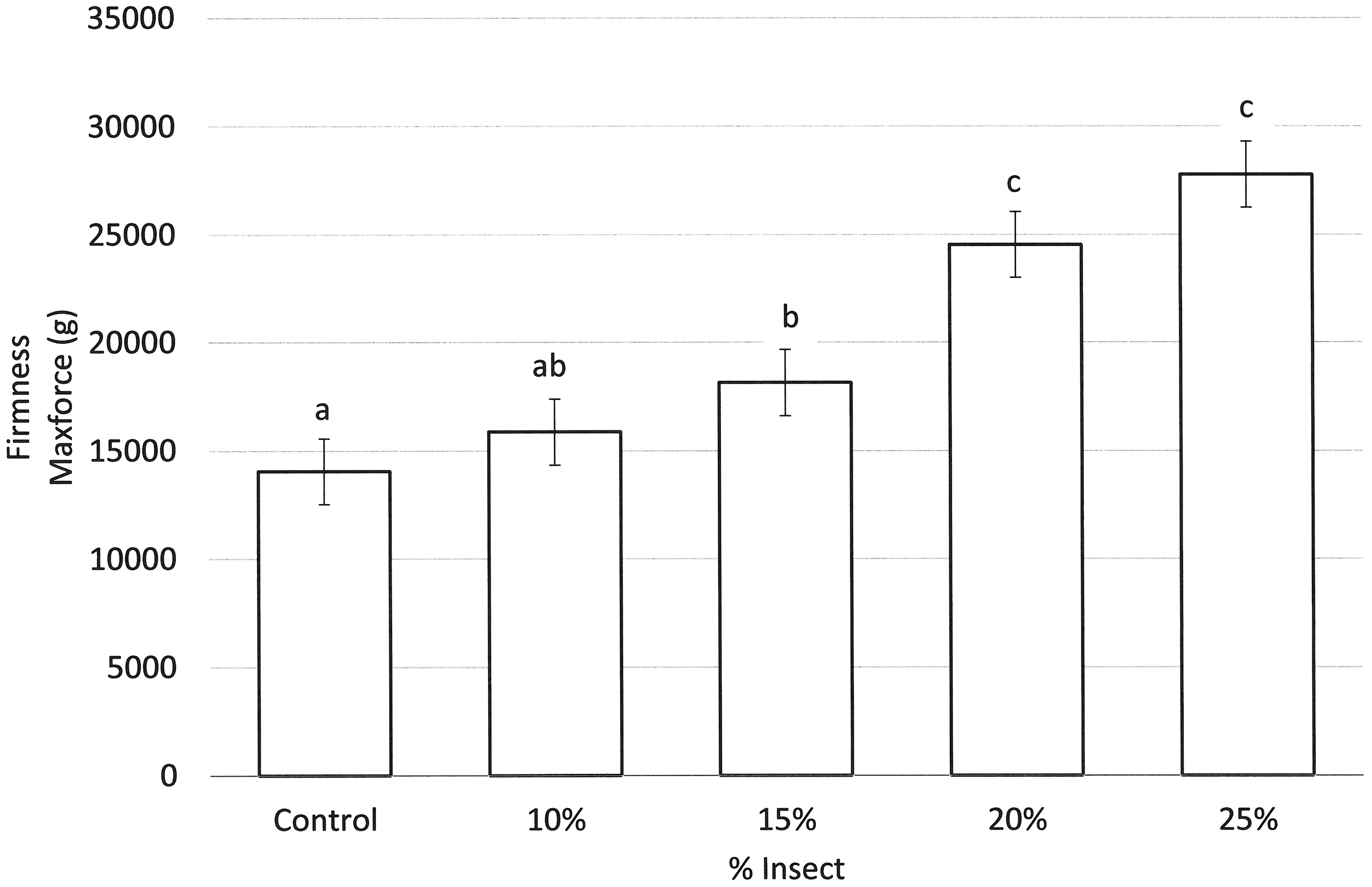
The firmness of meat systems after replacement with Tenebrio flour. Results with different letters (a,b,c) are significantly different. Data is given as mean with confidence intervals (P < 0.05; n = 8)
In the bread system, we replaced 10%, 20%, 30% and 40% of the wheat flour with Tenebrio flour. We observed that the buns were darker, had a smaller volume, and were firmer as the amount of wheat flour that was replaced was increased ( Fig. 4 ). All of these effects were significant (P < 0.05). We conclude that it is possible to enrich white buns with protein by replacing some of the wheat flour with Tenebrio flour, as wheat flour consists of approximately 10% protein 12 and Tenebrio flour consists of approximately 50–60% protein. The higher the level of replacement, the more it influences the bread, and more than 20% replacement appears to be devastating for bread quality.
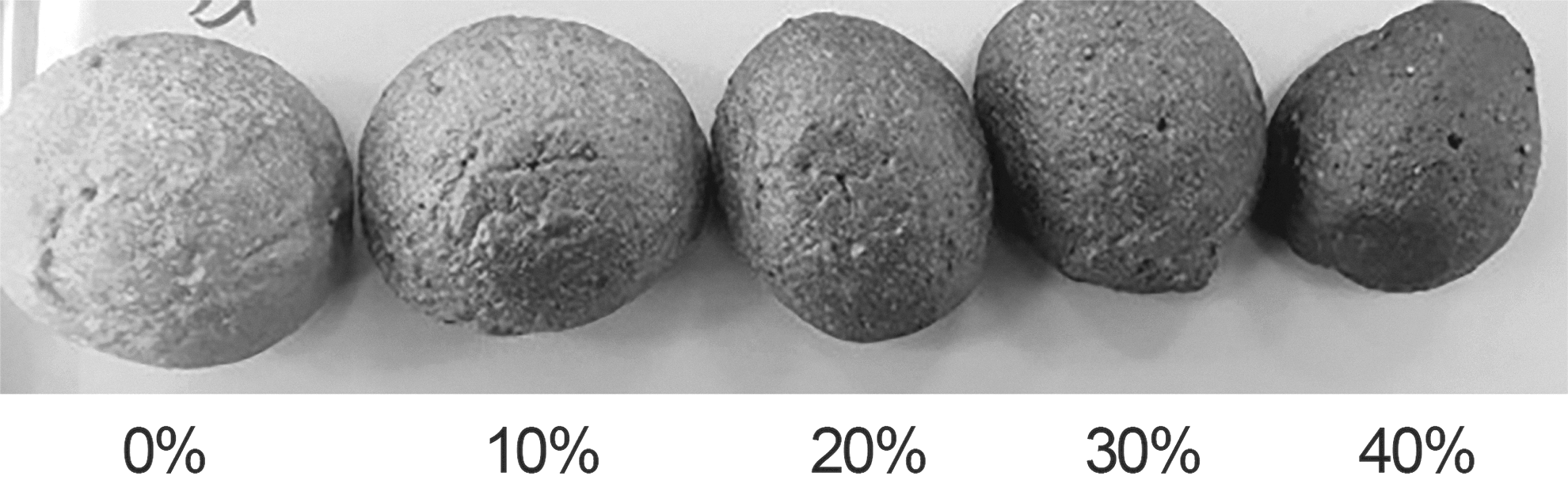
Buns with 0%, 10%, 20%, 30% and 40% of the wheat flour replaced by Tenebrio flour.
In another study, similar effects were observed when wheat flour was replaced by other protein-rich flours such as soy protein flour. 13 The authors suggest that this effect can be explained by a weakening of the gluten network. which is interrupted by the foreign proteins. 13 It might be better to use the Tenebrio flour in rye bread or whole meal bread, as those breads have a darker color, are more compact, and even have some of the taste notes that we found in insect flour.
Proteins have an emulsifying effect, which is correlated with their surface hydrophobicity. 14 As the Tenebrio flour has a relatively high protein content, it might have some emulsifying capacity. We tested this in a mayonnaise system and found that the mayonnaise separated during whipping if more than 6.25% of the egg yolk was replaced, and the viscosity was likewise significantly (P < 0.05) decreased ( Fig. 5 ). These results indicate that the proteins in insects, at least when applied in an insect flour matrix, have limited emulsifying capacity.
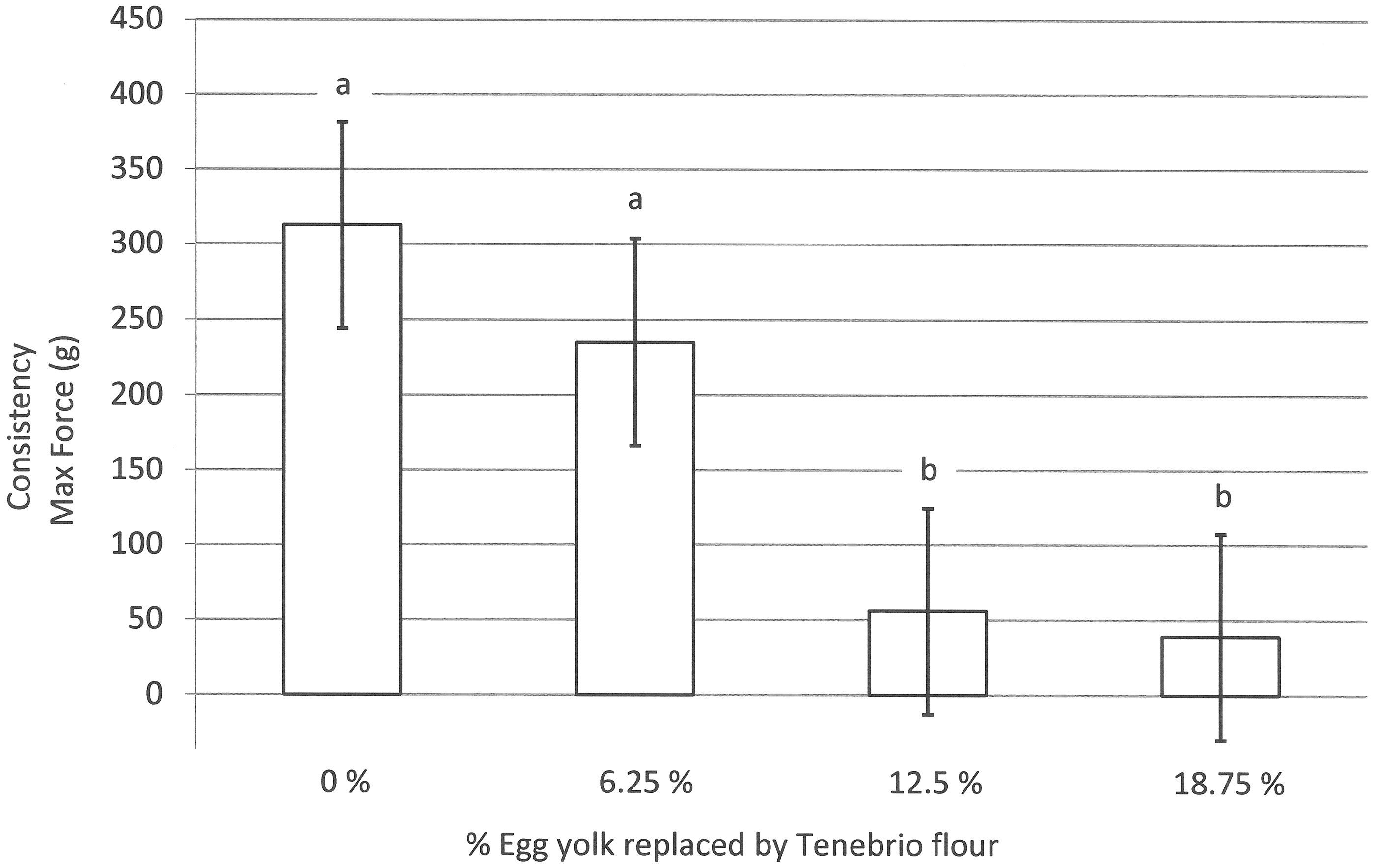
Consistency of mayonnaise when egg yolk is replaced by Tenebrio flour. Results with different letters (a,b) are significantly different. Data are given as mean with confidence intervals (P < 0.05; n = 8).
We found none or little functionality of the insect flour in food systems. Thus, if functionality is needed in products with insect flour added, it must come from other ingredients or eventually an isolated protein fraction from the insect flour. We can conclude that insect flour will be a good ingredient to enrich products, if the dark color and the unique insect taste are masked or are a natural part of the product.
Development of Insect-Based Main Meal Products
The idea-generation process ended up with four new food concepts containing insects ( Fig. 6 ). They were based on well-known meat products, with 100% of the meat replaced by Tenebrio flour and plants.
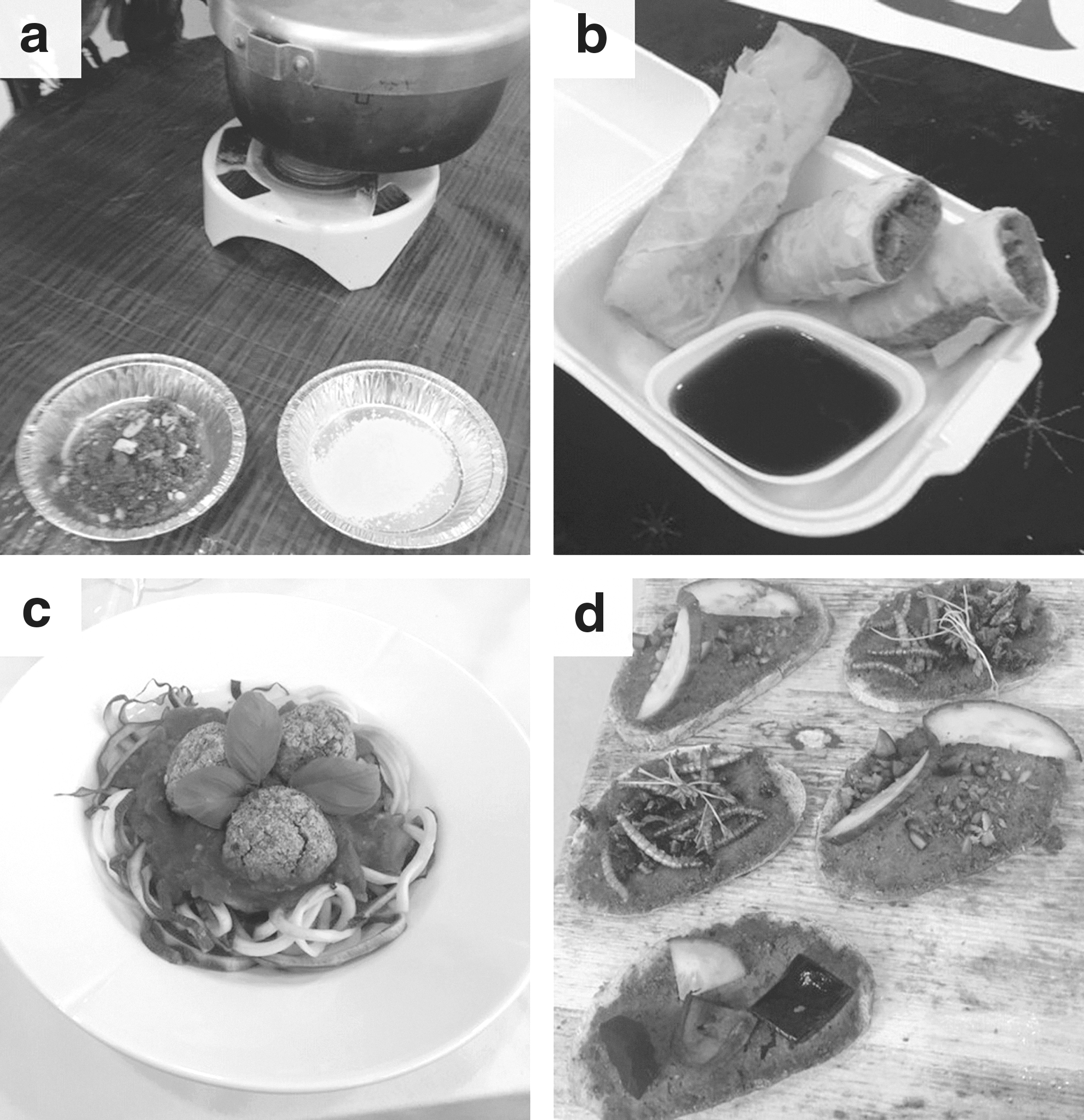
Pictures of the developed insect-based foods, Tenebrio Flour;
Chili con Bugs, an instant chili-con-carne-like product, was designed as an adventure food. It contained 400 g sauce powder with 15% Tenebrio flour and 45 g mashed potato powder. By adding hot water into two sections of the packaging, the consumer could hydrate the powder and have chili con bugs ready to eat directly from the packaging. The product was designed to fulfill the nutritional demands of an active adult and contains 3,200 KJ with 29% of the energy derived from protein. Instant food products for use in adventure activities are relatively expensive, and Chili con Bugs could be produced and sold for about the same price as similar products on the market. Bug Rolls are spring rolls with all the meat replaced by Tenebrio flour (11%). The rolls contained in total 21% protein.
The results indicate that the taste of insects fits very well into Mexican and Asian food styles that typically contain chili, garlic, cumin, cinnamon, coriander and cocoa. In the Chili con Bugs and Bug Rolls, the meat had no functionality and it was relatively easy to replace it directly with Tenebrio flour. These two prototypes only need their recipes adjusted in the actual production facilities before they could be introduced into the market.
We also tried to develop foods where meat brings emulsifying and water-binding properties. Prototypes for INBalls and Pasect were developed. INBalls was a meatball-type product, while Pasect was a spreadable paté containing 15% and 30% Tenebrio flour, respectively. In both products, it was necessary to add other ingredients to make the best possible emulsions, and it was more difficult to find the right taste as the Tenebrio flour gave a special taste to the products. Both products would need considerably more product development, particularly on the texture, before they would be ready for commercial production.
Conclusion
On a short-term basis, producers of insect-based foods can increase their sales by making small changes in their marketing mix. They should improve the information on how to use their products and should adapt packaging design to fit the sustainable image of insects. To convince consumers to buy insects on a regular basis, it will be necessary to decrease prices and develop main-meal, convenience products based on insects.
The results of this work show that, with some effort in the development kitchen, it is possible to produce insect-based products for main meals with insect flour as a dominant ingredient—especially products where insect flour is not a functional ingredient and a strong flavor profile is suitable. It might be beneficial to refine the insect flour and separate the different parts of the flour, such as protein, fat and the cuticula (chitin), to get a more uniform texture and maybe a more neutral taste. In this way, the usability of insect flour in food might be improved.
Footnotes
Acknowledgments
The authors would like to thank students from the Marketing Management and Digital Concept Development educations for planning and performing the focus group surveys, Kenneth Dahl for supporting the students during the survey, Bettina Aarup for preparing the sensory analysis, the sensory panel for hours of professional insect tasting, the Food Technology students for innovation of new foods based on Tenebrio flour and for testing the functionality of the flour, and Marianne Birgitte Houmann Jensen and Inge Hummelshøj Hansen for their work in the Steering Committee. We especially want to thank the two companies joining the project, Jimmini's (Paris, France) and
Author Disclosure Statement
No competing financial interests exist.
Funding Information
This work was carried out as part of the research and innovation project “Insects on the Dinner Table” supported by funding allocated to Erhvervsakademi MidtVest (FFL-13 funds for research association and development and evidence foundation (the Frascati-manual), as well as the inVALUABLE project under the Grand Solution program (grant no. 6150-00011B) funded by Innovation Fund Denmark.