




Abstract

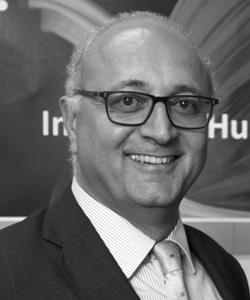
With a career spanning 35-plus years and named in 2018 by the Courier Mail as one of Queensland's 100 Most Influential People, Mario is an experienced and sought-after life sciences professional, industry advocate, and trusted advisor, working closely with government, industry and academia.
Mario is the Managing Director of biostate Pty Ltd. and serves as a Non-Executive Director with elo Life Systems Australia Pty Ltd, Alpine Immune Sciences Australia Pty Ltd, Suncare Community Services Ltd, The Healthcare Impact Foundation Ltd., and The Queensland Eye Institute Foundation. Previous roles include executive positions at Sullivan Nicolaides Pathology and Mayne Group, as well as CEO of Queensland Clinical Trial Network (QCTN) and Life Sciences Queensland (LSQ).
Mario is also an active contributor on various committees and advisory groups, including as an Australian delegate at B20, Member of the Queensland Government Biofutures Industry Advisory Group, Chair of Griffith University's CTU Advisory Committee, Chair of QUT IBHI External Engagement Committee, as well as a Government appointed Member of the QUT Council.
There I got interested in clinical trials. At the same time, the Queensland Government wanted to move the state away from an economy based on agriculture and primary resources into more knowledge-intensive industries. Because I was building clinical trial capabilities, the government asked me to head up the newly formed Queensland Clinical Trials Network (QCTN) and help build that capability. We started doing that, but we realized pretty quickly that everyone in the world was trying to make the next blockbuster drug. Whilst we could be a strong contributor and globally relevant in this quest, we probably couldn't easily become the world leader – just given the sheer number of players in this space.
But with the amount of accessible and sustainable biomass that we had, we knew that we could become a leader in agri-industrial biotechnology, be it producing biofuel, high-value chemicals, or plants that make feed, food, or fuel more nutritious, energy-rich, or drought-resistant. So we started to move our efforts into getting industry players in industrial biotechnology to come work with us, and to raise the visibility of our aspirations for this sector. Eventually we realized we needed an industry voice as well, and that is how Life Sciences Queensland got started.
So, the Queensland Government started a program called the Smart State Initiative that provided money to get people to work on knowledge-intensive industries at the university level, to support patenting, and to bring international thoughtleaders in agri-industrial biotechnology to Australia to work. A lot of these people were Australians who had gone overseas for jobs, so it was a way to bring them back. The initiative also helped build infrastructure and new research institutes.
A key player in funding early infrastructure work was US philanthropist Chuck Feeney. Originally an anonymous donor, he gave over a $100 million, but through matching agreements with the government was able to bring in three times for industry. He was the catalyst. These funds, as well as the interest those large sums of money attracted, really helped get these early efforts off the ground and put us on the map as it were.
Eventually a new government came in, but they did not totally abandon the principles of Smart State. For political reasons, they chose not to call it that anymore and some details were changed. Changes to policy creates challenges. If you're trying to bring in investors, instability is a problem. It's human nature—people don't like uncertainty, especially when it comes to investments.
Smart State is now called Advance Queensland, and it emphasizes agri-industrial industries more than healthcare applications of biotechnology. This is because farming is a big part of the Queensland economy and to maintain the support base of farmers and the regions, there needed to be focused policy initiatives that directly assisted them whilst maintaining a focus on being environmentally responsible. It is now much more focused on creating biomass and what can be done with that biomass, as well as finding ways of recycling waste
Queensland is a big state, and produces 30 million tons of sugar cane and its resultant bagasse every year. By nature of sugarcane processing, it's already in piles. It's already at the mill, and if you build a biorefinery right next to it, your feedstock is 100 feet away. You don't have to put in on a truck, so this industry lends itself to being exploited. We also have a fair amount of wood waste and grow a lot of legumes and stover, all of which can be turned into ethanol and other high value products.
Because of our large land area and tropic location, we are one of the few places in the world you can grow large amounts biomass in a sustainable way, so it makes sense for us to invest in developing a strong agri-industrial sector.
I'm completely agnostic whether policy makers are on the left-hand side of the house or the right-hand side of the house. By definition, good policy is always desirable and bad policy is less desirable—but less bad if it doesn't change all the time. Stability and predictability of policy are critical. People are smart; they will learn how to work around obstacles. It's much easier to walk a straight line, but if they can't do that they'll figure out a way around it. But if those obstacles start to move, it becomes much, much harder. If you're in a big organization or business, you can't afford to keep restructuring to meet regulatory change. You just can't afford to do it. It kills innovation.
Gene-editing is basically breeding in a compressed time frame. What might take 10 or 15 years for someone to breed in a traditional way, you can do in a season or two. You don't need the tree or plant to be the full height to know whether the change has yielded the desired features. The beauty of gene-editing is you can look in nature and see the traits that are desirable, and if it already exists (and it usually does) you can activate it without the time it would take through traditional breeding, cross-breeding, or back-breeding. It saves a tremendous amount of time.
The other benefit is it is not a GMO. However, with the public as soon as you say “gene-something” they immediately hear GMO. That is the great challenge the industry faces. The reality is, we need to ensure that we have a social license. At the end of the day we can only succeed with social license. So, we have to communicate as effectively as possible that what we are doing with this technology is nature, only fast-tracked.
I think GMOs are also important for the same reason: you have the possibility to get better outcomes. But in some ways GMOs could eventually become a bit redundant because of these new technologies. A lot of the traits and desirable outcomes that you're looking for when you start inserting foreign DNA already exist, but are silenced. It won't be true all the time, but in many cases.
That doesn't change the challenge that if you say something is gene-edited the public doesn't hear past the word gene. But if we can show people that often all we are doing is editing a plant based on an existing variant of that plant that has already happened by nature, there will hopefully be more acceptance.
GMOs became vilified in part because the end user wasn't told why it was important. Farmers were told the benefits, but consumers weren't. If the producers of the first GMOs had made the message relevant to consumers, it still would have been a challenge but the outcome for adoption would have been better. elo tries to focus on the end market and create a tangible, consumer benefit for this reason.
Some days I feel like I'm a policeman and other days I'm a cheerleader. If there is good public policy and public leaders, who are actually doing the things that help progress society, and your people are supported, rewarded, and encouraged, innovation will thrive.
I see my legacy on the floor of this meeting [BIO's World Congress on Industrial Biotechnology and AgTech, held recently in Des Moines, Iowa]. There are 30 Queenslanders at this meeting. It's a large delegation led by a senior Minister. When we first came to this meeting, there were six or seven of us. For the third year in a row we have a government minister in attendance. I see my legacy as helping promote industrial biotech to become a priority in Queensland. I didn't put steel in the ground personally, but I helped create an ecosystem where that was possible.