




Abstract
The effects of pH, temperature, single and dual metal ion concentrations, initial Planococcus biomass quantities, and desorption agents on the uptake of cadmium (II) and nickel (II) were measured using atomic absorption spectrophotometry. To show surface adsorption of bacteria, SEM-EDX and FTIR analysis were done before and after metals adsorption. The maximum biosorption capacity of Planococcus sp. for single and binary ion was determined to be 0.67 and 0.48 mmol/g for cadmium (II) and 0.58 and 0.47 mmol/g for nickel (II), respectively. The correlation coefficient for the second-order kinetic model was 0.993. The Langmuir and Freundlich isotherm models were also applied to the equilibrium of system and data were better fitted with the Langmuir isotherm.
Introduction
Wastewater from a variety of industries can contribute to environmental contamination with heavy metals that poses a threat of toxicity to people, plants, and animals. 1 Heavy metals that enter water sources and wastewater directly or indirectly cause death and disease and must be removed from both water and wastewater. 2 In addition to their high toxicity, heavy metals have a tendency to bioaccumulate along the food chain. 3 Additionally, unlike organic pollutants, inorganic pollutants such as heavy metals cannot be degraded and are accumulated over time in the environment. 4,5
According to the US Environmental Protection Agency and US Food and Drug Administration, the permissible levels of cadmium in drinking water are 0.005 parts per million (ppm). According to the World Health Organization (WHO), the permissible levels of nickel in wastewater and agricultural soils are 0.2 and 0.05 parts per million (ppm), respectively. 6
To reach such low levels, new and efficient methods of removing heavy metal from water and wastewater need to be developed. Methods that have been applied to date include include flocculation, precipitation, electrolysis, crystallization, adsorption, chemical precipitation (chemical and physical) and biological. Physical and chemical methods are not suitable due to their high cost, secondary pollutants, low efficiency (especially at low concentrations), lack of regeneration opportunities, and need for large volumes of chemicals. Biological methods have a better cost-benefit profile and are friendly to the environment. 6,7 In recent years, biosorption and bioaccumulation processes have been considered for low-cost, efficient, and environmentally friendly removal of heavy metals from contaminated wastewaters. Biosorption, bioaccumulation and biodegradation have been already employed using yeast, fungi, algae, bacterium and cyanobacteria. 8,9
Among organisms and microorganisms, bacteria play an important role in removing toxic and heavy metals, because bacteria can live everywhere, do not make sludge, and are easily cultivated. Both dead and live bacteria can remove pollutants, although dead bacteria have higher pollutant removal capabilities because of their larger surface area compared to live bacteria. 10 –12 The removal of metal ions by bacterial biomass is a complex process dependent on the metal ions that need to be removed and their concentrations; cell wall composition and cell physiology of the bacteria; and physicochemical factors such as pH, temperature, time, ionic strength and metal concentration. 13,14 The cell wall functional groups known for playing important roles in biosorption are carboxyl, amine, hydroxyl, amide, thiol, phosphate. Carboxyl groups, being negatively charged and plentiful, actively participate in the binding of metal cations. 15 –17
All biomaterials used for biosorption have demonstrated good biosorption capacities towards various metal ions. Metal ion-binding can include complexation, coordination, electrostatic attraction, and microprecipitation, while ion exchange plays a major role in the binding of metal ions by adsorbent biomass. 18 The aim of the present study is to investigate the experimental and theoretical removal of single and binary nickel and cadmium ions from simulated wastewater using Planococcus sp. as biosorbent.
Materials and Methods
Preparation of Bacteria and Metal Solutions
Biosorbent to remove metal ions from aqueous solutions was prepared using Planococcus sp. (Gram-positive, cocci form, motile, and non-spore forming) isolated from wastewater in the Babolrood River in Iran. The isolated bacteria were purified and identified according to Bergey's manual (2005). 19 The bacterial strains were cultured in a 250-mL Erlenmeyer flask containing 50 mL medium glucose mineral salts (GMS; 3.0 g/L yeast extract; 5.35 g/L Na2PO4; 2.67 g/L NH4Cl; 10.0 g/L glucose; 0.4 g/L FeSO4·7H2O; 0.075 g/L MnSO4·7H2O; 0.1 g/L MgSO4·7H2O; and 0.1 g/L CaCl2·2H2O, pH7.0) at 37°C, 150 rpm, and 72 h. The strains were then harvested by centrifugation at 10,000 rpm for 15 min at room temperature and washed twice with saline.
Single and binary metal concentrations were measured with atomic absorption spectrophotometry (ChemTech, Bedford, UK, Analytical CTA 2000). The liquid phase was separated from the adsorbent by filtration using 0.45 μm membranes. Nickel and cadmium solutions with different initial concentrations(0.4–3 mg/L) were prepared by dissolving NiCl2·6H2O and CdCl2H2O in deionized water to reach adequate dilution for single and binary study, respectively. Solutions of sodium hydroxide NaOH (0.1 M) and nitric acid HNO3 (0.1 M) were used for pH adjustment. 18
Biosorption of Single and Binary Component Heavy Metal Solution
The effect of different variables were determined as follows: pH (3-12); isotherm (single and binary, 0.4–3.0 mg/L); temperature (5, 20, 45 and 60°C); initial concentration of bacterial biomass (0.5–3.0 g); contact time for defining desorption kinetic, live and dead bacterial biosorption, the effect of desorption agents (EDTA, CH3COOH,NaHCO3, HNO3, CH3COOH, HCl, CaCl2, KCl, H2SO4). To set the pH, HCl 0.1M and HNO3 0.1 M had been used. To measure of recycling ability, nickel, and cadmium was washed from bacterial biomass that reached from centrifuge after 60 min adsorption with named desorption agents in above and after washing 3 times with deionized-double distilled water was used again to determine the ability to recapture of metal(s) for 5 times; the final amount gained from the average of them. 20,21
Biosorption Experiments
After the experiments, each supernatant flask was taken and filtered. Isotherm experiments were carried out in bottle flasks filled with 250 mL of water mixed with 0.1 g of Planococcus biomass at 37°C and initial pH initial close to 6.0. The initial concentrations of metal ions ranged from 0.4–3.0 mg/L. The concentration of single metals in relevant samples were determined by atomic absorption spectrophotometer. Liquid phase was separated from adsorbent using 0.45-μm membrane filter. Metal uptake at equilibrium was calculated by Equation 1:
where q e is the metal uptake (mmol nickel and cadmium adsorbed per g adsorbent), V (L) is the solution volume, W (g) is the amount of sorbent, C i (mmol/L) is the initial metal concentration in solution and C e (mmol/L) is the equilibrium metal concentration in solution.
Biosorption was measured using the Weber-Morris intra-particle diffusion model:
where qt (mg/g) is absorption at time t (min), kid (mg/g min0.5) is the rate constant of intra-particle diffusion, and C is the value of intercept (which provides information about boundary layer thickness; larger intercept indicates greater boundary effect).
Linear form equation, on rearrangement to a linear form, a plot of 1/qe against 1/Ce, gives a straight line:
The linearized Freundlich isotherm model is described by Equation 4:
22
where Ce is the equilibrium concentration of heavy metal in the solution (mol/L), q is the adsorption capacity at equilibrium (mmol/g), n is the Freundlich constant related to the energy of adsorption, and k is a constant. The values of k and 1/n are evaluated from the intercept and the slope, respectively, of the linear plot of lg q versus lg Ce based on experimental data:
23
Equation 5 does not require effective qe. If pseudo-second order kinetics is applicable, the plot of t/qt against t (Equation 6) should be linear. From this, qe, k and h can be determined from the slope and intercept of the plot, and there is no need to know any parameter beforehand. 24,25
The empirical Freundlich equation reflects a variation in adsorption energies with the amount adsorbed. This distribution of interaction energies is explained by heterogeneity of adsorption sites. Unlike the Langmuir model, the Freundlich equation does not provide an upper limit on adsorption, which restricts its application to dilute media. This model also accountrs for interactions between the adsorbed molecules. The Freundlich equation is written:
Where KF (L/g) and n are empirical parameters representing the steepness of the isotherm and qe (mg/g) is the adsorption density.
Desorption Experiments
A desorption study was performed in a similar manner to the adsorption studies. Kao et al. and Vijayaraghavan and Yun previously investigated eluting agents' desorption properties for a number of biomasses.
25,26
Vijayaraghavan and Yun found that acidic solutions may dissolve some types of polysaccharides containing metal-binding sites, as well as the mineral contents of the biosorbent.
26
The efficiency of various eluents—0.1 M HNO3, HCl, EDTA, CaCl2, KCl, NaHCO3 and CH3COOH—was used to recover nickel/cadmium from biosorbed bacterial cells of the selected strain at 37°C and 150 rpm. The filtrates were analyzed to determine the concentration of metals ions after desorption. The recovery percentage is obtained from Equation 7:
27
where Dr is the amount of cadmium/nickel ions released in the supernatant solution (mg) and Da represents the cadmium/nickel ions initially adsorbed on the biosorbent (mg).
Results and Discussion
Effect of pH on Biosorption
Several mechanisms, including ion exchange, complexation, electrostatic attraction, and micro precipitation, could be involved in metal-ion binding in biosorption. The effect of pH on ion uptake is related to bacterial biomass functional groups the solution's metal content.
Different bacterial biomass shows different uptake rates and varied optimal uptake pH.
The effect of pH on nickel and cadmium ions biosorption on Planococcus sp. was studied at room temperature by varying the pH of the solutions. Batch study results indicate that, in the presence of the biomass, chemical precipitation occurred. Cadmium began to precipitate after pH 7, but the nickel ions began to precipitate after pH 6 (Fig. 1). Higher pH causes the adsorption surface to become less positively charged and increases the electrostatic attraction between sawdust and metal ios.
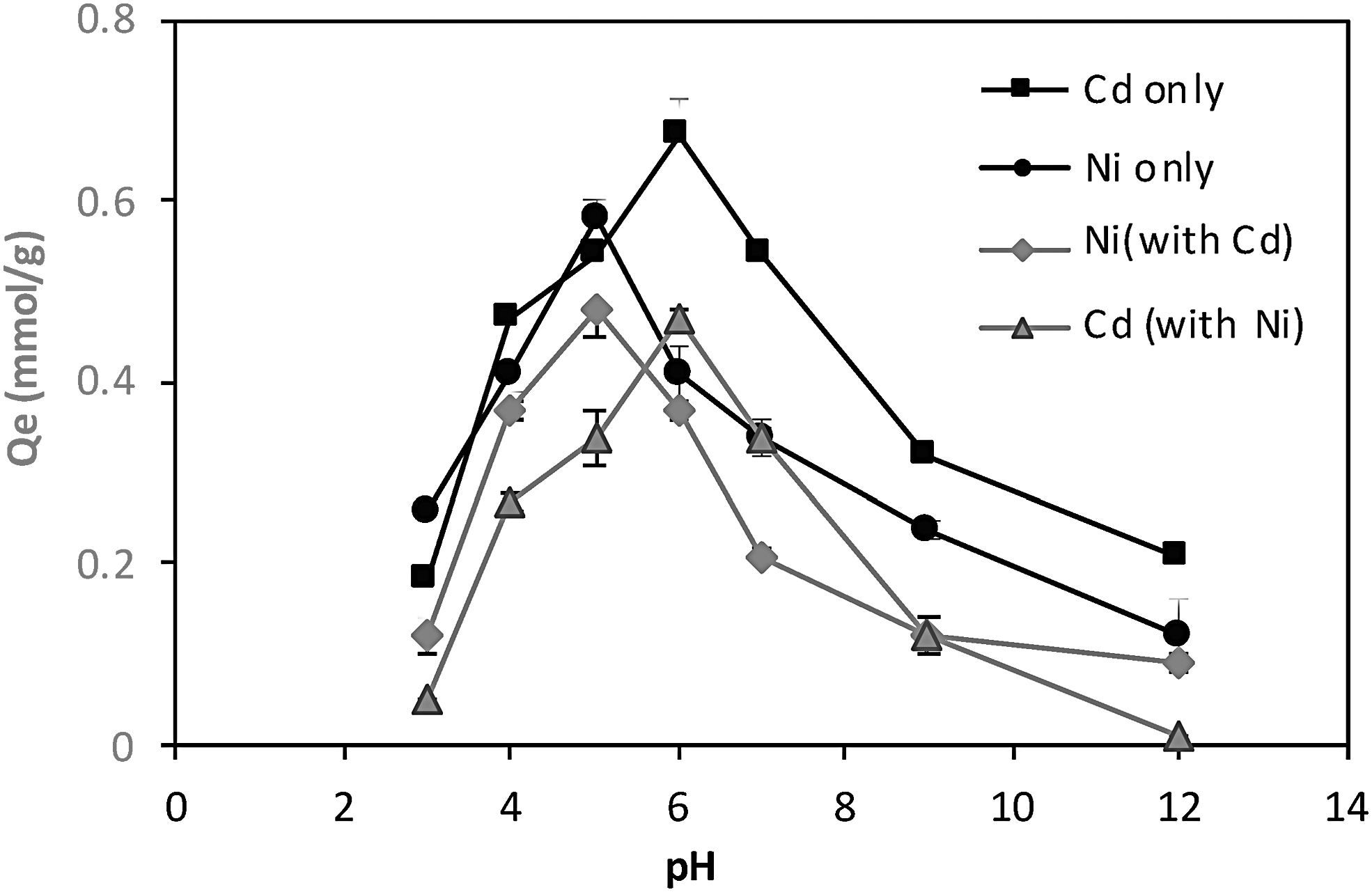
Effect of pH on the nikcel and cadmium ions (single and binary form) biosorption by Planococcus sp.
Experimental results show that biosorption of nickel and cadmium ions increased up to pH 8. Lower biosorption at lower pH can be attributed to protons more effectively capturing binding sites, reducing availability for metal ions.
Kinetic Experiments
To understand the biosorption mechanisms and process speed, it is important to study mass transfer and chemical reactions. Kinetics is an additional important factor that also affects biosorption because it identifies the maximum time for adsorption. The typ of biosorbent, metal ion, and their interations all affect the time it takes to reach maximum biosorption. Almost 90% of metal binding is achieved rapidly because all active sites are vacant.
Figure 2 shows a plot of t/qt versus t, the kinetics of nickel and cadmium biosorption onto Planococcus, at pH 6, temperature 37°C, in deionized water. The maximum adsorption of cadmium and nickel occurred in the first 60 to 120 min. The equilibrium time for adsorption of the two metals was about 1 h, with maximum adsorption. The decrease in nickel and cadmium concentration in aqueous solution was rapid during first 20 and 30 min, respectively, suggesting that biosorption is a spontaneous process. Biosorption of the two metals was very fast, with equilibrium reached within 1 h. Most of the metal was removed within the first 5 min of contact with the biosorbent. The difference in biosorption capacity can be attributed to change in chemical composition and metal binding affinity of the bacterial cell wall. 28
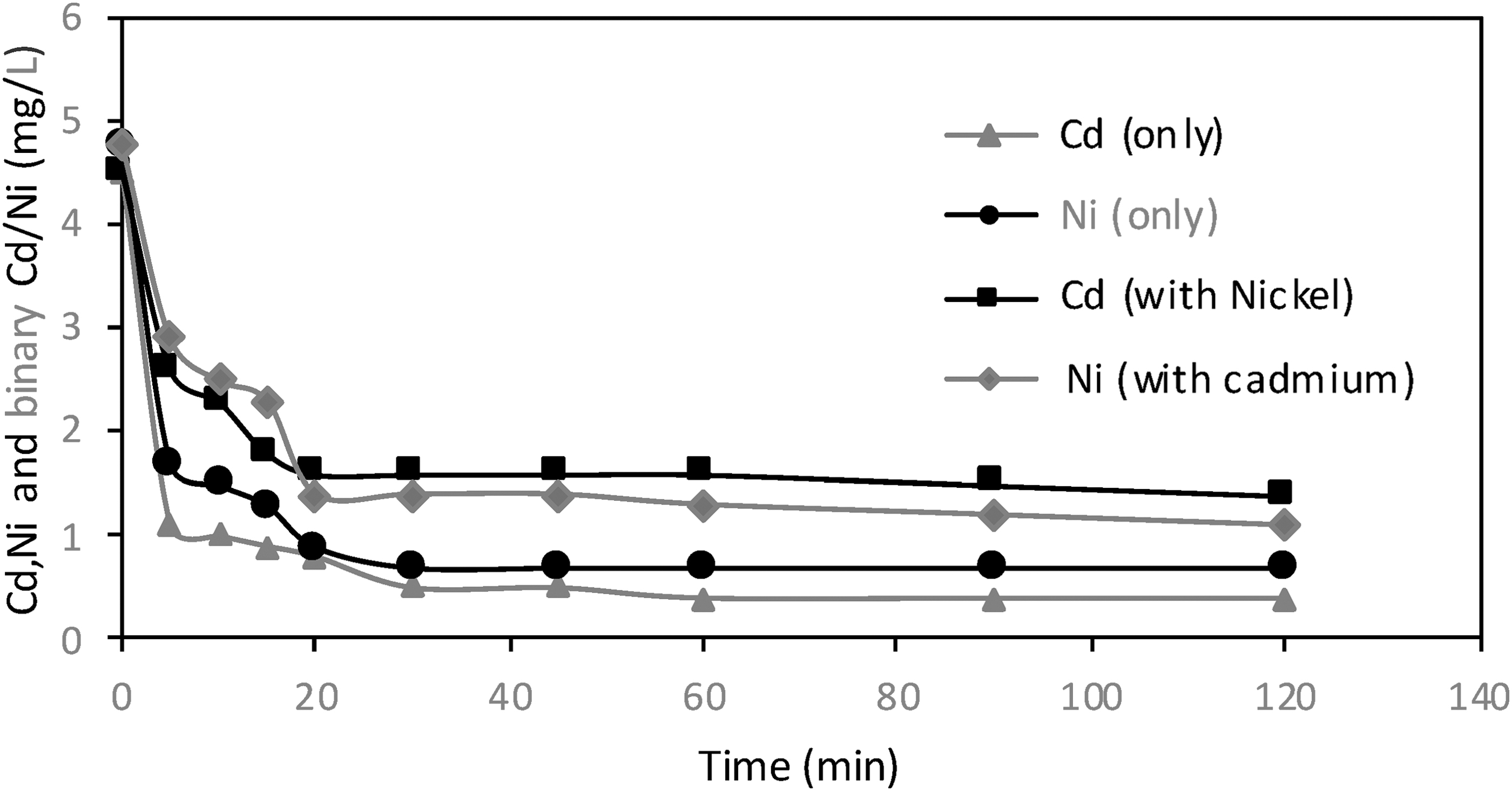
Kinetics of biosorption of nickel and cadmium only and binary by Planococcus sp at pH 6 and 37°C.
Adsorption Isotherm
The nonlinearized adsorption isotherm (Ce versus qe) of nickel and cadmium ions on the biomass of Planococcus biomass is shown in Fig. 3. The amount of metal ions adsorbed increased as its equilibrium concentration increased in solution and reached saturation. The Langmuir constants for the biosorption of nickel and cadmium ions on the biosorbent is shown in Table 1. The Langmuir isotherm model was used to measure the cadmium and nickel ions biosorption capacity of Planococcus from aqueous solution. It was found that biosorption occurs at specific homogeneous sites on the biomass, which has been successfully deployed in many monolayer biosorption processes.
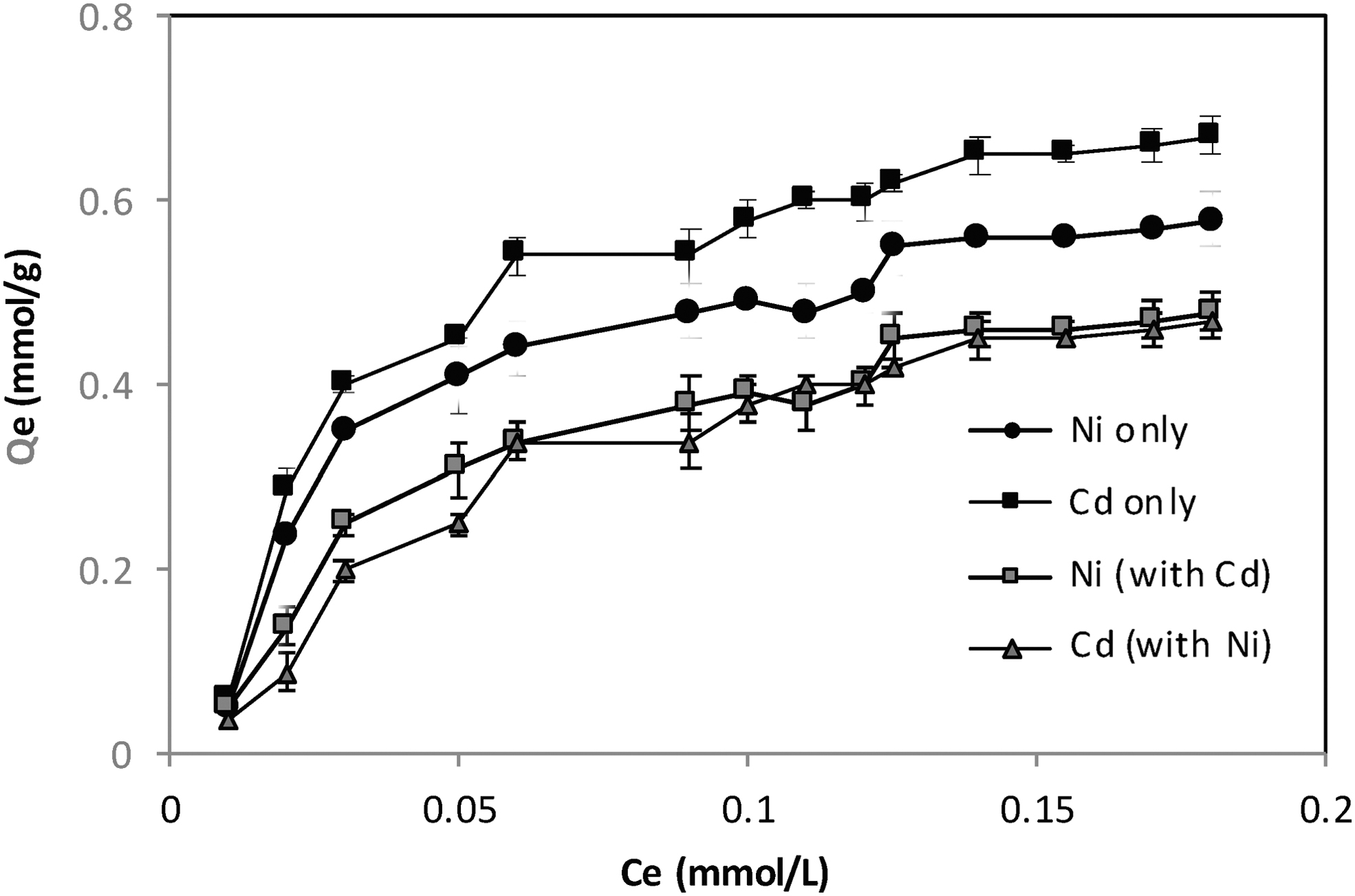
Langmuir isotherm of nickel and cadmium ions in single and binary form biosorbed Planococcus sp biomass.
Isotherm Parameters of the Langmuir and Freundlich Models for the Biosorption of Single and Binary Metal System
It was found that Langmuir model fits the experimental data (r 2 = 0.990) better than the Freundlich model. A maximum fixation capacity of 0.67 and 0.58 mmol g−1 (Table 1) was measured for cadmium and nickel, respectively. Sorption capacity values obtained in this study for cadmium and nickel are shown in Table 2. 29 –36
Comparison of Nickel and Cadmium Biosorption by Different Biosorbents
This study was compared with the work of other researchers. Kulkarni and colleagues evaluated the removal of cadmium and nickel by Bacillus laterosporus, (MTCC1628), Gram positive bacteria and found the maximum adsorption capacitie for cadmium(II) and nickel (II) ions were 0.67 mmol/g and 0.58 mol/g, respectively. The effect of initial pH, dose of biosorbent and other parameters on the adsorption of the two metals studied in this article have been almost identical to this work. 37
Characterization of Biosorbent using FTIR
Fourier Transforms Infrared Spectroscopy (FTIR) was used to determine the vibrational frequency changes in bacterial biomass functional groups in the presence of metal and metal-loaded biosorbents. FTIR spectra of raw and loaded bacteria in the range of 400–4,000 cm−1 were taken to obtain information about functional group interactions. The infrared spectrum exhibited broad bands centered at 3,437 cm−1 assigned to O-H and N-H stretching, the stretching vibration of C = O at 1,652 cm−1 and C-O stretching of alcoholic groups at 1,073 cm−1. The band at 1,447 cm−1 was representative of primary bending vibration of N–H groups. Comparing FTIR spectra loaded with raw bacteria displayed significant changes in some of the peaks. Significant shifts in the peaks (1,652 to 1,633 cm−1), (1,447 to 1,403 cm−1) and (1,073 to 1,043 cm−1) reflect the effects of carboxyl, alcoholic, and amine groups, respectively, on the surface of bacteria during biosorption.
Biosorption by Dead and Live Biomass; Effect of Biosorbent Dose and Temperature
To obtain viable bacterial biomass, bacteria was cultured on nutrient broth, incubated at 37°C in shaker incubator (150 rpm) at pH 6 for 24h, and centrifuged at 10,000 rpm for 15 min at room temperature. After getting live biomass, it was put in the oven for 72 h at 55°C and then were powdered to use in the experiments where dead bacteria was needed. 38 There are many different methods of dying, such as using sodium azide, autoclave, incubator, and 2,4 DNF. Sodium azide blocks the metabolic activity of bacteria and autoclave collapses the cell surface structure. A high amount of metals sorption was observed when autoclave was used, while sodium azide use exhibited lower sorption (Fig. 4).
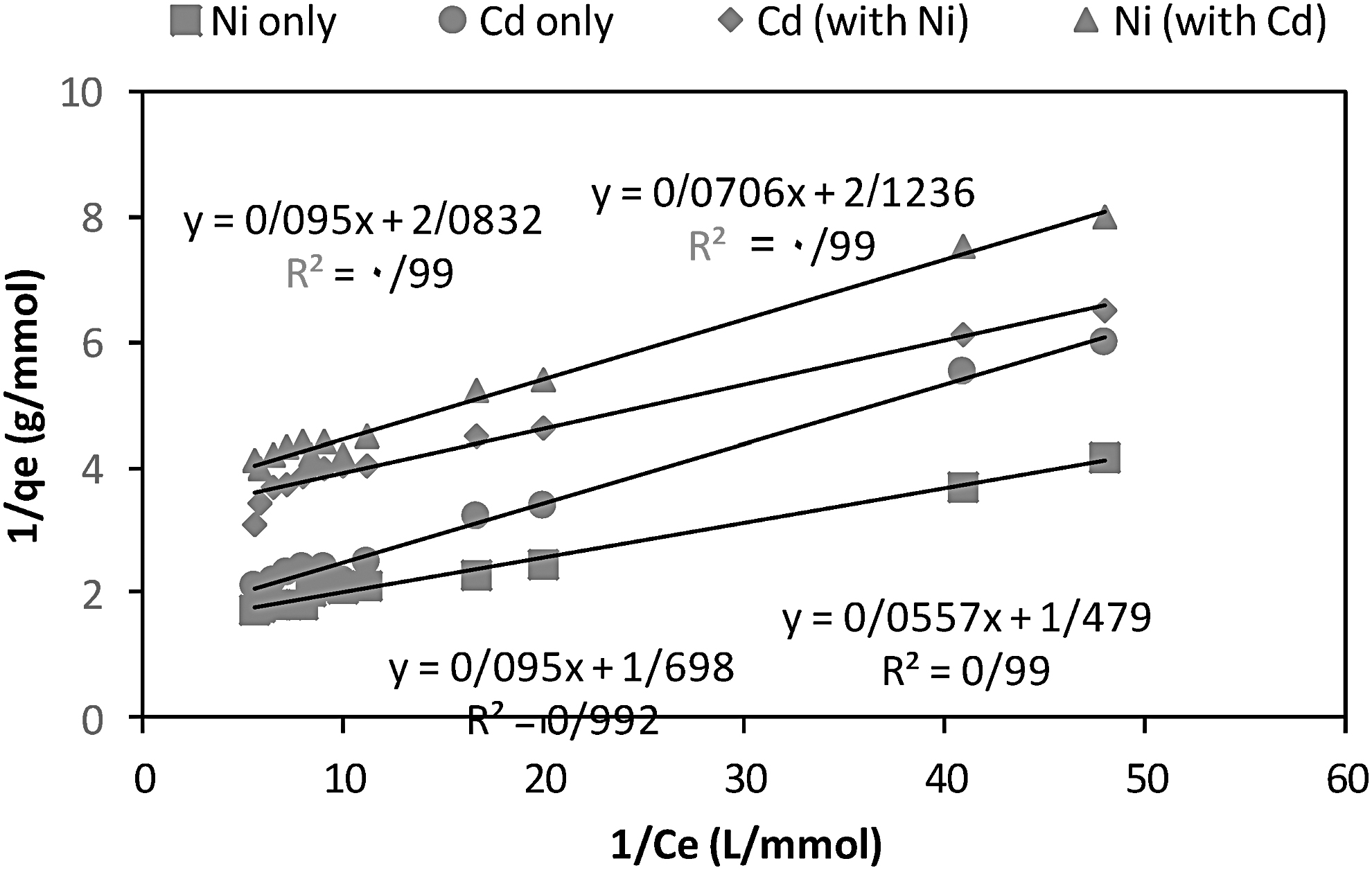
Linearized plot of the Langmuir relationship (1/q versus 1/Ce) between q and Ce of Planococcus sp biomass biosorption isotherm by model binary.
Our results showed that nickel and cadmium biosorption is enhanced with increasing biomass bacterial dosage (Fig. 5). Other researchers have found that biosorbent dose was also an important factor affecting biosorption capacity and removal efficiency. Yakup Arıca et al. showed that chromium uptake was dependent on the dosage of algae, and they showed that increasing the concentration of algae also increased metal uptake. 39 In 2017, Uthra and Kadirvelu showed that the amount of nickel removed increases rapidly with increased dosage of Pseudomonas aeruginosa and Bacillus subtilis biomass due to the greater availability of the biosorbent. 40

The effect of different methods of death (live and dead biomass) on nickel and cadmium sorption by 1 g biomass of Planococcus sp biomass incubated in 37°C and pH = 6.
In our work, the maximum cadmium and nickel adsorbed at the dosage 1, and 1.5 g/L respectively. In bacterial biomass, higher temperatures usually enhance sorption due to the increased surface activity and kinetic energy of the solute. Temperature seems to affect only the reduction of heavy metal uptake by bacteria, especially at very low temperatures and at very high temperatures (Fig. 6).
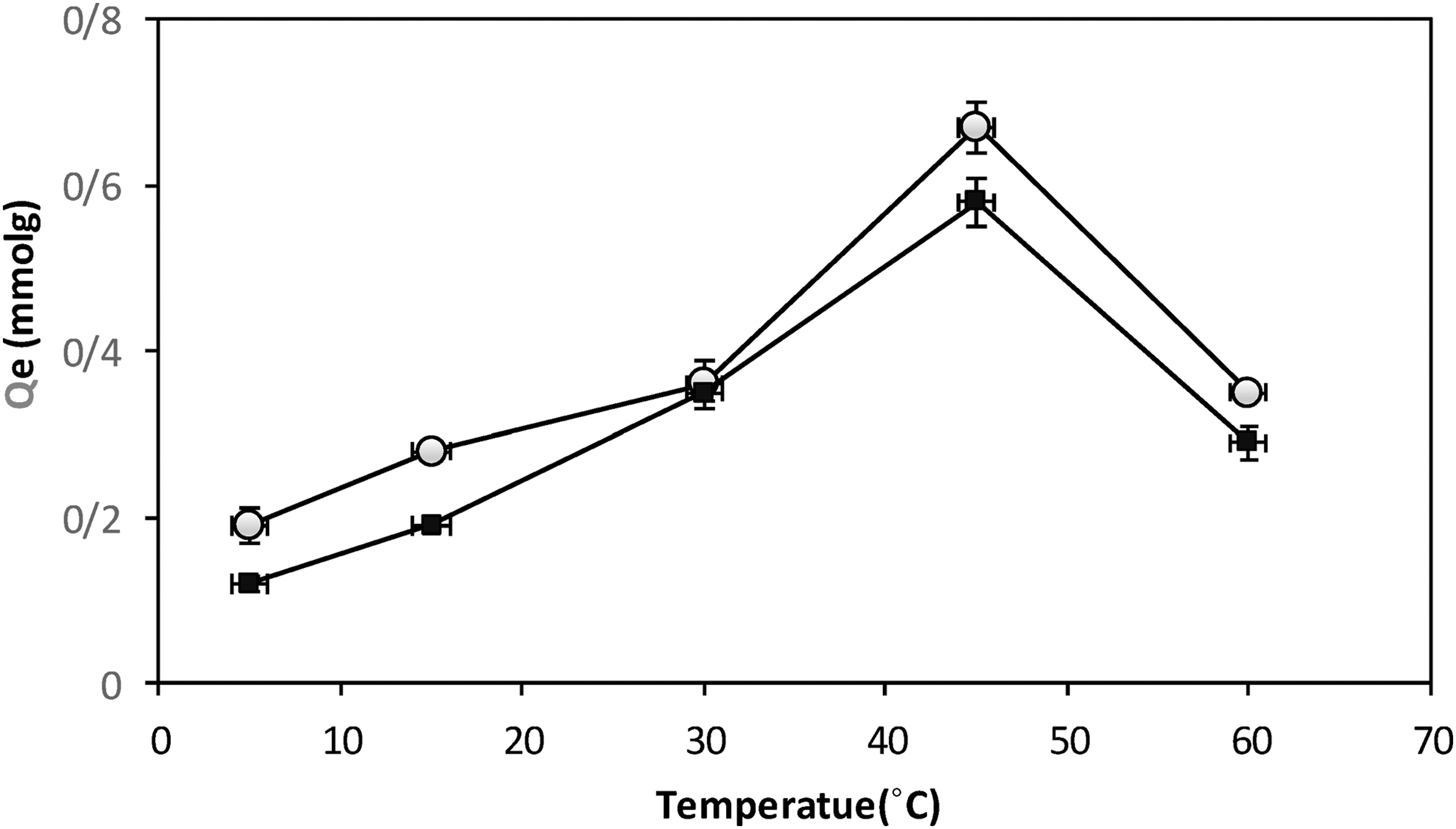
The effect of temperature on sorption of cadmium and nickel by Planococcus sp biomass.
Cadmium and Nickel Desorption Prcess
Biosorption research is completed when the recovery of metal ions from bacterial biomass is examined; otherwise, the process requires abundant biomass to use them on an industrial scale.
Figure 7 shows the percentage of nickel and cadmium ions released by Planococcus after treatment with different desorbents. Desorption was negligible when using distilled water. Metals desorption (%) with dilute mineral acids (HCl, H2SO4 and HNO3), organic acids (citric, acetic and lactic acids), and complexing agents (EDTA, thiosulphate, etc.) also shown. The high recovery percentage of nickel and cadmium ions by KCl and CaCl2 could allow the recycling of ions from the biomass into various industries.
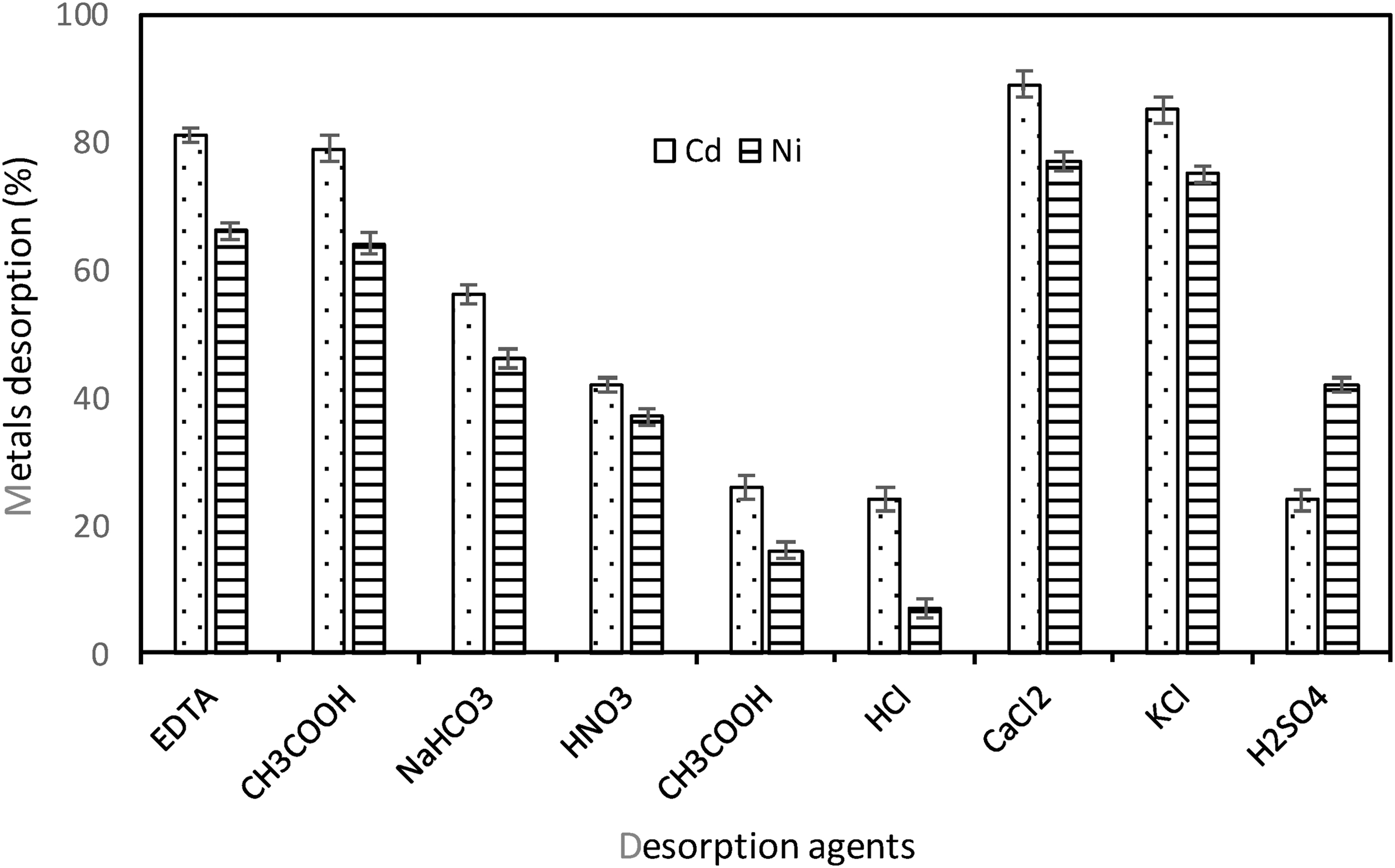
Nickel and cadmium ions recovered by different desorbents in batch tests onto Planococcus sp biomass (1g biomass, pH = 6, temperature 37°C)
Scanning Electron Microscipy SEM-EDX Analysis
Scanning electron microscopy (SEM) is an ideal tool for determining changes in cellular morphology. The surface morphology of Planococcus, with and without sorption of cadmium and nickel ions during the biosorption process, was studied using SEM-EDX. The shape changed into a spindle-like structure after metal ions sorption. The typical effects of adsorption was also seen by SEM-EDX images of different elements of bacterial cell walls before adsorption and its changes after adsorption. The modifications of bacterial biomass cell surface and precipitation of nickel/cadmium on the cells were revealed by SEM and EDX (Fig. 8).
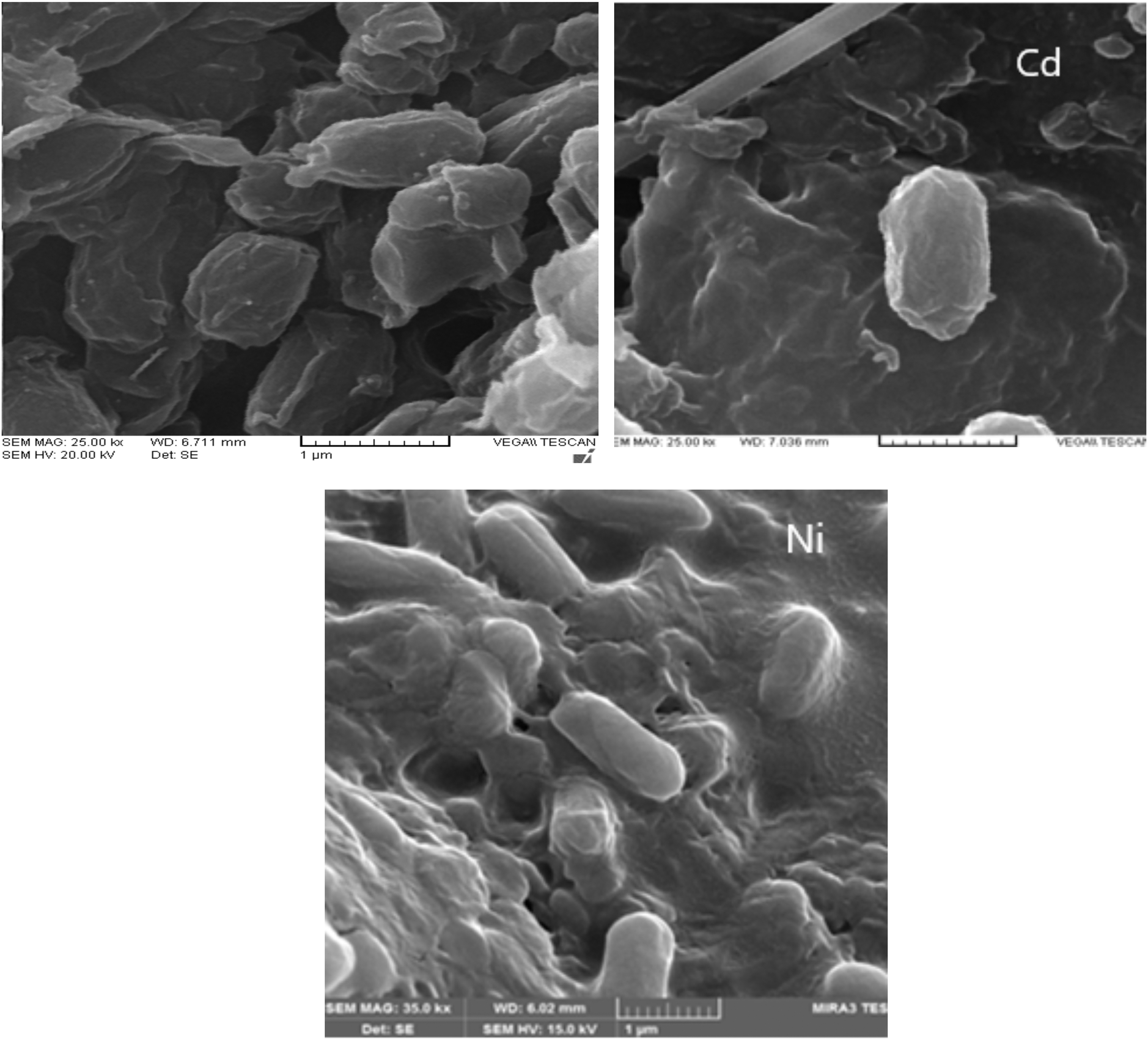
SEM image of Planococcus sp before and after biosorption of nickel and cadmium
Conclusion
Biosorption is a relatively new process with promising applications in removing pollutants from wawater. Biosorption is effective at quickly and cost-effectively reducing heavy metal ion concentrations. Gram-positive bacteria in particular is the subject of much research interest because of its high sorption capacity and high availability.
Table 2 compares the maximum adsorption capacity obtained from this study with other values reported in the literature. The adsorption capacities for nickel and cadmium using Planococcus sp. were found to be comparable with many of the reported literature values.
Comparisons between biosorbents such as brown, red and green algae; molds; yeasts; and bacteria showed that brown algae and bacteria are generally favorable. The efficacy of brown algae, which has a high efficiency in the removal of metals such as nickel and cadmium, is due to the alginic acid in its cell wall. In bacteria, the cell wall is also very important, with active groups on its surface, especially carboxylic acid and ammonium groups. Direct comparison of experimental data is not possible, due to different experimental conditions, such as pH, temperature, equilibrium time, heavy metal concentration, and biomass dosage.
The present study gives evidence of the possible benefits of using the biomass of Planococcus sp. for the removal of heavy metals from aqueous media. The Langmuir and Freundlich isotherm models were applied to the equilibrium data. Experimental data on deionized water wells are described by the Langmuir model. The optimum pH for biosorption of cadmium and nickel metals was 6 and 5.5 respectively. The maximum biosorption capacity of cadmium and nickel metal ions in single state was 0.67 and 0.58 mmol/g respectively. For the binary mode, the maximum adsorption rates for cadmium and nickel were 0.48 and 0.47 respectively.
Physico-chemical investigations indicate the presence of at least amide, sulfur, phosphates, hydroxyl, carboxylic acid, amine, hydroxide and thiol in surface Planococcus sp. The results obtained through this study support that Planococcus sp isolated from wastewater is an effective and low-cost biosorbent for cadmium and nickel removal from aqueous solutions.
The most important result of this research is that the Gram-positive bacterium Planococcus sp has the ability to remove several metals simultaneously, including cadmium and nickel. It should be emphasized that to achieve this goal, metal uptake experiments in real environments and in industrial sewage need to be done.
Footnotes
Author Disclosure Statement
No competing financial interests exist.
This article is the result of the dissertation of Ashraf Al-Sadat Hoseini, a PhD student from the Islamic Azad University, Ayatollah Amoli Branch.
Funding Information
No funding was received for this article.