




Abstract
Emerging carbon capture utilization (CCU) technologies potentially allow chemical companies and other manufacturers to capture waste carbon—in the form of carbon monoxide (CO) and/or carbon dioxide (CO2)—from industrial emissions and process it into sustainable, value-added biofuels and chemicals. Using CCU technologies to consume waste feedstocks can cut production costs; benefit the environment; monetize industrial emissions; and, depending on the region, allow companies to meet CO2 emissions goals. Moreover, using waste carbon to make chemicals can also reduce manufacturers' reliance on fossil fuels such as crude petroleum and natural gas, an important factor, particularly for the European Union and China, given the volatility in sourcing and pricing of fossil fuels, especially those that are imported.
This working paper: 1) explains carbon's critical role in the production of chemicals and as a target for industrial emissions reduction; 2) describes new CCU technologies stemming from advances in fields such as industrial biotechnology and electrolysis; 3) identifies sectors and geographical locales in which these technologies are being adopted, as well as factors driving adoption; and 4) examines potential implications for US and global industrial competitiveness within one sector with high emissions, the steel industry. This paper concludes that these CCU technologies are promoting a paradigm shift that has the potential to increase firm-level competitiveness for manufacturers that adopt these processes, while also reducing the environmental impact of these manufacturers. To the extent that these technologies become widely adopted, they could result in substantial increases in supply of such chemicals globally, with potential disruptive impacts on trade and prices.
Introduction
Carbon is an essential element of life. The human body contains about 18% carbon by weight, the highest elemental representation after oxygen (65%). 1 Carbon is also an essential element in liquid transportation fuels and many chemicals; the carbon in these products is largely obtained from fossil fuel inputs such as crude petroleum and natural gas, with some more recently from renewable feedstocks (e.g., corn; and agriculture and forestry residues). Carbon is also a component of industrial emissions, which frequently contain carbon dioxide (CO2) and carbon monoxide (CO), and which have been a source of environmental concern. Companies are seeking to reduce industrial emissions overall—as well as levels of CO and CO2 in the emissions—by various processes.
Technological advances in the fields of industrial biotechnology and electrolysis are now allowing manufacturers to use waste carbon captured from their emissions to make value-added products such as chemicals and biofuels.
2
Manufacturers, including those that primarily produce non-chemical products, are starting to monetize waste carbon (in the form of CO and/or CO2) from industrial emissions by processing it into more sustainable and value-added biofuels and chemicals (for graphics on industrial emissions and on the chemicals value chain, please refer to the full paper at
Using waste feedstocks to manufacture chemicals provides several potential advantages, including enhancement of firm-level competitiveness; possible reduction of barriers to entry for new chemical byproduct producers such as steel mills; 3 and environmental benefits such as reduced levels of CO2 emitted to the atmosphere. Also, given the volatility in sourcing and pricing of fossil fuels, waste inputs allow for increased energy security, particularly for the European Union (EU) and China, through reduction of manufacturers' reliance on fossil fuels such as crude petroleum and natural gas. But the speed of US adoption of this technology may be tempered by factors discussed in more detail below, including, among others, national policies and the relative cost of fossil fuels in the United States.
Background—Carbon Is a Key Input in the Chemical Industry
The US chemical industry is the world's 2nd largest, supplying about 14% of the global market in 2019, and is global in nature with operations worldwide. 4 Since its inception, the industry has produced chemicals along the entire value-chain, from upstream commodity chemicals (generally high volume, low value) to downstream specialty chemicals (high value, low volume).
Many chemicals, especially commodity chemicals, have low margins and are extremely price competitive and any processes that reduce production costs can increase competitiveness; as such, companies have continuously incorporated process and product enhancements during the past century to optimize production capacity and competitiveness. For example, chemical companies have been integrating sustainable processes into their value chains for the last three decades for several reasons, including beneficial environmental impacts, improving process efficiency and reducing costs, and achieving “better bottom line results.” 5 Within the chemical industry, sustainability is now considered to be “absolutely vital to long-term viability” and a “strategic imperative.” 6 The chemical industry—particularly the commodity chemicals segment—also has high barriers to entry as a result of factors such as capital-intensive processes; high energy costs; the necessity of large-scale production; and environmental liabilities. 7
Crude petroleum and natural gas have long been preferred feedstocks for many chemicals and liquid transportation fuels because they are significant sources of carbon and because they have been readily available. Crude petroleum is a significant feedstock for liquid transportation fuels and, depending on the region, can also be an important feedstock for the chemical industry. 8 Moreover, crude petroleum pricing can also be an important factor determining the economic feasibility of fuels produced from renewable feedstocks such as agricultural and forestry residues, among others. For chemicals, one European source mentioned that 90 percent of chemicals (excluding fuels) are derived from fossil fuel-based feedstocks. 9
However, fossil fuels—imported by many nations to meet demand—have traditionally been subject to significant price fluctuations and supply disruptions. 10 For example, the price of crude petroleum first reached a high of $120 per barrel in 2008 and, as of January 2020, was hovering around $50–60 per barrel. 11 Moreover, pricing spikes have always been a reality in the industry, particularly because of unplanned outages, as reflected in the September 2019 crude petroleum price increases resulting from outages in Saudi Arabia. 12
As such, in recent years, particularly with advances in industrial biotechnology, more companies producing liquid biofuels and organic chemicals have been using renewable feedstocks such as agriculture and forestry residues and energy crops, including switchgrass among others. 13 However, the cost competitiveness of products derived from alternative feedstocks has varied, particularly for biofuels, with some becoming less competitive as the price of crude petroleum has declined. Land use and food security questions have also been concerns for plant-based feedstocks, leading to a continuing search for other feedstocks.
New Carbon Capture Utilization Technologies Enable Conversion of Industrial Emissions into Carbon-Based Chemicals
A major goal of most stakeholders, particularly in the chemical industry, is continued development of a “circular economy,” an industrial system in which waste is eliminated and resources are reused. 14 As abatement efforts for industry emissions reach optimal use and become more expensive, 15 novel CCU technologies are emerging that use waste products as feedstocks for chemicals instead of sequestering the carbon or using it for enhanced oil recovery (EOR). The new processes include conversion of waste carbon in industrial emissions to liquid transportation fuels (such as ethanol and methanol) and chemicals (including building blocks such as formic acid, acetic acid, polyols, and acetone). 16 These processes, which are becoming more prevalent because of continuing scientific advances in fields such as industrial biotechnology and electrolysis, 17 not only reduce the amount of CO2 that would otherwise be emitted to the atmosphere but also reduce the overall carbon footprint of the chemical process.
Examples of major players potentially using or supplying CCU technology include: Technology providers developing and potentially licensing the CCU process and equipment; Companies with large levels of industrial emissions: ○ Chemical companies using CCU technologies as an alternative method/feedstock to produce chemicals, reduce environmental pressure, and monetize waste streams; ○ Non-chemical companies (such as steel manufacturers) using CCU technologies to produce chemicals, reduce environmental pressure, and monetize waste streams.
Technology providers such as LanzaTech and Avantium, among others, have developed a variety of new processes that use industrial emissions from sources such as steel plants, chemical plants, and refineries, to name a few. The emissions have varying concentrations of CO and CO2 as feedstocks to produce value-added biofuels and chemicals. Diverse solutions are available, often depending on a project's specific conditions. 18 The new processes reflect a variety of technologies (e.g., ranging from fermentation using proprietary microorganisms 19 to new catalysts to electrocatalysis); are at varying stages of development (e.g., research scale to full commercialization); and produce a variety of chemicals.
In one CCU technology—fermentation—proprietary microorganisms convert (or digest) carbon-based emissions to produce bioethanol and/or various chemicals through a process that involves gas collection, fermentation in a bioreactor, and recovery of the end products (see LanzaTech's process in Fig. 1 as an example of a process using fermentation). As discussed further below, the individual microorganisms used in a given fermentation process have the potential to be switched out as market conditions change and replaced by other microorganisms that produce different products (e.g., replacing a microorganism that produces biofuels with one that produces chemicals, and vice versa, if market changes make one product more advantageous than the other).
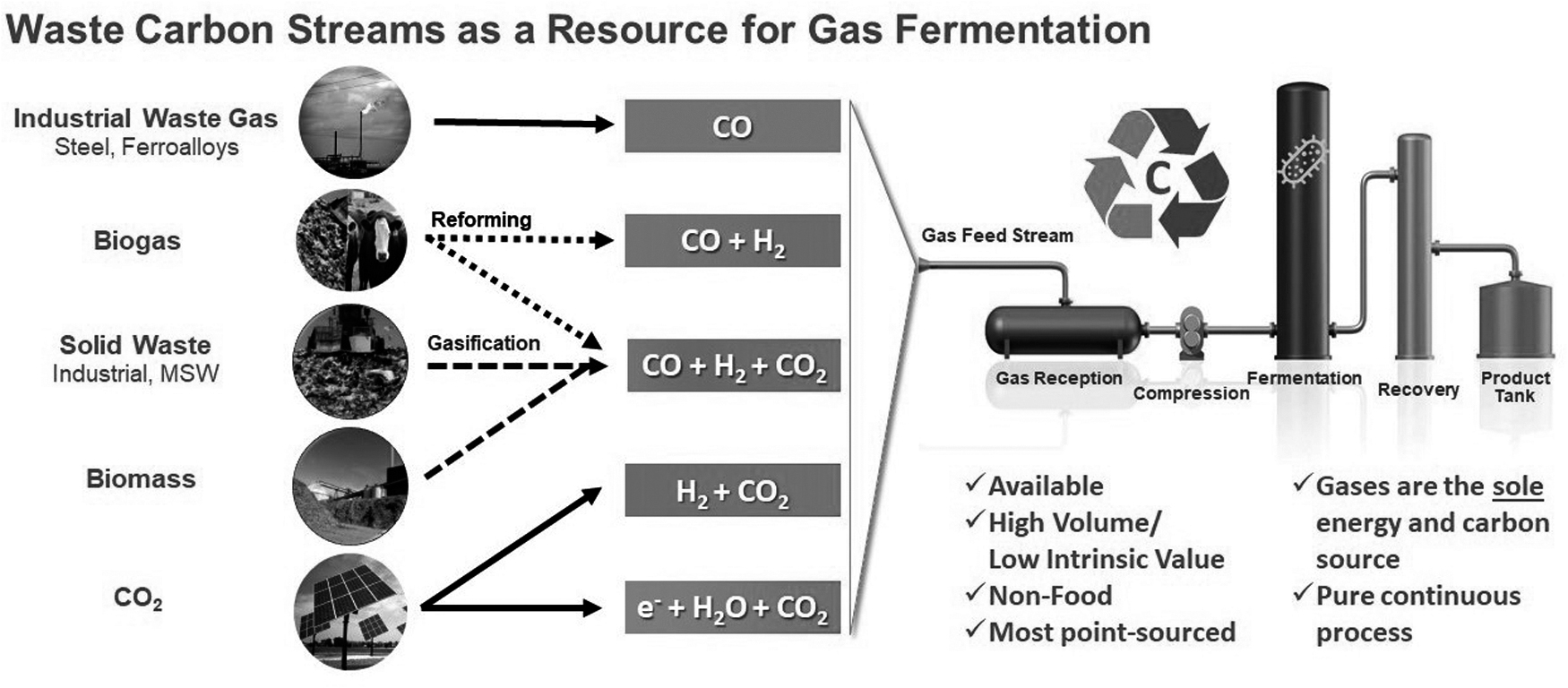
Converting waste carbon streams to ethanol and chemicals using LanzaTech's technology. Source: LanzaTech.
Alternatively, in CCU solutions utilizing electrolysis, electricity—sometimes in combination with a catalyst—is used to convert emissions to bioethanol or various chemicals; the process and/or the catalyst may be proprietary. Avantium's ReCode process is an example of a process using electrolysis (for more information on Avantium and the ReCode process, including a graphical depiction of the process, please refer to the full paper at
Industry sources note that the new production capacity is generally in the form of modular “bolt-on” units that can be added to existing production facilities. 20 Cost data are usually proprietary but industry representatives say that a number of factors affect the cost of retrofitting existing manufacturing sites with such units, including output, the region, and the cost of energy used (e.g., renewable electricity); they add that since this is new technology, it is likely that the costs will decline as the processes are adopted by more companies and further optimized. 21 A 2018 press release, issued when ArcelorMittal broke ground on the Steelanol project, stated that the company was investing about $177 million in the project. The companies developing these technologies see significant potential for the use of waste emissions. For example, Avantium cites the energy efficiency of the ReCode process, the reduction in CO2 emissions, and, speaking of the chemicals produced, “the good market potential of the products at a mass production scale.” 22
Companies also cite the potential of using waste emissions from non-chemical sources. For example, noting that steel mills worldwide produce about 30 billion gallons of waste gas per year, LanzaTech, one of the first companies to start commercial production of bioethanol using waste emissions, says its process can be used on about 65% of global steel mills, potentially producing 30 billion gallons of ethanol annually. The ethanol, in turn, can be turned into about 15 billion gallons of jet fuel per year, or about 20 percent of the aviation fuel used annually.” 23 In Fig. 2, LanzaTech shows other sources of waste carbon (including refineries, chemical plants, and municipal solid waste (MSW), among others) and the potential amount of global ethanol production they estimate can be made from them using their technology. LanzaTech is also focusing on chemicals, such as acetone and isopropyl alcohol, that can be made by switching out the proprietary microbes used in the process. 24 On October 7, 2019, LanzaTech announced ventures with a Chinese steel producer and an Indian petrochemical company to produce downstream chemicals from ethanol produced using their process; the chemicals will be inputs in the manufacture of products such as synthetic fibers that are then used to produce consumer goods. 25 Opus 12, which has developed “bolt-on” units that convert CO2 to chemicals using water and electricity, has identified 16 chemicals and fuels that can be made using its technology, including chemicals such as ethylene that can be used as building blocks to manufacture downstream value-added chemicals. 26

Sources of waste carbon and annual amounts of ethanol potentially produced from each. EtOH is a common abbreviation for ethanol. The units are metric tons per year. Source: LanzaTech; Original graphic can be found at
Although there are no comprehensive data yet on the uptake of CCU projects by the chemical and non-chemical industries, broad estimates exist about the overall potential scope and value of “carbontech” projects to reduce CO2. As mentioned earlier, the term “carbontech” is broader than CCU, describing the technologies and processes that convert waste products such as emissions streams and MSW to new products while reducing the manufacturer's environmental footprint. Use of waste carbon from industrial emissions is one of many carbontech processes being implemented to reduce carbon emissions (Fig. 3).
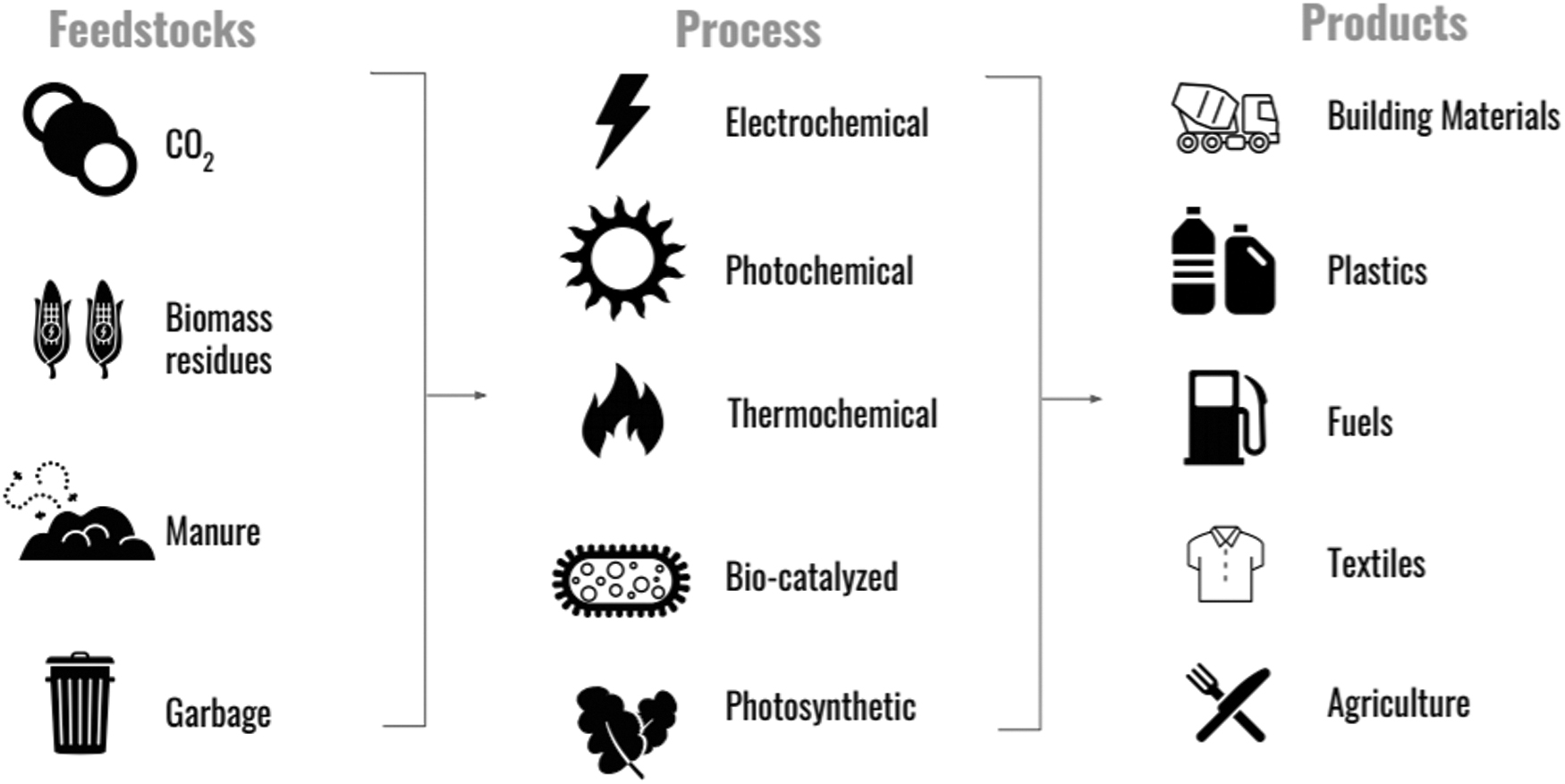
Sample carbontech processes. Adapted from Carbon180 Carbontech Fact Sheet (2018).
Estimates of the size of the US and global carbontech markets vary but they are very large. The US market for all carbontech processes is projected to be valued at over $1 trillion annually by 2030 and the global market could reach $6 trillion per year. 27 Thyssenkrupp, speaking specifically of the market for technologies that reduce waste emissions, says it is “worth billions.” 28 Another source, speaking just of chemicals, estimates that waste carbon could replace use of fossil fuels in the production of about $350 billion worth of chemicals. 29
Fuels and chemicals each account for a relatively large share of the global carbontech market, with the total available market for fuels estimated at about $3.8 trillion and that for chemicals (including plastics) about $440 billion. 30 Although data are not available for the share of carbontech accounted for by waste carbon from industrial emissions, it is estimated that such projects could grow to about 25–30% of the total carbontech market as more processes are commercialized. 31
As shown in Table 1, many of the projects underway to date are in China and the EU. 32 Industry sources cite several reasons for this geographical concentration, including the magnitude of waste emissions available, industrial efforts to reduce emissions to meet national targets, funding, government policies, and, especially in China, reported national concern about reliance on imported fossil fuels. 33 According to one industry representative, the EU and China are more open to investment in carbon capture to produce renewable fuels and chemicals; in comparison, the United States has reportedly little investment in this area. 34 Reasons vary, including emissions targets, carbon pricing programs, and government policies. For example, sources note that CCS technologies are more prevalent in the United States. They attribute this, in part, to the use of EOR to produce more crude petroleum and to US policies that support CCS, including the US 45Q Carbon Capture and Storage tax credit and the California Low Carbon Fuel Standard. 35 Another reason mentioned is that the type and cost of fossil fuel used as a feedstock by the chemical industry varies by region; in the United States, natural gas and other fossil fuel costs are substantially lower than such costs in the EU. 36 These factors are discussed in more detail below.
Examples of CCU Projects Underway Worldwide
Compiled by author from various industry and news sources
Consortia have also been formed to develop and assess such technologies, such as Carbon4PUR in the European Union (EU). Carbon4PUR, a team of 14 partners led by the chemical company Covestro, including industrial and academic partners among others, is exploring how waste carbon from mixed CO and CO2 streams from steel flue gasses can be used to manufacture polyols, a raw material used in polyurethanes. Covestro already produces cardyon® commercially at its plant in Dormagen, Germany; cardyon®, a polyol made from waste CO2 obtained from emissions from a chemical plant, contains up to 20% CO2. In addition to Covestro, other large multinational chemical companies such as Aramco Performance Materials, BASF, Dow Chemical, and Evonik are involved in numerous CCU projects.
The business models used vary. For example, LanzaTech currently licenses its technology; thyssenkrupp, Dow Benelux, and Phytonix Solar Chemicals have also stated they plan to license their technologies. 37 The business models used by the industrial emitters also vary but, according to industry sources, will likely combine licensing and joint venture (JV) models. 38 The technology providers would license the technology to the sources with the industrial emissions with the licensees then owning the chemicals produced. The company providing the waste gas could then create a JV with another company (e.g., a chemical company) that would market/distribute the chemicals produced. The JV would sell the products and the partners would receive payments from the JV. 39 Steel companies would reportedly partner with a chemical company in a joint venture to reduce business risk and to also benefit from the chemical company's knowledge of chemical markets and distribution pathways. 40 Figure 4 presents a graphical depiction of a few possible “mix-and-match” supply chain scenarios; also, although the steel and chemical industries are highlighted in the graphic, other firms with industrial emissions and/or using them (e.g., those manufacturing cement) also play a key role.
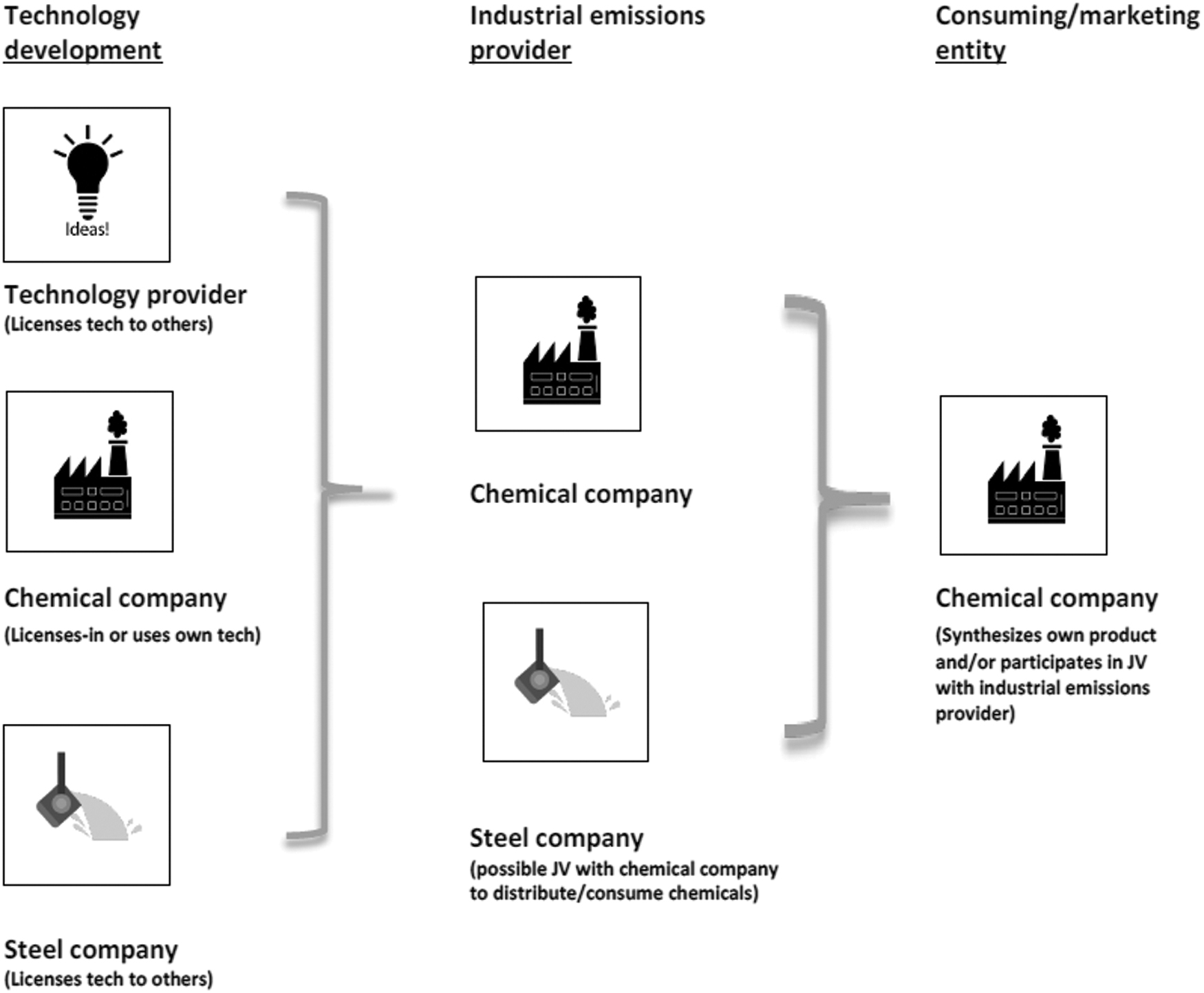
Possible supply chain scenarios for conversion of waste carbon to biofuels and chemicals. Source: Developed by author from various industry and news sources.
Steel companies such as ArcelorMittal (the world's largest steel producer in 2018), Shougang Group (the 6th largest producer), Tata Steel Group (the 11th largest producer), and thyssenkrupp (the 32nd largest producer) are participating in several CCU projects. 41 In June 2018, ArcelorMittal reported that, with LanzaTech, it had started construction of a unit to produce bioethanol at its steel production site in Ghent, Belgium, with production expected to start midway through 2020. 42 ArcelorMittal adds that the CCU project will expand its contributions to the circular economy and help it meet its goal to become a “zero-waste business, with all materials used or generated during steel production recuperated, treated and reused in the production chain or becoming the raw materials for other industries.” 43 The company further says that CCU projects—in conjunction with other routes such as using “clean power” and renewable replacements for fossil fuels, among others—will allow it to “significantly reduce” its waste carbon emissions by 2050, positioning it to become carbon neutral in Europe by that year. 44
In 2018, thyssenkrupp announced Carbon2Chem, a collaboration with about 17 partners from academia and industry. 45 The pilot plant uses industrial emissions to initially manufacture methanol (and then eventually other chemicals such as ammonia and isocyanates), which can, in turn, be used as building-block inputs to produce downstream value-added chemicals. 46 The company adds that, in addition to using such technology at its facilities and other steel production facilities in Europe, its technology can be used at about 50 steel mills worldwide, as well as at production facilities in other “CO2-intensive” sectors. 47 thyssenkrupp has stated that it will cut its waste carbon emissions by 30% by 2030 and its operations will be carbon neutral by 2050. 48
In October 2019, it was announced that LanzaTech's commercial-scale joint venture with Shougang Group had produced over 9 million gallons of bioethanol in its first year of operations; the bioethanol is being used as automotive fuel. 49 Moreover, the project was reportedly on track to start producing a polymer—polyethylene terephthalate—for use in producing apparel and packaging. 50 The JV is said to be in line with China's environmental goals. 51
Factors that Determine Investments to Use Waste Carbon as Chemical Feedstocks
The extent to which new CCU technologies become commercially successful is based on multiple factors, some of which are discussed below. The most important factor to all stakeholders is whether the planned products/processes are chemically possible. Technology providers and consuming companies must also optimize processes in order to use emission feeds containing varying concentrations and purity levels of waste carbon. Moreover, companies developing the products/processes and those using them spend substantial time and money on research and development to identify, test, and scale-up operations and technological advancements from pilot plant to demonstration scale to commercial scale. One source notes that it can take industry about 10 years to develop technology to the demonstration scale level. 52
Once the technology is developed, then technology providers and/or companies utilizing the technology have to make a business case for using it commercially and obtain funding to bring it to commercial scale. Industry sources have noted that the extent to which CCU investments are made depends on several important factors, including: the proximity of CCU processing facilities to the waste gas source; production cost tradeoffs, including those related to feedstock and renewable energy costs; and government policies. 53 These factors are described in greater detail below.
Proximity
Proximity of the consuming entity to the source of the industrial emissions is a key factor, playing a significant role. Companies using CO2 from industrial emissions as a feedstock should ideally be near the source of the emissions because otherwise the CO2 needs to be compressed and then shipped, usually by pipeline, for use at distant locations. Since transporting CO2 is said to be expensive and not economically feasible, co-location of the emissions provider and the consuming company (e.g., with bolt-on or modular units) makes CCU projects more attractive. 54
Production Costs and Tradeoffs
The relative costs of using waste carbon as a feedstock depend on numerous factors along the value chain. Emitters, for example, have to consider alternative uses for the industrial emissions (e.g., if they are flared or used for power/heat). Consuming industries such as chemical producers have to consider factors such as the energy costs needed to run the processes, the downstream product being produced, and the comparable costs of traditional feedstocks.
There are also many process advantages that enter the equation and can enhance the overall impact. In general, many CCU technologies have the potential to provide more sustainable processes, environmental benefits, and cost savings than conventional chemical processes using fossil-fuel feedstocks. CCU technologies based on industrial biotechnology processes such as fermentation, for example, can be integrated with conventional chemical processes, including those that are already in place in existing plants. Such processes use a variety of feedstocks, ranging from waste to renewable inputs. They also usually require less energy, in part by running at ambient temperatures and pressures. The alternative feedstocks and lower energy use generally reduce capital and operating expenditures. 55 Also, given the range of products generated by specific microorganisms in fermentation processes, companies benefit from being able to change product streams as desired (e.g., switching between biofuels and chemicals, depending on market conditions and costs) by changing the microorganisms, many of which are proprietary. 56 But, at the same time, there are a number of cost factors that could temper the speed of adoption. This section will look at possible scenarios in more detail.
Energy Costs
Energy needs contribute a multi-faceted and nuanced layer to the cost analysis, especially given the availability and cost of renewable energy sources. The discussion of energy costs below takes into account several factors along the value chain, including the impact on stakeholders (ranging from emitters to the chemical companies processing the waste carbon), use and costs of renewable energy for replacement and/or process energy needs, the comparable cost of fossil-fuel feedstocks, and regional energy use.
In regard to replacement and/or process energy costs, industrial emissions are generally either flared or used for power/heat. 57 If an emitter using emissions for power/heat invests in technology to produce biofuels or chemicals from its emissions, then additional energy is needed to replace those power/heat needs. Energy is also needed by the chemical companies to run many of the processes.
Sources note that ideally this replacement energy (e.g., for emitters) and/or process energy (e.g., for chemical companies) would be renewable energy to enhance the sustainability of the process. 58 As such, renewable energy availability and costs affect the economic feasibility of CCU projects but questions have arisen as to whether sufficient supplies of low-cost renewable energy are available. 59 BASF, a multinational chemical company headquartered in Germany, recently instituted a new research program addressing reduction of and reuse of waste emissions with the goal of making its production of chemicals carbon neutral by 2030. The company says the new projects will triple its renewable energy requirements and obtaining the energy will be a challenge. 60 BASF adds, however, that government policies will help determine the availability of such energy. 61 Avantium says that renewable energy capacity has to increase, adding that the chemical industry will need 4–9 times more electricity to produce chemicals and biofuels from CO2. 62 TATA Steel says: “New technologies and large amounts of renewable energy are needed to produce steel in a carbon-neutral way.” 63
Alternatively, if the CO2 is flared by the emitter rather than used for power/heat, then sources say that the cost of the CO2 to the consuming chemical company could essentially be free but, for conservative cost estimates, is generally valued at the regional energy price. 64 For steel companies in JVs with chemical companies to produce and distribute the chemicals, one source notes that the JV partners other than the steel company would generally pay for this replacement energy. 65
The economic feasibility of CCU projects reportedly increases when renewable energy costs are around $22–33/MWh. 66 US costs for renewable electricity derived from solar and wind generation (i.e., onshore wind, tracking photovoltaics (PV), and non-tracking PV) vary by region and by project but were in the range of $27–69/MWh in the first half of 2019. 67 In the EU and China, as in the United States, onshore wind and solar electricity prices vary by country and region. Both the EU and China are rapidly adding offshore wind, which is more expensive than onshore wind and solar electricity. 68 Europe reportedly has a lot of renewable energy capacity (e.g., wind) for use in CCU projects. 69
In regard to the comparable costs of fossil-fuel feedstocks, prices of crude petroleum and natural gas are also included in cost analyses (e.g., by technology providers and/or the producing companies) to determine if a competing process using a waste feedstock is economically feasible versus one using a fossil-fuel feedstock. LanzaTech, for example, stated in 2018 that its process to manufacture ethanol (a biofuel) is competitive with crude petroleum priced at $80 per barrel. 70 Another source notes that ArcelorMittal's Steel2Chemicals project with Dow Benelux, TATA Steel, and others is not economically feasible when the price of crude petroleum is $50 per barrel. 71 During the October 2018–19 twelve-month period, however, the price of crude petroleum fluctuated, generally declining from a high of about $76 per barrel to a low of $45 per barrel by the end of 2018 before climbing to about $66 per barrel by the end of April 2019 and then hovering around $50–60 per barrel through September 12, 2019. 72
Also, the type of feedstock used varies by region. For example, natural gas is a major feedstock for the US chemical industry while naphtha is the predominant feedstock in the EU. In the United States, natural gas and other fossil fuel costs are substantially lower than such costs in the EU. 73 US production of crude oil and natural gas has increased rapidly over the past decade, largely because of advances in extraction techniques from shale rock and other similar geologic formations. Natural gas is priced regionally and requires an expensive process of liquefaction and regasification for overseas transport; the increased availability of cheap natural gas within the United States has provided a competitive advantage to domestic chemical manufacturers. 74
Moreover, industrial production and related emissions reportedly increase when natural gas prices are low. 75 But some CCU projects could become less competitive in the United States because lower cost fossil fuels could make alternative feedstocks such as waste CO2 more expensive and, therefore, less competitive.
Overall Impact on Production Costs
The overall impact on production costs of using waste carbon feedstocks varies, largely depending on whether fuels or chemicals are produced and also versus the comparable feedstock. For example, one industry source states that production of fuels from recycled carbon is more expensive than fuels produced from fossil fuels but can be competitive with some fuels produced from biomass. Also, for companies currently producing biofuels, the eventual production of downstream value-added chemicals in addition to the fuels is likely to enhance the economics of such projects. 76
In general, however, several of the companies manufacturing chemicals from waste carbon streams have estimated cuts in production costs (largely resulting from the feedstocks) of about 20–50%. 77 Companies that cited reductions of about 20% observed that they were being conservative either because the projects are in their early stages or because the chemistry of the processes limits the amount of CO2 used as a feedstock and, therefore, the savings. 78 In comparison, Phytonix Solar Chemicals states that they can produce butanol for about $2 per gallon, reducing production costs by more than 50% compared to fossil-based production. 79 In a 2018 presentation, the company stated that its CO2 feedstock costs were about $0.35 per gallon of butanol in the 4th quarter of 2017 (said to be based on CO2 costing about $40 per ton) versus other producers' propylene feedstock costs of $2.75 per gallon of butanol. 80 Aramco Performance Materials, which has projects underway addressing the production of polyols from waste carbon with CO2 concentrations in the final product of about 40–50% by weight, has stated that the cost of waste carbon is “consistently 90–95 percent less expensive than petroleum based feedstock.” 81
Government Policies
Government policies play an important role in the evolving expansion of CCU projects. The geographical concentration of the waste carbon projects generally reflects the location of sources of public funding and other policy measures, particularly regarding the production of biofuels, whereas chemical production is often based on market demand. 82 Many governments' biobased products policies have historically addressed biofuels rather than biobased chemicals. 83 However, such biofuels policies generally do not recognize feedstocks other than biomass. In the United States, for example, since current federal regulations largely define biofuels as being made from plant-based feedstocks, ethanol and other biofuels made from industrial emissions haven't qualified for the federal renewable fuels mandate, thereby limiting their use. 84 As one source says, “What's key is whether the fuel qualifies for local incentives or even has a share in the market. In Europe, for example, fuel needs to qualify under the European Renewable Energy Directive. 85 This impacts the price of the fuel and the payback to those investing in a facility.” 86
Richard Branson, founder of Virgin Group, 87 has said that “firm government action on incentives” would be needed to build a commercial-scale CCU plant in the UK to produce jet fuels from waste carbon emissions that could produce about 125 million gallons of jet fuel per year. 88 Industry representatives concur, noting that recent government policies have included incentives to encourage production and use of products made from waste carbon. As a source notes, “Today we're seeing a step change globally. Both in inclusion of fuels made from ‘recycled carbon’ and in tax credits that support carbon utilization technologies.” 89 Bioethanol derived from industrial emissions will be recognized as an “advanced” biofuel by the EU under the Renewable Energy Directive 2 (RED II) which was implemented in December 2018 and is expected to be reflected in member countries' national laws by June 30, 2021. 90 RED II is expected to attract new investment in renewable energy in the EU, in part by providing longer-term certainty to investors. 91
In the United States, the US 45Q Carbon Capture and Storage tax credit was expanded by the Bipartisan Budget Act of 2018 to, among other things, include CCU projects using industrial emissions. 92 Eligible companies can claim the tax credit for CCU projects creating chemicals from industrial emissions as long as lifecycle assessments indicate a net reduction in waste carbon emissions. 93 The 45Q tax credit and the California Low Carbon Fuel Standard are said to be spurring new US carbon capture projects. 94
Moreover, many world regions have (or are implementing) incentives and/or mandates to reduce emissions; increase use of biofuels such as ethanol; or increase CCU projects. 95 Biofuels Digest says that blending mandates in the EU, the United States, China, and Brazil will promote biofuels demand worldwide. 96
The United States, for example, has the Renewable Fuels Standard (RFS), Renewable Identification Numbers (part of the RFS), credits, and regional incentives. 97 As cited by one source, however, the United States also has the potential to provide additional grants and funding for CCU projects, particularly such projects addressing chemicals. 98
The EU reportedly has the majority of biofuels mandates in place worldwide. 99 The EU also has a goal to reduce industrial emissions by 2030 by 40% below 1990 levels and many member countries have set goals to meet the targets set by the UNFFC and the Paris Agreement. 100 Since one way to meet this goal is to implement CCU projects, the EU has implemented research funding mechanisms such as “research, development, and deployment” funding and programs such as Horizon 2020, the Innovation Fund, and Sustainable Process Industry through Resource and Energy Efficiency (SPIRE). 101
Several projects are funded by Horizon 2020 and/or SPIRE, including Carbon4PUR, ReCode, and Steelanol, among others. 102 Whereas Horizon 2020 focuses on promoting EU competitiveness, the Innovation Fund focuses on low-carbon projects, including CCU projects. 103 The Innovation Fund, valued at over €10 billion (or about $11.4 billion), depending on the carbon price (discussed further below in this section), is reportedly focused on helping European companies sustain their leadership position in low-carbon technologies. 104 It was implemented as part of the EU's update of its Emissions Trading System (deployed on April 8, 2018) to assist its efforts to meet its emissions targets by 2030 and to “support the European Commission's strategic vision of a climate neutral Europe by 2050.” 105 Funding for the Innovation Fund will be obtained, in part, from the EU Emissions Trading System, which has been described as “the world's largest carbon pricing system.” 106
Moreover, a recent report from Members of Parliament on the Business, Energy and Industrial Strategy (BEIS) Committee mentions that, for the UK, CCU technologies “will be necessary to meet the UK's existing climate change targets at least cost, and that the country could not credibly adopt a ‘net zero’ target, in line with the aspirations of the Paris Agreement, without the technology.” 107
Like the EU, China is implementing biofuel mandates. China has long stated that all gasoline used in the country will be blended with bioethanol by 2020. 108 China has also issued standards to lower levels of certain pollutants in steel emissions by 2025; companies that meet the standards will reportedly be eligible for financial incentives. 109
Carbon pricing programs, including emissions taxes, also reportedly encourage CCU projects. 110 Carbon pricing is generally defined as putting a price on emissions with the general goal to encourage emitters to discontinue emissions or continue/reduce their emissions, paying for the level they emit. 111
The EU and China both have carbon pricing programs. 112 China, for example, has had several carbon pricing pilot programs in place and will reportedly roll out a national plan with monetary trading in 2020. 113 Carbon prices in the EU reportedly tripled since 2018. 114
As such, many companies worldwide are reportedly already considering a carbon price in their business plans. 115 Cefic, the European chemical industry trade association, says in its “mid-century vision”—presenting a strategy for the European chemical industry through 2050—that a world carbon price would make waste carbon “a valuable commodity” and that the circular economy will play an important role in the European chemical industry's future.” 116 Cefic's vision is based on numerous assumptions, including that the European CO2 price will grow to $111.47 per metric ton by 2050, incentivizing chemical producers to focus on CCU projects. 117
As mentioned earlier, government policies play an important role in the evolving expansion of CCU projects. Although the rate at which government policies promoting CCU are being developed and implemented varies by country and region, these incentives and mandates are likely to increase the relative attractiveness of CCU investments for industrial emitters, as well as the rate of substitution of waste feedstocks for fossil-based feedstocks for consuming chemical companies.
Case Study: What Is the Potential Impact on the Steel Industry?
Steel manufacturers around the world are facing numerous factors affecting their bottom line, including growth projections, emissions targets, and carbon prices. This section addresses in more detail how CCU and chemical manufacturing can help mitigate costs and revenue loss.
Production Trends
The global steel industry is a significant source of industrial emissions, reportedly accounting for about 25% of the global manufacturing sector's industrial emissions of CO2. 118 The World Steel Association states that production of crude steel in 2019 amounted to 1.81 million metric tons in 2018, up from 1.73 million metric tons in 2017. 119
Other than in 2008–09 and 2015, world crude steel production increased every year since 2000. 120 Projections vary as to future growth of demand and production through the next 15–20 years but seem to indicate slowing growth. One expectation is that steel demand will only grow by 1.1% annually through 2035, reaching about 1.9 billion tons in 2035, which is below 2019 global production capacity of about 2.3 billion tons. 121 Another source posits that crude steel production capacity will grow to 2.8 billion metric tons in 2030 and 3.1 billion metric tons in 2040 but adds that no new capacity is needed by 2040 if growth stays at or below 1.4% per year. 122 Industry sources note the current oversupply situation for crude steel production capacity versus demand, particularly in China. 123
Production Processes and Emissions
The CO2 intensity of crude steel production varies because of several factors but production processes play a large role. The two predominant crude steel production processes are the integrated process, which primarily relies on blast furnace (BF)/basic oxygen furnace (BOF) technology to melt iron ore into molten iron for subsequent conversion into crude steel, and the electric arc furnace (EAF) process, which melts and converts scrap steel into crude steel. 124 The BF/BOF process emits about 1.8–2 metric tons of CO2 for every metric ton of crude steel produced. In comparison, emissions from the EAF process are reportedly much lower than BF/BOF levels; one source quantifies them as being about 20% of BF/BOF levels. 125
World Steel Association statistics indicate that steel mills using the BF/BOF process accounted for about 71% of total worldwide production in 2018 versus about 29% for the EAF process. 126 Moreover the statistics indicate that usage also varies by country/region. In 2018, whereas EAF mills accounted for the majority of US production of crude steel (about 68%), BF/BOF mills accounted for an estimated 88% of Chinese production. In the EU, the mix is relatively more even, with BF/BOF mills accounting for about 59% of production versus 42% for EAF mills. 127
Production Versus Emissions Goals
There are few long-range projections for world steel production and demand. Whereas IEA suggests that economic and population growth may result in growth in steel demand in emerging countries, both IEA and Accenture Strategy suggest that Chinese demand will slow; Accenture Strategy also states that global demand growth may slow if emerging countries face slower industrialization rates; as new materials emerge that could replace steel; and as more scrap steel is used as the circular economy grows. 128 Slowing demand scenarios may be exacerbated by production cuts to meet emissions targets and carbon pricing programs.
In 2019, the European steel industry was already said to be facing cost pressures because of increased imports of low-cost Chinese steel imports and, prospectively, from carbon pricing. 129 About 85% of the global steel industry is potentially expected to face an average reduction in net present value of about 14% if carbon prices reach about $100 per metric ton by 2040; the source also mentions that many steel companies are not likely to reach the necessary emissions reductions by 2050 to meet world CO2 reduction goals. 130 Moreover, an Organisation for Economic Co-operation and Development (OECD) report says that OECD steel producers, particularly those using the BF/BOF process, are expected to reduce production by as much as 12% if an OECD-wide carbon tax of about $25 per metric ton of CO2 is implemented. 131 ArcelorMittal, for example, reported that a production cut in May 2019 was, in part, due to rising carbon prices. 132
As such, the steel industry is reportedly continuing to research and implement ways to reduce emissions, including abatement efforts; process enhancements; and using the emitted waste carbon to produce other value-added products, such as chemicals and textiles. 133 Innovation and partnerships are considered critical. 134 Eric de Coninck, Chief Technology Officer for Technology Development at ArcelorMittal, is cited by one source as saying: “We must search for innovative solutions to further reduce the emission of greenhouse gasses.” 135
The use of waste emissions to make chemicals will let steel companies reduce their carbon footprint and associated carbon tax burden while also producing value-added products. LanzaTech says that they recycle the steel industry's waste carbon, getting twice the value that steel mills would, and that steel companies are factoring this into their business models as they move towards a circular economy. 136 Another source noted in 2011 that, given certain specified conditions, a steel mill that sells all its waste carbon emissions to produce chemicals could accrue about $55 million annually; the source added that emissions taxes could double such benefits. 137
Potential Business Models
One potential question is whether the use of this technology to make chemicals lowers the barriers to entry to the chemical industry for steel producers. The business models used by the industrial emitters vary but, reportedly, are expected to combine licensing and JV models. In this scenario, the technology providers would license the technology to the sources with the industrial emissions with the licensees then owning the chemicals produced. The company providing the waste gas could then partner with another company (e.g., a chemical company) that would produce, market, and/or distribute the chemicals. 138 The partnership would sell the products and the partners would receive payments from the partnership. 139 Steel companies, for example, could partner with a chemical company in a JV to reduce business risk and benefit from the chemical company's knowledge of production processes, chemical markets, and distribution channels. 140
Conclusion
Using waste carbon from industrial emissions as a feedstock for chemical manufacture appears to be a viable complement to ongoing abatement efforts. For one thing, such processes can reduce the amounts of CO2 emitted to the atmosphere, helping industry and national economies meet sustainability goals. IEA says that CCU strategies could result in “near-zero steel production and emissions” and “new economic opportunities.” 141 An April 2019 report from Members of Parliament on the Business, Energy, and Industrial Strategy Committee mentions that, for the UK, CCU technologies “will be necessary to meet the UK's existing climate change targets at least cost, and that the country could not credibly adopt a ‘net zero’ target, in line with the aspirations of the Paris Agreement, without the technology.” 142 The report also says that a failure to develop CCU technologies “… could force many heavy industries to close in the coming decades, if the UK sticks to its climate change targets.” 143 Customers are also increasingly seeking “green” products, further driving adoption of many of these technologies.
On a geographical basis, European chemical firms have reportedly been among the first to adopt circular economy principles. 144 The EU is also considered a likely location for such projects given its published goals to reduce emissions; proactive government policies such as RED II and its biofuels mandates; large industrial sector; its renewable energy resource base; and its goal to increase renewable power to 20% of EU energy use in 2020 and to become “the world's first climate-neutral continent by 2050.” 145 Also, funding in Europe is reportedly becoming more available as pension funds and investment funds move away from fossil-fuel investments. 146 One source, speaking of the European chemical industry, notes that CCU would allow the industry to reduce its reliance on fossil fuels (which can undergo substantial pricing swings and supply volatility) and “at the same time create a new source for European competitiveness versus raw material rich regions.” 147 Another source states that European leadership in development and deployment of clean-energy technologies translates to a global competitive advantage. 148
Firms in other regions are also said to be focusing on building such principles into their operating models. 149 China is considered a likely location for chemical projects using waste carbon, given its efforts to keep its economy growing by focusing on manufacturing and the related growth in its steel and cement industries. 150 As mentioned earlier in this paper, several reasons are cited for Chinese projects, including the country's goals to reduce industrial emissions and improve air quality (particularly as China seeks to transition to innovative, value-added production); China's reported concerns about its import reliance on fossil fuels; and the availability of funding, particularly from the Chinese government. 151 Other factors cited include the large sizes of its steel and chemical industries versus those in other countries and its need for bioethanol, given its mandate to use E10 gasoline nationally by 2020.
Many things are in flux: technologies are still being developed and scaled up; government policies are being implemented; business models are being established; funding is still being sought; the costs of installing the new technologies; 152 and the supply and pricing of fossil fuels remain volatile. But steel companies, refineries, and chemical companies are increasingly starting to use waste carbon emissions as feedstocks for chemicals and there are significant supplies of waste carbon from global industrial emissions worldwide for companies to use. A report from CO2 Sciences and The Global CO2 Initiative estimates that seven billion metric tons of CO2 emissions per year—about 15% of global CO2 emissions—are likely to be available for use by 2030. 153
Although estimates are not available of the potential number of projects that may become viable, the timeframe of commercial development of the projects, or the value of products derived from the CO2 emissions, the sampling of projects listed in Table 1 reflects the interest of manufacturing firms, particularly those in the steel and chemical sectors, in CCU projects.
On a sectoral basis, chemical producers using waste carbon as a feedstock instead of fossil-fuel based feedstocks are said to be less subject to the volatility in price and supply of fossil-fuel feedstocks. 154 They also appear to be able to derive a competitive advantage in regard to the pricing of many of the products produced from the waste carbon feedstocks and, to the extent that they are partners in JVs with industrial emitters, they may also be able to increase market share and/or market coverage. Moreover, use of the waste carbon feedstocks is likely to allow them to respond to carbon pricing programs and renewable energy mandates.
Steel companies that can gain revenues from byproduct sales derived from their industrial emissions and offset emissions taxes and/or reduce other obligations under new mandates may be able to avoid reducing production in an increasingly competitive and oversupplied global market for steel with thin profit margins. Steel industries that adopt these sustainable technologies might be able to better survive oversupply conditions, carbon pricing programs, and renewable energy mandates than those that do not.
In closing, early adopters of these technologies could gain world market shares and increase export flows, potentially edging out industries worldwide that focus on them later. 155 Industrial organization economists note that any cost reduction due to improved technology will lead to a price reduction—and, therefore, more competitive performance—regardless of market structure (i.e., whether the market is perfectly competitive, monopolized, or somewhere in between). 156
Footnotes
Acknowledgments
The author would like to thank Dylan Carlson, Heidi Colby-Oizumi, Andrew David, Diana Friedman, David Guberman, Dan Matthews, and Dan Kim (USITC); Professor Robert Feinberg (American University); and Pedro Cardenas for their helpful comments and suggestions. The author also thanks Trina Chambers, Shadara Peters, and Monica Sanders (USITC) for administrative support.