




Abstract

The availability to synthesize DNA reliably and at low cost is poised to not only disrupt numerous markets, including chemicals/materials, diagnostics, therapeutics, and food, but also significantly improve the sustainability profile of manufacturing. Twist Bioscience—founded in 2013 by Emily Leproust, Bill Banyai, and Bill Peck—has developed a proprietary semiconductor-based synthetic DNA manufacturing process featuring a high-throughput silicon platform that allows it to miniaturize the chemistry necessary for DNA synthesis. This miniaturization reduces reaction volumes by a factor of 1,000,000 while increasing throughput by a factor of 1,000, enabling the synthesis of 9,600 genes on a single silicon chip at full scale. Traditional synthesis methods produce a single gene in the same physical space using a 96-well plate. The company reported 2020 sales of $90.1 million.
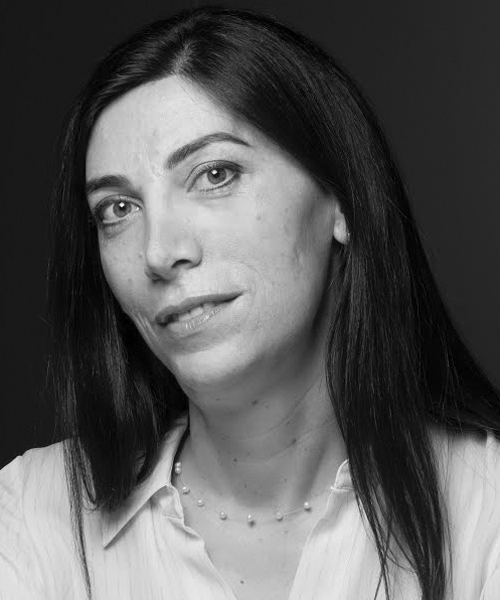
Industrial Biotechnology recently sat down with Leproust, Twist Bioscience CEO and cofounder, to discuss her pioneering work in the high-throughput synthesis and sequencing of DNA. In 2020, Biotechnology Innovation Organization presented her with the Rosalind Franklin Award for Leadership. Prior to Twist Bioscience, she held escalating positions at Agilent Technologies where she architected the successful SureSelect product line that lowered the cost of sequencing and elucidated mechanisms responsible for dozens of Mendelian diseases. She also developed the Oligo Library Synthesis technology, where she initiated and led product and business development activities for the team. Dr. Leproust designed and developed multiple commercial synthesis platforms to streamline microarray manufacturing and fabrication. She serves on the Board of Directors of CM Life Sciences and is a co-founder of Petri, an accelerator for start-ups at the forefront of engineering and biology. Dr. Leproust earned her Ph.D. in Organic Chemistry from University of Houston and her
Eight years ago, we founded Twist, just the three of us, with $600,000 in seed money. Just eight years later, we achieved revenues of $31.2 million in our last quarter. That only happens if you have a combination of a few things; one is a great idea. The Twist idea to make synthetic DNA that enables our customers to improve health and sustainability, is, I think, a very good one. Second, you need great people. We've been focused on attracting great people to Twist and building an innovative, high-performing culture. Next, you need capital. We've raised quite a bit of capital over the years, from investors that are focused on true differentiation, true innovation, and building something big.
The last thing you need is grit. It's not a straight line or curve. There's ups, downs, and hardship. We always tell the team: if it was easy, everybody would be doing it. We stayed focused through good and bad times, and here we are. I think what we have achieved is quite impressive. Our customers are very happy, and we are making a big impact on the world. And, we are only at the end of the beginning. It's good, but there is a lot more we can do.
From that platform, we are building DNA for a number of applications. One is in synthetic biology. Our customers use our DNA to engineer yeast, algae, and E. coli. If you feed sugar to yeast, you get products like beer or champagne. But, if you change the genes, you can redirect the metabolism of what's happening inside the yeast cell. Instead of making alcohol, you can make any chemical you want. Using synthetic biology, the chemicals currently being made from oil could be made from biomass. You can replace existing material, which is good and more sustainable, but also cheaper. Frankly, people care more about cost than sustainability.
The second thing is that, not only can you make drop-in replacements for chemicals currently produced, but also new chemicals that would be almost impossible to make from oil. One example is spider silk; the material is super strong—stronger than steel—and very light. The problem is you can't farm spiders. If you put a million spiders together, and you come back a week later, you have one spider. But, if you take the genes for spider silk and you put it in yeast, you can produce spider silk at large scale.
This is just one example. But I think the big picture is that all the plastics currently being made have the potential to be replaced by proteins. This would be more sustainable, cheaper, and you could have materials that are new, and improve our lifestyle.
Another way to cultivate culture is driven by how you act when there is a failure. If you create a culture where failure is not an option, people always play it safe. Also, if you're never failing, you're probably not trying hard enough. Of course, you don't want to fail all the time, but sometimes is okay.
From the executive level, it is important to keep the bar high. I have people coming to me saying something is way too hard. And I say, “Good.” If it was easy, everyone else would be doing it too. If you're not hearing, “This is too hard,” you're probably not pushing the envelope enough.
But, when setting hard goals, you also have to step back a bit as management. If I want a boat, and tell my employee exactly the color, shape, and material of that boat, I will get that boat. But as a manager, if I give my employees a longing for the high seas, they will build their own boat. And every time, their own boat is better than mine. As a manager, you don't want to stand in the way of innovation. Many times, people tell me they will try x, y and z, and I'm thinking to myself, “That will never work.” And it works! And I'm so glad I didn't say it wouldn't work! At all levels, you have to give them inspiration and let them innovate in their own way.
I am definitely most proud of what we've built at Twist as a team. I always say, “It it's good it's the team, if it's bad it's me.” So, my biggest achievement is building the right team to get here.
The other thing I see is self-doubt. Sometimes we write a job description at Twist with someone specific in mind. And it has happened several times that the individual doesn't apply because they didn't have one of ten things listed in the job description. This has happened more with women than with men. I think women are more likely to have this self-doubt.
My grandmother used to say, “Fear doesn't make the danger go away.” It is important to learn to ignore a voice that tells you you can't do something and just go for it.