




Abstract
Single cell protein (SCP) refers to dead and dried cells of microorganisms such as yeast, bacteria, fungus, and algae. SCPs serve as food or feed supplement and provide an alternative to traditional protein sources. This study aimed to produce SCP from Lactobacillus sp. using fruits and vegetable waste (orange peels, onion peels, and pea pods). The maximum yield of SCP produced was 8.6 g with inoculum of 4% at pH 6 for 48 h at 37°C on food waste media with a 1% concentration. The SCP was found to be rich in vital macronutrients such as protein (48.34 ± 0.05%), fat (2.44 ± 0.2%), fiber (2.97 ± 0.16%), and ash (5.93 ± 0.25%). SCP was also evaluated for its functional properties such as bulk density (0.62 ± 0.08g/cm3), water (2.31 ± 0.43 mL/g) and oil (1.89 ± 0.26 mL/g) absorption capacities, foaming capacity (12.25 ± 2.04%), emulsion (50.5 ± 0.99%), DPPH inhibition (38.84 ± 0.01%) and total phenols (10.19 ± 0.04 mg GAE/g)]. The results suggest that the SCP produced is rich in many vital micronutrients and possesses important functional properties, which suggests it is a potential candidate to be used as a functional ingredient in food products. Moreover, to the best of the author's knowledge, there is no report available in the literature on SCP production by Lactobacillus utilizing food waste. The conversion of food waste into a value-added product using the easily available and safe microorganism Lactobacillus makes SCP production more economically viable and environmentally friendly.
Introduction
Both humans and animals consume protein as a source of nitrogen and essential amino acids, which they use to build new structural and functional proteins that allow them to live. The amino acid content of a protein influences its nutritional value; dietary protein typically contains 20 amino acids, many of which cannot be synthesized by humans or animals and are thus required and must be obtained from food. 1 Protein can also be acquired by cultivating various bacteria and algae, preferably those with more than 30% protein in their biomass and capable of producing a healthy balance of essential amino acids. Although certain producing microbes, such as filamentous fungi or algae, are multicellular, microbial protein is often referred to as single cell protein (SCP). Microbes contribute to protein demand by enhancing the protein concentration or quality of fermented foods, in addition to direct usage as SCP. 1
Orange peel is a by-product affordable and excellent substrate for the development of microorganisms. Orange peel includes insoluble polysaccharides such as pectin, cellulose, hemicellulose, and soluble carbohydrates, including glucose, sucrose, and fructose. 2 It is also high in fiber and low in protein content. The orange peels may be employed as low-cost and eco-friendly adsorbents for removing colours from wastewater. Citrus fruit oil (D-limonene) demonstrates detoxifying and antioxidant effects. 3
Processing and stabilizing onion wastes might alleviate the problem of its disposal and acquiring stabilized onion by-products as natural antioxidant food additives. It was revealed that brown skin and top-bottom might be employed as a functional component rich in dietary fiber, primarily in the insoluble fraction, and in total phenolics and flavonoids, with solid antioxidant activity. 4 Moreover, dark skin included a high quantity of quercetin aglycone and calcium, and the top-bottom had a high concentration of minerals. Outer scales might be used as a source of flavanols, with antioxidant solid activity and amount of dietary fiber. Onion wastes suitably processed and stabilized might be used in the food business as beneficial ingredients to be added to processed meals. Onion extracts might be utilized as natural dietary components to prevent browning produced by the enzyme polyphenol oxidase. 5
Peapod is a by-product derived from green pea manufacturing. Pea pods usually comprise about 30–67% of the weight of the harvested product (whole pod). Peapod may be utilized as sustainable biomass for microbial fermentation, comprising cellulose and hemicellulose coupled with crude protein, lignin, and ash. 6
Bacteria, yeast, fungus, and algae have the potential as agents in the bioconversion process to produce single cell protein. For instance, Lactobacillus sp. is a gram-positive bacterium and is non-pathogenic. Therefore, Lactobacillus sp. is ideal to use in the bioconversion process to create SCP since it does not cause harm, disease, and death to another organism. Lactobacillus sp. is widely known to be employed in bioconversion since it can digest monosaccharides, including glucose, amylose, and maltose, used as substrates in SCP manufacturing. 7 In this work, we intended to investigate the potential microbial fermentation of fruits and vegetable wastes into SCP by utilizing Lactobacillus on media containing fruits and vegetable wastes.
Materials and Methods
RAW MATERIAL
Orange peels, onion peels, and pea pods were obtained from regular household waste. Collected food waste was thoroughly washed and tray-dried for 6 h at 50°C. The dried waste was ground and sifted with a 500 μm sieve. The powdered food waste was further used as media by blending with distilled water for fermentation. Bacterial culture of Lactobacillus sp. was isolated from a yoghurt sample of Epigamia Greek.
SINGLE CELL PROTEIN PRODUCTION
Single cell protein production was carried out in 100 mL flask containing 50 mL food waste media, as suggested by Chalon et al., 8 with slight modifications. Food waste media of different concentrations (1, 2, 3, 4, and 5%) were fermented with different inoculum sizes (2, 4, 6, 8, and 10%) and at different pH (4, 5, 6, 7, and 8) for varying time intervals (24, 48, 72, 96, and 120 h) at 37°C to optimize conditions for optimal SCP production. The fermented food waste media was filtered through muslin cloth, and the filtrate was sonicated at 25kHz for 50–150 s and was centrifuged at 10,000 RPM for 15 min. Further it was collected and dried at 60°C until a consistent weight was attained. The dried pellet was ground into a fine powder of SCP. The SCP was kept in a cold, dry place till further analysis. Optical density was measured at 600 nm and protein was analyzed per the method of Lowry. 9
RESPONSE SURFACE METHODOLOGY
A set of mathematical/statistical approaches for generating and deploying empirical models is called Response Surface Methodology (RSM), using The Design Expert (DX 13) software. RSM was attempted to connect response to the levels of various input variables or factors that impact it through suitable experiment design and analysis. 10
DATA ANALYSIS
Cell growth and crude protein were the fixed variables. In contrast, independent variable treatment factors include Production time (factor 1), Inoculum size (factor 2), and pH (factor 3), the range and level of which are shown in Table 1. The formulation of the RSM technique was used to optimize the process of producing SCP. The independent variables are provided in Table 2.
Determination of Independent Variables and Treatment Codes in Research
Experimental Runs and Actual Values of Factors Used in Central Composite Design
PROXIMATE ANALYSIS OF SCP
The composition of SCP (protein, fat, carbohydrates, ash, moisture content, fiber) was determined as per the methods given in AOAC method.
FUNCTIONAL PROPERTIES OF SCP
The functional properties viz. bulk density, water absorption capacity, oil absorption capacity foaming (capacity and stability), emulsion (capacity and stability), DPPH scavenging activity, total phenolic content and ascorbic acid content of single cell protein were determined as per Razzaq et al. 11
FOURIER-TRANSFORM INFRARED SPECTROSCOPY
Fourier-transform infrared spectroscopy (FTIR) of the single cell protein was performed in attenuated total reflection (ATR) mode on a PerkinElmer Spectrum 400 instrument equipped with a Diamond ATR. After mounting the SCP, the spectra were collected from 400 to 4,000 cm−1 with 16 scans at a resolution of 4 cm−1. The resulting spectra were then altered in Spectrum 10 software to conduct baseline correction and deconvolution of the FTIR peaks with an enhancement factor (γ) of 2 and a smoothing filter of 70%. Similar parameters have already been utilized effectively in other publication. 12 The SCP was sonicated for different time intervals of 50 s, 100 s, and 150 s; each sample was analyzed for protein conformation using FTIR.
Results and Discussion
SINGLE CELL PROTEIN PRODUCTION
The food waste media of different concentrations was fermented with different inoculum sizes at different pH and for different time intervals at 37°C to optimize conditions for optimal SCP production. Maximum SCP production was found at food waste concentration of 1%, incubation period of 120 h at 37°C, with inoculum size of 4% at pH 6, which increased the SCP yield to 8.6 g.
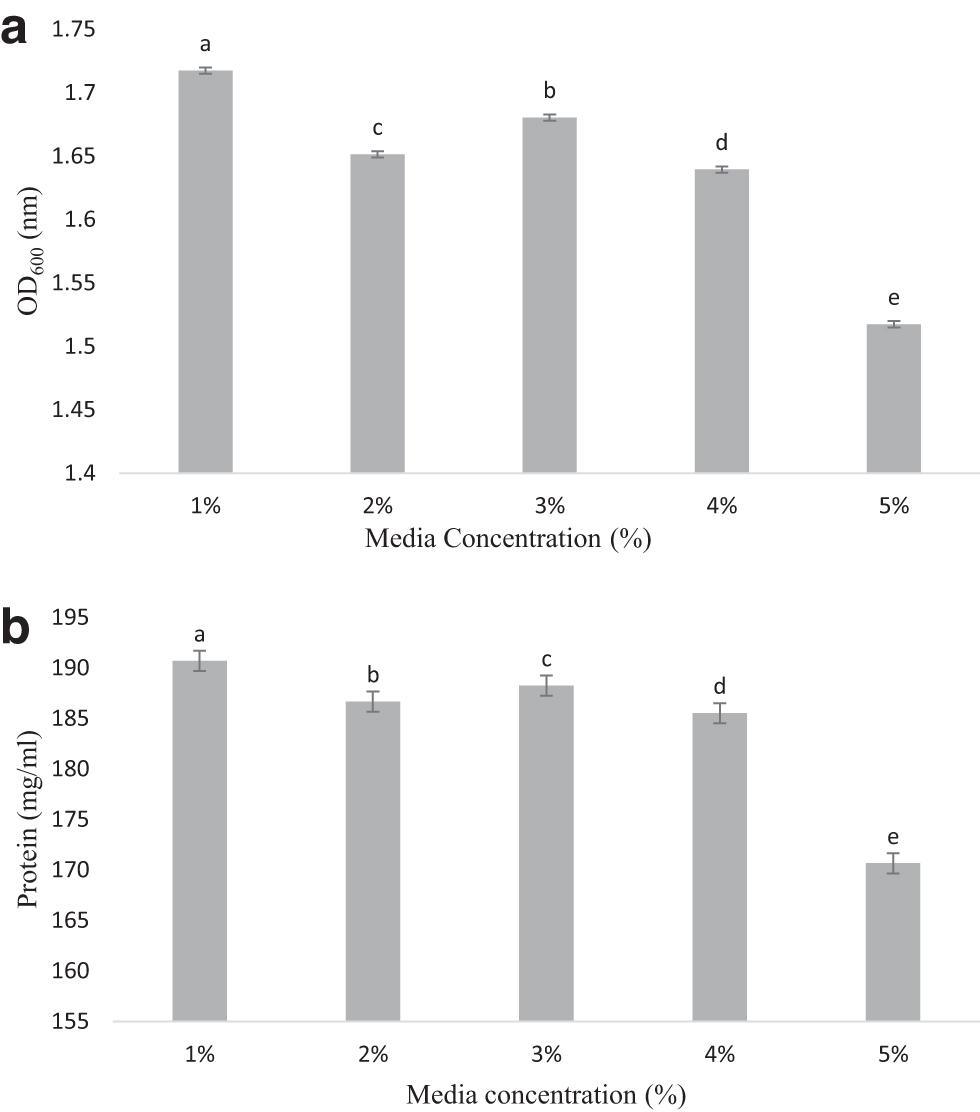
The influence of media concentration on production of single cell protein is shown in Fig.1a-b . The best results were observed at food waste media concentration of 1%. As the concentration of food waste was increased the bacterial growth and protein concentration substantially decreased, this must have caused due to substrate inhibition.
The inoculum size greatly impacts the biomass growth and secondary metabolite synthesis of microbial cultures. Inoculum size primarily influenced biomass growth and volumetric secondary metabolite production. In most cases, increasing inoculum density resulted in increased biomass production but a reduced average (specific) growth rate. Figure 2a-b clearly shows that inoculum size of 4% greatly affected the production of SCP.

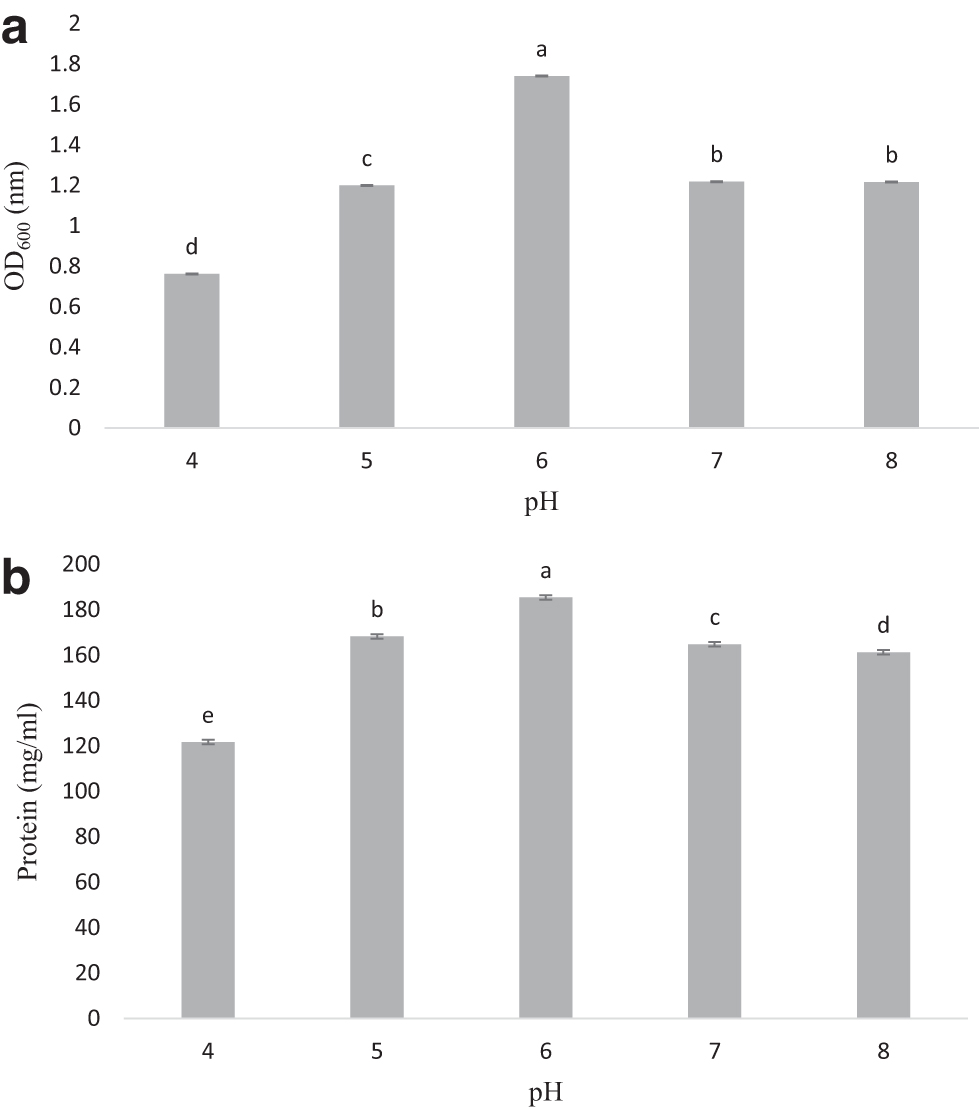
Microorganisms are highly dependent on extracellular pH for their cell growth and production of substrates. These microorganisms grow optimally under pH conditions below pH 9. Therefore, the production of protein is considerably affected by the pH of the growth media. As shown in Fig. 3a-b, there is a significant difference in cell growth and protein concentration at pH 6 compared to other pHs of 4, 5, 7 and 8.
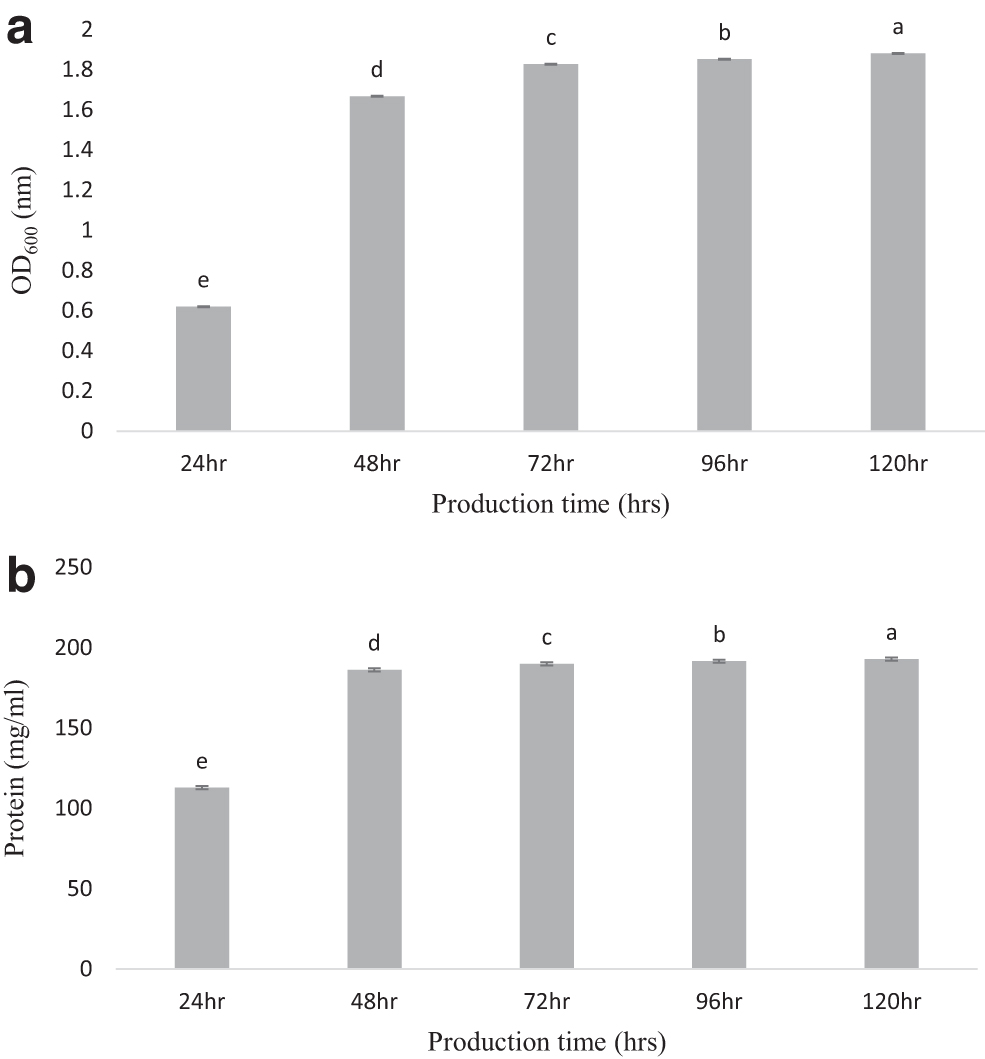
The results of study on effects of production time on single cell protein production is shown in Fig. 4a-b, the cell growth and protein concentration considerably increased until 72 h, but did not see much difference later.
OPTIMIZATION BY RESPONSE SURFACE METHODOLOGY
The results of applying Response Surface Methodology (RSM) with different formulations to analyze the research parameters of cell growth and crude protein in the production of Single Cell Protein (SCP) on food waste media obtained data that can be seen in Tables 3 and 4.
Analysis of Variance (ANOVA) for Response Surface Model for Cell Growth
Analysis of Variance (ANOVA) for Response Surface Model for the Protein
CELL GROWTH
The results of the Analysis of Variance (ANOVA) demonstrate that inoculum size had a significant influence on cell growth response, with a p-value less than 0.05. (0.0001) (Table 3). The cell growth response model has an F value of 19983.06, suggesting that it is significant, which implies that the model may still effectively characterize it and use it as a predictive model throughout the optimization process to get the optimum formula. If the p-value is less than 0.05, the variable significantly influences other variables. The lower the p-value, the greater the degree of significance. 13
The appropriate model for cell growth response identified by the program is a first-order (linear) model with an R2 value of 0.9999. A close to one R2 value implies a high correlation between the data and the derived model. 14 In addition to R2, lack of fit is used to assess the degree of agreement between the data and the generated model. The derived lack of fit value has a significant influence since the resultant value, 4.07 (P > 0.05), is not significant; this implies that the linear model is perfect for estimating fixed variables. 15 The linear model on the yield of cell growth has the following response equation:
Growth = 1.89 + 0.0635A – 0.0295B + 0.5201C + 0.0035AB + 0.0248AC + 0.0027BC – 0.2076A2 – 0.1459B2 – 0.3411C2
The Model F-value of 19983.06 implies the model is significant. An F-value this big might arise owing to the noise of just 0.01%. Model terms with P-values less than 0.0500 are significant. In this case, A, B, C, AC, A2, B2, and C2 are significant model terms. Values larger than 0.1000 imply that the model terms are unimportant. Model reduction may enhance the model if there are numerous inconsequential model terms (Table 3).
B, AB, AC, BC, A2, B2, and C2 could be major model words based on the criteria above. The diagnostic plots were used to assess the appropriateness of the regression model. The R2 coefficient was determined as a model fair indication. If the R2 coefficient approaches one, the model will be more potent, and response prediction will be better. With an R2 value of 0.9996, the regression model was found to fit the experimental results.
The influence of each component on cell growth is shown in 3D surface plots, and the optimal amounts of production time of 48 h, inoculum size 2%, and pH 6 were determined to be the best values of the selected parameters (Fig. 5).
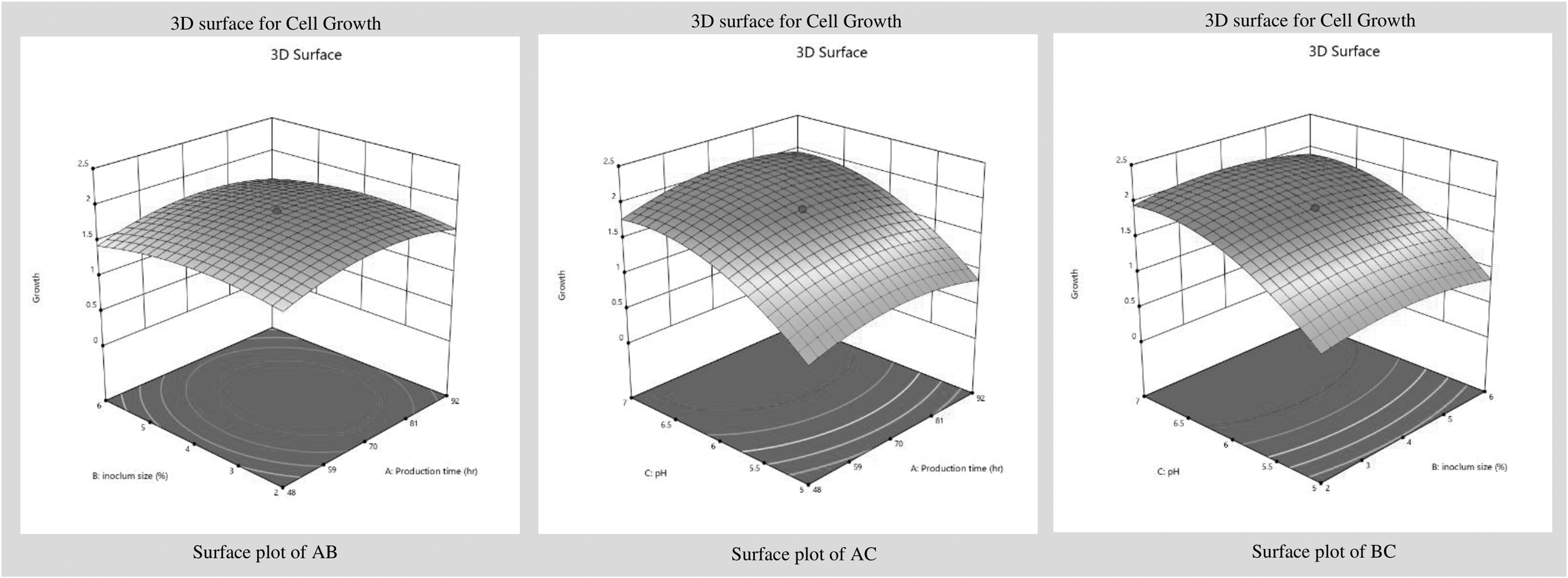
3D response surface of each factor on the cell growth and their optimum amount, where A, B and C are equal production time, inoculum size and pH, respectively.
The predicted maximum and measured cell growth were 1.504 and 1.572, respectively. Finally, under the optimum expression circumstances, overall cell growth showed a substantial rise.
PROTEIN
The ANOVA test revealed that production time and inoculum size had an interaction and significant impact (P < 0.05) on crude protein content with a p-value of <0.0001, and the resultant response model had an F value of 3119.59. (Table 4). According to Cai et al., 16 the model is significant if the p-value is less than 0.05. The program picked the 2FI model (interaction between two factors) with an R2 value of 0.9996 for the optimal response to crude protein levels. Since the value of R2 is near one, the influence of the fixed variable on the independent variable is significant, and the equation model is suitable for explaining the effect of production time and inoculum size.
In addition to R2, lack of fit is used to evaluate the model's adequacy to observation data acquired at various probabilities. The resulting lack of fit value has a significant effect since the resultant value, 0.0025, is insignificant. A minor lack of fit is required for a decent model since it demonstrates the model's compatibility with crude protein response data. 17 The model will be considered appropriate when the p-value of the lack of fit is above the probability level used. In other words, the desired p-value of a statistical analysis of lack of fit is insignificant. When the p-value of the lack of fit is more significant than the probability threshold selected, the model is considered suitable. In other words, a statistical study of the lack of fit's required p-value is not significant.
The linear model on the yield of cell growth has the following response equation:
Protein = + 194.50 + 4.07A – 0.4427B + 33.33C + 1.26AB – 0.4450AC – 2.19BC – 7.75A2 – 8.70B2 – 24.50C2
The Model F-value of 3119.59 implies that the model is significant. An F-value this large might occur due to noise of just 0.01%. Model terms with P-values less than 0.0500 are significant. In this case, A, C, AB, BC, A2, B2, and C2 are significant model terms. Values larger than 0.1000 imply that the model terms are unimportant. Model reduction may enhance the model if there are numerous inconsequential model terms.
B, AB, AC, BC, A2, B2, and C2 could be major model words based on the criteria above. The diagnostic plots were used to assess the appropriateness of the regression model. The R2 coefficient was determined as a model fair indication. If the R2 coefficient approaches one, the model will be more potent, and response prediction will be better. With an R2 value of 0.9999, the regression model was found to fit the experimental results.
The influence of each component on protein is shown in 3D surface plots, and the optimal amounts of production time of 48hr, inoculum size 2%, and pH were determined to be the best values of the selected parameters (Fig. 6).
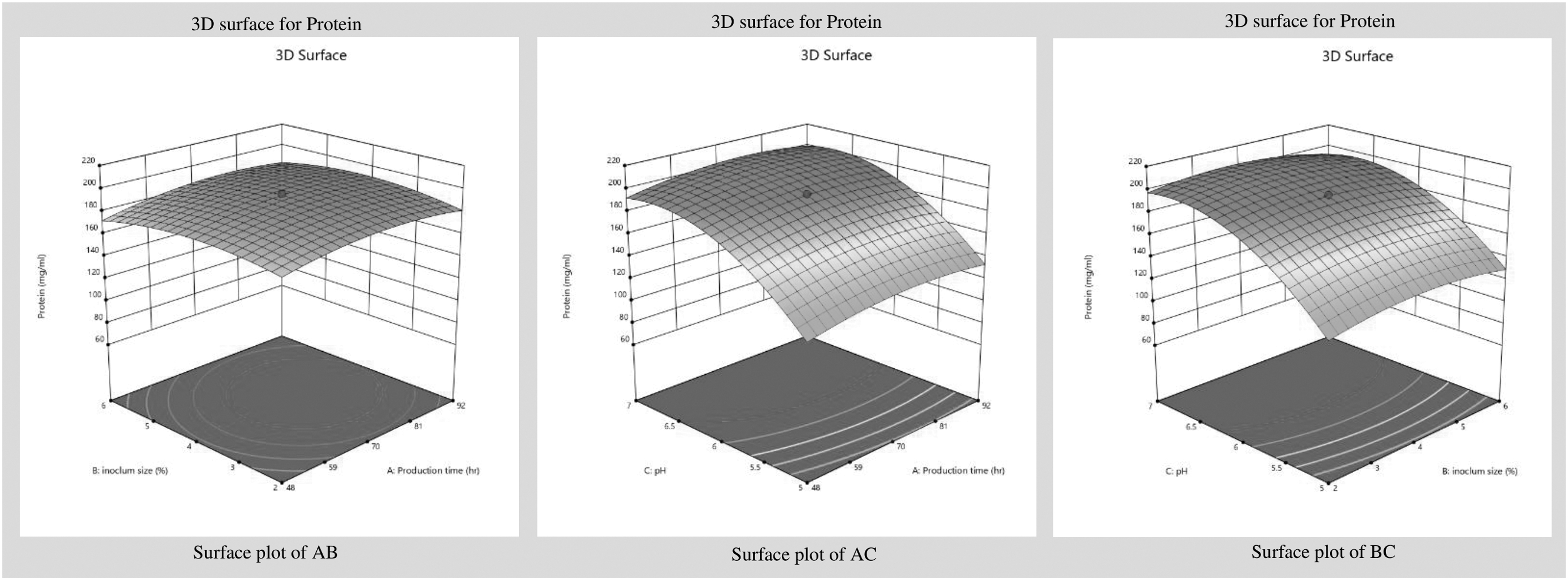
3D response surface of each factor on the protein and their optimum amount, where A, B and C are equal production time, inoculum size and pH, respectively.
The predicted maximum cell growth and the measured protein were 175.676 mg/mL and 178.42 mg/mL, respectively. Finally, under the optimum expression circumstances, overall cell growth shows a substantial rise.
PROXIMATE COMPOSITION OF SCP
The single cell protein was analyzed for its proximate composition to find its potential as a food supplement. The results of the proximate compositions showed it to be a valuable source of various nutrients such as crude protein (48.34 ± 0.05%), carbohydrates (33.29 ± 0.01%), fat (2.44 ± 0.2%), fiber (2.97 ± 0.16%), and ash (5.93 ± 0.25%) (Table 5). The protein and mineral levels of SCP produced by us were higher as compared to wheat, the most commonly consumed cereal. 18 Therefore, SCP can be used for the fortification of cereal-based products to improve their nutritional content.
Proximate Composition of Single Cell Protein
Values are presented as mean ± SD.
FUNCTIONAL PROPERTIES OF SCP
The functional properties determined for SCP were bulk density (0.62 ± 0.08 g/cm3), water absorption capacity (2.31 ± 0.43 mL/g), oil absorption capacity (1.89 ± 0.26 mL/g), foaming capacity (12.25 ± 2.04%) and stability (19.25 ± 1.29 %), emulsion capability (50.5 ± 0.99%) and stability (68.5 ± 0.72%), DPPH radical-based scavenging activity (38.84 ± 0.01%) and total phenolic content(10.19 ± 0.04 mg GAE/g) (Table 6).
Functional Properties of Single Cell Protein
Values are presented as mean ± SD.
The bulk density is consistent with the earlier report by Bacha et al. 19 The WAC and OAC of a food item are key factors to consider when using it as a component in a variety of food product formulations. These characteristics characterise the texture and mouth feel, as well as encourage stability and retention. The SCP had more absorption capacity than wheat as reported by Chandra et al. 20 The interfacial area filled by protein is referred to as foaming capacity, whereas foam stability is the ability of protein to stay constant in the face of stress; these findings were backed by Bacha et al. 19 Proteins, as surface-active agents, can generate persistent emulsions by exerting electrostatic repulsive forces on the surface of oil droplets. Emulsion qualities are significant functional features that play a crucial role in the development of novel protein sources for meals. According to the findings, SCP has outstanding emulsifying capabilities, which are required for mayonnaise, frozen desserts, and comminated meat products. SCP can be utilized as a substitute to frequently used proteins in food items in this regard. A previous report by Guerrero et al. 21 backed up these conclusions.
The significance of foods with high antioxidant content has piqued people's curiosity since they provide health benefits against cardiovascular and cancer problems. 22 The results showed that SCP has high antioxidant activity due to its DPPH scavenging activity and total phenolic content. In this context, SCP can be used as a functional food element in food recipes. These antioxidant potential of SCP findings are comparable to those previously reported by Vieira et al. 23
FOURIER-TRANSFORM INFRARED SPECTROSCOPY
The secondary structure of single cell protein was studied using Fourier–Transform Infrared Spectroscopy (FTIR). The amide band region from ca. 400 cm−1 to 4,000 cm−1 represents the secondary structure of the single cell protein. The FTIR spectra of single cell protein at different sonication times of 50 s, 100 s, and 150 s can be seen in Figs. 7, 8, and 9 , respectively. There were no significant changes in the relative peak areas of the SCP at different sonication times.
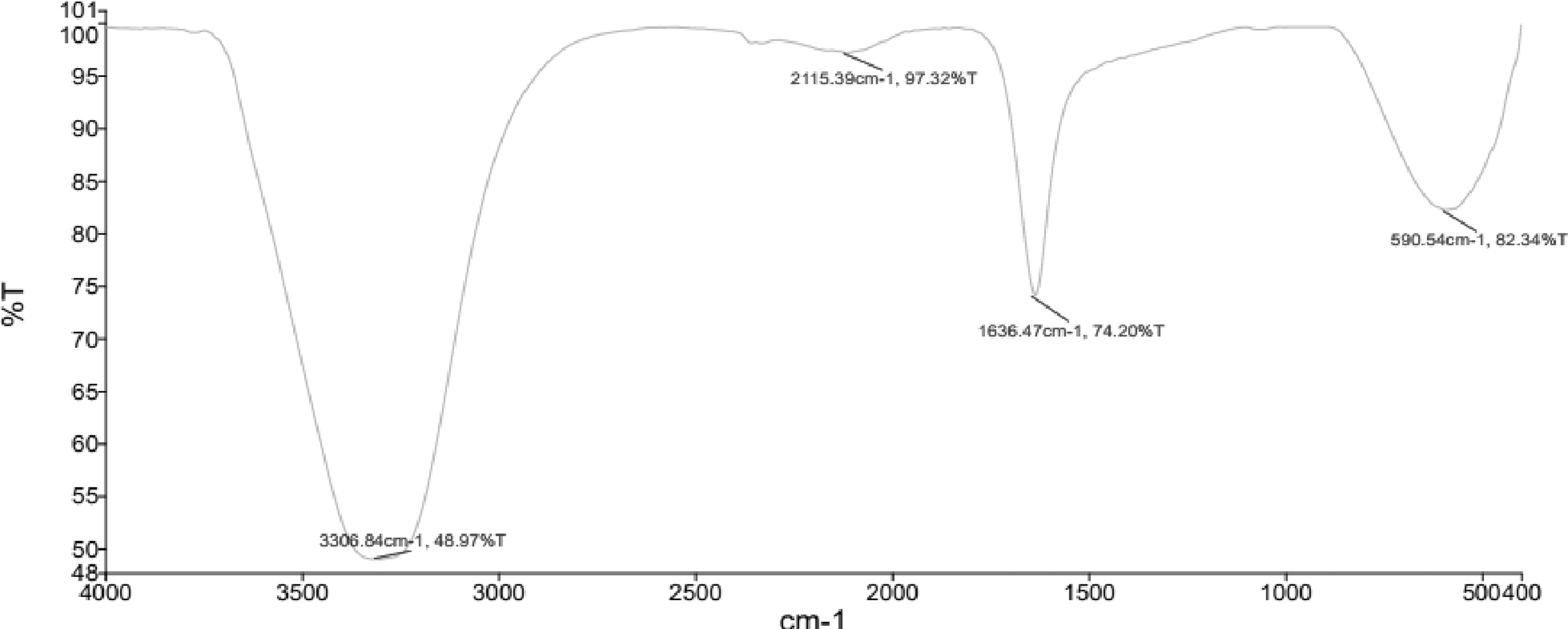
Fourier Transmitted Infrared Spectra (ATR) of single-cell protein (sonicated for 50 s).
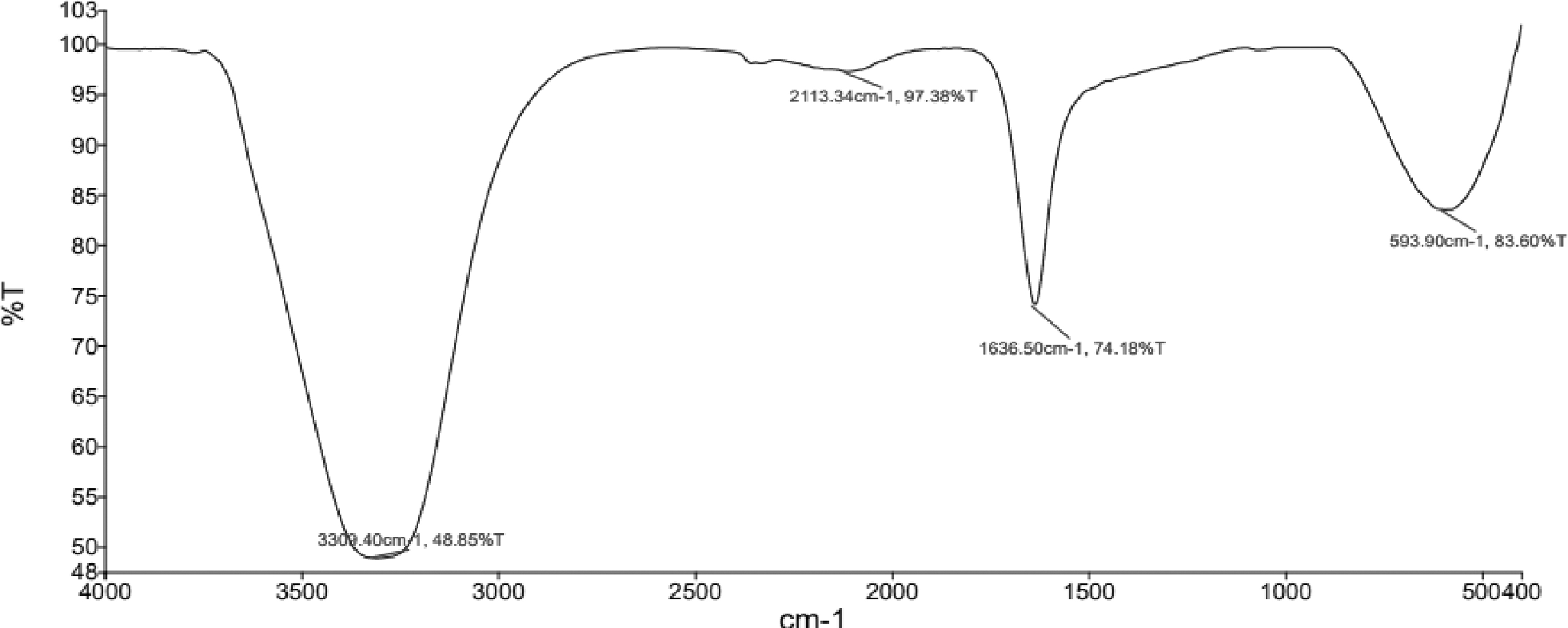
Fourier Transmitted Infrared Spectra (ATR) of single-cell protein (sonicated for 100 s).
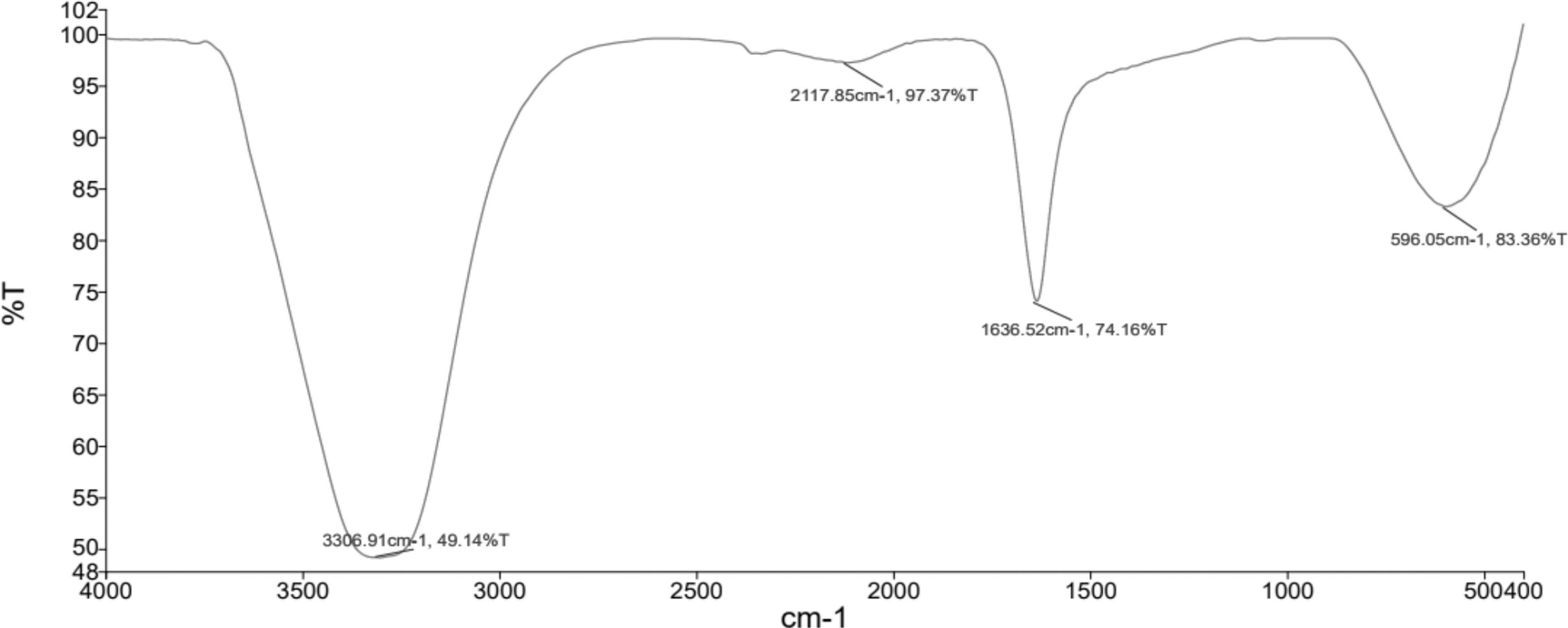
Fourier Transmitted Infrared Spectra (ATR) of single-cell protein (sonicated for 150 s).
However, there was notable difference in the peak positions at 590.54 cm−1, 1,636.47 cm−1 and 3,306.84 cm−1 for 50 s sonication; 593.90 cm−1, 1,636.50 cm−1 and 3,309.40 cm−1 for 100 s sonication; 596.05 cm−1, 1,636.52 cm−1 and 3,306.91 cm−1 for 150 s sonification. The significant variation in the size of IR absorption in the low wavenumber range (peak position between 590 cm−1 and 600 cm−1) and high wavenumber range (peak position between 3,300 cm−1 and 3,310 cm−1) shows the affirmation of strong hydrogen-bonded ꞵ-sheet. An increase in this type of ꞵ-sheet conforms to the protein aggregation. 24 This explains that as sonification disrupts the cell for releasing protein from the biomass, the amount of protein released depends on how long the cell was treated with sonification. The amount of protein released for the biomass treated for 150 s was more significant than the biomass treated for 50 s and 100 s. Thus, treating biomass by sonication at a different time interval, even if slightly, affects the separation of protein from the biomass.
Conclusion
In our work, fruits and vegetable waste was utilized as substrates for producing single cell protein using Lactobacillus sp. Much work has been done in using Lactobacillus sp. to produce SCP. However, no research has tried to use these organisms to produce proteins from fruits and vegetable waste. The results of this study demonstrate that fruits and vegetable wastes have the potential as low-cost fermentation substrates for SCP production utilizing Lactobacillus sp. This study determined that fruit and vegetable waste can be utilized to produce SCP by culture fermentation without extensive pre-treatment or nutrient supplementation. Results from this work contribute to knowledge about SCP synthesis from low-cost agriculture waste. Fermentations in this study were done in conical flasks by adjusting the pH and other parameters. SCP synthesis was greatly enhanced by adjusting growth conditions (i.e., pH, substrate concentrations, inoculum size, and incubation time). The produced SCP was found to be rich in nutrients such as protein, carbohydrates, fats, fiber etc., and possess important functional properties.
The utilization of fruits and vegetable waste not only eliminates disposal problems but also solves pollution-associated problems. More research needs to be done to evaluate economic feasibility, with a focus on the conversion of the resulting fermentation product into a pellet and the evaluation of its effect on human palatability and growth when used as a food supplement.
Footnotes
Author Contributions
Aditya Chavan: conceptualization, methodology, writing (original draft preparation), investigation; Narinder Kaur: supervision, writing (reviewing and editing).
Author Disclosure Statement
No competing financial interests exists.
Funding Information
The authors thank the Department of Food Nutrition and Technology, Lovely Professional University (LPU) for financial support.