




Abstract
In this study, production of Vitamin K2 MK-7 or Vitamin K2-7 was performed by submerged fermentation of soybean. The production of Vitamin K2-7 was optimized for different time intervals (24–144 h), temperature (32°C, 37°C, and 40°C), salt concentrations (0.02 mg/mL–0.06 mg/mL) and different ratio of a mixture of salts, CaCl2.2H2O and MgSO4.7H2O (1:1, 1:2, 1:3, 3:1, 2:1). It was found that the maximum concentration of Vitamin K2-7 was obtained at fermentation time of 72 h. Salts were found to be more effective in production of Vitamin K2-7 as compared to the fermentation without salt. The mixture of salts also found to be significant for the increase in production of Vitamin K2-7. It was found that at ratio of 1:1 (CaCl2.2H2O:MgSO4.7H2O), the production of Vitamin K2-7 was enhanced by 165% as compared to fermentation without salts. Temperature also plays critical role and it was found that at 37°C maximum production of VitaminK2-7 was observed. The work provides a sustainable alternate to Vitamin K2-7 production over conventional chemical synthesis method.
Introduction
Vitamin K is a fat-soluble vitamin which exist in different forms of phylloquinone (Vitamin K1) and menaquinone (Vitamin K2). The most prominent and potent form of Vitamin K2 is Menaquinone-7 (MK-7) out of its identified 14 forms. 1 Vitamin K2-7 or Vitamin K2-MK-7 is an important Active Pharmaceutical Ingredient (API) used in the heathcare, nutraceuticals, and cosmetics industries. 2,3 It is one of the important ingredient in the medications for osteoporosis, cardiovascular diseases, diabetes, inflammation Alzheimer's disease, dementia, cognitive impairment, and peripheral neuropathy. 1,2 Studies showed that postmenopausal women who have a higher-risk of osteoporosis when treated with increased dietary intake of Vitamin K1 and Vitamin K2-7 along with milk, calcium, and Vitamin D, leads to reduced bone resorption. 3 Various research are also being carried out about the role of Vitamin K2-7 in treatment of CKD, chronic kidney disease-mineral and bone disorder (CKD-MBD), CVD and CKD-associated osteoporosis. 4 -6
At present, the major methods used in the production of Vitamin K2-7 include natural extraction, 7 chemical synthesis, 7,8 and microbial fermentation. 9 -12 Both natural extraction as well as chemical synthesis methods leads to environmental pollution and therefore not considered as sustainable method of Vitamin production. 13,14 Also, chemical synthesis method leads to production of cis form of isoprene side chain which is the cause for low activity of Vitamin K2-7 and its complicated reactions with other substrates which leads to unwanted yield of byproducts and isomers. 13,15 These problems associated with conventional methods of Vitamin K2-7 production leads to the identification of alternate methods to produce Vitamin K2-7 at cheaper cost and in stable form. Due to these factors production of Vitamin K2-7 by bacterial fermentation of natural substrate seems to be the promising option for its larger production.
In fermentation choice of bacteria also plays critical role in the quantification of Vitamin production. Various researchers have identified different bacterial species such as Bacillus subtilis, 1,16 -28 Bacillus licheniformis, 29 Lactococcus lactis, 16,30,31 Eubacterium lentum, 16,32 Veillonella, 16,33 Bacteroides, 16 Flavobacterium, 12,27,34 and Escherichia coli 35 that participated in fermentation process for the production of Vitamin K2-7. Amongst these species, various strains of B.subtilis such as B. Subtilis Natto, 19,36 B.subtilis MTCC 2756, 20,37 B.subtilis NCIM 2708, 38 B. subtilis MH-1, 18 and B.subtilis BS20 27,39 are widely used in the fermentation due to their properties such as faster growth rate, low incubation time, easy cultivation and high yield of Vitamin K2-7.
Various researchers have used modified genetic strains of different species to enhance the production of Vitamin K2-7. 18,22 Song et al. 22 used mutated B.subtilis natto-2-6 strain to increase the production of Vitamin K2-7 by 55% up to 3.593 ± 0.107 mg/L. Here, the culture medium was fermented using liquid state fermentation at 37℃ and 150 rpm for 72 h. Similar work was carried out by Sato et al. 18 where a recombinant strain of B. subtilis, i.e., mutant strain D200-41 was used to efficiently produce 60 mg/L of Vitamin K2-7, and it was found that production of Vitamin K2-7 was higher in static conditions, compared to agitated and aerated culture.
In the past, various fermentation techniques used for the production of Vitamin K2-7 such as solid-state fermentation (SSF) and liquid state fermentation (LSF). 1,27,28 Studies were conducted wherein soy proteins and corn grits were used as raw materials with different strains of Bacillus subtilis 1,27,28 and Bacillus amyloliquefaciens 28 to produce Vitamin K2-7 using solid state fermentation. Singh et al. 38 obtained maximum concentration of Vitamin K2-7 using B. Subtilis NCIM 2708 and soybean medium for the solid-state fermentation. They optimized the production by modifying the medium composition of the fermentation broth to yield maximum concentration of 39.039 μg/g for Vitamin K2-7.
However, it is observed that liquid state fermentation was widely used method for Vitamin K2-7 production due to its feasibility. 28 Different raw materials were used to produce Vitamin K2-7 by liquid state fermentation such as chickpeas, common maize, field beans, green lentils, mung beans, peas, soyabean, sunflower, true millet, and white lupin. 23 Berenjian et al. 26 used liquid state fermentation for his study and optimized the nutrient conditions for the fermentation to obtain a maximum concentration of 62.32mg/L ± 0.34 mg/L, which was produced by B.subtilis natto at 40℃ for 144 h. Puri et al. 20 optimized the production of Vitamin K2-7 using B.subtilis MTCC 2756 strain and obtained maximum yield of 14.4 μg/mL when the fermentation broth was treated 1-naphthol and tween 80 (0.1%). We selected soybean for this study as it is readily available in Asia 26 and cheaper in cost, 26,27 which makes its suitable candidate of raw material for production of vitamin K2.
In this work Vitamin K2-7 was obtained from Soybean powder as the substrate for liquid state fermentation with recombinant strain of B.Subtilis (MTCC-2756) which is specialized to enhance the production of Vitamin K2-7 in liquid broth. The production was further optimized by making variation in the temperature and salt concentration of fermentation media.
Material and Methods
PREPARATION OF NUTRIENT BROTH
Bacillus Subtilis MTCC 2756 was obtained from Institute of Microbial Technology, Chandigarh, India. Sodium Chloride (99.5%, Loba Chemie, Mumbai, Maharashtra, India), Peptone Powder (Loba Chemie, Mumbai, Maharashtra, India), Yeast Extract (Molychem, Mumbai, Maharashtra, India) for preparation of nutrient broth (NB) were obtained from local market. Preparation method involves mixing of Yeast extract (3 mg/mL of NB), Peptone Powder (5 mg/mL of NB) and Sodium Chloride (5 mg/mL of NB) with 100 mL of distilled water in a 250 mL of conical flask. The mixture was then autoclaved at 121°C and 15 psi for 15 min in a horizontal autoclave (Natsteel Equipment, Mumbai, Maharshtra, India). The prepared nutrient media is then stored in Laminar Air Flow (LAF) (Radical Enterprise, Ahmedabad, Gujarat, India) in the same sealed flask for further use.
PREPARATION OF NUTRIENT AGAR
Nutrient agar was prepared by mixing of Agar Powder ( Molychem, 15 mg/mL), Sodium Chloride (99.5%, Loba Chemie, 5mg/mL), Peptone Powder (Loba Chemie, 5mg/ml) and Yeast Extract 3 mg/mL (Molychem, 3 mg/mL) with 100 mL of distilled water in 250 mL of conical flask. The mixture was then autoclaved at 121°C and 15 psi for 15 min in an autoclave (Natsteel Equipment). The prepared nutrient media is poured on sterile petri plates in the Laminar Air flow and allowed to cool down at room temperature. The prepared plates are then stored the same LAF for further use.
REVIVAL OF LYOPHILIZED CULTURE AND PREPARATION OF INOCULUM
The master culture was prepared from the lyophilized culture of Bacillus subtilis (MTCC No 2756) in a vacuumed glass tube was sterilized thoroughly by cleaning it with ethanol before open it in Laminar Air Flow (Radical Enterprises, India). The seal of vial was broken and the cotton is then gently removed, to avoid the endospores from releasing it into the air. The endospores were transferred into a falcon tube and about 2 mL of nutrient broth was added to it. Then, this mixture was plated into 4 plates containing 25 mL autoclaved Nutrient Agar using spread plate method.
These plates were incubated at 37℃ for 24 h and labelled. The remaining endospores were covered with cotton and stored at 4℃ for further use. The inoculum was prepared by transferring of bacteria into 100 ml of nutrient broth using sterile metallic loop in 250 mL of conical flask. The liquid culture of B. Subtilis was then incubated in incubator (SPAN Automation, India) at 37°C temperature and 125 rpm for 24 h. The inoculum was further quantified by transferring 5 mL of liquid culture into 100 mL of nutrient broth in 250 mL of conical flask.
PREPARATION OF FERMENTATION BROTH
The materials for fermentation broth for production of Vit K2-7 includes soyabean powder (100 mg/mL), glycerol 98% (Loba Chemie, 0.04 mL/mL), yeast extract (Molychem, 5 mg/mL), 0.5 mg/mL potassium phosphate dibasic (K2HPO4, 98%, Oxford Lab Fine Chem, India, 0.5 mg/mL), magnesium sulphate heptahydrate (MgSO4.7H2O, Oxford Lab Fine Chem LLP, India, 0.4 mg/mL), calcium chloride dehydrate (CaCl2.2H2O, Molychem, India, 0.4mg/ml), sulphuric acid (H2SO4, Molychem,) and potassium hydroxide (KOH, Molychem) were obtained from local market .
The concentration of soybean powder was fixed at 100 mg/mL, the optimized concentration reported in the literature. 37 -40 Fermentation media was prepared by mixing of soybean powder, yeast extract and potassium phosphate dibasic in 100 mL of distilled water in a 250 mL conical flask. For each set of study we used fermentation media in different individual conical flask. Each flask was then sealed with cotton plug and put in autoclave at 121°C and 15 psi pressure.
PREPARATION OF EXPERIMENTS TO STUDY EFFECT OF SALTS
MgSO4.7H2O and CaCl2.2H2O were used to study the effect of salts in fermentation media on Vitamin K2-7 production. 0.04 mg/mL of each salts were added in different conical flask to study the individual effect of each salt on production of vitamin K2-7. Another set of experiments includes addition of MgSO4.7H2O and CaCl2.2H2O in the ratio (1:1, 1:2, 1:3, 3:1, 2:1) in each conical flask containing fermentation media. The inoculated flasks were then transferred to incubator at 37 °C as per the literature. 40 After 72 h, 25 mL of sample were collected from each flask for the analysis of Vitamin K2.
PREPARATION OF EXPERIMENTS TO STUDY FERMENTATION TIME
To study the effect of fermentation time three conical flasks were inoculated with culture media and then transferred to incubator at 37°C. Optimized salt mixture at concentration of 0.04 mg/mL is added in the ratio 1:1 of MgSO4.7H2O and CaCl2.2H2O were added before addition of inoculum. Samples (25 mL) were then taken in every 24 h for analysis of Vitamin K2-7 in the solution. The average of results obtained from three conical flasks were then considered as final result.
PREPARATION OF EXPERIMENTS TO STUDY FERMENTATION TEMPERATURE
To study the effect of fermentation temperature the nine different conical flasks with fermentation media are inoculated with 5 mL of bacterial culture each. The pH in each flask was maintained at 7 and salt mixture of MgSO4.7H2O and CaCl2.2H2O at optimized concentration of 0.04 mg/mL were added in the fermentation media. The flasks were then divided into the set of three and each set were then transfer to three incubators set at different temperatures (32°C, 37°C, 40°C). 25 mL samples were collected, and each flask taken for analysis at optimized value of 72 h to analyze the effect of temperature on the production of vitamin
PREPARATION OF EXPERIMENTS TO STUDY FERMENTATION TIME
To study the effect of fermentation temperature the nine different conical flasks with fermentation media are inoculated with 5 mL of bacterial culture each. Each flask was then maintained at different pH (5.5–8.5) and salt mixture of MgSO4.7H2O and CaCl2.2H2O at optimized concentration of 0.04 mg/mL were added in the fermentation media. The temperature was maintained at 36°C for 72 h followed by sample collection for further analysis.
ANALYSIS OF VITAMIN K2-7
Vitamin K2-7/MK7 was analyzed after separation from fermentation broth using UV-Spectrophotometer (Shimadzu, Mumbai, Maharashtra, India). Pure Vitamin K2-7 (Riddham Enterprise, Ahmedabad, Gujarat, India), n-Hexane (Loba Chemie, Mumbai, Maharashtra, India), Propane-2-ol (Loba Chemie, India) were obtained from local market. To obtain the standard curve, Pure Vitamin K2-7 was mixed with the organic solvent which consisted of ration of propanal-2-ol with n-Hexane as 1:2. 15
Initially, a standard solution of Vit K2-7 was prepared in which 0.38 g of powdered Vitamin K2-7 was mixed with 10 mL of organic solvent in 20 mL of test tube to prepare 100 μgm of Vitamin K2-7 per mL of organic solvent. The mixture was then mixed using vortex mixture (Scientific Industries, New Delhi, India). A standard curve at the wavelength of 210 nm was then obtained at different concentration of Vitamin K2-7 (1–10 μg/mL) using serial dilution method.
Experimental samples were obtained from the fermentation broth as discussed in previously. Each of the sample was then was centrifuged at 7,000 rpm for 15 mins at 25℃ and supernatant was transferred to a test tube of 20 mL. The supernatant was then passed through 0.22-micron nylon membrane using vacuum filtration. 5 mL of separated liquid was then mixed with 15 mL of distilled water and 15 mL solution of Propan-2-ol /n-Hexane mixture (1:2, v/v) respectively, to separate Vitamin K2-7 using liquid–liquid extraction method. 23 For the same the mixture was then vigorously shaken for 5 min followed by centrifugation at 6,000 rpm for 5 mins in a 50 mL of falcon tube. 22
The organic phase was then separated, and the absorbance was determined using the wavelength range 190–300 nm by UV spectrophotometer. Standard of Vitamin K2-7 in the concentration range from 1 μg/mL to 10 μg/mL was analyzed to obtain standard curves. 31 The concentration of Vitamin K2-7 was determined by substituting the Optical Density (OD)/absorbance in standard curve of concentration v/s absorbance and finding the corresponding concentration for the given absorbance of the sample of Vit K2-7.
Results and Discussion
ANALYSIS OF STANDARD CURVE TO ESTIMATE SAMPLE CONCENTRATION
Amount of Vitamin K2-7 was estimated by comparing its standard curve for different rates of absorbance at different concentrations. The suitable wavelength for preparing standard curve was found to be 210 nm (Fig. 1). Figure 2 showed that the value of absorbance increases with increase in concentration of Vitamin K2-7 from 1 μg to 10 μg per mL of standard solution. Each sample was replicated three times to confirm the absorbance and then the average value was plotted, as shown in Fig. 2. The standard curve was used to calculate the amount of Vitamin K2-7 in the sample obtained from fermentation broth. The following regression equation was obtained using the graph, i.e., y = 0.415x +(-0.392) and based on the same equation, R2 value was calculated as 0.961 with a standard deviation of 1.282. Thereafter, using regression equation, the concentration of Vitamin K2-7 was calculated for different samples of fermentation broth at different conditions.

UV absorbance curve at different wavelength and different concentrations
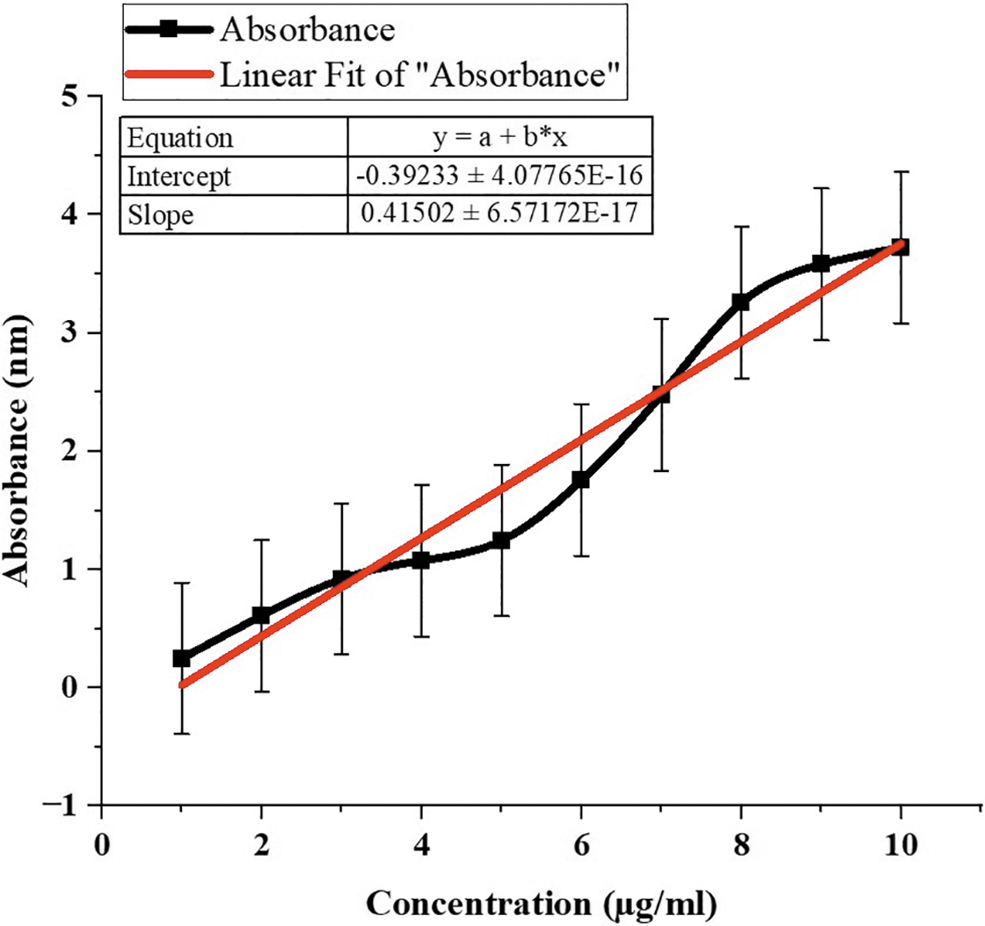
Standard absorbance curve for Vitamin K2-7
Salts showed significant effect on the production of vitamins. Figure 3 showed the effect of individual salts in the fermentation broth for the production of Vitamin K2-7. It was found with the presence 0.04 mg/mL of the of CaCl2.2H2O and MgSO4.7H2O respectively produces 7.202 μg/mL and 7.455 μg/mL respectively, as compared to 3.15 μg/mL of Vitamin K2-7 produced in the absence of salts. Figure 4 showed that the optimized value of salt required for higher production of Vit K2-7 is 0.04 mg/mL of both the salts, i.e., CaCl2.2H2O and MgSO4.7H2O. This may be due to the enhanced metabolic process due to the presence of salts. Similar results were also obtained in prior research. 20,21
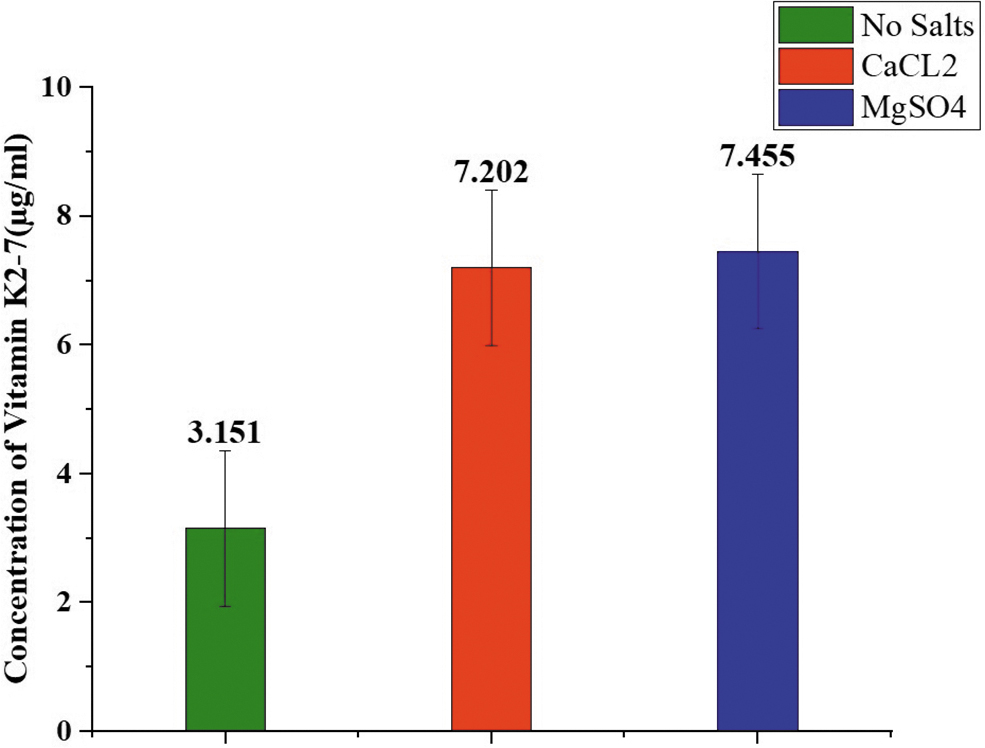
Effect of salt presence in fermentation media on production of Vitamin K2-7
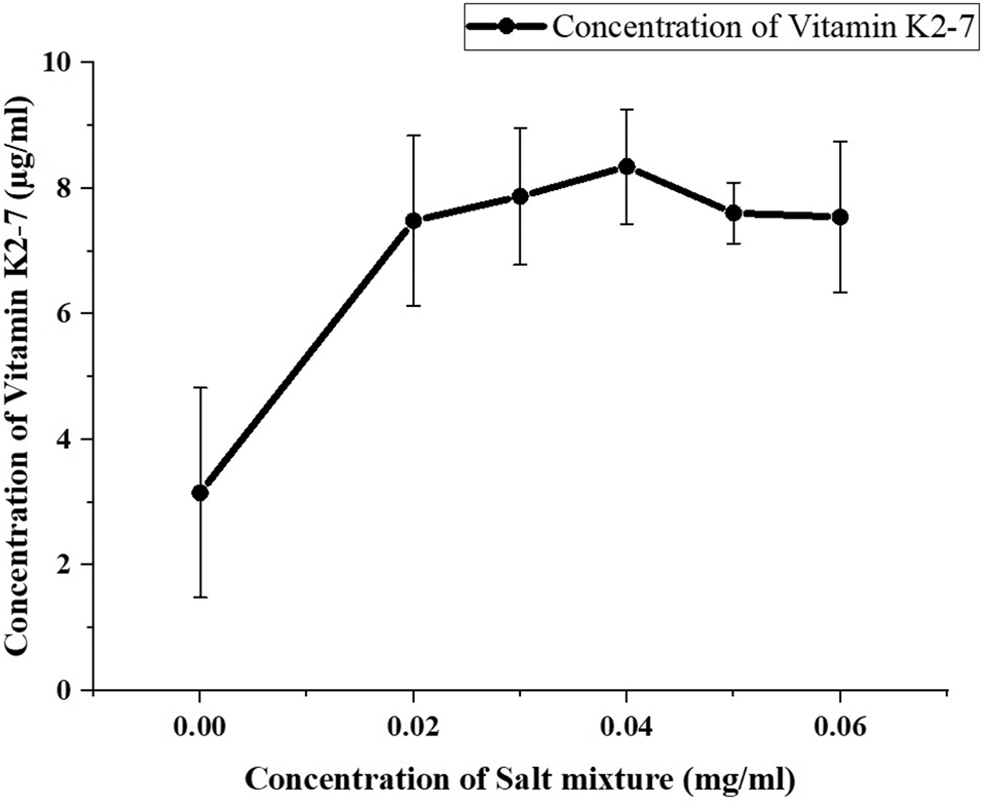
Effect of salt concentration of production of Vitamin K2-7
Table 1 showed the variation of CaCl2.2H2O and MgSO4.7H2O in the ratio of (1:1, 1:2, 1:3, 3:1, 2:1) for the concentration of 0.04 mg/mL of salt concentration. It was observed that at the ratio of 1:1, the maximum concentration of Vitamin K2-7 was obtained, i.e., 8.346 ± 0.909 μg/mL. This may be due to some enhancement in metabolic pathway of Vitamin K2-7 production.
Effect of Ratio of Salt Mixture on Production of Vitamin K2
Figure 4 showed the effect of change in the concentration of mixture of salts CaCl2.2H2O and MgSO4.7H2O in the ratio of 1:1. It was found that with rise in the concentration of the salt mixture the production of Vitamin K2-7 increased up to 0.04 mg/mL. Further this concentration the production of Vitamin K2-7 drops may be due to decrease in salt tolerance of the cell. Similar results were found in the literature for the different salts. 38,41,42 which shows that the CaCl2 was found to be the best nutrient for production of Vitamin K2-7 as compared to the K2HPO4 and MgSO4. 38 It was also found that a salt mixtures plays very important role in enhancing the production of Vitamin K2-7.
STUDY OF FERMENTATION TIME ON PRODUCTION OF VITAMIN K2-7
Figure 5 expressed variation of concentration of Vitamin K2-7 at different intervals of fermentation. And showed that the concentration of Vitamin K2-7 was found to be 6.381 μg/mL ±0.5721 μg/mL obtained just after 24 h of onset of fermentation. This shows that used strain of B. subtilis is active and the culture takes lesser incubation time to start the fermentation. It shows that the growth of bacteria and production of Vitamin K2-7 are taking place simultaneously, starting from transfer of inoculum to fermentation media. The similar trends were also reported by Puri et al. and Berengian et al.20.26 They showed that the production of Vitamin K2-7 starts with growth of bacteria and increases consecutively. From Fig. 4, it was also observed that the concentration of Vitamin K2-7 increases with fermentation time up to 72 h after which we observed a fall in the concentration. It may be due to the conversion of Vitamin K2 its conversion in secondary metabolite.
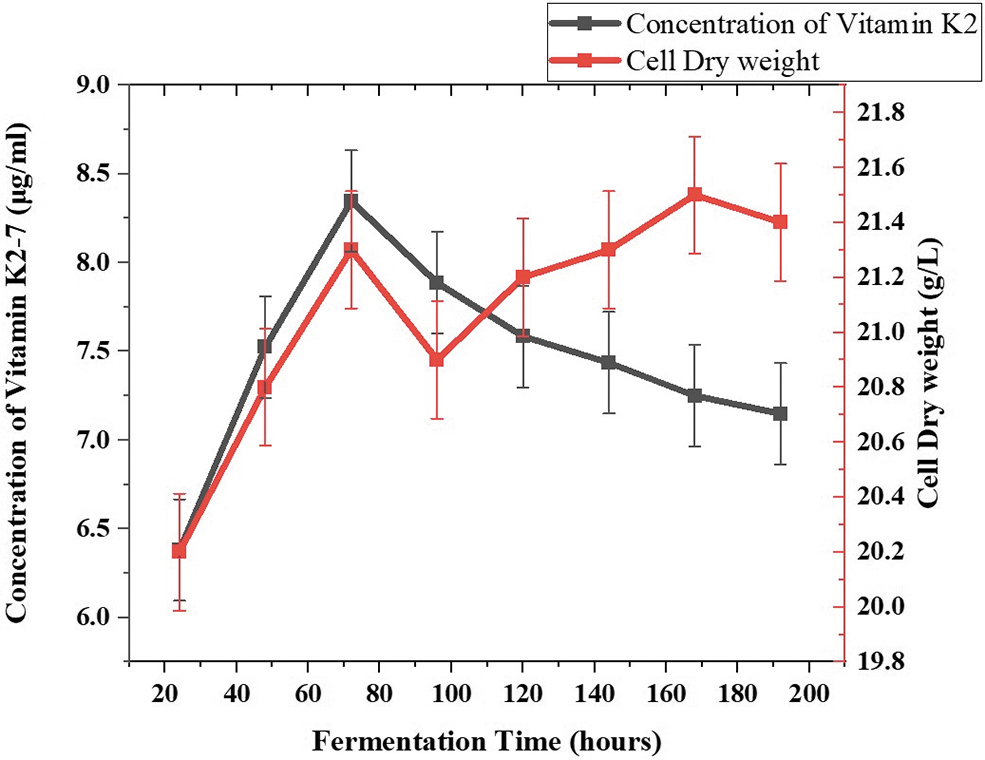
Effect of fermentation time on production of vitamin K2-7
EFFECT OF FERMENTATION TEMPERATURE ON THE PRODUCTION OF VITAMIN K2-7
Figure 6 shows the effect of temperature on the production of Vitamin K2-7 and it was observed that quantity of Vitamin K2-7 in fermentation increases with the increase in the temperature up to 37°C above which, we have observed a decline in the production of Vitamin K2-7. Various research showed that the temperature range of 35°C to 37°C was optimum temperature range for production of Vitamin K2-7. 40,43 It was due to favorable enzymatic kinetics at in this range of temperature.
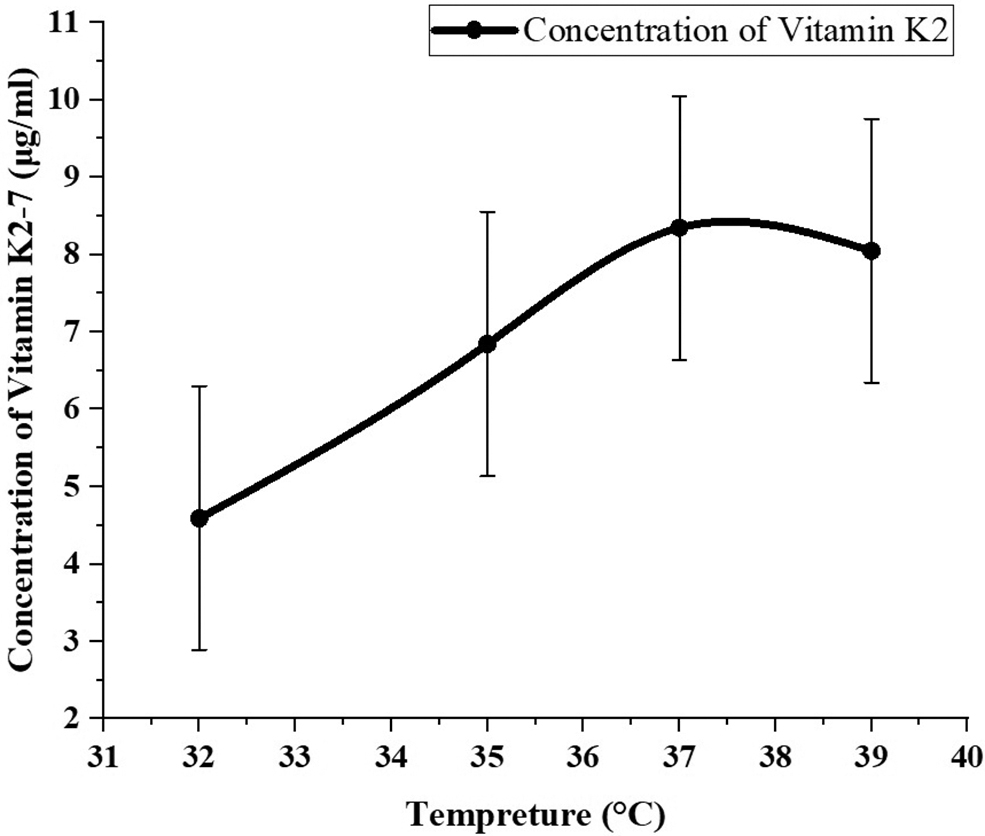
Effect of temperature on the production of Vitamin K2-7
STUDY OF PH ON PRODUCTION OF VITAMIN K2-7
Figure 7 shows the effect of pH on the production of Vitamin K2-7 and it was observed that the concentration of Vitamin K2-7 was increased with the increase in pH up to 7.7. Standard deviation of ±1.102 was found. The concentration was then further decrease with increase in the concentration. This may be due to the fact that with increase in alkalinity of the solution the growth and metabolic function of B.Subtilis decreases. Simillar results have been reported in the literature. 38,39

Effect of pH on production of Vitamin K2-7
Conclusion
Submerged fermentation was carried out using soyabean as raw material with recombinant strain of B.Subtilis MTCC 2756 to produce Vitamin K2-7. The effect of fermentation time, individual salts and their mixtures at different ratio were also studied in the production of Vitamin K2-7. It was found that the maximum amount of Vitamin K2-7 was obtained after 72 h of fermentation. It was also found that in the presence of CaCl2.2H2O and MgSO4.7H2O there is rise in the production of Vitamin K2-7 by 128% and 136% respectively. Effect of salt ratio on the production of Vitamin K2-7 showed that the maximum production was obtained at the ratio of 1:1 which is 8.346 μg/ml, which was 165% rise in production as compared to production without salts. The optimum temperature for the production of Vitamin K2-MK7 was found to be 37°C. The work provided a sustainable approach for Vitamin K2-MK7 production over chemical method of synthesis.
Footnotes
Acknowledgment
This work was supported by Institute of Advance Research, Gujarat, India, as part of its research.
Author Disclosure Statement
No competing financial interests exist.
Funding Information
This work was funded by the Institute of Advance Research, Gujarat, India.