




Abstract
This review article presents a comprehensive evaluation of carbon capture (CC) methodologies, with a focus on sustainable carbon dioxide (CO2) mitigation using microalgae. It highlights the urgency of addressing escalating atmospheric CO2 levels owing to their significant contribution to global warming and explores various CC techniques. Special emphasis is placed on microalgae-based strategies, which offer a promising solution for biologically sequestering CO2 efficiently and cost-effectively while converting it into valuable biomass, which then can be used for various applications that include bioenergy. The article examines various mechanisms identified and involved in CO2 assimilation, methodologies, and possible improvements in CO2 capture and biomass conversion by microalgae. It also assesses the economic feasibility of microalgae cultivation for CC, suggesting that large-scale implementation could sequester substantial amounts of CO2 annually and yield significant biomass for applications such as integrating wastewater treatment and flue gas utilization, thereby contributing to a sustainable global bioeconomy and mitigating climate change impacts.
Introduction
The period marked by revolutionary industrial transformations and relentless energy requirements has resulted in an unparalleled surge in greenhouse gas (GHG) emissions, posing a grave global threat. Carbon dioxide (CO2), one of the eight principal GHGs, significantly contributes to this surge in emissions. The escalation in GHG emissions is persistently rising at an alarming pace, having already surpassed 412 parts per million (ppm) of CO2 equivalent in 2022 and projected to ∼685 ppm of CO2 equivalents by 2050. 1,2 The negative effects of excessive CO2 emissions on the environment can range from complex climate shifts to increased air pollution, faster global warming, receding glaciers, ocean acidification, unpredictable drought patterns, and lower crop yields. 3 In addition to the obvious dangers to human health, these occurrences have a multiplicity of negative effects, including a decline in agricultural output, a loss of biodiversity in aquatic habitats, and heavy economic losses.
The predominant strategies for carbon management in recent years have heavily relied on carbon capture (CC) and storage or CC, storage, and utilization technologies as the primary solution to mitigate CO2 emissions from human activities. 4 Current carbon management practices involve extracting CO2 industrial exhaust gases through solvent-based physical or chemical absorption methods. These methods include the use of amine-based solvents such as Rectisol and Selexol, which absorb CO2 from the gases. Solid adsorbents such as calcium oxide are also employed for CO2 capture. 5 The captured CO2 is separated and concentrated through thermal regeneration or calcination processes. In thermal regeneration, heating the CO2-laden solvent releases and collects the CO2. Calcination heats the solid adsorbent to release and capture the CO2 for further utilization or storage. 6 Underground geological reservoirs store intense CO2. It can boost recovery in oil and gas operations and produce stable carbonates in saline aquifers and basaltic rocks. 7 Postcombustion is a widely studied and established technology for efficiently removing CO2 from industrial emissions. It is one of several methods available for CC, storage, and utilization. It efficiently isolates CO2 from industrial exhaust gases by absorption, making it widely used in industry. 8 The CO2 extraction from these sources requires enrichment owing to the low concentration (3–20%) and partial pressure (0.03–0.2 bar) of flue gases. Several chemical solvents, including as monoethanolamine (MEA), diethanolamine (DEA), 2-amino-2-methyl-1-propanol, and liquid ammonia, have been effectively used for this CO2 collection and concentration stage. 9
Another method of CO2 capture is to use physical adsorbents such as methanol diethyl ethers, polyethylene glycol, and N-methyl-2-pyrrolidone. These materials successfully collect CO2 by adsorbing it to their surfaces. 10,11 Furthermore, precombustion technologies turn fossil fuels into syngas, a blend of hydrogen and carbon monoxide, which facilitates CO2 absorption. Oxy-fuel combustion uses pure oxygen rather than air, resulting in more effective CO2 condensation. Chemical looping uses metal oxides to react with fuel, which aids in CO2 capture and separation. 12 Advanced CO2 extraction methods include membrane-based separation, cryogenic separation, and hydrate-based gas capture. Selective membranes filter CO2 efficiently yet cost a lot to make and maintain. Liquefying CO2 by cryogenic separation is efficient yet energy-intensive. 12,13 Hydrate-based gas separation absorbs CO2 in the form of hydrates, offering a unique but difficult technique. Each approach has advantages and disadvantages, with notable difficulties such as the energy-intensive adsorbent renewal process and the high operational costs of vaporizers and reactors. 14 Although CC, storage, and utilization techniques are used in a variety of industries, geological CO2 storage necessitates ongoing risk assessment and monitoring to address concerns about oceanic acidification and potential CO2 leakages while ensuring environmental safety and effectiveness. 15
The use of biological techniques for the CC and storage has emerged as an efficient means of achieving a reduction in the overall amount of CO2 emissions. These techniques encompass afforestation, oceanic fertilization, and microalgae-based CO2 fixing. Nevertheless, afforestation and oceanic fertilization are frequently not preferred because they demand significant amounts of time, large areas of land or ocean, and may unintentionally impact marine biodiversity. Microalgae-based CO2 fixation, in contrast, provides a swifter and more effective alternative, rendering it a more feasible choice for CC and storage on a wide scale. 16 Addressing these constraints, microalgae-based CC, utilization, and storage technologies present a compelling solution, providing an efficient, cost-effective, and secure method for biologically sequestering CO2 while simultaneously converting it into bioenergy and value-added byproducts. 17 Harnessing microalgae-based carbon fixation offers vast potential to establish an innovative framework for tackling the hurdles of achieving net negative CO2 emissions, preserving endangered biodiversity, mitigating air pollution, and fostering a sustainable global bioeconomy. Thus, this review presents an in-depth exploration of microalgae-based CC technologies, emphasizing their preference over other methods, advancements in CO2 uptake, diverse biomass production, and CO2 assimilation mechanisms from flue gas and wastewater, offering crucial insights for sustainable CO2 mitigation efforts.
Methodologies for Carbon Capture
Methods for CC and sequestration of CO2 have evolved over the years, with various physicochemical and biological approaches being developed (Table 1). Physicochemical methods for CC include chemical absorption, solid adsorption, gas separation membranes, and cryogenic distillation. 29 Biological approaches for CC and sequestration have gained significant attention as a promising solution. These encompass methods such as afforestation, oceanic fertilization, and microalgae-based CO2 fixation (Fig. 1). Biological approaches for CC and sequestration, such as microalgae-based CO2 fixation, have emerged as the most promising solution owing to their efficiency, cost-effectiveness, and potential for simultaneous bioenergy production and generation of valuable byproducts. 30 Furthermore, microalgae-based CC technologies have the advantage of being able to use flue gas and wastewater as sources of CO2, making them highly versatile and adaptable in different industrial settings. 27 These methods have shown great promise in achieving sustainable CO2 mitigation, providing a pathway toward net negative emissions and the establishment of a circular carbon economy. 5 , 31 Table 1 demonstrates the three primary categories of CO2 capture and the technology that correlate to each of them. There is a vast range of different separation techniques that can be used.
A Comparative Analysis of Various Carbon Capture Technologies
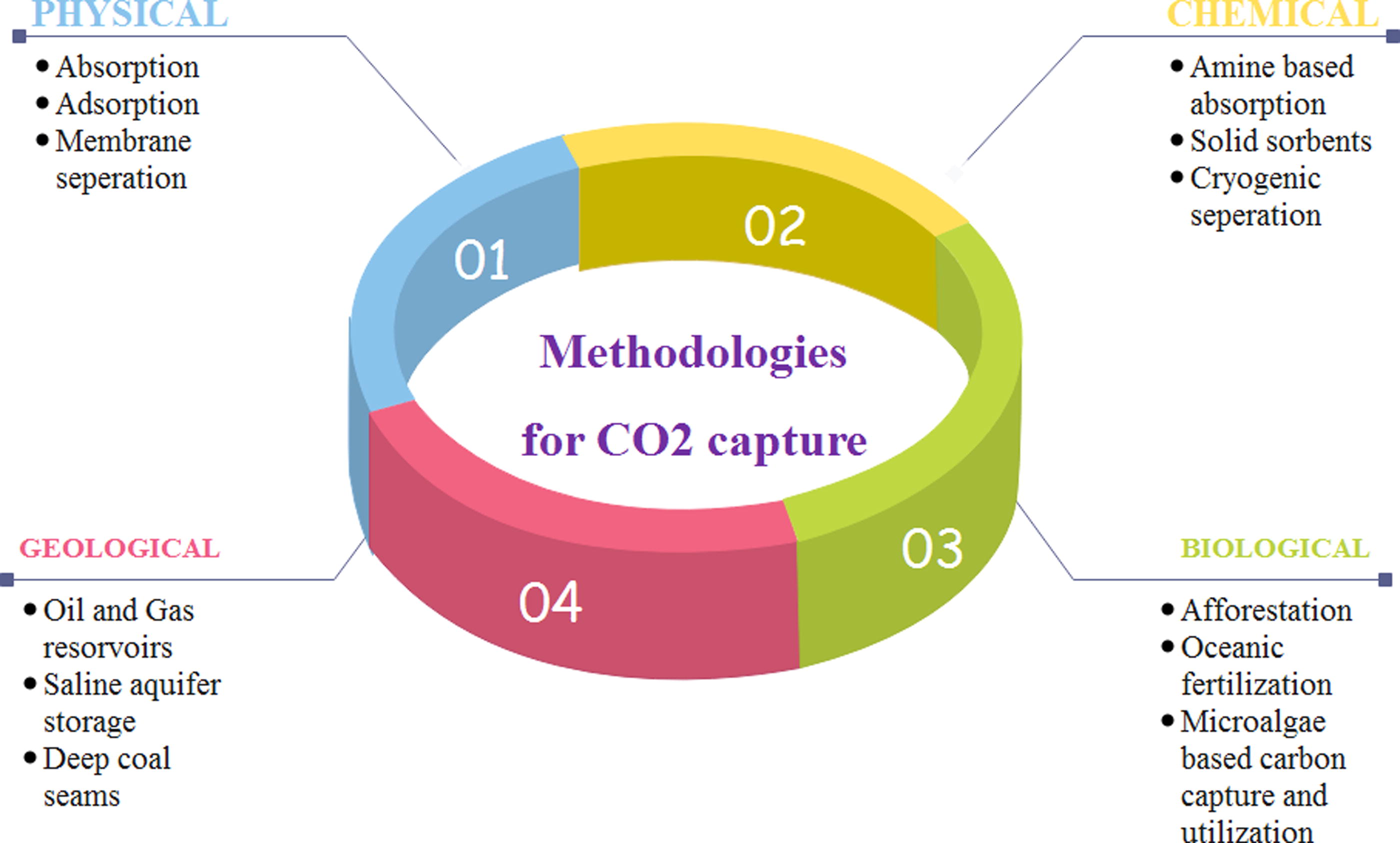
Various methodologies for CO2 capture.
PHYSICAL METHOD OF CO2 CAPTURE
The separation of CO2 from gas streams is accomplished by the use of physical processes that include adsorption, absorption, and membrane separation in the technique of physical CO2 capture technologies (Fig. 2). Several typical methods of physical CO2 capture include the following:
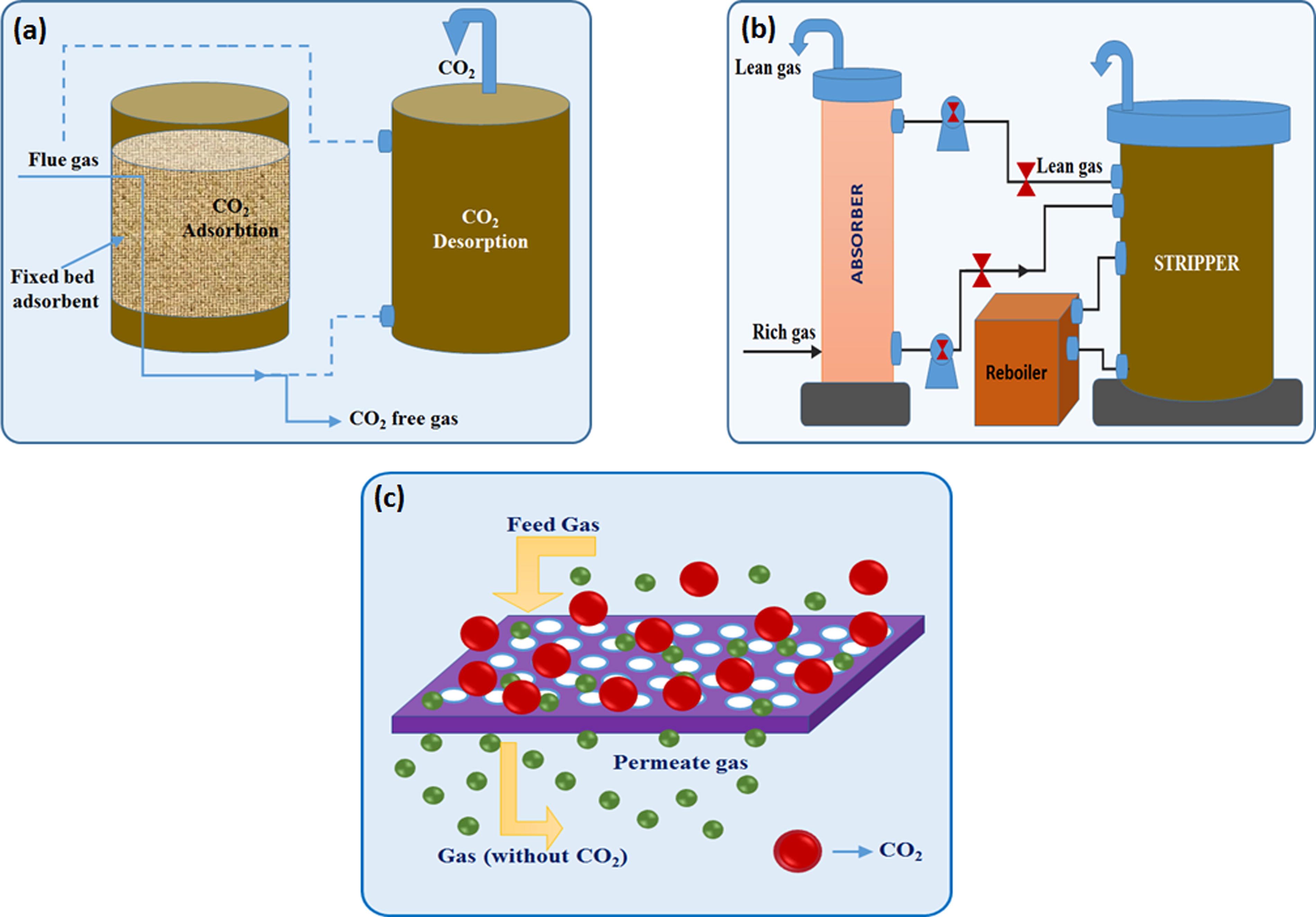
Physical method of CO2 capture:
Adsorption
Adsorption involves the adhesion of CO2 molecules onto a solid surface, typically a porous material like activated carbon or zeolites. The CO2 molecules are captured on the surface of the adsorbent material, allowing for their separation from the gas stream (Fig. 2a). 19
Absorption
Absorption is a process where CO2 is dissolved in a liquid solvent, such as amines or ammonia, to form a solution. The CO2-rich solvent is then separated from the gas stream, and the CO2 can be released by heating the solvent in a process known as desorption (Fig. 2b). 18
Membrane separation
In the process of membrane separation, selective membranes are used to extract CO2 from gas mixtures on the basis of differences in permeability. The membranes allow CO2 to pass through while inhibiting the passage of other gases, which enables the separation of CO2 from the gas stream (Fig. 2c). 20
These physical CO2 capture methods offer advantages such as energy efficiency, scalability, and potential for integration with existing industrial processes. However, they also have limitations such as high capital costs, energy requirements for regeneration, and challenges in achieving high purity CO2 capture.
CHEMICAL METHOD OF CO2 CAPTURE
Chemical methods for CO2 capture involve the use of chemical reactions to selectively capture and separate CO2 from gas streams (Fig. 3). Some common chemical CO2 capture methods include the following:
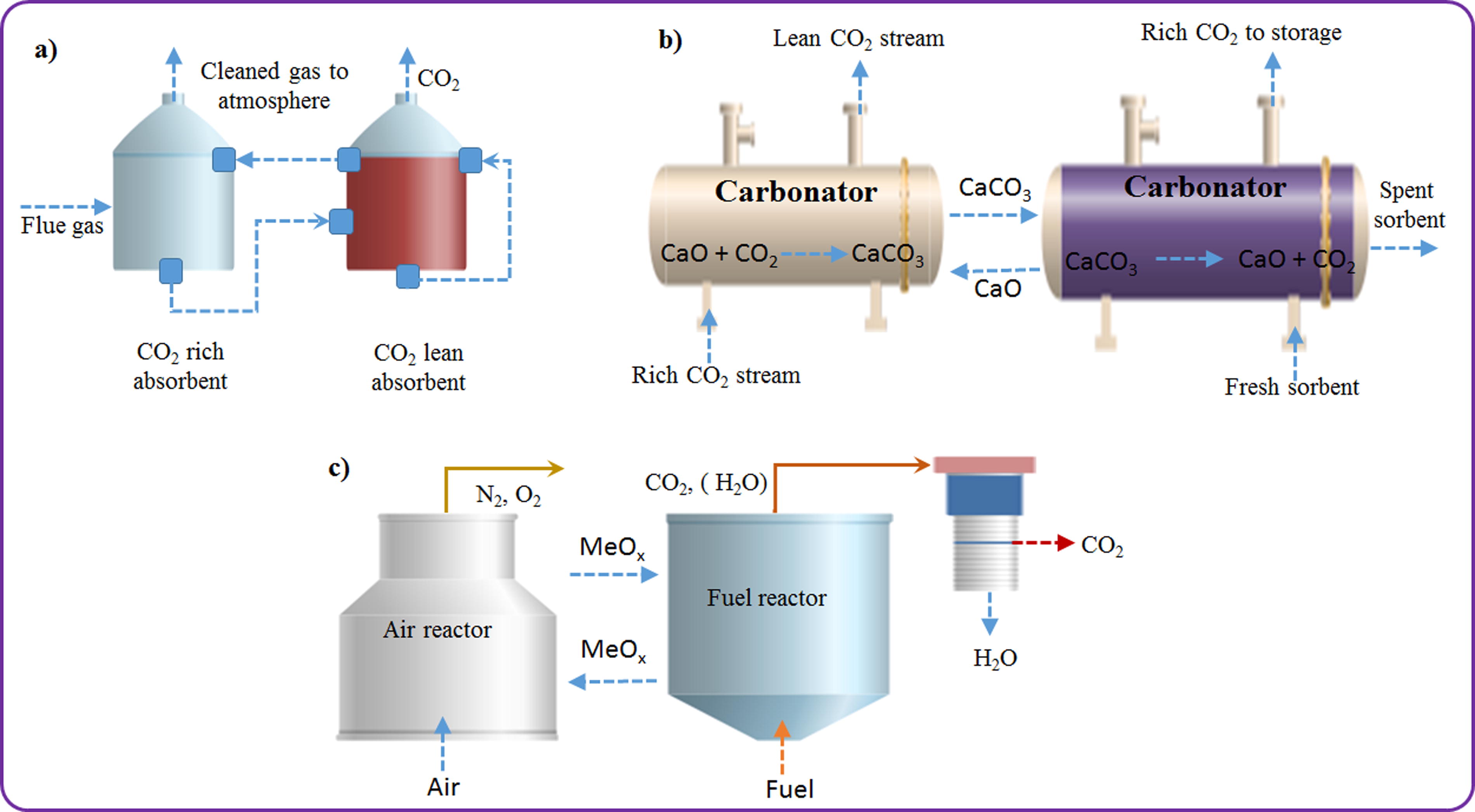
Chemical method of CO2 capture:
Amine scrubbing
Amine scrubbing is a widely used chemical method where CO2 is absorbed by aqueous amine solutions, for example, MEA or DEA. The CO2 reacts with the amines to form stable carbamate compounds, which are then regenerated by heating to release the captured CO2 (Fig. 3a). 22
Carbonation
Carbonation involves the reaction of alkaline materials, such as calcium oxide (lime) or magnesium oxide, with CO2 to form stable carbonates. This process can be used in industrial applications for CO2 capture and storage (Fig. 3b). 32
Chemical looping
Chemical looping is a process where a solid oxygen carrier, such as metal oxides, is used to transfer oxygen for the combustion of a fuel. In the context of CO2 capture, chemical looping combustion can enable the separation of CO2 from flue gasses without the need for energy-intensive separation processes (Fig. 3c). 33
Chemical CO2 capture methods offer advantages such as high capture efficiency, potential for CO2 utilization in the form of stable carbonates, and applicability to a wide range of industrial processes. However, challenges include the energy requirements for regeneration, solvent degradation, and cost considerations. 33,34
GEOLOGICAL METHOD OF CO2 CAPTURE
Geological CO2 capture, storage, and utilization (CCSU) involve the capture of CO2 from industrial bases, transportation to geological storage sites, and injection into underground reservoirs for long-term storage or utilization. Some key aspects of geological CO2 capture include the following:
Capture
The CC from industrial sources, for example, power plants or industrial facilities, is accomplished by the use of a variety of capture methods, including postcombustion capture, precombustion capture, and oxy-fuel combustion. 35 The captured CO2 is then compressed for transportation.
Storage
Pipelines or ships are used to carry the captured CO2 to geological storage sites that are suited for the purpose. These geological storage sites may include depleted oil and gas reserves, saline aquifers, or deep basalt formations. 36 The CO2 is injected into these geological formations for secure storage.
Monitoring and verification
Monitoring techniques, for example, seismic surveys, pressure monitoring, and geochemical analysis, are engaged to ensure the integrity of the storage sites and verify the long-term containment of injected CO2. 37,38 This is crucial for assessing the effectiveness and safety of geological CO2 storage.
To reduce GHGs emissions and slow the progression of climate change, geological CC and storage present a potentially useful alternative. It is possible for geological CCSU to contribute to the achievement of climate targets and help avoid the release of CO2 into the atmosphere by storing it safely beneath.
BIOLOGICAL METHOD OF CO2 CAPTURE
Afforestation, oceanic fertilization, and microalgae-based biological methods aimed at capturing and storing CO2 to mitigate climate change.
Afforestation
Afforestation involves the establishment of forests on lands that were previously not forested. Trees and vegetation naturally capture CO2 from the air through photosynthesis process, storing CO2 in their biomass. Afforestation projects help increase carbon sequestration, enhance biodiversity, improve soil health, and provide ecosystem services. 39
Oceanic fertilization
To encourage the growth of phytoplankton, oceanic fertilization makes use of the addition of nutrients to ocean waters. These nutrients include iron and nitrogen, among others. Microscopic marine algae known as phytoplankton are responsible for a significant portion of the carbon sequestration process that occurs through photosynthesis. The goal of oceanic fertilization is to increase the intake of CO2 from the atmosphere and to boost the biological pump that carries carbon to the deep ocean. This is accomplished by achieving this goal through the enhancement of phytoplankton growth. 26
Microalgae-based method
One prominent biological method is microalgae-based CO2 capture, which uses microalgae to sequester CO2 and produce biomass. Here is a brief explanation of microalgae-based CO2 capture:
Microalgae Cultivation
Microalgae are microscopic photosynthetic organisms that can grow in various aquatic environments, such as ponds, bioreactors, or open tanks. These microorganisms have a high CO2 fixation capacity and can convert CO2 into organic compounds through photosynthesis.
CO2 Sequestration
Through the process of photosynthesis, microalgae are able to take in CO2 from the surrounding air or from industrial sources such as flue gases. Microalgae are able to successfully sequester carbon in their biomass by converting CO2 into carbohydrates, lipids, and proteins with their own metabolic processes. 40
Biomass Production
The biomass produced by microalgae can be harvested and processed to extract valuable products such as biofuels, animal feed, nutraceuticals, and bio-based chemicals. This biomass can also be employed for CC and storage applications. 41
Microalgae-based CO2 capture offers several advantages, including high CO2 sequestration rates, rapid growth rates, and the potential for producing valuable bioproducts. 42 In addition, microalgae cultivation can be integrated with wastewater treatment processes, providing a sustainable solution for CO2 mitigation and resource recovery. 43
Mechanism of CO2 Capture by Microalgae
Microalgae have the unique ability to capture and use CO2 through a process called photosynthesis. 44 During photosynthesis, microalgae use energy from sunlight to convert CO2 and water into oxygen and carbohydrates. 31 These carbohydrates serve as a source of energy for the growth and reproduction of microalgae, whereas the oxygen is released back into the atmosphere. This process not only helps to reduce the levels of atmospheric CO2 but also contributes to the production of biomass, which can be used for various bioproducts and biofuels. Furthermore, microalgae have developed various mechanisms to optimize their CO2 capture efficiency. These mechanisms include the ability to concentrate CO2 within their cells, the utilization of efficient carbon fixation pathways, and the optimization of light and nutrient availability for optimal photosynthesis and CO2 fixation.
PHOTOSYNTHESIS
Photosynthesis is the fundamental process by which microalgae capture and convert CO2 into biomass. During photosynthesis, microalgae use sunlight as an energy source to convert CO2 and water into oxygen and organic compounds. These organic compounds, mainly in the form of carbohydrates, serve as the primary source of energy for microalgae’s growth and metabolic processes 45 (Fig. 4).

Photosynthesis process that takes place in microalgae and higher plants (exported from Kyoto Encyclopedia of Genes and Genomes).
OXYGEN PRODUCTION AND CO2 FIXATION
During the process of photosynthesis, microalgae release oxygen back into the atmosphere as a byproduct. 44 Simultaneously, they fix CO2 from the environment and incorporate it into their biomass. This dual function of microalgae, oxygen production, and CO2 fixation makes them highly valuable in the context of mitigating climate change and reducing GHGs emissions.
CARBON CONCENTRATION MECHANISM
Microalgae have developed a specialized carbon concentration mechanism to optimize their CO2 capture efficiency. This mechanism allows microalgae to actively accumulate and concentrate CO2 within their cells, even in environments with low CO2 concentrations. This carbon concentration mechanism involves the active transport of CO2 across the cell membrane and its subsequent conversion into bicarbonate ions within the cells. These bicarbonate ions are then converted back into CO2 at the site of carbon fixation, such as within the chloroplasts. 31 This specialized mechanism enables microalgae to efficiently capture and use atmospheric CO2, maximizing their potential as CO2 fixers in biorefinery processes and other applications. Their ability to concentrate and use CO2, coupled with their efficient carbon fixation pathways and optimization of light and nutrient availability, allows microalgae to maximize their photosynthetic efficiency and CO2 fixation capacity. 44 Overall, microalgae are efficient in capturing and converting CO2 through photosynthesis. 31
MULTIPLE ROUTES OF CARBON ASSIMILATION
In addition to their efficient carbon concentration mechanism and photosynthetic pathways, microalgae have multiple routes of carbon assimilation. These routes allow microalgae to effectively assimilate and use carbon from various sources, including atmospheric CO2, organic compounds, and dissolved inorganic carbon sources. These multiple routes of carbon assimilation enhance the versatility of microalgae as CO2 fixers in biorefinery processes. 31 The combination of a specialized carbon concentration mechanism, efficient photosynthetic pathways, and multiple routes of carbon assimilation makes microalgae highly effective in capturing and using CO2 from various sources. 44 The ability of microalgae to competently capture and use CO2 through their specialized carbon concentration mechanism, efficient photosynthetic pathways, and multiple routes of carbon assimilation makes them a promising tool for CO2 capture and mitigation strategies. Microalgae have a specialized carbon concentration mechanism that allows them to efficiently capture CO2 from the environment and convert it into biomass through photosynthesis. Their efficient carbon fixation pathways and multiple routes of carbon assimilation make microalgae highly effective in capturing and using atmospheric CO2, making them a promising tool for CO2 capture and mitigation strategies in biorefinery processes and other applications. Microalgae’s specialized carbon concentration mechanism, efficient photosynthetic pathways, and multiple routes of carbon assimilation make them a highly effective tool for capturing and converting CO2. 31
PHOTOSYNTHESIS CASCADE
Light dependent
During the light-dependent (LD) phase of photosynthesis, microalgae use light energy to generate adenosine triphosphate (ATP) and nicotinamide-adenine dinucleotide phosphate (NADPH), which are key molecules in driving the carbon assimilation process. During the LD phase of photosynthesis, microalgae use light energy to generate ATP and NADPH, which are crucial molecules for driving the carbon assimilation process in microalgae. 44 During the LD phase of photosynthesis, microalgae use light energy to generate ATP and NADPH, which are crucial for driving the carbon assimilation process in microalgae (Fig. 5). This process plays a vital role in the conversion of CO2 into biomass and the production of valuable bioproducts in microalgae-based biorefineries. 31 This process plays a vital role in the conversion of CO2 into biomass and the production of valuable bioproducts, making microalgae-based biorefineries an environmentally friendly and sustainable solution for CO2 capture and utilization. Microalgae’s efficient photosynthetic pathways and their ability to use different light wavelengths make them highly productive in capturing energy from sunlight for the conversion of CO2 into biomass.
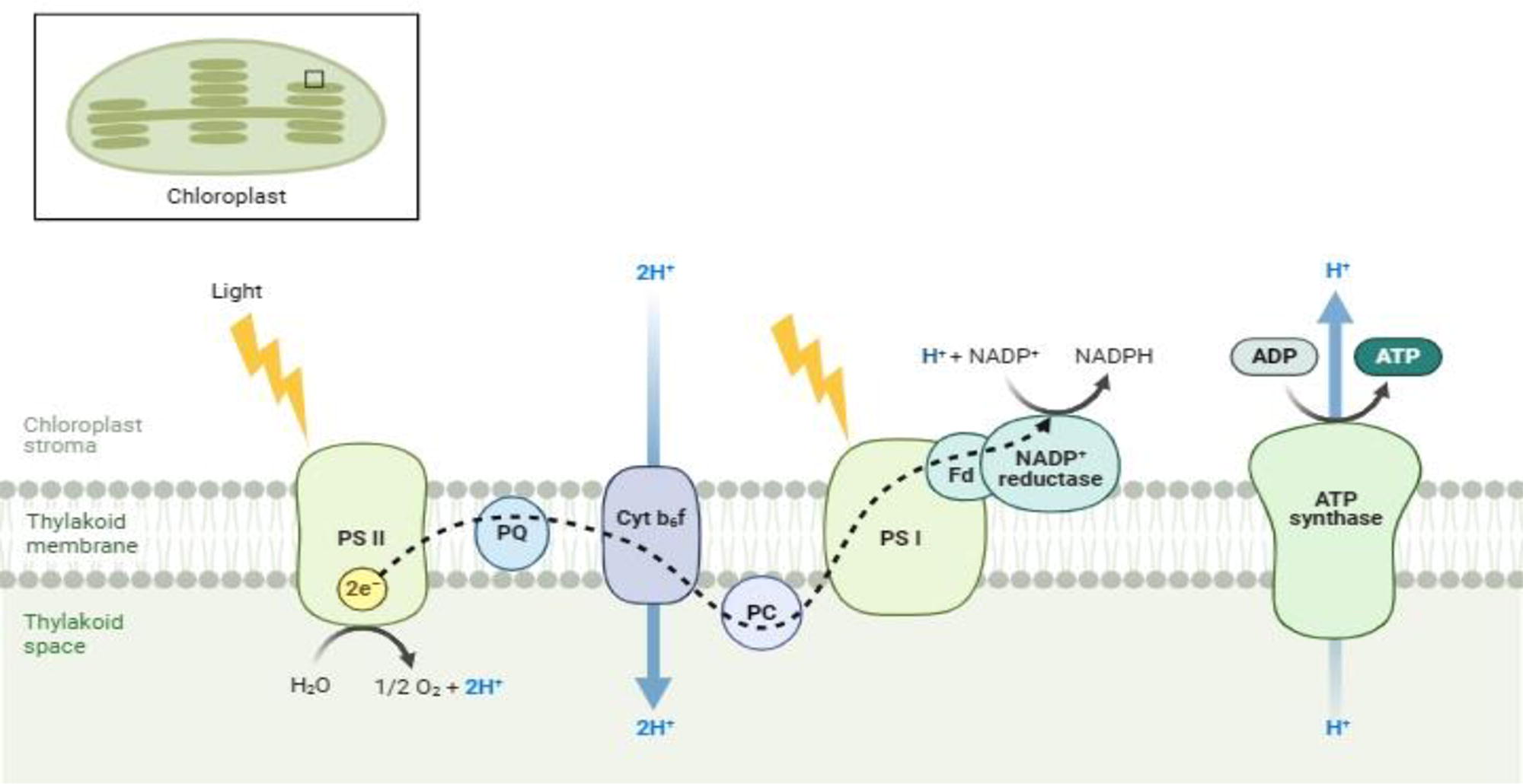
Light-dependent pathway of CO2 fixation.
Dark reactions
In the dark reactions of photosynthesis, microalgae use ATP and NADPH generated during the LD phase to fix CO2 into organic molecules such as sugars and lipids. 46 These organic molecules serve as the building blocks for biomass production and can be further processed to obtain various value-added products, including biofuels, food supplements, and pharmaceuticals. In addition, microalgae have the ability to use multiple routes of carbon assimilation, such as the Calvin cycle and alternative carbon fixation pathways (Fig. 6). 47 Overall, the photosynthetic process of microalgae plays a crucial role in capturing and converting CO2 into biomass, offering a sustainable solution for CO2 capture and utilization. 44 The efficient photosynthetic pathways of microalgae allow them to capture energy from sunlight and convert CO2 into biomass through the LD and dark reactions of photosynthesis. The efficient photosynthetic pathways of microalgae allow them to capture energy from sunlight and convert CO2 into biomass through the LD and dark reactions of photosynthesis. 48
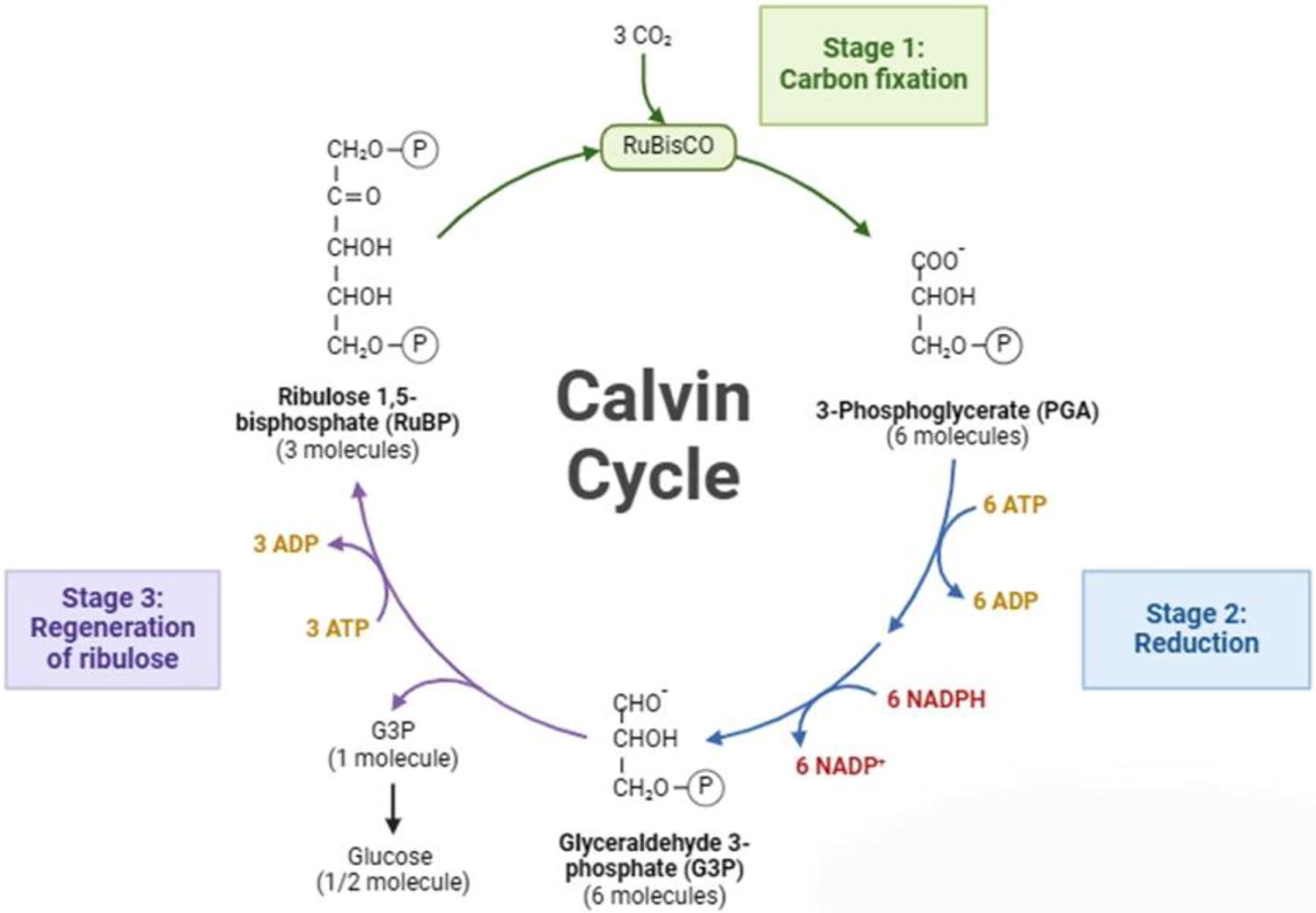
Calvin cycle of carbon fixation pathway.
ALTERNATIVE MODES OF CO2 ASSIMILATION
Microalgae demonstrate a remarkable capacity to use alternative pathways for CO2 assimilation, surpassing the conventional Calvin cycle. These alternative modes, including the C4 and Crassulacean Acid Metabolism pathways, equip microalgae with the ability to thrive in diverse environmental settings while optimizing their efficiency in fixing CO2. 49 Through these nuanced modes of CO2 assimilation, microalgae effectively harness and transform CO2 into biomass even amid formidable environmental challenges. 50
FLEXIBILITY AND ADAPTABILITY
Microalgae have emerged as a prime focus of research studies owing to their inherent flexibility and adaptability to different CO2 concentrations. For instance, Vale et al. 51 discuss microalgae’s rapid adaptability and high specific growth rates, which make them effective CO2 absorbers compared with terrestrial plants. 51 Wang et al. 31 have provided extensive insights into the photosynthetic CO2 fixation capabilities of microalgae, emphasizing their resilience and adaptability to variable CO2 levels. 31 These research efforts illuminate the potential of microalgae, positioning them as a versatile solution in the realm of CO2 bioremediation and an instrumental component toward achieving carbon net-zero emissions.
SURVIVABILITY IN DIFFERENT CO2 CONCENTRATIONS
Microalgae have exhibited varying degrees of adaptability and CO2 fixation capabilities under different CO2 concentrations, as highlighted by several research works. 52 Patil and Kaliwal discussed the impacts of CO2 concentrations on the biomass productivity and CO2 fixation rates of several microalgae species. 53 Furthermore, the survival and growth efficiency of these microorganisms was scrutinized by Wang et al., 31 who examined the importance of process regulation to enhance fixation efficiency while optimizing CO2 and light conditions for various strains. These studies illustrate a keen interest in using microalgae not only for their robust CO2 bioremediation potential but also in advancing toward a sustainable future through micro algal biorefinery approaches.
Methodology of CO2 Capture Using Microalgae
The methodology of CO2 capture using microalgae involves several key steps. 44 These steps include selecting suitable microalgae strains with high CO2 fixation potential, optimizing cultivation conditions to enhance CO2 capture efficiency, implementing genetic and metabolic modifications to further enhance CO2 fixation capability, and designing efficient photobioreactor systems for large-scale cultivation.
IDENTIFICATION AND SELECTION OF THE HIGH CO2-TOLERANT ALGAL STRAINS
Within the framework of the CO2 capture process, the initial phase involves the discovery and selection of algal strains that have a high tolerance to CO2. 31 These strains are characterized by their ability to thrive in environments with high levels of CO2, making them ideal candidates for efficient CO2 fixation. They are typically selected based on their biomass productivity, CO2 fixation rates, and lipid potential. Furthermore, their tolerance to high CO2 concentrations is crucial to ensure their survivability and optimal performance in CO2 capture processes. In an investigation, a selection of river algal species was isolated and recognized for their potential in CO2 sequestration, specifically species such as Spirogyra, Oscillatoria, and Chlorella, which were collected from a freshwater pond in a coal mining area. The blue–green alga, Oscillatoria, was a focus for the CO2 capture study. 54 The CO2 fixation potential of these selected strains was evaluated, and it was found that they exhibited a high capacity for CO2 capture and biomass production. These findings highlight the importance of selecting microalgae strains with high CO2 fixation potential for effective CO2 capture. Furthermore, the choice of high CO2-tolerant algal strains is crucial in ensuring their suitability for large-scale cultivation and maximizing their CO2 capture potential. 31,55
OPTIMIZATION OF PROCESS PARAMETERS FOR CO2 CONVERSION
The subsequent phase in the technology of CO2 capture using microalgae involves fine-tuning the process parameters to enhance CO2 conversion. Optimizing process parameters is essential for increasing the efficiency of CO2 conversion during microalgal cultivation. This involves fine-tuning various environmental and operational conditions to maximize the photosynthetic capabilities of microalgae, thereby improving their CO2 uptake and conversion into biomass. One key parameter is the CO2 concentration supplied to microalgae. Elevated CO2 levels can stimulate growth and increase the carbon fixation rate; however, it is essential to determine the optimal range as excessively high concentrations can inhibit growth. For example, studies have shown that microalgae such as Chlorella vulgaris exhibit an increase in growth rate and CO2 sequestration efficiency within certain elevated CO2 concentration ranges. 55
Light intensity and photoperiod are also pivotal factors. Microalgae require light for photosynthesis, but the optimal quantity and duration of light exposure must be meticulously calibrated. Varied species of microalgae have distinct light requirements, with some thriving under high light intensity, whereas others prefer lower levels. Adjusting the photoperiod can regulate the light/dark cycle to suit the metabolic rhythm of specific strains, enhancing CO2 conversion efficiency. For instance, the studies conducted by Razzak et al. 56 have demonstrated the significance of optimizing light intensity and duration for different microalgal strains, showcasing substantial improvements in CO2 conversion and biomass production under carefully controlled light conditions. In another study by Zhao et al., 57 the researchers investigated the effect of light intensity on the growth and lipid production of Scenedesmus obliquus and found that a moderate light intensity led to the highest biomass and lipid content, indicating the importance of optimizing light conditions for specific desired outcomes.
Apart from CO2 and light, nutrient availability also plays a vital role in the optimization process. Microalgae require essential nutrients such as nitrogen, phosphorus, and micronutrients for their growth and metabolism. Balancing the nutrient levels in the growth medium is critical to promoting CO2 conversion efficiency and biomass production. In a study, researchers discovered that modifying the nutrient composition of the growth medium, specifically adjusting the nitrogen-to-phosphorus ratio, resulted in improved CO2 conversion efficiency and biomass production for Chlorella sp. 58 Furthermore, research has shown that the addition of micronutrients, such as iron and trace metals, can enhance the growth and lipid accumulation of microalgae, further enhancing their ability to mitigate CO2 and contribute to biomass production. 55
pH levels in the growth medium have been identified as a critical factor in the regulation of CO2 fixation. Maintaining the appropriate pH range is crucial for the enzymatic activity involved in CO2 uptake and carbon fixation during photosynthesis. Studies have demonstrated the significance of controlling pH to optimize CO2 biofixation in microalgae. For instance, research by Qiu et al. 59 showcased the impact of pH regulation on the CO2 biofixation efficiency of C. vulgaris, emphasizing the role of culture pH in governing the metabolic pathways responsible for CO2 assimilation. Furthermore, the regulation of temperature and culture mixing can significantly influence CO2 fixation. Temperature affects the metabolic rates of microalgae and the solubility of CO2 in the growth medium, thus impacting CO2 uptake and utilization. Studies have highlighted the importance of maintaining an optimal temperature range to support robust CO2 fixation in microalgae. 49,50,52,60 In addition, efficient culture mixing is essential to ensure uniform CO2 distribution and prevent CO2 limitation in the growth medium, maximizing the overall CO2 capture efficiency. 49,50,60
Process regulation also extends to the management of potentially inhibitory substances, such as oxygen and reactive oxygen species, which can negatively impact CO2 fixation. 45 Oxygen evolution during photosynthesis can compete with CO2 fixation, leading to reduced carbon assimilation. Strategies to mitigate the inhibitory effects of oxygen, such as adjusting the culture aeration rate or employing oxygen-scavenging mechanisms, are essential for enhancing CO2 conversion efficiency. 51 Nutrient availability, including sources of nitrogen, phosphorus, and trace minerals, is necessary to support algal growth and metabolism. The composition of the culture medium must be optimized to provide a balanced nutrient supply while avoiding excesses that can lead to eutrophication and inhibit CO2 conversion. 43 Stirring and mixing are operational parameters that should not be overlooked. Proper mixing ensures that cells receive uniform light exposure and CO2 access while preventing the settling of algal biomass. It also aids in temperature control and nutrient distribution throughout the culture medium. Hence, by effectively optimizing these parameters, microalgae can be engineered to become more efficient converters of CO2, thereby not only mitigating GHGs emissions but also producing valuable biomass for biofuel, food supplements, and other bioproducts. For example, Arias et al. 61 found significant CO2 removal efficiency using a photobioreactor with optimized conditions for C. vulgaris, achieving up to 74% CO2 removal from the airstream.
CO2 CAPTURE IN PHOTO BIOREACTOR SYSTEMS
One of the prime factors to maximize CO2 capture is the cultivation of microalgae in suitable photo bioreactor systems. The open pond system, the closed-culture system, and the tubular photobioreactor are some of the different types of photobioreactor systems that are available (Fig. 7). A variety of criteria, including scalability, cost-effectiveness, and the specific requirements of the microalgae species that are being farmed, are taken into consideration when selecting a photo bioreactor system. Each type of photo bioreactor system has both advantages and disadvantages for its operation. Figure 7 shows some of the common types of photo bioreactor systems used for CO2 capture in microalgae cultivation. Open pond systems are cost-effective and easy to scale up, but they have limitations in terms of controlling light exposure, temperature, and contamination. Several researchers have focused on improving the design and operation of open pond systems to address these limitations, implementing strategies such as shading devices, mixing systems, and advanced monitoring and control techniques to optimize CO2 capture and microalgae growth. 31,49,61,62 Wang et al. 31 explored the use of a modified open pond system with baffles and paddlewheels for efficient CO2 removal, achieving a CO2 capture efficiency of 68%. Similarly, researchers implemented a novel approach by integrating an open pond system with a thin film photobioreactor to enhance CO2 capture and microalgae growth, achieving a remarkable CO2 capture efficiency of 72%. 31,63

Different photobioreactor systems: (1) Open system—
Closed-culture systems, on the contrary, provide better control over environmental factors such as light exposure, temperature, and contamination. 64 These systems are often more suitable for cultivating specific microalgae strains with precise requirements. The enclosed nature of closed-culture systems also reduces the risk of contamination, making them an ideal choice for high-value microalgae products such as pharmaceutical compounds and nutraceuticals. 58 Recent advancements in closed-culture systems, including the use of light-emitting diodes to provide tailored light spectra and intensities, have significantly improved CO2 capture efficiency and microalgae growth rates. 28,65 In addition, advancements in tubular photobioreactor have led to enhanced CO2 capture and microalgae cultivation efficiency. These systems offer a favorable surface-to-volume ratio, allowing for efficient light exposure and CO2 utilization. 46 The tubular design also enables easy scale-up and operational flexibility, making it suitable for large-scale microalgae cultivation for biofuel and biomass production. Researcher Xu et al. 66 demonstrated the effectiveness of a tubular photobioreactor system in achieving high CO2 capture efficiency and microalgae biomass productivity, highlighting its potential for sustainable carbon mitigation and bioenergy generation.
When selecting a photobioreactor system for CO2 capture, it is essential to consider factors such as the specific requirements of the cultivated microalgae species, operational scalability, and cost-effectiveness. Each type of system offers distinct advantages and limitations, and the choice should align with the intended goals of CO2 mitigation and biomass production. To further enhance CO2 capture efficiency and microalgae cultivation, ongoing research is focusing on innovative design modifications and process optimization for all types of photobioreactor systems. These efforts aim to address challenges related to light exposure, temperature control, and contamination while maximizing the potential of microalgae as a sustainable solution for CO2 biofixation and bioresource generation.
Improvements in CO2 Uptake by Microalgae
Improvements in CO2 uptake by microalgae can be achieved through various approaches, including physicochemical engineering of cultivation systems to optimize CO2 delivery and availability. Genetic engineering of microalgae is also used to enhance their CO2 fixation efficiency. 50 In addition, the design of photobioreactor and baffles aims to maximize light exposure and CO2 absorption. 47 Finally, supplementation of growth media with nutrients that promote CO2 uptake and biomass production contributes to the enhancement of CO2 uptake by microalgae. 67 Adapted strains with higher CO2 fixation capacity are developed through genetic engineering for improved CO2 uptake capabilities, whereas optimizing cultivation conditions further maximizes CO2 delivery and availability. 63 Chemical methods as well as hybrid methods for delivering and capturing CO2 from the atmosphere or industrial sources are explored, along with solvent-based and membrane-based techniques for capturing and concentrating CO2 from microalgae cultivation systems.51 Table 2 summarizes these methods and approaches for improving CO2 uptake by microalgae.
Improvements in CO2 Uptake by Microalgae
Improving CO2 uptake by microalgae can lead to more efficient and effective CC and utilization, thereby contributing to mitigating climate change and transitioning to a sustainable future. 51 The development and implementation of these strategies will not only enhance the economic viability of microalgae-mediated CO2 biomitigation but also address the challenges of low sequestration efficiency and high energy consumption. 45 Crucially, these enhancements are essential for achieving more sustainable and effective CC and utilization technologies (Fig. 8). Focusing on continuous improvement in CO2 uptake by microalgae is important for advancing these technologies while enhancing their efficiency.
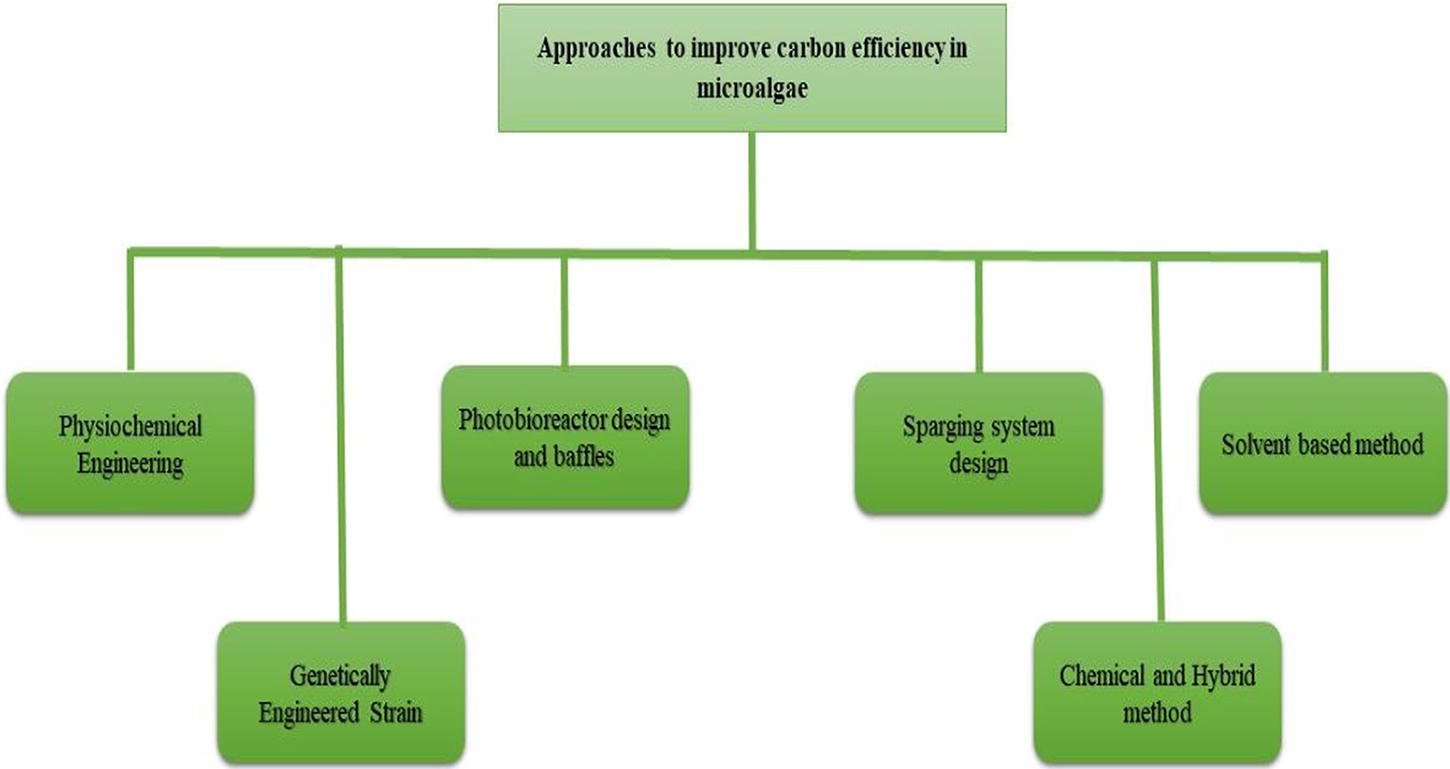
Different approaches of improving carbon fixation efficiency in microalgae system.
Carbon Assimilation and Biomass Yield by Capturing CO2 from Flue Gasses and Using Wastewater as Growth Media
Through the utilization of wastewater as a growing medium and the capture of CO2 from flue gases, it is possible to achieve both the assimilation of carbon and the production of biomass. 31 This sustainable approach provides an effective way to address environmental challenges while promoting resource efficiency in industrial processes. Through the utilization of these alternative resources, businesses have the ability to lessen their impact on the environment and make a contribution toward a more sustainable future for our world. In addition, implementing innovative technologies that optimize the utilization of renewable energy sources will further enhance sustainability efforts in various industries. Tables 3 and 4 show the source of wastewater and the CO2 assimilation by microalgae, as well as the biomass yield. Several studies were conducted utilizing wastewater from various sources for carbon assimilation and biomass production by microalgae. The results indicated significant CO2 assimilation and biomass yield using different types of wastewater as growth media. 43,64,78,79 Microalgae exhibited remarkable CO2 assimilation from industrial flue gasses containing exceptionally high concentrations of CO2 (150,000 ppm). 47 The biomass yield from this source was notable, highlighting the effectiveness of microalgae in capturing CO2 from industrial emissions. Wastewater from the natural gas processing industry facilitated efficient CO2 capture by the selected microalgae species. 56,80 The study demonstrated substantial biomass production using this wastewater, emphasizing the potential of microalgae in carbon assimilation and biomass generation in industrial settings. The wastewater from thermal power plants provided a conducive environment for CO2 capture by the studied microalgae. The results revealed significant biomass yield, indicating the viability of utilizing wastewater from thermal power plants for sustainable biomass production through microalgal carbon assimilation. 43,80 Thus, the utilization of alternative resources such as industrial flue gasses and wastewater for carbon assimilation showcased promising results in terms of biomass yield. Furthermore, the study underscored the environmental significance of using microalgae for CO2 capture and biomass production, contributing to the reduction of ecological footprints in industrial processes. As the demand for sustainable practices continues to grow, incorporating innovative technologies and leveraging renewable energy sources will be pivotal in driving environmental stewardship and resource efficiency across diverse industries. The findings from this study provide valuable insights into the potential of microalgae in addressing environmental challenges and promoting sustainable resource utilization, offering a pathway toward a more environmentally conscious and resource-efficient industrial landscape.
Biomass Production and CO2 Fixation by Various Algal Species
Carbon Assimilation and Biomass Yield by Capturing CO2 from Flue Gasses and Using Wastewater as Carbon Source (as Growth Media)
N/A, not applicable.
Biomass Valorization Through Circular Economy
It is a paradigm of sustainable development that substitutes the linear economy with a closed framework that focuses on extracting, reducing, reusing, and recycling biological resources to minimize waste formation. Microalgae biomass valorization through circular economy is an example of this concept. 70,81 The inherent CO2 sequestration capacity of microalgal cells can be used for the development of a robust bioenergy system that uses CC, storage, and utilization technology. This technology offers advantages over traditional CC, storage, and utilization technology in terms of the amount of time it takes, the geological hazards it poses, and the CO2 storage and transport capabilities it possesses. For the purpose of bolstering the circular bioeconomy, the integration of microalgal CC, storage, and utilization technology with energy generation necessitates the development of algal biorefinery systems that are both optimized and integrated (Fig. 9).

An encompassing scheme for microalgae utilization: CO2 sequestration, wastewater remediation, bioenergy production, and synthesis of high-value coproducts, driving the circular bioeconomy.
Extensive research has been conducted to identify the function that the microalgae-based bioenergy with CC, storage, and utilization technology plays in supporting a circular bioeconomy. This research has focused on the net energy and cost effectiveness of the bioenergy with CC, storage, and utilization technology. Particularly, the focus has been on carbon sequestration by microalgae as well as their energy and cost efficiencies. Using flue gas from coal-fired power stations, Seambiotic Ltd. has been able to effectively develop a variety of marine microalgal strains since the year 2003. This has allowed the company to absorb CO2 and produce algal bioethanol and biodiesel. In a similar vein, the use of waste gas from paper and pulp mills for the cultivation of mixed cultures of Scenedesmus, Chlorella, and Monoraphidium resulted in a much better biomass energy production per area. 31 These cultivation concepts improved the net energy ratio to 0.25 while also enhancing lipid production with higher heating values of 20–23 MJ kg−1. In addition to examining the energy efficiency and carbon fixation capabilities of microalgae-based bioenergy with CC, storage and utilization technology is an important economic assessment that highlights the viability of a biorefinery framework over a conventional CCSU model. The microalgae-based biorefinery for methanol and bio-oil exhibited high CO2 capture efficiency (73%) with substantial revenue generation totaling $59.2 million USD alongside a net CO2 capture cost much lower than amine-based CC and utilization predictions. 31
In addition, microalgal biofilms show a high productivity of 30 g/m2 per day and demonstrate thermal and electrical efficiencies (0.25 W/m2) comparable with direct air capture technology (ranging from 0.12 to 0.41 W/m2). 82 This indicates the potential viability of using microalgae for bioenergy with CC, storage, and utilization technologies in a circular bioeconomy. The efforts to produce bioelectricity from algal biomass can be utilized to power the entire system for cultivating and harvesting algae, completing the loop of a biorefinery model. Furthermore, by coproducing various energy products such as biohydrogen, bioethanol, and biodiesel from waste sources within an algal biorefinery environment, it is feasible to significantly reduce the overall cost of algal energy production while contributing toward a circular economy. 62
Policy-making organizations in different countries have been progressively implementing carbon taxation systems to decrease carbon emissions and meet sustainable development goals by 2050. The carbon taxes have increased over time, going from $20 per ton of CO2 in 2019 to $50 per ton of CO2 in 2022. Projections indicate that the carbon taxes will continue rising to reach $170 per ton of CO2 by 2030 as part of strict emission regulations. 83 This increase aims to encourage the adoption of sustainable technologies for capturing and using carbon instead of paying high carbon taxes. Among these options, microalgae-based bioenergy with CC, storage, and utilization technology is emerging as an attractive choice within a biorefinery model at a reasonable cost compared with chemical-based technology. In addition, microalgae-based bioenergy with CC, storage, and utilization technologies acts as a net-negative emission technology that not only reduces carbon emissions but also generates additional oxygen and valuable products or green energy within circular bioeconomy frameworks. To ensure its widespread applicability across industrial setups while maintaining an integrated system with industrial standards successfully achieving the target, essential considerations relating to space requirements and cultivation systems need further development efforts illustrating promising future prospects for microalgae-based bioenergy with CC, storage, and utilization technologies contribution toward circular economy objectives aligning with sustainability targets associated with energy–environmental nexus.
Future Perspective
Cultivating microalgae can help reduce CO2 from the atmosphere and use the captured carbon in various products. This characteristic of algae has been recognized as a hopeful method for sustainable CO2 sequestration and use, known as microalgae-based bioenergy with CC, storage, and utilization technology. Microalgae cells have approximately 400 times greater efficiency in capturing CO2 than land plants, resulting in a higher fixation rate compared with traditional technologies. 84 Despite these advantages, the economic perspective on microalgae-based bioenergy with CC, storage, and utilization does not meet the needs of commercial markets and requires careful collaboration across multiple disciplines to translate progress into practical applications. The primary obstacle is the high initial operational cost of photobioreactors as well as the limited amount of land that is required for raceway pond placement. When considering the many options for cultivation, open raceway ponds and airlift photobioreactors provide exceptional performance and cost effectiveness. Nevertheless, the choice of the microalgal strain poses a constraint. 85 An algal strain possessing high biomass productivity, CO2 tolerance, and adaptation to fluctuations in light and temperature can significantly improve the economic feasibility of the operation. Determining a robust strain necessitates a substantial investment of time and effort. Hence, innovative techniques that incorporate phenotyping, automated flow cytometry, and machine learning or artificial intelligence-based models are being developed to efficiently and accurately identify appropriate microalgal strains. 31
Aside from conducting screenings, it is necessary to examine genetically modified strains that possess desired traits and have established metabolic pathways. Moreover, the use of nanotechnology for interventions exhibits promise from both economic and environmental perspectives. Nevertheless, the current constraint in genetic modification pertains to the limited genomics databases of microalgae. 86 Comprehensive omics-based studies on nonmodel and valued microalgal strains yield complete data and important targets for facilitating metabolic engineering. 63 These studies primarily focus on enhancing CO2 fixation using chloroplast genes. Nevertheless, they necessitate costly techniques such as gene guns and transformation methods. Therefore, it is recommended to explore the utilization of microalgae-based CC, storage, and utilization to harness valuable energy products from carbon emissions. Specifically, within a microalgae-based bioenergy with CC, storage and utilization model, carbon integrated as biomass can be processed for lipid or carbohydrate production. 63 In the process of biodiesel synthesis, the leftover material obtained from lipids can be subjected to hydrolysis, which breaks it down into sugars. Alternatively, it can be subjected to anaerobic digestion in order to generate biogas and produce bioelectricity. By sequentially extracting different energy forms or isolating valuable molecules like pigments or platform chemicals, it is possible to significantly reduce costs in a microalgae-based bioenergy system that involves CC, storage, and utilization. 31 Furthermore, the use of leftover biomass to produce biochar, biofertilizer, and liquid fertilizers has the potential to improve the economic value chain in a microalgae-based CC, storage, and utilization model. 47
A robust and methodical biorefinery necessitates a preexisting structure with an optimized workflow. Although some research have been conducted using models to anticipate numerous targets in microalgae-based bioenergy with CC, storage, and utilization technologies, there is still a lot of opportunity for experimental validation to increase prediction reliability and accuracy. Modeling the interplay of multiple contaminants in flue gases, in particular, can help discover resilient and CO2-tolerant microalgae strains. Furthermore, additional research is needed on the techno-economic analysis of the microalgae-based bioenergy with CC, storage, and utilization biorefinery model in order to encourage association amid industries. Furthermore, to the techno-economic analysis, a life cycle assessment using a cradle-to-gate method for microalgae-based bioenergy with CC, storage, and utilization is advised. Considering factors such as the origin of industrial source flue gas, location, and climate conditions necessitates an integrated approach that combines advanced artificial intelligence tools such as geographic information systems and prediction models with experimental evidence, as well as economic and environmental considerations for microalgae-based bioenergy with CC, storage, and utilization.
Conclusion
In this review, the multifaceted role of microalgae in addressing the pressing issue of atmospheric CO2 accumulation is explored. The evaluation of various CC methodologies has underscored the unique advantages of microalgae-based systems, which not only sequester CO2 efficiently but also offer a sustainable pathway for biomass production with multiple applications. Microalgae have been identified as a promising biological agent for CO2 capture, capable of converting this GHG into valuable resources through photosynthesis. 45 The mechanisms of CO2 assimilation by microalgae, as well as the methodologies for enhancing CO2 capture and biomass conversion, have been examined in detail. The economic feasibility of large-scale microalgae cultivation for CC has been assessed, demonstrating the potential for substantial CO2 sequestration and biomass generation. 62 Moreover, the integration of microalgae cultivation with wastewater treatment and flue gas utilization presents a synergistic approach that can enhance the environmental and economic benefits of these systems. This integration not only contributes to a sustainable global bioeconomy but also offers a promising avenue for mitigating climate change impacts. Thus, the development and implementation of microalgae-based CC technologies represent a significant step toward sustainable CO2 mitigation. As we move forward, continued research and development are essential to optimize these systems, making them more efficient and economically viable. The future of microalgae in CC and utilization is bright, and with ongoing innovation, it could play a pivotal role in shaping a more sustainable and resilient planet.
Footnotes
Acknowledgment
The authors thankfully acknowledge Vignan’s Foundation for Science, Technology and Research, Vadlamudi, Guntur, Andhra Pradesh, India, for their support.
Author Contributions
Sankaran Krishnamoorthy: Conceptualization, Supervision, Writing–Original Draft Preparation, Writing–Review & Editing, Methodology, Project Administration. K. Chandrasekhar: Data Curation, Writing–Review & Editing, Formal Analysis, Investigation. M.R. Charan Raja: Visualization, Investigation, Writing, Resources. All authors have read and approved the final manuscript.
Author Disclosure Statement
All authors express no conflict of interest to disclose.
Funding Information
No funding was received for this article.