




Abstract
Expression of recombinant proteins is highly dependent on the micro-environment provided to the cells during the cell culture process. Typically, the cell culture process at industrial scale lasts for 7–15 days, and maintaining a suitable nutrient-rich micro-environment is extremely critical to achieve the desired quality of the protein. Composition of Media and feed, and their application in the process, is crucial as they decide the quality and quantity of the protein. Most of the commercially available media and feeds come with proprietary label from the supplier, so there is always an uncertainty on the concentration and time of addition during the process, and hence the variability in desired quality is likely, and it is always the case that we are under-feeding few and over-feeding few other nutrients. In general, the media and feeds complex mixture of nutrients, which are required for cell growth, is primarily made up of amino acids, vitamins, trace metals, etc. Understanding the composition of these components in media and their consumption during the cell culture process can significantly help in directing the outcome of the process in a desired manner. In this work, the focus was to make a single high-throughput high-performance liquid chromatography method for profiling of nine water-soluble vitamins (vitamins B and C) with baseline separation and to develop a robust sample preparation procedure to minimize the matrix interference of other components present in the cell culture media. The outcome of the study achieved both objectives, where all nine water-soluble vitamins were obtained as baseline separated, and the same method could detect the presence of vitamins in cell culture components where no baseline drift was observed, which confirmed the development of robust sample preparation.
Introduction
Cell culture media composition is critical to create an environment that supports the growth, maintenance, and functionality of cells in vitro, including the production of therapeutically important proteins such as monoclonal antibodies. Earlier media formulations were mostly prepared using undefined components like serum or hydrolysates, but new formulations are entirely chemically defined; 1,2 however, these are proprietary of the manufacturer, and hence the user is unaware of the composition. These media help regulate both pH and osmotic pressure and include various energy sources (e.g., glucose and pyruvate), salts, trace elements, buffers, shear stress protectants, abundant amino acids, and small amounts of vitamins. 3 Recombinant protein expression using mammalian cells is one of the most critical aspects of higher-order biotherapeutic protein production. As the protein is not only being expressed but also made biologically active inside the cell using post-translational modifications, unlike microbial cells. There are many modifications such as glycosylation, cysteinylation, and pyroglutamate conversion, which are very important for the biological activity of the protein. 4 These modifications can only be controlled by upstream process development. Some of the other protein modifications, such as truncation and oxidation, can be taken care of by purification but at a loss of final recovery, which may impact the overall cost of the drug. Thus, controlling these critical modifications through the cell culture process becomes very crucial. The expression of protein and its quality is mostly dependent on the micro-environment of the cell culture conditions, which involves the nutrients from media and feed, and physical parameters, such as temperature, pH, dissolved oxygen, pCO2, ammonia, etc. 4 –6 Physical parameters can be monitored and maintained at the desired level, which can control the growth behavior of the cell. But, when it comes to media and feed, the additional time and quantity are based on certain assumptions and not based on actual nutrients present in the media and feed. This is because most of these media are proprietary, and their composition is not known. In this case, the growth of the cells is managed by maintaining a fixed volume addition on a routine basis, which is derived based on process developmental studies. Due to these limitations, the variability in the composition of different lots of media and feed is never known to the user. And these variabilities can certainly impact the quality of protein as nutrient feeding is not controlled based on their usage. 7,8 Media are prepared by adding nutrients (both organic and inorganic), vitamins, salts, serum proteins, carbohydrates, and amino acids. 9 Vitamins are a group of essential organic compounds needed in small amounts for specific intracellular functions. 10 Since they cannot be synthesized in sufficient quantities by the cells, they must be obtained through external sources, that is, cellular culture media. The different vitamin classes vary greatly in their chemical properties and metabolic roles. Some vitamins function as enzyme cofactors (e.g., vitamin K and most B vitamins), biological antioxidants (e.g., vitamins C and E), or even hormones (e.g., vitamins A and D). 11,12 Vitamins are classified as either fat soluble (A, D, E, and K) or water soluble (C and B). 12 Water-soluble vitamins typically have charged or highly polar functional groups, such as carboxyl, hydroxyl, or phosphoryl groups, while fat-soluble vitamins are generally large hydrocarbon molecules, often with a high degree of unsaturation. 12 The role of each vitamin in cellular function is unique and crucial for maintaining metabolic processes. Riboflavin, for example, is converted into two active coenzyme forms: flavin mononucleotide and flavin adenine dinucleotide. 12 –15 While riboflavin is typically unaffected by other cellular components, it can induce the degradation of many other compounds through photosensitization. The only known alteration of riboflavin by other cellular components occurs when it reacts with thiamine hydrochloride (HCl). In this reaction, a high concentration of thiamine HCl relative to riboflavin results in the oxidation of thiamine by riboflavin, followed by the precipitation of chloroflavin as a degradation product. 16 This process is enhanced in the presence of ascorbic acid. 16 Additionally, nicotinamide has been shown to stabilize folic acid in neutral and mildly acidic solutions by preventing the precipitation that typically occurs at lower pH levels. 17 However, the degradation of folic acid is accelerated by riboflavin in the presence of ultraviolet (UV) light, 18,19 by ascorbic acid even in the absence of light, 19 and by the degradation products of thiamine. 20,21 Cyanocobalamin (vitamin B12) plays a pivotal role as a coenzyme in various metabolic pathways, particularly in propionate metabolism, amino acid metabolism, and single-carbon metabolism. 6,11 Similar to many other vitamins, cyanocobalamin is converted into several active forms within the cell. Thiamine (vitamin B1) functions as a coenzyme in decarboxylation reactions, playing a key role in energy metabolism, such as the conversion of pyruvate to acetyl-CoA, α-ketoglutarate to succinyl-CoA, and the metabolism of glucose into pentoses. 11,12,22,23 Vitamin B6 consists of a group of six related compounds—pyridoxine, pyridoxal, and pyridoxamine, along with their respective 5′-phosphate derivatives. At least one form of vitamin B6 is essential for cellular function and metabolism. 24,25 Biotin primarily involved in bicarbonate-dependent carboxylation reactions, plays a crucial role in metabolic processes such as the citric acid cycle, fatty acid synthesis, and the catabolism of branched-chain amino acids. 26 So, to understand the composition of these vitamins in cell culture media can be very meaningful from two perspectives, firstly, process development can be very easy as every addition is known to the user so the outcome is predictable and secondly, the developed process can be monitored easily and it is always possible to find the root cause for any undesired protein quality coming from cell culture process. There are many high-performance liquid chromatography (HPLC)-based and mass spectrometry-based methods available to analyze the water-soluble vitamins. The challenges with currently available HPLC methods are a lack of baseline-separated peaks of all vitamins and robust sample preparation. Mass spectrometry is one of the most sensitive techniques, but it comes with high cost and less robustness, especially when it is about the crude sample analysis, that is, cell culture media. In this work, we developed a robust chromatographic assay for qualitative monitoring of water-soluble vitamins. The methodology was developed to handle complex samples (having a mixture of proteins, lipids, trace metals, vitamins, etc.) and to analyze them on a high-throughput method that can separate and detect the nine water-soluble vitamins in a single assay.
Materials and Methods
Media (MAMPF powder, supplement 1, supplement 2, MAMPF supplement 1, MAMPF supplement 2, MAMPF supplement 3) were purchased from BioConcept Limited. Vitamin standards were purchased from Sigma Aldrich; vitamin C (ascorbic acid; cat no PHR1008), vitamin B1 (thiamine; cat no PHR 1037), vitamin B2 (riboflavin; cat no.47861), vitamin B3 (niacin; cat no PHR1276), vitamin B5 (pantothenic acid; PHR1232), vitamin B6 (pyridoxine, pyridoxal, and pyridoxamine; PHR1036), vitamin B7 (biotin; PHR1233), vitamin B9 (folic acid; PHR1035), vitamin B12 (cynocobalamine; PHR1234).
Sodium dihydrogen phosphate was purchased from Sigma Aldrich (Cat number 7558-80-7), and methanol was purchased from Sigma Aldrich (Cat no 67-56-1). The column chemistry used was C18 (Octadecyl Column) with the dimension of 250 × 4.6 mm and particle size of 5 microns was purchased from Phenomenex. The chromatographic separation was carried out on a Shimadzu UFLC system equipped with an auto-sampler and UV detector (SPD-20AV UV/VIS).
SAMPLE PREPARATION
Vitamin standards were weighed at 20 mg each and dissolved in 2 mL of MilliQ water, making the effective concentration of 10 mg/mL. All the standard samples were mixed in equal volume by taking 1 ml of each. The final effective concentration of each vitamin was 1 mg/mL. The MAMPF powder was dissolved in water at a concentration of 20 mg/mL. Other components were dissolved in water at a concentration of 5 mg/mL. All the test samples were treated with 15% v/v ethanol to precipitate any peptide or protein present. Turbidity was observed in samples after ethanol addition, which indicated the presence of peptides/proteins in the samples. The samples were subjected to short centrifugation to spin down the particulate matter. The supernatant of each sample was taken out and mixed with an equal volume of Chloroform and vortexed for 5 minutes, allowing lipids to be solubilized in organic solvent. Further, the samples were subjected to short centrifugation, resulting in bilayer formation of aqueous and organic solvents. The aqueous layer was taken further for analysis on HPLC.
EXPERIMENT DESIGN (FOR DETECTION OF VITAMINS IN MEDIA COMPONENTS)
A chromatographic method was designed where mobile phase A was 50 mM sodium dihydrogen phosphate with pH 2.5, and mobile phase B was 100% methanol. A step gradient method was used where mobile phase B went up to 20% from 0% in 3 minutes, followed by 40% in 7 minutes, then 50% in next 5 minutes and then 80% in next 3 minutes. The maximum absorption wavelength of each vitamin is different in the UV region, and it ranges from 205 (B7 and B5) nm to 392 (B12) nm. Wavelength for detection was set at 205 nm considering the lower limit of the range, column temperature at 40°C with flow rate of 0.8 ml/minute. Method details for the gradient of the mobile phase are presented in Table 1. All the vitamin standards prepared at a 1 mg/mL concentration were injected individually to identify the retention time of each. The injection volume of each sample was 10 µL. Then the mixture of all standards was compared with the individual injection of each vitamin standard.
In this study, the primary objective was to develop a high-throughput and robust method to identify the presence of multiple vitamins in the cell culture media, and hence, the study was limited to qualitative measurement of the composition.
Results
The vitamins standard mixture gave very good baseline separation of all the expected compounds as presented in Fig. 1. The chromatographic baseline was also very clear, allowing the lower level of detection of vitamins. Retention time of each vitamin is presented in Table 2. An annotation is given based on the individual vitamin standard injection. The response of each vitamin standard is different in spite of the same sample concentration. It is expected that the absorbance of each component differs at a particular wavelength of detection. Individual media components were treated with ethanol to remove any protein components and processed for centrifugation to settle down the turbidity of the solution. Supernatant of the solution was taken and injected directly into the HPLC directly. Results of each media component were compared against vitamin standards, and the identification of vitamins was performed based on the presence of peaks in the test sample corresponding to similar retention times in the vitamin standard. Data of each sample in comparison to vitamin standards are presented in Figs. 2–7.
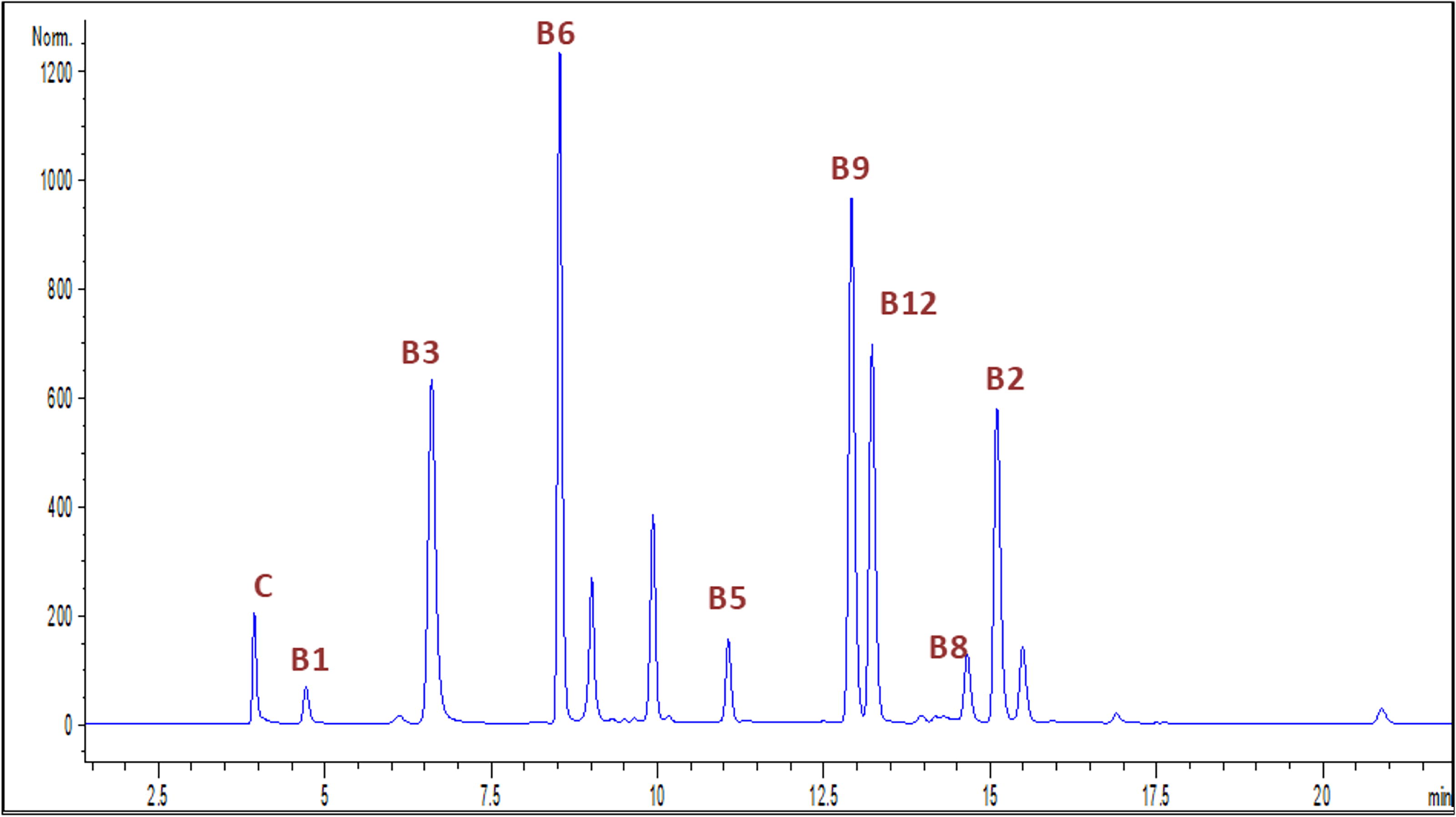
Chromatographic profile of a mixture of vitamin reference standards.

Chromatographic profile of MAMPF powder analysis.
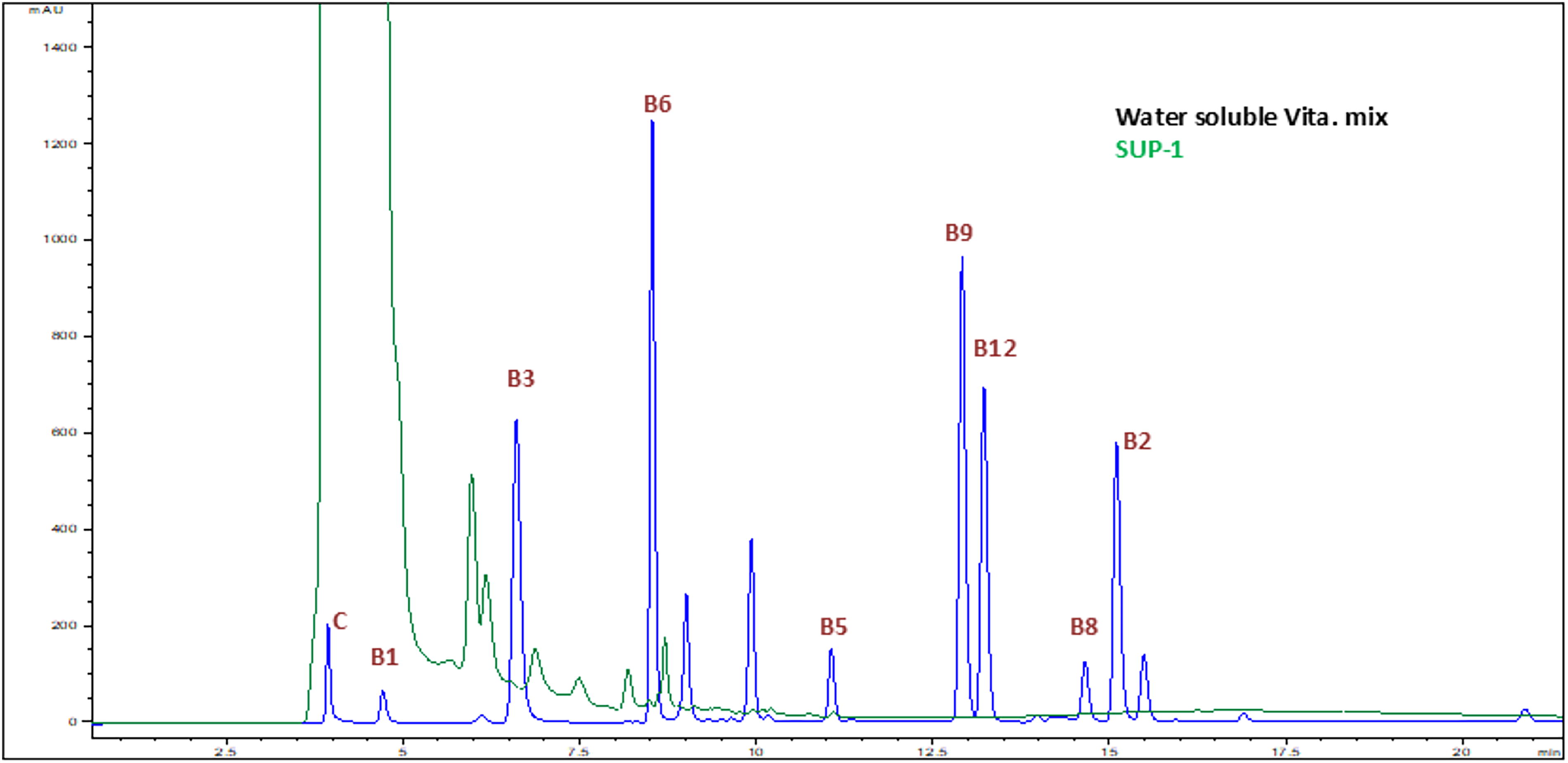
Chromatographic profile of supplement-1 analysis.

Chromatographic profile of supplement-2 analysis.
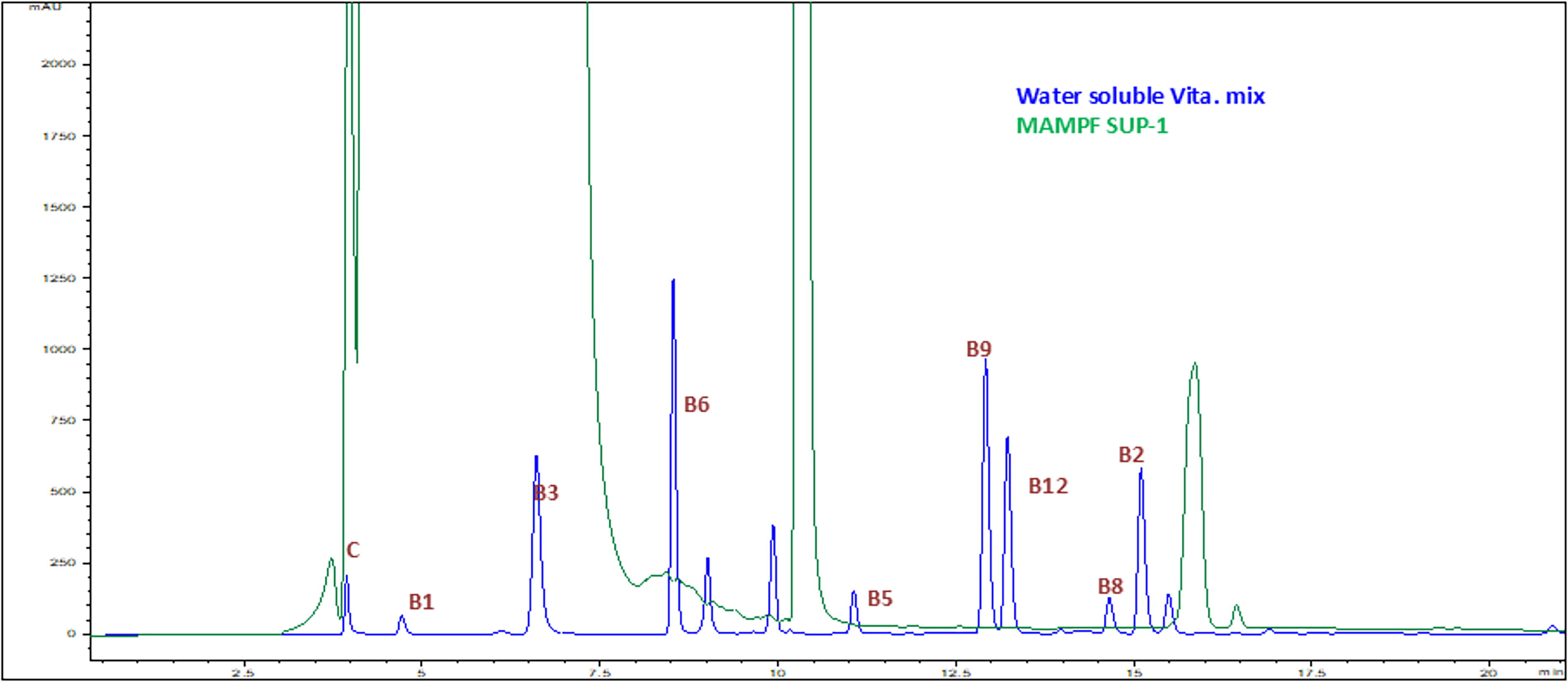
Chromatographic profile of MAMPF supplement-1 analysis.
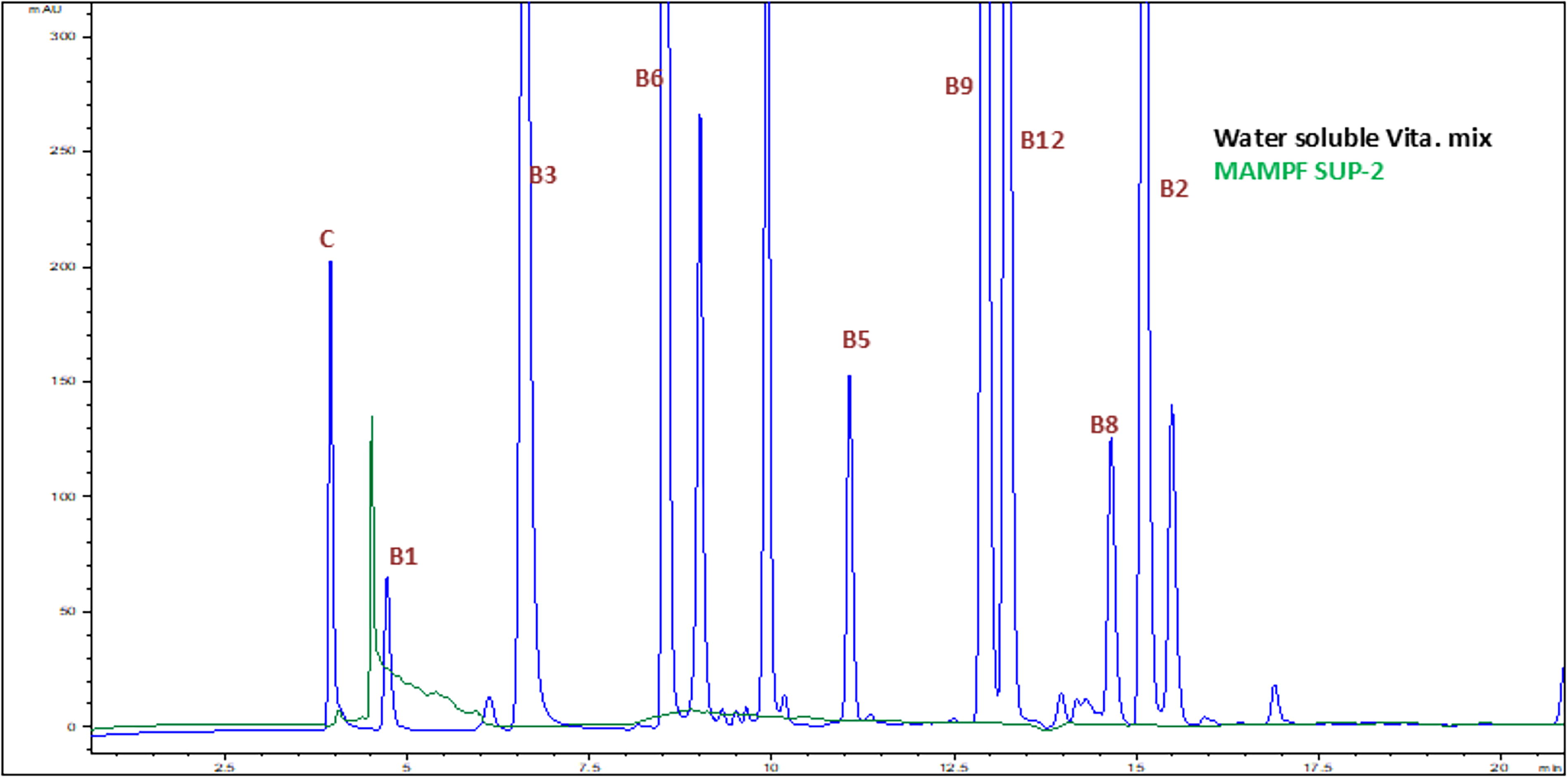
Chromatographic profile of MAMPF supplement-2 analysis.

Chromatographic profile of MAMPF supplement-2 analysis.
Discussion
The biopharmaceutical industry has made significant strides in the production of therapeutic proteins using mammalian cell lines. Central to this progress is the ability to produce high-quality proteins at economically feasible prices. Achieving these outcomes requires that cells be maintained in a meticulously controlled micro-environment enriched with a surplus of nutrients. The timely provision of these nutrients is directly linked to the bioactivity and overall quality of the expressed proteins. Mammalian cells demand a complex and balanced mixture of nutrients to perform their biological functions effectively. Vitamins, as essential micronutrients, serve as cofactors, antioxidants, and modulators of cellular metabolism. Their roles span critical processes such as energy production, nucleic acid synthesis, and redox regulation. However, due to proprietary constraints imposed by media suppliers, obtaining detailed information about the nutritional composition of commercial cell culture media and feeds remains challenging. This study aimed to elucidate the vitamin profiles of various media components using an HPLC-based method and link these profiles to protein expression performance. The primary objectives of this study were to: Develop an HPLC method to detect predominant vitamins in cell culture media and feed components. Establish a baseline qualitative profile for the cell culture media and feed components. Provide a framework to use this methodology for optimizing feeding strategies for vitamins.
Different media and feed supplements were analyzed, including various commercial supplements and powder formulations designed to support mammalian cell growth. The analytical method was based on HPLC, a well-established technique known for accurately resolving vitamins in complex matrices. Samples were prepared by following standardized protocols to preserve vitamin integrity. This involved minimizing exposure to light and heat, which can degrade sensitive vitamins. Also, loss of vitamins during sample preparation was also verified by spiking a known amount of vitamins in test samples. This is very important when this methodology is adopted for the quantitative measurement of vitamins. Optimized HPLC conditions allowed for clear resolution of the vitamins based on distinct retention times. Table 3 summarizes the vitamin content detected across the six tested components:
It is noteworthy that while the method reliably captured the predominant water-soluble vitamins, trace levels of additional vitamins may be present below the detection limits of the assay. The vitamin profiles provide critical insights into the nutrient environment during mammalian cell culture. Vitamins are integral to cellular metabolic processes that underpin efficient recombinant protein synthesis. Monitoring the consumption of these vitamins over time using spent media can help optimize nutrient supplementation strategies.
The scope of this work was focused on establishing proof of concept for the detection of water-soluble vitamins in test sample having complex matrix using the method of shortest turnaround time. Therefore, the quantitative measurement is not covered as part of this study. However, the method can be further expanded to quantify each vitamin by generating calibration curves using standards and monitoring the cell culture samples against them. Given the globally established reliability of HPLC technology, the linearity and accuracy of such calibration curves are expected to be both precise and reproducible. The impact of each vitamin on cell metabolism and protein chemistry is well established. Therefore, by analyzing the quality of the produced protein, it is possible to determine which vitamin supplement modulations could help improve protein quality. This would certainly help in timely vitamin replenishment during the process to prevent nutrient depletion, thereby ensuring that cells maintain their productivity and that the quality of the expressed proteins remains high. Additionally, it will help in understanding the specific vitamin requirements and consumption patterns in cell culture systems, allowing for targeted adjustments in feed formulations. Data derived from the HPLC analysis, bioprocess engineers can tailor feeding schedules and ratios to mitigate the risk of nutrient depletion. This strategic supplementation can lead to improved cell viability, enhanced protein titers, and superior bioactivity of therapeutic proteins.
The novelty of this work lies in the establishment of a robust sample preparation procedure that accounts for possible matrix component interferences and utilizes a simplified HPLC-based method rather than relying on high-cost and more time-consuming methods such as LC-MS. The deployment of HPLC in this context reaffirms its robustness as an analytical tool in the biopharmaceutical field. By focusing on predominant vitamins, the method provides a focused yet effective approach to assess the nutritional adequacy of cell culture media. This insight is pivotal for both academic research and industrial applications, where understanding media composition can drive process optimizations and cost efficiencies.
Conclusion
This presents a comprehensive analysis of the water-soluble vitamin composition in cell culture media components through a high-throughput HPLC method. The approach provides a cost-effective and rapid solution for analyzing complex test samples. While techniques such as mass spectrometry can also identify vitamins in complex mixtures, they are often limited by higher costs and lower robustness. In contrast, HPLC is a well-established, reliable technique that offers a more economical and consistent alternative for process developers and analysts. Recognizing the essential roles of vitamins in cellular metabolism and protein synthesis, this work provides a strong rationale for optimizing nutrient supplementation in mammalian cell culture. By monitoring vitamin consumption and adjusting feeding strategies accordingly, it is possible to enhance both the yield and quality of recombinant therapeutic proteins.
Footnotes
Acknowledgments
The authors are thankful to the Gujarat University Department of Pharmaceutical Sciences, Ahmedabad, Gujarat, for providing their facilities for this study.
Authors’ Contributions
P.S.: Data generation, conceptualization, and writing the original draft. D.C.: Data compilation and assisting with the information required for writing. R.M.R.: Technical reviewer.
Data Availability Statement
The article incorporates all datasets produced or examined throughout this research study.
Ethics Statement
This research did not involve human participants, animal subjects, or any material that requires ethical approval.
Author Disclosure Statement
The authors do not have any conflicts of interest.
Funding Statement
The author(s) received no financial support for the research, authorship, and/or publication of this article.