




Abstract

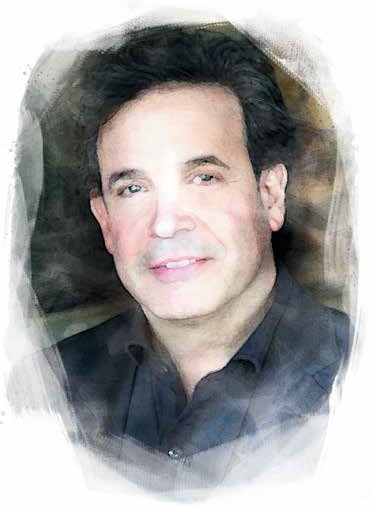
For the better part of four decades, Rudy Tanzi, PhD. has been one of the most prominent and influential researchers in the field of Alzheimer's disease (AD) and other neurodegenerative disorders. Tanzi is a founder and/or advisor to multiple biotech companies, co-director of the McCance Center for Brain Health at Mass General Hospital in Boston, and a successful book author.
In this interview, conducted by contributing editor Malorye Allison Branca, Tanzi discusses his recent whole-genome sequencing studies and where the people have gone wrong in trying to address this condition.
This interview, originally conducted for GEN Edge, has been edited for length and clarity.
Then APOE (apolipoprotein E) came around as the major late-onset risk factor. APOE controls the release of amyloid from the brain. So we can't deny that amyloid triggers this disease.
What I learned is that genes that cause early-onset forms of disease usually tell you about events that come early – you have to treat preferably with early detection, early intervention. Take cholesterol. You have to treat cholesterol decades before you get heart disease. You don't wait until you get a bypass or have congestive heart failure to pop your first statin.
This is exactly analogous in Alzheimer's. The amyloid genes are early-onset, even [homozygous] APOE4 onset is relatively early --mid-sixties. So the genes tell us you have to hit amyloid a decade or two before symptoms. All the brain imaging shows that the amyloid starts rising, even in patients after 40 years old, up to 2-3 decades before symptoms arise. By the time you have even the mildest cognitive impairment, amyloid's peaked and is already plateauing. So amyloid is something you have to hit early.
One [Biogen] trial had marginal improvement in cognition, the other had none. Previous amyloid trials had no cognitive improvement. So the FDA very carefully approved it for removing amyloid, not for treating cognition and said, ‘let's see if removing amyloid helps.' Well, if it's only removing amyloid in folks who are symptomatic, good luck. But if you use it for early detection, early prevention, then you'll see a result.
The silver lining is that this decision has opened a door for trials on cheaper, safer drugs that can remove amyloid just as well [as aducanumab].
haydenbird / Getty Images
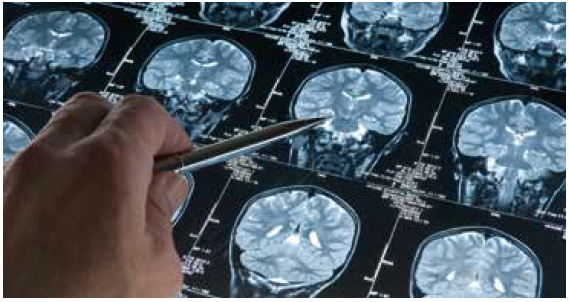
In a patient who's symptomatic, forest fires of neuroinflammation are already blazing. And you're hoping that you'll make them better by stomping out the brush fire of the tangle or blowing out the match of the amyloid that started it decades ago.
Most of the GWAS hits are bringing us to neuroinflammation. The early-onset genes tell us the earliest events you have to hit, preferably pre-symptomatically, like amyloid and tangles. The late-onset AD genes from GWAS are telling us what you need to hit later in patients: neuroinflammation, microglial activation, astrogliosis.
To our surprise, what we found was that the 13 genes that came out with the highest significance brought us back from microglia and neuroinflammation to neuronal genes involved with synaptic function and maintenance. But then, how could Alzheimer's, a disease of the synapses, not involve synaptic genes?
Other misfolded proteins that initiate the disease, like alpha synuclein causing Lewy bodies in Parkinson's and Lewy body disease, TDP43 in ALS, analogous to amyloid and tangles in Alzheimer's, all kill neurons. But that relatively small amount of neuronal cell death can trigger the neuroinflammation, which kills ten times more neurons. Without neuroinflammation, you don't get the symptoms. You'll have a resilient brain.
Once in a while, people die in their eighties with no dementia but are then found at autopsy to have abundant levels of plaques and tangles in their brains. How did they not have Alzheimer's? It's always the same answer: They were spared of neuroinflammation.