




Abstract

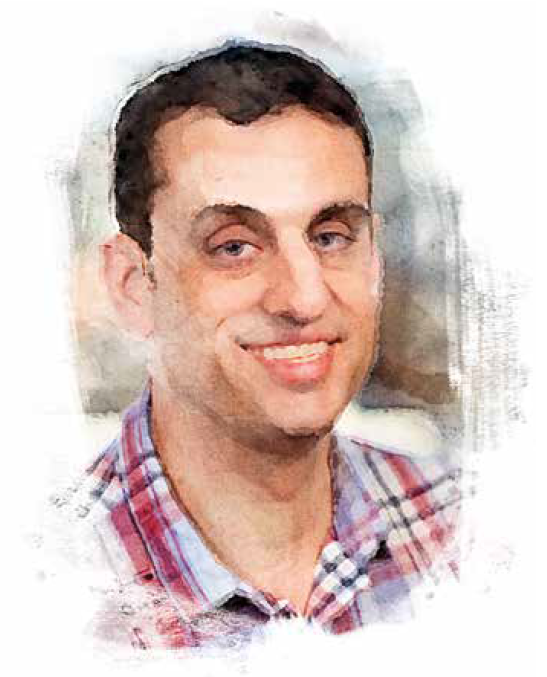
TwinStrand Biosciences technology, duplex sequencing, can be applied to many diverse areas. The three main buckets the company focuses on are genetic toxicology, cell and gene therapy, and minimal residual disease in cancer. IPM spoke with the company's CEO, Jesse Salk, to learn more about how duplex sequencing can be used in the clinic, the hurdles to getting it there, and how practicing medicine informs his business decisions—and vice versa.
This interview has been edited for clarity.
Some people prefer the term measurable residual disease. I don't like that term because it implies that truth is what you can measure. So, if you're looking for the presence of something, and you're using two different technologies to measure it, and one picks it up and the other doesn't—it implies that the truth is what you can measure rather than what it actually is.
Other people use the term molecular residual disease which adds a little more precision, but it doesn't say much about it.
If I had my way, I would stick with just residual disease, but that M is really stuck in there.
I'm excited because we've had a lot of traction in this area, and we recently presented some strong clinical data at the ASH Annual Meeting. And we plan to publish more studies. But we've shown that we are able to predict outcomes with significantly greater accuracy and precision than the standard of care—which is flow cytometry. And, our technology is more broadly applicable across laboratories, as opposed to being a very difficult thing to set up and do.
I put in a lot of time working with major academic groups, drug companies, regulators, key opinion leaders, and using not just our technical knowledge but our clinical knowledge, to think about how we can generate the most meaningful data for affecting patient outcomes.
In residual monitoring, it's only useful if there's something actionable about it. That said, there are an increasing number of things that are actionable. One can say, if I see this, I am going to put someone in a clinical study or do a more aggressive therapy. On the flip side, it is important to say, if I don't see this, and I can be confident that that correlates with a very low risk of relapse, I will avoid something that is very toxic.
For example, in AML, we do bone marrow transplants on most patients who can tolerate it. And in some populations that has up to a 25%, 30% mortality rate it. It cures more than it harms, but it's not benign. And if I could say, we can avoid doing this to people who we can molecularly prove are already cured, that would meaningfully change their care.
You align a lot of interests. One always has to keep in mind the five P's: physician, patient, payer, pharma, and policymaker. It's nice to be operating in an area where a new technology aligns everybody's interest. With all five of those groups—everybody gets something. Everybody wins. Who can't get behind making cancer treatment more effective and less toxic?
I'm not in academics anymore, but now I can work with a ton of super smart, engaged people and help them do what they're trying to do. I think this is how we will move the needle on cancer care and cancer research in a way that's more than any single one company or academic lab could alone.
Historically, scaling up NGS assays has been a big barrier. People either sent something to a one-stop outside reference lab that controls everything, or they had to build everything from scratch, which is incredibly complicated. So being able to get things out quickly that are easy for an average user to work with, without needing special equipment or to train a bioinformatician, has been very successful.
Residual disease monitoring can follow a patient longitudinally over time. Speaking from the perspective of an oncologist, we commonly do CT scans about every three months post-treatment for many types of solid tumor monitoring. It's a big market opportunity to move that process to a more objective, molecular, method. When I hear “market opportunity,” I think opportunity to affect change and to improve patient care. It's something that I think could easily benefit around half (or more) patients with cancer.
We have to do the rigorous clinical studies first to prove utility, but I'm convinced that this piece is going to be a very important one. I think we'll see the practice of oncology fundamentally change over the next decade to incorporate routine MRD monitoring.
My patients at the VA have a lot going on. Very few have no other medical problems, in addition to their cancer. Many have complex social situations or live far away. So, for me to be able to avoid an unnecessary or unhelpful treatment or direct them to a better one could vastly improve their quality (and length) of life.
But being able to give a good reason to do something that is rooted in objective data about their personal situation, not just population averages, helps people make decisions. It helps me make recommendations and it helps provide a level of confidence that we're collectively making a good decision. That is the most significant thing that I get out of practicing medicine. It is being able to see how gray and challenging some of these decisions are in the real-world environment.
If you could come into clinic with me, as a fly-on-the-wall, and see what we discuss, I think it would be very, very different than what a lot of people imagine. There is so much social and life context that goes into it. Patients ask, how is this going to affect my job? How is it going to affect my family? How should I tell somebody? Is my hair going to fall out? It's not, what is the hazard ratio of the Kaplan-meier curve in the New England Journal of Medicine paper? The patients in those trials are a lot more idealized in terms of comorbidities. My colleagues and I hardly treat anybody that looks like a patient in a clinical trial, so we have to do a lot of extrapolating.
Practicing medicine grounds me and it keeps me nimble. But the combination can be funny. Here's a little anecdote of the sometimes bizarre juxtaposition. On the day that we were closing a big, maybe $50 million financing at TwinStrand, I had to fill out a ton of paperwork to coordinate the wire transfer. As I was carefully counting the number of zeros, I got a page that one of my patients needed their constipation medication refilled. Even though sometimes it's hard jumping back and forth, I'm grateful for the regular reminders of what the most important things are to focus on. It not only puts things in perspective, it helps me make better decisions.