




Abstract

Inside Precision Medicine sits down with Kaitlyn Johnson, PhD, senior data analyst at The Rockefeller Foundation's Pandemic Prevention Institute (PPI), where her work leverages data analysis and modeling to provide real-time guidance to individuals and decision-makers to prevent and mitigate pandemics. Johnson is an interdisciplinary researcher passionate about developing quantitative solutions to improve public health and medicine.
Kaitlyn Johnson, PhD, Senior Data Analyst, The Rockefeller Foundation Pandemic Prevention Institute
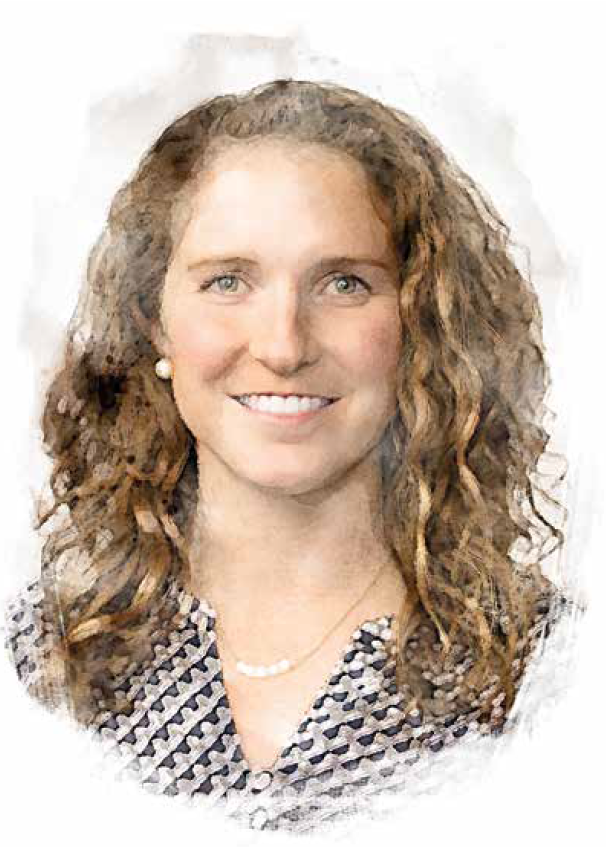
Johnson completed her PhD in biomedical engineering at the University of Texas at Austin in April 2020, just as the COVID-19 pandemic was taking off. During her graduate work, she worked in a systems biology lab that developed genomic-based tools to better understand treatment of cancer cells. More specifically, they developed technologies to track cancer cell lineages, developing linkages between genotype and phenotype.
Johnson worked on the data analysis side—integrating the outputs from sequencing data with longitudinal data of cancer cell populations over time to understand how they responded to drugs and developed chemotherapy resistance.
She started working at the UT COVID-19 Modeling Consortium led by Lauren Ancel Meyers, PhD, for her postdoc, using models of infectious disease dynamics helping to provide situational awareness and scenario-based projections to help guide the pandemic response for UT and the city of Austin.
She joined PPI last year to build upon her previous work, and to develop it into tools so that others—outside of close-knit collaborators—could leverage it. Her goal was to combine the science with the product and technology side of the world—to make tools from some of the academic science she was immersed in.
We asked Johnson about her work, the PPI, COVID-19, and future pandemics.
This interview has been edited for clarity and length.
When I'm conceptualizing a data to action pipeline, I think of this question in terms of three different buckets.
The first bucket is “now casting” or understanding the current state. What state are we in and what are we dealing with? In the example of a new emerging pathogen, this includes questions such as, what is the basic reproductive number (R°) of that pathogen? What is the effectiveness of vaccination? What are these properties that help us to be able to answer the policy questions? We need to have a baseline to dive into effects of policy on the epidemic context.
The second bucket is forecasting. Based on current trends, what do we think is going to happen? In pandemic forecasting, this is challenging because it is affected by human behavior, and it is hard to predict human behavior. So, forecasting tends to be only within the next two to three weeks—what do we think is going to happen based on what the data are telling us?
The last bucket, which is more on the side of informing policy, is the decision-making part of our analysis. This is where we might make scenario-based projections to assess the effect of different policies, where we try and mathematize what a policy is. One example would be analyzing different vaccine allocation strategies based on age, geography, or other factors—and the effects of the speed and timing of those rollouts on health outcomes. Another example, and something that was done at the PPI, was to analyze the difference between requiring COVID-19 rapid tests or COVID-19 vaccines at an event, to see what mitigation measures, or combination of measures, are better at preventing event attendees from arriving infected.
Again, we are not saying, this is what you should do. We're saying, here is the evidence to empower you to decide.
Having the quantitative evidence, we think, can enable someone to point to that tool when talking to friends and family. They can say, this is what the analysis shows and because of this, I'm going ask you to take a test before you come over to my holiday dinner.
One of the analogies that we think about is the weather app. People use it daily; it helps guide their daily decision-making. Because people are so reliant on weather forecasts, it encourages the collection and submission of data to the system. The idea that we have, as an Institute, is to have that type of desire for these tools within both the public and among decision makers. And that requires us working with them, answering the questions that they are most interested in, and presenting it all in a user-friendly way.
We think a lot about how to make our findings interpretable to the public so that they will be more easily accessed and how we can make them more widely available to people across the globe. It will be more impactful with a wider reach.
The challenge is finding how we can meet the person or the community that we're trying to serve where they are, and how to figure out the key questions that they're interested in. Instead of sitting at our desk and presuming we know what people need.
For example, I did a lot of work in my postdoc supporting university policies. We found that the university had differing concerns outside of the realms of a pure health perspective. We were focused on the level of infection while they were more interested in absenteeism, quarantine time, and the costs of testing that we had not originally considered. So, we incorporated those into our analysis.
Mammuth / Getty Images

Because SARS-CoV-2 was a novel virus, those tools were not in place at the start of the pandemic. What we are trying to do is to set up those systems for currently circulating pathogens and for novel pathogens. We want to be able to pipe in new data, answer those questions quickly, and then communicate quickly.
In general, the scientific community struggles to communicate uncertainty. So, we need to be able to say that this is what we think might happen, based on these sets of assumptions, and with a lot of uncertainty in how this could play out. Because all of it is dynamic and constantly changing. Being adaptable, while also being clear on your message, is important.
That is some of the work that we've been doing in wastewater surveillance. It is multi-pathogen testing so that we could have a better idea of the baseline levels of these circulating pathogens from wastewater, and readily modify them for novel or re-emerging pathogens.