




Abstract


Adam Rosenthal is the CEO and founder of Star Therapeutics, a biotechnology company with a mission to develop life-changing therapies for as many rare diseases as possible. The company's engine for innovation starts with identifying multiple rare diseases that share a common biology and then discovering novel therapeutics that can treat these diseases with a single therapy. Star consists of a family of companies, each focused on a specific area of biology, developing first-in-class therapies with the potential to target multiple diseases.
Rosenthal recently spoke with Inside Precision Medicine's editor in chief, Damian Doherty, about the company's unique approach to rare diseases and its first two spin outs—Electra Therapeutics and Vega Therapeutics—each focused on a distinct biology shared across multiple diseases.
At Star Therapeutics, we take a unique approach and start by exploring constellations of numerous diseases and looking for common pathobiology across them. This gives us multiple shots on goal–the discovery of a single therapy that targets a fundamental disease driver across numerous diseases. Even if the drug candidate or pathway turns out to not be optimal for disease A, it could very well be optimal for diseases B and C and so on. With this strategy, we follow the biology to uncover key pathways that open up multiple potential opportunities to maximize the therapeutic potential of any given drug candidate. This allows us to build a program centered around numerous diseases and dig deep into novel biology. I'm proud of the fact that all of our programs were generated internally, from our own ideas, and we diligently followed the biology along the way. Two of our programs that started as ideas are now clinical stage.
The Star Therapeutics team recently enjoyed a company outing at a San Francisco Giants game while supporting patients with rare diseases.

We were inspired by this experience and wanted to repeat the success achieved with our programs at True North. To date, we have spun out our first two companies, Electra Therapeutics and Vega Therapeutics from Star. Each clinical stage company is focusing on a specific area of biology to develop first-in-class therapies that can address multiple diseases with high unmet need.
We identified signal regulatory protein (SIRP) as a probable node to target numerous diseases and asked questions that could lead us to a drug candidate and a first disease indication. We identified and explored a rare disease called secondary hemophagocytic lymphohistiocytosis (sHLH), a life-threatening hyperinflammatory condition that currently has no approved therapies. In following the biology, we also identified numerous other diseases beyond hematology that may be addressed through targeting SIRP and are currently exploring multiple immunological disorders.
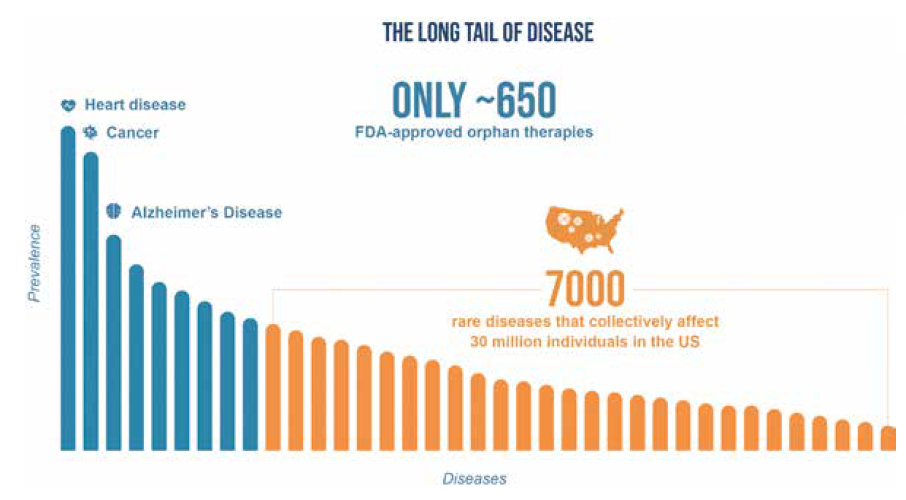
Despite collectively affecting up to 30 million Americans, many individual rare diseases go unnoticed, without cure or adequate treatments. Star Therapeutics takes a unique approach to address the unmet need in this “long tail of disease” by honing in on common pathobiology shared by multiple conditions and developing drug candidates that have potential to treat numerous rare diseases.
Electra Therapeutics, the first company to be spun out of Star Therapeutics and launched in 2022, is taking a first-in-class approach to target SIRP to deplete pathological immune cells. Electra's lead candidate, ELA026, is an antibody that can deplete SIRP-expressing myeloid and T cells, the principal cells responsible for driving disease in sHLH. It is currently in a Phase 1b global study in sHLH patients. Beyond ELA026, we have additional preclinical programs aimed at immunological diseases and cancer.
At Vega, we see a future where VWD patients have a treatment option that better meets their needs. We aim to bring a new paradigm to VWD to address the limitations of current treatments, which include factor replacement therapies that may require frequent IV infusions.
Vega has developed its lead product candidate, VGA039, to be the first purpose-built antibody therapy for VWD. VGA039 is a monoclonal antibody directed against Protein S to specifically address the underlying defects in the coagulation cascade caused by VWD, which lead to uncontrolled bleeding. VGA039's novel mechanism at restoring proper clotting can be applied to numerous other bleeding disorders beyond VWD, making it a potential universal hemostatic therapy.
Vega has generated data demonstrating preclinical efficacy of VGA039 in various bleeding disorders, including in vivo proof-of-concept in VWD. Studies have also shown VGA039's potential for infrequent subcutaneous dosing. Based on these findings, we are progressing VGA039 into clinical studies, which will initiate in early 2023.
In addition to existing programs, we are continuing to evaluate internal ideas for new programs and possible in-licensing opportunities. Following our model, new programs may lead to new “stars” to be added to our constellation of companies.