Abstract

“If you change the way you look at things, the things you look at change.”—Max Planck
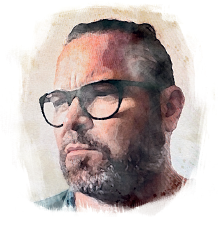
I met Bryce Olson in 2016 when he kindly agreed to speak at my precision medicine conference in San Diego. He was a natural, eloquent speaker with a compelling story that captivated his audience … and left them eager to know more.
When he was diagnosed with prostate cancer in 2014, there were no FDA-approved therapies. He underwent surgery and chemotherapy, but the cancer spread to his bones. He knew that the progression-free survival statistics didn't look favorable for stage 4 metastatic cancer. He was treated with docetaxel, a routine cancer drug, but it was never going to abate Bryce's type of cancer.
Bryce decided there and then that he would find a physician who could sequence him, with the hope it would reveal something actionable which could lead to an off label drug or participation in a clinical trial. Indeed, sequencing was the best thing he could have ever done as it revealed the particular pathways driving his disease, as he put it: “It was like my body had put a brick on the accelerator but had also drained the brake fluid”
Here the campaign “Sequence Me” was born, and he would speak at conferences across the U.S. with these words emblazoned on his T shirts, imploring patients to demand better treatments. He even had a checklist on his website to arm patients with comebacks if they felt they were being stonewalled. What followed were years of multiple treatments, flights to different clinical trial sites, enduring an endless yo-yo effect of containment, and then panic as either the experimental drug he had managed to procure became unavailable or the cancer would become resistant to other lines of treatment. It was compounded further by the effects of COVID and some of his options to travel to these sites became severely hindered. Despite this, he plowed on and continued to find ways to circumvent and tackle whatever was thrown at him.
Bryce began this year on his 13th line of treatment—a Bipolar Androgen Therapy which had miraculously brought his PSA down from alarming levels, and he was living his best life. He was due to speak at the virtual State of Precision Medicine conference I was organizing back in May, but he messaged me to say his health had a taken a turn for the worse, though I wasn't really cognizant of the gravity of that statement. My worst fears were realized when news broke that he had passed away a couple of weeks ago. This left me feeling profoundly sad. For those of us who had been privileged to know Bryce, we witnessed how this remarkable man was able to extend his life for nigh on a decade because of his indefatigable pursuit to stay alive, using everything in his armamentarium to fight his disease, which made the news of his death seem even harder to comprehend.
As we talk in this issue about the potential power of next-generation immunotherapies, I only wish he had been able to benefit from these treatments, gifting him another decade of life and possibly beyond. We've sadly lost a thoroughly decent man and a genomics advocacy goliath. His movement will continue to challenge the status quo and the way we approach cancer care, leaving a powerful legacy for all cancer patients trying to navigate an often complex treatment path. “Be like Bryce” would be my slogan to all patients and stakeholders across the ecosystem—perhaps then, we may just achieve that change we're looking for.