




Abstract

Damian Doherty sat down with Paul Goldsmith - chief medical and innovation officer, co-founder and president of Closed Loop Medicine, a TechBio company developing combination prescription drug plus software therapy products that enable personalized dosage with clinical process optimization. Paul talks about the genesis of his career and how it led him to co-found a company that is driving the need to deliver the right dose to the right patient at the right time.
For some of the drug prospects we never took forward before, one of the key issues was around intellectual property protection. We were still thinking very much from a therapeutic indication perspective at that stage, but in 2016 we started to consider coming at it from the drug dosage end and how you could begin to really enable that through digital techniques—techniques which just weren't available back in the early 2000s when we were doing the drug discovery work. The thinking was: if you're building digital to help with drug dosage, you can also use the digital to also deliver the non-drug elements of a therapy package.

I've always kept my clinical practice going throughout my entire career, so as a clinician you become very aware of what you really need to bring to bear on the patients if you're going to get positive results. In some areas if you only have drug, without the non-drug aspects, you just don't get a decent therapeutic effect at all. So, you would ideally bring it all together. But in practice clinically, you don't. I think that is a key consideration, those coalface clinical insights that I think a lot of companies just don't have.
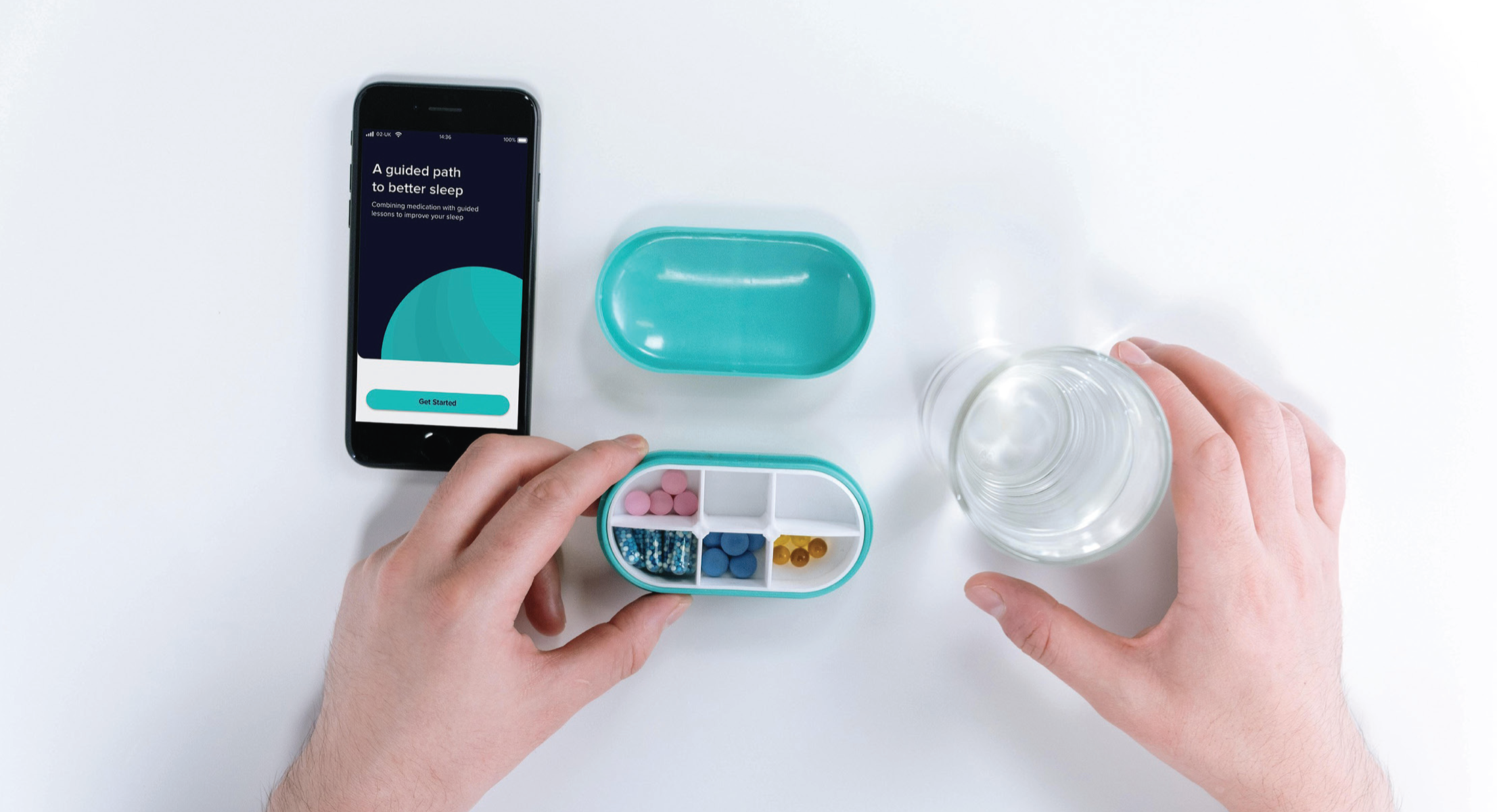
Those were the initial ingredients of Closed Loop Medicine—awareness that drug dosage is done really badly in clinical practice and taking drugs which are already there and making them better. But it's also taking drugs that may not have made it or not being used in the optimal way because people couldn't see how to protect it. But you can do that if you harness all the components we have brought to bear at Closed Loop Medicine.
At Closed Loop Medicine, by bringing together a team who have done that breadth across drugs, digital, devices, and regulation, we're addressing this—truly precision medicine with individuals receiving the dosage that suits them best. Between the U.K. and the U.S. there are commercialization challenges, but what is shared between both areas is the fact that healthcare professionals are very time-limited. These factors emphasise the importance of process automation improvement that you can do with a digital platform.
Once drug developers have passed the baton to marketeers, they want a simple story, e.g., one-two doses to make it easy for clinicians, then when it goes off patent the generics companies are completely focused on price. Companies haven't had the right mix of people in them to think about this problem or a solution. And we need digital to evolve and enable new solutions.
There are some areas where we have precision dosing now, it is happening. I think the best example is insulin. Why is that happening now? Vast efforts have been put into insulin optimization, enormous efforts and we're now seeing automated precision dosing. However, there are some special features here. Insulin is a liquid, so you can infinitely vary the amount which is delivered if it's in a pump. You've also now got continuous glucose monitoring technology for an instant feedback mechanism and then the software to automatically adjust dose. Then AI can assess calories in food to be eaten and predict new additional doses. What we are doing is taking a similar precision closed loop AI-augmented approach, but for drugs in solid dosage form or other injectables, be they for obesity treatment, antidepressants, etc. Of course, you then need the availability of those solid dosage forms, so it's just a different set of challenges, same principle.
I think the other barrier is the siloed expertise. At Closed Loop Medicine we've brought drug and digital expertise together and have approached things from the beginning with a drug and pharma IP mindset. Typically drug and digital expertise exist in different companies, or if they're in the same company like in Big Pharma, they're in different divisions. So very siloed. Then the regulations for each are separate and the way you trial them is different. We found there weren't really any regulatory consultants who could integrate and navigate a way through. We've ended up having to do it ourselves and have gained a lot of insights, which is part of the reason why I ended up on the board of MHRA as somebody who'd actually done it. It's an important offering to bring to a partner, having strategy experience and also IP aligned with an overarching regulatory approach. The regulatory is not just the MHRA and FDA licensing element of regulation, it's also a quality management system. All of the QxPs are siloed and interlinking those is not straightforward. You've got to do it ground up, a difficult thing to do if you're Big Pharma with divisions that have been established for decades.
Then there's the incentive systems. Although the payors want outcomes-based reimbursement, and in the U.K. we talk about “payment by results,” we currently have “payment by activity.” How do you move that model? Our approach can deliver that, as well as the stepping stones to evolve the reimbursement structure. And you need to generate evidence for that. That is part of the journey.
The biggest challenge in healthcare worldwide is healthcare professional availability. Most talk is around how we're going to get better diagnostics, and AI is going to help with certain elements. But actually, the biggest thing is process improvement. It's currently done really badly and is very health professional-intensive. Even if you had infinite money, there are just not enough people to do things. So longer-term, that could be one of the biggest things our platform addresses because it's automating the process of treatment. If we consider the move to precision dosing as the equivalent of the switch to battery-driven cars, then the automation of dosing is the equivalent of autonomous cars. We pick up the baton when a clinician has diagnosed a condition and decided they want to treat it with a particular therapy package, a drug or a drug plus something else, and then we sort everything else out. It is interesting to then consider whether the product is a service. Essentially dose optimization as a service, because although we're packaging it as a product or drug, and that's really important from a work-flow perspective, in part we're delivering a service and addressing this healthcare professional efficiency process failure which is so prevalent.