




Abstract
Abstract
Background:
Air-jet atomization is a common technique used for the generation of therapeutic aerosols from liposome suspensions for drug delivery to the lungs. Although the technique does not use an electric field, the aerosols generated by this technique are still charged, and this may affect respiratory drug deposition.
Methods:
In this study, the charge distribution of liposomes aerosolized by an air-jet atomizer was measured using a tandem differential mobility analyzer (TDMA) technique. The liposomes, composed of a mixture of two amphiphilic lipids and cholesterol, were synthesized by the dehydration–rehydration vesicle method. The effect of the precursor suspension properties, such as medium composition, pH, conductivity, and lipid mass concentration, on the charge distribution of the liposome aerosols was studied.
Results and Conclusions:
Results showed that the atomized liposomes have a bipolar charge distribution, and the number-fraction of charged liposome aerosols was influenced strongly by properties of the precursor solution under investigation. Liposomes synthesized in deionized water were observed to carry much higher charges than those synthesized in phosphate-buffered saline (PBS). Increasing the lipid mass concentration in the precursor suspension resulted in a decrease in the charge on the aerosols. Thus, the precursor suspension properties—composition, pH, and conductivity—can be used to control the magnitude of charge on liposome aerosols and to synthesize engineered liposome particles for the pulmonary delivery of drugs with controlled alveolar deposition and controlled delivery to alveolar macrophages.
Introduction
The engineering challenge remains in generating stable nanometer-size aerosols of sufficient concentration for drug delivery. Increased bioavailability and controlled release of the drug can be obtained by encapsulation of the drug within nanometer-sized carriers, such as polymeric nanoparticles, solid lipid nanoparticles, and liposomes.(5) Liposomes are self-assembled spherical vesicles composed of one or more phospholipid bilayers and are of great interest to drug-delivery research because of their biocompatibility and their ability to incorporate both hydrophilic and hydrophobic drugs.(6,7) They have been commercially used for the delivery of drugs like amphotericin B (Abelect) and clodronate disodium (Clophosome-A) via intravenous injection as well as the pulmonary route.(8,9) Aerosolization of liposomes has been carried out for the pulmonary delivery of drugs such as insulin,(10) interleukin-2,(11) anticancer drugs, (12) and antitubercular drugs.(5)
The deposition of a particle in the lung airways is governed by five mechanisms, namely, inertial impaction, gravitational sedimentation, diffusion, interception, and electrostatic attraction.(13) Thus, the size, shape, and charge of the aerosols are critical aspects that influence the deposition of these particles in the lungs. Electrostatic charges affect the deposition in two ways, depending on the number concentration of charged particles, via the space charge effect, which is predominant in the upper airways (first 10 generations of the respiratory tract), and the image charge effect, which is predominant in the lower airways.(14) The deposition efficiency of ultrafine (<200 nm) particles increased with decreasing particle size and is very low in the upper airways compared with the total respiratory tract deposition.(15) This suggests that the alveolar deposition of charged particles is significant for lung airway dosimetry. Electrostatic charge on a particle enhances the efficiency of lung deposition of the particle in the alveolar region by increasing the attractive forces (image charge forces) to airway surfaces. The experimental data on deposition of monodispersed particles (0.3–1 μm) in human subjects portray the dependence of total deposition, which increases with increasing particle electrostatic charge.(16) The particle charge also influences the uptake of the particles by alveolar macrophages, with negatively charged particles having a higher uptake rate by the alveolar macrophages.(17) Control over the particle size and charge can thus result in efficient targeting, better bioavailability, and reduced side effects.
The size distribution and morphology of nanometer-sized aerosolized liposomes generated by air-jet atomization and electrohydrodynamic atomization have been previously studied.(18) However, to the best of our knowledge, the charge distribution of liposome aerosols has not been studied yet. Studies have so far focused only on the surface charge of liposomes in solution.(8)
The aerosol generation technique greatly affects the charge on an aerosolized particle.(19,20) The charge distribution on pharmaceutical aerosols generated by dry powder inhalers (DPI) and metered dose inhalers (MDI) have been previously studied.(21) However, these techniques generate particles of diameter 1–3 μm by dispersion of dry powders. The potential use of air-jet atomization or electrohydrodynamic atomization for the generation of particles for pulmonary drug delivery necessitates that the charge distribution of the generated particles be well characterized so that their deposition in the lung can be well understood. Particles generated by electrohydrodynamic atomization are highly charged, because this technique uses a high electric field to generate aerosol droplets. Although the air-jet atomization technique does not involve application of an electric field, the droplets generated by this technique are known to acquire charge due to spray electrification.(22) An electrical double layer with the outside negatively charged and the inside positively charged is present at the surface of a dielectric liquid due to the action of the surface forces before atomization. When the layers are disrupted due to atomization, the droplets formed thus carry a charge on them. Both the size of the droplet and the composition of the precursor solution being atomized influence the charge on the droplet.(23–25) The residual excess charge on the droplet is transferred to the dry particle by two mechanisms, the charged residue mechanism (CRM) and the ion-emission mechanism (IEM). However, as the atomized droplets are micrometer-sized, IEM is likely not the mechanism and the charge is transferred to the dry particle upon evaporation solely by CRM.(26)
The charge on the aerosols can be measured by using a tandem differential mobility analyzer (TDMA) technique,(20,27,28) which is based on the electrical mobility of charged particles. The advantage of using the TDMA technique is that it can be used to measure the magnitude and polarity of charge on nanometer aerosols. This article focuses on the possible control of charge distribution on aerosolized liposomes during air-jet atomization. The effect of the precursor liposome suspension properties and size of the aerosol particle on the charge distribution has been studied. The experimentally measured charge on the particles has been correlated to the theoretically predicted charge on the liposome dry particle. The study can be used to better characterize and control the respiratory deposition of aerosolized liposomes by controlling the charge on the particles.
Materials and Methods
Preparation and characterization of liposome suspensions
The liposome suspension comprised equimolar amounts of 1,2-dipalmitoyl-sn-glycero-3-phosphocholine (DPPC), 1,2-dipalmitoyl-sn-glycero-3-[phospho-rac-(1-glycerol)] (sodium salt) (DPPG), and cholesterol, all purchased from Avanti Polar Lipids Inc. (Alabaster, AL). Chloroform (≥99.9% Omnisolv; EMD Chemicals, Gibbstown, NJ) was used as a solvent to dissolve the lipids. Sodium chloride (reagent grade; Sigma-Aldrich, St. Louis, MO), potassium chloride (ACS grade), disodium hydrogen orthophosphate anhydrous (enzyme grade), and potassium dihydrogen phosphate (enzyme grade) were purchased from Fisher Scientific (Pittsburgh, PA) and were used to prepare the phosphate-buffered saline (PBS). Deionized (DI) water (18.2 MΩ cm) was produced by a Milli-Q PF PLUS system (Millipore, Bedford, MA) and used in all the experiments.
Liposomes were synthesized using the dehydration–rehydration vesicle method, because it gives higher encapsulation efficiency.(18,29) In brief, dry lipid cake was prepared by completely evaporating the organic solvent in a rotary evaporator (Buchi Rotavapor; BuchiLabortechnik AG, Flawil, Switzerland) followed by drying in a vacuum desiccator overnight. The dried lipid cake was then hydrated with DI water or 0.1× PBS at a temperature above the gel–liquid crystal transition temperature of the lipids. The resulting suspension was subjected to freeze–thawing and extrusion through a polycarbonate membrane (19-mm diameter, 0.1-μm porosity; Schleicher & Schuell, Dassel, Germany) several times to yield a suspension containing 10 mg mL−1 of lipids believed to be unilamellar liposome vesicles. This suspension was then serially diluted with DI water or 0.1× PBS to obtain the desired concentration prior to atomization.
The hydrodynamic diameter, conductivity, and zeta potential of the liposomes in suspension were characterized by dynamic light scattering (Model: Nano-ZS, Nanoseries; Malvern Instruments, Worcestershire, UK) at a temperature of 25°C. The pH of the suspensions was measured by a pH meter (Model: AccumentAB 15/15+ meter; Fisher Scientific).
Aerosolization setup and charge distribution measurement
The complete aerosolization and the charge distribution measurement setup are shown in Figure 1. A constant output Collison atomizer (Model 3076; TSI Inc., Shoreview, MN) was used to generate liposome aerosols from the liposome suspensions. The upstream pressure in the atomizer was regulated at 35 psig. The generated aerosols were passed through a diffusion drier to ensure complete drying of the aerosols. It was assumed that the aerosol losses through the diffusion drier and lead airways were negligible. The size distribution of the dried particles was measured using a scanning mobility particle sizer (SMPS) (Model 3080; TSI Inc.). To ensure neutralization of highly charged particles to Fuchs stationary charge distribution,(30) a Po-210 neutralizer (activity 5 mCi) was used prior to the SMPS system.
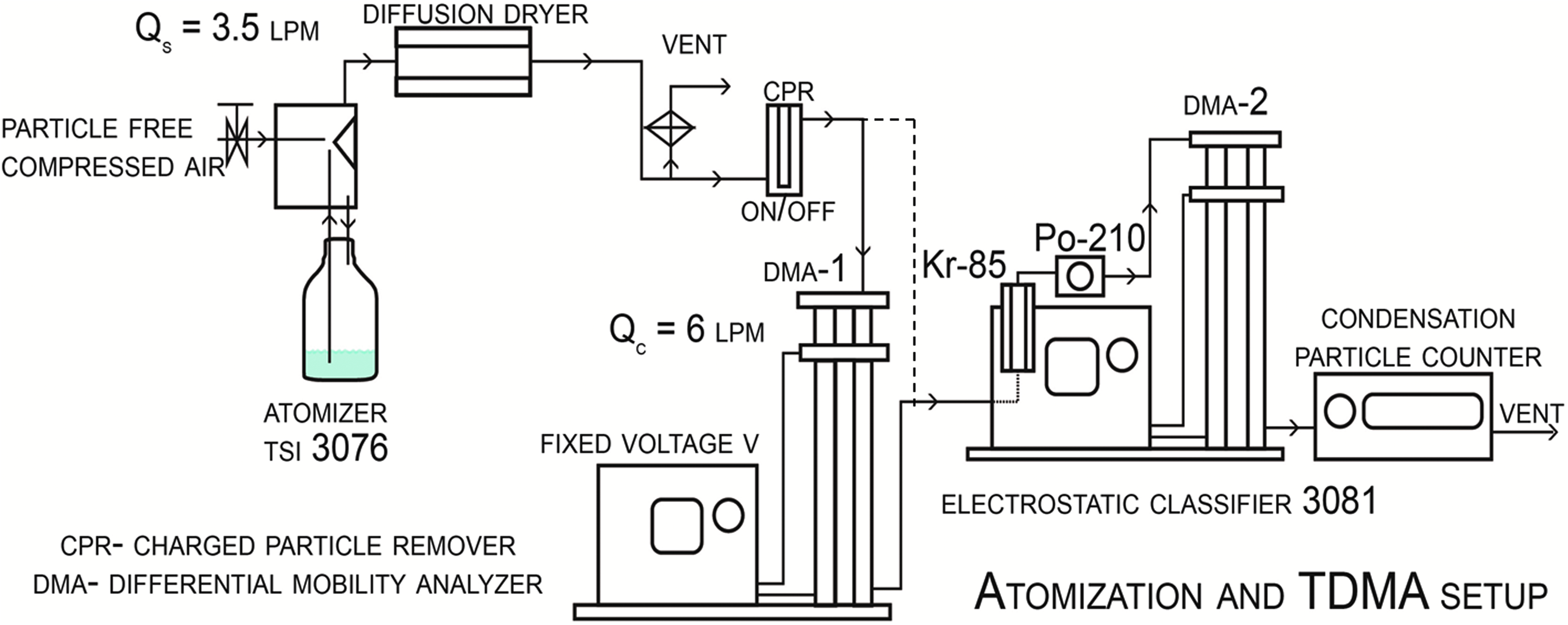
Schematic diagram of the TDMA setup for measuring charge distribution of particles.
To measure the fraction of charged particles, a homemade charged particle remover (CPR) was connected prior to the SMPS to remove all charged particles. The CPR was operated using a high-voltage power supply (Model 205B-10R; Bertan High Voltage, Hicksville, NY). The CPR was switched off to measure the total particle number concentration (Ntotal) at different mobility diameters by the SMPS, and the CPR was operated at a voltage of 2.5 kV to measure the uncharged particle number concentration (Nuncharged) at different mobility diameters by the SMPS. The fraction of the charged particles ( fc) at each diameter was obtained from the following equation:
The TDMA system(27,28) was used to perform the charge distribution measurements (Fig. 1). The TDMA technique is based on the electrical mobility of the particle, which is given by:
where n is the number of elementary charge on the particle, e is the charge on an electron (1.602×10⁻¹⁹ C), Cc is the Cunningham slip correction factor (corresponding to particle diameter dp), μ is the viscosity of the medium, and dp is the diameter of the particle. In brief, all the particles (charged, uncharged, and neutral) were introduced into the DMA-1, the central electrode of which was operated at a fixed negative voltage to classify positively charged particles of a certain electrical mobility. The classified aerosol stream comprised single and multiple charged particles of different sizes but with the same electrical mobility. This stream was then passed through a Kr-85 (Model 3077; TSI Inc.) and a Po-210 bipolar radioactive ionizing source (Model: P2042 Nuclespot Alpha Ionizer; NRD LLC., Grand Island, NY), which resulted in the particles acquiring a known stationary charge distribution.(30) This charge distribution was calculated by an approximation given by Wiedensohler(31) for particles carrying zero, one, or two charges and by a derivation given by Gunn and Woessner(32) for particles carrying three or more charges.
These particles were passed through the DMA-2, which was being operated in scan mode (mobility diameter range: 9.65–421.7 nm; aerosol flow rate: 0.3 L min–1; sheath flow rate: 6 L min–1), thereby classifying particles according to their electrical mobilities, and were counted using a condensation particle counter (CPC) (Model 3776; TSI Inc.). As the charge distribution of the particles entering the DMA-2 was known, the electrical mobility of the particles could be directly related to the size of the particle. The different peaks in mobility distribution corresponded to those in size distribution for various levels of charge on the particles. The voltage of DMA-1 was varied to obtain the number concentration of particles of a fixed mobility diameter carrying different unit charges. In the default configuration, the central electrode of the DMA-1 was negatively charged, and hence could be used to classify positive-charged particles only. To measure the negative charge distribution of the particles, the DMA-1 was operated at a reverse polarity using an external high-voltage power supply (Model 205B-10R; Bertan High Voltage), and the same measurement procedure was repeated as described above.
Prior to the use of the TDMA system for the measurement of charge distribution of liposomes, the transfer function of DMA-1 was measured using the TDMA approach.(33) In brief, aerosols generated from a sodium chloride solution (0.1% wt/wt) were neutralized and passed through DMA-1 held at fixed voltage. The particles exiting the DMA-1 were passed through DMA-2, which was being operated at sweeping voltage, and the particles exiting were counted using the CPC. The final diameter ratio of a particle selected by DMA-1 and the peak detected by DMA-2 was 1.06 (±0.06). The fraction of particles leaving DMA-1 that are detected in a given DMA-2 peak was found to be 0.23 (±0.03). These parameters were used to resolve the different peaks for the result obtained from the TDMA measurements. The number concentration of the particles under each peak in the mobility spectra was determined by correcting the peak height with a factor as determined from the transfer function study. As the magnitude of charge increases, the uncertainty in measurement increases due to the overlapping of peaks. Hence, the charge distribution measurement was limited to ±6 unit charges beyond which the individual peaks could not be resolved precisely. It was assumed that the peak height is not influenced by the presence of adjacent peaks in the measurement range.
Experimental plan
The overview of the experiments performed is listed in Table 1. To determine the effect of the presence of buffer salts, liposome suspensions were synthesized in aqueous suspensions with and without the presence of PBS. The physical properties of the liposome suspensions (liposome hydrodynamic diameter, zeta potential, pH, and electrical conductivity) were measured prior to aerosolization of the suspension. Two lipid mass concentrations of 0.01 mg mL–1 and 0.1 mg mL–1 were selected for the study in PBS. However, in DI water, only a concentration of 0.1 mg mL–1 of liposomes was studied. The particle number concentration in 0.01 mg mL–1 solution was extremely low, so that the charge distribution measurements could not be carried out. These concentrations were selected, because the number of multiple liposomes in a droplet at these concentrations is minimal.(18) The size distribution of the different suspensions was measured, and based on the peak mobility diameter, mobility diameters of 76.4 nm and 101.8 nm were selected for measuring the charge distribution of the liposomes.
Results
The experimental results for the influence of various synthesis parameters on the liposome suspension properties (hydrodynamic diameter, pH, conductivity, and zeta potential) and the dry aerosol properties (electrical mobility diameter and charge) of the liposome are presented.
Properties of liposome suspensions
The properties of liposome suspension are summarized in Table 2. The liposomes synthesized had a hydrodynamic diameter (Z average size) of 143.2 (±10) nm and a polydispersity index (PDI) of 0.068 (±0.02) irrespective of the lipid mass concentration and the medium of suspension. As the PDI of the liposome suspension was less than 0.1, the liposome suspension was considered as monodisperse.(34)
The PBS solution had a pH of 7.4. Due to this, the pH of the liposome suspensions prepared in PBS had a pH of 7.4 (±0.1), which has been previously reported to be more stable in terms of size and drug retention, hence suitable for drug-delivery applications.(35) In DI water, the pH of the liposomes was 6.4 (±0.3) and was consistent with the previously reported measurements.(18)
The zeta potential of the liposomes in DI water was −72.6 mV at a lipid mass concentration of 0.1 mg/mL. In PBS, the zeta potential of the suspension was −49.6 mV and −75.2 mV for lipid mass concentrations of 0.01 mg mL–1 and 0.1 mg mL–1, respectively. The conductivity of the liposome suspension was 0.0203 mS cm−1 in DI water at a lipid mass concentration of 0.1 mg mL–1, whereas in PBS, the conductivity of the suspension increased to 2.98 mS cm–1 and 3.97 mS cm–1 for lipid mass concentrations of 0.01 mg mL–1 and 0.1 mg mL–1, respectively. Buffer salts as well as higher number concentration of nanoparticles(36) in water act as charge carriers, thereby resulting in an increase in the conductivity of the suspension in PBS as compared with the suspension in DI water. An increase in lipid mass concentration in PBS increases the conductivity of the suspension due to the presence of a higher concentration of buffer salts along with the lipids.
Properties of liposome aerosols
The atomized suspension yielded dry particles in air with a flow rate of 3.5 L min–1. The geometric mean diameter, geometric standard deviation, and the total number concentration are shown in Table 3. The atomization of liposomes at lipid mass concentrations of 0.01 mg mL–1 and 0.1 mg mL–1 had a high probability of no liposomes per droplet (∼99% and 80%, respectively). The droplets containing one liposome per droplet at these concentrations are 1% and 18%, respectively, and the probability of multiple liposomes per droplet is less than 5% at both these concentrations.(18) The dry particle number concentration was observed to be much higher when liposome suspension in PBS was atomized compared with when liposome suspension in DI water was atomized (Fig. 2). This is because the buffer droplets containing no liposome resulted in high number concentration of dry residual salt particles, in contrast to atomization of a liposome suspension in DI water where the droplets without liposome are composed of DI water, which evaporates and leaves a small fraction of residual particle (less than 104 #/cm3).(37)
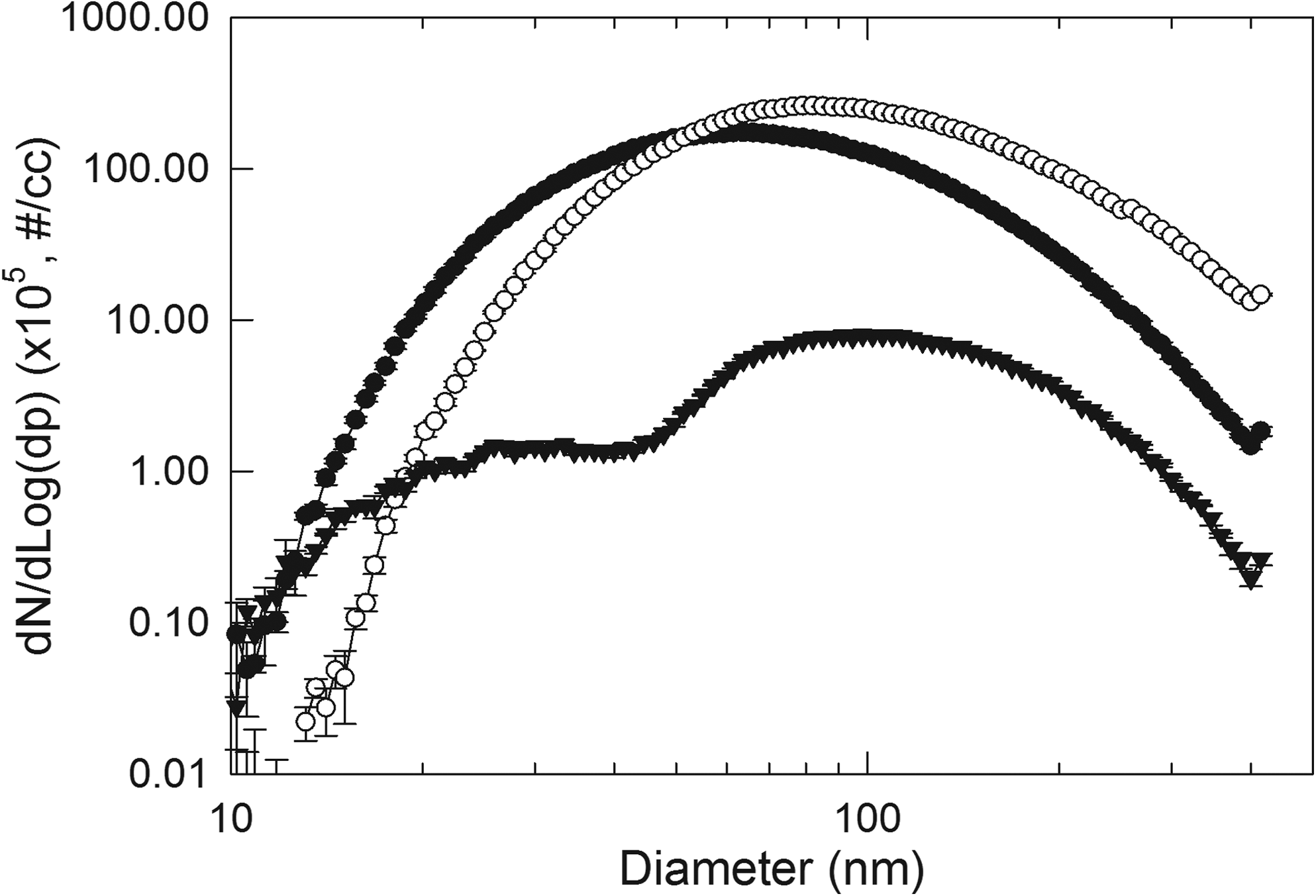
Size distribution of aerosols generated by atomization of liposome suspension synthesized in DI water with lipid mass concentration (▾) 0.1 mg mL–1 and in PBS buffer with lipid mass concentration (▼) 0.01 mg mL–1 and (○) 0.1 mg mL–1.
Fraction of charged liposome particles
The CPR was operated at voltages varying from 1 kV to 3 kV to remove charged particles. An increase in the removal of charged particles (containing single to multiple charges) was observed with a decrease in particle number concentration on increasing the operating voltage; however, no increase was observed beyond the applied voltage of 2.5 kV. Hence, 2.5 kV was selected to remove the charged particles for all of the studies.
The fraction of particles charged as a function of the diameter of the particles for the different atomized suspensions is shown in Figure 3. It was observed that a higher fraction of particles obtained from the atomization of the liposome suspension in DI water are charged than those synthesized in PBS. The fraction of charged particles also increased with the increasing size of the particle up to 100 nm, beyond which the fraction of charged particles remained independent of the particle mobility diameter.
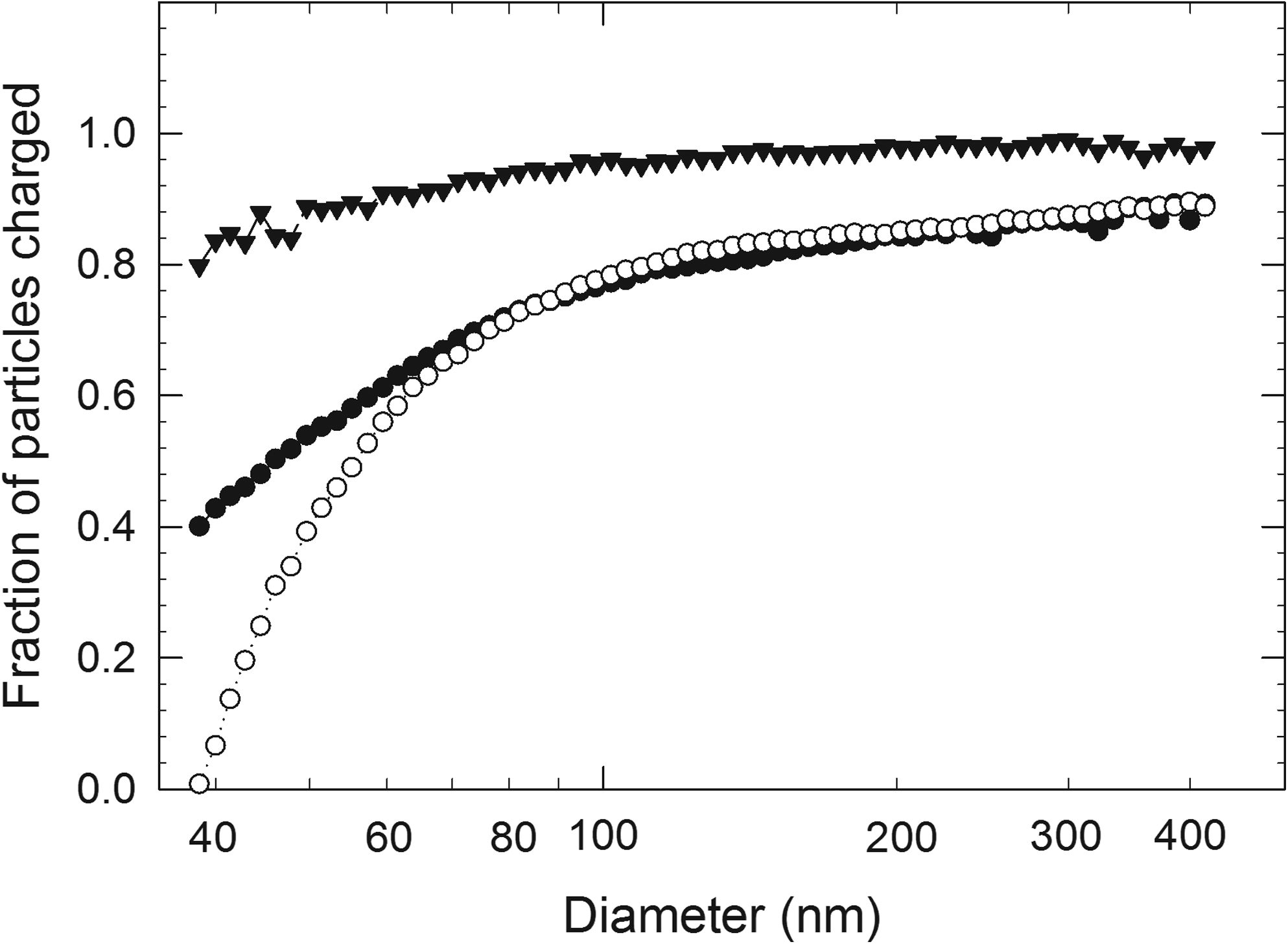
Charged fraction of aerosols generated from liposome suspension synthesized in DI water with lipid mass concentration (▾) 0.1 mg mL–1 and in PBS buffer with lipid mass concentration (▼) 0.01 mg mL–1 and (○) 0.1 mg mL–1.
Charge distribution results from TDMA measurements
The voltage of the DMA-1 was varied corresponding to the electrical mobility of particles of a certain size carrying different unit charge, and the corresponding peak was detected by DMA-2. Table 4 shows the set electrical mobilities of DMA-1, charge of the particles, and the actual detected DMA-2 peak location for 101.8-nm size particles. Figure 4 shows sample particle-size distributions obtained from TDMA measurements corresponding to the above values. The deviation in the set point mobility diameter from the detected peak mobility diameter and the broadening of the peak was due to the transfer function of the DMA-1.
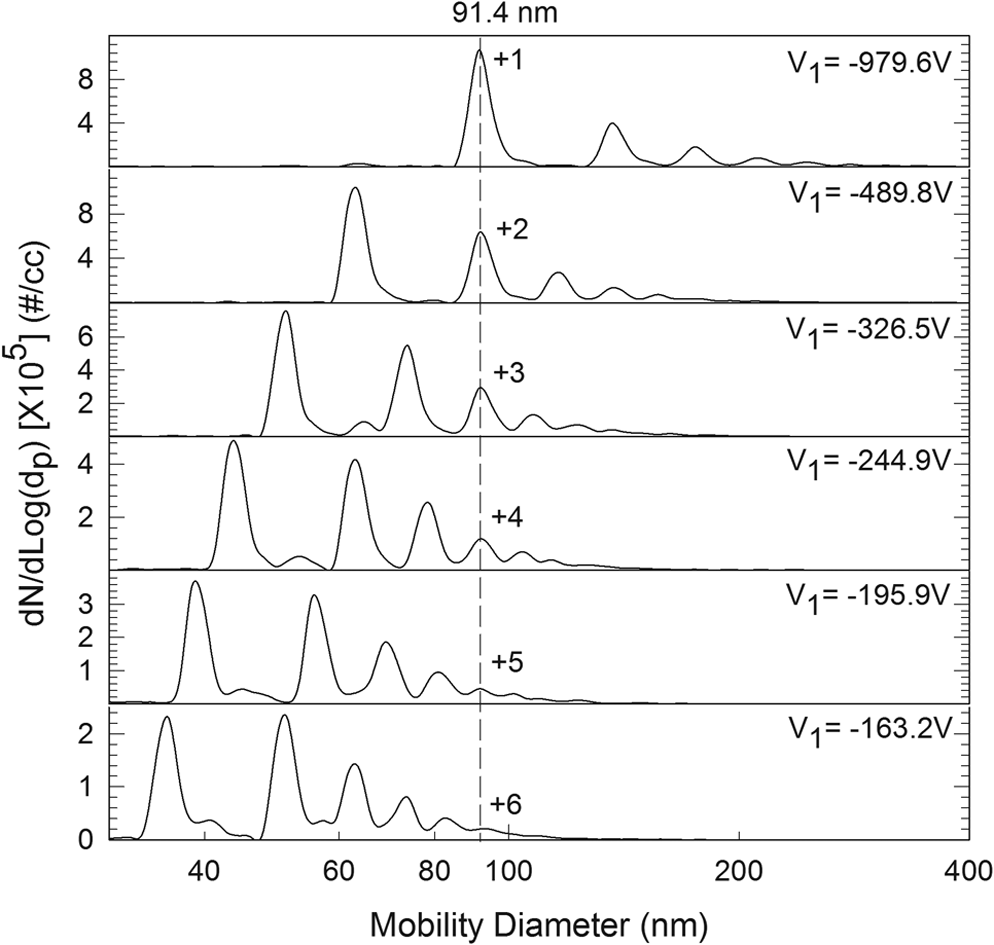
Sample TDMA measurement data; size distribution measured by DMA-2 at different set voltages (V1) of DMA-1 corresponding to electrical mobility of +1 to +6 charged 101.8-nm particles. The y-axis scale varies for each inset.
Effect of liposome suspension properties on the charge distribution of aerosolized liposomes
The liposome aerosols were observed to carry a bipolar charge distribution (Fig. 5). The figure shows that the properties of the atomized liposome suspension had a significant effect on the charge distribution of the dry liposome particles.
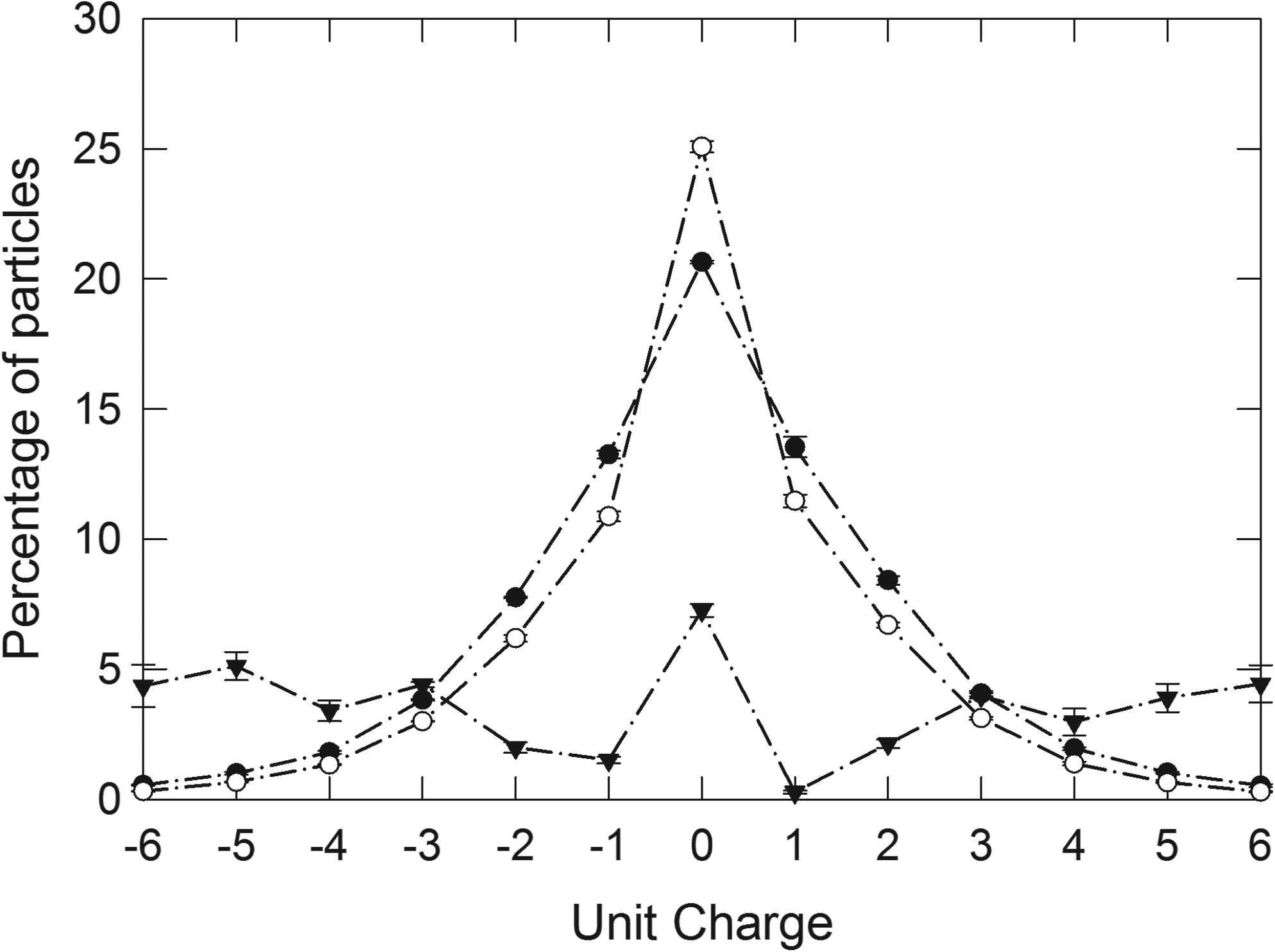
Charge distribution of aerosols of mobility diameter 101.8 nm generated from liposome suspension synthesized in DI water with lipid mass concentration (▾) 0.1 mg mL–1 and in PBS buffer with lipid mass concentration (▼) 0.01 mg mL–1 and (○) 0.1 mg mL–1.
It was observed that the presence of the buffer salts affects the charge distribution of the aerosolized liposome particles. Particles generated from liposome suspension synthesized in DI water carry a much higher charge per particle, with a high percentage of particles carrying more than ±6 unit charges. The peak in the charge distribution for the aerosol generated from the liposome suspension in PBS is observed at 0 unit charge with a symmetric, unimodal, bipolar charge distribution, with a narrow width of the distribution. These particles would include liposomes with PBS buffer particles and residual PBS buffer particles. However, for the particles generated from a liposome suspension in DI water, the much broader width and multimodal form of the charge distribution indicate that only about 40% of the total particles carry lower than or equal to −6 to +6 unit charges. This implies that most of the particles carry a much higher charge than ±6 unit charges.
The lipid mass concentration was observed to have a slight effect on the charge distribution of the aerosol. An increase in the concentration of the lipid mass in the suspension yielded a lower fraction of the particles being charged and a lower magnitude of charge per particle. The effect of lipid mass concentration has only been reported for liposome in PBS, because the high charge on the particles in DI water made the precise charge distribution measurement difficult.
The mean magnitude of charge carried by particles was found to be dependent on particle diameter (Fig. 6). As the particle size increases, the fraction of charged particles was observed to increase. This was observed for the aerosol generated from the liposome suspension synthesized in the presence of the buffer salt for both lipid mass concentrations. The mean magnitude of charge and the size of the particles were used to theoretically estimate the charge-to-mass (q/m) ratio for the particles generated from liposome suspension at a lipid mass concentration of 0.01 mg mL–1 in PBS solution. The q/m ratio was found to be 8.64×10⁻⁸ mC kg–1 and 8.32×10⁻⁸ mC kg–1 for 76.4 nm and 101.8 nm particles, respectively, assuming that the density of the dry particle is 1 g mL–1.
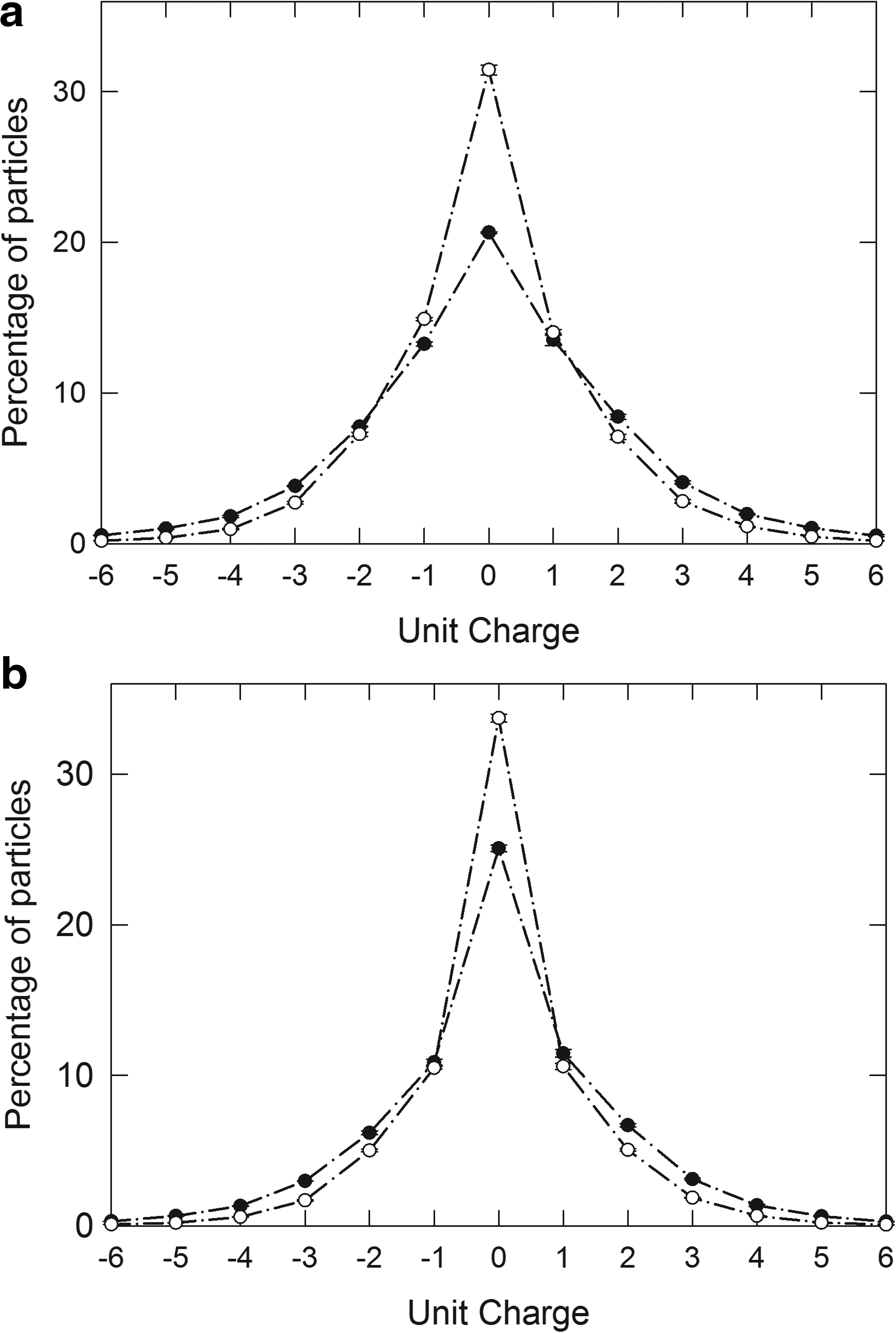
Charge distribution of aerosols of mobility diameter (○) 76.4 nm and (▼) 101.8 nm generated from liposome suspension containing lipid mass concentration
Discussion
The change in the charge distribution of liposome aerosols due to the change in the properties of the precursor suspension is due to spray electrification,(23) which is caused by the air-jet atomization of a suspension leading to the formation of charged droplets (Fig. 7). The surface of a polar liquid contains dipoles with the negative charge facing outwards and the positive charge facing inwards due to the action of surface forces in the liquid.(22) These dipoles thus create an electrical double layer, the thickness of which is approximately 0.02 μm in water.(22) The inner region consists of a small charge region known as the Stern Layer.(38) The atomization of the liposome suspension at the interface leads to a continuous disruption and reformation of the double layers, leading to an unequal charge within the generated droplet, thereby generating charged droplets containing liposomes. This process is therefore a purely statistical process, and hence initial charge distribution of droplets is symmetrical with respect to polarity.(39) The presence of buffer salts increases the conductivity of the liposome suspension significantly, which leads to an appreciable charge leakage from the droplet to the liquid bulk through highly conducting threads,(40) thereby reducing the electrical potential in the Stern Layer, and hence reducing the charge on the generated droplet. As the droplet dries to form a dry liposome particle or a dry residual buffer particle, the charge on the droplet is transferred to the dry particle by the charged residue mechanism.(26) According to this mechanism, the excess charge on a droplet is transferred to the particle enclosed within the droplet upon evaporation of the solvent. This charge transfer is limited, however, by the Rayleigh limiting charge, which is the maximum charge that a droplet of the same diameter as that of the particle can carry without fissioning.(26)
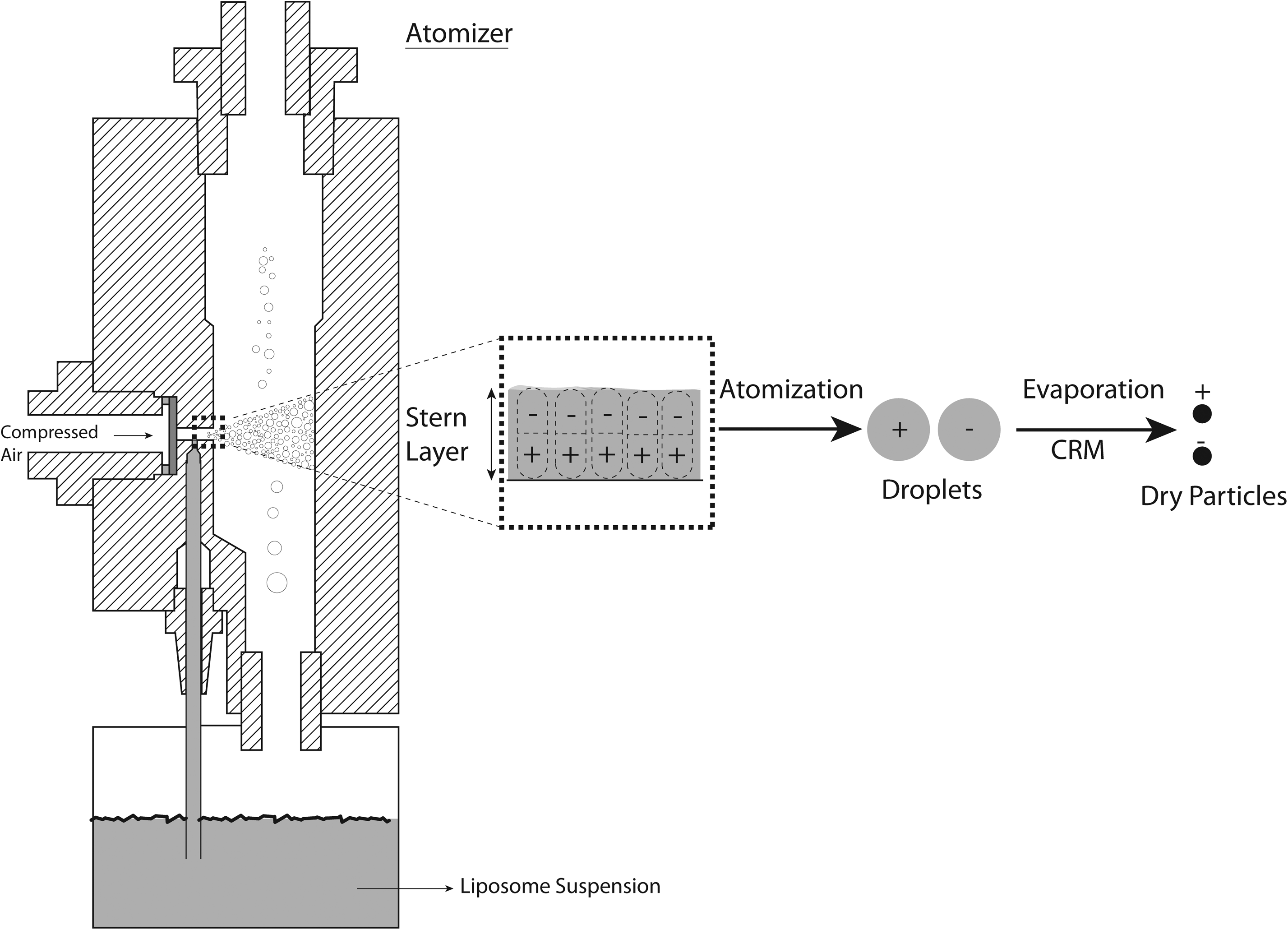
Mechanism of spray electrification during air-jet atomization. Atomizer schematic was adapted from TSI 3076 manual.
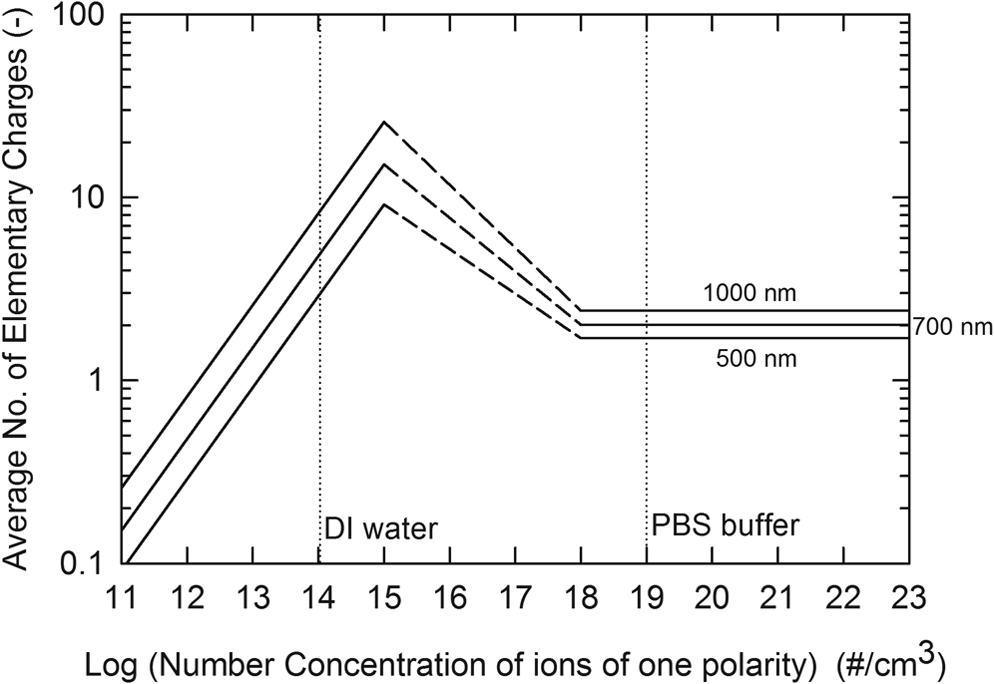
Theoretical expressions have been reported based on original derivations by Smoluchowski and Natanson.(41) The mean particle charge, |n|, assuming a symmetrical charge distribution for an ionic arrangement taking into account the interionic forces is given by the expression:
where N is the concentration of the ions of one polarity in the precursor liquid (#/cm3); V is the droplet volume formed upon atomization (cm3); C is the capacitance of volume V; k is the Boltzmann constant; and T is the temperature of the droplet. It was reported that a maximum value of |n| occurs at N=1015 (#/cm3).(41) At a large value of N, a partial discharge of the droplet occurs during the time of its formation, and the average charge was theoretically predicted by the following expression:
where Dμ is the droplet diameter in μm.
Figure 8 shows the average charge on droplets of different diameters with varying ion concentration N based on the above expressions, similar to those by Chow and Mercer.(41) For DI water, the concentration of ions is N≈1014 #/cm3. From the figure, it is observed that on increasing the buffer salt concentration (N≈1019 #/cm3), the average charge on the droplet decreases as compared with that of DI water droplet. Increasing the liposome concentration results in a slight increase in the conductivity of the suspension (N≈1015 to 1016 #/cm3) as compared with that of DI water, thus leading to an increase in the average charge on the liposome particles. The average charge on the liposome aerosols generated from the liposome suspension in PBS is comparable to previously reported charge measurement data for aerosols generated from ionic suspensions of sodium chloride of similar conductivity,(23) thus indicating that the charge distribution is not a function of particle characteristics and depends only on the ionic strength of the precursor suspension (as seen in Eq. 3). It is also observed that droplets of larger diameter on average carry a higher number of elementary charges. A larger droplet would result in a larger dry particle, and thus a larger particle can carry a higher charge, which is in agreement with the experimental results.
Conclusions
Charge distribution studies using the TDMA technique were performed on liposome aerosols generated by air-jet atomization. The aerosolized liposomes were observed to carry a bipolar charge distribution. The influence of the precursor solution properties on the charge distribution measurement was studied. It was observed that the composition/pH/conductivity, the medium of suspension, and the lipid mass concentration play a significant role in determining the dry particle charge distribution of the atomized particles by influencing the conductivity of the precursor suspension. Liposomes synthesized in DI water carried a much higher charge than liposomes synthesized in PBS solution. However, the aerosols generated from liposome suspension synthesized in PBS would consist of liposome salt particles and residual salt particles. It was not possible to distinguish the charge distribution of the liposome particles from that of the residual salt particles. In addition, an increase in the lipid mass concentration of the suspension resulted in a decrease in the charge carried by the particles. The effect of size of the particle on the charge carried was also studied. Larger particles were observed to carry a higher charge. The results were discussed based on the theoretical expressions for spray electrification. The study concludes that controlling precursor solution properties can be used to control the charge distribution of liposome aerosols generated by air-jet atomization. This can be used to engineer liposome aerosols for the pulmonary delivery of drugs based on the desired application by controlling their deposition in the alveolar region and by controlling their delivery to the alveolar macrophages.
Footnotes
Acknowledgments
This work was supported in part by grants from the Indo-US Joint Center for Nanoparticle Aerosol Science and Technology (NAST) funded by the Indo-US Science and Technology Forum (IUSSTF), New Delhi, India, and by grants from the Aerosol and Air Quality Research Laboratory (AAQRL) at Washington University in St. Louis. We also acknowledge partial support by the McDonnell Academy Global Energy and Environmental Partnership (MAGEEP).
Author Disclosure Statement
No conflicts of interest exist.