




Abstract
Abstract
Background:
The objective of this study was to utilize previously identified critical design attributes for the capillary aerosol generator as a model spray inhaler in order to develop a second-generation device that minimized aerosol drug deposition in the mouthpiece.
Materials and Methods:
Computational fluid dynamics (CFD) predictive analysis of the critical design attributes indicated that turbulence intensity should be reduced and the effective mouthpiece diameter should be increased. Two second-generation inhaler mouthpieces meeting these specifications were manufactured and tested. The first device (Design 1) implemented a larger cross-sectional area in the mouthpiece and streamlined flow, whereas the second device (Design 2) used a perforated mouthpiece wall. An in vitro deposition study was performed to quantify the deposition of drug mass in the mouthpieces and connected induction ports, and the results were compared with the CFD predictions.
Results:
The two second-generation mouthpieces reduced in vitro aerosol deposition from the original value of 7.8% to values of 2.1% (Device 1) and 4.3% (Device 2), without largely altering the induction port deposition. This was achieved by design alterations aimed at reducing turbulence intensity and increasing the effective mouthpiece diameter. CFD model predictions were in good agreement with the in vitro experimental data.
Conclusions:
A second-generation spray inhaler mouthpiece with low drug deposition was developed using a predictive CFD model and in vitro experiments. Applying this quantitative analysis and design methodology to medical devices, which is similar to the Quality by Design paradigm, could provide significant advantages compared with traditional approaches.
Introduction
The QbD paradigm is a scientific and rational approach to pharmaceutical product development that has been proposed by the U.S. Food and Drug Administration (FDA). The agency issued a challenge to the pharmaceutical industry to develop products using a systematic approach that begins with predefined objectives and focuses on product and process understanding. The FDA guidance for industry on quality systems defines QbD as a means of “designing and developing a product and associated manufacturing processes that will be used during development to ensure that the product consistently attains a predefined quality at the end of the manufacturing process.”(5) QbD principles can be applied to the engineering design of medical devices and pharmaceutical production processes.(6–9) Essential to the QbD approach is a complete understanding of how product design attributes and production processes relate to the final product performance.(10,11) This knowledge will allow the manufacturer to define a product design space. Advantages of this approach include the development of a robust, quality product that will benefit from regulatory flexibility when operating within an agreed boundary. During the initial product design phase, the desired product performance and critical quality attributes are identified. For example, in the case of a spray inhaler, the specific desired product performance characteristics could include 5% drug deposition within the inhaler and a FPF (percentage<5 μm) greater than 80%. Critical quality attributes that enable this desired performance would be defined and in-process controls used to maintain these attributes within their design space window.(11) The product design space is defined by a thorough understanding of the relevant processes. These approaches can use a combination of experimental data and mechanistic knowledge of chemistry, physics, and engineering to enable modeling of the process.(12) A successful model can then be used as an essential tool in the predictive design of the product.
The goal of this two-part study is to apply the QbD paradigm in order to evaluate and improve the performance of a model spray aerosol inhaler. Specifically, the CAG was selected and the performance criterion of the inhaler was specified to be minimal MP drug loss without significantly increasing the induction port (IP) deposition. A quantitative analysis and design approach was applied in which in vitro experiments and computational fluid dynamics (CFD) modeling were used to establish relationships between design variables, transport characteristics, and inhaler performance. The quantitative relations are then used to guide design alterations and predict improved system performance. This quantitative analysis and design approach is based on the QbD paradigm applied to medical device engineering and development.
In Part 1 of this study, we described how in vitro experimental data were used to develop and validate a CFD model for describing the capillary aerosol generation process and performance in a series of prototype inhaler designs.(13) MP aerosol drug deposition was used as the primary indicator of product performance. Based on the quantitative analysis and design approach, turbulence intensity and effective MP diameter were identified as examples of critical design attributes within the design space that directly influence aerosol drug deposition in the inhaler MP. Predictive quantitative correlations were then established that showed MP deposition was directly related to the average turbulence intensity and inversely related to the MP effective diameter. For example, these quantitative correlations indicated that MP deposition can be reduced below 5% if the effective MP diameter is increased above 8.8 mm. However, the predictive capabilities of these correlations outside of the limits initially considered and for different MP configurations were not verified in Part 1.(13)
Part 2 of this study will focus on the quantitative design of an inhaler–MP combination with the goal of reducing MP deposition without increasing mouth–throat deposition. Based on results from Part 1 of the study,(13) second-generation designs will seek to minimize turbulence intensity and maximize the effective MP diameter. To achieve these transport characteristics, the MP geometry will be modified and the orientation of the dilution airflow will be rearranged, resulting in two new second-generation designs. A concurrent CFD and in vitro approach will then be applied to assess the performance of the second-generation models. The resulting transport characteristics and MP deposition will also be compared with the correlations established in Part 1 of the study.(13) Agreement between the deposition values for the second-generation designs and the existing correlations will verify that the quantitative relations developed in this study are valid for a variety of design modifications and can be implemented in a general quantitative design approach. This article provides a case study describing the utility of implementing a combined CFD and in vitro experimental approach for the quantitative analysis and design of medical devices, which follows the QbD paradigm.
Materials and Methods
Quantitative analysis and design
During the quantitative analysis studies (Part 1), Prototype 1 was identified as the inhaler design producing the lowest MP drug deposition.(13) This original geometry will be used for comparison with the second-generation MPs developed in this study. Also in Part 1 of this series, relationships between design variables, transport characteristics, and inhaler performance were established based on concurrent in vitro experiments and CFD modeling. For the quantitative design of the inhaler, these relationships can be applied in reverse order, as illustrated in Figure 1. Reduced MP aerosol drug deposition was identified as the primary performance characteristic of the second-generation inhaler MPs, along with similar IP drug deposition compared with the original prototypes. To achieve the desired performance, MP transport characteristics and their correlations with aerosol drug deposition established during the analysis phase were considered. Specifically, it was found in Part 1 that MP deposition was strongly correlated with the transport characteristics of turbulence intensity (Iavg) and increased MP effective diameter (deff). As a result, these transport characteristics are termed “critical design attributes” and will be the focus of achieving reduced MP deposition. Based on the CFD modeling results of Part 1, the critical design attributes of interest can be controlled by increasing the inlet size of upstream dilution airflow and increasing the gap between the capillary tip and MP inlet. In addition, alterations to the MP geometry may also reduce the turbulence intensity and increase the effective diameter. As a result, the second-generation inhalers used in this study include (i) an increased MP geometric diameter without sudden expansions, (ii) large upstream dilution air inlets, and (iii) a larger region for the inlet of co-flow air (gap of 8 mm or perforated region of 14 mm). Second-generation inhaler MPs meeting these specifications were manufactured and tested as described below. CFD predictions and in vitro aerosol characterization of the second-generation MPs are compared and reported in this study.
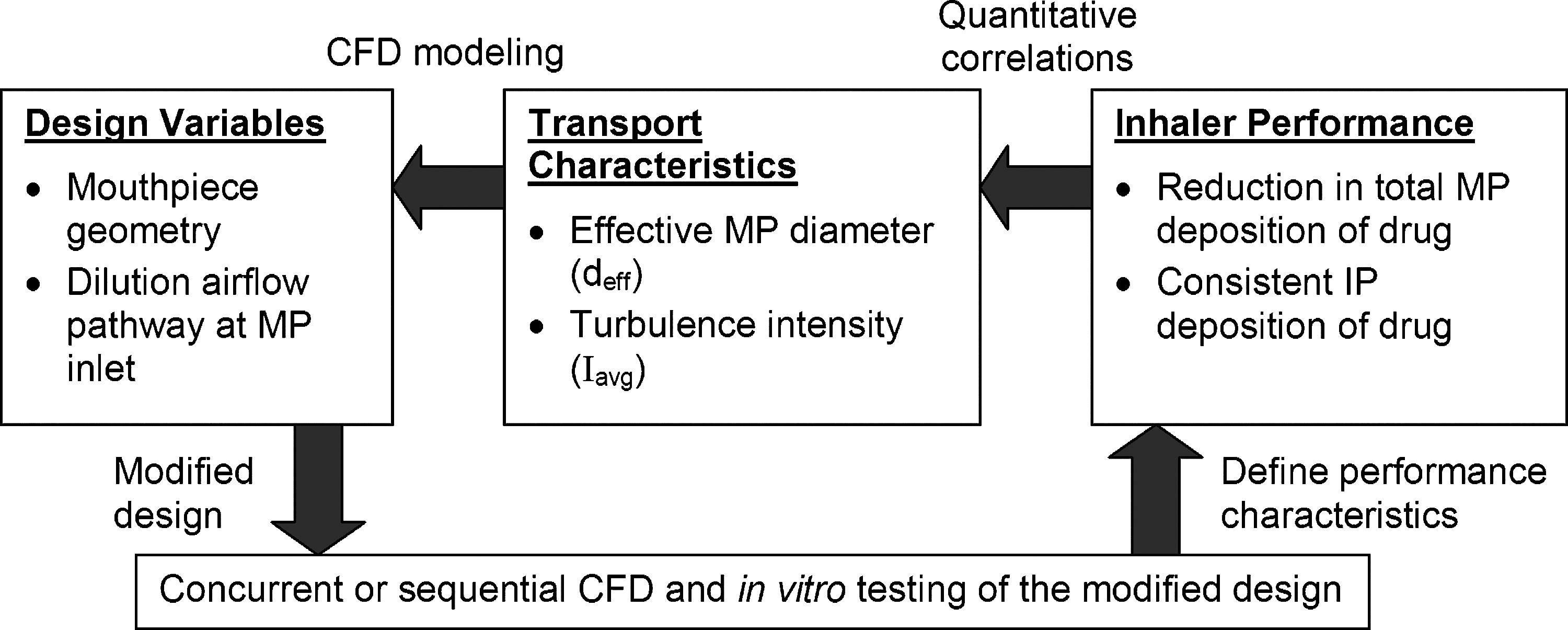
Diagram of the quantitative design process based on a concurrent approach of in vitro experiments and computational modeling. Relationships between design variables, transport characteristics, and inhaler performance were established using a quantitative analysis approach (Part 1).(13) In the current study (Part 2), these relationships are used to improve inhaler performance in a predictable manner by altering the effective MP diameter and MP turbulence intensity.
Prototype inhalers
The original inhaler MP (Prototype 1 from Part 1) and the second-generation inhaler MPs for the CAG system are shown in Figure 2 connected to a standard U.S. Pharmacopeia IP. For the original geometry described by Longest and Hindle(13) and the second-generation Design 1 configuration, the inhaler body is cylindrical with a length of approximately 70 mm (not entirely shown) and a diameter of 26.4 mm, which houses the heated microcapillary aerosol generation device and control unit (Fig. 2a and b). In both of these designs, a large dilution air inlet configuration was used. This inlet consisted of multiple 2-mm slots cut into the rear of the inhaler, producing an effective flow area of 352 mm2 and an effective hydraulic diameter of 21.2 mm. In all cases considered, an airflow rate of 30 L/min was used during aerosol generation. The original MP had a length of 28.4 mm with circular inlet and outlet diameters of 8.4 mm and 16.3 mm, respectively. The second-generation Design 1 MP also had a length of 28.4 mm with circular inlet and outlet diameters of 16.8 mm and 19 mm, respectively (Table 1). Also shown in Figure 2 for the original and Design 1 models is the flow path of the dilution air near the capillary spray nozzle. The dilution air (30 L/min) enters the rear of the inhaler and passes through the annular space between the outer wall and capillary inner cover. The flow then contracts radially around the capillary spray nozzle and enters the MP through a sudden contraction. The second-generation Design 2 MP streamlines the inhaler body to a diameter of 12.9 mm and contains a perforated air inlet section that begins at the capillary tip and extends a distance of 14 mm where the MP diameter begins to expand (Fig. 2c). The perforated air inlet wall section contains a number of small air inlet jets that allow air to enter the MP in a direction normal to the wall. The motivation behind this design in terms of reducing MP deposition is to eliminate the sudden constriction in flow associated with the other geometries, which may reduce turbulence intensity and increase the effective MP diameter. Considering a different inlet configuration as with the perforated wall design will also test the robustness of the deposition correlations developed in Part 1 of this study. The MPs were aligned with the center of the IP inlet and connected with an airtight seal. The dimensions of the two new inhaler configurations (Designs 1 and 2) are summarized in Table 1.

Semitransparent surface model of the inhaler near the capillary spray nozzle for the
Both new inhalers were constructed using SolidWorks CAD software (SolidWorks, Concord, MA) and a rapid prototyping process. The prototypes were created using an in-house Viper SLA machine (3D Systems, Valencia, CA). This rapid prototyping system used a 100-mW solid-state laser to selectively harden Accura 60 (3D Systems) clear plastic resin. The inhalers were then sanded smooth to minimize surface roughness effects. Tolerances of the rapid prototyping process were on the order of 0.1 mm.
Experimental methods
To confirm the CFD predictions, an in vitro deposition study was performed to quantify the deposition of drug mass in the MP and IP for the inhalers following aerosol generation. The in vitro experimental procedure was identical to the methodology used in Part 1 of this series.(13) In brief, the drug formulation that was aerosolized consisted of a 0.6% w/v albuterol sulfate aqueous solution (Nephron Pharmaceuticals Corp., Orlando, FL), which was pumped through the capillary at a flow rate of 25 mg/sec. Aerosols were generated as a bolus over a 2-sec period and delivered via the IP into an Andersen Cascade Impactor (ACI; Copley Instruments, Nottingham, UK). Neither the IP nor ACI was grounded in these studies. The dilution airflow rate drawn through the inhaler and used to sample the aerosols was 30±0.6 L/min. The ACI was used as a drug capture apparatus with a Type A/E glass fiber final filter (Pall Corp., Ann Arbor, MI). Following aerosol generation, washings were collected from the MP and IP geometries to determine the mass of deposited drug. A 1:1 admixture (25 mL total) of methanol and deionized water was used, and the solutions were then assayed using a validated HPLC-UV method. The masses of drug within the inhaler MP and IP geometries were determined and expressed as percentages of the nominal dose. All experiments were performed for more than five trials at ambient room conditions (20–25°C and 20–40% relative humidity; TM320 Data Logger, Dickson, Addison, IL).
Numerical procedure
The flow field generated by the CAG system is transient, compressible, locally supersonic, laminar-to-turbulent, unsteady, temperature-dependent, and multicomponent (i.e., air and water vapor). The computational solution procedure for this complex flow field was reported in detail by Longest et al.(14) and was reviewed in Part 1 of this series.(13) In summary, the continuous-phase solution of the CAG system was evaluated using the commercial CFD code Fluent 6.3 (ANSYS, Inc., Canonsburg, PA) in conjunction with user-defined functions. It was assumed that compressible water vapor exited the capillary nozzle at sonic flow conditions resulting in a local region of elevated pressure and downstream supersonic expansion. As described by Longest et al.,(14) properties at the capillary exit were based on the assumption of sonic velocity, a static exit temperature of 100°C, and the ideal gas law assumption. Airflow at 30 L/min was pulled through the inhaler, around the capillary nozzle (Fig. 2), and into the IP. Based on computational and experimental observations, the system was considered transient with a 2-sec CAG activation time.(15) Temperature and humidity were approximated in the numerical model to be 23°C and 30% relative humidity. Turbulence was simulated using the compressible Reynolds-Averaged Navier Stokes equations with the κ-ω turbulence model and low Reynolds number wall treatment. The individual species of air and water vapor were assumed to behave as ideal gases. The mass concentration of water vapor in air was determined using a turbulent convective-diffusive mass transfer relation, which was previously reported by Longest et al.(14) The energy characteristics of the compressible temperature-dependent flow were approximated by the solution of the combined thermal and mechanical energy equation.(14) User-defined functions were included to maintain a constant flow rate through the transient compressible system and to evaluate condensation onto the walls of the geometry. At the outlets, a variable pressure boundary condition was used to maintain a constant mass flow rate through the compressible flow field. All walls were assumed to be at 23°C to approximate the experimental conditions. Longest et al.(14) showed that this solution approach for the CAG system produced a spray cone angle that matched experimental observations.
In performing the CFD flow field solution, all transport equations were discretized to be at least second-order accurate in time and space. A constant time step of 0.025 sec was used in the simulations to evaluate the 2-sec period of capillary actuation. Reducing the time step by a factor of 2 and doubling the number of steps resulted in a negligible change in maximum velocity values. To solve the governing flow field equations, a coupled solution method was used with an implicit linearization scheme, which solves for all variables at the same time. This approach does not restrict the Courant number to a value of approximately 1 to maintain stability; however, a Courant number of 1 was specified for the coupled implicit solver to improve convergence, which was needed during the initial actuation time of the capillary. Based on the findings of Longest and Vinchurkar,(16) structured hexahedral meshes of the geometries were constructed. Grid convergence for Design 1 was based on comparisons of meshes with approximately 675,000 and 900,000 control volumes. For Design 2, meshes with 475,000 and 650,000 control volumes were used. Due to variability in the grids and geometries, these approximate mesh sizes have been rounded to the nearest 25,000 control volumes. Negligible variations in key parameters of interest, that is, the maximum velocity and particle deposition results, were observed between the two mesh resolutions considered. As a result, the approximate mesh size of the Design 1 and 2 new inhalers consisted of 675,000 and 475,000 control volumes, respectively.
The polydisperse aerosol size distribution generated by the CAG system was simulated using a Lagrangian tracking algorithm, as described by Longest et al.(14) and reviewed in Part 1 of this series.(13) In brief, the experimentally determined initial aerosol size distribution matched the results of our previous studies and had a mass median diameter of 3.3 μm.(17) The droplet tracking model of Fluent 6.3 was used with individual forces accounting for drag, gravity, and Brownian motion. As described by Longest and Xi,(18) the Fluent algorithms for Brownian motion and near-wall interpolation were corrected using user-defined functions. To better approximate turbulent effects on particle deposition, a user routine for near-wall anisotropic turbulence conditions was applied.(14,19) Based on relatively dilute conditions through a majority of the flow field, one-way coupling between the droplet and continuous phases was assumed. As a result, representative groups of particle sizes were used to approximate the polydisperse aerosol distribution produced by the CAG, as described by Longest et al.(14) Droplet evaporation was simulated based on the conservation of energy and mass equations with a semiempirical rapid mixing model approach until only the initial mass of albuterol sulfate remained. Previous studies using this numerical approach to simulate CAG aerosol transport and deposition have demonstrated good agreement between predictions of drug deposition and experimental results in a sectioned IP geometry,(14) a more realistic mouth–throat model,(17) and over different activation times.(15)
Results
CFD quantitative analysis variables
Figure 3 shows the CFD flow field predictions for the two new MP designs. The CFD predictions are displayed as contours of velocity magnitude and velocity vectors after 2 sec of aerosol generation. In the case of the original geometry (Prototype 1) reported by Longest and Hindle,(13) the expansion of the high-pressure vapor jet of the CAG system in conjunction with the constricted MP inlet results in a high-velocity jet through the inhaler and some reverse flow in the MP. In contrast, Figure 3a illustrates a significantly lower velocity flow field for the second-generation Design 1 MP that appears to have reached a nearly parabolic profile near the entrance of the IP. In addition, recirculation and reverse flow were significantly reduced in the second-generation Design 1 MP. Given the lower aerosol velocity and the near elimination of flow recirculation, the CFD predictions indicate a potential for lower drug deposition within the MP for Design 1 compared with the original geometry. With the Design 2 configuration, the smaller MP inlet diameter combined with the inward motion of co-flow air results in visible recirculation zones in the geometry and much higher airflow velocities compared with Design 1. As a result, it appears that the Design 2 model may not sufficiently reduce turbulence intensity and increase effective MP diameter.
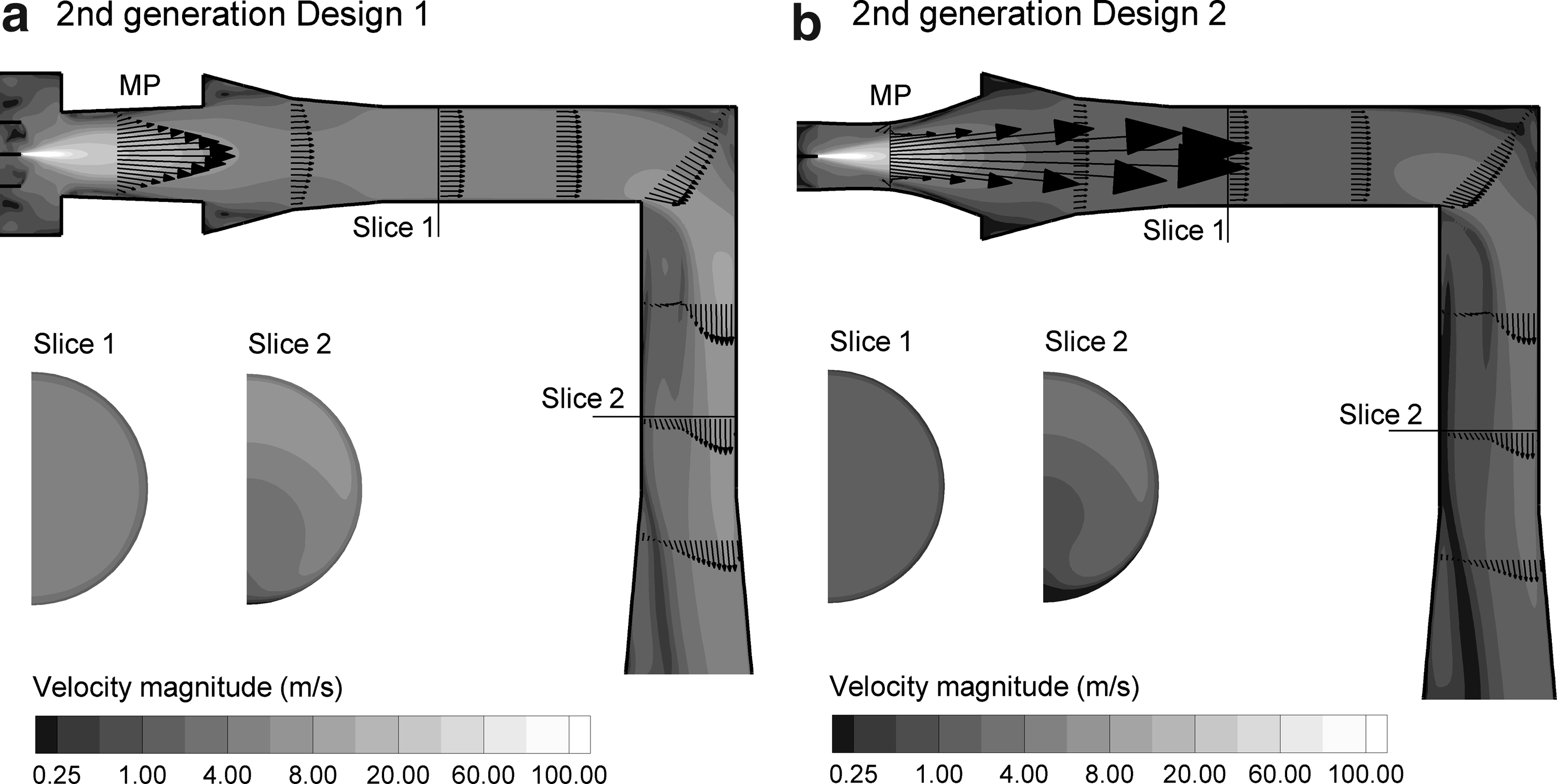
Velocity vectors and contours of velocity magnitude after approximately 2 sec of CAG activation in the second-generation
Figure 4 shows velocity magnitude and flow field streamlines after approximately 2 sec of CAG activation in horizontal and vertical planes for each of the new MPs. Compared with the original MP, the near-wall recirculation of Design 1 was significantly reduced leading to a significant increase in the effective MP diameter (deff). As described in Part 1, the effective MP diameter is defined as the minimum diameter available for positive (i.e., downstream) flow excluding recirculation regions. Quantitatively, Table 2 shows that the deff for the second-generation Design 1 MP was 11.1 mm. This represents a 79% increase compared with the original MP design. As indicated in Part 1, increasing the effective MP diameter is expected to reduce turbulence intensity and droplet recirculation, both of which could decrease droplet deposition within the second-generation designs. Design 2 also increases the effective MP diameter compared with the original design, resulting in a 30% improvement (Table 2). However, this increase is not as great as with Design 1 due to the inward orientation of the inlet flow and narrower MP geometry.
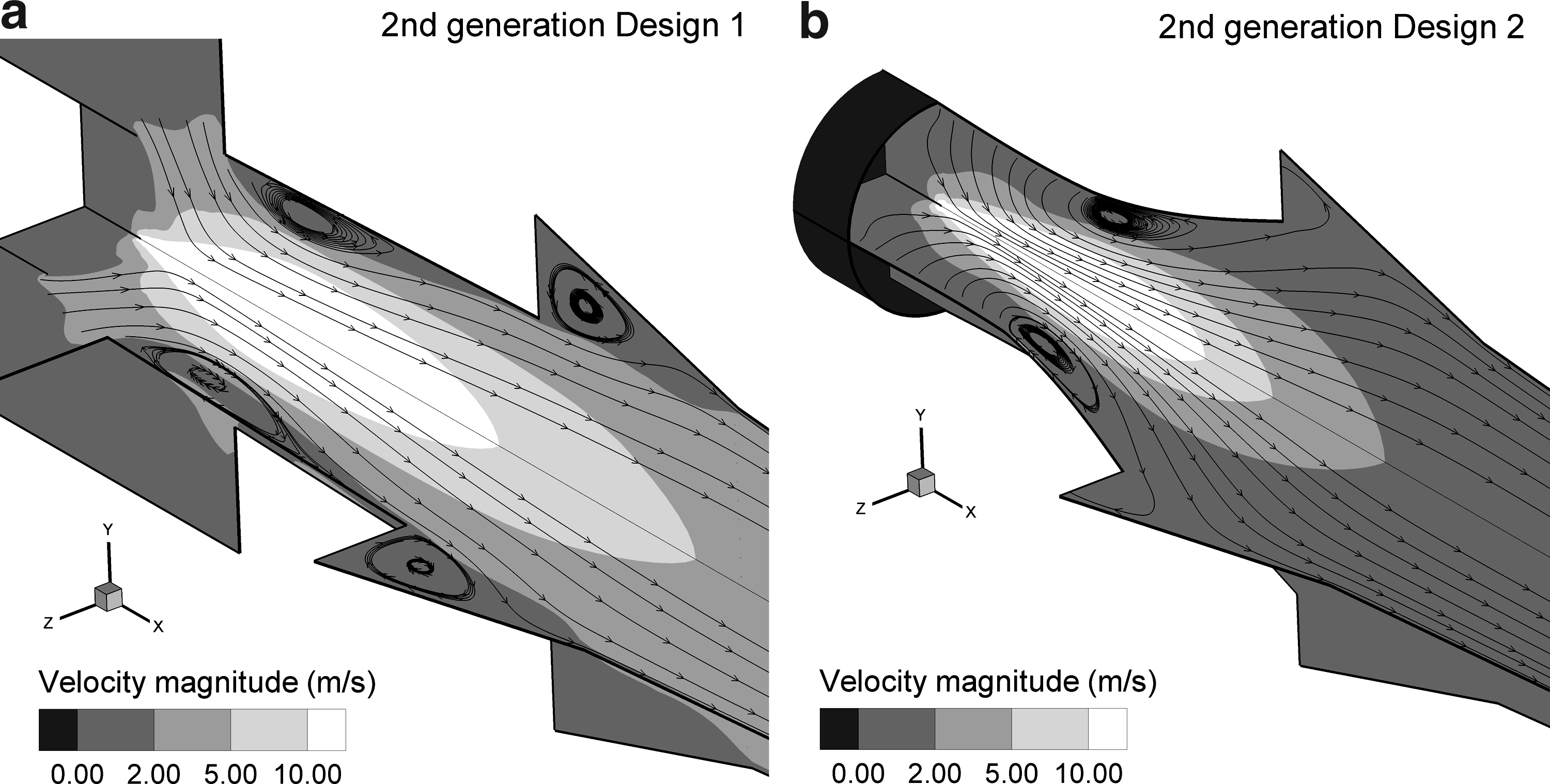
Velocity magnitude and flow field streamlines after approximately 2 sec of activation in horizontal and vertical planes for the second-generation
Defined as the minimum diameter available for positive (i.e., downstream) flow excluding recirculating regions.
Defined as the area-averaged turbulence intensity value at a cross-sectional slice taken midway of the MP length.
The second critical design attribute that was used to improve the inhaler MP design was reducing the observed turbulence intensity. To quantify turbulence intensity in the three-dimensional region of interest, conditions were evaluated at a cross-sectional slice taken in the middle of the MP. An area-averaged turbulence intensity (Iavg) was then calculated for the two-dimensional cross section, as prescribed in Part 1. Turbulence intensity was defined as the ratio of the root-mean-square fluctuating velocity to the mean velocity. Figure 5 and Table 2 report the modeled Iavg for the two new MP designs compared with a value of 796%(13) for the original geometry. There was a 29% reduction in turbulence intensity with the Design 1 MP compared with the original model. Decreasing the turbulence intensity reduces the turbulent dispersion of droplets and is expected to reduce droplet deposition within the MP. For the Design 2 model, Iavg was reduced from the original configuration by only 11%, which is explained by the high turbulence levels that can arise from radially inward directed air jets. Although this reduction in Iavg appears small, Longest and Hindle(13) report the potential for relatively large reductions in MP deposition associated with small changes in Iavg, based on the shape of the associated deposition correlation curve.
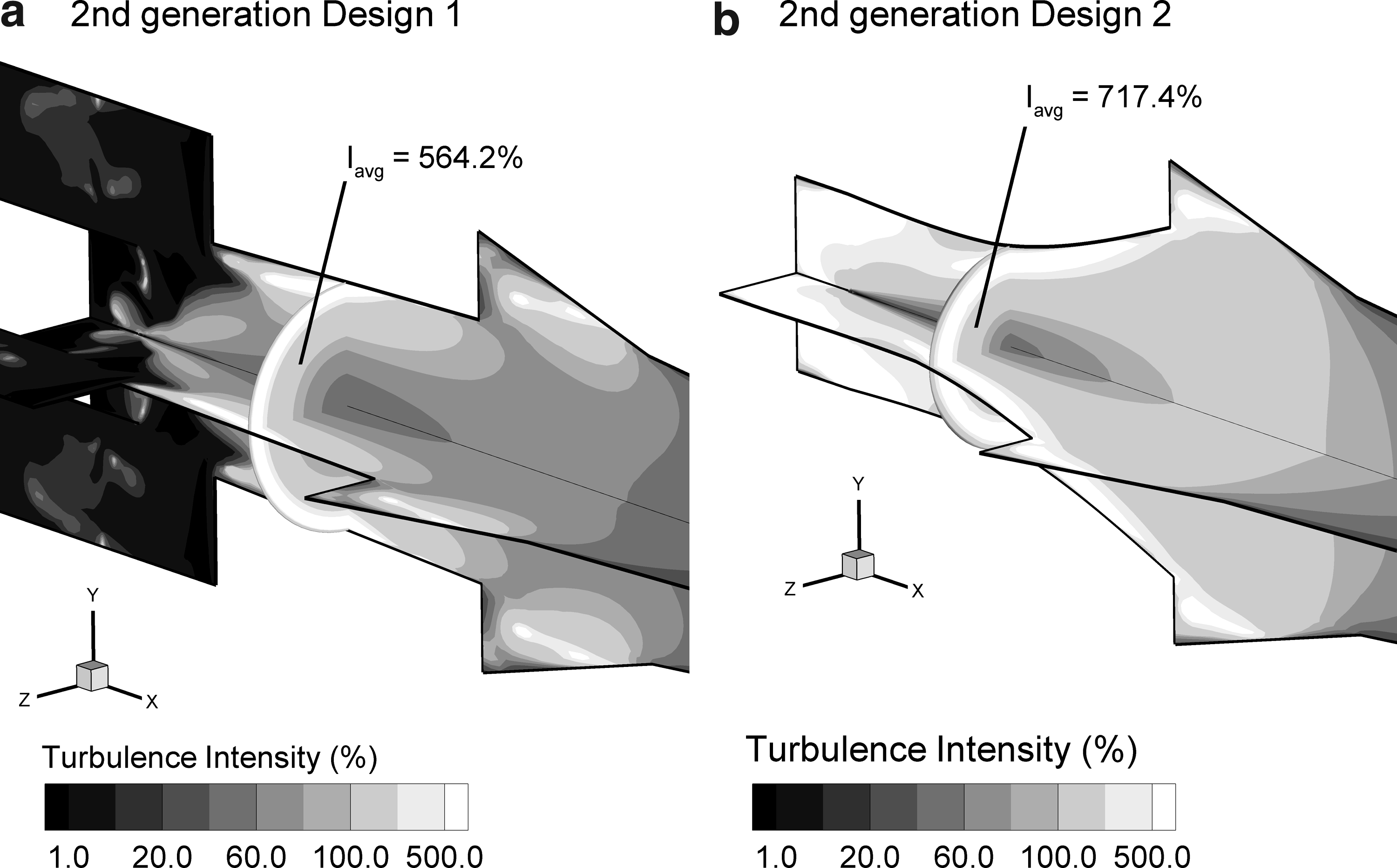
Turbulence intensity after approximately 2 sec of activation in horizontal and vertical planes for the second-generation
CFD predictions of aerosol transport and in vitro deposition
Figure 6 shows the trajectories of individual aerosol droplets as they are sprayed from the capillary into the second-generation MPs and subsequently transported to the IP. In contrast with the original geometry (refer to Part 1),(13) there now appears to be a centralized aerosol stream that transports the droplets through the MP and into the IP. The larger particles (>10 μm) with higher inertia are carried through this centralized stream and generally avoid wall deposition in the MP. Spray momentum effects are minimized by the large internal diameter of the MP (Design 1) and inward directed flow (Design 2). The reduced turbulent dispersion also appears to decrease the deposition of the small droplets (<5 μm), which are also now better carried in the central jet stream.
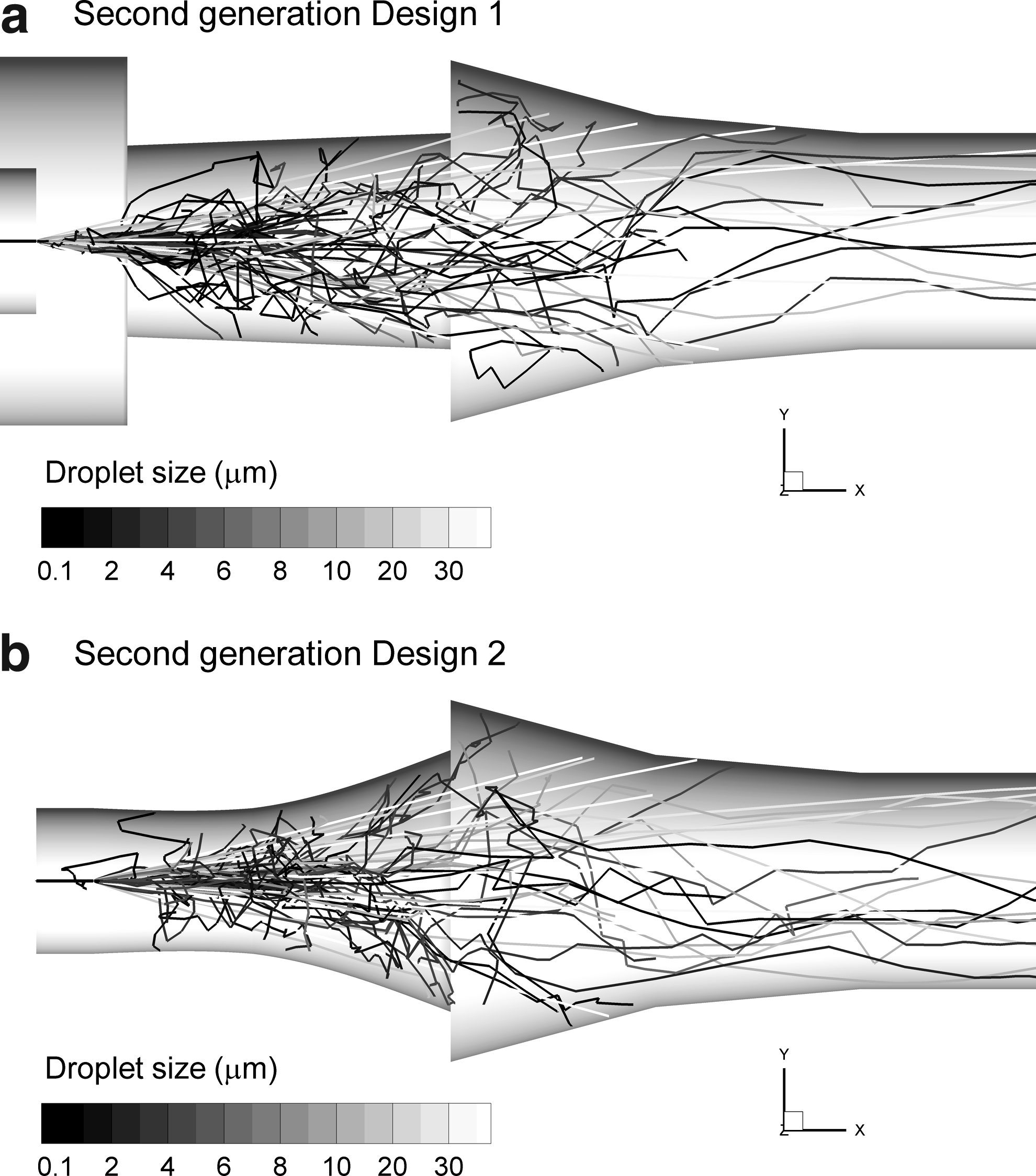
Droplet trajectories in the MP region for the second-generation
Figure 7 maps the local aerosol droplet deposition in the MP and IP based on CFD predictions for the two new designs. The most significant difference in the deposition profiles for the two new MP geometries compared with the original model (refer to Part 1)(13) occurs as the aerosol enters the MP. Both spray momentum and turbulent dispersion produce significant droplet deposition as the aerosol enters the original MP design. In contrast, using the second-generation MPs with increased effective diameters, there was lower droplet deposition in the upstream MP region. Both new MP designs resulted in the larger droplets being deposited along angled trajectories, producing a uniform deposition profile in the horizontal section of the IP. Figure 7 also reports the CFD predictions of drug mass deposition fraction (DF) in the MP and IP. The DF in the second-generation Design 1 MP was predicted to be 2.4% compared with 7.3% for the original MP. CFD predicted that DF in the Design 2 MP was 5.7%, which is between the value for the original model and the minimum value of Design 1.
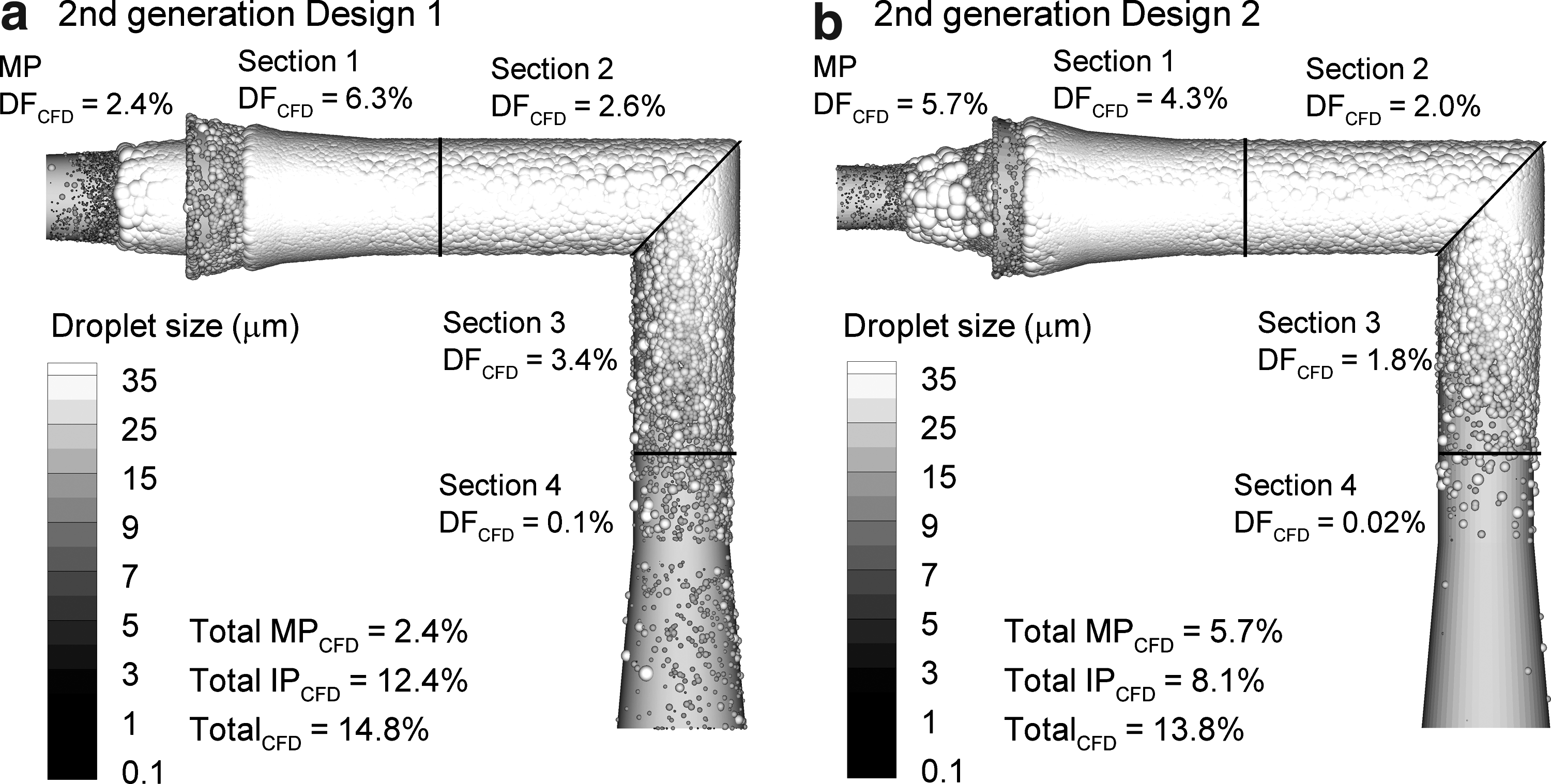
Numerical prediction of the droplet deposition pattern as a function of aerosol size for the second-generation
Table 3 compares the CFD deposition predictions with the in vitro aerosol deposition experimental results for the two new MP designs. Aerosol drug depositions in Design 1 and 2 MPs were 2.1% and 4.3%, respectively, of the delivered dose based on the experimental results. There was good agreement with the CFD predictions for both Designs (Table 3). MP deposition values were significantly lower than the in vitro deposition previously reported in the original MP design (7.8%). Furthermore, changing the MP design did not appear to have a significant effect on the total drug deposition in the IP. However, the overall deposition in the MP and IP was reduced from 17.2% for the original MP to 12.1% with the second-generation Design 1 and 16.5% with Design 2. It appears that modifying the MP size and design, together with the dilution airflow pathway conditions, resulted in a significant change in MP deposition without largely influencing deposition in the IP.
Mean (SD) mass of albuterol deposited is expressed as a percentage of the theoretical delivered dose.
Relative percent errors are based on the deposition fraction (DF) of drug mass and calculated as
CFD predictions that are within±1 experimental SD of the in vitro results.
Figure 8 shows the previously obtained correlations from Part 1(13) that define relationships between the critical design attributes (deff and Iavg) used in this study and the desired product performance parameter (MP drug DF). Figure 8 also shows the CFD predictions and actual in vitro deposition data for the second-generation MP designs. It is noted that both the effective MP diameter and turbulence intensity are CFD-predicted values. As described above, there was good agreement between the CFD predictions and the in vitro experimental data for the second-generation inhaler MPs. As predicted, reducing the inhaler MP turbulence intensity and increasing the effective MP diameter were found to significantly reduce the total drug deposition within the second-generation MPs. Interestingly, the correlations are valid for the CAG even though the MP configurations were changed significantly from the sudden constriction geometry of Design 1 to the streamlined and perforated wall configuration of Design 2. Therefore, these results indicate that the correlations were quantitatively predictive of aerosol deposition performance outside of the initial validation range and demonstrate the utility of the quantitative analysis and design method for spray inhaler development.
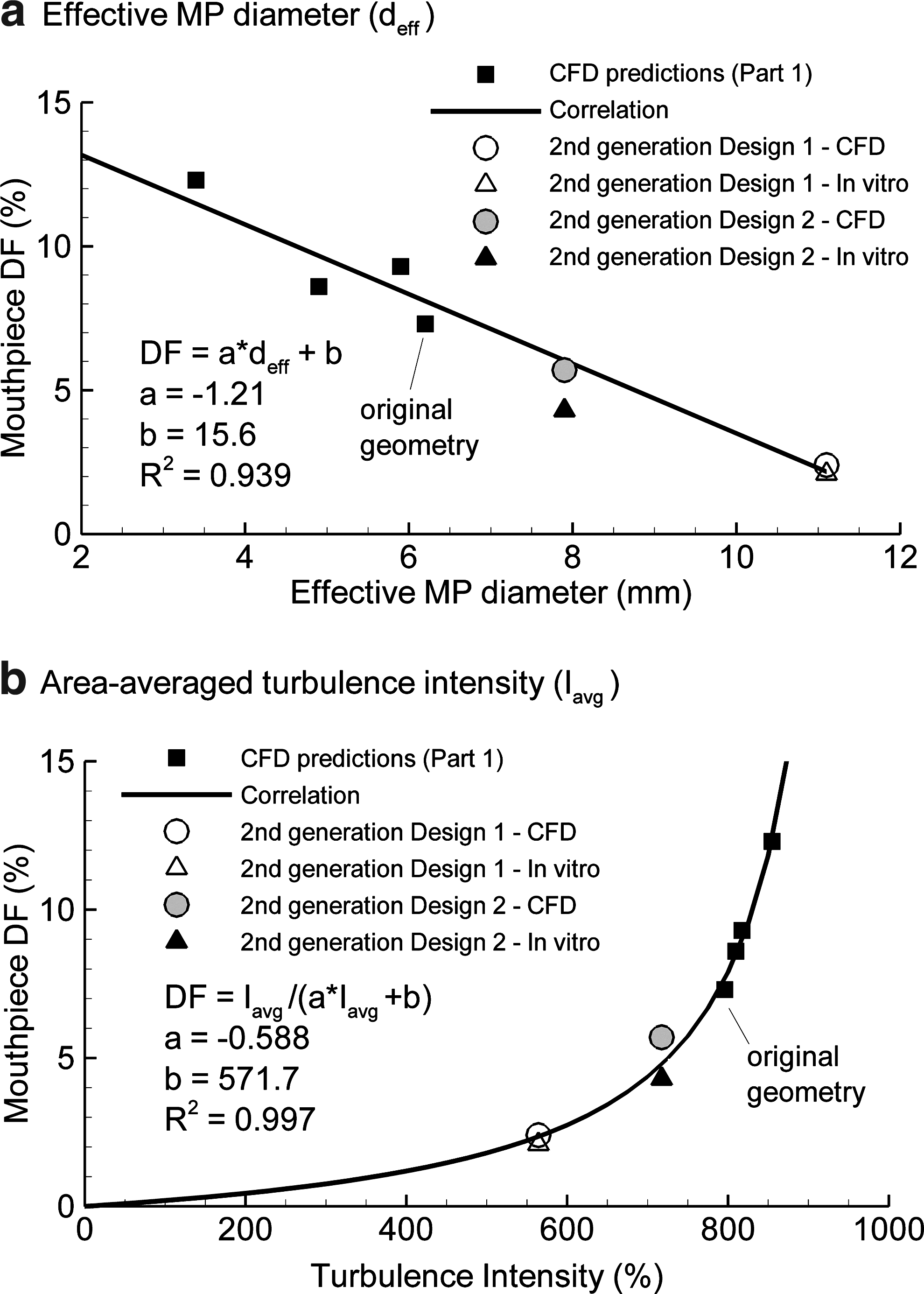
Comparison of MP drug deposition fraction (DF) with the
Discussion
Much of the focus of pharmaceutical QbD projects has been on the understanding and control of manufacturing processes. Equally important is the application of QbD principles in the design of quality medical devices. In both cases, the FDA is seeking to move the pharmaceutical industry from a reactive strategy to a proactive, knowledge-driven approach. The industry is being encouraged to develop products based on scientific understanding at the development stage.(10) Part 2 of this study describes the integration of developmental analytical knowledge with a design strategy for a pharmaceutical spray inhaler.
An improved second-generation inhaler MP for the CAG was developed during the design phase of this study. With Design 1, MP deposition was reduced to a practically negligible 2% of drug mass. The quantitative analysis and design approach followed the QbD paradigm. First, the desired product characteristics were identified. In this design example, the aim was to reduce the inhaler MP drug deposition while not affecting the drug deposition in the IP. Given the relatively small size of the albuterol aerosols generated by the CAG (MMAD=3.3 μm), the rationale was to maximize the respirable dose available for lung deposition. CFD analysis of the initial prototype designs indicated that significant numbers of potentially respirable particles were being deposited in the original MP. Drug deposition in either the inhaler MP or the IP is generally considered to not be available for delivery to the site of action within the lungs and should be minimized.
The next phase of this study was to identify and gain a thorough understanding of the critical design attributes that may be used within an inhaler design space that could alter the spray aerosol generation process and the final aerosol product.(13) It was beyond the scope of this study to establish a finite set of parameters for the inhaler design space. However, this approach implemented concurrent in vitro experimental and CFD methodologies to provide examples of the variables that can be investigated. Essential to this approach is an iterative development of the CFD predictive modeling, which was achieved through the knowledge gained in the experiments. In this limited proof-of-concept study, the interaction of a limited number of variables on the critical inhaler design attributes was considered. Turbulence intensity and effective MP diameter were identified as critical parameters that were predictive of aerosol drug deposition in the inhaler prototype models. CFD models were developed and validated that enabled quantitative determinations of the turbulence intensity and the effective MP diameter as a function of inhaler design variables. Quantitative predictive correlations were then developed to describe the relationships that would be used in the design phase of the study. In Part 1, these quantitative correlations were found to be highly predictive of MP drug deposition for the range of conditions that were considered.
Finally, Part 2 has evaluated design changes that were implemented to produce a reduction in the turbulence intensity and an increase in the effective MP diameter (Fig. 2). By reducing turbulence intensity, the potential for particles to leave the main jet stream and collide with the MP wall was reduced. Increasing the physical diameter of the MP design increased the effective MP diameter and better centralized the flow stream of the aerosol jet. The second-generation Design 1 MP was proposed in which a relatively large gap for co-flow air (8 mm) was used, together with an increased MP geometric diameter and large upstream dilution air inlets. The CFD predictive model allowed each design variable to be studied individually or in combination, and their respective impact on the critical design attributes could be assessed. CFD analysis was used to visualize the effects of the MP design variable changes on specific transport characteristics and particle tracking as shown in Figures 3–7.
The CFD predictive model indicated that the Design 1 MP would decrease the turbulence intensity to 564% and increase the effective MP diameter to 11.1 mm. Changes to these critical design attributes minimized drug deposition in the MP by reducing turbulent dispersion, which was identified as one of the main drug deposition mechanisms. The CFD predicted that MP drug depositions for Designs 1 and 2 were 2.4 and 5.7%, respectively. These values were observed to be in good agreement with the experimentally determined values of 2.1 and 4.3%. The CFD model was capable of predicting both the IP and total nonrespirable drug fractions, which were similar to the values observed experimentally. In addition, the quantitative correlations developed in Part 1 between DF and critical design attributes were found to be predictive of drug deposition in the second-generation models (Fig. 8). This agreement held true even though significant changes to the MP flow dynamics were implemented. The primary goal of this quantitative analysis and design study was to efficiently develop an inhaler MP that significantly reduced aerosol drug deposition in the device. The second-generation MPs achieved this primary aim, and Design 1 also produced an overall increase in the respirable delivered dose.
This study showed that the developed correlations were predictive of inhaler performance for modifications of transport characteristics beyond those considered in the initial validation range, which further demonstrates the use of this combined experimental and in silico approach. Once developed and validated, the CFD predictive model can be applied to explore the design space window and to establish operating tolerances for the range of design variables while maintaining critical quality attributes within acceptable levels. In this way, it is possible for a pharmaceutical manufacturer to establish normal operating tolerances for design variables such as internal MP diameter and size of dilution airflow inlets. Variations of these parameters would now be acceptable to the regulators, as the design process is operating within a defined space that did not substantially alter the quality of the product. Essential to this design space model is the incorporation of appropriate control strategies to ensure that the manufactured products are maintained within the design space. This QbD approach will lead to quality being built into the medical device rather than the present operating scenario, which relies heavily on end-product batch release testing.
It is interesting that only one value was required to be determined experimentally. Additional experiments could be conducted to verify the level of turbulence and the velocity field within the MPs. However, these measurements were not necessary to develop the required correlation between transport characteristics and the inhaler performance variable of deposition. This correlation was then implemented to optimize the design and reduce MP deposition. The predictive power of the developed correlations (Fig. 8) implies that the CFD model is adequately capturing the transport characteristics that have the strongest influence on deposition, which are the velocity field and turbulence. However, exact comparisons of turbulence and velocity fields between the model predictions and experiments may indicate some differences.
Some computational limitations of this study include the assumption of one-way coupling between the droplets and gas phase, evaluation of turbulence at one cross-sectional location, and use of the U.S. Pharmacopeia IP. One-way coupling refers to the assumption that the droplets do not influence the mass, momentum, and temperature of the continuous phase. It is currently assumed that the supersonic expansion near the capillary tip dominates the momentum transport in this area. However, two-way coupling of mass (water vapor) and heat may influence the rate of evaporation. As described in Part 1(13) of this series, evaluation of turbulence intensity at a selected cross-sectional location provided a strong correlation with MP DF. However, a more general volume-averaged value may work equally well. The 90° IP was used as a standard for determining if downstream deposition changed as a result of MP designs. However, previous studies have indicated that realistic mouth–throat deposition is typically higher than with the standard IP.(17,20) Finally, more advanced turbulence approximations such as large eddy simulations (LES) may help further improve agreements between in vitro results and numerical predictions of deposition. However, it is important to realize the LES approach will increase computational times by at least an order of magnitude and may not be able to simulate the entire time period required for CAG activation, which was 2 sec in this study.
Compared with the current study, similar concurrent CFD and in vitro studies have been reported for a metered dose inhaler (Proventil HFA, Merck) and the Respimat Soft Mist inhaler (Boehringer Ingelheim).(15,21) Future studies will seek to investigate the predictive applicability of the critical design attributes identified in this study (effective MP diameter and turbulence intensity) for other spray inhaler systems and their use as a design approach for optimization of spray inhalers in general. The effective MP diameter, which appears to account for jet velocity, turbulence, and recirculation effects, may have the broadest applicability across a variety of spray inhaler systems. A concurrent CFD and experimental quantitative design approach could guide more intuitive system modifications to achieve a desired performance criterion and faster design optimization. This CFD design approach has also been used to investigate spray aerosol deposition in more realistic mouth–throat geometries.(17) The use of CFD modeling and appropriate experimental studies may lead to the development of more useful in vitro–in vivo correlations for pharmaceutical inhalation products.(17,21)
Conclusions
In conclusion, this study has demonstrated the utility of a quantitative analysis and design procedure for the development of a pharmaceutical spray MP. Two second-generation spray inhaler MPs with low drug deposition were designed using a predictive CFD modeling and in vitro experimental approach. A rational development methodology was implemented in which an analysis phase was used to establish critical design attributes that directly correlated with the performance criteria of interest. The second-generation inhaler was then developed based on the identified design attributes of turbulence intensity and the effective MP diameter. There was good agreement between the CFD predictive deposition data and the in vitro experimental values for the second-generation inhaler MPs, indicating the validity of the mathematical model. Application of this quantitative analysis and design methodology to other spray inhaler systems could provide significant advantages compared with traditional development approaches and lead to significant design improvements for current and future inhaler systems.
Footnotes
Acknowledgments
The authors are grateful for critical advice from Dr. Peter Byron of the VCU Department of Pharmaceutics and for laboratory assistance from Ms. Suparna Das Choudhuri.
Author Disclosure Statement
No conflicts of interest exist.