




Abstract
Abstract
The wave of digital health is continuously growing and promises to transform healthcare and optimize the patients' experience. Asthma is in the center of these digital developments, as it is a chronic disease that requires the continuous attention of both health care professionals and patients themselves. The accurate and timely assessment of the state of asthma is the fundamental basis of digital health approaches and is also the most significant factor toward the preventive and efficient management of the disease. Furthermore, the necessity of inhaled medication offers a basic platform upon which modern technologies can be integrated, namely the inhaler device itself. Inhaler-based monitoring devices were introduced in the beginning of the 1980s and have been evolving but mainly for the assessment of medication adherence. As technology progresses and novel sensing components are becoming available, the enhancement of inhalers with a wider range of monitoring capabilities holds the promise to further support and optimize asthma self-management. The current article aims to take a step for the mapping of this territory and start the discussion among healthcare professionals and engineers for the identification and the development of technologies that can offer personalized asthma self-management with clinical significance. In this direction, a technical review of inhaler based monitoring devices is presented, together with an overview of their use in clinical research. The aggregated results are then summarized and discussed for the identification of key drivers that can lead the future of inhalers.
Introduction
The cost and difficulty of suboptimal asthma management
A
Asthma self-management and the importance of patient involvement in asthma control
One of the most important aspects for the efficient and effective management of asthma is the extent to which patients adhere to their prescribed action plan and use their medication correctly.(10,11) Although poor medication adherence is an important barrier for a variety of chronic diseases,(12) it has been identified as particularly problematic in asthma treatment(13,14) and especially for children and adolescents.(15,16) Reduced adherence has been associated with significant indicators of health degradation,(17–19) whereas 24% of exacerbations and 60% of asthma-related hospitalizations can be attributed to poor adherence.(20) All the above outline the need to increase the active involvement of patients in modern treatment methodologies and to use modern technologies so as to create easy-to-use tools for safe and effective self-management.
Inhaler-based health monitoring devices
A fundamental step in this direction is the creation of a sensing framework that can provide accurate information about the health of patients and help their doctors understand any possible difficulties that prevent patients from using their inhaled medication correctly.(21,22) This need for the modernization of inhaler devices has stimulated the research and commercial interest for their enhancement with novel sensing capabilities and has led to a number of approaches that focus mainly on the detection of inhaler actuations.
In this direction, a number of review studies have been recently published that focus on commercially available products and analyze their characteristics from the clinical point of view. The first of these studies has reviewed oral and nebulized medication monitors in addition to inhaler monitoring devices and as such, its analysis was limited to four indicative commercial products.(23) Two other studies provided a detailed review of the currently available devices focusing only on the clinical point of view and producing a useful guide on how clinical researchers and clinicians can select the most appropriate product and how to utilize the full spectrum of its capabilities.(24,25) Finally, a recent publication has provided a summary of the most common electronic monitors of inhaler adherence but focused on measured dose inhalers (MDI) and just mentioned some indicative devices for dry powder inhalers (DPI).(26) The modern adherence monitoring environment has also been analyzed in other studies, addressing important related issues such as the interpretation of results and the design of interventions that promote adherence.(10,27) Furthermore, quality control protocols have been presented for the proper use of such devices both for the assurance of patients' safety and the validity of results.(27,28)
Although the majority of current bibliography focuses on inhaled medication adherence, the multi-parametric nature of asthma disease and treatment creates a variety of technological challenges for the enhancement of inhalers with additional sensing capabilities. Among others, the monitoring of physiological, psychological, lifestyle, and environmental parameters holds the promise to significantly improve asthma treatment through its personalization. Furthermore, the detailed informational basis that can be formed based on these technologies can help clinical researchers understand the mechanisms behind asthma and empower patients manage their disease in an optimal and timely manner.
The purpose of this article is to provide a review of the historical evolution of Inhaler Based Monitoring Devices (IBMDs) for every type of inhaler, and including both their technical characteristics as well as their utilization in clinical research. In addition, increased attention is given to sensing functionalities that go beyond the detection of inhaler actuations to provide a more detailed analysis of the technical basis upon which novel inhaler devices are starting to emerge. In this way, it is intended to form a common discussion background for clinical researchers and technology developers, which could help for the identification of clinically significant asthma indicators and novel technology opportunities that can be used for their assessment on the basis of a portable, miniaturized device in the form of an inhaler add-on.
Methods
A systematic review was completed in August 2015 using PubMed(29) to identify studies that introduced electronic monitoring devices designed either as novel inhalers or inhaler add-ons.
Search strategy
Initial search terms included ((“electronic” OR “monitoring” OR “sensing”) AND “inhaler”). After the first screening, articles were filtered based on their relevance to the current topic, and names of monitoring devices were identified so as to include in the search terms of the review. Specifically, the second review search included the terms (“Nebulizer Chronolog” OR “MDI Chronolog” OR “Aerosol Actuation Counter” OR “Turbuhaler Inhalation Computer” OR “Doser” OR “Electronic Diskhaler” OR “SmartMist” OR “MDILog” OR “Diskus Adherence Logger” OR “Smart Inhaler Tracker” OR “SmartTrack” OR “SmartDisk” OR “SmartTurbo” OR “SmartFlow” OR “SmartMat” OR” Inhaler Compliance Assessment Device” OR “INCA” OR “Asthmapolis” OR “Propeller Health” OR “Chameleon” OR “SmartTouch” OR “MDI Acoustic Actuation Detector” OR “pMDI Datalogger” OR “Geckocap” OR “CareTRx” OR “Inspiromatic” OR “Sensohaler” OR “T-Haler”). References in particular articles were also examined to identify additional published studies. The overall review methodology is illustrated in Figure 1.
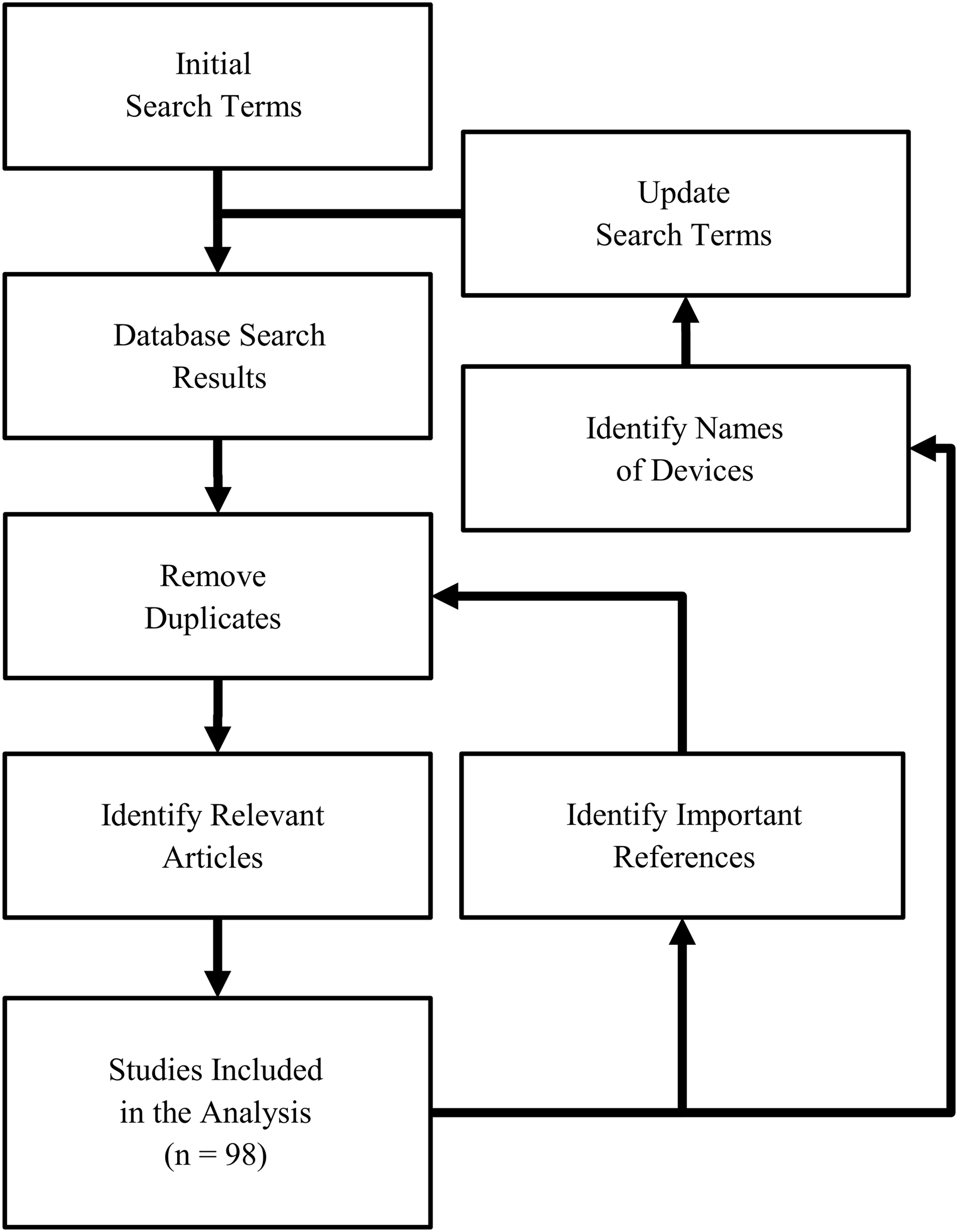
Bibliography review methodology.
Selection criteria
Studies have been included if they present a novel portable sensing device that was either mounted on standardized inhaler types or developed as a novel inhaler with sensing capabilities. In addition, clinical studies utilizing such devices were included if either they used commercially available systems or custom systems developed for specific research purposes.
Exclusion criteria
Studies were excluded if the device presented or used is not portable or not using the inhaler as platform. Furthermore, monitoring devices that are entirely based on smartphone applications are also excluded and so are the studies describing only software systems of sensing devices.
Data extraction and analysis
After the verification of an article's eligibility, the fundamental technical characteristics of the monitoring device were identified and aggregated in a common description. Increased attention was given to articles providing a validation of the device. Furthermore, all the clinical research studies that utilized every specific device were used and categorized based on the type of their outcomes. Using this information, a description of the historical significance of the device in the research of asthma was prepared, that outlined the contribution of every research approach.
Assessing risk of bias
Every publication was independently reviewed by two of the authors in order to assess the risk of bias. Results that were not in agreement were discussed and resolved with the consultation of a senior member when necessary.
Adherence and Competence
The World Health Organization has defined the adherence to long-term therapies as “the extent to which a person's behavior—taking medication, following a diet and/or executing lifestyle changes—corresponds with agreed recommendations from a health care provider”.(30) This concept is usually referred in bibliography as true adherence in order to allow the separation of the two distinct components that it comprises, namely adherence and competence.(10,16,31) On the one hand, adherence is related to the agreement of the patient's behavior with the prescribed action plan or dosing regimen and is commonly referred in bibliography as compliance or concordance. On the other hand, competence describes the ability of the patient to use the medication in a correct and effective manner and is commonly referred in bibliography as technique. The above naming scheme will be followed in this study.
More specifically and for the case of inhaled medications, adherence is defined as the percentage of prescribed doses that are actually received by the patient in a predefined period in time.
In contrast to adherence, the definition of competence is fundamentally dependent on the type of medication and the medical device that the patient uses, and therefore a variety of different approaches have been proposed over the past. A very common approach for inhaled medication is the separation of the prescribed technique in a number of fundamental criteria that are assessed in order to verify if they are met by the patient. These criteria may include important steps that should not be omitted during the use of medication or common errors that should be avoided by the patient.
Finally the combination of adherence and competence is used to define true adherence(31–34) as follows:
Inhaler Monitoring Devices
As already mentioned the purpose of this article is to review the technological evolution of inhaler monitoring devices with respect to their use in clinical research. In this direction non-inhaler devices were excluded from the analysis, whereas the software services of the respective systems are also not described, with the only exception being when they allow the use of additional sensors (e.g., the use of smartphone GPS). Figure 2 provides a detailed overview of the design of these devices to allow the easy comparison of their size and usability.
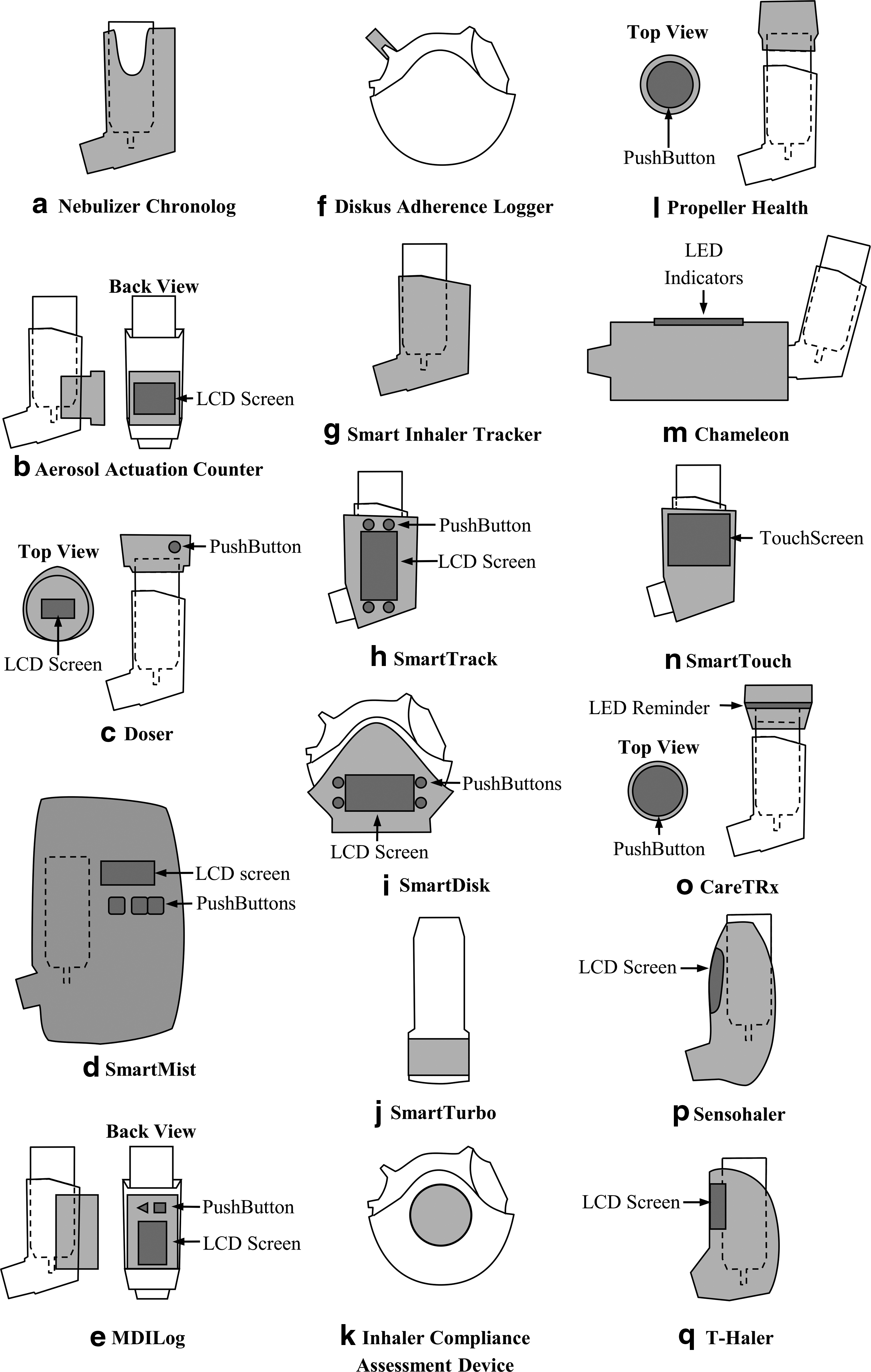
Evolution of the design of Inhaler Based Monitoring Devices, indicated with gray color.
Nebulizer Chronolog
The Nebulizer Chronolog (NC) was the first device to gain approval from the U.S. Food and Drug Administration (FDA) as a monitoring device of inhaled medication adherence.(35) Designed as an electronically enhanced plastic casing for standardized MDI canisters, NC had the capability to record the date and time of inhaler actuations and store roughly 4000 events. Unfortunately, the relatively high cost of the system, together with the immaturity of computing technologies and the requirement for a bulky interpreter device, limited its use mainly in the academic environment.
Despite these difficulties, NC has been utilized in research for more than a decade, and has been thoroughly compared with the traditional approaches for measuring treatment adherence, namely, patient diaries and canister weighing.(36,37) NC has been also used for the analysis of pollution effects on asthma patients(38) and has contributed significantly to the understanding of inhaler usage in both adults(39–42) and children,(43–46) leading to significant results towards the improvement of the adherence of inhaled medication.(47,48) It should be mentioned that subsequent versions of the device were criticized in terms of their reliability(49,50) and led to the discontinuation of the models that were based on thermistor measurements.(51)
Aerosol Actuation Counter
The Aerosol Actuation Counter (AAC) was introduced in 1990 as a tool for the assessment of the adherence of inhaled medication.(52) The device was attached on the back of the plastic casing of a standard MDI and included a small liquid crystal display (LCD) where the total number of actuations was displayed. The fact that only the sum of actuations was measured limited the use of the device in research. Nevertheless, the AAC device was used to show that the compliance of patients to prescribed medication was higher when they were informed that their inhaler use was being monitored.(53)
Turbuhaler Inhalation Computer
The Turbuhaler Inhalation Computer (TIC) is one of the first attempts to objectively monitor the use of a DPI and record the date and time of every valid inhalation.(54) The device mainly consisted of a miniaturized microphone, the measurements of which were used to detect the sounds related to the turning of the inhaler's twist mechanism and also the sound of the patient's inhalation. The TIC device was used in order to understand the effects of the type of medication used in compliance to treatment, by comparing the use of beta-agonists, corticosteroids, and their combination.(55)The effects of psychological factors on treatment adherence were also studied using TIC measurements, indicating that compliance was associated with a combination of psychological factors.(56)
Doser
The next most significant step towards automated monitoring of MDI actuations was the introduction of the Doser device.(57,58) Developed as a canister attachment that fits on top of the majority of inhalers, the design approach of Doser elevated significant cost effectiveness issues by giving the possibility to patients to replace their old inhaler without the need to replace the device itself. The simple user interface of the device included a small LCD screen and acoustic notifications, with the aim to support patients to take control of their treatment and follow their prescribed medication plan. On the other hand, the possibility to deactivate feedback, allowed the device to be used in academic research for adherence monitoring. Unfortunately, the inability of the device to transfer the collected data to a computer, together with the maximum time frame of 30 days, hindered its use in the academic environment.
Despite the above limitations, Doser has been proved to be an important tool for the understanding of asthma treatment and has been validated in comparison to NC as a reliable tool for the monitoring of inhaled medication adherence.(59,60) Doser has been also used for the comparison of adherence assessment methodologies for children,(61–63) including self-report, canister weight, pharmacy records, and parent-reports. Furthermore, significant conclusions have been reached towards the elevation of barriers of non-adherence,(64) and the impact of different interview approaches for the assessment of adherence.(65) Doser has also contributed to the study of psychological factors related to the patient's denial of their illness and their impact on compliance.(66) A recent randomized medium term study utilized the Doser device to outline the relation of adherence rate to beclomethasone dipropionate and the level of asthma control.(67)
Electronic Diskhaler
The Electronic Diskhaler (ED) is a DPI monitoring device with the ability to auditory record both blister perforation and airflow.(5) This device was used in combination with the Nebulizer Chronolog in an article that formulated some important guidelines for asthma self-management.(48)
SmartMist
One of the most important steps towards the evolution of inhalers is the SmartMist device, which introduced sensing capabilities that allowed the assessment of inhalation technique on top of adherence, and integrated also an innovative mechanism for the automated actuation of MDIs.(68) Designed as a hand-held device into which standard medication canisters could be fitted, the SmartMist device included a small LCD screen for the simplification of its use by patients and doctors.
In addition to the accurate monitoring of the date and time of its use.(60) the SmartMist allowed the recording of inspiratory flow rate and inspiratory firing volume, permitting healthcare professionals to access the inhalation technique of their patients and help them effectively use their inhaler correctly.(69) Furthermore, the SmartMist device took the first step for the integration of the above sensing capabilities with an automated actuation mechanism that released the medication when predefined conditions of inspiratory flow rate and inspired volume both coincided and helped for the optimal deposition on medication in the human lungs.(70–72)
MDILog
The MDILog is currently the most widely used device in academic research for the assessment of inhaled medication adherence and competence. The device has been FDA approved,(73) where its accuracy and reliability have been tested in recent publications.(60,74) Designed as attachment of the plastic casing of standard inhalers, the MDILog device followed the path of SmartMist by offering the ability to monitor the inhalation technique of patients, but based on different sensing components. In addition to the inhaler actuation sensor, the device includes an accelerometer and sensitive temperature sensor used for the recording of the date and time of inhaler shaking and actual inhalation respectively. Furthermore, MDILog offers wireless connectivity with computers and includes a small LCD screen and auditory tone outputs as a basic user interface.
As already mentioned, MDILog has been widely used in academic research, providing valuable insights towards the optimized treatment of respiratory conditions. MDILog has been used in different studies for the understanding of inhaled medication adherence in children,(75,76) and has revealed significant associations of adherence with age(77) and overall health literacy.(78) Related research has also used the MDILog to outline the relationship of adherence with psychological parameters such as negative affectivity,(79) family mealtime,(80) and child internalization.(81) Furthermore, a variety of studies have used the current device to assess the differences in adherence in economically disadvantaged population groups and minorities.(82–87) MDILog has also proved a valuable tool for the design and validation of adherence improvement methodologies in terms of interview modes,(60) different dosing frequencies,(88) problem solving approaches for training,(89) child-parent team interventions,(90) and also patient advocate interventions.(91)
It is also important to mention the significant role of the MDILog as a tool for the exclusion of participants from research trials based on their reduced medication adherence.(92) Finally, indicative of the significance that electronic adherence monitoring devices currently hold, is the validation of novel assessment methodologies in comparison with the results of MDILog, namely the Family Asthma Management System Scale (FAMSS),(93) the Medication Adherence Report Scale for Asthma (MARS-A), and the Daily Phone Diary (DPD).(94)
Diskus Adherence Logger
The Diskus Adherence Logger (DAL) device is a miniaturized sensor designed to sense the motion of the dose delivery level in Diskus DPIs.(95) A small magnet combined with a magnetic field sensor are in the core of this device, which allows the transfer of data to a computer through USB connection. DAL has been used in research in combination with the MDILog to include patients using DPI,(78,89,91) and has also been used for the study of adherence in older teens towards the identification of new approaches that may improve the poor adherence to medication and support efficient self management.(96)
Smart Inhaler Tracker
The Smart Inhaler Tracker (SIT) device was developed as an electronically enhanced inhaler casing compatible with the medication canisters of standard dimensions. The device could automatically detect inhaler activations and store locally their date and time, whereas the collected data were accessible through a USB port. Furthermore, the SIT incorporated some basic audiovisual reminders in the form of alarm sounds and an LED light that changed color after the actuation of the inhaler.
A couple of studies have validated the accuracy of SIT in vitro,(97,98) whereas a most recent publication has verified the reliability of the device in the real-world setting and underlined the importance of extensive monitor and data checking protocols in the reduction of data loss.(99) The SIT device was used to assess the accuracy of self-reported adherence in both young children(100) and adult individuals,(101) revealing the significant overestimation by both patient groups. Furthermore, studies have shown that the objective assessment of inhaled medication usage are strong predictors of future adverse outcomes(102) and valuable markers of current asthma control.(103)
SIT has also been used for the evaluation of novel approaches for the improvement of medication adherence and revealing significant strategies such as audiovisual reminders,(104) feedback consultations,(105) and parental education about the illness and medication.(106) In another case, it was proved that a new spacer device was not effective as an adherence improvement approach in children.(107) Finally, the SIT has proven to be an important tool for the study of novel medication approaches, such as the single combination budesonide/formoterol inhaler as maintenance and reliever therapy regimen (SMART)(108–112) and in the assessment of asthma such as the bronchial hyper-responsiveness test (BHR).(113)
SmartTrack
The SmartTrack device is the evolution of the Smart Inhaler Tracker and has been developed to include a more informative user interface with some additional customizable options. In detail, the SmartTrack includes a LCD screen and four push buttons that allow the navigation in the device menu that includes information about inhaler use and battery charge level, allowing also the selection of reminder ringtones. The sensing capabilities of the device can detect and record the insertion and removal of canisters in addition to the inhaler actuation events. Furthermore, Bluetooth connectivity is available in addition to USB. It is important to note an extended version of the device has been used in research, with the ability to send information through the mobile phone network, eliminating the need for a communication hub such as a computer or smart device. The SmartTrack device has been approved for safe use by the FDA,(114) and has been validated in terms of reliability and patient acceptability.(115) Furthermore, studies have used the device to understand the effects of reminders on treatment adherence in adults(116) and children.(117)
SmartDisk
The SmartDisk device incorporates the same functionalities with SmartTrack, but in a casing that is attachable to the standard Diskus DPI. Recent studies have utilized the SmartDisk device in combination with the SmartTrack in order to allow adherence monitoring for an extended patient group, regardless of their inhaler type preferences. More specifically, SmartDisk devices have been utilized for understanding the effects of practitioners' prescribing behavior on the adherence of treatment in children with respiratory symptoms.(118) In another study, SmartDisk was utilized to outline potential modifiable barriers to adherence including both parent and child-related factors.(119) SmartDisk and SmartTrack devices have also been used in a long-term study revealing the complexity of adherence optimization in children.(120)
SmartTurbo
Another device of this series is the SmartTurbo that incorporates the basic functionalities of the SIT in a casing that is attachable to the standard Turbuhaler DPI. Two recent studies have evaluated the accuracy of this device, supporting its use as a replacement of patient diary reports.(121,122)
SmartFlow, SmartMat
As mentioned above, the successful validation of the Smart Inhaler Tracker has led to the development of a variety of devices by the same company, in order to offer the same sensing and feedback functionalities for a wide range of inhaler types. SmartFlow and SmartMat, together with the above described SmartTurbo, SmartDisk, and SmartTrack, are completing the picture of adherence monitoring solutions offered in this category.
Inhaler Compliance Assessment Device
A very important step in the evolution of DPI monitoring was the introduction of the Inhaler Compliance Assessment Device (INCA). This novel device is mainly based on acoustical sensing, and is designed to process sound measurements in order to calculate important characteristics of inhaler use, as well as critical respiratory parameters. A number of studies have validated INCA as a tool for the assessment of inhaler technique(123–126) and the detection of errors such as the exhalation into the DPI(127). Additionally, a new inhaler policy has been tested in the hospital environment, based on the above functionalities of INCA showing promising improvements in the use of inhalers.(128) Furthermore, a method has been developed for the estimation of Peak Inspiratory Flow Rate (PIFR) by using INCA measurements,(129) and the detection of whether a patient generated adequate PIFR to effectively de-agglomerate drug particles from the DPI.(130) INCA has also been used in order to estimate the amount of drug delivered from DPIs.(131)
Propeller Health
Formally known as the Asthmapolis system, the Propeller device was the first attempt to monitor the location of inhaler actuations in addition to their date and time.(132,133) This innovative approach is based on the GPS functionality of modern smartphones and is aiming to provide useful geospatial information of asthma attacks that can help patients and healthcare professionals identify the triggers of exacerbations. Furthermore, the correlation of the data collected from a number of patients can indicate locations of high risk, helping patients improve their overall quality of life by avoiding these locations, or maybe even helping improve the air quality of their environment by identifying the possible sources of asthma triggers. Both versions of the systems have gained FDA approval.(134,135)
A recent article that used the Propeller system has focused on the validation of weekly feedback messages as an method for improving asthma control(136). In this study the Propeller measurements were used for the creation of accurate personalized reports of inhaler use (time and location), which were sent to the patients through e-mail messages. Among other results, the weekly e-mail reports have been found to be associated with improved asthma control and a gradual decline of asthma symptoms, whereas participants have reported increased awareness of their disease and better understanding of their treatment and preventive practices.
Chameleon
The Chameleon is an innovative approach to inhaler enhancement that was designed to combine the functionalities of a spirometer and inhaler spacer.(137,138) In addition to the monitoring of inhaler use, the Chameleon device offers the possibility to measure important physiological parameters such as the peak expiratory flow.
SmartTouch
The SmartTouch device is the next generation of SmartTrack, designed to clip around standard MDIs as its predecessor. The main improvement in this version of the device is the replacement of the LCD screen and buttons with a small touch screen that allows an easier and more intuitive use by the patient. The SmartTouch device has very recently received FDA approval.(139)
MDI Acoustic Actuation Detector
A recent publication demonstrated an inhaler prototype that uses a commercially available microphone and pressure sensor to assess the acoustic characteristics of inhaler use.(140) Although this MDI Acoustic Actuation Detector (MDI AAD) device is used specifically for the collection of data for the design and validation of the presented algorithm, it is offering important information for the fundamental hardware design of monitoring approaches of this category.
pMDI Datalogger
The pMDI Datalogger (pMDI DL) was introduced as a novel device for the assessment of inhaler technique that includes an ultrasonic sensor for the detection of actuations, an accelerometer for the monitoring of the required shaking of the inhaler, and an air flow sensor that can reveal important characteristics of the patient's inhalation.(141) The device is designed as a small attachment for the back side of MDI plastic casing but unfortunately does not provide wireless onboard storage or communication capabilities and thus can be only used when connected with a computer via a USB cable. After pMDI DL was utilized in a single study that investigated the importance of the facemask for the effective use of inhaled medication by children,(141) a number of studies have used its results towards the optimization of spacers(142) and the understanding of the parameters affecting inhaled therapy in children.(143,144)
CareTRx
The CareTRX device is a simple MDI actuation monitor that can be attached on top of standard inhaler canisters and provides visual reminders for increased medication adherence.(145) The CareTRX system, when combined with a smartphone, uses the integrated GPS functionalities additionally to monitor the location of each inhaler use.
Inspiromatic
Inspiromatic is an innovative approach to the design of DPIs that utilizes to a new method of medication delivery based on the real time inhalation flow measurements.(146) In addition, the device has the ability to store the collected measurements to be used by doctors and help them improve the adherence and competence of their patients to the prescribed therapy. Furthermore, the small screen of the device is designed to provide feedback to patients for the proper use of their inhaler.
Sensohaler
Another novel approach for the design of MDIs is the Sensohaler device that incorporates basic acoustic sensing functionalities that are used for the prediction of volumetric flow rate.(147)
T-Haler
The T-Haler device is a recently introduced approach for the design of an MDI with enhanced monitoring functionalities.(148) The integration of multiple sensing capabilities in this device allows the detection of inhaler shaking in addition to the time of actuation and the inhalation flow. This relatively extended information basis makes the T-Haler a very useful tool for the training of patients on the use of MDI inhalers.
Discussion and Future Directions
This review focuses on the evolution of IBMDs as an important tool for the assessment of asthma patients and their true adherence to the prescribed action plan. The review provides an important resource not only for the comparison of currently available inhaler monitors, but also for the development of new devices in this category, based on the historical perspective of their evolution. Therefore, commercially available devices are reviewed in addition to discontinued products and also novel ideas that are currently in their development process. In this way, the current article aims to provide the widest knowledge background for the understanding of how IBMDs have affected asthma treatment, why they reached their current state, and more importantly what are the key drivers for their future development towards the optimal management of the asthma disease. Figure 3 provides a summary of the aggregated results depicting some of the main technical characteristics of IBMDs and their historical utilization in clinical research.

Evolution of technical characteristics and functionalities of Inhaler Based Monitoring Devices. Circles and triangles on the horizontal lines indicate the functionalities of MDI and DPI based devices respectively, while the vertical lines show the timespan of their use in academic research.
One of the most evident patterns across all types of devices is the constant interest for the assessment of the date and time of inhaler actuations. The relatively simple hardware components that allow such measurements, and the plethora of articles that study the implications of adherence in patient health, have shifted the focus of technology developers in this relatively limited direction.
The assessment of patient competence and inhalation technique is another very important step towards the further enhancement of IBMDs that is commonly overlooked by developers. More specifically, such sensing capabilities have been integrated in a very small percentage of the available devices, despite their importance in the efficient delivery of medication in the patient's lungs. Furthermore, the availability of simple and commonly used sensors that can assess parameters related to inhalation technique (e.g., accelerometers for the detection of inhaler shaking) reveals significant technological and research opportunities in this direction.
Another very important area that is usually neglected in modern healthcare solutions is the importance of the environment in the management of health. Asthma poses no exception to this rule since the air quality and environmental conditions can lead to adverse effects and cause, in the extreme cases, life threatening exacerbations. It would therefore be of high importance to integrate some fundamental environment measuring components in inhaler devices that could be used to detect environmental risk factors that indicate dangerous situations.
One of the most important technological gaps towards the enrichment of the sensing capabilities of future portable medical devices in general, and IBMDs in particular, is the unavailability of miniaturized components that can sense physiological parameters of high clinical significance. Indeed, in the case of asthma, such parameters include but are not confined to breath temperature, breath volume rate, and breath nitric oxide concentrations. On the other hand, other measures of clinical relevance such as pulse rate and activity levels are neglected, despite the fact that they can be easily integrated in an inhaler device or even assessed through other products such as smart health wristbands.
Another trend among all IBMDs is the gradual reduction of user interface components that are implemented on the actual monitoring device and their replacement with smartphone applications that connect wirelessly with the inhaler sensors. This trend is evidently connected with the widespread adoption of smartphones and their continuously increasing capabilities that allow the highly informative visualization of measurements through interactive interfaces. In this direction, it is expected that future developments will gradually allow the utilization of novel wearable platforms such as modern smartwatches.
All of the above outline the gradual transformation of the traditional inhaler into a node of an extended Wireless Body Area Network (WBAN) that will allow asthma patients to monitor their health condition accurately, and to optimally manage their disease. Therefore, the regulatory framework of inhaler devices should be extended and cover the management of patient information in addition to the protection of health and safety. In this direction, and based on the recent advances of electronic health and mobile health technologies, a number of countries around the world have been actively refining their legislation to protect the sensitive information of patients in the modern healthcare environment and beyond the common human rights of privacy at home, family, and communication.(149,150) Nevertheless, significant steps should be made in the future in order create a robust legislative framework for the continuous and rapid technological developments of modern healthcare that will protect the fundamental rights of patients without hindering medical research or innovation.
Conclusions
The inhaler is fundamentally the most important medical device for the treatment of asthma. Designed on the basis of simplicity, the standardized inhaler devices allow their use by all patients regardless of their age and education. Unfortunately, this simplicity of design is related to a number of important drawbacks that affect the health of their users and introduce significant burdens to the healthcare system as a whole. As the modern technological environment evolves and offers novel sensing and analysis capabilities, the traditional scheme of inhaler design is starting to change and reveals innovation opportunities that promise to increase the efficiency of asthma treatment by health institutions and the effectiveness of asthma control by patients. In this direction, the present review focuses on the evolution of monitoring devices that are using inhalers as their platform, and tries to start a discussion between the clinical and technological community towards the identification of physiological, psychological, environmental, and lifestyle parameters that are significant indicators of asthma condition, and which can also be monitored by a miniaturized portable device.
Footnotes
Acknowledgments
This work is partially supported by the EU funded project myAirCoach (Grant Agreement No: 643607)
