




Abstract
Abstract
Background:
Rab25, a member of Rab family of small guanosine triphosphatase, is associated with progression of various types of human cancers, including lung cancer, the leading cause of cancer-associated deaths around the globe.
Methods:
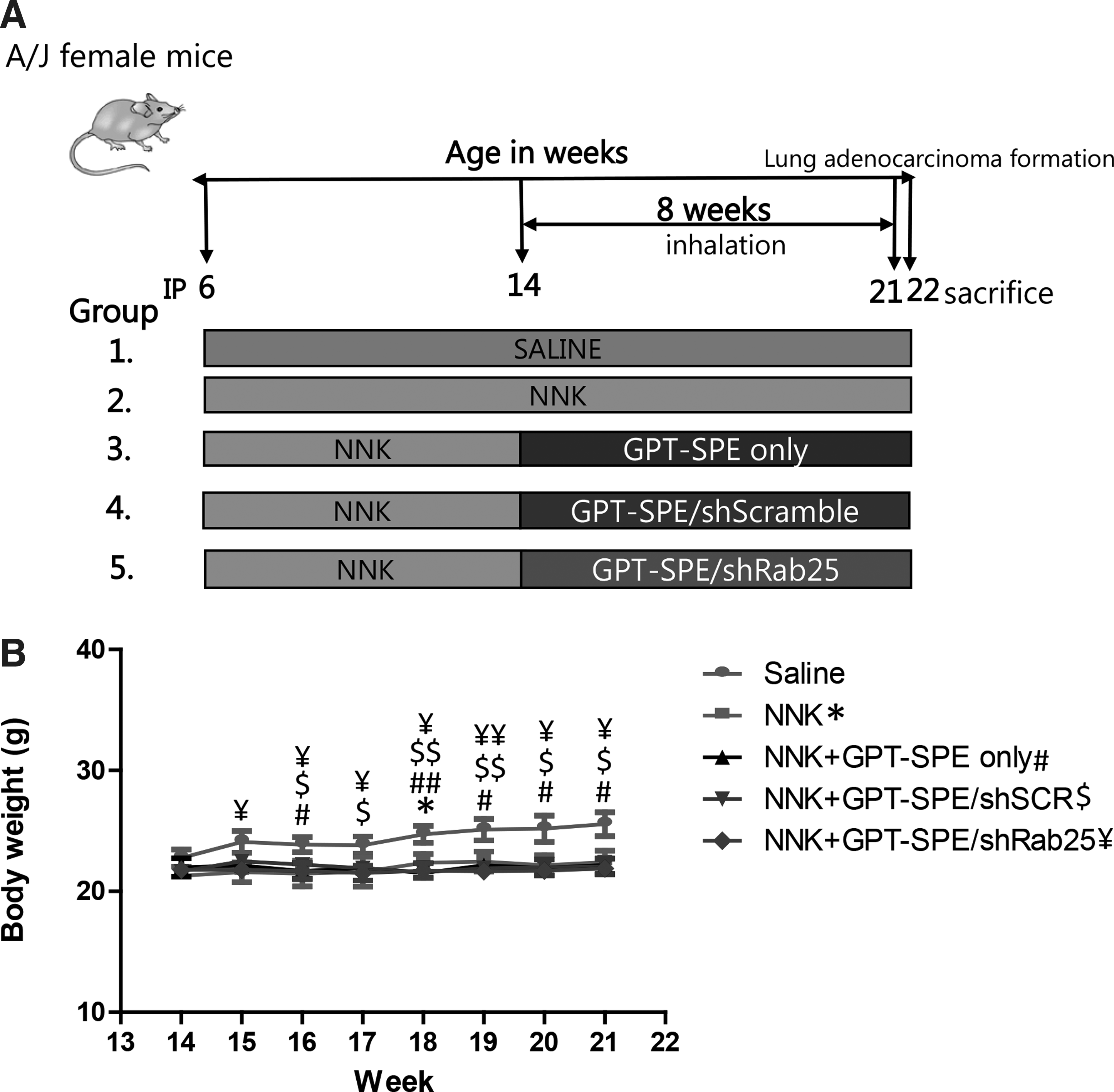
In this study, we report the gene therapeutic effect of short hairpin Rab25 RNA (shRab25) on 4-(methylnitrosamino)-1-(3-pyridyl)-1-butanone (NNK)-induced lung tumorigenesis in female A/J mice. Initially, mice (6 weeks old) were injected with single dose of NNK (2 mg/0.1 mL saline/mouse) by intraperitoneal injection to induce the tumor. Eight weeks later, shRab25 was complexed with glycerol propoxylate triacrylate-spermine (GPT-SPE) copolymer and delivered into tobacco-induced lung cancer models through a nose-only inhalation system twice a week for 2 months.
Results:
GPT-SPE/shRab25 largely decreased the tobacco-induced tumor numbers and tumor volume in the lungs compared to GPT-SPE- or GPT-SPE/shScr-delivered groups. Remarkably, aerosol-delivered GPT-SPE/shRab25 significantly decreased the expression level of Rab25 and other prominent apoptosis-related proteins in female A/J mice. The apoptosis in these mice was determined by detecting the expression level of Bcl-2, proliferating cell nuclear antigen, Bax, and further confirmed by TUNEL assay.
Conclusions:
Our results strongly confirm the tumorigenic role of Rab25 in tobacco carcinogen-induced lung cancer and hence demonstrate aerosol delivery of shRab25 as a therapeutic target for lung cancer treatment.
Introduction
L
Rab25 belongs to the Rab-related small guanosine triphosphatase (GTPases) proteins; these proteins are considered key regulators of intracellular membrane trafficking involved in various diseases, including cancer.(4,5) Several Rab GTPases, including Rab25, have been examined for being potential drivers in carcinogenesis.(6) Studies have shown that Rab25 contributes to the aggressiveness of breast and ovarian cancers.(7) Notably, knockdown of Rab25 expression inhibits the growth of ovarian cancer cells,(8) indicating the essential role for RAB25 in tumor progression and aggressiveness.(9) Specifically, knockdown of Rab25 by small interfering RNA (siRNA) suppressed cell migration and invasion in nonsmall-cell lung carcinoma (NSCLC) cells.(10) While RAB25 expression is positively correlated with E-cadherin, it is negatively associated with ZEB1 in NSCLC cell lines.(11) Particularly, the effects of Rab25 knockdown on tumor proliferation and apoptosis were confirmed in mice xenografted with gefitinib-sensitive lung cancer cells.(12)
Many scientists have therefore largely focused on RNA interference (RNAi)-based knockdown for cancer therapy. Usually, two kinds of RNAi-based therapeutics are well known: a vector-based short hairpin RNA (shRNA) or a chemically synthesized double-stranded siRNA.(13) A number of studies have been conducted with several RNAi-based therapies, such as shSCRN1 in lung cancer cell lines,(14) siDDR1in cancer cell lines,(15) shCul4A in lung cancer cells,(16) and short hairpin Rab25 RNA (shRab25) in colon cancer cell lines.(17) In comparison with other methods, shRNA has demonstrated great potential as a promising tool for cancer treatment.
Aerosol-mediated gene delivery performs a noninvasive alternative for the targeting of genes to the lungs.(18) In this regard, we have previously used several nonviral or viral vectors to transport DNA or siRNA or shRNA through aerosol delivery for lung cancer treatment.(19) For example, we delivered shAkt1 by glycerol triacrylate-spermine (GT-SPE) to suppress lung cancer progression.(20) Similarly, we used polyspermine to deliver the Pdcd4 gene that greatly reduced tumor size in K-rasLA1 lung cancer model mice.(21) Also, we have successfully used aerosol delivery of RNAi-based therapeutics by various polymer complexes, including spermine-based poly(amino ester)/Akt1shRNA complexes,(22) folate–chitosan-graft polyethylenimine/Akt1 shRNA complexes,(23) and poly(ester amine)/Akt1 siRNA complexes.(24) Using lentivirus as a viral vector, several shRNAs, such as AIMP2-DX2 shRNA,(25) OPN shRNA,(26) and PDCD4 shRNA,(27) were used for lung cancer treatments through aerosol delivery.
In this study, we delivered shRab25 in NNK-induced lung tumorigenesis female A/J mice through aerosol delivery to evaluate the preventive effect of shRab25 in the suppression of lung tumorigenesis.
Materials and Methods
Materials
NNK was purchased from Toronto Research Chemicals, Inc. (Toronto, Canada). Rab25 antibody was purchased from Abcam (Cambridge, United Kingdom). α-Tubulin from AbFrontier (Seoul, Korea); Bax, Bcl-2, and proliferating cell nuclear antigen (PCNA) antibodies were purchased from Santa Cruz Biotechnology (Santa Cruz, CA). The DeadEnd™ Colorimetric TUNEL assay kit was obtained from Promega Corporation (Madison, WI). Rab25 shRNA (shRab25) and the scrambled control shRNA (shScr) were purchased from Koram Biogen Corp. (Korea).
Mouse experiment
Female A/J mice, 5 weeks old, weighing 15–19 g, were received from Central Laboratory Animal, Inc. (Seoul, Korea). Mice were housed under a standard light/dark cycle at a stable temperature (23°C ± 2°C) and relative humidity (50% ± 10%) in the laboratory animal facility. The mice, 6 weeks of age, were divided into five groups, each group containing eight mice. Four groups of mice were injected with single dose of NNK (2 mg/0.1 mL saline/mouse) through intraperitoneal (IP) route. For gene delivery, three groups (except NNK control and saline control group) of mice were exposed with the Rab25 complexes in the nose-only inhalation chamber as described previously.(28,29) The polymer complex with DNA (shScr or shRab25) or aerosol containing polymer only was delivered 16 times (twice a week for eight consequent weeks). Mice were sacrificed 1 week after exposure and tumors on lung surface were carefully counted, as mentioned previously.(30) Finally, collected lungs were fixed in 10% formalin for histopathological examination and remaining lungs stored at −70°C for further experiments. All animal experiments were approved by the Animal Care and Use Committee at Seoul National University (SNU-140814-3).
Construction of Rab25 shRNA and preparation of GPT-SPE/shRNA complex
The shRNA sequence targeting mouse Rab25 mRNA and scrambled control were purchased. The glycerol propoxylate triacrylate-spermine (GPT-SPE) copolymer was synthesized as described previously.(22) GPT-SPE/shRNA complexes were self-assembled in distilled water by slow adding of 0.8 mg of DNA to 8 mg of polymer solution under gentle mixing. The complexes (final volume 30 mL) were incubated for 30 minutes at room temperature (RT) before delivery.
Western blot analysis
Lung tissues were lysed with the IKA® T10 homogenizer (IKA; Works GmbH & Co., Staufen, Germany) to extract the proteins. Total protein concentration was confirmed by using the Pierce™ BCA reagent (Thermo Scientific). Equal amounts (25 μg/well) of protein were loaded into 10%–12% sodium dodecyl sulfate–polyacrylamide gels and transferred to nitrocellulose membranes using the iBlot system (Life Technologies, Grand Island, NY). Membranes were blocked with Tris-buffered saline with Tween 20 (TTBS) containing 5% skim milk for 1 hour at RT, and immunoblotting was performed by incubation overnight at 4°C with the corresponding primary antibodies. The following day, antibody was labeled with secondary horseradish peroxidase (HRP) for 4 hours at RT. After washing, bands were captured using a model EZ-capture MG luminescent image detector (ATTO, Tokyo, Japan) and analyzed by using ATTO CS Analyzer windows version 3.0 (ATTO).
Histopathologic and immunohistochemistry analysis
Paraffin-embedded and sectioned lung tissues (4 μm) were stained by hematoxylin and eosin. For immunohistochemistry (IHC) analysis, the lung sections were then deparaffinized in xylene (each for 5 minutes × 2 times), rehydrated by alcohol gradients (2 min/each), and then washed with distilled water and 3% hydrogen peroxide, used for 10 minutes of incubation. To block the unspecific binding sites, sections were incubated with 3% bovine serum albumin in TTBS for 1 hour at RT after washing with a TTBS solution. Concerned primary antibodies (1:100) were used overnight at 4°C. Next day, the samples were rinsed by TTBS and then incubated in secondary antibodies conjugated to HRP (1:200) for 3 hours at RT. Then, 3,3′-diaminobenzidine (DAB) reagent (Life Technologies) was reacted with the tissue sections, and these were analyzed by light microscopy. The tissue sections were counterstained with a Mayer's hematoxylin (DAKO, Carpinteria, CA) and mounted using cover slide and the Permount (Fisher Scientific, Waltham, MA). The slides were observed using a Nikon eclipse fluorescence microscope (Tokyo, Japan).
Analysis of apoptotic cells by TUNEL assay
Determination of apoptotic cells using the DeadEnd Colorimetric TUNEL assay kit and all steps according to kit's instructions. Briefly, for paraffin-embedded lung tissues, sections were deparaffinized and rehydrated by xylene or graded ethanol (100%, 85%, 70%, and 50%) at RT, respectively. The rTdT reaction mix is added on equilibrated areas and incubated at 37°C for 60 minutes. After several washes in PBS and 2X SSC, the slides were incubated with streptavidin-HRP solution for 30 minutes at RT. For counterstaining procedure, DAB substrate was added to each slide and developed until the appearance of light brown background. Slides were observed by a light microscope to select × 1000 magnification fields (Olympus BX51, Tokyo, Japan).
Statistical analysis
Statistical analysis was performed using Student's t-test with Microcal Origin (Microcal Software, Northampton). Results are expressed as mean values ± standard errors of three independent experiments (n = 3). All data were compared with corresponding values (p < 0.001 was more significant, p < 0.01 was highly significant, and p < 0.05 was considered statistically significant).
Results
In vivo aerosol delivery of shRab25
To determine the carcinogenic function of NNK in vivo, mouse experiment was designed as illustrated in Figure 1A. The mice, 6 weeks of age, were divided into five groups, each group containing eight mice. Four groups of mice were injected with single dose of NNK (2 mg/0.1 mL saline/mouse) through IP.(31) Single IP injection of NNK for lung tumorigenesis in A/J mice is a simple procedure that takes 16 weeks for a reasonable yield of lung tumors to develop.(32) The experiment was carried out with one group of mice that were treated with an equal volume of saline (vehicle control of NNK). Eight weeks later, the NNK-treated mice were exposed with GPT-SPE, GPT-SPE/shScr, and GPT-SPE/shRab25 for 16 times (twice a week for eight consecutive weeks). Body weights of individual mouse were recorded weekly for 8 weeks during the aerosol delivery (Fig. 1B).
Aerosol delivery of Rab25 shRNA suppresses tumorigenesis in lung
As shown in Figure 2A, the injection of NNK induced a number of tumors in lungs, while there was no such tumor growth in lungs of control group mice (saline). After aerosol delivery of GPT-SPE, GPT-SPE/shScr, and GPT-SPE/shRab25 in NNK-induced A/J mice for 8 weeks, we found that GPT-SPE/shRab25 largely decreased the tobacco-induced tumor numbers in the lungs compared to GPT-SPE- or GPT-SPE/shScr-delivered groups. The observed antitumor effects of GPT-SPE/shRab25 are illustrated graphically (Fig. 2B, C, and Table 1). The results showed that aerosol-delivered GPT-SPE/shRab25 complex significantly decreased lung tumor number (n = 5) (Fig. 2B) and tumor volume (n = 5) (Fig. 2C). For further confirmation of antitumor effect of aerosol-delivered GPT-SPE/shRab25 complex, we performed the histopathologic analysis of lung tissues of mice 8 weeks after the aerosol delivery (Fig. 2D). The results demonstrated the higher tumor suppression effect of GPT-SPE/shRab25 than other GPT-SPE- or GPT-SPE/shScr-treated groups.
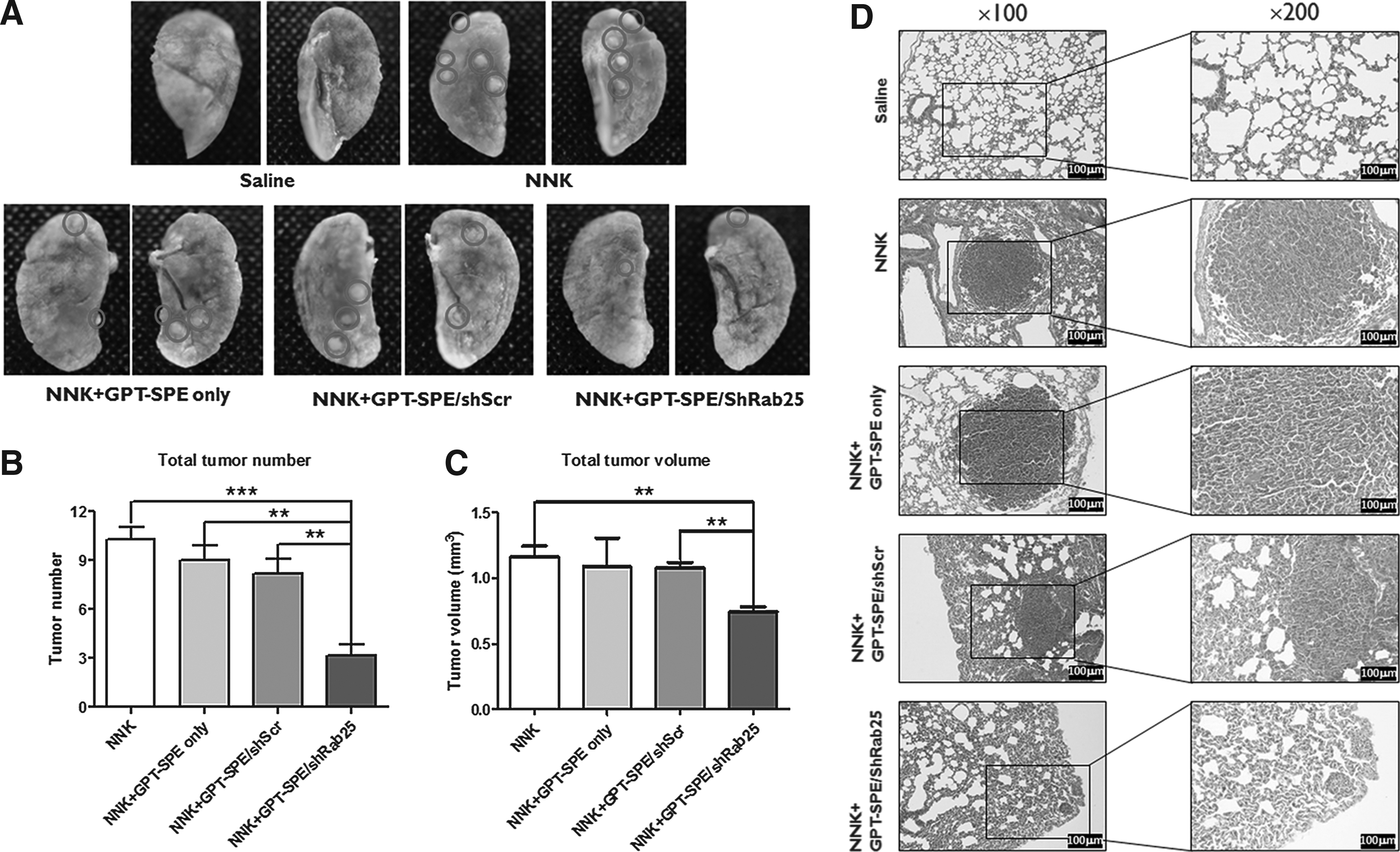
Therapeutic efficiency of shRab25 through aerosol delivery in A/J mice.
GPT-SPE, glycerol propoxylate triacrylate-spermine; NNK only, mice induced with NNK as a positive control; NNK+GTP-SPE only, mice induced with NNK and treated with GPT-SPE copolymer; NNK+GTP-SPE/shScr, mice induced with NNK and treated with GPT-SPE/shScr complex; NNK+GTP-SPE/shRab25, mice induced with NNK and treated with GPT-SPE/shRab25 complex; shRab25, short hairpin Rab25 RNA; STD, standard deviation.
p < 0.01 compared to NNK group.
p < 0.05 compared to GPT-SPE only.
p < 0.001 compared to GPT-SPE/shScr.
Cell proliferation was suppressed in aerosol delivery of shRab25
To evaluate cell proliferation in tumor tissue, IHC and western blot studies were performed. Western blot results confirmed that aerosol-delivered GPT-SPE/shRab25 group had very low levels of PCNA expression than GPT-SPE or GPT-SPE/shScr groups (Fig. 3A). Further densitometry analyses revealed that the expression level of PCNA in GPT-SPE/shRab25 group was significantly lower than other groups (Fig. 3B). We also investigated the expression level of PCNA by IHC. The experimental results demonstrated the clear evidence of lower expression of PCNA in GPT-SPE/shRab25 group (Fig. 3C). In addition, PCNA counting analysis showed that delivery of GPT-SPE/shRab25 significantly decreased PCNA-positive cells compared to the NNK control, NNK+GPT-SPE-only, and NNK+GPT-SPE/shScr groups (Fig. 3D).
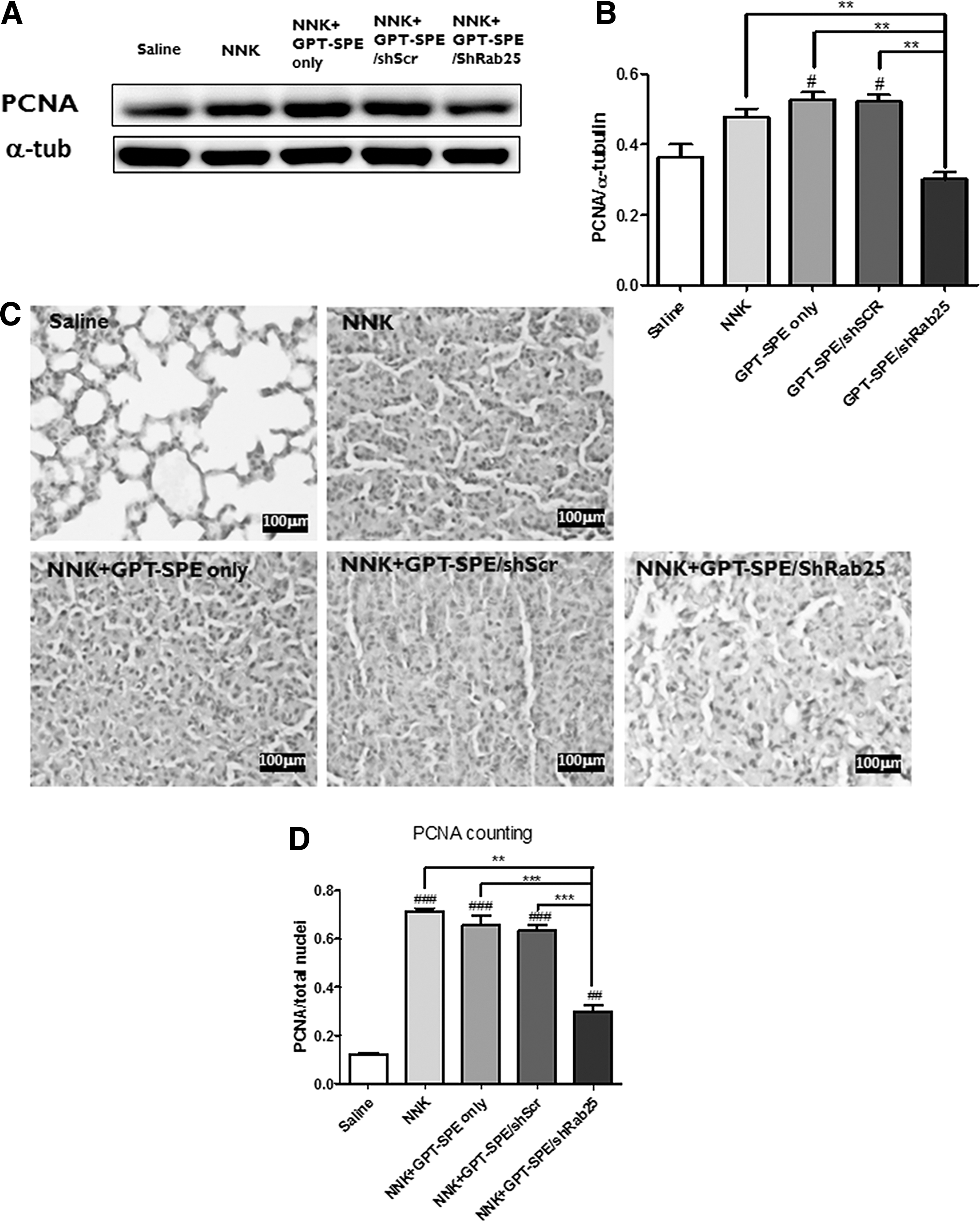
Inhibition of cell proliferation by aerosol delivery of shRab25.
Downregulation of Rab25 induced apoptotic cell death in lung cancer
To determine the expression level of Rab25 in the A/J mice lungs of NNK-treated A/J mice after inhalation of shRab25, western blot analysis was accomplished. Western blot result clearly demonstrated that the expression level of Rab25 after inhalation of GPT-SPE/shRab25 in the NNK-induced A/J mice largely decreased when compared to only NNK-treated A/J mice (Fig. 4A). Quantification of the western blot further confirmed the low expression of Rab25 in the GPT-SPE/shRab25-delivered group (n = 3, p <0.05 compared with NNK control) (Fig. 4B). To corroborate the induction of apoptosis by aerosol delivery of GPT-SPE/shRab25, we investigated the expressions of Bax (a proapoptotic protein) and Bcl-2 (an antiapoptotic protein) proteins in lung tissues by western blot. The results showed that the level of Bcl-2 decreased significantly in the GPT-SPE/shRab25-delivered group (n = 3) than other controls. In contrast, the level of Bax increased in the GPT-SPE/shRab25-delivered group (n = 3) than other groups (Fig. 4C and E). Furthermore, detection of apoptosis by TUNEL assay also indicated the higher amount of TUNEL-positive cells in the NNK+GPT-SPE/shRab25 group (Fig. 4F).
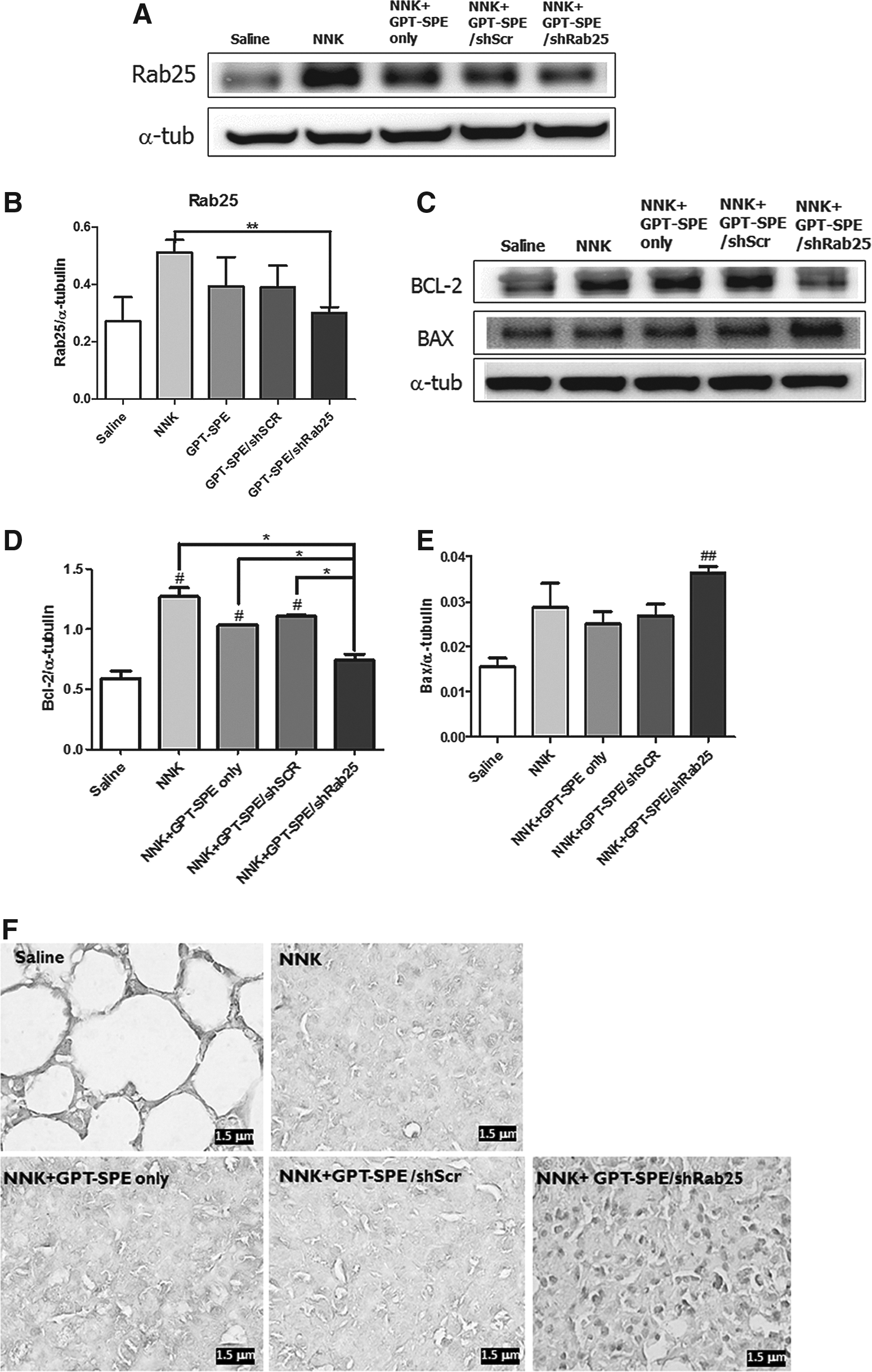
Determination of apoptosis mechanism by aerosol delivery of shRab25.
Discussion
Lung cancer is the leading cause of cancer deaths worldwide, especially due to tobacco smoking that causes nearly 6 million deaths per year. Tobacco contains a variety of carcinogens, of which NNK has been identified as the most potent lung carcinogen.(33) It is noted that a single IP injection of NNK at a dose of 2 mg is enough to induce an average of 10–12 lung adenomas per A/J mouse.(34) Hence, A/J mouse is a suitable model to study the molecular mechanisms of NNK to induce the development and progression of lung tumors. Based on these animal models, although many antitumor agents have been identified to suppress NNK-induced lung carcinogenesis to some extent, it is still necessary to develop advanced methods to treat lung cancer at the genetic level.
It has been reported that chromosome instability, genetic mutation, and activation of oncogenes occurred in NNK-induced lung tumors due to disruption of the expression of several enzymes of various cellular signaling pathways.(35) Rab25 signaling pathway plays a role in the regulation of cell proliferation and apoptosis in cancer cells, indicating that the Rab25 gene plays an important role in tumor occurrence and development.(36) Previous in vitro studies referred that downregulation of Rab25 has a large effect on cancer suppression and indicated that Rab25 could be an essential molecular target for cancer therapy.(37–39) Considering gene therapy as a promising treatment strategy for cancer, aerosol delivery of therapeutic genes seems the most convenient way for lung cancer gene therapy because it is a simple, noninvasive, and direct method that makes instant access to lungs without any effect to other organs due to the anatomical structure and location of the lungs inside the body.(40)
Besides, the large surface area, good vascularization, and ultrathin structure of the alveolar epithelium are distinctive features of the lung that can facilitate systemic delivery via pulmonary route.(41) Moreover, aerosol particles can reach the gas-exchange surfaces of the alveolar region of the lung,(42) rendering the pulmonary route as an attractive pathway for aerosol delivery. Recently, aerosol delivery of polyethyleneimine (PEI) complexes of p53 and IL-12 genes stimulated higher therapeutic responses in different animal lung tumor models.(40,43) PEI usually forms stable complexation with DNA to protect DNA from degradation and stable during nebulization. Although PEI has been known to be an efficient vector for gene delivery both in vitro and in vivo, it exerts some degree of cytotoxicity when administered to the body.
In pursuit of low-toxic gene carrier, researchers have made a number of polymers based on PEI backbone to reduce the cytotoxic property of gene carrier. In fact, spermine-based poly(amino ester)/DNA complexes are less toxic than PEI 25K-based complexes. In this study, we therefore used spermine, a short homologue of PEI, in combination with glycerol, to prepare a biodegradable copolymer (GPT-SPE) as a gene delivery carrier. Particularly, GPT-SPE had low cytotoxicity and it exhibited high ability to form a complex with DNA. Besides, the physicochemical and biological characterizations of GPT-SPE exhibited it as a safe and efficient gene delivery carrier. Consequently, GPT-SPE efficiently delivered shRNA through the aerosol route for lung cancer gene therapy.(22) Since the properties of GPT-SPE deemed safe and efficient, we selected GPT-SPE to deliver DNA, especially shRNA to downregulate Rab25 in lung cancer through the RNAi mechanism.
Fortunately, the emergence of RNAi phenomenon has provided new opportunities for cancer therapy. Particularly, shRNAs that enable persistent suppression of sequence-specific gene silencing show great promise for therapeutic applications. Accordingly, our research group has used various polymers to deliver Akt1 shRNAs (shAkt1) by aerosol route for in vivo lung cancer therapy. For example, we used folate–chitosan-graft-PEI to deliver shAkt1to suppress the lung tumorigenesis in male A/J mice.(23) In another study, GT-SPE/shAkt1complex suppressed lung tumorigenesis in a K-rasLA1 lung cancer mouse model by inducing apoptosis through the Akt signaling pathway and cell cycle arrest.(20) Similarly, aerosol delivery of GPT-SPE/shAkt1complexes greatly suppressed lung tumorigenesis in the K-rasLA1 lung cancer mouse models.(22)
Considering that apoptosis induction by shRNA would be an efficient and promising strategy for cancer gene therapy, we determined to evaluate the effect of Rab25 shRNA in lung tumorigenesis through aerosol delivery. Importantly, downregulation of Rab25 by shRNA exhibited proliferation, induced apoptotic cell death, and then decreased tumor growth in ovarian cancer xenograft mouse.(8) In this study, we used female A/J mice to observe in vivo effects of aerosol-delivered Rab25 shRNA in lung tumorigenesis because female A/J mice are more sensitive to NNK-induced lung carcinogenesis than males.(44) We took advantage of our potent gene carrier, GPT-SPE, to deliver shRNA for lung tumor therapy. As expected, aerosol delivery of GPT-SPE/shRab25 complexes in the female A/J mice showed remarkable anticancer effects. The total tumor number and tumor volume of lung surface neoplastic lesions were significantly decreased after repeated aerosol delivery of shRab25. Similarly, the nodules (adenocarcinoma and adenoma) and their numbers were comparably smaller in the lungs of NNK+GPT-SPE/shRab25-treated mice group than in the lungs of mice treated with NNK control, NNK+GPT-SPE/shScr, and NNK+GPT-SPE-only groups (Table 1).
Notably, the aerosol delivery of GPT-SPE/shRab25 largely decreased the PCNA expression levels, as detected by IHC and western blot. The PCNA protein plays a great role in the process of life and death of the cell. Usually, apoptosis occurs when PCNA is absent or present in low quantities in the cell.(45) The decreased level of PCNA in the GPT-SPE/shRab25 group was thus an indication of antitumor effect of shRab25. These data clearly demonstrated that delivery of shRab25 reduced cell proliferation in the NNK-induced lung tissue. Consistently, aerosol-delivered GPT-SPE/shRab25 decreased Rab25 expression levels as examined by densitometric analysis and western blot. Besides, our in vivo study revealed that GPT-SPE/shRab25 induced apoptotic cell death, associated with Bcl-2 downregulation and Bax upregulation, which is a well-known phenomenon of a mitochondria-mediated apoptosis pathway where Bax is translocated to the mitochondria from cytosol through the reduction of Bcl-2. To further assess the suppression of lung cancer progression by shRab25, associated with apoptosis proteins, we performed TUNEL assay to detect the abundance of apoptosis-related proteins in the lung tissues. The TUNEL assay confirmed the higher number of TUNEL-positive cells in the NNK+GPT-SPE/shRab25 group than other controls. These data exhibited that shRab25 could facilitate apoptosis in the lungs of NNK-induced A/J mice.
In summary, the present investigation demonstrated that aerosol delivery of shRab25 complex efficiently suppressed the tobacco carcinogen-induced lung cancer. Thus, this study confirmed that the aerosol delivery system could offer a promising approach for specific delivery of shRNA as an effective tobacco carcinogen-induced lung cancer therapy. To our best knowledge, this study is the first demonstration of the treatment of tobacco carcinogen-induced lung tumorigenesis in A/J mice by using Rab25 shRNA.
Footnotes
Acknowledgments
This work was supported by the Bio-Synergy Research Project (NRF-2012 M3A9C4048819) of the Ministry of Science, ICT and Future Planning through the National Research Foundation of Korea. N.G. was supported by the Brain Korea 21 program for the Veterinary Science of Seoul National University, Republic of Korea. This study was partially supported by the Research Institute for Veterinary Science, Seoul National University.
Author Disclosure Statement
No competing financial interests exist.