




Abstract
Background:
Pyrazinamide is a Biopharmaceutical Classification System class III antibiotic indicated for active tuberculosis.
Methods:
In the present work, pyrazinamide-loaded biodegradable polymeric nanoparticles (PNPs) based dry powder inhaler were developed using the double emulsion solvent evaporation technique and optimized using design of experiments to provide direct pulmonary administration with minimal side effects. Batches were characterized for various physicochemical and aerosol performance properties.
Results:
Optimized batch exhibited particle size of 284.5 nm, % entrapment efficiency of 71.82%, polydispersibility index of 0.487, zeta potential of −17.23 mV, and in vitro drug release at 4 hours of 79.01%. Spray-dried PNPs were evaluated for drug content, in vitro drug release, and kinetics. The particle mass median aerodynamic diameter was within the alveolar region's range (2.910 μm). In the trachea and lung, there was a 2.5- and 1.2-fold increase in in vivo deposition with respect to pure drug deposition, respectively. In vitro drug uptake findings showed that alveolar macrophages with pyrazinamide PNPs had a considerably higher drug concentration. Furthermore, accelerated stability studies were carried out for the optimized batch. Results indicated no significant change in the evaluation parameters, which showed stability of the formulation for at least a 6-month period.
Conclusion:
PNPs prepared using biodegradable polymers exhibited efficient pulmonary drug delivery with decent stability.
Introduction
Pulmonary drug administration is the most effective technique to treat lung disorders because it provides direct drug delivery to the site of action with little systemic side effects. The route of administration can be used for both local and systemic action. 1 In both circumstances, the therapeutic efficacy of the inhaled drug can be improved by sheathing it in appropriately constructed inhalable carriers that can protect the drug while also promoting drug transport through extracellular and cellular barriers. 2 The advantage of nanoparticles to escape clearance systems such as the mucociliary clearance, macrophage uptake, and transport to the systemic circulation allows them to remain in the lungs. 3
Pulmonary tuberculosis is a severe disease caused by the infectious intracellular bacteria Mycobacterium tuberculosis. Antitubercular medications are currently administered in the form of oral tablets and capsules as part of the current tuberculosis treatment strategy. The medications in these formulations have proven efficacious, but only a small percentage of the drug reaches the lungs, and is then quickly eliminated. 4 The problem can be solved by preparing a drug delivery system, which delivers the drug into the pulmonary system, avoiding exposure of drug to systemic circulation and thereby retaining the drug for a prolonged period of time.
The major goal of the investigators is to develop a formulation that can deliver drugs in a controlled and precise manner. One of the most explored drug entrapment strategies for modified drug delivery in modern medicine is polymeric nanoparticles (PNPs). 5 In PNPs, the drug is dissolved, encapsulated, or bound to a nanoparticle matrix made from biocompatible and biodegradable polymers with sizes ranging from 1 to 1000 nm. 6 Their nanometer size allows for efficient penetration across cell membranes. 7 Other possible benefits of this approach include a reduction in drug dose, side effects, and drug interactions, and the ability to target both drug-resistant and latent microbes.
Various investigators have studied PNPs for the delivery of active compounds to the respiratory tract.8,9 Biocompatible/biodegradable PNPs are widely preferred due to their potential in the drug delivery system. Polylactic acid nanoparticles have shown to maintain therapeutic drug levels in the lung for a prolonged period of time. 10
Pyrazinamide is the first-line medication, which plays a crucial part in expediting tuberculosis treatment. 11 The key factor is that pyrazinamide differs significantly from ordinary antibiotics, which are mostly effective against bacteria that are growing and have little to no effect on resistant strains that are dormant. 12 Pyrazinamide changes into its active moiety, pyrazinoic acid, in bacteria in acidic pH, which further inhibits the growth and replication-related enzyme fatty acid syntheses I. 13 Hepatotoxicity is the most serious adverse effect of pyrazinamide, which is dose dependent. 14 Previously, investigators have reported pyrazinamide nanoparticles for pulmonary targeting with an aim to reduce the dose-dependent side effects of drug. However, the nanoparticles were prepared using nonbiodegradable polymer/s. 15
The current investigation involves the development of a unique oral dry nanopowder (biodegradable PNPs) medication delivery for pyrazinamide, which can be administered using the Rotahaler after filling it in capsule dosage form. Design of experiments (DoE) was used to optimize the process and formulation variables. Prepared nanoparticles were evaluated for particle size, polydispersibility index (PDI), zeta potential, entrapment efficiency (EE), and drug release studies. Optimized batch was further characterized for surface morphology, aerodynamic particle size analysis, and in vivo deposition in animals. Drug release kinetics was applied on the in vitro release data of optimized batch to check the pattern of drug release. Accelerated stability studies were conducted for the period of 6 months at 40°C/75% relative humidity (RH).
Materials and Methods
Materials
Pyrazinamide was a gift sample from Macleods Pharma Ltd. (Ankleshwar, India). Polylactic acid and Percoll were obtained from Sigma Aldrich (Mumbai, India). Pectin, gelatin, and PVA (polyvinyl alcohol) were obtained from Vishal Chemicals (Mumbai, India). Poloxamer 188 was obtained from BASF (Mumbai, India). Chitosan was purchased from Astron Chemicals (Ahmedabad, India). Span 80 was purchased from Ozone International (Mumbai, India). Methanol was purchased from Thomas Baker Chemicals (Mumbai, India). Double distilled water was used throughout the investigation.
Methods
Preparation of PNPs of pyrazinamide
PNPs were prepared by the double emulsion solvent evaporation technique. 16 Briefly, a specific amount of drug was dissolved in organic mixture consisting of span 80 (2% v/v) dissolved in methanol. Then, emulsification of aqueous polymeric solution in the above drug containing organic solution was carried out under high-speed stirring (10,000 rpm) to get primary W/O (water in oil) emulsion. Furthermore, this was added to 25 mL of distilled water containing surfactant under stirring to achieve a W/O/W (water in oil in water) double emulsion. The obtained PNPs were separated by ultracentrifugation at 10,000 rpm for 30 minutes. Finally, the products were spray-dried using a spray dryer (LSD-48; JISL, Mumbai, India) and stored at −4°C until further use. Operation parameters of spray dryer were as follows: inlet temperature: 115°C, outlet temperature: 55°C, aspiration: 1200 rpm, and feed pump: 21 rpm.
Preliminary trial batch of pyrazinamide-loaded PNPs
In the preparation of PNPs, various biodegradable polymers such as polylactic acid, gelatin, pectin, and chitosan and various surfactants such as polyvinyl alcohol and poloxamer 188 were scrutinized. Furthermore, the amount of polymer (60, 80, 100, 120, 140, and 160 mg) and the amount of surfactant (60, 80, 100, 120, and 140 mg) were also assessed for the influence on the nanoparticle's formation. Parameters such as drug quantity (50 mg), amount of surfactant (PVA) (100 mg), stirring time (2 hours), and stirring speed (10,000 rpm) were kept constant. In addition, screening of stirring time (1, 2, 3, and 4 hours) was also carried out. Prepared nanoparticles were evaluated for particle size and %EE.
Optimization by using Box–Behnken experimental design
DoE is used to optimize the process and formulation variables to get the optimized formulation.17,18 In DoE, the technique of Box–Behnken design is an effective method of indicating the relative significance of a number of variables and their interactions.19,20 The Box–Behnken statistical screening design was used to evaluate the main and interaction effects of independent variables on the various dependent parameters of pyrazinamide-based PNPs to optimize the formulation. The nonlinear quadratic model generated by the design is as follows:
Where Yi is a dependent variable, b0 is an arithmetic mean response of 13 runs, and bi is the estimated coefficient for factor Xi. The main effects (X1, X2, and X3) signify the average result of altering one factor at a time from its lowest to highest value. The interaction terms (X1X2, X1X3, and X2X3) prompt change in responses when two factors are simultaneously altered. The polynomial terms (X1 2 , X2 2 , and X3 2 ) are added to investigate nonlinearity of the model. The polynomial equation can be used to draw a conclusion after considering the magnitude of coefficient and mathematical sign it carries (i.e., positive or negative).
A three-factor, three-level Box–Behnken design with 13 runs was generated by an experimental design-expert software version 13 (Software from Stat Ease, Inc.). The coded and actual value of independent variables is given in Table 1. Dependent variables were particle size (nm) (Y1), PDI (Y2), %EE (Y3), and zeta potential (Y4).
Selection of Independent Variables
Evaluation of PNPs
Particle size, PDI, and zeta potential analysis
A zetasizer (Malvern Dynamic light scattering Zetasizer Nano ZS) was used to examine the particle size, PDI, and zeta potential of prepared batches of pyrazinamide PNPs. Briefly, PNPs were diluted 100 times and subjected for the analysis.
Percent entrapment efficiency
The total amount of drug encapsulated inside the nanoparticle is known as percent entrapment efficiency (%EE). PNP formulation was ultracentrifuged at 14,000 rpm for 15 minutes. Then, the liquid from the supernatant was taken and mixed with methanol. Furthermore, the amount of unentrapped drug was determined using UV/visible-spectrophotometry (Shimadzu 1800, Japan) at 263 nm. Entrapped drug was found by subtracting unentrapped drug from the total added amount. The following formula is used to calculate the %EE:
Drug content determination
Pyrazinamide PNPs (10 mg) were weighed and dissolved in 10 mL of methanol. Drug amount was determined by UV-visible spectroscopy at 263 nm after appropriate dilutions.
Data analysis and model validation
Statistical validation of the polynomial equation was obtained using Design Expert 13 software. The models are evaluated in terms of statistically significant coefficient and R2 values. Various three-dimensional (3D) response surface and predicted versus actual graphs are obtained from the Design Expert 13. Multiple regression analysis and analysis of variance (ANOVA) were carried out. To validate the experiment domain and polynomial equation, one optimal checkpoint formulation is found through a desirability function. The checkpoint formulation was prepared and evaluated for various responses. The resultant experiment values of the responses are quantitatively compared with the predicted value to calculate the percentage prediction error. Optimized batch was evaluated for particle size, PDI, zeta potential, %EE, drug content, drug release studies, scanning electron microscopy (SEM), aerodynamic diameter, and in vivo deposition studies.
In vitro drug release study
PNPs containing 50 mg of drug were suspended in the dialysis membrane bag [RC (regenerated cellulose) membrane −MWCO (molecular weight cut-off) 50 kDa] (equilibrated with release medium for 30–40 minutes), which was further placed in the release media (phosphate buffer, pH 7.4, 100 mL). 21 Drug release study was carried out at 37°C with continuous stirring at 100 rpm using a magnetic stirrer (Remi Laboratories, Mumbai, India). A specific amount (5 mL) of release medium was withdrawn at fixed time intervals (0.5, 1, 2, 4, 6, 8, and 12 hours) and replaced by the same volume of the fresh medium to maintain the sink condition. Quantification of drug was determined using a UV-visible spectrophotometer at 263 nm using phosphate buffer as blank solution.
Fourier transform infrared spectroscopy
The compatibility study of the drugs and excipients was checked out using the Fourier transform infrared (FT-IR) spectrophotometer (Shimadzu, Japan). Samples were kept for 15 days at 25°C ± 2°C/65 ± 5% RH in a stability chamber (EIE Instruments, Ahmedabad, India). The sample was mixed with dry KBr-Potassium Bromide in a ratio of 1:5 and the mixture was filled in the cavity of sample holder and samples were scanned in the region of 4000–500 cm−1 by using pure KBr powder for baseline correction.
Scanning electron microscopy
A optimized batch of PNPs were subjected to SEM study using a scanning electronic microscope (JEOL, UK JSM-6380LV, USA). Direct compression of the spray-dried powder sample was carried out on a double-sided carbon tape and multiple images were taken at various magnifications.
Powder flowability
Angle of repose and Hausner's ratio were computed to identify the flow properties of the optimized batch of PNPs. Angle of repose was measured using the fixed funnel method keeping a fixed height of 2 cm. Radius was obtained from the bottom surface of the pile and θ value was computed using the following equation.
Hausner's ratio was calculated by dividing tapped density by the bulk density value.
Kinetics of drug release
In vitro release profile data of optimized batch were fitted to various release kinetic models, including the zero-order, first-order, Higuchi, Korsmeyer–Peppas, and Hixson–Crowell cube root models, by using the regression analysis technique. 22
Equations for the kinetic release models include the following:
where Qt, Q0, and Q∞ are the amount of drug release at particular time t, time equal to zero, and infinity, respectively.
Determination of mass median aerodynamic diameter
Mass median aerodynamic diameter of the optimized batch was determined using an eight-stage cascade impactor (Anderson, Mumbai, India). 23 The cascade impactor was mounted with a mouth-piece adapter configured with a flow rate of 28.3 L/min for 5 seconds. PNPs of pyrazinamide (260.98 mg containing 50 mg of drug) filled in a capsule in the Rotahaler were secured to the induction port. Following actuation, the plates were accumulated and weighed for the deposited particles. These values were inserted into the MMADCALCULATOR to obtain MMAD (mass median aerodynamic diameter) and geometric standard deviation. 24
In vivo and ex vivo studies
In vivo studies were approved and executed according to the Institutional Animal Ethics Committee guidelines of ROFEL Shri G.M. Bilakhia College of Pharmacy, Vapi, Gujarat, India (Protocol approval ID: ROFEL/IAEC/2021/0015). 25 Twelve Wistar rats of either sex of 200–250 g were used to assess the in vivo deposition of drug. The rats were kept in an environment with a 12-hour light/dark cycle and had free access to food and water. Rats were split into two groups, one of which received lipid-polymer hybrid nanoparticles of pyrazinamide (equivalent to 3 mg of drug) and the other group received pure pyrazinamide (3 mg). Animals were anesthetized using ketamine (100 mg/kg) before sample administration.
Sample nanopowder was administered using the method described by Chaurasiya et al. 26 Briefly, the powder sample was taken in the syringe and puffed through the nasal cavity of the rats via a 20G cannula tube connected with the syringe. After administration, rats were sacrificed for tissue distribution. The trachea and lungs were homogenized with 10 mL of PBS (phosphate buffer solution) and 1 mL of methanol, and then vortexed for 5 minutes. To each sample, 30% trichloroacetic acid was added for deproteination. Each sample was neutralized with sodium bicarbonate and centrifuged for 10 minutes at 10,000 rpm. The supernatant was analyzed for drug content using the HPLC (high performance liquid chromatography) technique, using 2% v/v acetonitrile in 5 mM potassium phosphate buffer, pH 4 as mobile phase, and flow rate of 1 mL/min.
Drug uptake studies
Alveolar macrophage cells were isolated following the BAL (bronchoalveolar lavage) method described elsewhere. 27 The cells were dispersed in F12K medium, then plated in 24-well plates (1 × 10⁶ cells/mL/well), and incubated for 60 minutes at 37°C. Suspension cells were removed by a gentle wash with phosphate buffer (500 μL). The samples were prepared by adding drug and drug-loaded PNPs in F12K medium to prepare a concentration of 25 μg/well and added to the plates, which were then incubated at 37°C for 3 hours. The dispersion (500 μL) was added to 500 μL of 70% Percoll in an Eppendorf tube and centrifuged for 10 minutes at 10,000 rpm at 4°C.
Alveolar macrophage cells that have not internalized PNPs migrated to the lower layer, whereas cells that have not internalized the drug remained in the upper layer and cells that have internalized PNPs formed the middle layer. 28 The middle layer was collected, diluted with 500 μL of methanol, and sonicated for 1 minute. The dispersion was centrifuged at 10,000 rpm at 4°C for 10 minutes. Furthermore, the supernatant was collected, filtered, and analyzed for drug amount using UV-visible spectroscopy at 263 nm to determine drug uptake by alveolar macrophage cells.
Measurement of nitric oxide
Nitric oxide measurement as an indication of activation of phagocytosis was carried out using Griess reagent. 29 The plates were treated and incubated as mentioned in drug uptake studies in concentrations of 100, 300, and 500 μg/mL. Following incubation, the supernatant was retrieved and blended with Griess reagent for 10 minutes. The amount of nitric oxide generated was determined by taking absorbance of the solution at 540 nm using a UV-visible spectrophotometer.
Accelerated stability study
A stability study of an optimized batch of PNP-based dry powder containing pyrazinamide was carried under an accelerated stability condition. Prepared nanoparticles were packed in aluminum tubes and subjected to stability studies at 40°C/75% RH for a 6-month period. At the interval of 3 months, samples were evaluated for various parameters such as particle size, zeta potential, drug content, and in vitro drug release.
Results and Discussion
Preliminary trial studies
Various types of biodegradable polymers, surfactants, and their amounts were evaluated for their influence on the particle size and %EE of prepared formulation. In addition, stirring time was also screened for optimization.
From the results of scrutinization trials of various variables as tabulated in Table 2, polylactic acid showed a smaller particle size <300 nm than the other three polymers. Thus, polylactic acid was selected as the biodegradable polymer for further optimization process of nanoparticles. Then, the amount of polylactic acid was varied to study the influence on particle size and %EE. It was found from the result (Table 2) that with an increase in amount of polymer, particle size and %EE were found to be increased. However, initial batches had a higher particle size, which could be due to less amount of solid available for stirring and attrition, leading to inefficient size reduction.
Preliminary Trials for Screening of Variables
%EE, percent entrapment efficiency; PVA, polyvinyl alcohol.
Further two different surfactants, that is, PVA and poloxamer 188, were assessed for their impact on the nanoparticle formation. PVA showed a smaller particle size and higher %EE than the poloxamer 188. Thus, PVA was selected for further optimization. Then, the amount of PVA was varied, and the results illustrated a decrease in particle size and %EE, with an increase in surfactant amount, which could be attributed to an increase in wetting property of the dispersion media. Furthermore, prepared batches were subjected to stirring for different time periods. It was observed that particle size was decreased with the increase in stirring period. In addition, %EE was also found to be lowered, which could be due to erosion of drug from the surface due to prolonged period of stirring.
Optimization using Box–Behnken design
The Box–Behnken design was applied to obtain the data of optimized batches of PNP formulation. Responses of the design batches are tabulated in Table 3. Multiple regression analysis was carried out. All the responses observed for 13 formulations were simultaneously fitted to a quadratic model with R2 values for Y1 (0.9860), Y2 (0.9991), Y3 (0.9848), and Y4 (0.9966) using Design Expert 13. Polynomial equations obtained are as follows:
Responses of Design Batches
PDI, polydispersibility index.


The observed value for particle size for all 13 batches varied from criteria 150.5–299.9. The result indicates that Y1 is affected by the independent variables selected for the study. The polynomial equation reflects the wide range of values of various coefficients. Coefficients of independent variables were negative indicating a decrease in particle size with an increase in the levels of factors. Individual and interaction effects (X2X3 and X1X3) were found to be significant with p-value <0.05. For PDI (Y2), X1 and X2 had a positive sign indicating the increase in PDI values with the variables, while X3 showed the opposite effect. In this study, all individual and interactions effects were observed to be significant with p-value <0.05. For %EE (Y3), negative coefficients of X1, X2, and X3 showed a decrease in entrapment capacity with an increase in the variable's levels.
In this study, individual and interaction effects (X2X3 and X1X3) were found to be significant with p-value <0.05. For zeta potential (Y4), negative coefficients of X1, X2, and X3 showed a decrease in value of zeta potential with an increase in the variable levels. In this study, individual and interaction effects (X1X2 and X2X3) were found to be significant with p-value <0.05.
Results of ANOVA are shown in Table 4. The result suggested the significance and best fit of response surface nonlinear quadratic model with p-value <0.05. Thus, a further reduced model was not generated. Furthermore, 3D response surface (Fig. 1A) and predicted versus actual (Fig. 1B) plots were used to study the interaction effects of the factors on the responses. Plots illustrated similar results as discussed for multiple regression analysis. Further optimized batch was obtained from the desirability plot. The plot was generated using selection criteria for all responses having desirability function value equal/near to one (Fig. 1C). Optimized formulation was prepared and evaluated and results obtained are compared with predicted values. Experimental values were found in concurrence with theoretical values with % relative error <5%, as shown in Table 5.
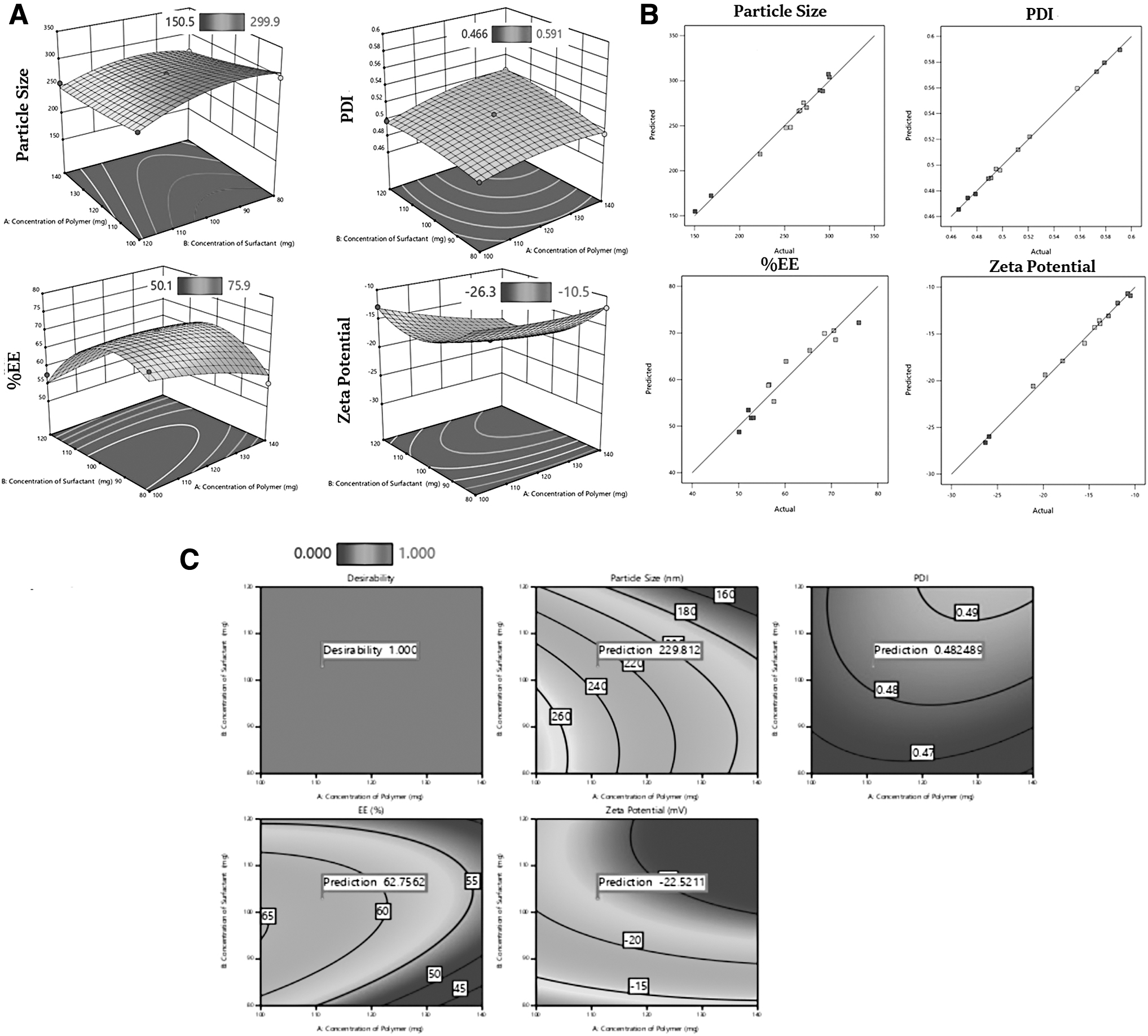
Response surface plots,
Results of Analysis of Variance of Dependent Variables
Result of Optimized Batch for Response Variable
Optimized batch of PNPs consisting pyrazinamide was evaluated for drug release. Figure 2 demonstrated about 90% drug release in 6 hours.

Dissolution profile of optimized batch of polymeric nanoparticle containing pyrazinamide.
Fourier transform infrared spectroscopy
FT-IR studies were carried out to check any interactions between drug and excipients in the prepared nanoparticles. The results, as shown in Figure 3, indicated the absence of any such major interactions.

Fourier transform infrared spectroscopy graphs.
Scanning electron microscope
SEM of the optimized batch of PNP was carried out. The result of the study is shown in Figure 4, which confirmed the presence of crystal structure. The SEM result of pure drug powder indicated a larger particle size compared with PNP powder sample.
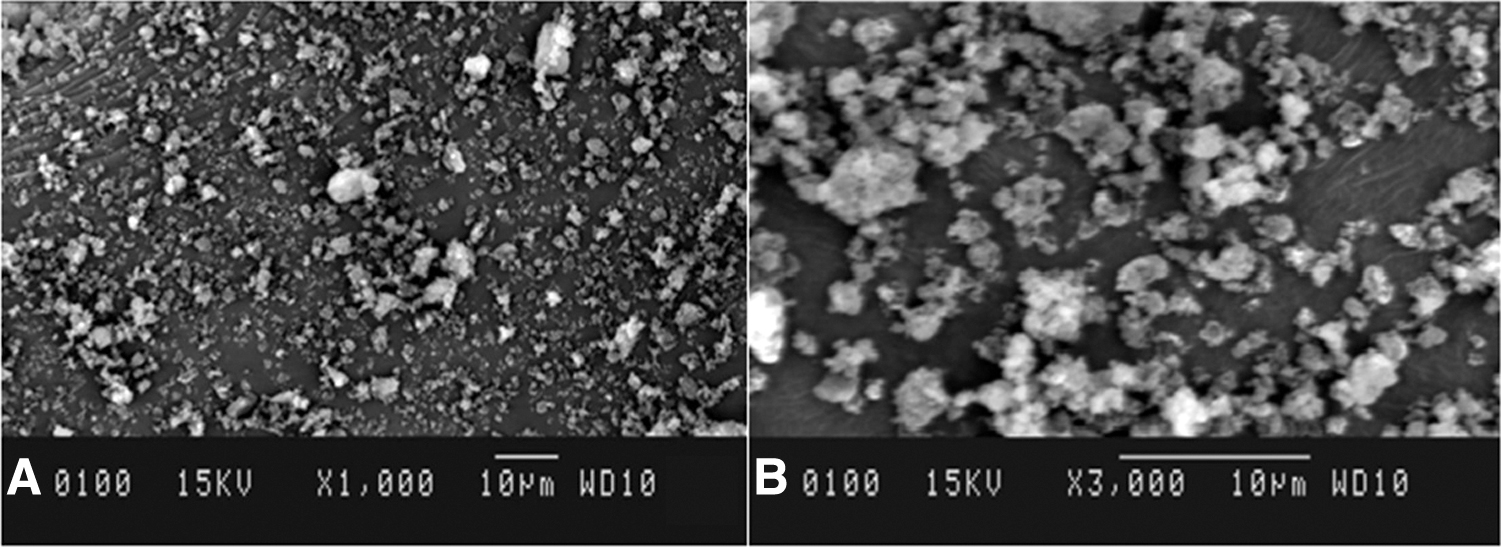
Scanning electron microscopy graphs.
Powder flowability
Micromeritic properties of the optimized batch of PNPs were studied. Angle of repose (23.12) and Hausner's ratio (1.23) value revealed that the flow property was considerably good.
Kinetics of drug release
The interpretation of kinetic drug release data was based on the value of (R 2 ) regression coefficient near to 1. Results suggested aptness of Higuchi model with R2 value 0.982 following diffusion mechanism, while zero-order, first-order, Korsmeyer–Peppas, and Hixson– Crowell models had R2 value of 0.962 and 0.588, respectively.
Determination of mass median aerodynamic diameter
The primary factors that affect a particle's deposition in various lung regions are its size and shape. Small airways and alveoli can be reached by aerodynamic particles with a size range of 0.5 to 5 μm. 30 Optimized PNPs showed aerodynamic particle size of 2.910 μm with geometric standard deviation of 2.75 and fine particle fraction value of 82.4%, suggesting deposition of nanoparticles in deeper airways. Figure 5 shows in vitro distribution of the powder sample in the cascade impactor, illustrating the deposition of nanoparticle powder at various stages.
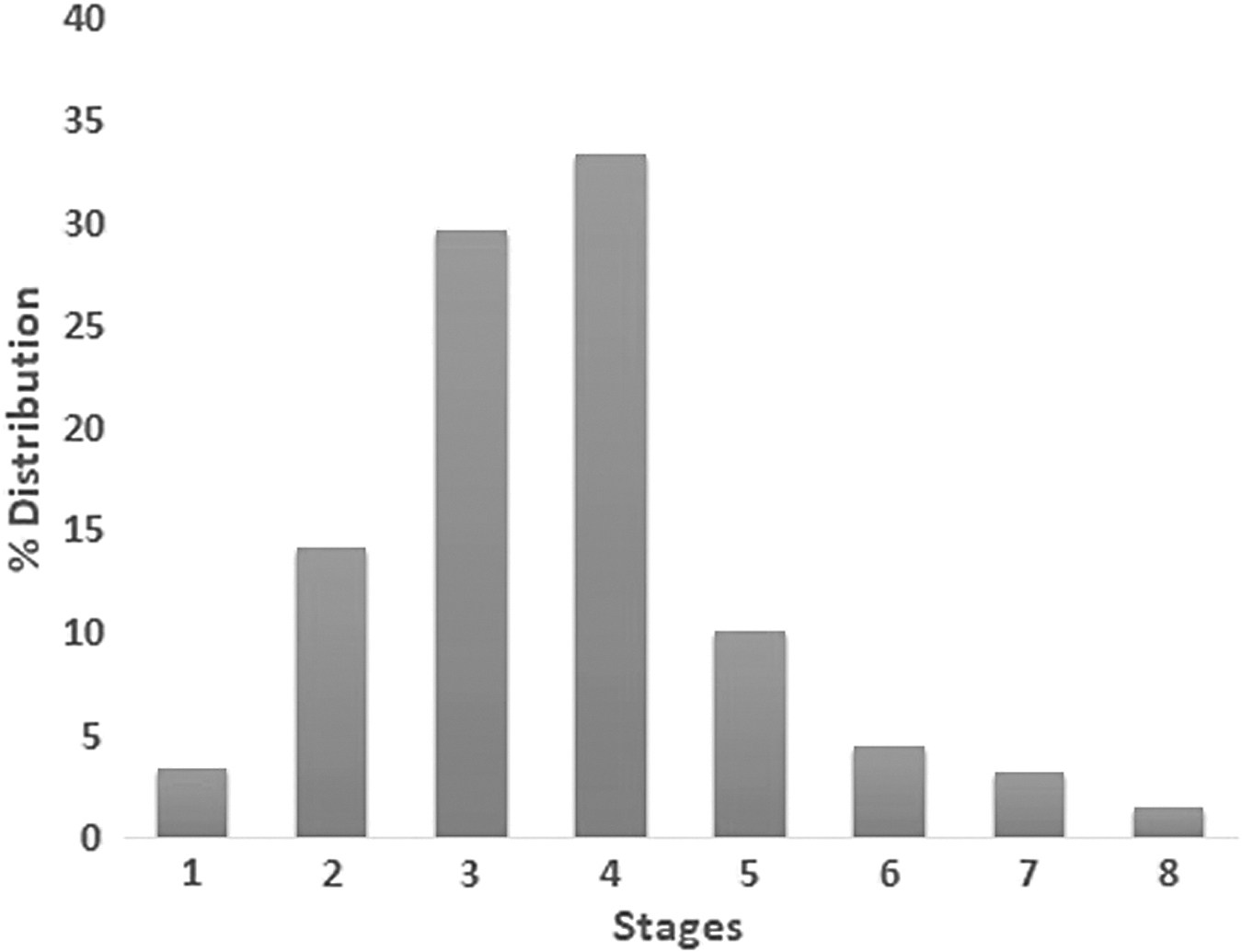
In vitro distribution of powder nanoparticle samples in Cascade impactor.
In vivo deposition and drug uptake study
In vivo tissue deposition in the trachea and lung was performed. Drug distribution of PNPs containing pyrazinamide in the trachea and lung was 88.53% and 93.33%, respectively, which was 1.2 and 2.5 times more than pure drug deposition in the trachea (73.77%) and lung (37.33%), respectively. The percentage uptake amount of pyrazinamide from PNPs (8.52% w/w) was significantly higher (p < 0.05) (Student's t-test) compared with that of pure drug (1.28%) by alveolar macrophages. Nitric oxide concentration is toxic to epithelial cells in concentrations of 4–5 μM. 31 Results inferred that nitric oxide generation was <0.2 μM (Fig. 5). Pyrazinamide PNPs deposited deeply in the lungs, where they are in close contact with alveolar macrophages, which may facilitate their quick absorption through phagocytosis. 32
Accelerated stability study
When stored at 40°C/2°C/75% RH and at room temperature for 30 days, an accelerated stability analysis of the optimized batch showed no noticeable change in physicochemical parameters, as shown in Table 6.
Accelerated Stability Data of Formulation
Conclusion
Pyrazinamide PNPs were prepared using the emulsion method. Box–Behnken design was used to optimize the process and formulation variables. The optimized batch had a small particle size to reach the pulmonary system with good EE. Release kinetics followed the Higuchi model, suggesting diffusion mechanism of drug release from PNPs. Aerodynamic diameter of particles was found to be in range to retain in alveolar region. An increase in in vivo deposition was observed 2.5- and 1.2-fold in the lung and trachea, respectively. Alveolar macrophage drug uptake of PNPs was found to be higher than the pure drug. The stability study demonstrated stability for at least 6 months. Thus, a stable pulmonary nanoparticle-based dry powder inhaler of pyrazinamide was prepared. The dry powder (pyrazinamide nanoparticles) can be delivered using a Rotahaler.
From the observations of in vivo animal studies, it can be concluded that the overall dose of the drug can be decreased by administering the drug via inhalation route directly targeting the respiratory system. In addition, it is believed that due to dose reduction of pyrazinamide, dose accumulation will not be observed despite its long half-life, that is, 9–10 hours. Thus, dry powder (pyrazinamide nanoparticles) inhalable formulation can be used for effective management of pulmonary tuberculosis. However, extensive study should be carried out to confirm the human dose and efficacy with the prepared pyrazinamide nanoparticles.
Footnotes
Acknowledgment
The authors acknowledge Macleods Pharma Ltd., Ankleshwar, India, for gift sample of pyrazinamide.
Authors' Contributions
K.P.: Conceptualization, interpretation of data, and drafting of work. S.S.: Practical work.
Author Disclosure Statement
The authors declare they have no financial conflicts of interest.
Funding Information
No funding was received for this work.
Reviewed by:
Anthony Hickey
Andy Clark