




Abstract
Background:
The lack of visual dynamic spray characterization has made the understanding of the physical processes governing atomization and drug particle formation difficult. This study aimed to investigate the changes in the spray plume morphology and aerodynamic particle size of solution-based pressurized metered-dose inhalers (pMDIs) under different conditions to achieve better drug deposition.
Methods:
Solution-based pMDIs were studied, and the effects of various factors, such as propellant concentration, orifice diameters, and atomization chamber volume, on drug deposition were examined by analyzing the characteristics of spray plume and aerodynamic particle size.
Results:
Reducing the actuator orifice and spray area led to a concentrated spray plume and increased duration and speed. Moreover, the aerodynamic particle sizes D50 and D90 decreased, whereas D10 remained relatively unchanged. Decreasing the atomization chamber volume of the actuator led to reduced spray area and an increased duration but a decreased plume velocity. D90 exhibited a decreasing trend, whereas D10 and D50 remained relatively unchanged. Reducing the propellant concentration in the prescription, the spray area and the plume velocity first decreased and then increased. The duration initially increased and then decreased. The values of D50 and D90 showed an initial decreasing followed by an increasing trend, whereas D10 remained relatively unchanged.
Conclusions:
During the development process, attention should be paid to the changes in the spray area, spray angle, duration, and speed of the spray plume. This study recommended analyzing the characteristics of the spray plume and combining the data of two or more aerodynamic particle size detection methods to verify the deposition in vitro to achieve rapid screening and obtain high lung deposition in vivo.
Introduction
Pressurized metered-dose inhalers (pMDIs) are the most widely used dosage to treat respiratory disease because of their low cost, portability, and rapid onset of action. 1 The clinical efficacy of pMDIs depends on the total amount of drug delivered to the lungs and the amounts of drug deposited in specific lung regions. 2 Differences in the deposition effect are reflected in in vitro evaluation indicators. As mentioned in the draft guidance for albuterol sulfate pMDIs issued by the U.S. Food and Drug Development Authority in April 2013, 3 the main parameters for in vitro evaluation of pMDIs include single actuation content, aerodynamic particle size distribution (APSD), spray pattern (SP), plume geometry (PG), and priming/repriming. Among these, SP, PG, and APSD are the key quality attributes for in vitro evaluation of pMDIs, which can be used to evaluate parameters such as the size and shape of the actuator orifice, the size of the valve metering chamber, the size of the valve stem hole, and the vapor pressure in the container. 4
The determination methods for Spray pattern (SP) and Plume geometry (PG) are usually divided into collision and noncollision systems. 5 Noncollision systems are more commonly used as it uses laser imaging systems for detection. Draft Guidance on Beclomethasone Dipropionate suggests nonimpaction (laser light sheet technology) or other suitable method may be used to determine the spray pattern and the plume geometry. 6 The APSD can usually be determined by impactor and laser diffraction methods, predicting the likelihood of the target component being distributed in the target area of the respiratory tract by measuring the aerodynamic particle size. However, only a few studies have focused on the impact of the actuator or the formulation on the in vitro performance of the pMDI products. For instance, Chen Baolei et al. 7 estimated the effect of orifice diameter and length on in vitro deposition. They found that when the value of actuator orifice was fixed, increasing the orifice length could reduce the amount of residue in the actuator and increase the drug deposited in the throat. Moreover, the deposition of fine particle distribution decreased slightly. Likewise, when the value of the orifice length was fixed, increasing the actuator orifice could reduce the amount of residue in the actuator, increase the amount of drug deposited in the throat, and also lead to a decrease in fine particle distribution values. However, the influence of actuator and droplet size, spray characteristics and velocity, and other parameters has not been investigated, although these parameters are essential for the development of improved pMDI products.
This study took solution-based pMDIs of beclomethasone dipropionate as an example. The focus was on analyzing the dynamic spray plume characteristics of aerosols under different factors, paying attention to the changes in the spray area, spray angle, duration, and speed of the spray plume and further confirm the results using APSD. The key parameters were screened through spray plume and drug deposition to achieve higher fine drug dose, providing a reference for drug of solution-based pMDI development and clinical evaluation.
Materials and Methods
Instrumentation and reagents
Instrumentation
The Agilent 1100 high-performance liquid chromatography system was used (Agilent), which included a G1322A degasser, a G1311A quaternary pump, a G1313A autosampler, a G1315 DAD (diode array detection) detector, and a Hewlett–Packard ChemStation. The SprayVIEW (Proveris Scientific) SP and PG analyzer was used, which included Vereo series SFMDx (Shake and Fire for pMDIs) automatic trigger and Viota software with Oracle database (Proveris Scientific). An Andersen Cascade Impactor (ACI, Copley Scientific Limited), a low-capacity pump (UK Copley Company), a DFM3 (flow meter model, UK Copley Company), and a New Particle laser particle size analyzer (model (HELOS&INHALER) were used.
Reagents
The solution-based pMDIs of beclomethasone dipropionate (batch numbers 220801–220825, SPH Sine Pharmaceutical Laboratories Co., Ltd.), with main component reference standard (batch number Y0001553, European Pharmacopoeia Reference Standard), were used.
Methods
In this work, three actuators with different orifice diameters (0.265 mm, 0.27 mm, and 0.275 mm), different atomization chamber volumes (16.5 mm3–12.5 mm3–6.5 mm3), and a wide range of propellant concentrations (90%−95.67%) were investigated. Exact quantitative composition of the pMDI solution formulations of different propellant concentrations is shown in Table 1. The propellant concentration was fixed at 95.67% as the orifice diameters and atomization chamber volumes changed.
Exact Quantitative Composition of the pMDIs Solution Formulations
API- Active Pharmaceutical Ingredient.
Spray detection
Instrument Conditions
The trigger parameters, camera parameters, and laser parameters of the SprayVIEW analyzer were set as given in Tables 2 and 3, respectively.
Trigger Parameters for the SprayVIEW Analyzer
PG, plume geometry; SP, spray pattern.
Camera Parameters and Laser Parameters
SP and PG Detection
SP is the average value of the captured images obtained by collecting images from the main view direction of the spray and processing them using Viota software (Proveris Scientific). PG is the average value of the captured images obtained by collecting images from the left side of the spray and processing them using Viota software. 5 Figure 1 shows the determination principle of SP and PG.
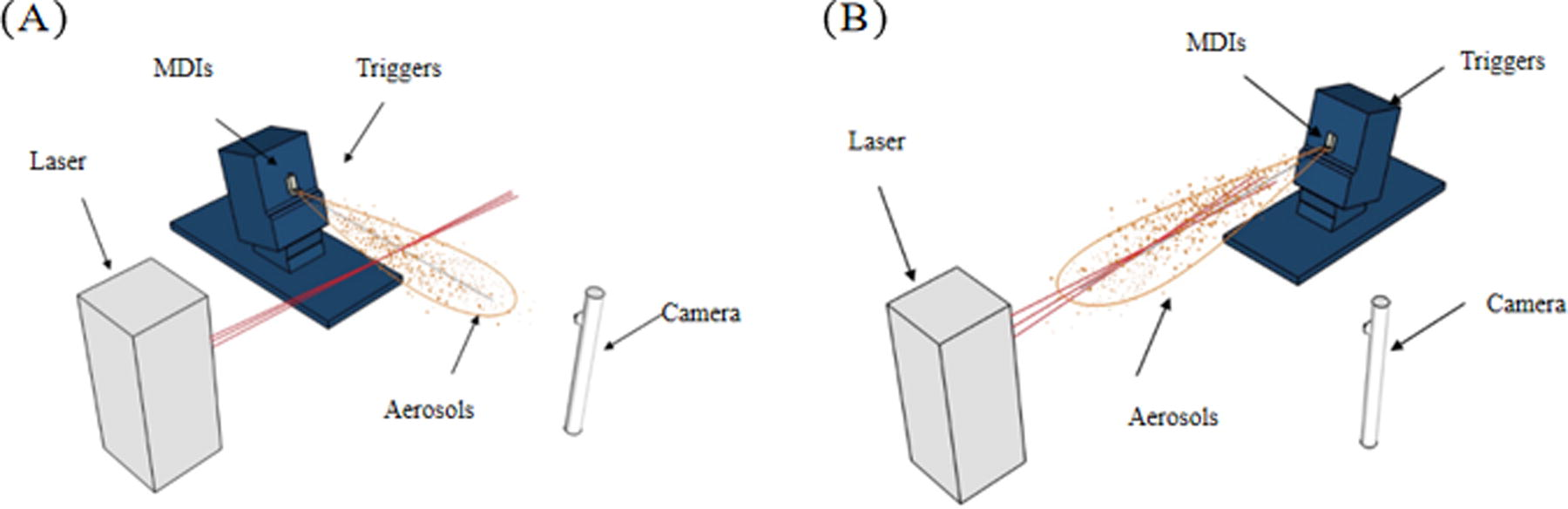
Determination principle of spray pattern
The SprayVIEW SP and PG analyzer analyzed the sample by collecting and processing plume images, analyzing the characteristics of SP and PG images. The collected and processed images are shown in Figure 2. The selected distances in the spray pattern should be at least 3 cm apart and based on the range of 3–7 cm from the R mouthpiece edge. 6 In this experiment, the selected distances in the spray pattern are 3 cm (SP 30) and 6 cm from the actuator nozzle (SP 60). Then the corresponding test method was selected. Repeat testing three times for each type, and the characteristic data of SP and PG were recorded. The results are shown in Figures 3–5.
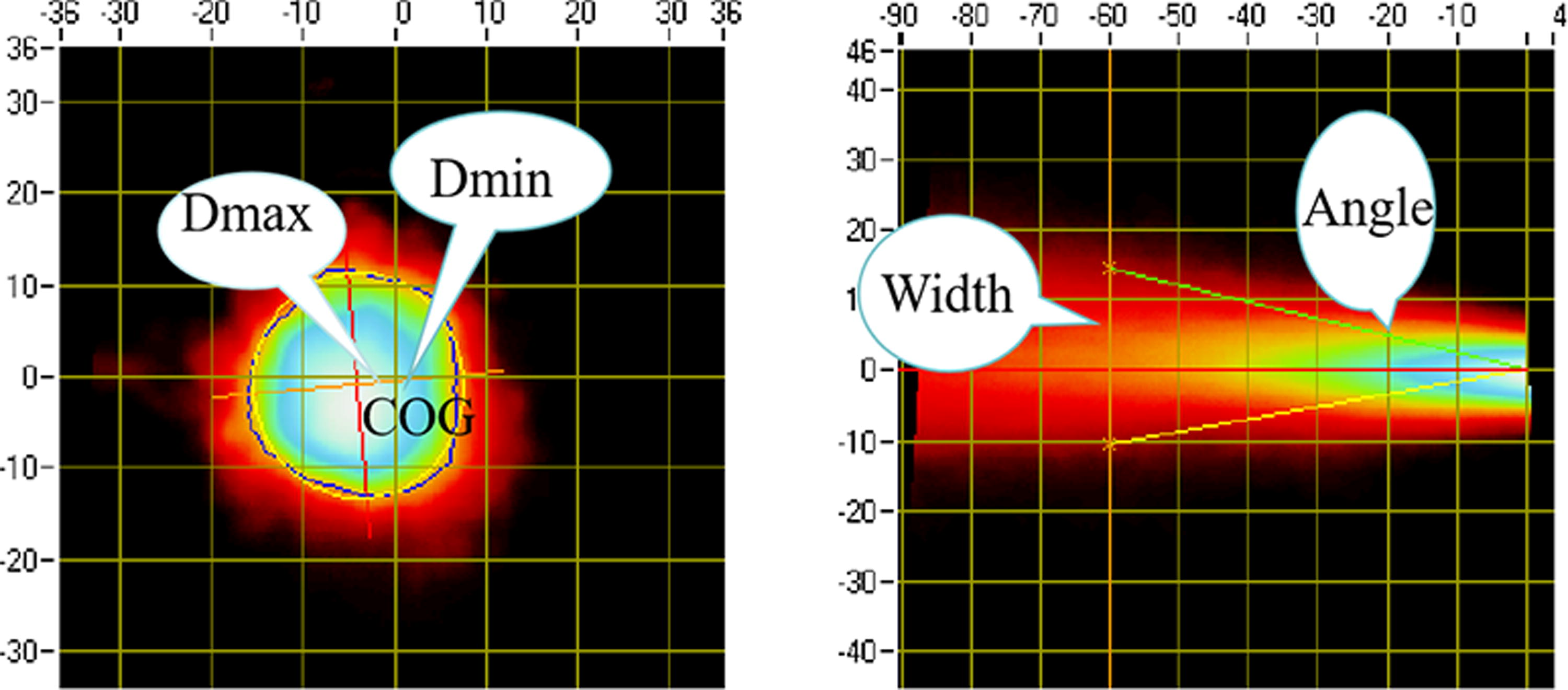
Spray pattern
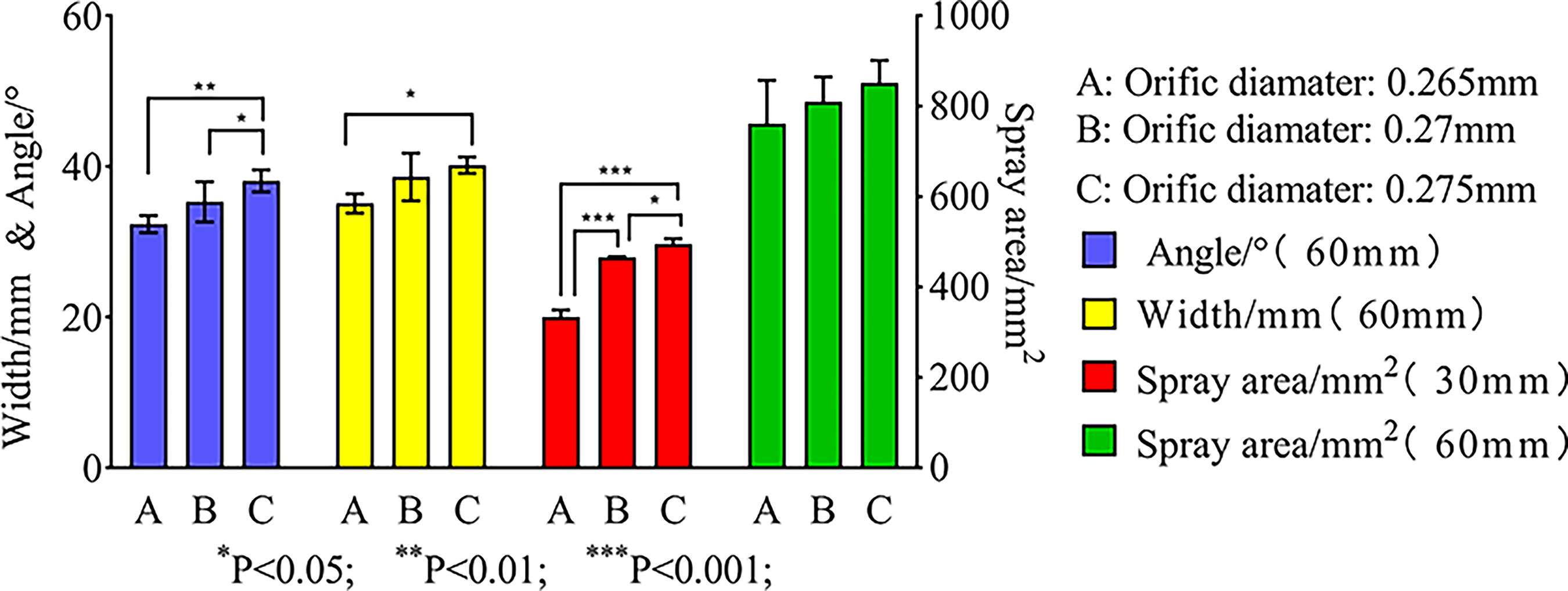
Effect of different orifice diameter of actuator on spray pattern and plume geometry. Ovality: The ratio of Dmax to Dmin. Spray area: The area contained in the image contour line.
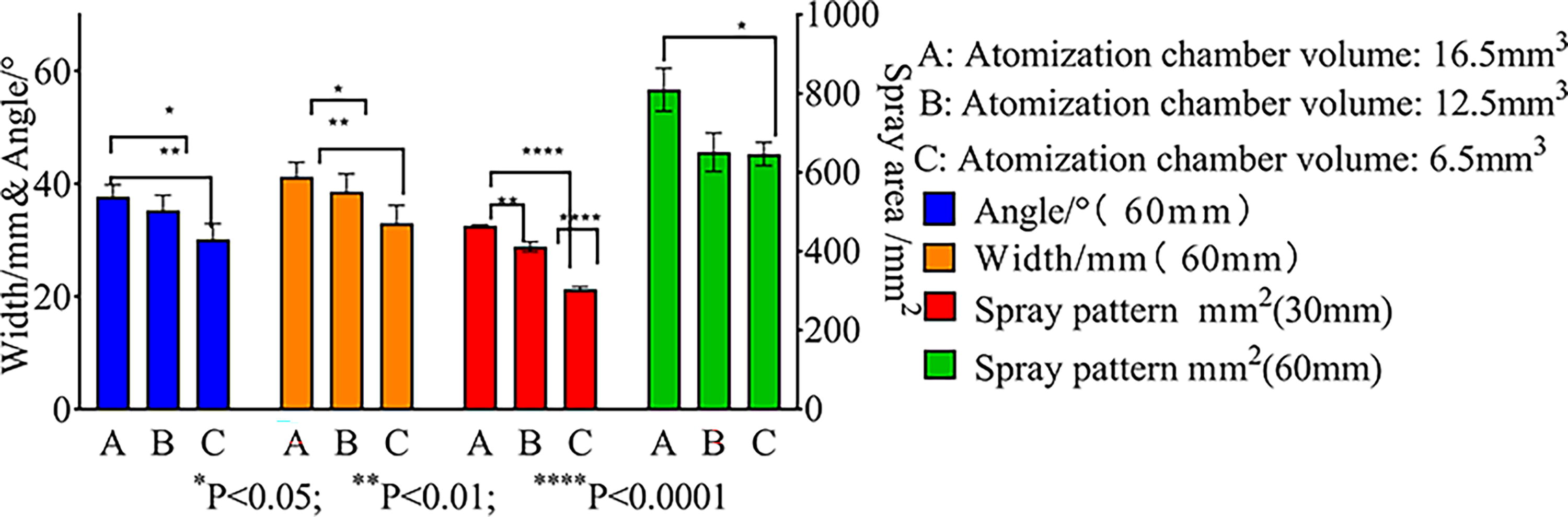
Effect of different atomization chamber volumes on spray pattern and plume geometry. Ovality: The ratio of Dmax to Dmin. Spray area: The area contained in the image contour line.
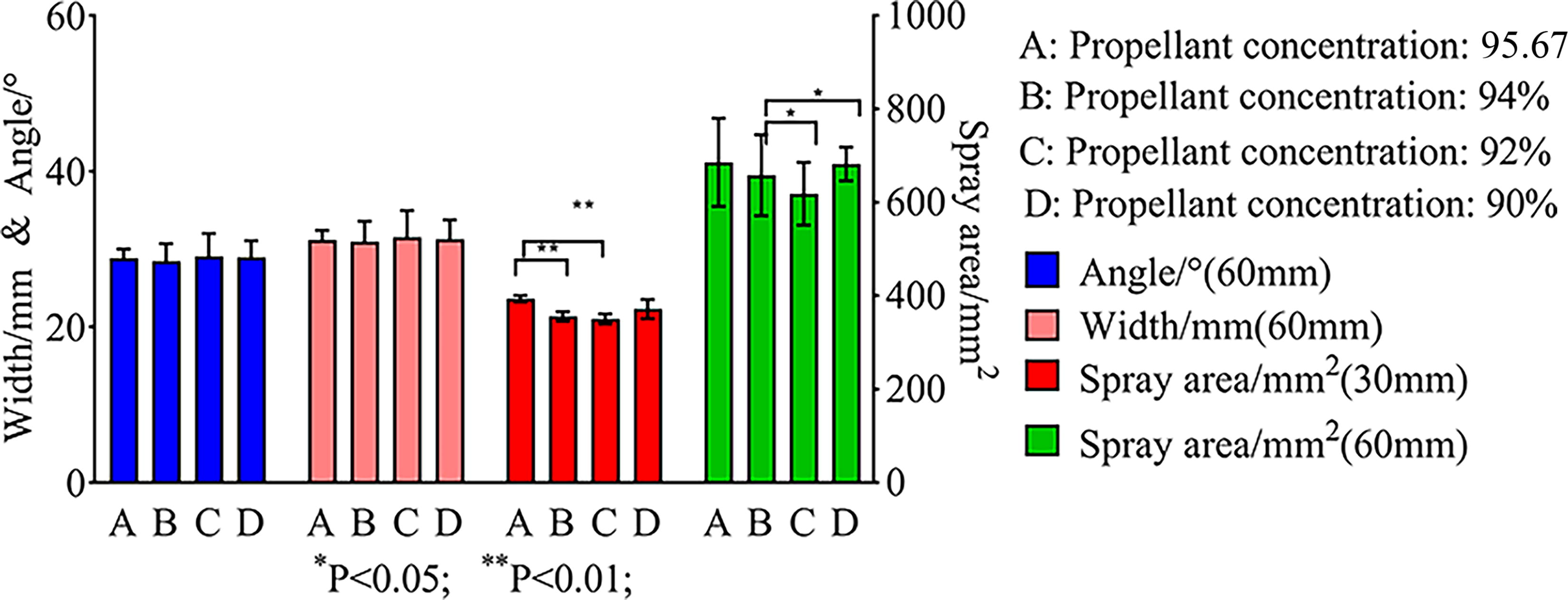
Effect of different propellant concentrations on spray pattern and plume geometry. Ovality: The ratio of Dmax to Dmin. Spray area: The area contained in the image contour line.
Plume duration and plume velocity
Plume Duration
The PG dynamic spray image collected was processed using Viota software. The playback tool was used to find the start time of the spray, which is the time when the plume was first observed to leave the mouthpiece, and then the cursor on the intensity curve was set to the start time. Next, the playback tool was continued to play until the spray stopped at the origin (mouthpiece plane), and then the second cursor was set on the intensity graph to that value. The duration of the plume is the difference between these two values. The average image intensity versus the time graph of PG is illustrated in Figure 6.
Plume Velocity
The PG dynamic spray image collected was processed using Viota software. The threshold intensity value was used to determine the leading edge of the plume. Throughout the entire plume duration, the yellow line was consistently dragged when recording each point. The measurement origin was defined on the mouthpiece plane, with the t = 0 point being set (Fig. 7). Subsequently, the playback tool was advanced to obtain the image of each point in the sequence. The yellow line was dragged back from the front of the plume to its edge, and the time and distance values of each image were recorded, taking note that the intensity value had reached the previously defined threshold level. The data were then analyzed, and a distance versus time relationship graph was plotted. A suitable curve was fitted to the data to maximize the R2 value (which should be >0.90). Once the fit was attained, the equation of the curve fit was differentiated to solve for the required distance (between 8 and 12 cm). 8 The instantaneous velocity at a distance of 8 cm from the outer edge of the mouthpiece adapter was calculated uniformly in this study.
APSD (impact method)
The ACI device 1 was installed according to the requirements of the U.S. Pharmacopoeia (USP) Appendix <601>. After collecting medicinal products as required, the drug solution from the actuator, mouthpiece, ACI stages 0–7 (referred to as S0–S7), and filter layer were washed into a volumetric flask using a solvent, and the content of active ingredients was determined in each stage by high-performance liquid chromatography. The results are shown in Tables 4 and 5.
Aerodynamic Particle Size Distribution at Different Orifice Diameters of the Actuator (Impact Method)
FPF, fine particle fraction; GSD, geometric standard deviation; MMAD, mass median aerodynamic diameter.
Aerodynamic Particle Size Distribution at Different Concentrations of the Propellant (Impact Method)
Tip: The orifice diameter of the actuator is 0.27 mm, and the volume of the atomization chamber is 12.5 mm3.
APSD (laser diffraction method)
The test parameters were set as given in Table 6. The HELOS&INHALER laser particle analyzer was used to collect and process the APSD of the sample. The collected and processed APSD is shown in Tables 7 and 8.
Test Parameters
Aerodynamic Particle Size Distribution Under Different Orifice Diameters of the Actuator (Laser Diffraction Method)
Aerodynamic Particle Size Distribution Under Different Propellant Concentrations (Laser Diffraction Method)
Tip: The orifice diameter of the actuator is 0.27 mm, and the volume of the atomization chamber is 12.5 mm3.
Statistical analyses
The measured values from three samples are presented as mean ± standard deviations. One-way analysis of variance was used for the statistical analyses; differences with p < 0.05 were considered statistically significant.
Results
SP and PG results
The ovality of all SP in this study is within the range of 1.00–1.20, which meets the requirements of the guidelines. In the experiment, three orifice diameters of actuator (0.265 mm, 0.27 mm, and 0.275 mm) were selected to study the SP and PG of the aerosol. As shown in Figure 3, the spray area, plume angle, and plume width at 3 cm and 6 cm from the actuator nozzle showed a significant increasing trend with the increase in the orifice diameter. The influence of the atomization chamber volume on spray was investigated, and the results are shown in Figure 4. As shown in the results, the spray area, plume angle, and plume width at different distances showed a decreasing trend with the decrease in the volume of the atomization chamber (16.5 mm3–12.5 mm3–6.5 mm3). The influence of propellant concentration (90%−92%−94%−95.67%) on the spray was investigated, and the results are depicted in Figure 5. As shown in the data, the spray area at 30 mm and 60 mm first decreased and then increased with the decrease in propellant concentration, and significant differences were found in the spray area of the four different propellant concentrations at the 3-cm detection point. The spray angle and width first was basically unchanged.
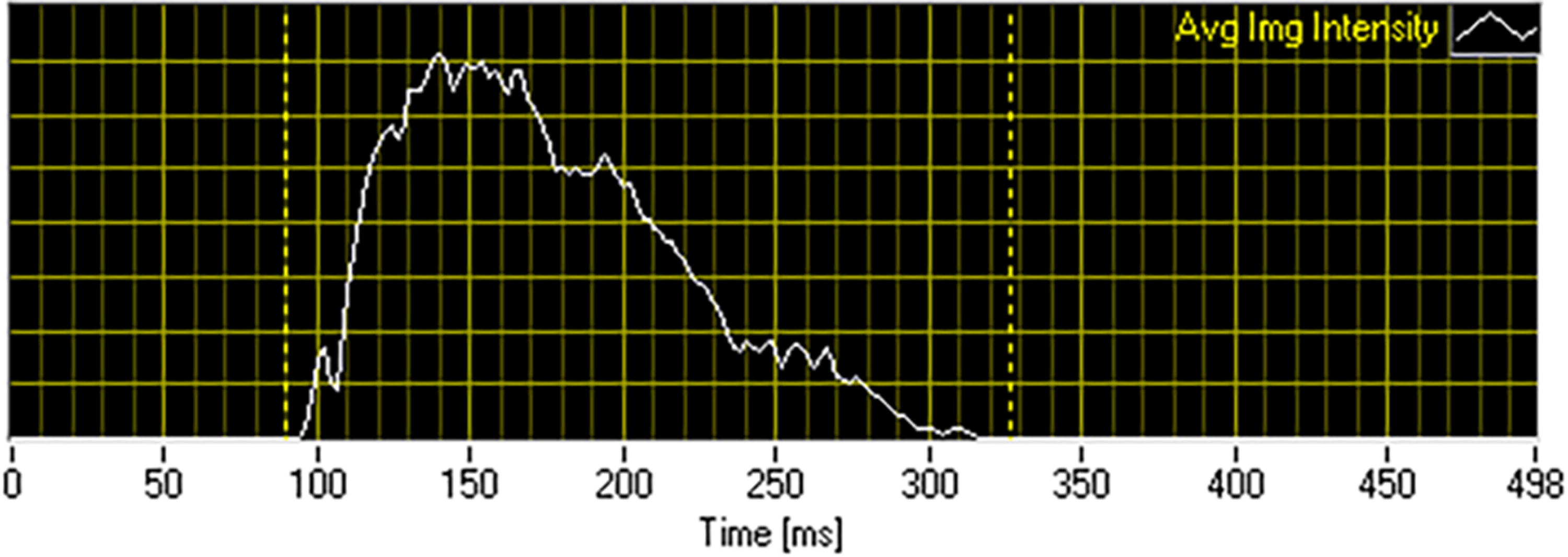
Schematic diagram of average image intensity versus time for spray morphology.
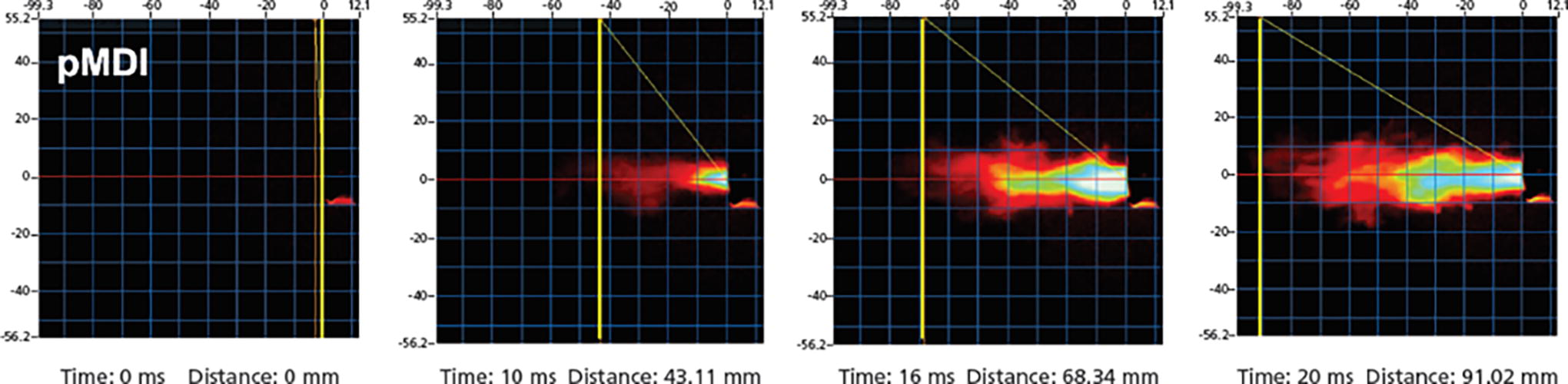
Schematic diagram of the dynamic spray pattern.
Plume duration and plume velocity results
The instantaneous intensity change graph of the image was used to calculate the plume duration and spray velocity .The results are shown in Figure 8, where Figure 8a and 8a′ represent the effects of different orifice diameters on the plume duration and the spray velocity, respectively. As the orifice size increased, both the plume duration and the spray velocity decreased. Figure 8b and 8b′ represent the effects of different atomization chamber volumes on plume duration and spray velocity, respectively. When the atomization chamber volume increased, the spray velocity of the plume first remained unchanged and then slowly increased, but the duration decreased. Figure 8c and 8c′ represent the effects of different propellant concentrations on the plume duration and velocity, respectively. Figure 8c and 8c′ show that as the propellant concentration increased from 90% to 92%, the velocity decreased. When the propellant concentration increased from 92% to 94% and 95.67%, the spray velocity increased, but the trend of plume duration and velocity changed in opposite directions.

Plume duration and plume velocity.
APSD (impact method) results
Tables 4 and 5 depict the impact of the orifice diameter of actuator, atomization chamber volume, and propellant concentration on the APSD results, respectively. The tables show that the change in orifice diameters from 0.265 to 0.275 mm had a great effect on fine particle fraction (FPF) and mass median aerodynamic diameter (MMAD), resulting in a decrease from 58.10% to 50.62% and an increase from 1.23 to 1.46 μm, respectively. Sequentially, FPF increased and MMAD decreased as the volume of the atomization chamber decreased. When the concentration of the propellant decreased from 95.67% to 90%, FPF and MMAD initially increased and then decreased. Furthermore, the data in the tables indicated that variations in actuator orifice diameters, atomization chamber volume, and propellant concentration had little impact on geometric standard deviation (GSD), and no significant changes were observed in GSD values across the different conditions tested.
APSD (laser diffraction method) results
The results showed that the trend of the APSD measured using the laser method was similar to that measured by the impact method, indicating that the same dynamic plume spray exhibited the same in vitro aerodynamic distribution under different detection methods. Table 7 shows that when the orifice diameter increased from 0.265 to 0.275 mm, the aerodynamic particle size of the dynamic plume under laser detection showed an increasing trend, with D50 increasing from 1.77 to 1.84 mm, D90 increasing from 3.43 to 3.62 mm, and D10 remaining basically unchanged. Table 7 also shows that the aerodynamic particle size under laser detection varied with different atomization chamber volumes. As the atomization chamber volume decreased, D90 showed a decreasing trend, but D10 and D50 remained basically unchanged. Table 8 shows that as the propellant concentration decreased from 95.67% to 90%, the values of D90 first decreased and then increased, whereas D50 and D10 remained basically unchanged.
Discussion
Drug particles in pMDI aerosols are formed from droplets generated by atomization of the pump’s multiphase flow, and any small changes in the components can affect the drug efficacy. This study found that changes in the propellant concentration, actuator orifice diameters, and atomization chamber volume in the prescription can form differentiated plume characteristics and particle size distributions, which can affect the deposition of drugs in the respiratory tract. The Proveris SprayVIEW SP and PG analyzer was used to observe, measure, and obtain plume indicators in real time during the dynamic changes of the spray plume. Its aerodynamic particle size was measured using both impact and laser diffraction methods. The findings surprisingly revealed that the plume indicators and in vitro deposition of aerosols were correlated under different detection methods.
Effect of orifice diameter variation
Figure 3 shows the effect of orifice diameter variation on the spray. As the orifice size of the actuator increased, the spray area at 30 mm and 60 mm from the actuator orifice also increased, forming a more dispersed plume shape. The dispersed plume increased the collision of aerosols in the upper airway (oral, laryngeal, extrathoracic airway, etc.), thereby obtaining a lower fine particle dose. Figure 8 revealed that the plume duration and plume velocity increased when the orifice was smaller. This might be because the same volume of drug solution was restricted in a smaller orifice, resulting in a smaller spray area. The orifice diameter also increased the flow resistance, requiring a relatively larger driving force and a longer time to spray the drug solution from the orifice. Brambilla et al. 9 showed that a smaller actuator orifice produced a higher plume temperature, which accelerated the expansion rate of the propellant, resulting in an increase in the plume velocity and plume duration under smaller orifices.
Particle deposition depends on the aerodynamic diameter and velocity of the particles with other factors being consistent. When the aerodynamic diameter is large or the velocity is high, the inertia of the aerosol particles is too great, and they may collide with the moist airway owing to their inability to follow the airflow. If the plume velocity is fast, the possibility of aerosol deposition in the larynx is higher. However, in the investigation of different orifices, the impact of a dispersed plume shape with a large spray area and angle on in vitro deposition is greater than that of the plume velocity. This can be further confirmed by the Anderson impactor method. As shown in Table 4, the drug content in the mouth and throat increased as the orifice size increased because of the increase in the spray area and angle, resulting in a lower inhalable drug amount and lower FPF value. The MMAD also increased. The results of laser diffraction measurement (Table 7) indicated that as the orifice size increased, the values of D50 and D90 also increased, indicating that the aerodynamic particle size was larger.
Effect of atomization chamber volume variation
Drug particles in pMDI aerosols are formed from droplets that are generated by atomization of the atomization chamber’s multiphase flow. 10 Shear driven by a velocity difference at liquid–vapor interfaces can produce droplets,11,12 and bubble nucleation and expansion can rupture the liquid phase in flashing sprays, leading to atomization. 13 So the atomization chamber of the actuator is an essential location in the initial formation stage and expansion stage of the plume. Figure 4 shows the effect of atomization chamber volume on the plume. The test results showed that when the atomization chamber volume was large, the spray area at 30 mm and 60 mm from the actuator orifice also increased, increasing the probability of aerosol collision in the upper airway. Figure 8 revealed that as the atomization chamber volume decreased, the plume duration increased. However, the plume velocity of the spray initially decreased and then remained constant after reaching a certain volume. This indicated that reducing the atomization chamber volume within a certain range can delay the expansion, evaporation, and bubble generation and growth of the propellant, resulting in a gentler plume.
Further investigation into the effect of the atomization chamber volume was conducted using the Anderson impactor and laser diffraction methods. When the atomization chamber volume was reduced to 12.5 mm3, the drug content deposited in the mouth and throat decreased because of the dispersed low-speed plume. This resulted in an increase in the inhalable drug amount and a decrease in MMAD. When the volume was further reduced to 6.5 mm3, the plume velocity remained unchanged. However, the drug content of the aerosol deposited in the mouth and throat decreased further because of the more concentrated spray, as shown by the results of the Anderson impactor method (Table 4). The results of laser diffraction measurement (Table 7) also indicated that as the atomization chamber volume decreased, D10 and D50 remained essentially constant, whereas D90 gradually decreased. This indicated that a smaller atomization chamber volume resulted in a lower aerodynamic particle size, which was beneficial for obtaining a higher inhalable drug amount.
Effect of propellant concentration variation
Although previous studies have shown that the vapor pressure of an propellant solution containing 10% ethanol (i.e., 90% propellant) was only slightly reduced, 14 different propellant concentrations had a certain effect on the aerosol evaporation process. In this study, the effect of propellant concentration on the spray plume was investigated in the range of 90%–95.67%.
Figure 5 shows that when the propellant concentration decreased from 95.67% to 92%, the spray area at 30 mm and 60 mm from the actuator orifice slightly decreased, forming a more concentrated plume shape. This might be because the spray produced by the high content of propellant had a higher ejection force. Although this was conducive to breaking into smaller initial droplets, the spray had poor stability, and the spray area was larger. 15 It is known that saturated vapor pressure of a formulation is altered by the addition of ethanol, thereby affecting the atomization process.16–18 As the ethanol concentration increases, the vapor pressure decreases, 19 thereby producing more stable small bubbles in the initial formation stage and expansion stage of the plume, preventing bubbles from coalescing, thus avoiding the generation of large spray angles and speeds when large bubbles were broken. 10 However, when the propellant concentration was reduced to 90%, the spray area at 30 mm and 60 mm from the actuator orifice increased slightly. This might be because the droplet evaporation rate is too slow when the ethanol content was too high. Stein and Myrdal 20 showed that droplets that evaporated slowly were more likely to deposit in the actuator mouthpiece or USP inlet during cascade impaction studies, possibly because of their larger size.
Figure 8 shows that when the propellant concentration decreased from 95.67% to 92%, the duration time of the spray plume increased slightly, and the plume velocity decreased, forming the relatively concentrated and gentle spray plume. Further evidence of the Anderson cascade impactor results revealed that a decrease in the drug content of aerosol deposition in the mouth and throat, resulting in a higher fine drug dose and a decrease in MMAD. However, when the propellant concentration dropped to 90% and the ethanol content increased, the duration time of the spray plume decreased and the plume velocity increased. At the same time, the FPF value decreased and MMAD increased, which was consistent with the existing studies.21,22 This trend was also consistent with the aerodynamic particle size trend measured by the laser method.
Conclusions
This study simultaneously characterized its aerodynamic particle size using the impact and laser diffraction methods to elucidate the correlation between the plume characteristics of different factors and aerodynamic particle size. The results indicated that the diameters of the actuator orifice, the volume of the atomization chamber, and the content of the propellant in the formulation significantly impacted the spray area, spray angle, plume duration, velocity, and aerodynamic particle size. Therefore, these factors should be given more attention when developing the solution formulations of pMDIs. The measurements and visualizations presented in this article tried to quantify the dynamic spray and reveal the intrinsic atomization principle, enabling the development and validation of a new multicomponent pMDI spray model. Further exploration is needed to investigate the changes in plume characteristics and aerodynamic particle size when more than one parameter changes simultaneously.
Footnotes

Authors’ Contributions
Y.Z. and B.Y: Conceptualization, methodology, software, date curation, and writing—original draft. Q.S., C.H., N.S., and Y.M.: Writing—reviewing and editing.
Author Disclosure Statement
The authors declare they have no conflicting financial interests.
Funding Information
No funding was received for this article.