




Abstract
Sexual health is an important consideration for young adults with cancer; however, oncology healthcare providers are often not equipped with strategies to approach these problems in a systematic way. To address this gap in adolescents and young adults (AYA) care, a one-day international Sexual Health Symposium was held before the Global AYA Cancer Congress (Edinburgh, December 2016). The goals of the symposium were to (1) provide a forum, where international AYA experts had the opportunity to share their knowledge regarding AYA sexual health and (2) develop a guideline for healthcare professionals to screen for and intervene on sexual health issues. This review focused on commonly encountered concerns: (1) management of climacteric symptoms, (2) sexual dysfunction in young men, (3) contraception during and after cancer therapy, and (4) psychosocial issues and care.
Introduction
A
Oncology HCP rarely feel confident in addressing AYA sexual health, 4 and to deliver developmentally appropriate care, education regarding the impact of cancer treatment on body image, sexual desire, and sexual function is required. 2 To our knowledge, sexual health guidelines specific to AYA with cancer do not currently exist, however, would be instrumental in guiding HCP care delivery. The inability for HCP to access training and resources related to sexual health makes it extremely challenging for them to optimally address sexual healthcare needs of AYA, creating the risk of compromising patients' quality of life during cancer treatment and survivorship.
Since AYA sexual health guidelines would be of significant value to oncology HCP, we connected with international colleagues who voiced similar concerns regarding AYA sexual health needs and gaps in care delivery at their healthcare institutions. It was decided among this multidisciplinary working group that holding a one-day international Sexual Health Symposium at the Global AYA Cancer Congress (Edinburgh, December 2016) would be an important opportunity to facilitate collaboration among HCP with experience in AYA sexual health to address common sexual health problems reported by this population.
The overall goals of the symposium day were to (1) provide a forum where international AYA experts had the opportunity to share their knowledge regarding AYA sexual health and (2) develop a guideline for HCPs to screen for and intervene on sexual health issues. Four sexual health topics were targeted by the working group that are most commonly encountered in patient care. These were the focus of the initial literature search, the symposium day, and in this final review: the topics described in this article are: (1) management of climacteric symptoms, (2) sexual dysfunction (SD) in young men, (3) contraception during and after cancer therapy, and (4) psychosocial issues and care. Examples of clinical care issues from the symposium participants' practice settings are described and discussed within each of the topic sections.
Our intention is that the final guideline will be distributed to HCP internationally and used as a resource to guide clinical interventions for common sexual health problems, develop education materials and its delivery to HCP, and/or to contribute to the development of relevant patient education materials.
Guideline strategy
A literature search was conducted on all four areas of concern and summarized before the symposium and supported the presentations delivered at the symposium. A medical writer was present during the symposium to record discussion and to identify common opinions/themes that were brought up in conversation. All participants were made aware of the medical writer's presence before the start of the symposium. The panel included HCP with expertise in AYA care and the sexual health problems that were highlighted. The audience consisted of HCP with an interest or expertise in AYA care. The 50 delegates represented Sweden, Japan, France, England, Ireland, Australia, Canada, the United States, and India. The following article is a summation of a narrative literature search conducted on each topic followed by specific comments and opinion from the panel/audience at the meeting.
There are many aspects of sexual health not covered in this article, but which are clearly outlined in a recently published systematic review. 5 However, herein we outline some key items that can be addressed by front-line oncology providers, and importantly, permits further conversation and referrals accordingly.
Part 1: Climacteric Symptoms in Young Women with Cancer
Pathophysiology
Cancer treatment, especially that including alkylating agents and pelvic radiotherapy, can impact sexual health and fertility in young women by inducing temporary loss of menses or premature ovarian failure (menopause before the natural age). Estimating the prevalence of ovarian failure or menopause in young women is dependent on cumulative exposure to alkylating agent, 6 pelvic or total body irradiation, 7 and age at treatment exposure. 8
The spectrum of climacteric symptoms include vasomotor symptoms (hot flashes, night sweats), sleep disorders, mood disorders, vaginal dryness, and impaired cognition. 9 Of all symptoms, hot flashes and other vasomotor symptoms are important to evaluate as they occur most frequently and are one of the earliest signs of ovarian failure. 10 Climacteric symptoms are due to loss of an estrogenized state, and represent a continuum such that women may have amenorrhea without climacteric symptoms, and conversely, have symptoms with “normal” serum estrogen levels. Thus, menopause is not due to a specific estrogen serum level, but rather an individual's threshold. 10 Hot flashes specifically may be caused by resetting of the thermoregulatory center in the hypothalamus secondary to estrogen withdrawal, associated with complex interplay between serotonin, norepinephrine, and adrenergic neurotransmitters, likely justifying the effectiveness of nonhormonal therapies.
Screening for climacteric symptoms
Unfortunately, women undergoing cancer treatment are often unaware of the increased risk of menopause or of temporary ovarian insufficiency, likely impacting the reporting of symptoms, and delay to intervention.
As AYA must confront these uncomfortable symptoms earlier in life, poor body image, depression, and anxiety are worse due to SD and its implications on intimacy. 11 In one study of women with breast cancer (BC) diagnosed by age 40 years, those who had amenorrhea were significantly more likely to have sexual disinterest and dysfunction compared with women who did not have amenorrhea. 12 Similarly, hot flashes were found to be more severe, of longer duration, and more frequent in BC survivors than healthy women. 13 They were also responsible for a greater mood disturbance (anxiety, depression, confusion) and overall decreased quality of life. This underscores the need for early assessment and recognition by HCP of sexual side effects secondary to therapy-associated premature menopause.
Management strategies
Although data on management of climacteric symptoms pertains largely to older women, there is no information suggesting that a different therapeutic approach is needed for AYA. Hormone replacement therapy (HRT) is the most effective treatment for symptoms associated with premature menopause; however, HRT is not an option for women with hormone-sensitive cancers.14,15 Instead, there are four main nonhormonal drug classes relevant to our patients which have been evaluated for the treatment of hot flashes in randomized controlled trials (RCTs) (Table 1).
1. Venlafaxine: Venlafaxine, an antidepressant which inhibits the reuptake of serotonin–norepinephrine (SSRI), is a good option as the first line of treatment for hot flashes. A study by Loprinzi et al. is one of several that evaluated the effectiveness of venlafaxine by randomizing BC survivors to various doses of drug and placebo. 16 There was a reduction of the median self-reported hot flush score to 27% with venlafaxine compared with 61% with placebo, an effect that took place within a few weeks. Venlafaxine should first be given at 37.5 mg once daily and gradually increased to 75 mg for optimal results. 16 The rapid relief in symptoms, including a decrease in night sweats, improvement in sleep and libido, led to high rates of compliance. Although venlafaxine does present notable side effects, including lack of appetite and nausea that were more severe when compared with another drug, clonidine, 17 the fast-acting nature of venlafaxine meant that patients were less likely to discontinue venlafaxine.
2. Clonidine: Clonidine is a centrally active antihypertensive and alpha-2 adrenoreceptor agonist for which multiple RCTs have demonstrated benefit in postmenopausal women to decrease hot flashes by 20%–40%. A dose of 0.025–0.075 mg orally twice daily is advised. 18 Compared with venlafaxine, adverse effects with clonidine are less numbered and severe (skin irritation, constipation, anxiety, insomnia, dry mouth), and in three RCTs, it was seen to be as equally effective of venlafaxine by the eighth week of treatment.17,19,20 For the oncologist, both drugs may be considered, and alternated based on tolerability.
3. Gabapentin: Gabapentin is structurally similar to the neurotransmitter gamma-aminobutyric acid and modulates glutamate homeostasis and has many indications, including the treatment of neuropathic pain. Gradually titrated low-dose gabapentin has also been explored as a method to manage uncomfortable hot flashes. Increasing dose from 300 to 900 mg three times daily has resulted in significant reductions in hot flashes.21–23 A study by Guttuso et al. found a 45% decline from baseline, although common notable adverse effects occurred, including edema, nausea, and dizziness. 21
4. Paroxetine: Paroxetine is another highly effective treatment for hot flashes. Compared with placebo, paroxetine was found to reduce hot flashes by 50% or more, with few side effects (nausea, insomnia, constipation).24,25 Both trials also highlighted that paroxetine has similar effect at low and higher dose, and patients would be able to limit harmful adverse effects by taking only 10 mg daily. However, paroxetine and fluoxetine, another SSRI, may inhibit tamoxifen activity through interactions with cytochrome CYP2D6 and thus should be used cautiously in these women due to an increased risk of secondary BC. 26
HRT, hormone replacement therapy.
Nonpharmacological interventions are being increasingly explored in the treatment of hot flashes, but are beyond the scope of this review. Briefly, in a randomized study by Nedstrand et al., acupuncture was able to alleviate symptoms within 12 weeks of being applied. 27 However, acupuncture is very operator dependent and the contribution of the placebo effect to these results is difficult to estimate. Hypnosis and other behavioral therapies are also important to consider.28–31
Psychological impact
AYA are often troubled by SD due to increasing relationship strains with their partners as well as a loss of confidence in relationships In fact, young women are more likely to report sexual problems and body image problems than older women. Interestingly, a study by Fobair et al. found that women who had married partners were more likely to report problems related to SD than did unmarried women, suggesting that couple-based therapies could be an important intervention for women in long-term relationships. 41
Psychological problems associated with premature menopause can result in reduced quality of life in AYA and should be addressed by HCPs. There are psychological benefits with exercise, particularly yoga, which can improve anxiety and distress levels. 28 In addition, cognitive behavioral therapy (CBT) and couple-based therapies have been identified as valuable strategies to manage the psychological burdens of premature menopause. Systematic reviews and guideline statements have issued advisories on nonpharmacological approaches to menopausal symptoms and can be referenced.30,33–35
Common clinical practice problem and discussion
A 29-year-old woman with hormone-sensitive invasive breast cancer complaining of persistent hot flashes and night sweats following three cycles of chemotherapy.
Young women are susceptible to bothersome symptoms related to treatment-induced premature menopause. Recommendations were made among the symposium participants around strategies for HCP to initiate conversations related to sexual health concerns (Fig. 1). With respect to treatment for this particular case, this woman is ineligible for hormone replacement as she has a hormone-sensitive cancer, which would otherwise be considered the gold standard intervention for menopausal symptoms. However, there are several nonhormonal pharmacological interventions that can be considered. There was a consensus among the symposium participants that oncologists should have a basic awareness of these to initiate treatment while patients await consultation with specialty clinics (gynecology, endocrinology) (Fig. 2).
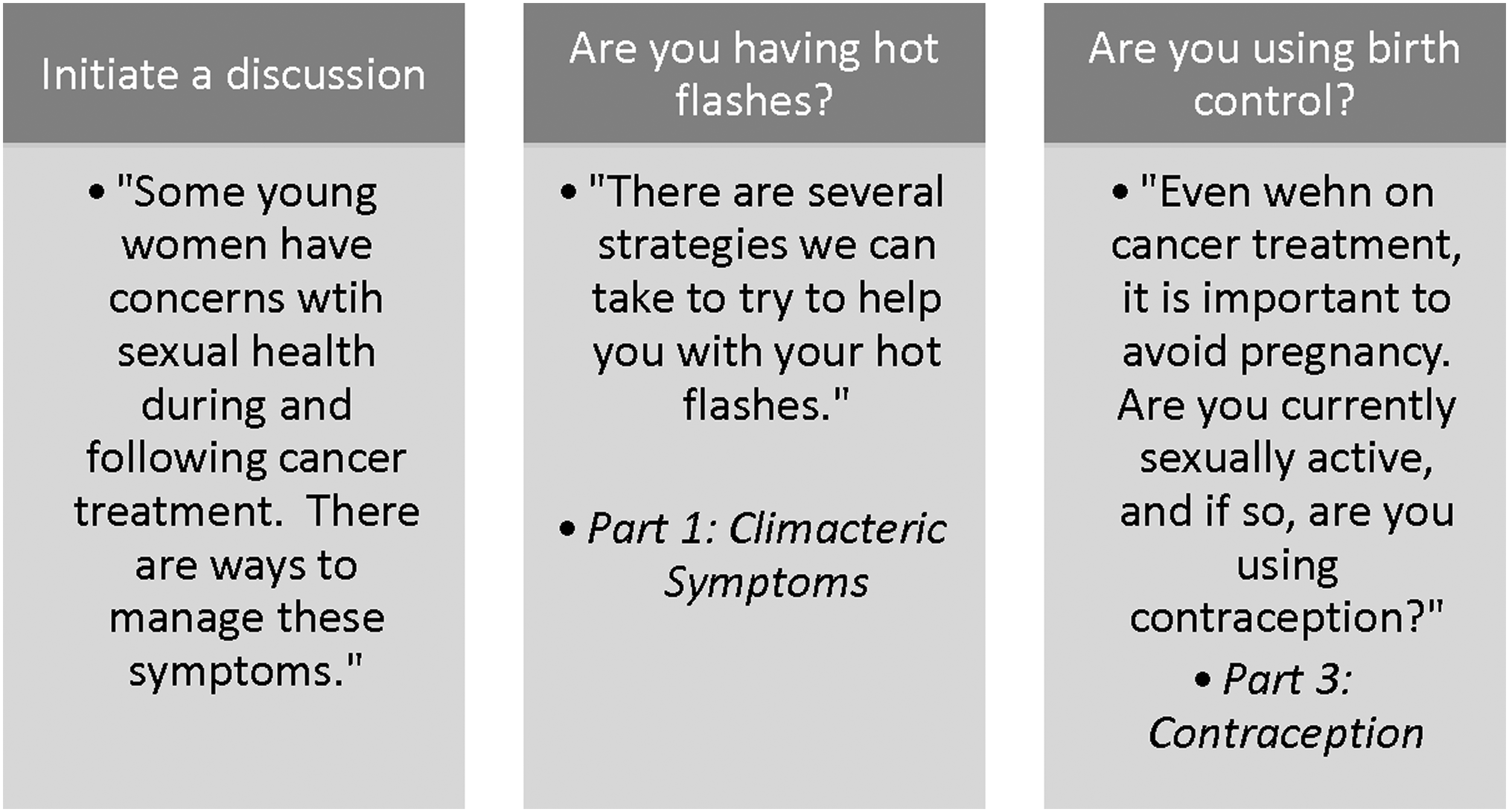
Three simple recommendations for front-line providers on initiating conversations regarding sexual health (based on the outcomes from the symposium discussion) for the front-line oncology provider.

When available, further referrals to psychosocial providers and sexual health experts (i.e., physiotherapy) are important.
As evidence for nonpharmacological interventions remains limited, there was general consensus among participants that patients should be offered nonhormonal pharmacological treatment options and that nonpharmacological interventions (including hypnosis, physical exercise) should be considered.
Summary
• Premature menopause can result in a number of bothersome symptoms in young women and providers should ask about symptoms in addition to menses.
• Hormone replacement is contraindicated in women with hormone-sensitive cancer.
• Recommended nonhormonal pharmacological interventions for vasomotor symptoms include venlafaxine, clonidine, paroxetine, or gabapentin.
• Nonpharmacological interventions for hot flashes (hypnosis, acupuncture, exercise) should be considered for individuals concurrently with pharmacological treatment or for those who do not tolerate or are declining conventional treatment options.
• Psychological stress caused by the burden of premature menopause must be addressed through yoga and other forms of exercise, CBT, hypnosis, and couple-based therapies.
Next steps
To optimize the care of young women experiencing climacteric symptoms, HCP would benefit from education and tools to guide them in assessing for climacteric symptoms, prescribing pharmacological treatments for hot flashes and would further benefit from additional resources to facilitate the implementation of nonpharmacological programming (i.e., hypnosis) or identifying relevant community cancer programs where patients can access such services.
Part 2: SD in Young Men
Young men with cancer often experience SD which may manifest itself in multiple ways, including erectile dysfunction (ED), ejaculatory dysfunction, low libido, and sexual pain. The actual prevalence of SD in AYA is unclear,32,36–38 in part, due to a reluctance of disclosure. 39 Survivors of pediatric cancer have reported SD in 10%–40% of AYA, higher than population data.32,38 For those diagnosed with cancer in the AYA years, the prevalence has been estimated between 20% and 50% although much of these analyses have been limited to patients with testicular cancer (TC) and thus represents an area of future research.40,41
Pathophysiology
The pathophysiology of SD in cancer is a complex interplay between vasculogenic, 42 endocrinologic,43–45 anatomic, neurogenic46–48 factors, as well as psychological distress32,37–39,42,49,50 and chronic pain. 40 Leydig cell (LC) dysfunction has been detected frequently among patients with testicular43–45 and hematological cancers 51 with subsequent increase in SD, however, these patients typically have adequate serum testosterone.43,44 Moreover, a consistent relationship between LC insufficiency and SD has not yet been found.52,53 In one study, 176 males (aged 25–45 years, 97% treated with chemotherapy, 40% treated with RT), had lower testosterone levels compared with population norms, however, no association between testosterone level and SD or quality of life was identified. 54 A small RCT in 35 patients with mild LC dysfunction failed to show any improvement of sexual function for those treated with testosterone replacement. 55
Screening for SD
A suggested flow diagram is presented in Figure 3 for patients self-reporting or screened for SD. Although there are no established guidelines for post-treatment screening in this age group, our institutional practice is to screen for LC dysfunction with targeted questioning (e.g., low libido, spontaneous erections, body hair loss, muscle bulk) and LH/testosterone levels annually. In addition, we conduct SD screening on a six-month basis and enquire on social relationships, body image, sexual experiences, libido, nocturnal emissions, orgasms, and quality of ejaculate. In the setting of abnormalities (either screened or self-reported), we assess patient for biochemical signs of hypogonadism and refer to a specialist urologist and sexual health counseling (Fig. 3).

Screening for SD in males following cancer therapy. SD, sexual dysfunction. *Adapted from AUA guidelines.
Management strategies for SD
Studies evaluating treatment for SD in male cancer patients are rarely limited to AYA men specifically. The following are general guidelines for management once SD has been identified.
1. Phosphodiesterase type 5 (PDE5) inhibitors: PDE5 inhibitors, such as sildenafil, inhibit the degradation of cyclic guanosine monophosphate by PDE5, which causes smooth muscle relaxation and thus penile erection, and can help maintain erections sufficient for penetration. 56 PDE5 inhibitors in combination with testosterone therapy has also been successfully used by hematological cancer patients following bone marrow transplant to correct ED. 57 Patients should be provided with education regarding optimal usage of PDE5 inhibitors: take 30–60 minutes before activity, duration of effect 4–5 hours, must be sexually stimulated for it to work, may take longer to work if fatty food eaten prior, and there is a risk of priaprism/visual/hearing loss.
2. Testosterone replacement therapy (TRT): In one study, men who had received high-dose chemotherapy/chemoradiotherapy for hematological malignancies benefited from TRT for libido, although its impact on ED was equivocal. 58 Nevertheless, TRT has shown promise in andropausal men with SD, and should be considered.51,59 As the diagnosis of testosterone deficiency is complex with lack of accurate assays/population-based normal ranges, initiation of TRT should occur with HCP who carry expertise in this area. This is especially so for young male cancer survivors who frequently have symptoms of testosterone deficiency (i.e., fatigue and SD) with borderline testosterone levels. The negative impact of TRT on spermatogenesis should be discussed with the patients before the treatment. In patients whose spermatogenic function is already compromised by chemotherapy, TRT needs to be used with caution and proper counseling.
Psychological impact
A cancer diagnosis for AYA carries the potential for difficulties in many areas such as development, infertility, and SD making AYA especially susceptible to emotional distress. 37 For example, young male survivors of brain cancer, whose disease is known to significantly impact their psyche, tend to be less sexually active, less sexually satisfied, and report more sexual arousal problems.38,39 SD in men with TC may be embedded in the psychological changes following diagnosis and treatment 50 especially because of the symbolic nature of the diseased organ. 49 Psychological distress for this population may occur because of their reduced sense of masculinity, the myths, fantasies, and beliefs around cancer and feelings of loss of attractiveness and changed body image. 42 To our knowledge, no controlled studies have examined for possible interactions between emotional distress and SD, 49 and represents an area of research need.
Common clinical practice problem and discussion
A 23-year-old male with testicular cancer requiring chemotherapy and a retroperitoneal lymph node dissection. He is complaining of difficulty maintaining erections and persistent retrograde ejaculation.
SD in young men is often multifactorial with complex biological underpinnings. Symposium participants emphasized the importance of bringing up the topic of SD with young men and that the HCP team members responsible for leading this discussion can vary (nursing, social worker, and oncologist). With respect to treatment for ED, the literature suggests that PDE5 inhibitors have been found to be effective in both testicular and hematological AYA cancer population. The group was in agreement of this and further discussed the importance of psychological assessment and creating partnerships with specialty services (psychosocial, urology) as they are valuable for supporting oncology providers in addressing the concerns of young men with SD.
Summary
• It is important to ask all young men about SD and this discussion can be led by many different members of the multidisciplinary team.
• Best evidence supports PDE5 inhibitors, which have been successful in AYA populations in testicular and hematological malignancies.
• There are psychological effects on young men with a cancer diagnosis and counseling may be effective for AYA males to reduce body image issues, anxiety, and distress.
• TRT can also be considered, but dedicated counseling and specialist referral is suggested.
Next steps
Based on the findings from the literature and symposium group discussion, it was suggested that HCP could further increase patient access and optimize their multifactorial sexual healthcare needs by developing partnerships and clinical pathways with urological and psychosocial programs.
Part 3: Contraception
Embedded within the conversation about sexual health is advice regarding the use of appropriate contraception since carrying a pregnancy while exposed to chemotherapy or RT can result in teratogenic effects on the fetus. 66 Patients commonly believe themselves to be infertile from treatment resulting in either lower rates of contraception use 67 or usage of ineffective methods. 68 The simple act of providing family planning services during cancer survivorship can significantly increase use of more effective forms of contraception and access to emergency contraception. 67 Discussing contraception also promotes sexual health and encourages dialog in this regard between patient and provider.
Contraception has been classified into four tiers by the World Health Organization (WHO) based on efficacy. 69 Tier 1 includes long-acting contraceptives that are the most effective, including sterilization, intrauterine devices (IUDs), and implants. Tier 2 is comprised of short-acting contraceptives such as combined hormonal contraceptives (CHCs) with estrogen and/or progestin that can be taken orally, injected, or delivered through a patch or vaginal ring. Tier 3 includes barrier methods and Tier 4 includes behavioral methods (fertility awareness-based methods, withdrawal) with decreasing efficacy.
Contraception and cancer treatment
In women with current or a history of BC (or other hormone-sensitive cancers), all types of hormonal contraceptives should be avoided. Nonhormonal contraceptives, such as copper IUD, barrier methods, and tubal ligation, are preferred. Hormone-free copper IUD is often the first choice in women with BC.
70
Comparatively, the levonorgestrel-releasing IUD (LNG-IUD) prophylactic use can prevent de novo endometrial polyps, but may increase the risk of BC recurrence.60,71,72 The WHO Guidelines consider that BC is a condition which represents an unacceptable health risk if the LNG-IUD is used (category 4), and that LNG-IUD should thus not be used.
61
However, in case of past BC with no evidence of current disease for 5 years, it is considered that the theoretical or proven risks usually outweigh the advantages of using the method (category 3), and thus use of LNG-IUD is not usually recommended, unless other more appropriate methods are not available or not acceptable.
61
These WHO guidelines differ from recently updated guidelines by the Society of Obstetrics and Gynecology of Canada. Recently updated guidelines by the Society of Obstetricians and Gynecologists effectively summarizes the literature62,71,73–75 and concludes as follows:
• Patients with BC taking tamoxifen may consider an LNG-IUS after consultation with their oncologist. (I-A) • Intrauterine contraceptives have a number of noncontraceptive benefits. The LNG-IUS significantly decreases menstrual blood loss (I) and dysmenorrhea. (II-2) • LNG-IUS is contraindicated in women with current progesterone-receptor-positive (PR+) BC or active cervical/endometrial cancer. • LNG-IUS has excess risk, which outweighs advantages in women with a past history of PR+ BC <5 years ago.
As oral contraceptive pills (OCP) may contain estrogen and/or progestin, they are contraindicated in women with BC. Indeed, the use of CHCs is shown to increase BC risk 65 and recurrence. 76 Current evidence suggest that carriers of the BRCA mutation and those with a family history of breast or ovarian cancer have no increased risk of BC with OCP use77,78 although some studies have found a small but significant increased risk for long duration of use or if started before first full-term pregnancy in case of BRCA1 mutation.79,80 Furthermore, ovarian cancer risk is reduced with OCP use in women carrying a BRCA mutation.77,78 Thus, women carrying a BRCA mutation without a personal history of BC have no contraindication to OCP use.
Other common cancers in AYA include leukemia and lymphoma, which may necessitate stem cell transplant (SCT) causing severe immunosuppression. 81 For SCT patients, safe practice involves avoiding contact of their mucous membranes with the saliva, semen, or vaginal secretions of their partner, as well as oral exposure to feces. Latex condoms should be used to prevent infection. 4 In immunocompromised patients, IUD insertion should be cautious, due to the higher risk of pelvic inflammatory disease occurring in the weeks following its insertion.63,64 Contraceptive efficiency of copper IUD in the case of immunosuppressive treatment seems to be maintained, even if some failure has been described. 82 However, an RCT in immunodeficient women with HIV demonstrated that IUDs were more efficacious in preventing pregnancy and were associated with lower rates of pelvic inflammation, compared with OCPs. 83 OCPs should be avoided in SCT patients, as it can decrease clearance of cyclosporine and prednisolone, drugs that are necessary to prevent host rejection of the transplanted bone marrow. 66 If patients using OCPs have chemotherapy-induced vomiting or diarrhea, and repeated administrations of antibiotics that can potentially change bacterial flora during treatment, reduced OCP absorption can occur, making vaginal rings and transdermal patches better options. 66
During cancer treatment, thromboembolic risk is often increased (disease itself, chemotherapy, surgery, immobility). As CHC (oral or transdermal) increase thromboembolic risk, 84 they should be avoided during the cancer treatment.
Finally, two studies conducted before the year 2000 suggest that chemotherapy can be transmitted in seminal fluid. Cyclophosphamide was found to penetrate the reproductive tract in rats and transmitted from a male rat to its partner, affecting its progeny. 85 Likewise, a patient with Hodgkin's disease treated with vinblastine induced vulvovaginitis in his wife about 3–4 days after treatment. 86 These studies suggest that condom use may be necessary to prevent potential drug transmission between patient and partner. Condoms should be a required safety precaution for all cancer patients on treatment to prevent transmission of the wide variety of potentially cytotoxic drugs used throughout treatment.
Common clinical practice problem and discussion
A 24-year-old woman diagnosed with a hormone-sensitive breast cancer. Her treatment plan includes dense-dose chemotherapy agents that will make her immunocompromised. She intends to remain sexually active with men during cancer treatment and is not in a monogamous relationship.
From the symposium discussion, strategies were recommended around how to bring up the topic of contraception with this patient (Fig. 1). With respect to contraception choice, several factors that influence contraception selection for AYA patients include cancer type, compliance, and treatment plan. For women with hormone-sensitive cancers who have sex with men, a hormone-free IUD is the best option. If she is not in a monogamous relationship, condoms are also recommended for STI prevention. In the case of patients receiving high-dose chemotherapy, it was felt by participants that an IUD can be inserted before initiation of immunocompromising treatment or can be left in place if already inserted. It was recommended by participants that ongoing clinician monitoring is required for bleeding and febrile neutropenia. Some participants did report that patients have found IUD insertion to be an uncomfortable procedure and did not recommend it for those who have not previously had intercourse. In these cases, intensive counseling should be provided around condom use. The group further discussed the fact that there are many contraception options and it is difficult to quickly determine in clinical settings the best options for their patients.
Summary
• Educating AYA around contraception use during and after treatment is important, especially to avoid unwanted pregnancies.
• There are several factors that should influence which contraception is selected, including type of cancer, compliance, and concurrent therapies.
• In case of hormone-sensitive cancers, nonhormonal contraception is recommended, and hormone-free IUDs is often a first choice.
• During cancer treatment, thromboembolic risk, thrombopenia (with a higher risk for spotting or menorrhagia), have to be taken into account.
• Behavioral methods are not recommended because of their low efficiency in preventing pregnancy and STIs. Condom can be recommended for STIs prevention.
• In immunocompromised patients, IUDs may be a safe form of contraception, but the risk of STIs has to be taken into account, and latex condoms should be used on a regular basis, despite the couple's relationship status.
• Condom use has also been recommended in treated men, as a precaution to prevent the transmission of chemotherapy.
Next steps
Although contraception guidelines do exist, participants felt that their centers would benefit from additional guidelines and education around contraception options specific for oncology patients as there are additional considerations for this specific population.
Part 4: Psychosocial Issues and Care
For AYA, developmental tasks are significant and include the creation of sexual identity, establishing romantic/sexual relationships, and also exploring their sexual preferences and/or practices. 87 AYA with cancer must achieve these tasks while dealing with the diagnosis of cancer and thereafter the treatment side effects that may affect multiple aspects of sexuality as well as impaired fertility. Disruptions to social life due to hospitalization impact negatively on the establishment of both romantic and supportive relationships. Support groups and networks, such as Stupid Cancer, Lacuna Loft, Young Adult Cancer Canada, and Cancer Fight Club, may help to meet the need of the AYA survivor to establish and maintain contacts with others who have had similar experiences and understand what it is like to live with a condition that may be incomprehensible to healthy peers.
Younger cancer survivors may find it challenging to talk about their sexuality with HCP. 88 This is particularly important if the survivor is a member of a sexual minority group. Assumptions of heterosexuality, common in healthcare settings, will alienate the young person and much needed help may not be provided.
There are limited interventions for sexual changes after cancer in the older adult population and no evidence-based interventions for YAs in particular. Because many YAs have limited sexual experience, a return to previous sexual functioning after treatment may not be a goal; however, an understanding of what changes the treatment may cause is an important part of educating the YA.
It is widely acknowledged that there are gaps in the care of AYAs with cancer leaving them with a multitude of unmet needs in medical care, side effects and symptoms, psychological and spiritual, relationships, and financial domains. 89 To remove these gaps and address their unmet needs, a concerted transdisciplinary approach is needed.
Common clinical practice problem and discussion
A 20-year-old male with relapsed leukemia who will be requiring an allogeneic stem cell transplant. He is currently in a relationship and is sexually active. It is anticipated that he will experience sexual side effects from the intensive treatment.
Sexuality is an important developmental task for AYA with cancer and there are limited evidence-based psychosocial interventions and no guidelines that address the psychosocial aspects of AYA sexual health concerns. Symposium discussion emphasized the need for early initiation of discussion regarding sexual health counseling, even before SCT. Younger adults with sexual health concerns can benefit from psychosocial support (peer support, formal counseling). Peer support and its role in normalizing AYA sexual health experiences (side effects, body image concerns) was especially felt to be an effective intervention for this population by the symposium participants.
Summary
• Sexuality-related tasks are important for AYA with cancer to achieve despite the experiences they encounter with their diagnosis and treatment process.
• There are limited evidence-based interventions, and guidelines do not exist to support HCP in addressing AYA sexual health psychosocial issues.
• Peer support and counseling can be beneficial for AYA coping with challenges related to their sexual health.
Next steps
AYA psychosocial guidelines related to supporting AYA with sexual health concerns were felt to be an important priority for HCP to advocate for as AYA concerns are often multifactorial and almost always include an emotional component. Early recognition and permission for open discussions with patients is paramount and can occur among various disciplines.
Part 5: Complex Case
In the final section of the sexual health symposium, participants were invited to bring forward complex AYA sexual health cases for which there are no available evidence to support clinical interventions. Following presentation of the case described below, a discussion was held with the goal of sharing experiences/expertise that would be helpful in addressing the issue.
A 21-year-old patient disclosed that he had suffered with rectal bleeding following anal intercourse during induction chemotherapy treatment for acute lymphoblastic leukemia. Safety implications and advice regarding anal intercourse had not been discussed with him before discharge home and at the time of occurrence, he felt unable to seek medical help due to the nature of his complaint.
There is not strong empirical base of evidence pertaining to any aspect of sexuality in AYA with cancer to draw upon, and no evidence to guide HCP on how to advise their patients regarding staying safe in their sexual relationships. This may indeed be a salient factor in why such issues are avoided by HCP. For example, there are no guidelines for safe practice of anal and oral sex regarding platelet and neutrophil counts, however, providing space for patients to ask questions is nonetheless important, and also acknowledges differences in sexual preferences. 90 Conversations about specific sexual practices (such as oral sex) are increasing due to the recent acknowledgment of human papillomavirus-associated oral cancers. 91 Extrapolations for platelet counts can be obtained from general hematology guidelines for blood count thresholds for other procedures, but, in general, there was no specific consensus that could be reached. All who attended the symposium condoned that patients should be provided with opportunities to have discussions about their sexual practices, and that more online resources are required.
Conclusion
It is imperative that HCP appropriately address the sexual health issues of AYA with cancer. This article discussed the unique considerations for YAs around common identified sexual health concerns. Our goal is this article will enhance oncology HCP knowledge on common sexual health issues. We further hope that this is translatable into direct care interventions for AYA with cancer.
All symposium attendees agreed that HCP are required within oncology programs to ensure that conversations regarding sexual health be incorporated into the mainstream dialog of patient care. There are barriers, including lack of HCP knowledge, time, resources to which to refer patients, and personal comfort. Furthermore, all agreed that sexual health remains an important concern for patients and should not be overlooked.
Footnotes
Author Disclosure Statement
No competing financial interests exist.