




Abstract
Purpose:
Treatment of pediatric cancers and hematological malignancies requires long periods of isolation in a sterile room. To promote family connections, telepresence robots have been made available in the homes of hospitalized patients. Our aim was to evaluate the perceived benefits and difficulties encountered by users and their families in terms of family dynamics. We also evaluated the presence of the robot on the medical caregivers' therapeutic relationship and organization of daily care.
Methods:
An observational study was undertaken with semistructured face-to-face interviews of 17 patients (aged 7 to 25 years) and their parents conducted by a psychologist on day +15 after provision of the robot and then after the patients had gone home, as well as face-to-face interviews of 15 caregivers by a philosopher before the robots were made available and at day +21.
Results:
One of the main perceived benefits expressed by the patients was maintenance of a connection with their siblings and retention of their role in the family. For parents, the device provided reassurance of being able to stay in touch with their child. The nursing staff indicated that the devices allowed them to develop more than a professional relationship with the child and to interact with their extended family. Limitations of the virtual nature of the nursing staff/family relationship were also noted, such as potential frustration for patients when they witness things that they cannot access and a degree of concern for the parents during periods of disconnection.
Conclusions:
This study revealed an overall perceived benefit for patients, their families, and caregivers. It also highlighted relevant issues and it provides guidelines for broader application of such devices.
Background
Telepresence robots (Fig. 1) are being used as a means for remote communication, 1 particularly for teleconsultations and/or access to various public services (e.g., cultural events and education). In case of long-term hospitalizations, they can be used for a range of purposes such as access to cultural events, academic resources, contact with the patient's home, and to maintain family connections.
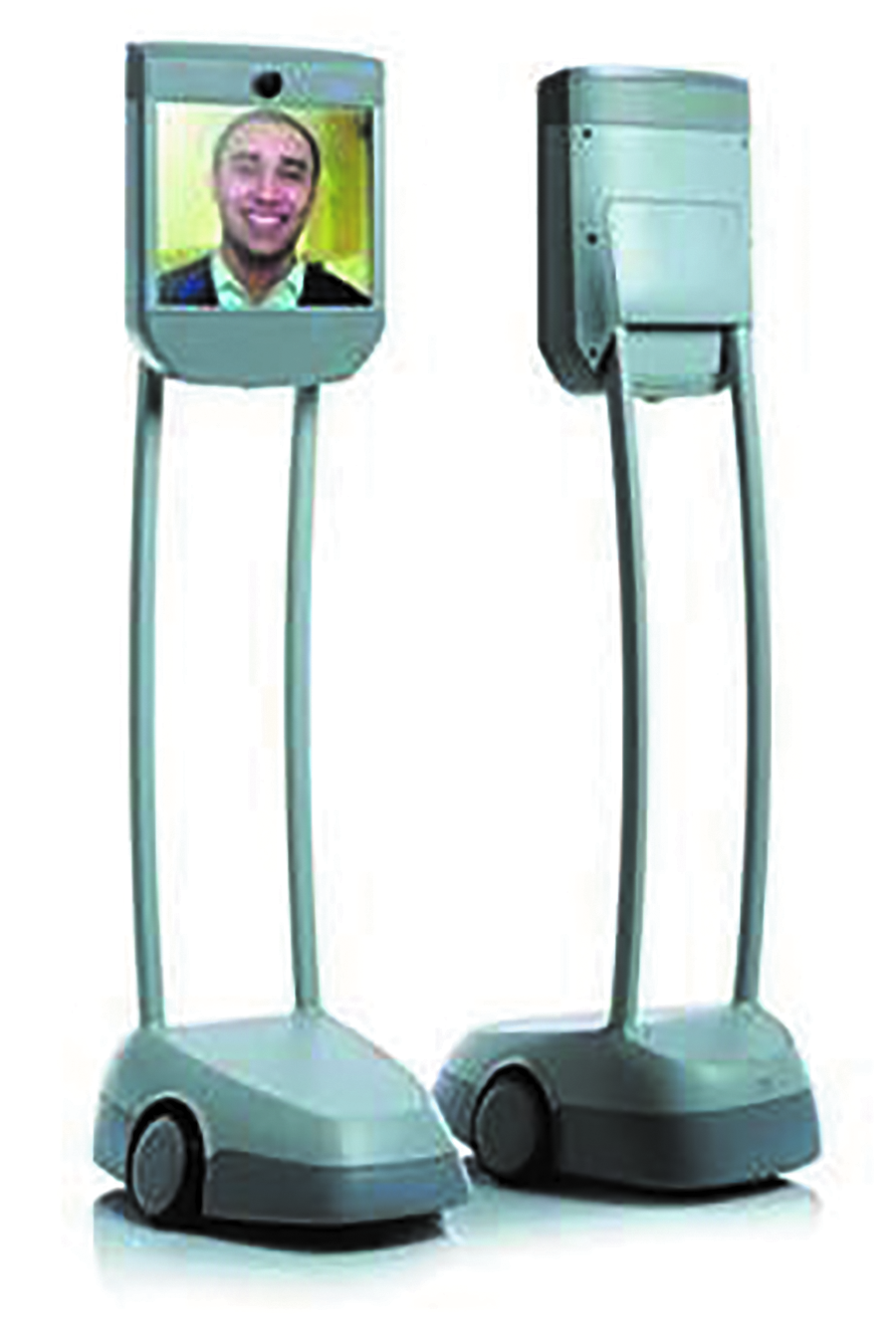
Telepresence robots.
As part of the VIK-e project, telepresence robots have been made available at home for patients hospitalized in isolation wards (Figs. 2 and 3) at the Leon Bérard Cancer Center and at the Pediatric Hematology and Oncology Institute (Lyon). Initially intended for use in the context of recreational events, it soon became apparent that the use of telepresence robots could be broadened to include applications in family situations. The initial aim was to offset potential negative effects inherent to the constraints of being in protective isolation. When our patients are hospitalized in an isolation ward, no more than three people can visit them and children under 15 years of age are not allowed. This adversely affects family connections, and in particular connections with siblings, over the course of such hospitalizations, in addition to exacerbating the psychological and affective isolation of hospitalized patients and the ensuing psychological effects.2–4
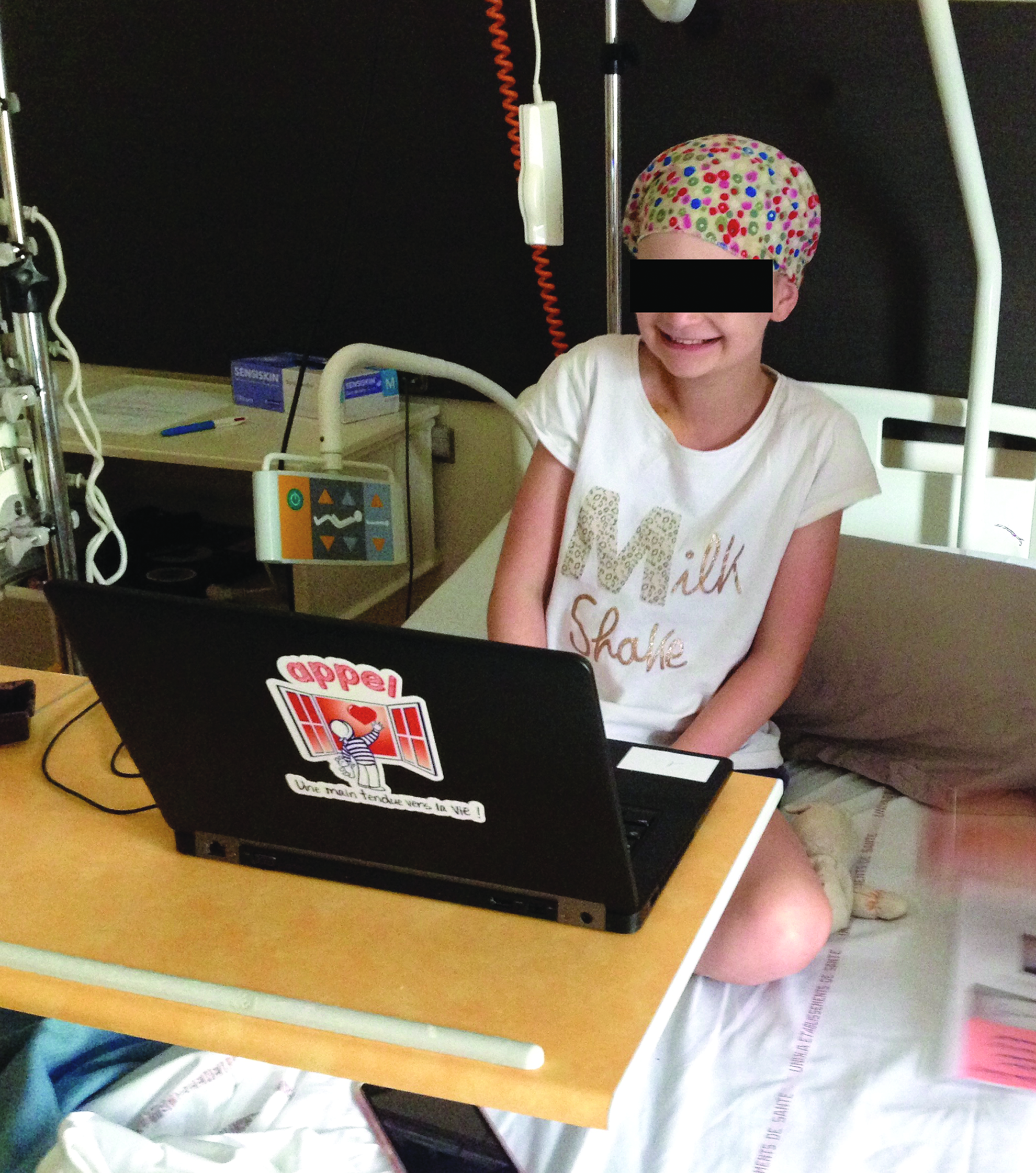
Telepresence robot at the hospital.

Telepresence robot at home.
Although some studies have examined the use of such robots and their effects in academic settings, 5 or the suitability of their use with elderly populations for ongoing care, 6 to our knowledge, there have not been any studies to date that examined the use of such robots at home in the family setting.
Our objectives were to identify possible impediments to the use of these telepresence robots in an isolation ward and ultimately to devise recommendations to continue or even broaden the trial.
Specifically, we analyzed the following:
the experience of patients with the device: beneficial effects and/or difficulties with the adaptive processes for long-term hospitalization in isolation; the experience of the patient's family: impact on the family organization, perception of care, and hospitalization of their child or the experience of siblings; and the experience of the medical team before and after the robots became available: effects on the child–nursing staff relationship, impact on organization of daily care, and the possibility of more extensive interactions.
Methods
Criteria for inclusion
Patients and families
All of the patients (7 to 25 years of age) and their families with access to a telepresence robot could participate in the study. The criteria for exclusion were limited French language skills and a psychiatric or cognitive disorder precluding being able to provide free and informed consent.
The following ethical precautions were taken:
The patients included in the study had access to psychological support by a psychologist independent from the study.
It was made clear to patients that refusal to participate or choosing to withdraw from the study would not have any impact on whether they would be able to have access to a telepresence robot.
For the medical caregivers:
Inclusion was on a voluntary basis by all of the caregivers (nurses, nurses' aides, and doctors) of the hospitalization unit where the telepresence robots were used.
We thought the study required two complementary skills: the skill of a psychologist familiar with the psychological effects of isolation to capture the experiences of patients and families and the skill of a philosopher specialized in ethics of daily care practices to identify the ethical issues of a device likely to impact their practice.
Data from the semidirected interviews were obtained:
By the psychologist with the patients and then with their families at day +15 regarding the presence of the robot (T1). A second semidirected interview (the patient and the families separately) was conducted after they had returned home (T2).
By the philosopher with the medical staff of the units before the availability of the robots and then at day +21.
The interviews were recorded and then transcribed. The philosophical analysis was vertical (identification of significant themes in the interviews) and then horizontal (identification in the transcript of words used by each interviewee for the various questions).
The analysis of the patient and family interviews was also vertical and then horizontal. We were able to devise an arborescent table allowing the recurrent themes in the interviews to be discerned while still reproducing the complexity of interindividual nuances.
In keeping with French law, the Institutional Review Board (the Comité de protection des personnes [CPP]) in question recused itself as studies in humanities, social, and human sciences have by law been considered to not impact human beings. By contrast, in keeping with the general rules regarding personal data (GDPR), all of the identifying data, including by cross-referencing, have been removed from the publication.
Results
A total of 17 patients (8 girls and 9 boys) ranging from 8 to 23 years of age (median age 16 years) and their families were included in the study. At T1, 16 patients (1 refusal) and 16 families (1 not applicable) were interviewed. At T2, 13 patients (3 refusals and 1 not applicable) and 12 families (3 refusals, 2 not applicable) were interviewed (interviews that could not be conducted due to factors other than consent of the patient, e.g., changes to the care protocol or absence of family, were deemed to be not applicable). The results presented below are a summary of the data collected during the semidirected interviews at T1 and T2.
Patient perspective
The patients reported having had a mostly positive and beneficial experience with the tool. As indicated by all of the patients, the benefits were first retention of a connection with their family—particularly their siblings—who were not allowed to visit the patient in the isolation ward (“the robot allowed me to get out of my room virtually to see my loved ones at home. So, it made me feel less alone”). Maintenance of a connection with siblings was achieved through typical small talk as well as by light-hearted exchanges such as games or poking fun at each other (“I spent an hour playing with him, with the robot. Still, it's me who won!”). The patients also indicated that they were able to participate to a certain extent in key family activities such as meals. The robot was seen as a practical tool that promoted communication. It was often compared with other means of communication, although the interviewed patients stated that they preferred the autonomy and freedom that the robot offered. Communication through the robot was described as more spontaneous and less conventional. The robot was generally seen to be a way to feel more at ease and it appeared to help most of the patients adapt to living at the hospital and to cope with the isolation.
In terms of difficulties, the first items raised were often technical in nature (e.g., getting the Wi-Fi network or the connection to work). The main reasons given for making limited use of the robot were fatigue or physically feeling unwell. Some patients expressed having experienced a degree of frustration when using the robot, such as not being fully present with their family or being transiently involved in things that they cannot access in person (“it's like having a bowl full of candy in front of you, that you cannot eat” or “it was also a little complicated, to see the family… It actually reminds you that you're not with them”). What the others see can also be a difficult issue, particularly due to the desire to not reveal certain things (e.g., the care or emotional distress) to their family and particularly to their siblings (“I do not want to show him that I'm not fine. The goal is not that I show him that it's not ok. He is already worried enough.”). Some patients also indicated having difficulty at times due to either them or their siblings experiencing separation (“The first few times, it was not easy. Not so much for me, but for my brother. It was not easy because when I told him I had to hang up, he was not well and was crying. I think he must have thought it was a bit like I was leaving again”). While difficulties were reported by several of the subjects, only one of them ultimately considered that the tool could have a detrimental effect and that they would not want to go through this experience again if it was made available to them as they had experienced too much frustration using it.
Family perspective
For the families, responses regarding their experiences with the item were also generally positive. Retaining family connections (with siblings and extended family) was again seen as the main benefit, as well as being able to participate in key moments of daily family life (“it even happened that we were cooking and the robot was next to us”). The majority of the parents thought that the robot was beneficial for the well-being of their child as it allowed them to overcome the isolation and also to have a bit of fun. As was also the case for the patients, the families preferred the robot over other means of communication due to its greater ease of use. The parents deemed the robot to be beneficial both for family members at home and for those who spent long periods of time at the patient's bedside. For family members at home, it was a source of reassurance in the sense that it allowed them to see their child and to have a sense of their physical and mental well-being. For the parent who was staying in the patient's hospital room, it provided them with a degree of access to their home life and to other members of their family.
In terms of the possible negative repercussions stemming from use of the robot, some wondered whether the patient might experience frustration when they witnessed things that they were largely missing out on. Others were worried about how their child would feel when the communication session ended and they were again faced with the reality of their isolation, as well as how hard it might be for the patient to keep up appearances due to the presence of the robot, at least in the early stages of its use. The possibility of disinterest by the patient in communication in general, and use of the robot in particular, was raised: in connection with the effects of the disease and of the treatment (e.g., fatigue or physically feeling unwell: “he was not doing very well physically, so he used it only two or three times”); the personality of the patient (e.g., prudishness, shyness, or introversion); their age (adolescence); defensive and adaptive coping mechanisms of the patient (restriction of the centers of interest or willingness to isolate oneself in a bubble); or the robot itself (potentially intrusive) (“He had a small refusal when he lost his hair after the chemo, he did not want to connect to not see it, so that his little sisters do not see him.”).
The reassurance derived from being able to connect with the patient can paradoxically become concern when the latter does not initiate the connection. The family may then incorrectly assume that this is due to the patient being physically unwell and/or emotionally distraught and this can, therefore, be an additional source of concern (“That said, if one day, she wants to stay alone, it can secure us. But it can also worry us. If we are here and if she does not want to connect and we have no means of communication, we will be like that. Whereas perhaps there is nothing. It's double-edged. Because she just may not want to. And we must respect it. But in our head, as we are not good, we say to ourselves: if she does not connect, it is that it does not go well!”). There can be a degree of disappointment when the patient uses the robot more or less than expected. This disappointment exists both for the parents (even though they largely understand the reasons) and for the siblings who tend to want communication more than the patients themselves. Some of the parents shared with us the difficulties that siblings had (particularly the younger ones) with coming to grips with why the patient would end the communication session or would not connect to begin with. It is also interesting to note that a device initially intended to be one-way (with the patient initiating the connection) was often circumvented by the family calling the patient to suggest that they connect through the robot. Nonetheless, most of the families felt that the benefits outweighed the difficulties that they had encountered with it (“Also, what is at stake, I think, as parents, is that necessarily, those who are at home are waiting for a connection, and that we expect a lot of things from a sick child. And I think that she can perhaps connect to try to please others, and that it does not necessarily make her happy. […] So, I think sometimes she does not allow herself to say no. And even us, we have to pay attention to that. It may be more us sometimes who need to see her.”).
Nursing staff and doctors' perspectives
In terms of the nursing staff, 15 interviews were carried out before the robots were made available: 9 with nurses' aides, comprising two interviews, and 6 individual interviews with nurses. Once the robots had been made available, it was harder to get the nursing staff to attend the interviews. Ultimately, 13 interviews were carried out: 5 with nurses' aides, 6 with nurses, and 2 with doctors of the unit.
Their evaluation of the presence of a robot in the patient's room was generally positive. Indeed, the nurses emphasized that the robot helped the children stay more or less up to date with what was going on at home. The nurses' aides emphasized that the child can be keen to show them their other life, their house, and their brothers and sisters. The importance of the connection with their siblings was often mentioned and that the robot allowed the patient to assume their role at home and that this allowed them to continue to have a life that is as normal as possible. The nursing staff also saw merit in virtually meeting the extended family of the patient to find out where they live and their usual surroundings. They also noted how important it was for brothers and sisters to see how the patient lives at the hospital and to become virtually acquainted with the individuals involved with the patient's hospitalization. According to the nursing staff, this allowed them to get a genuine feel for what it is like instead of conjuring up various unrealistic scenarios.
Nonetheless, a number of limitations and/or difficulties were also noted. There were concerns regarding confidentiality of the medical data and the difficulty with containing their dissemination with this virtual interface: “Who is actually involved with the conversations that take place in the room? Who is present, but out of sight?” Some of the nursing staff even went so far as to mention possible situations of hidden public. Moreover, they also noted that in case the child has somatic problems, it is not possible to send the parents to a colleague down the hallway to reassure them and to accompany them. It then becomes difficult to take care of the child while also reassuring the parents on the screen. When this happened, it put the nursing staff in a difficult situation. In a broader sense, several nursing staff stated having encountered difficulties when the robot was used as a substitute for the family, noting that nothing can really replace direct contact, with its subtleties and nonverbal communication. Finally, the nursing staff expressed a desire to retain privileged contact with the child, which according to them is, for a large part, established without the presence of family. For a patient who is hospitalized in a continuous manner in their room, the nursing staff thought that it is important to develop relationships within the unit and that a relationship forms that is based on trust.
Discussion
The results of this exploratory study indicate that experiences with the robot were overall positive. Most of the nursing staff, patients, and patients' families appreciated having access to the robots. The feedback for this initial trial appears to make the case for validation and deployment of home use of these robots. Indeed, the various parties involved were keen to use them and, due to their novelty, the robots generated considerable interest. By promoting conditions and opportunities for communication for a number of families, they were beneficial to the patient, but perhaps even more so for their family who derived a degree of reassurance and sense of connection from them. This was also a secondary benefit for patients since use of the robot by patients to reassure their loved ones can be interpreted as a way of attenuating their feelings of guilt linked to the effects of their disease on the family balance.7–9 The robots were also a source of reassurance for the nursing staff who are well aware of the toll that being hospitalized in an isolation ward can take on a child, adolescent, or young adult.
Without questioning the usefulness of the tool and positive perception that was expressed by the various parties, a number of specific situations and difficulties that were reported have led us to issue several recommendations and items that warrant being addressed. It seems important to us to, first of all, temper the high expectations that some might have regarding this tool. Indeed, its novelty can sometimes lead to disproportionate expectations and hopes, primarily by doctors and families. The experience of frustration and disappointment expressed by some families is a reminder that it is probably not a panacea for all intrafamily communication difficulties, the medical caregiver/care receiver/relatives triad relationship, or for the constraints linked with hospitalization in isolation that pre-existed its implementation. It seems reasonable to us to state that the robot is susceptible to not being suitable all the time for all patients and their families, and it seems essential, therefore, to be able to inform users beforehand, and particularly the siblings of the patient, of possible impediments to communication that the robot is not able to resolve (e.g., the patient not feeling well physically or mentally, or the care). There is also a need to preserve and to guarantee conditions of free and informed choice regarding its use and the possibility of assistance, whether technical or psychological, when difficulties are expressed.
On the other hand, the advent of new communication technologies in the medical and hospital setting is a reason to revisit the ethical considerations regarding respect for and the preservation of privacy, which lie at the core of the care relationship. The use of connections by telepresence robots indeed forces us to consider and to guarantee the means and modalities by which the privacy of not only the patient is preserved but also that of their family due to the presence of the robot in their home. Likewise, the privacy of the care, the contact between the patient and their doctor or with any other health professional, and the confidentiality of personal and medical data need to be protected.
The low number of subjects included in this qualitative study has prompted us to be cautious with regard to the wider significance of the results. An extension of the study for a longer period of time and in other oncology and hematology centers seems necessary to validate them, particularly by means of a quantitative study that would allow the sample to be significantly increased.
Conclusions and Perspectives
In summary, the two main enduring effects regarding the contribution of telepresence robots for children and adolescents hospitalized in isolation are retention of a connection of the patients with their siblings and the possibility of retaining their position and role in the family on the one hand and the fact of being able to move in a virtual setting by means of a robot and the gain in autonomy on the other hand.
Based on our study, we can also issue the following three recommendations:
The robot should not be made available at the start of the hospitalization to allow time for familiarization and a reciprocal acceptance between the patient and the nursing staff within the unit.
Siblings (above all, younger brothers and sisters) should be prepared for what can be expected from the robotic connection, the reasons why at times it may be disconnected or no connection is made by the patient, and that these should not be interpreted as them being rejected by the patient.
Parents should be made aware that the robot should not be used as a substitute for direct interactions and the presence of the nursing staff, which can otherwise make it hard for the latter in terms of the quality of the human relationship and safeguarding of data regarding their child.
The encouraging results of this exploratory study hence suggest validation and more widespread use of the tool in a larger population. During this experimentation, there was an opportunity to see whether an older population could also benefit from this tool. Indeed, the presence of the robot in the adult unit led to requests from the nursing staff as well as the patients for more patients to have access to a telepresence robot. Such requests proved to be particularly common from adults and young adults with young children. As a result, a project with wider availability of robots was started this year, and it should give rise to another study aimed at measuring the impact on this specific population.
Footnotes
Author Disclosure Statement
There are no competing financial interests.
Funding Information
Bristol-Myers Squibb (BMS) supported the project by financing the purchase of the telepresence robots by the Philanthropic Association of Parents of Children afflicted with Leukemia and other cancers (APPEL) as well as the costs associated with the study in humanities and social sciences. This work was supported by LYRICAN (INCA-DGOS-INSERM 12563), PIA Institut Convergence Francois Rabelais PLAsCAN, Ligue de L'Ain contre le Cancer (Canopée).