




Abstract
Introduction:
Samyama is an Isha Yoga 8-day residential meditation/yoga retreat combined with 60 days of preparation with vegan diet. We showed earlier Samyama retreat was associated with lower systemic inflammation and favorable lipid profiles along with other physical and mental health benefits. There is no mechanistic study on the impact of an advanced meditative process on multiple blood lipids and their implications on meditation-related improved physical and mental wellbeing.
Methods:
Sixty-four Samyama participants on vegan diet had blood sampled immediately before and immediately after the 8-day retreat for lipidomic analysis. The complex plasma lipidome was characterized using high-resolution mass spectrometric analysis and tandem mass spectrometry.
Results:
Pre- and post-Samyama blood samples of 64 Samyama participants were analyzed. Acylglycines (acetyl, propionyl, butyryl, and valeryl) were increased in the plasma post-Samyama compared with pre-Samyama (p < 0.001). Levels of glycerophosphocholines, glycerophosphoethanolamines, di-unsaturated ethanolamine plasmalogens, cholesterol esters, acylcarnitines, and acylgylcerines (triacylglycerols and diacylglycerols) decreased after the Samyama meditation. Plasma levels of glycerophosphoserines or glycerophosphoinositols were unchanged.
Conclusion:
An 8-day advanced meditation retreat resulted in increased acylglycines, an endocannabinoid-like fatty acid amide associated with increased cellular anandamide levels, anti-inflammation, analgesia, and vascular relaxation. Other serum lipid levels, including some that are associated with increased risk of atherosclerosis, were reduced following the Samyama program.
ClinicalTrials.gov Registration:
Identifier: NCT04366544.
Introduction
The popularity of meditation has increased in recent times as people utilize it as an approach to reduce stress and anxiety. However, exploration of overall biochemical changes from meditation needs to be more thoroughly investigated. This is the first and large study exploring the changes in lipidomic profile immediately before and immediately after an advanced meditation program to better have mechanistic insights into improved physical and mental wellbeing associated with meditation.
Isha Foundation is an international nonprofit organization offering an 8-day Samyama residential meditation retreat. 1 Samyama is a highly advanced meditation program requiring four prerequisite courses. The Samyama retreat requires extensive 2 months of daily preparation, including hata yoga (physical postures), kriya yoga (breath), and meditation, in addition to a vegan diet, including 50% raw (uncooked) foods.
Vegan diets have been shown to reduce circulating lipids, including glycerophosphocholines, acylcarnitines, and sphingomyelins. 2 A 6-day Panchakarma-based Ayurvedic intervention, which included herbs, vegetarian diet, meditation, yoga, and massage in healthy subjects, has shown changes in phospholipid biosynthesis, choline metabolism, and lipoprotein metabolism. 3 In addition, previous studies have shown that lipid profile changes by consuming whole grains, 4 probiotics, 5 and prebiotic herbs. 6 Yoga was associated with improvements in lipid profile and other physiological metrics. 7,8 No previous study examined wide spectrum lipidomic changes in a large cohort of advanced Samyama meditators on vegan diet prospectively.
In our previous study, participants in Samyama experienced reduced depression and anxiety, improved well-being, lower body weight, and reduced blood triglycerides. 9 Additionally, it has been shown that Samyama participants have improved immune responses 10 and increased functional connectivity between the default mode and salience brain networks. 11 This study, for the first time, aimed to prospectively study wide spectrum changes in lipidomic profile immediate before and immediately after the 8-day Samyama meditation retreat to mechanistically explore changes in advanced meditators on vegan diet.
Materials and Methods
Subject recruitment
Registered participants for the April 2018 eight-day residential yoga/meditation program (Samyama program) at the Isha Institute of Inner Sciences (McMinnville, TN) were approached about the study 2–3 months before the start of the retreat. Invitation letters were sent electronically. Study eligibility criteria were Samyama program participants of at least 18 years of age.
Exclusion criteria were inability to read or comprehend the consent form, presence of a medical condition for which a blood draw would be contraindicated (e.g., severe anemia), active use of marijuana, opioids, or related drugs, use of antibiotics or probiotic/prebiotic supplements within 60 days of enrollment, and residence outside of the United States. All participants provided electronic consent. This study was reviewed and approved by the Institutional Review Board of the Indiana University School of Medicine (#1801728792). STROBE checklist (Supplementary A) was used to validate study procedure. 12
Samyama program details
Participation in the Samyama program 1 required completion of several yoga programs. These include Inner Engineering, 13 Bhava Spandana, 14 Shoonya, 15 and Yogasanas. 16 The Samyama retreat requires extensive 2 months of daily preparation based on yoga and meditation practices leant in these programs. Inner Engineering is a comprehensive beginner level yoga program where participants learn the Shambhavi Mahamudra Kriya (SMK) practice. 13 SMK is a 21-min practice involving breath and sound conducted in a seated posture. Bhava Spandana is a 4-day residential retreat where participants undergo advanced mediation process under the strict guidance of a trained instructor. 14
The Shoonya program offers a combination of two practices—Shakti Chalana Kriya (SCK) and Shoonya meditation. SCK is another practice involving breath and sound conducted in a seated posture. Shoonya meditation is a meditative process where there is no action from the practitioner. Finally, the Yogasanas program offers physical practices that involve more than 20 different yoga postures. For 2 months before the Samyama program, participants needed to conduct these practices daily. In addition, they would be required to consume a 50% raw vegan diet, which also excluded coffee, tea, alcohol, and tobacco.
The Samyama program itself was conducted in a closed hall absent of external influences. Participants remained silent with hours in meditation with intermittent breaks. 1 All participants had similar vegan diet provided by the Samyama retreat organizers during the 8-day retreat.
Sample collection and plasma processing
Blood samples were collected at the Isha Institute of Inner Sciences a day before the retreat and immediately after completion of the 8-day retreat (Fig. 1). All samples were collected using sterile venipuncture technique by physicians, nurses, or phlebotomists. Blood samples were de-identified and labeled with unique codes.

Study timeline for plasma lipidomic analyses of Isha Samyama program participants.
For the nontargeted lipidomics analyses, 100 μL of plasma were vortexed with 1 mL of methanol containing the stable isotope internal standards [ 2 H5]phosphatidylethanolamine 34:1, [ 2 H5] docosahexaenoic acid, [ 2 H54]phosphatidylcholine 28:0, [ 2 H5]MAG 18:1, [ 13 C3]DAG 36:2, and bromocriptine. 17 Next, 1 mL of water and 2 mL of methyl-tert-butyl ether were added and the samples vigorously shaken at room temperature for 30 min. After centrifugation at 4000 g for 30 min, 1 mL of the upper organic layer was dried by centrifugal vacuum evaporation and dissolved in 200 μL of infusion solvent (isopropanol:methanol:chloroform [4:2:1] containing 15 mM ammonium acetate).
For the targeted analyses of acylcarnitines and acylglycines, 100 μL of plasma were vortexed in 1 mL of cold acetonitrile:methanol:formic acid (800:200:2.5) containing the stable isotope internal standards [ 2 H3]N-acetylmethionine and [ 2 H9]propionyl choline. 17 The samples were next vigorously shaken at room temperature for 30 min. before centrifugation at 30,000 g for 30 min at 4°C. Seven hundred microliters of the supernatant were dried by centrifugal vacuum evaporation and dissolved in 200 μL of infusion solvent (acetonitrile:methanol [1:1]).
High-resolution mass spectrometric analyses
Samples underwent flow injection analyses at a flow rate of 12 μL/min and were analyzed by high-resolution mass spectrometry (MS) using a Q Exactive benchtop Orbitrap (Thermo Fisher Scientific, Waltham, MA) with a resolution of 140,000 and less than 3 ppm mass error. Electrospray ionization with a sheath gas of 12, a spray voltage of 3.7 kV, and a capillary temperature of 321°C were used. The ionization modes utilized are listed in the legend of each data figure. For MS 2 studies, a window of 0.4 amu was used for the precursor ion and the product ions were acquired at high resolution (<3 ppm mass error). For MS 2 studies, the neutral collision energy was optimized between 20 and 30 eV.
Data presentation
Data are presented as relative metabolite levels (i.e., the ratio of the signal intensity of the endogenous metabolite to the signal intensity of an appropriate stable isotope internal standard) ± standard error.
Statistical analysis
The means and standard deviations were calculated for the lipids. The normality of the distribution on difference between the pre- and post-Samyama was checked with the Shapiro–Wilk test for each lipid. Depending on the normality, paired t-test or Wilcoxon signed rank test was performed to determine significant difference in levels of metabolite at the 0.05 level of significance. R statistical software (version 4.1.3; The R Foundation for Statistical Computing, Vienna, Austria) was used for statistical calculation.
Results
Participants
A total of 64 Samyama participants enrolled in this study. Blood sampling for lipidomic analyses was obtained from all 64 Samyama participants immediately before and after the 8-day Samyama retreat. Participant ages ranged from 25 to 71 years (mean 41.8 ± 10.9 years), including 36 males and 28 females.
Acylglycines
Since changes in gut microflora can dramatically alter the supply of short-chain fatty acids to the circulation, we utilized acylglycines as an index of this metabolism. All monitored acylglycines (acetyl, propionyl, butyryl, and valeryl) were increased in the plasma post-Samyama blood samples compared with pre-Samyama blood samples (p < 0.01; Fig. 2; Table 1; Supplementary B). All increases in acylglycines were validated by MS 2 with glycine [74.0247] as the product anion (<1 ppm mass error). These represent biomarkers of augmented metabolism by the gut bioflora.
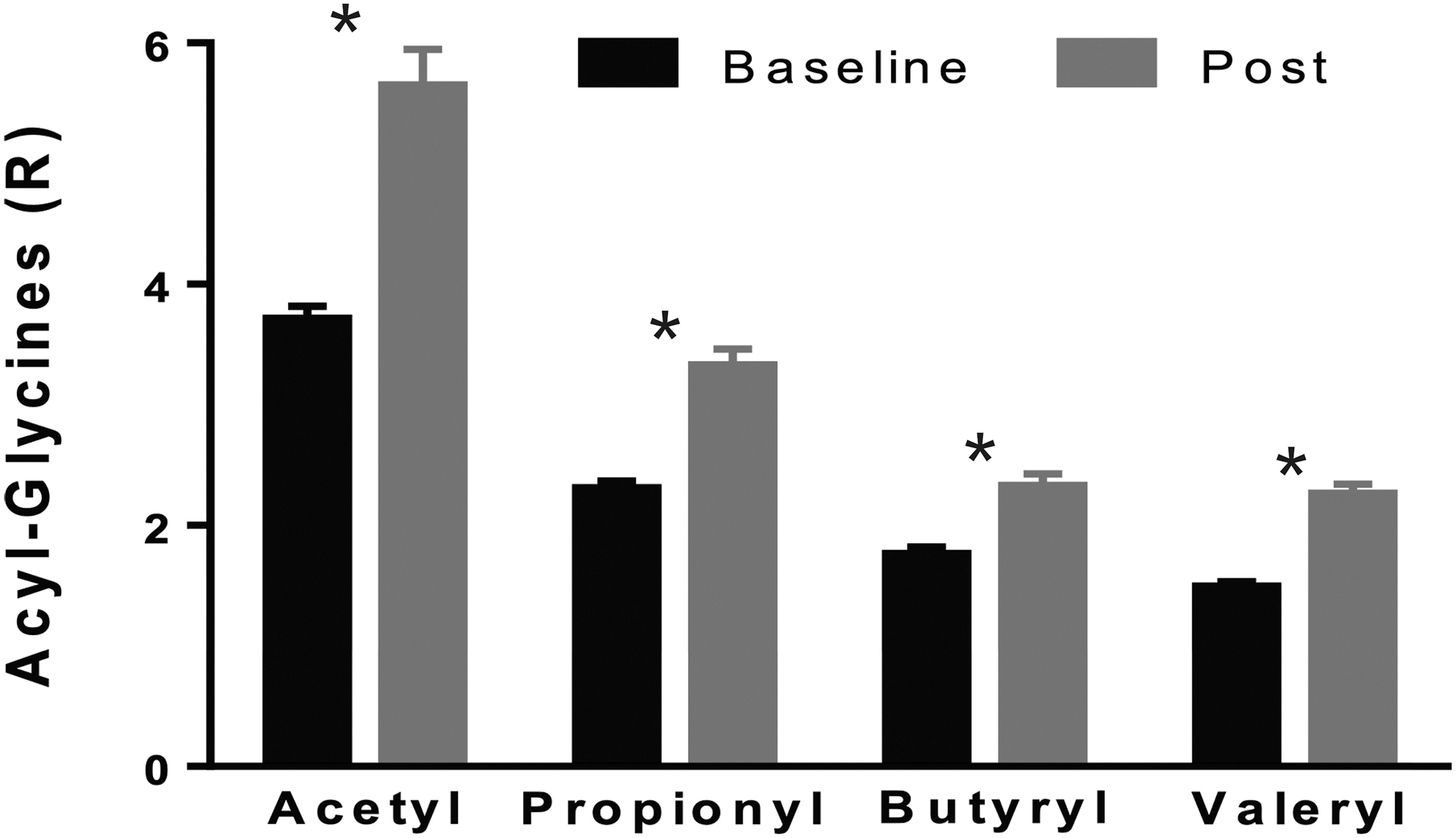
Relative plasma levels of acylglycines post-Samyama compared with pre-Samyama (p < 0.001). The [M-H]− anions of acylglycines were monitored in negative ESI. Statistical significance is denoted by an asterisk (*). ESI, electrospray ionization.
Lipid Values for Pre- and Post-Samyama
Paired Wilcoxon signed rank test.
Paired t-test.
N, no significance; SD, standard deviation.
Neutral lipids: acylglycerines
The plasma levels of both diacylglycerol (DAG) and triacylglycerol (TAG) were universally decreased in the plasma post-Samyama compared with pre-Samyama (p < 0.01; Fig. 3 and Table 1), except DAG 36:2 (p = 0.09).
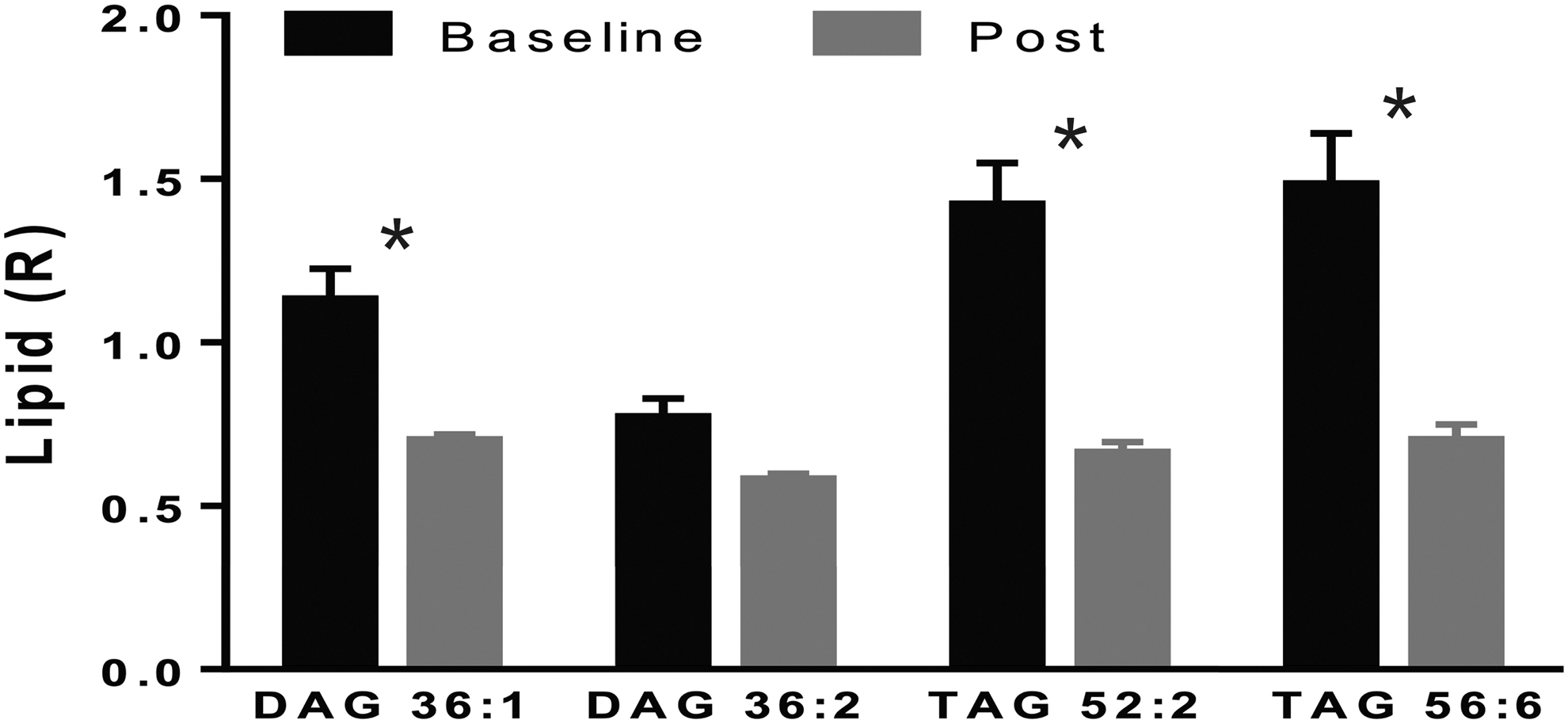
Plasma levels of DAG and TAG were decreased post-Samyama (p < 0.01), except for DAG 36:2. Values for TAG 52:2 are scaled down than actual values (Table 1). Statistical significance is denoted by an asterisk (*). DAG, diacylglycerol; TAG, triacylglycerol.
Choline glycerophospholipids
Phosphatidylcholine (PC) (p < 0.01; Table 1), choline plasmalogen (p < 0.05; Table 1), and lysophosphatidylcholine (LPCs) (p < 0.01; Table 1) relative levels were mostly lower after the Samyama compared with pre-Samyama values (Fig. 4), except PC 32:1 (p = 0.16) and LPC 16:0 (p = 0.06). These included glycerophospholipids (GPL) with mono-, di-, and poly-unsaturated fatty acid substituents.
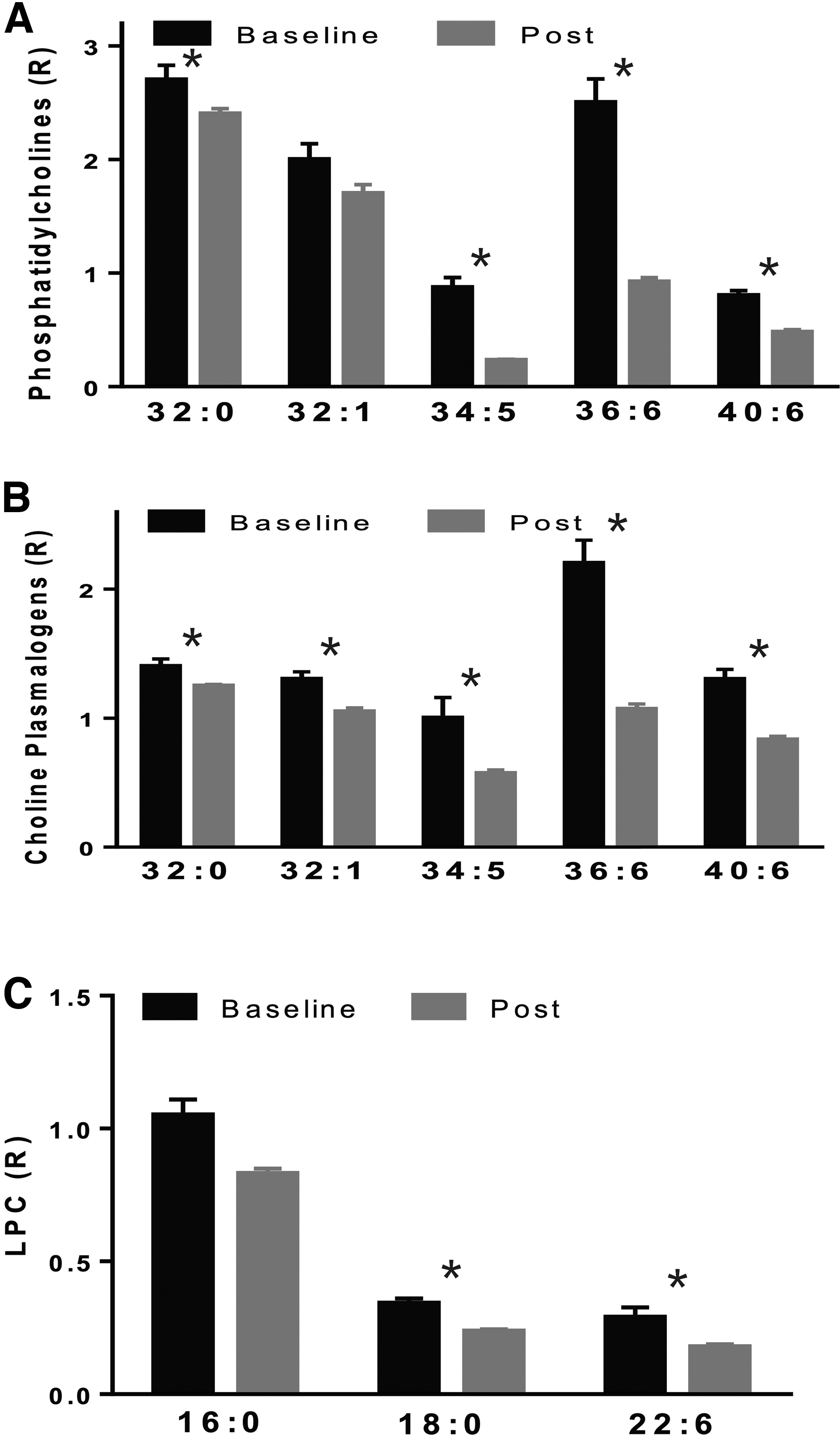
The majority of phosphatidylcholine
Ethanolamine-, inositol-, and serine-GPL
While plasma phosphatidylethanolamines were uniformly decreased (p < 0.05) in the plasma post-Samyama compared with pre-Samyama, only the mono- and di-unsaturated ethanolamine plasmalogens (PEp) were decreased (p < 0.01; Fig. 5 and Table 1). There were no changes in the levels of inositol- (phosphatidylinositol) or serine-GPL (phosphatidylserines) (no significance) (Fig. 5).
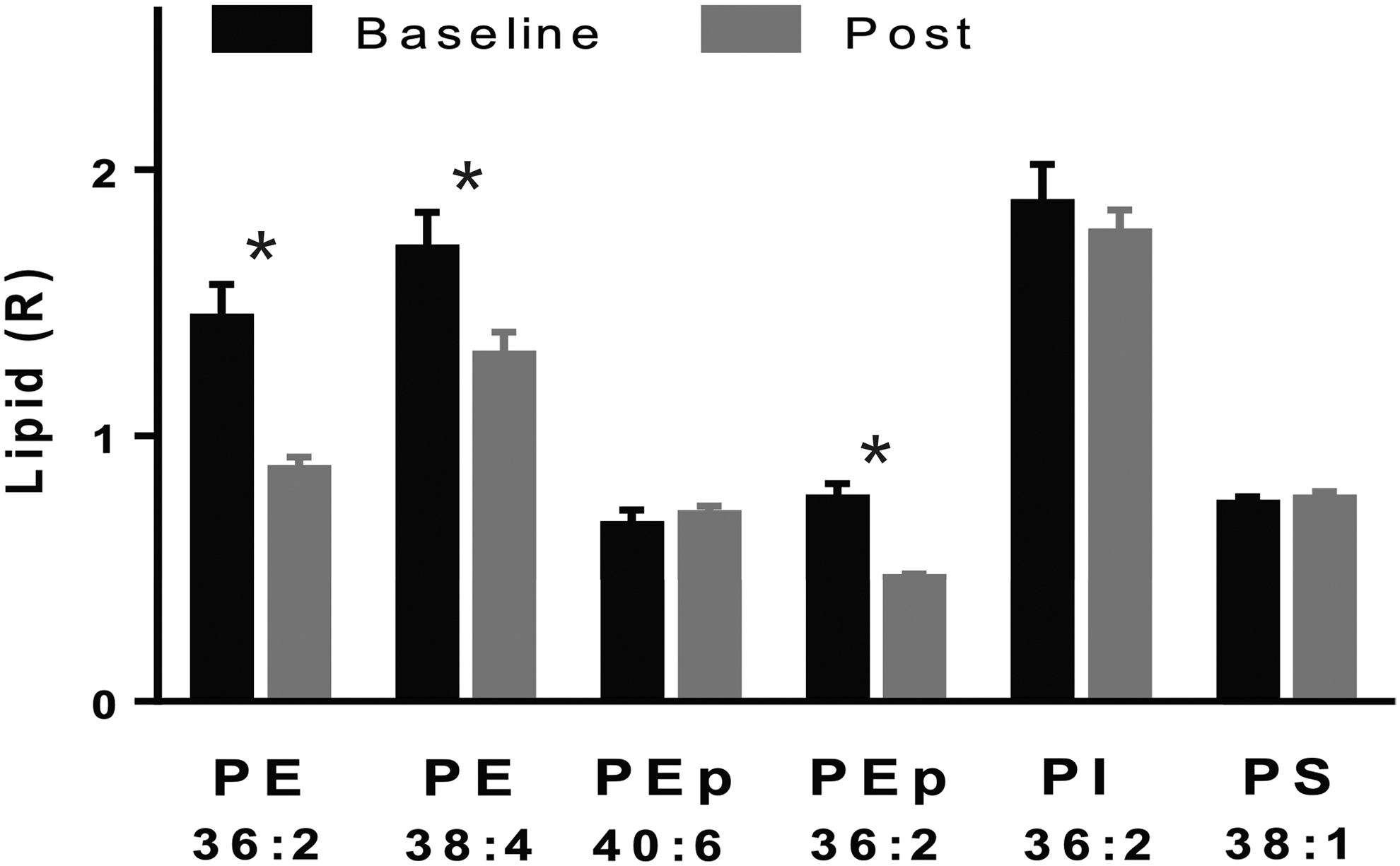
Plasma PE were uniformly decreased in the plasma post-Samyama (p < 0.05), while only mono- and di-unsaturated ethanolamine plasmalogens (PEp) were decreased (p < 0.05). There were no changes in the levels of PI or PS. Statistical significance is denoted by an asterisk (*). PE, phosphatidylethanolamines; PI, phosphatidylinositol; PS, phosphatidylserines.
Cholesterol esters
The relative levels of cholesterol esters also were suggestively reduced post-Samyama compared with pre-Samyama (Fig. 6A and Table 1).

Acylcarnitines
Relative levels of acylcarnitines (carnitine esters) were lower post-Samyama compared with pre-Samyama (p < 0.05; Fig. 6B and Table 1). Decreases in these metabolites are probably reflective of decreased release of free fatty acids from lipid stores.
Discussion
This is the first and largest study to date to characterize multiple blood lipidomic profiles with respect to meditation. This study characterized the complex lipid profile of advanced Samyama meditators immediately before and after the 8-day Isha Samyama retreat. All study Samyama participants had a similar vegan diet during the retreat. Therefore, this study focused on observed changes in the blood lipidome from participation in an advanced Samyama meditation program.
A universal increase occurred in the acylglycines (acetyl, propionyl, butyryl, and valeryl) following the Samyama retreat, and a nearly universal decrease was observed in the other measured lipids including choline plasmalogens, PC, LPCs, phosphatidylethanolamines, ethanolamine plasmalogens, cholesterol esters, acylglycerines, and carnitine esters with no change in phosphatidylinositols and phosphatidylserines.
Veganism and vegetarianism eliminating animal products have been promoted for presumed health benefits such as lowered blood pressure and risk of heart disease and type II diabetes. 18,19 Yoga and meditation, in combination with vegan diet, also has been shown to lower blood lipids. 3,9 In addition, previous studies have clearly demonstrated that alterations in gut microflora by consuming whole grains, 4 probiotics, 5 and prebiotic herbs 6 result in similar lipid alterations. The primary effects of yoga and meditation on multiple serum lipids on meditators on vegan diet were not well studied. This study aimed to study the predominant effects of yoga and meditation on human lipidome.
Acylglycines are involved in a diverse array of signal transduction pathways, 20 including activation of G protein-coupled receptor 132, a receptor involved in inflammatory pathways. 21 Acylglycines are endocannabinoid-like fatty acid amides with structural similarities to anandamide (AEA). 20 Cellular functions attributed to the most studied acylglycine, N-arachidonoylglycine, include anti-inflammatory activity, 22 analgesia, 23 vasorelaxation, 24 and modulation of electrical signaling and inhibition of glycine and calcium currents. 25,26 Acylglycines increase cellular levels of AEA. 20
We recently reported significantly increased levels of AEA and other endocannabinoids immediately after a 4-day meditation retreat. 27 Similar to the endocannabinoid AEA, acylglycines are degraded by hydrolysis catalyzed by fatty acid amide hydrolase. 28 Since meditation has been linked with increased AEA and endocannabinoid expression, 27 it is possible that these effects are linked to increased acylglycine expression.
While acylglycine levels were increased after the 8-day meditation program, other lipid levels were mostly reduced. This includes levels of DAGs and TAGs (triglycerides). A reduction in DAGs may be involved with increased insulin sensitivity. 29,30 DAG lipase hydrolyzes DAG to produce 2-arachidonoylglycerol (2-AG), another important endocannabinoid. 31 In a prior study, we showed that a meditation retreat increased 2-AG levels. 27 The result of reduced triglycerides during Samyama is consistent with results reported in a prior study. 9
Along with triglycerides, cholesterol and low-density lipoprotein (LDL) levels were also reduced during the Samyama program. 9 In this study, we have shown that participation in this program reduced cholesterol ester levels. Cholesterol esters have been linked to the formation of atherosclerotic plaques. 32 There was also a reduction in different size chains of carnitine esters. Certain carnitine esters, such as butyryl carnitine, have been linked to prediabetes 33 and acylcarnitines may play a role in insulin resistance. 34
The decreases in cholesterol esters and TAGs may benefit endothelial function. Vegan diets are known to decrease the risks for cardiovascular disease, diabetes, diverticular disease, and eye cataracts, 19,35 –38 and possibly some cancers 18 ; this may be related to the endothelial protective effect of lowered cholesterol esters and TAGs. These lipids are highly regulated since they serve essential membrane and signal transduction functions. 39
Our data are consistent with previous studies 2,3 that demonstrated significant reductions in the levels of circulating glycerophosphocholines with the Samyama preparation and retreat. These include PC, choline plasmalogens, and LPCs. PC is a structural phospholipid found in cell membranes, which has been shown in be involved with the cell cycle, 40,41 plasma lipid homeostasis, 42 and colonic mucosal protection. 43 Ulcerative colitis patients supplemented with PC have showed reduced inflammation. 43,44 However, its metabolites have been linked to increased risk of cardiovascular disease. 45,46
LPCs are phospholipids derived from PCs that have been linked to inflammation, cardiovascular disease, and diabetes. 47 –49 LPCs are a major component of oxidized LDLs and is critical for atherogenesis. 50,51 LPCs can have conflicting effects for diabetes as they have been shown both to increase insulin resistance and decrease blood sugar levels. 48 Furthermore, high-fat diets have shown to decrease LPC levels. 52 This is an important consideration since Samyama participants were exposed to what was most likely a low-fat diet.
Participants after Samyama also demonstrated lower plasmalogen levels. Decreased levels of ethanolamine plasmalogens (PEp) have been linked to neurodegenerative diseases such as Alzheimer's disease and Parkinson's disease. 53,54 However, this it is unclear if these associations are causal or effective. Since plasmalogens are considered from treatment for neurodegenerative diseases, 55 it is important to note the reduction in levels of these lipids. It is also important to assess whether these changes are long term or as a result of a meditation program where food intake may be limited. It is important to note that participants mentioned increased mindfulness, joy, vitality, and resilience after Samyama. 9 Therefore, a reduction of lipid levels is not considered a reflection of a perceived decline in cognitive ability.
A part of reduction in lipids could also be related to any dietary alteration over the course of the 8-day program. For example, vegan diets have been shown to reduce circulating lipids, including glycerophosphocholines, acylcarnitines, triglycerides, and sphingomyelins. 2,56 While participants were on a vegan diet before and following the program, they may have had different dietary habits during the program. Altering dietary habits may have played a role in reduced levels for many lipids. Although vegan diet has been associated with primary reduction in lipid levels, we observed increase in acylglycine levels during 8 days of vegan diet, which is most likely due to a meditation-related change.
The inclusive Samyama meditation, yoga, and kriya practices along with vegan diet have contributed to cardioprotective, antiatherosclerotic, and anti-inflammatory benefits, while increasing acylglycine, which are associated with increasing cellular endocannabinoids, including AEA 20 ; this is consistent with our recent report of increased levels of endocannabinoids, including AEA after a 4-day meditation retreat. 27 Our data are the first to demonstrate that meditation can augment the circulating levels of acylglycines, endocannabinoid-like fatty acid amides, while lowering levels of other lipids that are associated with atherosclerosis.
The long-term effects of these acylglycine increases need to be further studied in longitudinal studies. The lower levels of other lipids we observed in the study could potentially explain and translate into lower long-term systemic inflammation, less atherosclerosis, less cardiac and metabolic diseases, longer longevity, and vitality in long-term meditators over years. This study's findings are consistent and supportive of our recent report of objective physiological benefits (decreased systemic inflammation, improved lipid profile, and lower HbA1c) and improved psychological function (reduced anxiety and depression) in Samyama meditators. 9
This study did have a few limitations. As this was an observational study of Samyama participants voluntarily enrolling in the program, we did not have the opportunity to create a control group or limit participants to a single intervention (e.g., vegan diet only, meditation only) as Samyama preparation and retreat are inclusive of daily yoga, kriya, and meditation practices along with vegan diet.
Another limitation is the exact amount of food intake and calories were not measured during the program. It is possible that participants were more focused on their spiritual experiences during the program that their overall food intake was reduced. Reduced food intake and vegan diet might have contributed to lower lipid levels, but they do not explain increase in acylglycine levels, which is most likely due to intense meditation. It is hard to separate the individual contributions of meditation and vegan diet in lowering lipid levels during the Samyama retreat as they are practiced together.
Conclusions
In summary, the 8-day Isha Samyama program lowered several circulating lipids involved in atherosclerosis and systemic inflammation, thereby imparting protection against cardiovascular disease. Samyama retreat also elevated acylglycines, which are associated with endocannabinoids. The latter have been linked to joyful feelings in meditators. 27 Long-term effects of these lipid levels on cardiovascular disease and happiness need to be further studied.
Footnotes
Acknowledgments
The authors appreciate support provided by Isha Institute of Inner Sciences, McMinnville, TN, and study volunteers for this prospective research on Samyama participants.
Authors' Contributions
R.V.V. contributed to study design and article preparation. P.L.W. contributed lipidomic assays, data analysis, and article preparation. A.V. contributed to study design, funding, and sample collection. J.E.C. contributed lipidomic assays and data analysis. S.H. contributed to study conduct and data collection. M.M. contributed to study conduct and data collection. S.A. contributed to study design, conduct, and data collection. H.O. contributed to data analysis. B.S. contributed to study design, conduct, data collection, and article revision. D.P. contributed to research coordination, IRB approval and communications, study conduct, and data collection. J.R. contributed to article preparation. S.S. contributed to study design, interpretation, article preparation, and funding.
Ethics Approval and Consent to Participate
This study was reviewed and approved by the Indiana University School of Medicine Institutional Review Board. All subjects provided written or electronic consent to participate.
Author Disclosure Statement
No competing financial interests exist.
Funding Information
This research was funded by Indiana University, Indianapolis, IN, and Lincoln Memorial University, TN.
Supplementary Material
Supplementary A
Supplementary B
References
Supplementary Material
Please find the following supplemental material available below.
For Open Access articles published under a Creative Commons License, all supplemental material carries the same license as the article it is associated with.
For non-Open Access articles published, all supplemental material carries a non-exclusive license, and permission requests for re-use of supplemental material or any part of supplemental material shall be sent directly to the copyright owner as specified in the copyright notice associated with the article.
