




Abstract
Background:
Breast cancer symptoms related to the disease nature and treatments develop and the quality of life of patients is impacted. Art therapy improves the quality of life by increasing symptom control and treatment compliance. This study aimed to determine the effect of art therapy on pain, emesis, anxiety, and quality of life in operated breast cancer patients.
Methods:
This experimental research was carried out with a total of 60 patients, 30 in the intervention group (IG) and 30 in the control group (CG), who received treatment in the Oncology Center of Sivas Cumhuriyet University Practice and Research Hospital. A Personal Information Form, the Pain Intensity–Visual Analog Scale, the Rhodes Index of Nausea, Vomiting, and Retching, the Beck Anxiety Inventory, and the Functional Assessment of Cancer Therapy Scale-General (FACT-G) were used to collect research data. Within the scope of the research, IG received chemotherapy sessions for 10 weeks (five sessions) with 2-week intervals by an art specialist in marbling, accompanied by ney music. CG received no intervention. The obtained data were uploaded to the SPSS (22.0) program and statistical analysis was performed.
Results:
The decrease in the pain, nausea-vomiting, and anxiety levels of the patients in IG and the increase in their quality of life after the art therapy accompanied by ney music were statistically significant compared with the first follow-up (p < 0.05). There was no statistically significant change in the quality of life of the patients in the CG, whereas their pain, nausea-vomiting, and anxiety scores increased. According to the comparison between IG and CG, there was a significant difference in favor of IG in terms of pain severity, quality of life, emesis, and anxiety levels (p < 0.05).
Conclusions:
The art of marbling with ney was effective in operated breast cancer patients experiencing pain, emesis, and anxiety and improved their quality of life.
Clinical Trial Registration:
NCT05666583.
Introduction
Breast cancer, which is the most common type of cancer among women worldwide and in Turkey, is an important problem for public health. 1 Surgery, radiotherapy, chemotherapy, and one or multiple hormonal treatment options are used in the treatment of breast cancer. Surgery, radiotherapy, chemotherapy, and hormone therapy methods can be used separately or in combination in the treatment of breast cancer, which has significant side effects. 2
Chemotherapy is one of the most common and effective methods of cancer treatment and causes frequent health problems due to its side effects such as nausea-vomiting, loss of appetite, mouth ulcers, pain, fatigue, anxiety, depression, sleep problems, and changes in the skin and nail. 3 In recent years, symptom management is not limited to medication in cancer patients, but complementary and alternative practices and art therapy have also started to be included in the treatment. 4
Regardless of the method used, loss of breasts, fatigue, pain, nausea, alopecia, loss of appetite, and other side effects have a significant effect on the quality of life of women receiving breast cancer treatment. 5 Besides the side effects of the treatment, cancer can cause psychosocial problems such as anxiety, depression, despair, change in body image, change in lifestyle, and social isolation and affect the quality of life negatively. 6 It has been reported that the diagnosis and treatment of cancer are associated with an increase in anxiety and depressive symptoms and that depression and anxiety are not only associated with psychologic indicators but also physiologic indicators and affect the quality of life of the individual. 7,8 Anxiety and depression have also been reported to be associated with a high mortality rate in cancer patients. 9 In addition to the course of cancer and its negative effects, treatment modalities also have negative effects on patients.
Based on these reasons, the World Health Organization recommends the development of strategies to increase the quality of life. In the literature, it has been stated that the emotional manifestation of individuals with chronic health problems is more effective and that their spiritual and psychologic well-being positively improves. 10,11
Surgical and medical practices implemented for physical diseases such as cancer do not address patients' fear, concerns, anxiety, and depression and their somatic consequences. However, in the treatment process of cancer, not only treatments but also other problems that patients experience are important. However, not much attention is paid to these problems in hospitals and oncology clinics. 12 For this reason, it is important to address how complementary therapies such as art therapy can help combat the disease process and difficulties that arise from treatments and how the quality of life of breast cancer patients can be increased with art activities and art therapy. Since the beginning of the 21st century, art therapy has had an important place among complementary therapies. 13 Art activities create a therapeutic effect by affecting the brain structure and functions and different motor, somatosensory, visual, emotional, and cognitive processes.
Art therapy, including touching (painting, drawing, coloring, sculpting clay, etc.) or the use of an art tool, affects the motor parts of the brain. These parts are the neocortex, limbic system, and basal ganglia. In art therapy methods such as painting, including shapes and colors, the visual cortex in the occipital lobe is involved. 14,15 Art therapy provides the expression of one's feelings and thoughts. 16,17
Although the treatment methods used in the treatment of cancer are effective, the treatment can often cause side effects that can affect the patient's functions and quality of life. Pain, nausea, vomiting, and anxiety are among the most common symptoms that most affect the quality of life in patients with breast cancer undergoing chemotherapy. 18,19 It is reported that integrative therapy methods such as art therapy in combination with the medical treatment of cancer increase the effect of medical treatment and relieve the patient. 20 –22 Art therapy provides pain reduction by diverting attention, relaxing, and stimulating the release of natural opioids.
In art therapy, the attention of the person experiencing pain is diverted and the attention is focused on a stimulus other than pain. Distraction methods increase the patient's tolerance to pain and raise the patient's pain threshold. 16 This mechanism is based on the hypothesis that the brain's capacity to focus attention on stimulation is limited. On the contrary, it is reported that art therapy activities such as listening to music and painting reduce pain by increasing the release of endorphins, which are natural opioids. 18,23,24 It is stated that the relaxation created by listening to music, especially from art therapy activities, also reduces pain. 18,25
In contrast, art therapy can help reduce emesis by activating the cortical region of the brain, supporting emotional coping with intense emotions and stress that occur during each chemotherapy session. 25 Music stimulates the release of dopamine, which helps patients with cancer feel good, and endorphins, which induce happy moods and relieves pain. It also stimulates the release of oxytocin and leads to a positive and happy feeling. 18 Art therapy, which is an expressionist therapy method, enables the person to express her inner experiences, suppressed and verbally unexpressed emotions with the help of artistic elements.
Art therapy performed with expressionist initiatives affects the individual on a mobile/sensory, perceptual/emotional, cognitive/symbolic level. It allows the person to express herself with the reflection of the emotions hidden inside, and to reduce her anxiety by paying attention to the things she likes. Dopamine and endorphins released together with the effect of paying attention to the work that a person loves allow a person to experience good emotions and reduce anxiety. 20,21
In this direction, the study aimed to determine the effect of marbling practice accompanied by ney music, on the management of symptoms such as pain, nausea-vomiting, and anxiety, and the quality of life of patients with breast cancer. Ney is one of the oldest instruments used in various musical traditions in the Middle East. Ney, a wind musical instrument, was first seen 5000 years ago in Mesopotamia. 26 Music is the universal means of expressing feelings, impressions, and thoughts. Ney sound has a melodic and relaxing effect. In addition, since ney is the closest musical instrument to the human voice, it also influences people. The sound of ney is frequently used in religious ceremonies and meditation practices in the Middle East and in this country. 27 It was preferred in this study since it creates a national and cultural identity for Turkish society and influences people.
In the world and in this country, no study on art therapy has included the couse of ney and marbling. It is thought that the application of art therapy, which is one of the complementary medicine methods, to patients in addition to medical treatment and care services and raising the awareness of health professionals about the issue may be important in terms of supporting patient care and treatment and symptom management. Therefore, this study planned to determine the effect of art therapy on pain, emesis, anxiety, and quality of life in operated breast cancer patients.
Research hypotheses
H1: Art therapy has an effect on the level of pain in operated breast cancer patients.
H2: Art therapy has an effect on the level of emesis in operated breast cancer patients.
H3: Art therapy has an effect on the level of anxiety in operated breast cancer patients.
H4: Art therapy has an effect on the level of quality of life in operated breast cancer patients.
Methods
Study design
This research was a randomized controlled experimental research. This study was reported using the CONSORT 2010 checklist (Supplementary Material S1) for a randomized trial. This study was registered at
Study samples
The population of the study consists of 135 breast cancer patients registered in the University Application and Research Hospital Oncology Center. The sample size of this research was decided by using the t test family in the G-power statistical program, by performing power analysis. When statistical analysis was performed with 80% power analysis at the 95% confidence interval, it was found sufficient to cover a total of 54 people, including 27 in the intervention group (IG) and 27 in the control group (CG). 28 The study was conducted with 60 patients, 30 of whom were in the IG and 30 in the CG. Patient flow through the research process is shown in Figure 1.
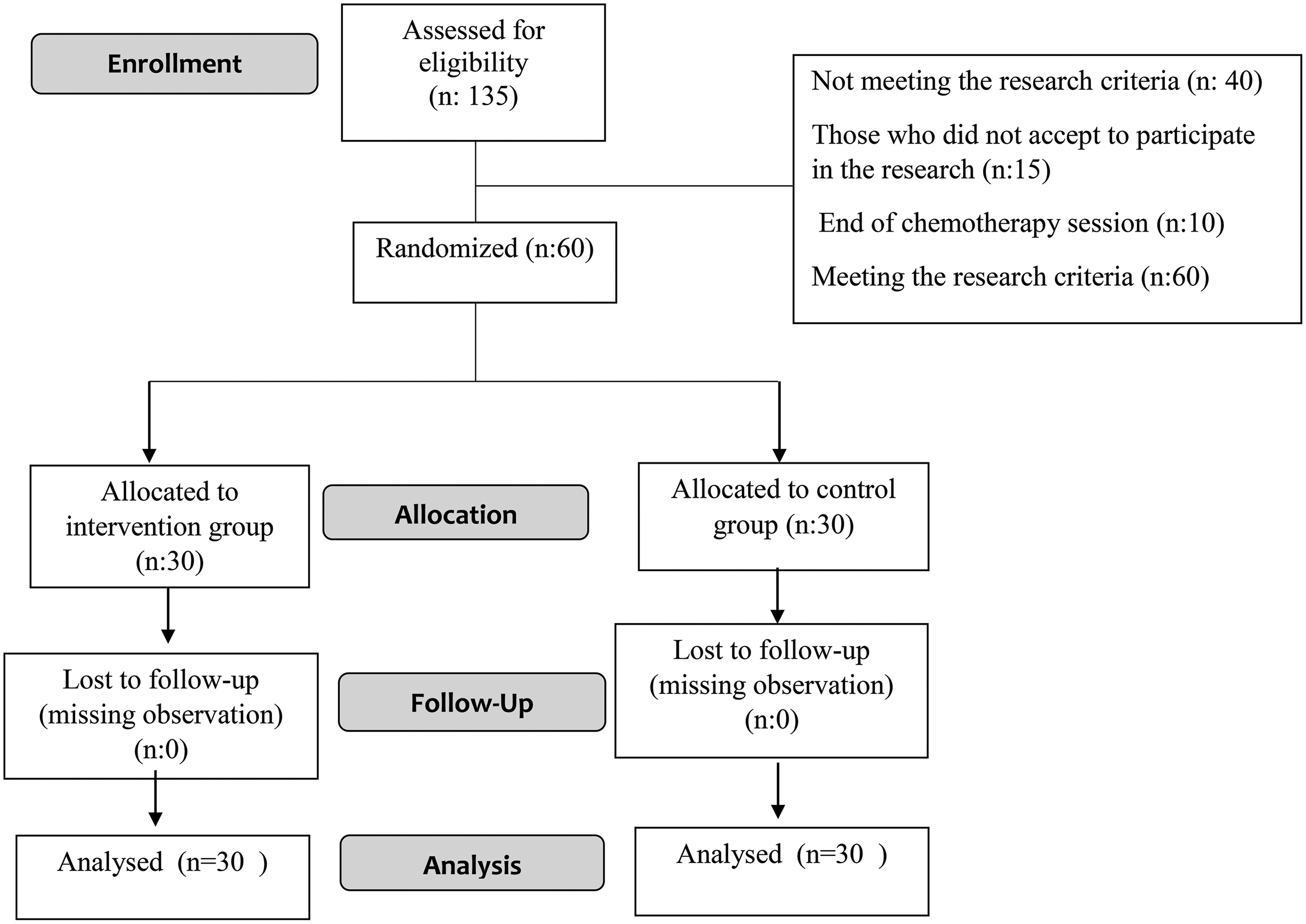
Flow diagram.
The research sample consisted of patients 18 and older, who received at least one cure of chemotherapy, who had undergone breast surgery, who did not have art therapy, who did not have difficulty in communicating and who did not have mental problems, and who agreed to participate in the study. Those with cancer stage IV, visual, hearing, and communication difficulties, those younger than 18, and those who wanted to leave the study were not included in the study.
Randomization
Patients who came on the same days of the week were included in the same group (IG on Monday, Wednesday, Friday, and CG on Tuesday and Thursday). Thus, the interaction between IG and CG was prevented. Simple randomization was used in the study. The patients who met the research criteria were numbered by writing on the cards and were divided into IG and CG by drawing lots by the oncology service nurse.
Data collection instrument
Personal Information Form: It has been prepared by using the literature. The form consists of 16 questions to determine the sociodemographic characteristics of the patients (age, gender, marital status, educational status…).
Pain Intensity Measurement–Visual Analog Scale (VAS): It is a scale used to evaluate the pain experienced by patients. Scale contains the numbers “0 (no pain)” at the beginning of the line and “10 (severe pain)” at the end of the line. The patients mark the level of pain their experience based on these two values. 29,30
Rhodes Index of Nausea, Vomiting, and Retching (RINVR): The scale was developed by Rhodes and McDaniel, its validity and reliability were established, and the alpha internal consistency coefficient of the scale was found to be 0.98. 31 Items 1, 3, 6, and 7 are reversed to score the scale. Each response is scored as 0 = least distress, and 4 = most distress. The patient's experience of nausea and vomiting in each of the eight items is summed up. The highest possible value is 32, indicating the most severe symptom occurrence score. 32
Beck Anxiety Inventory (BAI): Beck et al. determine the frequency of anxiety symptoms experienced by the individual. The scale is a Likert-type self-assessment scale consisting of 21 items and scored between 0 and 3. The high total score indicates the high level of anxiety experienced by the person. The score range ranges from 0 to 63. Evaluation of the scale is 0–7 points for no anxiety symptoms, 8–15 for mild anxiety, 16–25 for moderate anxiety, and 26–63 for severe anxiety symptoms. 33
The Functional Assessment of Cancer Therapy Scale-General (FACT-G): FACT-G, a quality-of-life scale, was developed by Cella et al. This scale has 4 subgroups consisting of 28 items: physical condition, social life and family status, activity status, and emotional state. Total scale score is obtained by summing the scores of all items and subgroup scores are obtained by summing the scores of the items in the subgroup. High scores on the total scale and subgroups indicate that patients' quality of life is also high. 34
Data analysis
The data obtained from this study were evaluated with the SPSS 23.0 program. The normality of the data was checked with the Kolmogrov–Smirnov test. When the data met parametric conditions, independent sample t test was used for two independent groups, paired sample t test was used for two conjugated groups, when the assumptions were not met, Mann–Whitney U test was used for two independent groups, and Wilcoxon test was used for two conjugated groups. Chi-square test was used to evaluate the data obtained by counting. The error level was taken as 0.05.
Application of art therapy
As art therapy, the patients were given marbling practice accompanied by a ney sound. An art therapy room was created in a room of the oncology center with the necessary materials. Marbling art application was made by the patients of the Faculty of Education, Department of Fine Arts. While the patients were making marbling, the ney sound was played simultaneously via the music player.
Patients receiving chemotherapy for breast cancer come to the oncology center every 2 weeks for a dose of chemotherapy. For this reason, art therapy was applied to the patients at intervals of 2 weeks. Considering that the patients received an average of six cycles of chemotherapy at the center (no application was made in the first cycle, the patients were informed about the study to be performed and their consent to participate in the study was obtained), a total of five sessions of art therapy were planned. Art therapy was applied to the patients in the IG for half an hour in the art room before each chemotherapy session.
In the third and fifth sessions of the art therapy application, the scales were applied to the IG and CG simultaneously. No application was made to the individuals in the CG. Routine chemotherapy was administered to the patients in the CG. After the third and fifth chemotherapy cycles simultaneously with the IG, the scales were readministered by interviewing the patients.
Ethical principles
The ethics committee permission required for the study was received from the University Noninterventional Clinical Research Ethics Committee (No. 2020-11/15). In addition, the necessary permission was obtained by submitting the information form containing the purpose and scope of the research to an Application and Research Hospital where the research was conducted. This study was completed within the framework of the standards and ethical criteria of the Helsinki Declaration. Verbal and written consent from the participating patients was obtained after they were informed about the study.
Results
The findings regarding the descriptive characteristics of the IG and CG are given in Table 1. Forty percent of the individuals in the initiative group are in the age range of 36–45, 90% are married, 93.3% are housewives, 66.7% are primary school graduates, 60% of them have an income equal to expenditure, and 56.7% of them were found to be in cancer stage III. On the contrary, 43.3% of the individuals in the CG are between the ages of 46 and 65, 96.7% are married, 96.7% are housewives, 53.3% are primary school graduates, 83.3% have an income equal to expenditure, and 43.3% were found to be in disease level stage III.
Descriptive Characteristics of Intervention and Control Group Patients
When examined in terms of sociodemographic characteristics between the IG and CG, no difference was found in terms of marital status, age, occupation, education level, income status, and disease stage. The chi-square test value for these findings was found to be insignificant at the p > 0.05 significance level.
Table 2 shows the comparison of pain levels according to VAS, RINVR, BAI, and FACT-G Quality-of-Life Scale mean scores according to the three measurements in the IG and CG.
Comparison of the Pain, Quality-of-Life, Nausea-Vomiting, Retching, and Anxiety Scale Mean Scores of the Intervention and Control Groups with All Results
Bold indicates p < 0.05; Student t-test for Intergroup comparison and Paired sample t-test for intra group comparison.
There is a statistical difference between the values.
BAI, Beck Anxiety Inventory; FACT-G, Functional Assessment of Cancer Therapy Scale-General; RINVR, Rhodes Index of Nausea, Vomiting, and Retching.
When the mean pain intensity averages of the patients according to VAS were examined, it was determined that there was no difference between IG and CG in the first measurement, and there was a decrease in favor of the IG in the second and third measurements. This difference was statistically significant (p < 0.05). The pain level of the patients in the IG decreased gradually in the second and third measurements compared with the first measurement (p < 0.05). The results of the second measurement of the individuals in the CG increased significantly compared with the first measurement. No difference was found between the second and third measurements (p > 0.05).
It was determined that there was no difference in the mean quality-of-life score of the patients in the IG and CG in the first measurement, and there was an increase in favor of the IG in the second and third measurements. This difference was statistically significant (p < 0.05). In the IG, the quality of life increased gradually in the second and third measurements compared with the first measurement, at a statistically significant level.
Nausea, vomiting, and retching levels decreased statistically in favor of the IG in the second and third measurements (p > 0.05). While the mean score of the scale in the IG decreased gradually, in the CG, the second and third measurements increased compared with the first measurement. These differences were found to be statistically significant.
It was determined that there was no difference in the anxiety scale mean score of the patients in the IG and CG in the first measurement, and there was a decrease in favor of the IG in the second and third measurements. This difference was statistically significant (p < 0.05). In the IG, the level of anxiety gradually decreased in the second and third measurements compared with the first measurement, at a statistically significant level. In the CG, the anxiety scale total score increased in the second and third measurements compared with the first measurement, and the difference was found to be statistically significant (p < 0.05).
Table 3 shows the correlation between the scales. In the study, a positive and significant relationship was found between the pain level and quality of life in the first and second measurements (p < 0.05). A direct and significant relationship was found between the level of pain and the second and third measurements of the anxiety scale (p < 0.05). A statistically significant inverse relationship was determined between the first measurement of quality of life and the first and third measurements of the anxiety scale (p < 0.05). A statistically significant inverse relationship was determined between the third measurement of quality of life and the second and third measurement of the anxiety scale (p < 0.05). No statistically significant correlation was found between the total score of the nausea, vomiting, and retching index and other scales.
Relationship Between Visual Analog Scale, Functional Assessment of Cancer Therapy Scale-General Quality of Life, Beck Anxiety Scale, and Rhodes Nausea, Vomiting, and Retching Index Scores
Bold indicates p < 0.05; Student t-test for Intergroup comparison and Paired sample t-test for intra group comparison.
Indicates satistical difference between the values p < 0.05.
Indicates satistical difference between the values p < 0.01.
BAI, Beck Anxiety Inventory; FACT-G, Functional Assessment of Cancer Therapy Scale-General; RINVR, Rhodes Index of Nausea, Vomiting, and Retching; VAS, Visual Analog Scale.
Discussion
Cancer patients frequently experience conditions such as fatigue, nausea-vomiting, sleep disorders, depression, anxiety, pain, and nutritional disorder and their quality of life decreases significantly due to these conditions. 35 Besides the use of pharmacologic methods, the use of nonpharmacologic methods is important in symptom management in these patients. 36 Art therapy, one of these methods, has important effects in solving many of the physiologic and psychologic problems of cancer patients. 16,17 In this study, it was also found that ney and marbling, which is a cultural music and cultural practice, reduce the symptoms of pain, anxiety, nausea, vomiting, and retching that occur in breast cancer patients receiving chemotherapy and improves their quality of life. Below, the effects of the art of marbling performed with ney flute on pain, vomiting, anxiety, and quality of life in breast cancer patients are discussed in the light of the literature.
The conclusion for pain, one of the symptoms examined in the study, was that the pain levels of patients with breast cancer were significantly reduced after art therapy. It was determined that similar results were obtained when compared with the results of some previous studies. Josephine et al. conducted a systematic analysis of 20 randomized controlled studies published between 2011 and 2020, and revealed that music therapy, which is one of the art therapy methods, increases the quality of life by reducing pain as well as many symptoms. 18 Kievisiene et al. measured healing in the management of cancer-related somatic symptoms, particularly pain, in a systematic review of 11 randomized controlled trials. 19 Similarly, Cheng et al. reported in a meta-analysis study that art therapy had positive effects on improving pain symptoms in patients with breast cancer. 37
In another randomized controlled trial, art therapy administered in conjunction with breast cancer patients was found to relieve the symptom of pain by making significant contributions to cholinergic anti-inflammatory processes. 38 Another quasiexperimental study on cancer patients concluded that after performing art therapy, patients experienced an improvement in their physical and mental health and a significant decrease in pain level. 39 In the study conducted by Gramaglia et al., it was found that listening to music for 10–15 min regulates the autonomic nervous system, significantly reduces pain as well as physical problems such as stress and fatigue, and affects the heart rate. 40
In the current study, marbling was also used along with music (ney music), which is one of the art therapy methods. Despite the differences in the methods used in the studies, the type of music, and the methods of art application, as can be seen in all studies, art therapy methods reduce the pain of breast cancer patients. The effectiveness of the art therapy method, by drawing people's attention away to prevent them from focusing on the pain, increases the resistance to pain. Pleasant activities increase the release of endorphins and enkephalin in patients, and they have a morphine-like effect. Based on these results, it is thought that adding art therapy to the treatment of patients with breast cancer along with medical treatment and making it a routine practice will make it easier to cope with pain.
The effect of art therapy on emesis in patients with operative breast cancer is another problem addressed in the study. It is seen that there are many studies on the effects of art therapy on nausea and vomiting caused by chemotherapy, and different results are obtained. For example, Gimeno et al. reported that music did not have a significant effect on nausea and vomiting caused by chemotherapy. 41 Similarly, a study conducted by Moradian et al. in patients with breast cancer showed that music had no effect on nausea and vomiting caused by chemotherapy. 42
However, it is noteworthy that there are more studies showing that art therapy is effective on chemotherapy-induced nausea and vomiting. In one of these studies, it was reported that art therapy reduces symptoms such as nausea and vomiting in individuals receiving breast cancer treatment, and provides motivation by providing social functionality to the patient. 43 In addition, a randomized controlled trial concluded that art therapy applied for 12 weeks in patients with breast cancer is an effective method of reducing nausea and vomiting. 44 In a study conducted by del Río Dléguez and Rebeca López, it was determined that art therapy reduces nausea and vomiting, as well as other physical findings. 45 A similar study by Lima et al. also showed that art therapy has a positive effect on emesis. 25
The key to music therapy interventions is the selection of desirable, appealing music that is compatible with the person's culture and pleasure. 46 In this study, ney music, which is compatible with the culture of the people, was used. In addition, different results may vary depending on the type of chemotherapy drugs used and the type of art therapy used. Lima et al. report that the emetogenic potential of chemotherapy drugs (high, medium, low emetogenic effect) may change the effect of art therapy on nausea and vomiting due to the fact that they are different from each other. 25 It has been reported that factors such as patients' tendency to art therapy method, interest, giving another effect along with music may also affect. 23 For this reason, the authors believe that there is a need for systematic analyses examining randomized controlled trials that will reveal differences.
In the study, it was found that breast cancer patients' anxiety levels significantly decreased after art therapy. Psychologic interventions, including art therapy, are required to improve the emotional and psychosocial well-being of cancer patients. In the literature, it has been reported that dealing with art materials and creating a product from these materials make an important contribution to the elimination of emotional conflicts in people. 13,14 It has also been stated in the literature that art therapy practices improve social and problem-solving skills, increase awareness and self-esteem, and significantly reduce anxiety. 16,47
In some recent systematic reviews, the effect of art therapy on anxiety in women receiving chemotherapy for breast cancer has been investigated. For example, Kievisiene et al. determined that art therapy has a positive effect on anxiety in women with breast cancer. 19 A systematic review of randomized controlled studies by Josephine et al. showed that art therapy benefits cancer patients in several ways, including reducing their anxiety. 18 In another systematic review, it has been proven that art therapy provides benefits for patients diagnosed with breast cancer in terms of anxiety and depression treatment. 48
In a meta-analysis study, it was reported that art therapy was effective in reducing anxiety in patients with breast cancer. 37 In addition, another study by Jang et al. found that art therapy significantly reduced this anxiety. 44 In other studies examining the relationship between art therapy and anxiety, it has also been found that art therapy has significant effects on reducing anxiety. 24,25,49 In another study, it was reported that art therapy applied for 1 week is a safe, cost-effective, and easily applicable approach to significantly improve psychosocial health in breast cancer patients receiving chemotherapy. 50
Connel, one of the leading names in the field of psychotherapy and expressive art therapy, states that art therapy helps to relax and alleviate the strong negative feelings that cause severe discomfort, encourages socialization, and makes patients feel happier. 51 Cancer patients, who feel happier, manage their treatment process and emotions more easily. On the contrary, with the art of marbling and ney concert, the effects of which were investigated on the patient as art therapy methods in this study, the patients' attention on their symptoms was reduced by diverting their attention to another direction, and their anxiety based on the mechanism of biochemical changes (endorphin, enkephalin, dopamine, serotonin release) that made them feel good because they were doing pleasurable activities decreased. 51
Contrary to the above studies, Xu et al. revealed in a meta-analysis that art therapy had positive effects on depression in patients with breast cancer, but not on anxiety. 52 In addition, two meta-analyses conducted by Boehm et al. and Tang et al., also found no beneficial effect of art therapy on anxiety in breast cancer patients. 48,53
The differences in methodology, the difference in the method of art therapy applied, and the different effects on the duration of art therapy used may have caused some different results in the studies conducted. However, in the literature it is generally suggested that art therapy should be a part of treatment for reasons such as having a significant positive effect on medical treatment, reducing patients' medication use, causing them to have a pleasant time, increasing social interactions, and not focusing their attention on the symptom caused by disease and treatments. In fact, the mechanism of alleviation of complaints such as pain, emesis, and anxiety, which is the subject of this study, is related to these mechanisms.
During this study, six courses of chemotherapy and five sessions of art therapy were administered to these patients with an interval of 15 days. After the baseline values were obtained in the first measurement, the second measurement was made after the third session of the art therapy application, and the third measurement was made after the fifth session of the art therapy. In the first measurement made after these art therapy sessions with music therapy and marbling, it was determined that 30 min of art therapy did not reduce pain in the CG according to the baseline value in this IG, while in the second and third evaluations in the IG, art therapy reduced pain, emesis, and anxiety.
In fact, in the third measurement, it was determined that pain intensity, emesis, and anxiety decreased even more in the IG compared with the second measurement. In the CG, emesis increased in the third measurement. Thus, as the art therapy session increased, the decrease in the severity of pain, emesis, and anxiety was proven by the statistically significant difference between the measurements. Pain, emesis, and anxiety levels of the patients in the IG gradually decreased in the second and third measurements compared with the CG.
When the literature was examined, it has been determined that art therapy reduces pain, nausea, vomiting, and anxiety in patients, mostly without paying attention to the number of chemotherapy cycles and the number of art therapy sessions. For example, Hsieh et al. investigated the effects of art therapy on pain intensity and fatigue in patients with breast cancer. For 24 weeks, the art therapy group listened to 30 min of music per week. When the effects of art therapy after 6, 12, and 24 weeks of intervention were compared between the two groups, it was found that art therapy reduced pain intensity and general fatigue. 54
In the randomized controlled study of Li et al., in the IG, art therapy was applied from the first day after radical mastectomy until the third day of hospitalization for chemotherapy in addition to routine nursing care, and only routine nursing care was given to the CG. Pain scores were measured at baseline and at the last three tests. The study's findings showed that music therapy has both short-term and long-term positive effects in relieving pain in breast cancer patients after radical mastectomy. 55
In a study by Chen et al., listening to music and sharing experiences were applied to the patients during a six-cycle, three-stage chemotherapy application process. At the end of the application, it was determined that anxiety decreased in patients. 56 In a randomized controlled study conducted by Lima et al., 30 min of music therapy was applied to breast cancer patients receiving chemotherapy. After the third session, the therapy in which music and relaxation exercises were applied together reduced anxiety and emesis in patients and increased the quality of life. 25 In a study by Dadkhah et al., massage therapy with music was performed twice on patients receiving chemotherapy. Periorbital massage therapy with music significantly reduced nausea and vomiting in patients receiving chemotherapy compared with the CG. 23
The number of art therapies applied and the effect of repetitive art therapy were not taken into account in any of the studies. Again, none of the abovementioned studies used two art therapy methods together. In the evaluation of pain, emesis, and anxiety after art therapy was performed a total of three times in this study, a greater decrease in pain, emesis, and anxiety as the art therapy sessions increased was evaluated as a different finding from other studies. Another difference is that ney music and marbling art, which are known in Turkey and have a cultural background, were applied together in this study. In studies investigating the effect of art therapy methods that the authors have been able to access in the literature on the symptoms of patients undergoing chemotherapy with breast cancer, music was mainly used as an art therapy method.
However, in the end, although the place of the studies, the methodology used, and the duration and number of sessions applied were different, it was determined that the effect of art therapy on the symptoms was positive. In future studies, systematic reviews based on randomized controlled studies evaluating these differences can be made and discussed by presenting the evidence. However, based on these results, it is considered appropriate to suggest that such activities, which are cost-effective, pleasurable to patients, and distract their attention from their symptoms, should routinely be placed alongside medical treatments.
In the study, it was found that the quality of life of breast cancer patients increased significantly after art therapy. It was expected that the quality of life would increase in these patients as their pain, anxiety, nausea, vomiting, and retching symptoms were relieved after art therapy. In a randomized controlled study, it has been reported that as a complementary therapy, art therapy had an important role in improving the quality of life in women with breast cancer and had a strong effect on the rehabilitation of these patients. 57 In another study, it has been reported that 12-week art therapy improved many physical and psychologic symptoms in breast cancer patients and thus was effective in increasing the quality of life. 43 In the study conducted by Jalambadani and Borji, it has been concluded that art therapy improved social relationships, physical and psychologic health, and quality of life in breast cancer patients. 58
Pain is a common symptom in cancer patients and causes stress. In patients, pain may develop within the natural course of the disease and in the postmastectomy period due to neuropathy caused by chemotherapy and radiotherapy. 59 In these patients, pain also affects the quality of life negatively. In the study, a negative relationship was found between the pain levels of the patients and their quality of life. The quality of life decreased as the severity of pain increased. This result is similar to those reported in other studies in the literature. 59 –61
Anxiety is a psychologic problem seen in ∼20%–30% of cancer patients. Severe anxiety may be related to the treatment process, the negative impact of the disease on quality of life, the uncertainty of the future, and the fear of death. 62 In this study, a reverse relationship was determined between anxiety level and quality of life. In the literature, it has been stated that high anxiety levels affect the quality of life in all its dimensions in breast cancer patients. 63 Anxiety and depression are associated with sadness, despair, poor perception of life, and helplessness, which can negatively affect the quality of life. 64 In a study conducted in South Africa, it has been reported that psychologic distress and depression accompanying cancer affected the quality of life negatively. 65
In the present study, it was determined that there was a reverse relationship between the pain and anxiety levels of the patients. In previous studies, it has been stated that the most important factor in the development of anxiety is the severe pain experienced by cancer patients. Due to this relationship between anxiety and pain, these findings are consistent with the literature. 66,67
Conclusions
In this randomized controlled trial, it was determined that art therapy accompanied by ney reduces pain, nausea, vomiting, and anxiety, and improves the quality of life in patients with operated breast cancer. In the assesment of pain, emesis, and anxiety after art therapy, it was determined that there was a decrease in pain, emesis, and anxiety and an increase in quality of life as the art therapy session increased.
Art is a discipline that aims to heal physically and emotionally with its healing effect as a universal language in all cultures. The authors think that the art of marbling and ney can also be applied to cancer patients from different cultures in the rehabilitation process and can be easily used as a supportive care initiative. In addition, with this study, in which the ney concert and the art of marbling were applied therapeutically for the first time, it is recommended that art therapy applications be used in the symptom management of all chronic diseases, especially in other types of cancer. The inclusion of art therapy practices in the symptom management of cancer patients together with medical treatment will increase the quality of life of patients by supporting the management of symptoms.
Limitations
The limitations of the study include not blinding the researcher and not using an active CG while performing art therapy in the study. However, it is an important result to determine art therapy as an application that supports medical treatment in the control of three important symptoms such as cancer, emesis, and anxiety in women with breast cancer. In addition, in this study, ney and marbling were discussed together for the first time and were found to be effective. Further studies are planned in the future, in which an active CG is used and other symptoms are also addressed.
Footnotes
Authors' Contributions
M.M., S.M., E.B.A., and S.Y. proposed the research design. M.C.M. was responsible for the selection of patients receiving chemotherapy; S.M. was responsible for the practice of art therapy; E.B.A. and S.Y. were responsible for literature screening and data extraction; and E.B.A. and S.Y. performed the data analysis. M.M., S.M., E.B.A., M.C.M., and S.Y. wrote and revised the article. All authors read and approved the final article.
Author Disclosure Statement
No competing financial interests exist.
Funding Information
This project was supported by the Scientific Research Projects Commission of Cumhuriyet University as a B-Type Individual Research Project Numbered SBF-2021-085.
Supplementary Material
Supplementary Material S1
References
Supplementary Material
Please find the following supplemental material available below.
For Open Access articles published under a Creative Commons License, all supplemental material carries the same license as the article it is associated with.
For non-Open Access articles published, all supplemental material carries a non-exclusive license, and permission requests for re-use of supplemental material or any part of supplemental material shall be sent directly to the copyright owner as specified in the copyright notice associated with the article.
