




Abstract
Objective:
This scoping review aimed to map the adverse reactions in the oral mucosa and face caused by the use of natural products.
Methodology:
This review was performed according to the Joanna Briggs Institute Manual for Evidence Synthesis and the Preferred Reporting Items for Systematic Reviews and Meta-Analyses extension for Scoping Reviews (PRISMA-ScR) guidelines, with a protocol registered in the Open Science Framework (DOI 10.17605/OSF.IO/R57D8). The search was carried out systematically using PubMed, Scopus, Web of Science, Embase, LILACS, and LIVIVO databases, as well as gray literature through Google Scholar and OpenGrey. Reports of clinical cases on the adverse effects of natural products on the oral mucosa or perioral region of the face resulted from inappropriate use or self-medication were included. Data from the included studies were described in a narrative form.
Results:
Seven hundred and six studies were identified, and after removing duplicates and applying the eligibility criteria, 28 studies were included. The year of publication ranged from 1976 to 2022. The studies were conducted in 19 countries. Fifty patients were mentioned in the included studies and 34 were female (68%). The natural products most related to adverse reactions were propolis (n = 17), with manifestations such as perioral eczema, edema, erosions, erythema, allergic contact dermatitis, and garlic (n = 9), with manifestations such as chemical burn, burning sensation, vesicles and blisters, crusts, and ulcerations.
Conclusion:
Propolis and garlic were the natural products with the most reported adverse effects on the oral mucosa and perioral region.
Introduction
Integrative medicine aims comprehensive patient care and focuses on health promotion through the maintenance of healthy habits, which helps to prevent diseases, combining conventional and alternative therapies. 1,2 In general, alternative medicine can be used both as a substitute for conventional medicine and in an auxiliary way, adding a more satisfactory result for a specific disease. Several approaches of alternative therapies have been used by dentists, such as acupuncture, mind–body techniques, and the use of natural products. 3
Phytotherapy is the field of medicine that uses natural products, preserving their components for preventive and therapeutic purposes. 4 Herbal products have been used since ancient times to improve health conditions due to some properties, such as anti-inflammatory, antiviral, antitumor, immunomodulatory. 5,6
Despite the benefits, the use of these natural products may be associated with some adverse reactions. The literature presents case reports of ulcerations in the buccal mucosa, 7 edema, 8 cheilitis and eczema in the perioral region, 9 erosive lesions, 10,11 as well as burns in the oral mucosa, 12 lip, 13 and face. 14 These adverse reactions may occur when there is no professional follow-up or the form of use is not adequate. 15,16 In addition, a combination of more products could also contribute to the potentiation of adverse effects. 4
During the COVID-19 pandemic, the search for natural products to improve immunity and prevent the new coronavirus increased considerably due to the fear and stress that affected the population. 17 Muniz et al. 18 reported a case of burning of the oral mucosa on the dorsal surface of the tongue in a 72-year-old woman who used raw garlic daily to improve her immune system, showing the negative effects of this product when used in its natural and inappropriate form.
In this context, the objective of this scoping review was to map the literature about adverse reactions in the oral mucosa and perioral region of the face caused by the inappropriate use of natural products or self-medication, through case reports and case series described in the literature, aiming to point out the factors directly related to the manifestations, such as type of product, form of presentation, and form and place of administration.
Methodology
This scoping review was performed in accordance with the recommendations of the Joanna Briggs Institute Manual—JBI Manual for Evidence Synthesis 19 and followed the guidelines of the Preferred Reporting Items for Systematic Reviews and Meta-Analyses extension for Scoping Reviews (PRISMA-ScR) checklist. 20 The protocol of this study 21 was registered in the Open Science Framework with DOI 10.17605/OSF.IO/R57D8 (https://osf.io/r57d8), where the objectives, the eligibility criteria of the sources of evidence were predefined, as well as the methods and relevant data to be extracted and presented.
This review aimed at addressing the following research question: “What are the adverse reactions in the oral mucosa and perioral region of the face resulting from self-medication or the inappropriate use of natural products used for therapeutic purposes?” Incorporating the elements of the participants, concept, and context (PCC), the inclusion criteria have been defined as P—patients who self-medicated or used the natural products inappropriately for therapeutic purposes; C—the existence of adverse reactions, damage, or burns resulting from the use of natural products, regardless of the mode of presentation and dosage adopted; C—no specific context has been determined to refine this scoping review. Evidence sources belonging to any context (hospital, clinical, home) were eligible.
Search strategy
Literature search was perfomed at the following electronic databases: PubMed, Scopus, Web of Science, Embase, LILACS, and LIVIVO. The gray literature search was performed on Google Scholar and OpenGrey, in July 2022. An experienced librarian supervised the search strategy assembly and the refinement process of this scoping review. The authors applied a three-step search strategy recommended by the JBI Manual for Evidence Synthesis. The first step was to use Pubmed Medical Subject Headings (MeSH) terms to build the first strategy, and then the authors reviewed the text words contained in the title and abstract of retrieved articles and added the identified keywords and index terms to the search strategy. Reference lists of all identified sources were examined and, as a result, other herbs were added to the strategy, such as Allium sativum, Garlic, Propolis, Ginger, and Beeswax.
The following MeSH or keywords were used: “Biological Products,” “Natural Products,” “Phytotherapy,” “Herbal Therapy,” “Herb Therapy,” “Medicinal Plants,” “Allium sativum,” “Garlic,” “Propolis,” “Ginger,” “Beeswax,” “Chemical Burns,” “Garlic burn,” “Ulceration,” “Mouth Mucosa,” “Oral reaction,” “Oral mucosa,” “Oral Mucosa burn,” “Oral reaction,” “Allergy,” “Allergic contact,” “Dermatitis,” and “Adverse Effect.” Initially, these terms were combined with Boolean operators (AND, OR) and the search strategy was defined for PubMed, which was subsequently adapted for the other databases, according to the particularities of each one, including the gray literature. A sample of the search strategy used in PubMed is shown in Table 1. There was no temporal or language restriction in the search for evidence.
Example Search Strategy
Source: Authors.
Eligibility criteria
Studies that reported adverse effects of natural products on the oral mucosa or perioral region of the face from self-medication or inappropriate use were considered. Descriptive observational studies of case series and case reports were eligible, while literature reviews and opinion articles were excluded. Furthermore, case reports presenting occupational exposure or cosmetic use of the product, as well as studies that reported only therapeutic effects or the use of natural products associated with other substances, were excluded from this scoping review.
Study selection
The study selection process was performed using the Rayyan software (https://www.rayyan.ai/). All records identified were exported to the software for the identification and removal of duplicate articles, and then the eligibility criteria were checked. Initially, two reviewers (I.d.A.F.M. and D.S.C.) independently screened the titles and abstracts of the retrieved articles (phase 1) to select studies eligible for full-text screening (phase 2). Articles excluded after full reading were justified. Disagreements existing in the two phases were resolved by consensus or through discussion with a third examiner (D.C.C.-T.). The references of the studies included were also screened to include additional relevant articles.
Data extraction
Data from the eligible studies were extracted using a data-charting form, containing the following information to be collected: author, year of publication, country, sex and age of the patient, natural product formulation, form and place of administration, purpose of use, and adverse effect. This step was performed independently by two calibrated examiners and, in case of disagreements, a third reviewer was consulted. To increase the level of agreement between examiners, a pilot test was previously performed with three articles. The PRISMA-ScR checklist guidelines 20 were adopted in this scoping review.
Results
The flowchart shown in Figure 1 describes the process of study selection and screening. This search yielded 706 articles through the electronic database searching and gray literature. After removing duplicates, 498 articles remained eligible for title and abstract screening. Of these, 59 articles were eligible for full-text screening, after applying these inclusion and exclusion criteria. Fifteen articles were not available and 16 were excluded with justification. At the end of the process, 28 articles were included in the qualitative synthesis of this scoping review.

Flowchart for study screening and selection process.
Data extraction from the included studies is shown in Table 2. The year of publication ranged from 1976 (n = 1) to 2022 (n = 1) and is illustrated in Figure 2. The studies were conducted in 19 countries, of which Croatia (n = 3) and Turkey (n = 3) were predominant. Gender and age of the patients described in the studies are illustrated, respectively, in Fig. 3). Fifty patients were mentioned in the included studies and 34 were female (68%), aged between 17 and 80 years. Males were represented by 16 cases (32%), ranging in age from 22 to 77 years.
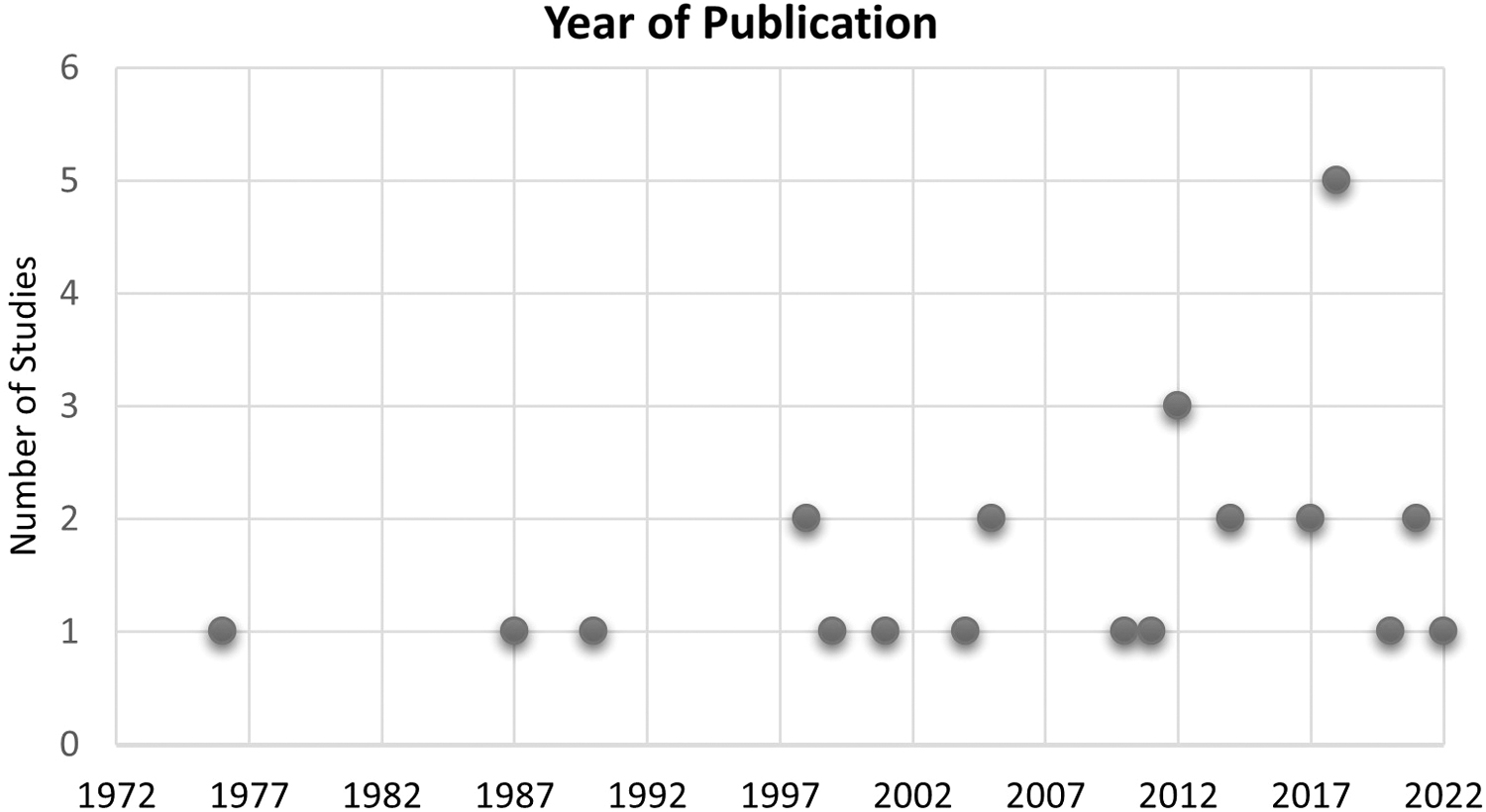
Distribution of included studies according to year of publication.
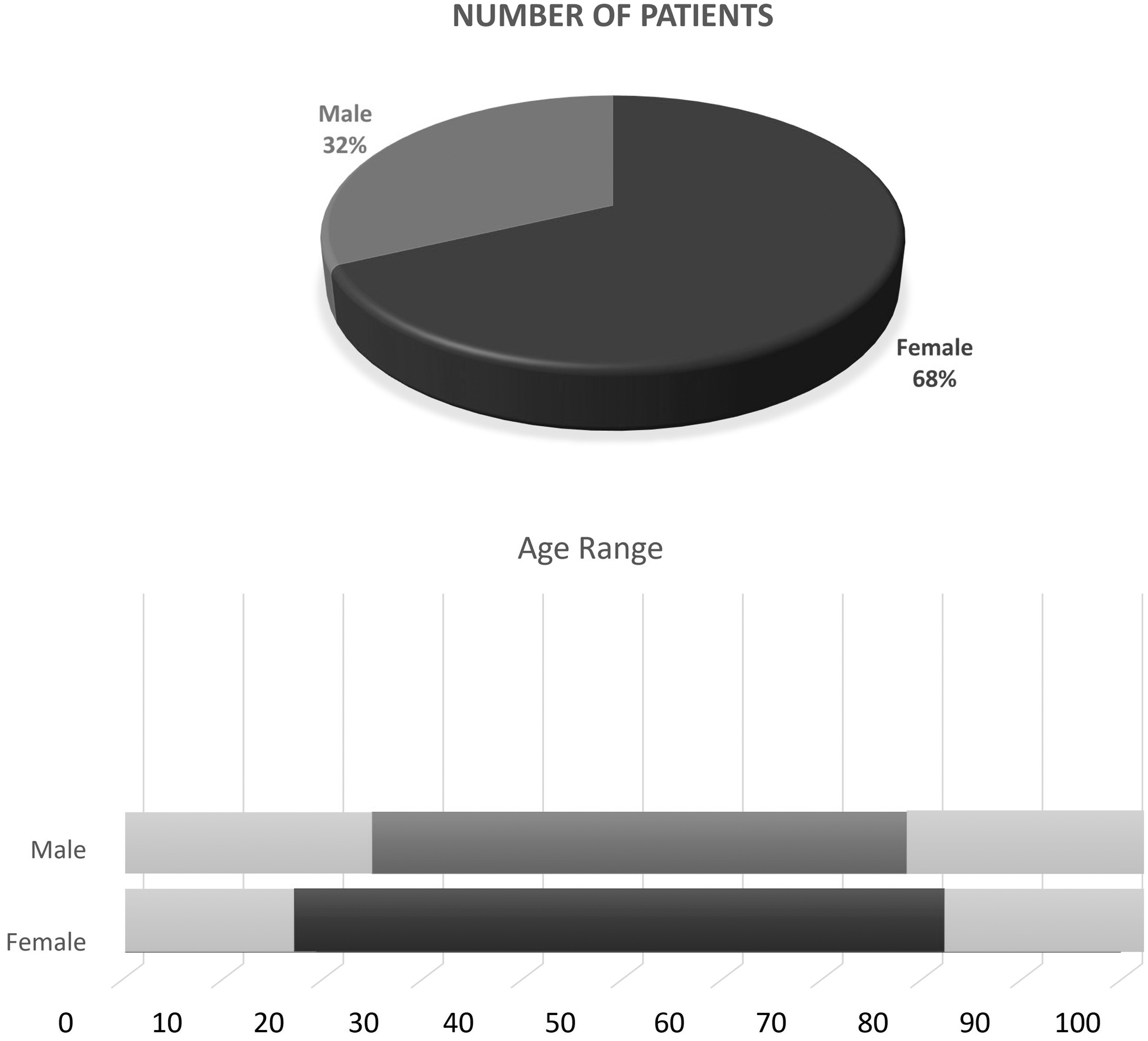
Distribution of included studies by gender and age of patients.
Data Extraction from Included Studies
COVID-19, coronavirus disease 2019.
The natural products that showed the most adverse reactions were propolis (n = 17) and garlic (n = 9). In addition, Hypericum perforatum (n = 1), a herbal medicine containing Angelica dahurica and Ligusticum chuanxiong roots (n = 1), and Matricaria chamomilla (n = 1) were also mentioned (Fig. 4).

Natural products that were identified as the ones with the most adverse reactions.
Among the formulations, propolis was used in the form of solution, extract, spray, tablets, honey enriched with propolis, lip balm, and cream/ointment/lotion. Propolis was used for different purposes: treatment of gingival inflammation, eczema and herpes, dry lips, and improvement of immunity to prevent COVID-19. The garlic formulations described in the studies were fresh and crushed garlic, being used for the treatment of herpes, pruritus, warts, acne, improvement of immunity for the prevention of COVID-19, and relief of toothache and trigeminal neuralgia.
The most common adverse effects with the use of propolis were eczema in the perioral region, edema, erosions, erythema, pain, papules, cheilitis, oral mucositis, ulceration, crusting of the lips, allergic contact dermatitis, and contact stomatitis. For garlic, the following effects were observed: chemical burn, burning sensation, plaque, oozing, vesicles and blisters, crusts, tenderness, pruritus, erythema, and ulcerations. The main regions affected by these effects are shown in Figure 5.
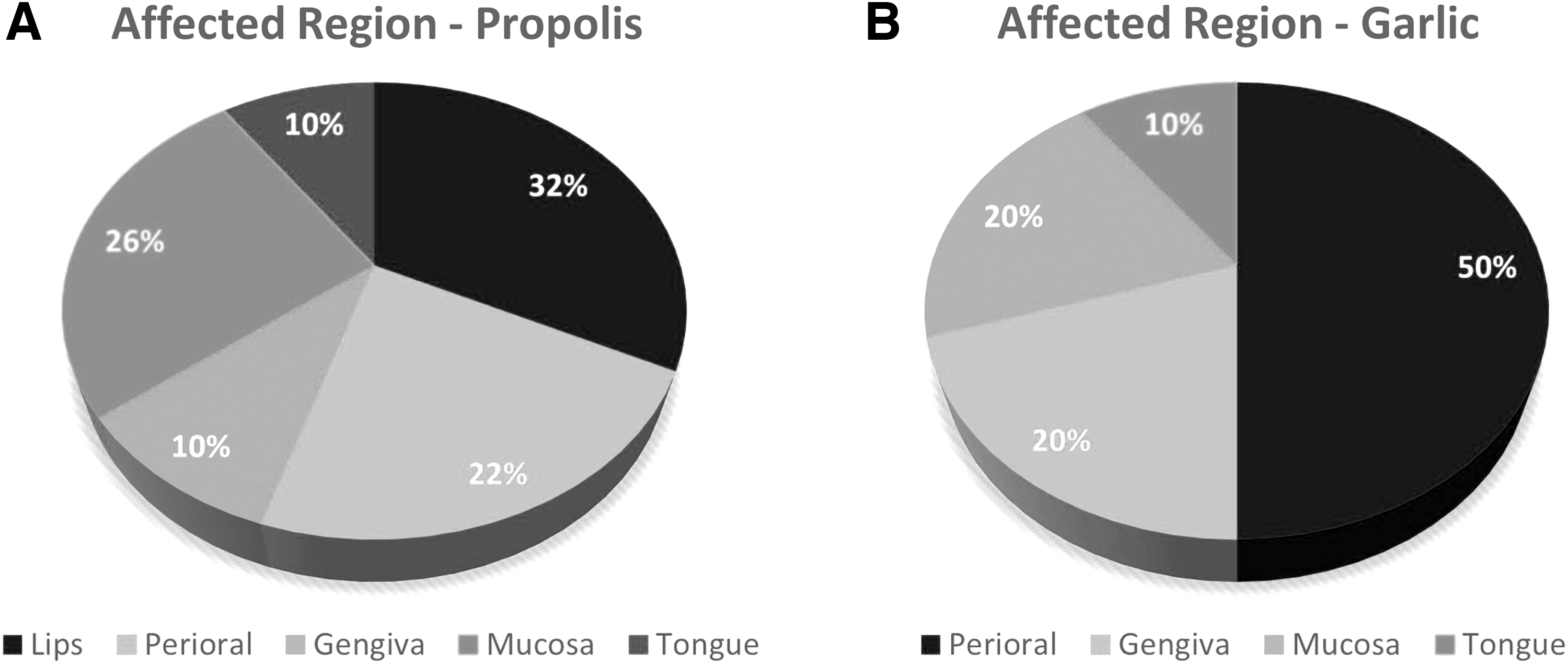
Adverse effects that were commonly found with the use of propolis
Discussion
This scoping review investigated the available evidence regarding the adverse effects reported in the literature from the use of natural products on the oral mucosa and perioral region of the face from self-medication or inappropriate use, and propolis and garlic were the products with the most reported adverse effects.
The use of natural products has become increasingly prevalent in recent decades due to the various benefits already reported and also because of the population's belief that they are not harmful to health because they come from natural sources. Associated with this, there is the ease of access in the market of these herbal supplements. 41,42
The results of the present study revealed an increase in cases of adverse reactions caused by natural products from the 2000s. In the same period, the World Health Organization (WHO) through the “WHO traditional medicine strategy: 2002–2005” stimulated the integration of medicinal plants in public policies and in the development of the health system of member countries, later updated with “WHO traditional medicine strategy: 2014–2023.” 43 In Brazil, the National Policy on Integrative and Complementary Practices 44 of the unify health system was approved in 2005, which proposed the inclusion of medicinal plants and phytotherapy, in addition to other integrative practices, in the country's public health system. These policies have improved the population's access to this type of medicine, resulting in an open field for the use of plants for medicinal purposes and, consequently, self-medication.
Although the number of scientific publications on the consumption of these products is increasing, there is a gap between the information obtained by the health professional and the users, and consequently, dissemination of harmful effects on health is not enough. 42,45 The literature points out some reasons why patients do not report the use of natural products to their doctors, such as fear of disapproval, lack of knowledge of doctors, and doubts about the relationship between use and complaint presented. 41
Health professionals should seek knowledge about the efficacy, safety, and harmful interactions of herbal preparations, in addition to providing security and confidence to the patient so that he or she assumes the use of these natural products. 41,42 Good professional–patient communication, with adequate and understandable language, could be essential for raising awareness among the population, clarifying the harmful effects, and opposing the belief that there is no harm because it comes from a natural source.
This highlights the importance of pharmacovigilance in the use of natural products, to identify adverse reactions and report them for epidemiologic analysis. In a recent study from China, 46 adverse events associated with herbal medicines, recorded from 1998 through 2016, have helped the health care system to report natural products and herbal formulas associated with adverse reactions as well as to evaluate and determine their characteristics, causality, and severity. In Netherlands, the pharmacovigilance database has revealed many suspected herbal ingredients, sometimes adulterated, and serious adverse reactions associated with their use. 47 In addition to encouraging health care professionals and promoting public reporting of adverse reactions, a public education campaign that focuses on the appropriate use of natural products could help practitioners, patients, and regulators to obtain more knowledge for an effective therapeutic use of herbs and reduce harm.
According to the WHO, self-medication comprises the use of medicines not prescribed by a doctor for the prevention, and treatment of diseases or symptoms. 48 Several factors can influence the practice of self-medication, including easy access to medicines, cultural and socioeconomic factors, education, age, and sex. 45 Many natural products are found in the daily routine of patients, such as foods, seasonings, and present an ancient culture of health benefits, including anti-inflammatory, antioxidant, antimicrobial, and immunomodulatory properties, 49,50 which contributes to the unsupervised use. Self-medication and the use of natural products are practiced globally, 41,51 which corroborates the findings of the present review, in which 19 countries were identified in the included studies, showing that it is a widespread practice in different demographic regions.
This scoping review observed a predominance of case reports in female patients, which corroborates the study by Jerez-Roig et al., 48 which associates this finding with greater self-care and frequency of medical consultations for women.
With the outbreak of COVID-19 in the world and the search for protection and a cure for the disease, there was an increase in the use of some natural products, such as propolis extract and honey. 52 In addition, other nutraceutical foods, such as ginger and garlic, whose properties have already been reported in the literature, were consumed with the aim of improving immunity, as a preventive measure against the new coronavirus, 3,4,52,53 a practice widely observed due to fear of infection by the population. 6,54 –56
Muniz et al. 18 reported a case of burns on the oral mucosa resulting from the inappropriate topical use of garlic, with extensive burning and ulceration on the dorsum of the tongue, resulting from an attempt to improve immunity against Sars-CoV-2. With the same objective, perioral eczema resulting from the consumption of propolis tablets has also been mentioned. 22 This demonstrates that, despite the benefits of garlic and propolis, adverse effects have been related to the inappropriate use of these products.
The anti-inflammatory, antioxidant, antimicrobial, and immunomodulatory properties of garlic make it well known and used by the population since antiquity. 18,42,50,57 However, it can result in adverse effects, mainly through topical use, such as skin and mucosal burns, which clinically can present as vesicles, blisters, crusts, erythema, edema, and pseudomembranous lesion. 13,14,18,31,57 The chemical burn resulting from garlic is related to allicin, formed by the reaction of alliin and enzymatic allinase after mechanical action, such as crushing or grinding. 57 This can be seen in the case reports included in this review, which used crushed garlic topically, 12,14,18,27,31,35 scrubbed, 13 ground into a paste, 26 and garlic poultice 36 and resulted in chemical burn. Garlic coverage at the applied site mentioned in the studies of Filobbos et al., 27 Sisson and Balmer, 36 and Yilmaz et al. 14 is due to the popular belief that this results in an increase in its action potential and scientifically explained by the volatility of the organosulfur compounds present in this product. 57
Propolis, a product also widely used, has several therapeutic properties, such as anti-inflammatory, antibacterial, and antiviral, 49 being available in different forms of presentation, such as extract, spray, pastilles, lip balm, honey enriched with propolis, lotions, and cosmetic products. 22,23,29,37,39 The most commonly described adverse effect with the use of propolis is an allergic reaction, such as dermatitis of contact, stomatitis, cheilitis, and perioral eczema, whose main allergens are caffeate esters, 3-methyl-2-butenyl, benzyl salicylate, and benzyl cinnamate, 58,59 which corroborates the clinical findings observed in the case reports described in this review, characterized by erythematous plaques and papules, desquamation, and erosions. 10,22,29,34
The limitation of this scoping review could be the exclusion of other studies, except case reports and case series, which may have omitted some relevant data. The authors acknowledge that it is necessary to assess clinical studies with clinical protocols, but the literature is very heterogenous regarding the type of natural product, form of its presentation, and form/place of administration. However, this study was a first step focusing on adverse reactions caused by the inappropriate use of natural products that can be directly listed in those study designs. Also, other herbs with known allergenicity, such as cinnamon, 60 should be included in future studies. Primary surveys with more standardization regarding the type of natural product, form of its presentation, and form/place of administration are also recommended for future studies.
Unfortunately, the authors could not identify the country where the propolis came from, as this was not reported in the articles. Therefore, it is possible that the studies used local products or imported raw material from very far regions, which is common in industrialized propolis products sold in many countries. This is a limitation for the analysis of these results, but the authors can point to the widespread usage of natural products. In this context, they seek to highlight the consequences of a possible misuse of natural products, serving as basis for further research in this field, focusing on phytochemical composition and pharmacological properties, as well as pharmacovigilance data.
Conclusion
Most studies pointed to propolis and garlic as the natural products that caused the most adverse reactions in the oral mucosa and perioral region of the face, characterized, respectively, by allergic reactions and chemical burns, and more frequent in women, who generally have greater self-care and regularity of medical appointments. Greater awareness among health care professionals and the population about some natural products is essential. Therefore, it is important to focus on appropriate use, as well as recognition and reporting of adverse reactions to ensure safe use by health care professionals and the patients.
Footnotes
Authors' Contributions
D.S.C.: Conceptualization, investigation, methodology, formal analysis, data curation, and writing—original draft preparation. I.d.A.F.M.: Conceptualization, investigation, methodology, formal analysis, data curation, and writing—original draft preparation. H.N.B.: Methodology, formal analysis, and writing—original draft preparation. R.S.A.S.: Conceptualization, investigation, formal analysis, and writing—reviewing and editing. T.G.d.T.: Conceptualization, methodology, supervision, formal analysis, and writing—reviewing and editing. D.C.C.-T.: Conceptualization, methodology, supervision, formal analysis, and writing—reviewing and editing. All authors revised the final article and approved its final version.
Author Disclosure Statement
No competing financial interests exist.
Funding Information
No funding was received for this article.