




Abstract
Objective:
Capoeira is an Afro-Brasilian martial art as well as a music- and dance-based cultural practice. This article aims to establish a foundational framework for future research endeavors in the domain of Capoeira by conducting a comprehensive review of existing literature focused on the relationship between Capoeira and physical as well as mental health aspects.
Methods:
PubMed, PsychArticle, and Google Scholar were searched from January 01, 2012, until July 15, 2022. This review was conducted in accordance with the Preferred Reporting Items for Systematic Reviews and Meta-Analyses statement. Study selection and risk-of-bias judgments were performed by two authors independently. Only articles written in German or English language were eligible for this review. Geographical restrictions with regard to social status or gender were not made.
Results:
A total of 19 relevant studies meeting predetermined inclusion and exclusion criteria were identified for analysis. While robust studies specifically addressing the intersection of Capoeira and physical and mental health are currently lacking, this review reveals mixed findings. The impact of Capoeira on physical health (cardiovascular variables, flexibility, balance, bone density) appears inconclusive, contrasting with the more discernible positive effects observed on mental health outcomes (general health behavior/lifestyle, executive functions, conscious attention control, social skills, prosocial behavior, self-efficacy, self-confidence, resilience, anger, and aggressive behavior/aggression).
Discussion:
The concentration of studies within the Portuguese-speaking region raises the possibility of a geographic bias. Despite this limitation, this review suggests that Capoeira holds promise as a psychotherapeutic intervention. However, the need for further studies to establish its solid effectiveness is underscored.
Conclusion:
This review provides a synthesis of existing literature on Capoeira and its effects on physical and mental health. The observed trends warrant additional research, particularly in diverse geographic settings, to validate and extend our understanding of Capoeira’s potential as a psychotherapeutic intervention.
Introduction
Mental health plays a pivotal role in the holistic well-being of individuals, ensuring their adeptness in addressing daily challenges and responsibilities. 1 Despite the strides in medical advancements that have facilitated physical well-being, the prevalence of mental illness appears to be on the rise. 2 Consequently, there is a growing recognition of the significance of mental health, particularly in political spheres. Since the 1990s, high-profile institutions, including the World Health Organization (WHO) and European counterparts, have increasingly emphasized the political and individual importance of mental and integrative health and well-being, 3 and more recently also the effects of arts on health. 4
The notion that physical activity contributes to bolstering mental health is substantiated by evidence. Exercise, for instance, aids individuals grappling with depression by fostering resilience and self-confidence, thereby enhancing mental health. 5 Furthermore, the integration of psychotherapy with exercise-based interventions often exhibits superior efficacy compared with conventional therapies in psychotherapeutic contexts. 6 Consequently, to comprehensively assess overall well-being, both physiological fitness factors and psychosocial elements, such as social support and involvement, must be systematically considered together. 7 This knowledge is increasingly implemented in practice, with sports and exercise activities being employed as therapeutic modalities, particularly in clinical settings. 8,9
One such intervention involves the practice of Capoeira, a Brazilian martial art and cultural practice amalgamating dance and combat, characterized by ritualistic and familial structures. 10 Capoeira is a result of the African diaspora and related to slave history in Brazil. Slaves gathered and practiced it, but since it was forbidden to them, they disguised it as folklore. Capoeira is related to and practiced next to the Afro-Brazilian spiritual tradition of Candomblé, as reflected in songs and rituals. In Brazil, it was long criminalized, but it was legalized in the second half of the last century, and from there recognized as an intangible world cultural heritage in 2014. From Brazil, it spread out into the world starting in the 1990s and is now practiced on all continents. As a cultural practice stemming from oppression, it seems naturally suited to strengthen resilience. Much (1995) outlines several reasons why Capoeira is deemed an ideal component for prevention and rehabilitation programs, emphasizing its role in decision-making and personality development, as well as its potential to enhance both general physical and specific cognitive skills. 11 Initial studies affirm theoretical assumptions, indicating that Capoeira engenders improvements in cardiovascular traits, executive functions, self-esteem, self-regulation, and social behavior. 12 Moreover, Boguszewski et al. (2014) observe positive health-related behaviors among capoeiristas, manifested through healthier lifestyles, dietary choices, and underlying attitudes (e.g., no drugs). 13 Capoeira groups also cultivate health education in their youth work and engage in voluntary health work with underprivileged or sick children or adults.
These findings collectively suggest that exercise therapies, particularly Capoeira, can yield multifaceted positive effects encompassing both physical and mental domains, thereby promoting holistic health. The use of Capoeira in health contexts is strengthened by the WHO global report on traditional and complementary medicine (2019) that supports the idea of the use of traditional-based cultural practices for health, as well as the WHO report on Arts and Health that emphasized the role of the arts for health and well-being. 4,14 Our work systematically examines the impact of Capoeira on individuals, delving into physiological and psychological variables through a rigorous systematic review.
Methods
PubMed, PsychINFO, and Google Scholar were systematically searched from January 1, 2012, to July 15, 2022, adhering to the guidelines outlined in the Preferred Reporting Items for Systematic Reviews and Meta-Analyses (PRISMA) statement. 15 The primary focus of the search terms revolved around “Capoeira” as the central subject of investigation, particularly its impact on both physical and mental health. Consequently, search strings were formulated for terms such as “capoeira AND physical health OR capoeira AND physical well-being OR capoeira AND physical ability,” and “capoeira AND mental health OR capoeira AND mental well-being OR capoeira AND physical stability.”
In addition to database searches, access to a curated literature list provided by Prof. Dr. Sabine Koch facilitated the identification of relevant studies on the topic. Gray literature was not searched separately.
Two independent reviewers (R.K. and T.O.) executed the study selection process. Disagreements between the two reviewers were resolved by consensus. Explicit inclusion and exclusion criteria were established a priori, guiding the screening of titles and abstracts, as well as the comprehensive assessment of full-text articles. No constraints were imposed concerning study design, considering both randomized and nonrandomized trials eligible for inclusion. WHO definitions of physical health and mental health were applied to ensure that selected studies effectively measured health-related effects. Language-wise, only articles in German or English were considered, while no geographical restrictions based on social status or gender were imposed. For improved comparability, studies involving subjects aged over 50 years were excluded. Exclusion criteria were rigorously applied, specifically targeting title and abstract selection, with a particular focus on studies that did not distinctly examine capoeira and other sports separately, rendering the attribution of effects to capoeira unclear.
Each included study underwent a comprehensive assessment for risk of bias and methodological quality. The Cochrane risk-of-bias tool was employed for randomized controlled trials, the Newcastle Ottawa Scale for nonrandomized studies, and the “Strengthening the Reporting of Observational Studies in Epidemiology (STROBE)” tool for interview and observational studies.
Results
Study selection
The literature selection and study inclusion were conducted through title, abstract, and full-text screenings. The criteria outlined above served as the benchmark for this selection process, encompassing both inclusion and exclusion criteria. A PRISMA diagram (Fig. 1) visually represents the data extraction. A total of 29 studies were excluded due to the removal of duplicates. Additionally, 1732 hits were excluded based on the assessment of titles and abstracts, resulting in the subsequent evaluation of 47 full texts for suitability. Among these, 28 full texts were excluded with justification. Main reasons were no physical or mental health outcome measured and no German or English language. Following this methodological approach, 19 studies were identified and utilized to address the research question (Table 1). 16 –34
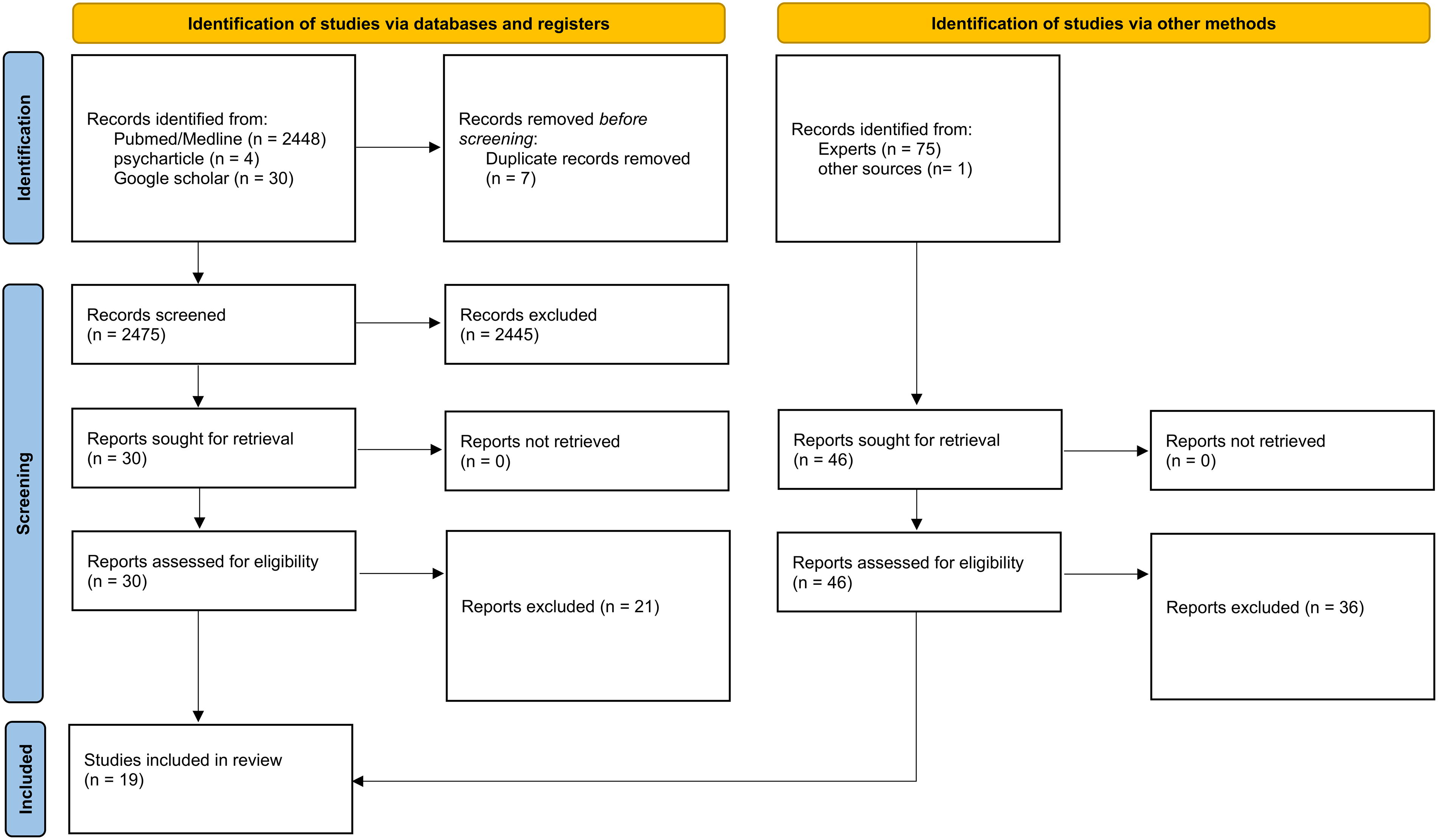
PRISMA flow diagram. PRISMA, Preferred Reporting Items for Systematic Reviews and Meta-Analyses.
Characteristics of Included Studies
BUA, broadband ultrasound assessment
Risk of bias and quality assessment
On the whole, the majority of the studies included in the analysis exhibit a low to moderate susceptibility to bias. Nevertheless, upon employing the STROBE criteria, it becomes evident that three specific studies 19 –21 demonstrate noteworthy vulnerabilities in their reported outcomes, primarily stemming from ambiguities in their presentations. Moreover, biases in randomized studies are also discernible due to the inherent challenges in implementing blinding among study personnel and distinct study groups, given the active engagement in capoeira practice, resulting in an unambiguous allocation process. Detailed individual study outcomes can be referenced in Tables 2–4.
STROBE Judgment for Included Observational Studies
Low risk of bias (−); high risk of bias (+); unclear risk of bias (o).
Risk of Bias Judgment by Using the Cochrane Risk of Bias Tool 1
Low risk of bias (−); high risk of bias (+); unclear risk of bias (o).
Newcastle Ottawa Scale
Low risk of bias.
Medium risk of bias.
High risk of bias.
Physical health outcomes
Cardiovascular system
One included study investigated the extent to which capoeira could improve cardiovascular characteristics (blood pressure, heart rate, heart rate variability). 18 All 18 study participants were male and were aged between 24 and 29 years. While the capoeira group (n = 10) completed a 90-min capoeira session once a week for 10 weeks, the control group (n = 8) was instructed to abstain from all exercise during the study. Nearly all observed variables differed statistically significantly between the capoeira and control group after intervention. Nogueira et al. (2014) also investigated the effects of capoeira on physical characteristics (musculoskeletal or metabolic) in primary school children. 25 A total of 172 boys (mean age = 11 years; standard deviation [SD]: 0.5) and 151 girls (mean age = 11 years; SD: 0.6) were studied over a 9-month period. Results suggest that all children practicing Capoeira had a lower resting heart rate and maximal oxygen uptake compared with children in the control group. In two studies from 2015 and 2017, Nogueira et al. confirmed the aforementioned results. 26,27
Bone density
In addition to variables related to the cardiovascular system, parameters related to bone density were also investigated in the series of studies by Nogueira et al. 25 –27 In addition to a specific ultrasound measurement, the broadband ultrasound assessment (BUA) was used to determine bone mineral content. Bone density was tested on tibia and radius bones using a DXA and pQCT scans. Statistically significant differences for BUA and the measurement of the index of bone strength of the lumbar spine were found in favor of Capoeira. The other bone density variables did not show significant differences between the groups.
Flexibility
Moreira et al. investigated the extent to which a progressive capoeira training program can increase flexibility in beginners over the course of 8 weeks. 30 A total of 13 subjects with an average age of 26 years, who trained twice per week for 60 min, were compared with 8 subjects without training with an average age of 27 years served as a control group. Statistically significant post-intervention differences between the experimental and control group were found for nearly all observed flexibility outcomes in favor of the capoeira group.
Balance
De Paula Lima et al. described the effects of capoeira using different physiological variables such as balance and postural control. 31 A total of 51 subjects were divided into a capoeira group with an average age of 26.6 years and a control group with an average age of 24.4 years. While the capoeira group was randomly selected, the control group consisted of athletically active students. No statistically significant differences between the capoeira and control groups regarding the measured variables could be identified by the study authors.
Another study investigated the extent to which capoeira can have effects on the acquisition of balance in deaf children and adolescents. 22 A total of 24 deaf children between the ages of 10 and 16 were studied over a 6-month period. Before the start of the training program and after 6 months, a test with the Berg Balance Scale was conducted. Results show that capoeira led to a significant increase (p < 0.01) in balance for the entire sample. For a more detailed analysis of the statistical data, the group was divided into two age groups (10–13 years; 14–16 years). While a similar significant increase (p = 0.03) was found for the age group of 10–13 years (n = 10) after 6 months of training, this effect could not be demonstrated for the age group of 14–16 years (n = 14) (p = 0.05).
Mental health outcomes
General health behaviors
One included study found that general health-related behaviors of 18–40-year-old men may increase with the practice of capoeira. 16 This study investigated 15 capoeiristas with approximately 6 years of training experience (mean age = 24; SD: 5.74) and contrasted these with 45 nonsporting individuals (mean age = 27; SD: 5.31). It could be shown that the capoeiristas had statistically significantly better results than the control group in terms of dietary habits and health-promoting behaviors.
Aggression
Kusnierz et al. (2014) investigated the aggression levels of experienced athletes of different martial arts including capoeira and compared them with a control group of sports students. 32 For verbal aggression, capoeiristas show the lowest scores among all martial arts practitioners. Statistically significant differences were found in comparison with the control group (p < 0.01). Similar results were found for anger (p < 0.01) and hostility (p = 0.03).
Cognitive skills/attention
A study by Hirata on executive functions in preschool children establishes that capoeira is a suitable program for improving attention or inhibitory control. 33 In this study, 1810 children from different schools participated in a 40-min capoeira class three times per week during their regular school day over a period of 20 weeks. At the same time, 554 untrained schoolchildren served as a control group. Compared with the control group, the capoeira group was able to achieve significant positive differences in inhibitory control/attention (p = 0.04).
Another study investigated changes in executive skills through capoeira training in children aged 8–13 years. 17 This study divided 67 children into an experimental group (n = 37) and a untrained control group (n = 30). Group comparison between experimental and control group showed that the capoeira group was able to achieve significantly better results in executive functions after the intervention (p = 0.03).
Social behavior/social skills
Delattre and Collaer (2017) compared capoeiristas (n = 117) to noncapoeiristas (n = 15) using a self-report questionnaire before and after an hour of capoeira training regarding their current state of anxiety, self-efficacy, and prosocial tendencies. 34 The authors found that one capoeira session can lead to significant differences in decreases in anxiety and increases in self-efficacy. In addition, significant differences between capoeiristas and noncapoeiristas could also be found for prosocial tendencies.
In two included studies, Momartin et al. were able to show that capoeira can have positive effects on resilience, self-confidence, and interpersonal relationships. 23,24 Both studies included refugees with traumatic experiences. Subjects were adolescents or young adults aged 12–18 years (n = 32). Included refugees also reported about a decrease in perceived anger. Results further show significant effects in pre–post comparison regarding emotions (p ≤ 0.01), and prosocial behavior (p < 0.01).
Joseph (2015) researched inmates of a Canadian prison in a 10-week capoeira study. Capoeira was trained in one session per week. 19 Each lesson consisted of a 30-min block of practice of specific skills followed by a 10-min roda. Finally, the skills learned were reflected on and discussed together. In addition to building social skills, they also learned what it means to exhibit cooperative behavior. Participants demonstrated a significant build-up in social skills over the study period.
Self-confidence
A study by Prytherch and Kraft (2015) also researched refugees. 28 The authors used questionnaires as well as interviews over a 2-year period to examine the impact of capoeira on refugees’ well-being and self-efficacy. Both capoeiristas (n = 7) aged 11–24 and trainers (n = 6) participated in the interviews. Interviewees reported about positive changes in psychosocial behavior. The interviewees also speak of the opportunity to experience positive self-expression and self-actualization and see capoeira as a constructive way to deal with anger and tension. In addition to this, questionnaire data show that capoeira improves mood and coping with difficult situations. Moreover, improved scores in self-efficacy could be shown by questionnaire data.
Discussion
This review has sought to investigate the impact of capoeira practice on both physical and mental health. The individual effects on specific variables pertaining to mental and physical health were systematically summarized and delineated above. The synthesis of several studies indicates that capoeira may contribute to the enhancement of diverse physical and mental health parameters.
While positive effects were consistently observed for cardiovascular system variables and flexibility, the outcomes for balance and bone density exhibited variability. Specifically, within the singular study addressing bone density, only a subset of measured parameters achieved statistical significance. Regarding balance, the included studies presented divergent results. On one hand, significant improvements in balance were reported after capoeira practice, yet these findings were not corroborated by another study. These discrepancies may be partially situated within existing literature, which demonstrates significant effects for all aforementioned variables following martial arts practice. 35 –37 Anomalies not aligning with existing literature could potentially be elucidated by the considerable age heterogeneity and variations in the health status of subjects across studies. The diverse age groups, ranging from children in age range of 10–16 years to adults, coupled with comparisons between subjects with specific limitations (e.g., hearing impairment) and healthy adults, introduce potential limitations to comparability.
The evidence concerning the impact of capoeira on mental health presents an unequivocal picture. Included studies demonstrated enhanced general health behavior among capoeiristas. Moreover, capoeira exhibited potential benefits in improving executive functions, including conscious attention control. Positive effects on social skills and prosocial behavior were identified, along with indications of heightened self-efficacy, increased self-confidence and resilience, and reduced aggressive behavior among capoeiristas. These findings align with recent investigations exploring the nexus between martial arts and mental health. 38,39 However, it is imperative to acknowledge the inherent heterogeneity in mental health measurements (and methodologies) across the included studies.
Limitations
Nevertheless, it is essential to acknowledge the limitations inherent in the studies included in this review, stemming primarily from population selection and the associated control groups, potentially compromising their representativeness. Consequently, the ability to draw generalizable conclusions regarding prevalence is constrained.
The narrative synthesis of the literature in this review is subject to certain limitations in data collection. Consequently, a cautious interpretation of the results or generalized effects of capoeira on physical and mental health is warranted. Some of the examined studies lacked a randomized control group, while various aspects such as sample age, size, and expertise, inherent in different study designs, pose challenges in amalgamating results. Moreover, the current data landscape reveals considerable variability in the selection of study variables, limiting the comparability of similar effects across diverse research groups. An additional constraint emerges in the review process itself, where the procedure of literature search and data extraction was conducted by a single reviewer, potentially affecting objectivity. A further limitation is evident in the geographical origin of the studies, predominantly situated in Brazil, where capoeira, as a movement intervention, originated. This regional concentration may obscure or mitigate cultural differences, rendering the generalizability of results to the broader population uncertain. Additionally, the scarcity of data available in German and English, as included here, in comparison to Portuguese, on this topic is a limitation, indicating that this work does not encapsulate the entire landscape of research.
Conclusion
Within the confines of a systematic review, notable evidence has been identified supporting the substantial positive impact of capoeira on both physical and mental health dimensions. However, it is noteworthy that capoeira remains a relatively nascent area of investigation, thereby restricting the availability of literature and limiting comprehensive evaluation. This constraint implies that a substantial portion of existing research predominantly pertains to the South American region, introducing the possibility of a geographical and cultural bias.
Recognizing this constraint, it is apparent that a significant portion of the current body of knowledge is region-specific. Consequently, generalizing findings to broader populations or diverse cultural contexts is circumscribed. To address this limitation and enhance the robustness of future inquiries, it is imperative to expand research endeavors into Western and Eastern regions. Such an approach will contribute to a more comprehensive understanding of capoeira’s impact across diverse geographical and cultural spectra, fostering improved comparability in subsequent studies.
Authors’ Contributions
R.K.: Conceptualization, methodology, and writing—original draft. D.A.: Methodology, writing—original draft, writing—review and editing, and visualization. S.K.: Conceptualization, resources, supervision, and writing—review and editing. T.O.: Conceptualization, methodology, writing—review and editing, and supervision.
Footnotes
Author Disclosure Statement
The authors state that they have no conflicts of interest.
Funding Information
For the work on this article, no funding was received.