




Abstract
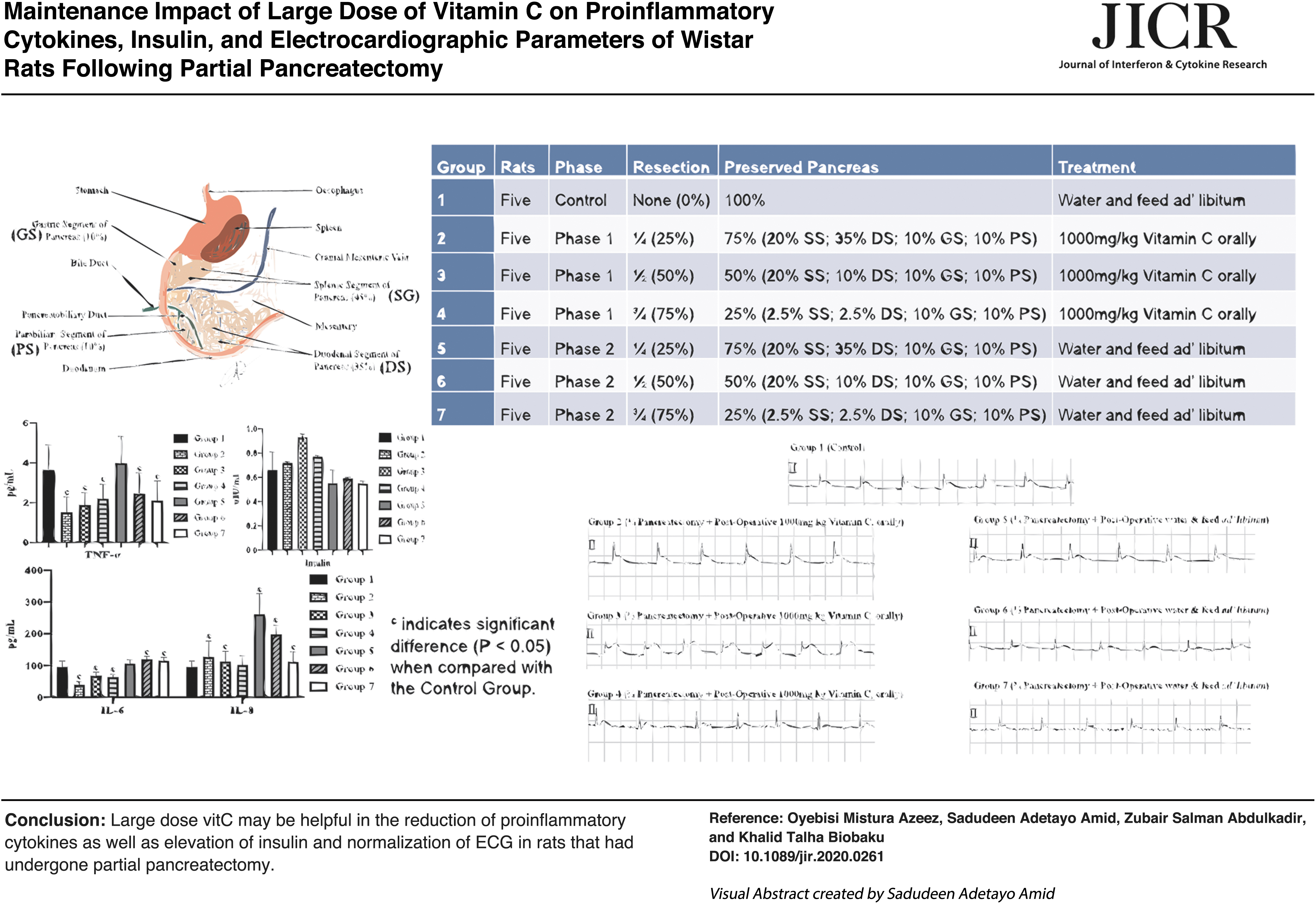
We investigated serum tumor necrosis factor alpha (TNF-α) and interleukins (IL-6 and IL-8) in rats undergoing pancreatic wound healing after partial pancreatectomy. In addition, we studied the effects of partial pancreatectomy on the insulin and the electrocardiography (ECG). We proposed that vitamin C (VitC) could have maintenance impact on TNF-α, IL-6, IL-8, insulin, and ECG parameters of pancreatic wound healing of Wistar rats that had partial pancreatectomy surgery, if administered in large dose. Thirty-five male adult Wistar rats (180–250 g) were randomized into 7 groups, with 5 rats in each group. Group 1 was control. Groups 2, 3, and 4 (phase 1) received oral 1,000 mg/kg VitC, while groups 5, 6, and 7 (phase 2) received only water and feed ad libitum postoperatively for 14 days. One-quarter (¼) pancreatectomy was performed in groups 2 and 5, half (½) pancreatectomy was performed in groups 3 and 6, and three-quarter (¾) pancreatectomy was performed in groups 4 and 7. Significant (P < 0.5) decrease in IL-6 was observed in phase 1 when compared with the control. Significant increase in IL-6 was observed when compared with control. Significant increase in IL-8 was observed in phase 1 (groups 2 and 3) and phase 2 when compared with the control. Significant decrease in TNF-α was observed in phase 1 when compared with the control. Significant decrease in TNF-α was observed in phase 2 (groups 6 and 7) when compared with the control. Insulin level decreased and increased insignificantly in phase 2 and phase 1, respectively, when compared with the control. Although atrial fibrillation was recorded in phase 2 (group 7), normal ECG was seen in the control and phase 1 (group 2). Large dose vitC may be helpful in the reduction of proinflammatory cytokines as well as elevation of insulin and normalization of ECG in rats that had undergone partial pancreatectomy.
(Color images are available online).
Introduction
Partial pancreatectomy can either be used as a diagnostic procedure in pancreatic biopsy or as a treatment for isolated pancreatic gross lesions such as neoplasms, abscesses, or trauma in dogs and cats (Allen and others 1989). In cats, poorly prognostic pancreatic carcinoma, characterized by focal nodular mass that is most commonly reported by ultrasonographic finding (Hecht and others 2007), is highly metastatic due to its aggressiveness (Linderman and others 2013) and it is treated by partial pancreatectomy (Allen and others 1989). In dogs and cats, partial pancreatectomy and tumor resection take lion's share of postoperative complications after pancreatic surgery (Polton and others 2007). Glucose metabolism, regulated by insulin, is reported to be deteriorated after partial pancreatectomy (Wu and others 2018), resulting in pancreatic diabetes (Kim and others 2011) and delayed gastric emptying (Parmar and others 2013), which has been linked to arrhythmias, heart failure, myocardial ischemia, and infarction (Bissinger 2017; Azeez and others 2017; Azeez and others 2018; Park and others 2019). These cardiovascular complications are diagnostically detectable by electrocardiography (ECG) (Azeez and others 2017; Azeez and others 2018).
Cytokines are known to play a vital role in wound healing (Behm and others 2012) after pancreatectomy, but they have also been implicated in diseases that are life threatening (Scarpioni 2016). Owing to the inflammatory phase of the wound healing process, tumor necrosis factor alpha (TNF-α) and interleukin-6 (IL-6) are found in high concentrations in nonhealing wounds when compared with healing wounds (Patel and others 2016). Chronic nonhealing wounds are also known to have higher IL-8 than healing wounds (Bilder and others 2003). Postoperative aberration in organ function is usually consistent with inflammatory cytokines, therefore, inhibition of these cytokines has successfully improved organ function (Hsing and Wang 2015).
Vitamin C (VitC) strongly protects cells from free radicals (Fang and others 2002) and its high dose improves immune function (Cartmell and Kingsnorth 2000). Du and others (2003) established clinical efficacy of high-dose VitC on acute pancreatitis. Anti-inflammatory effect of VitC has been linked to its ability to significantly reduce proinflammatory cytokine expression in the messenger ribonucleic acid (Jang and others 2014). Its antiarrhythmic power is connected to its prevention of postsurgical atrial fibrillation and shortening of postoperative hospital stay in the intensive care unit (Hemilä and Suonsyrjä 2017).
The effects of melatonin-a synthetic antioxidant on the alteration of proinflammatory cytokines in gastric wound healing have been well documented (Amid and others 2020). However, there are no documented reports on the maintenance impact of large dose of VitC, which is a potent antioxidant and anti-inflammatory agent, on the proinflammatory cytokines in pancreatic wound healing after partial pancreatectomy.
Our hypothesis, therefore, was that VitC, which is a potent anti-inflammatory, antiarrhythmic, and antioxidant agent, could have maintenance impact on the proinflammatory cytokines (TNF-α, IL-6, and IL-8), insulin, and ECG parameters of Wistar rats that had partial pancreatectomy surgery, if administered in large dose.
Materials and Methods
Experimental animals
Adult male Wistar Albino rats, sourced from the animal house of Faculty of Veterinary Medicine, University of Ilorin, Ilorin, were housed in well-ventilated cages maintained at 28°C ± 2°C. They were fed on standard rat chow and distilled water ad’ libitum while being acclimatized for 2 weeks before the experiment (Azeez and others 2012). Ethical approval was given by the Faculty of Veterinary Medicine, University of Ilorin Animal Care and Use Committee with the approval number FVMERC/7141/2019. Procedures involving animals and their care were monitored and ensured that the standard of practice was in accordance with the National Institutes of Health (NIH) guideline for animal care and use (Albus 2012).
Experimental design
A total of 35 male adult Wistar rats (180–250 g) were randomized into 7 groups, namely, 1, 2, 3, 4, 5, 6, and 7 (5 rats in each group). Groups 2, 3, and 4 are classified as phase 1 whereas groups 5, 6, and 7 are classified as phase 2. Group 1 (control) rats did not undergo pancreatectomy and they were given only water and feed ad libitum whereas groups 2, 3, and 4 underwent one-quarter (¼), half (½), and three-quarter (¾) partial pancreatectomy, respectively. Groups 5, 6, and 7 also underwent ¼, ½, and ¾ partial pancreatectomy, respectively. All the groups in phase 1 were treated with oral 1,000 mg/kg VitC postoperatively whereas those of phase 2 received only water and feed ad libitum throughout the postoperative period, as summarized in Table 1.
Summary of Experimental Animal Grouping, Amount of Pancreas Resected and Preserved as Well as Postpancreatectomy Treatments
Experimental animal grouping, amount of resected and preserved pancreas and postpancreatectomy treatments. Segmental division of the rat pancreas and relative mass percentages: splenic segment, SS (45%); duodenal segment, DS (35%); gastric segment, GS (10%); and parabiliary segment, PS (10%) (Richards and others 1964; Tsuchitani and others 2016). Pancreatectomy of SS and DS was performed. ¼ pancreatectomy (25% SS resected; 20% SS, 35% DS, 10% GS and 10% PS preserved). ½ pancreatectomy (25% SS and 25% DS resected; 20% SS, 10% DS, 10% GS and 10% PS preserved). ¾ pancreatectomy (42.5% SS and 32.5% DS resected; 20% SS; 2.5% SS, 2.5% DS, 10% GS and 10% PS preserved).
Partial pancreatectomy procedure
Anesthesia and analgesia
Intramuscular administration of 90 mg/kg Ketamine (JAWA KETAMINE®) and 10 mg/kg Xylazine (V.M.D® XYL-M2) was performed in all the rats undergoing partial pancreatectomy to induce and maintain anesthesia. Then 0.05 mg/kg buprenorphine (Buprenex®) was administered subcutaneously a day before the surgery and preoperatively on the day of surgery (Curtin and others 2009).
Surgical procedure
The ventral abdomen was shaved and cleaned with 2% chlorhexidine solution (Durvet®) and 95% alcohol (La Onyx®) 3 times to achieve aseptic preparation. The rats were then placed on a homeothermic blanket system (Harvard® Apparatus, UK) at temperature 37°C and then draped to expose only the surgical site. A 2 cm ventral midline laparotomy incision was performed through the skin and linea alba to expose the abdominal viscera. The pylorus, which terminates at the beginning of the duodenum, was identified and exteriorized alongside the duodenum. The pancreas sits on the mesenteric border of the duodenal loop. Special consideration was given to the rat pancreas owing to its anatomical segmentation, taken into cognizance, the splenic (SS) and the duodenal segments (DS), which are 45% and 35% of the entire rat pancreas, respectively (Richards and others 1964; Tsuchitani and others 2016), as sites of pancreatectomy. The gastric segment (GS) and the parabiliary segment (PS) were preserved, not only because they are small (10% of the entire rat pancreas, each) (Richards and others 1964; Tsuchitani and others 2016), but also because the pancreatobiliary duct, which is a common duct for delivery of bile and pancreatic juice (Kamisawa and others 2009), traverses the PS (Richards and others 1964) (Fig. 1). Partial pancreatectomy of SS and DS was performed. ¼ pancreatectomy (25% SS resected; 20% SS, 35% DS, 10% GS, and 10% PS preserved) was performed in groups 2 and 5. ½ pancreatectomy (25% SS and 25% DS resected; 20% SS, 10% DS, 10% GS and 10% PS preserved) was performed in groups 3 and 6. ¾ pancreatectomy (42.5% SS and 32.5% DS resected; 20% SS; 2.5% SS, 2.5% DS, 10% GS and 10% PS preserved) was performed in groups 4 and 7 (Table 1 and Fig. 1).
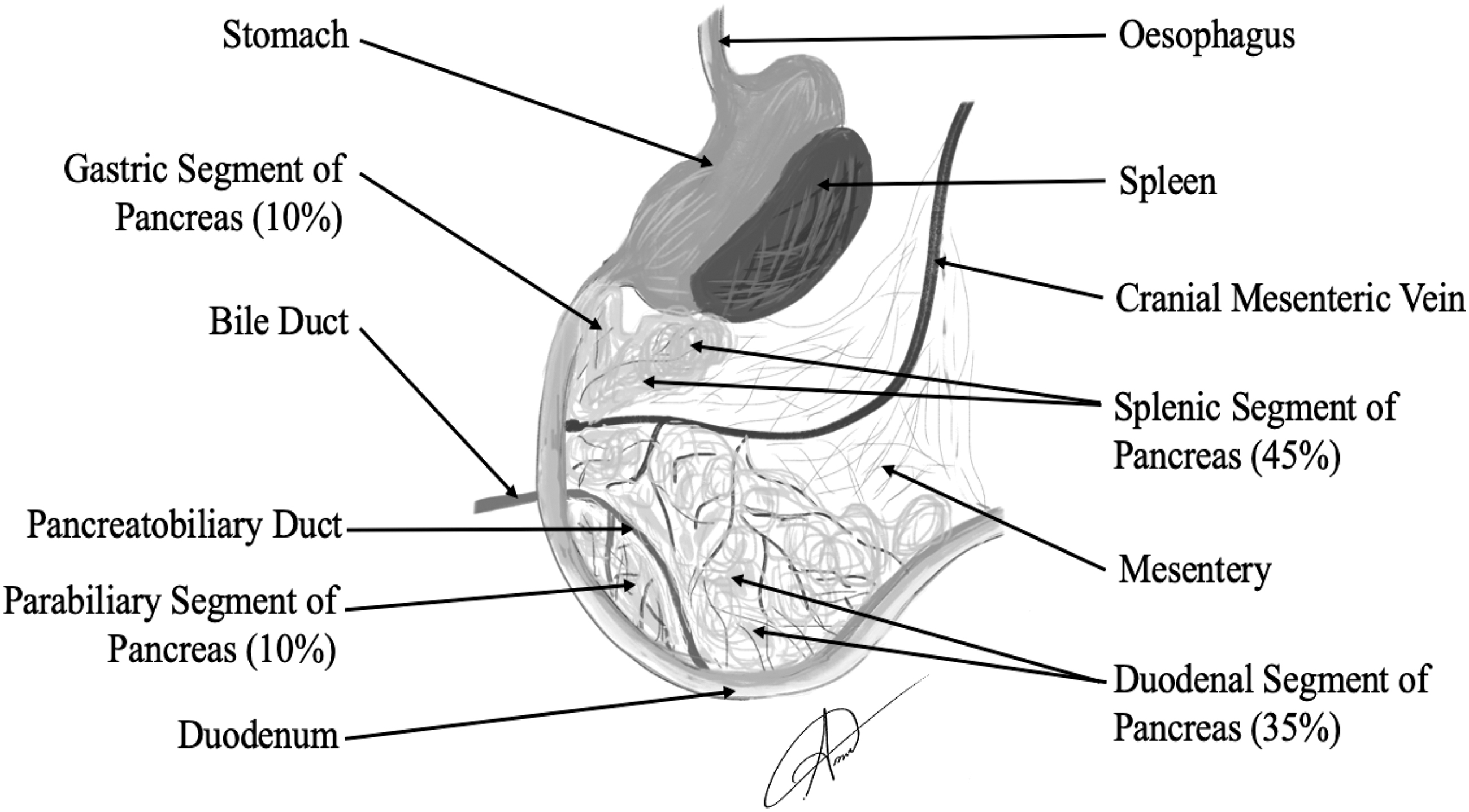
Segmental division of the rat pancreas and relative mass percentages: splenic segment, SS (45%); duodenal segment, DS (35%); gastric segment, GS (10%); and parabiliary segment, PS (10%) (Richards and others 1964; Tsuchitani and others 2016). Diagram source: Adetayo Sadudeen Amid, Department of Veterinary Surgery and Radiology, University of Ilorin, Ilorin, Nigeria.
The duodenal loop was returned back into the abdominal cavity after pancreatectomy. The linea alba and the skin were closed using 5-0 Polyglactin 910 (Vicryl® Ethicon® Johnson & Johnson International) and 4-0 Nylon (Ogotex®) using simple interrupted suture pattern, respectively.
Postoperative monitoring
Immediately after surgery, 0.05 mg/kg buprenorphine (Buprenex®) was administered subcutaneously (Curtin and others 2009) and also 3 days after surgery (Wilson and others 2016). The rats were returned back into the cage, placed on the homeothermic blanket system (Harvard Apparatus) at temperature 37°C and then provided with water. The body temperature was monitored with rectal thermometer whereas the respiratory rate was observed by visual inspection. Heart rate was monitored using EDAN® 10 veterinary ECG equipment made in China.
Postoperative treatments
VitC at 1,000 mg/kg was given orally to all the rats in phase 1, whereas those in phase 2 were served only water and feed ad libitum after recovery. Rats were monitored till they fully and completely recovered. This postoperative treatment was carried out for 14 days before ECG was carried out on day 14.
Measurement of ECG
ECG was taken on the 14th day after the surgery using EDAN 10 veterinary ECG equipment made in China, with 50 mm/s paper speed and a sensitivity of 100 mm/mV. Rats were anesthetized with 90 mg/kg Ketamine and 10 mg/kg Xylazine, routinely. The alligator clips for right arm, left arm, right leg, left leg, and the heart were put in place after rubbing the sites with adequate quantity of gel. The EDAN was connected to the laptop to gather information about each rat, which was recorded and saved.
Serum collection
After ECG had been taken, on the same 14th day blood sample was collected from the retro-orbital venous plexus of all the 35 rats (van Herck and others 2001) into plain sample bottles for serum preparation. Thirty minutes of coagulation was allowed before the coagulated blood samples were centrifuged for 10 min under 4°C refrigerating temperature at 3,000 g to have the supernatant separated from the coagulated blood samples. The supernatant (serum samples) was thereafter pipetted into sterile polypropylene sample tubes for the analyses of insulin, TNF-α; and Interleukins (IL-6 and IL-8).
Enzyme linked immunosorbent assay
Serum insulin level was determined using insulin-specific enzyme-linked immunosorbent assay (ELISA) test kit (Immuno-Biological Laboratories, Germany) and absorbance was measured at 450 nm with 630 nm as the reference wavelength. TNF-α, IL-6, and IL-8 were measured using corresponding specific rat ELISA test kits (Roche Company, Swiss). All assays were conducted in accordance with the instructions of their respective manufacturers.
Statistical analysis
Results are expressed as mean ± standard deviation (SD) and they were all subjected to one-way analysis of variance (ANOVA), in accordance with Tukey's multiple comparison post hoc test to compare differences between the means obtained from the control and tested rats, using GraphPad Prism version 5.3. Differences were considered significant at P < 0.05 (Hedges and Rhoads 2010).
Results
Effects of partial pancreatectomy and 1,000 mg/kg VitC on TNF-α
A significant decline was found in the level of TNF-α after partial pancreatectomy and postoperative treatment with 1,000 mg/kg VitC in groups 2, 3, and 4 (phase 1) when compared with group 1 (control) (Fig. 2). Similarly, a significant reduction in TNF-α was recorded in groups 6 and 7 that underwent partial pancreatectomy alone when compared with the control (Fig. 2).
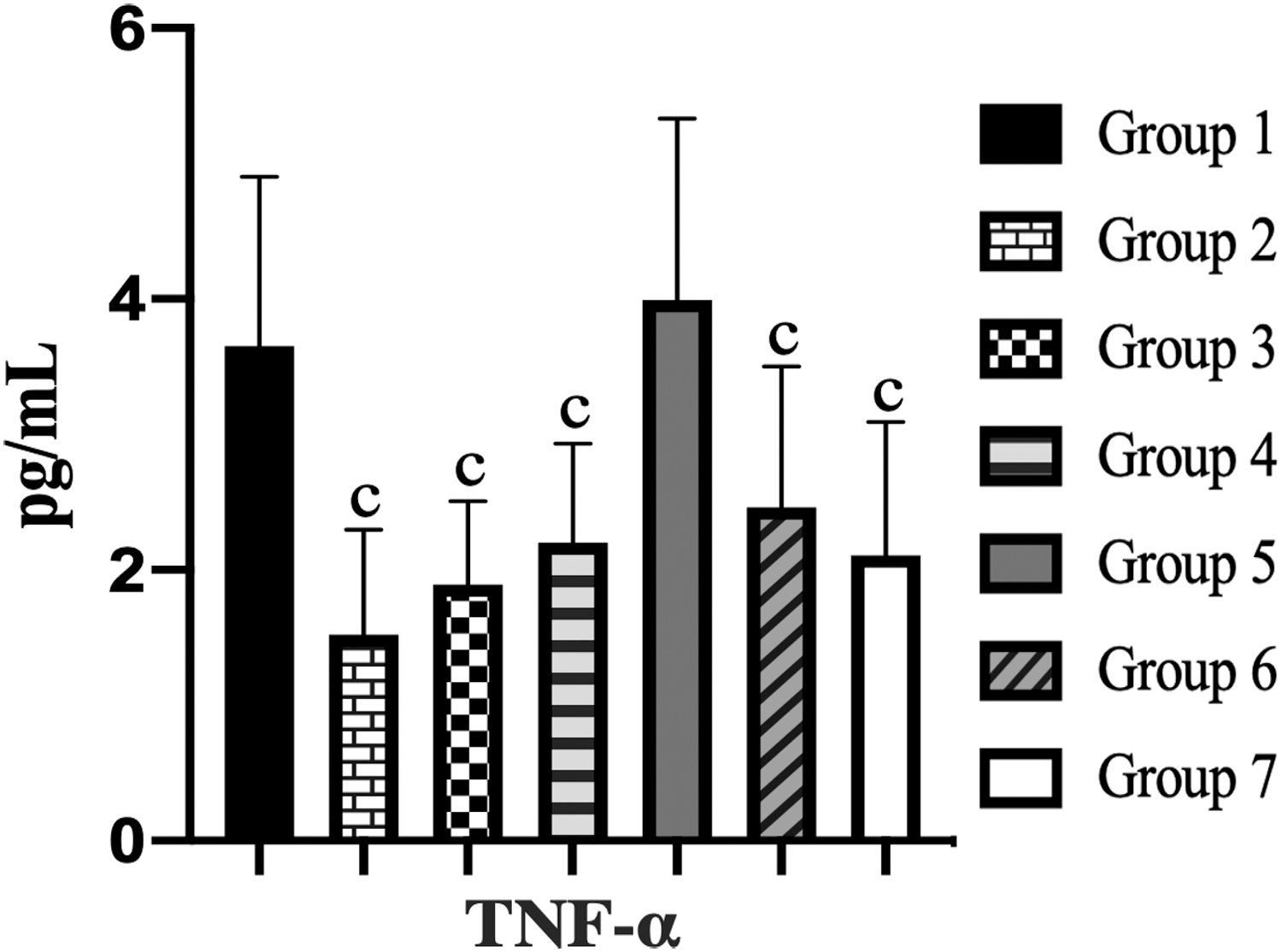
Effects of partial pancreatectomy and 1,000 mg/kg vitamin C on TNF-α, IL-6, and IL-8. Values are expressed as mean ± SD. TNF-α (pg/mL). Group 1 (control); groups 2 and 5 (¼ pancreatectomy); groups 3 and 6 (½ pancreatectomy); groups 4 and 7 (¾ pancreatectomy); phase 1 (groups 2, 3, and 4); phase 2 (groups 5, 6, and 7). Phase 1 (postoperative 1,000 mg/kg vitamin C, orally); phase 2 (postoperative water and feed ad libitum). cSignificant difference (P < 0.05) when compared with the control group. IL, interleukin; TNF-α, tumor necrosis factor alpha.
Effects of partial pancreatectomy and 1,000 mg/kg VitC on IL-6 and IL-8
Although a significant drop in IL-6 was observed in phase 1 (groups 2, 3, and 4) when compared with the control, however, a significant elevation in IL-6 was recorded in groups 5, 6, and 7 (phase 2) when compared with the control as shown in Fig. 3. Significant increase in IL-8 was observed in groups 2, 3, 5, 6, and 7 when compared with the control (Fig. 3).
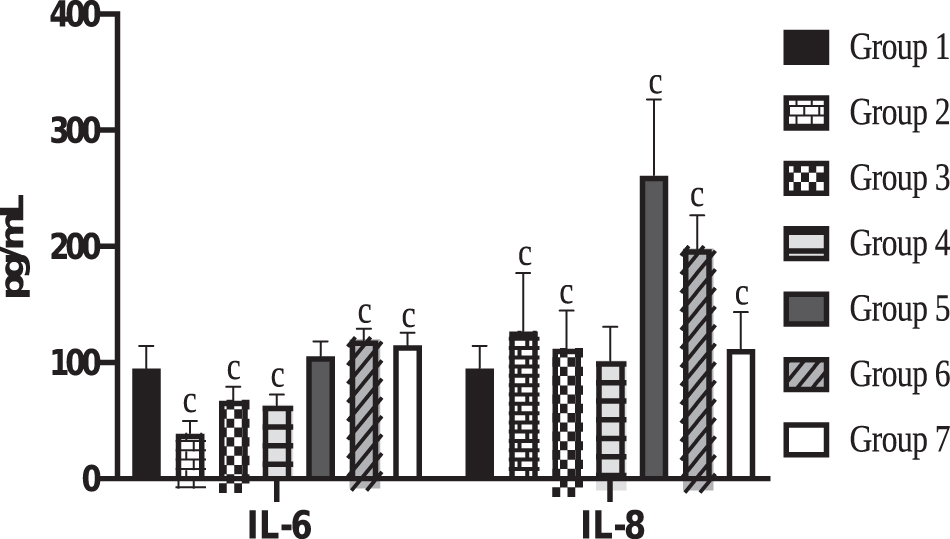
Effects of partial pancreatectomy and 1,000 mg/kg vitamin C on TNF-α, IL-6, and IL-8. Values are expressed as mean ± SD. Interleukins (IL-6 and IL-8, pg/mL). Group 1 (control); groups 2 and 5 (¼ pancreatectomy); groups 3 and 6 (½ pancreatectomy); group 4 and 7 (¾ pancreatectomy); phase 1 (groups 2, 3, and 4); phase 2 (groups 5, 6, and 7). Phase 1 (postoperative 1,000 mg/kg vitamin C, orally); phase 2 (postoperative water and feed ad libitum). cSignificant difference (P < 0.05) when compared with the control group.
Effects of partial pancreatectomy and 1,000 mg/kg VitC on insulin
There was an increase in the level of insulin in groups 2, 3, and 4 in phase 1 that took 1,000 mg/kg VitC supplementation after partial pancreatectomy when compared with group 1 (control), whereas a decline in insulin level was observed in groups 5, 6, and 7 (phase 2) that underwent partial pancreatectomy alone when compared with the control as shown in Fig. 4.
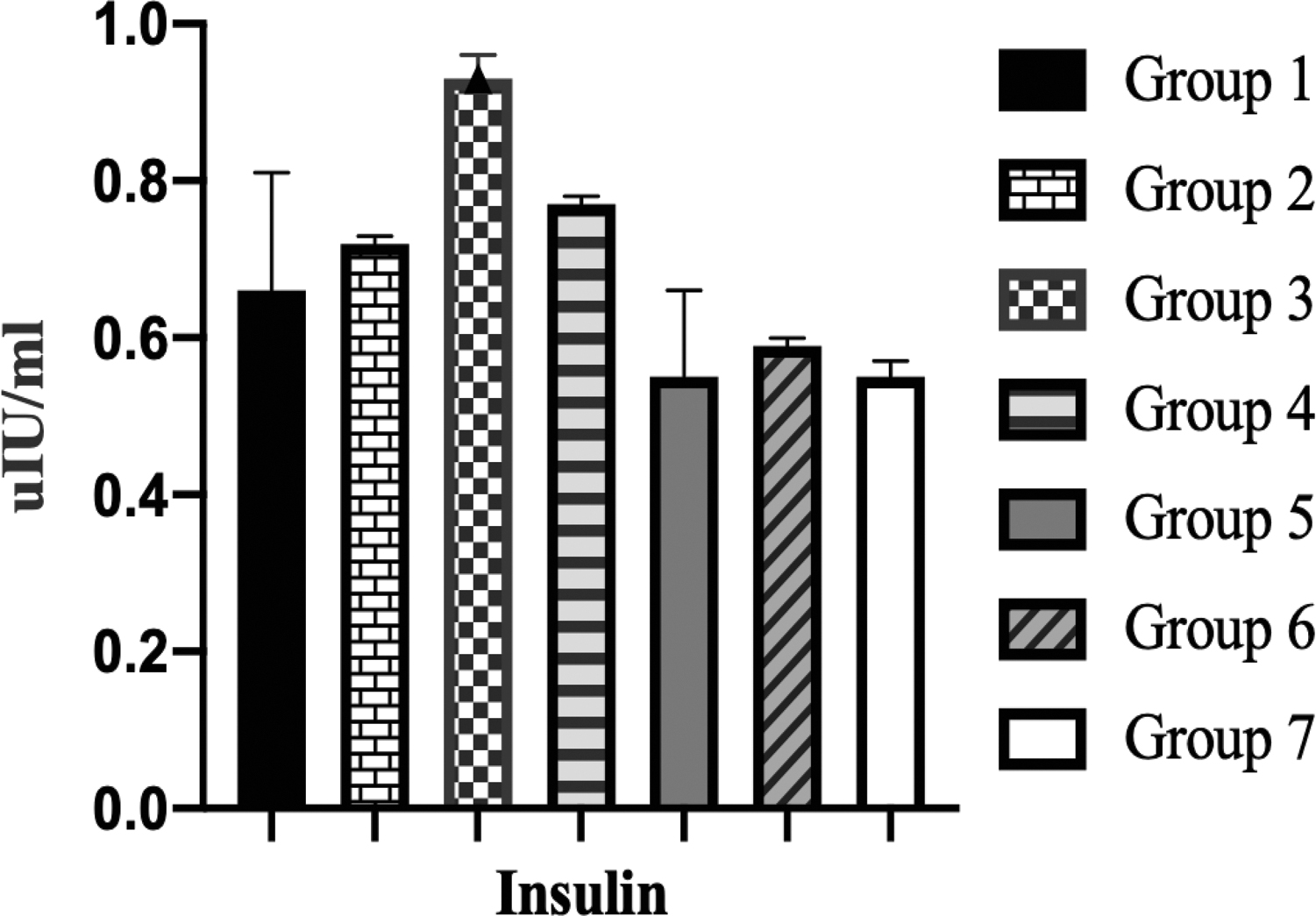
Effects of partial pancreatectomy and 1,000 mg/kg vitamin C on insulin. Values are expressed as mean ± SD. Insulin (insulin, uIU/mL). Group 1 (control); groups 2 and 5 (¼ pancreatectomy); groups 3 and 6 (½ pancreatectomy); groups 4 and 7 (¾ pancreatectomy); phase 1 (groups 2, 3, and 4); phase 2 (groups 5, 6, and 7). Phase 1 (postoperative 1,000 mg/kg vitamin C, orally); phase 2 (postoperative water and feed ad libitum). cSignificant increase (P < 0.05) when compared with the control group.
Effects of partial pancreatectomy and 1,000 mg/kg VitC on the electrocardiogram
Normal P, QRS complex, and regular RR interval in group 1 (control) and group 2 are shown in Fig. 4. There was a raised T wave, inverted P wave, and rough isoelectric baseline with regular RR in group 3, whereas there was irregular RR interval and flutter appearance of the baseline in group 4. Very wide P and PR waves and very tall R wave with normal T wave regular RR interval were recorded in group 5, whereas irregular RR interval, irregular R amplitude with flutter baseline, and raised T wave were recorded in group 6. Group 7 recorded atrial fibrillation with no discernible P wave and QRS complex as well as increased P wave, increased PR interval, and irregular RR interval (Fig. 5).
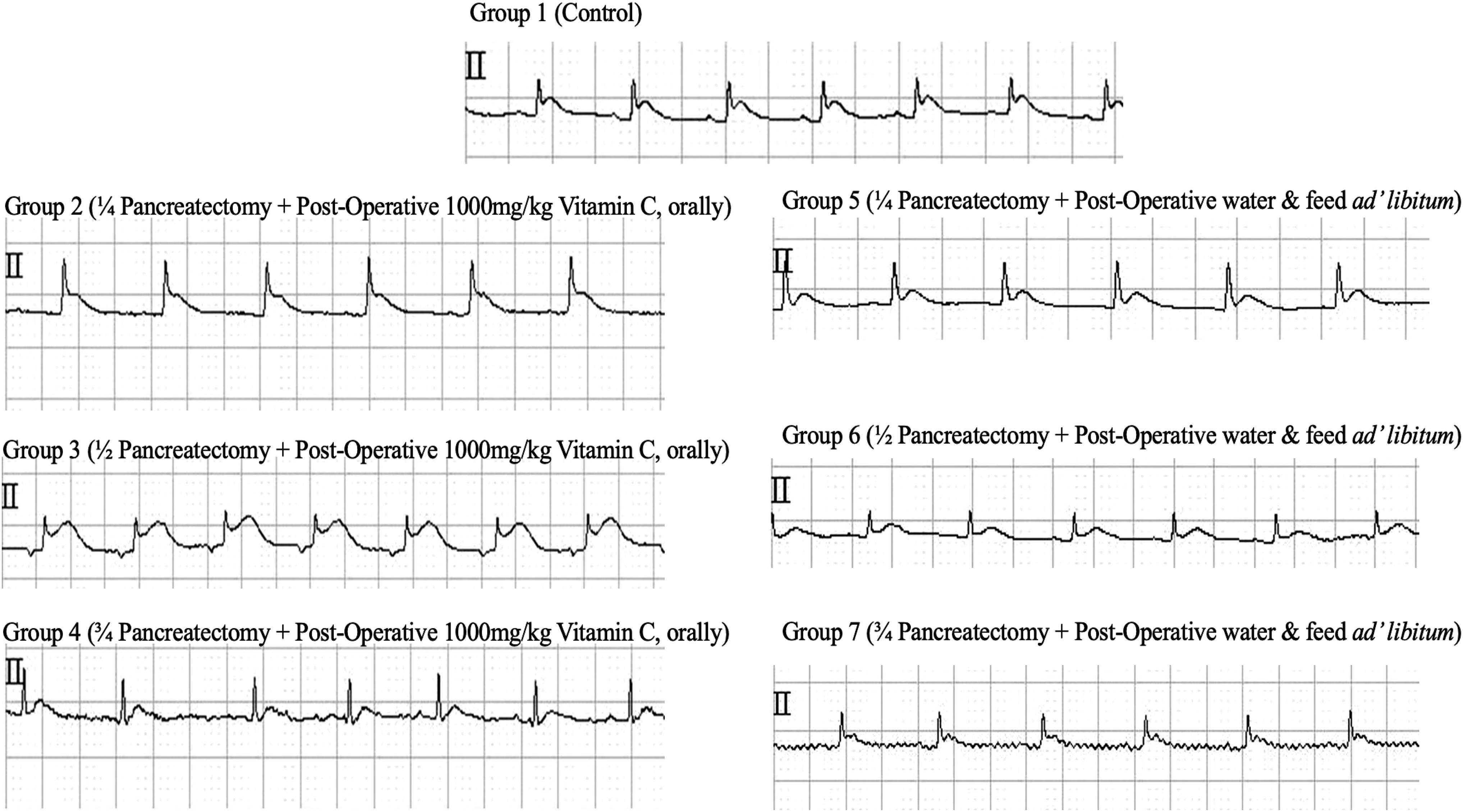
Effects of partial pancreatectomy and 1,000 mg/kg vitamin C on the electrocardiogram: group 1 (control). P, QRS, T, and QT are normal. Group 2 (¼ pancreatectomy+postoperative 1,000 mg/kg vitamin C, orally) showing normal P and normal QRS complex, RR interval is regular. Group 3 (½ pancreatectomy+postoperative 1,000 mg/kg vitamin C, orally) showing raised T, inverted P, and rough isoelectric baseline, RR is regular. Group 4 (¾ pancreatectomy+postoperative 1,000 mg/kg vitamin C, orally) showing irregular RR, flutter appearance of the baseline. Group 5 (¼ pancreatectomy+postoperative water and feed ad libitum) showing very wide P and PR, normal T, regular RR interval, and very tall R
Discussion
Proinflammatory cytokines are known to play a vital role in wound healing (Behm and others 2012), with pancreatic wound healing, after partial pancreatectomy, not an exemption. In contrast, proinflammatory cytokines have also been implicated in diseases that are life threatening (Scarpioni 2016), leading to postoperative aberration in organ function (Hsing and Wang 2015). Reduction in circulating proinflammatory cytokines has been reported to be consistent with administration of exogenous antioxidants (Amid and others 2020); inhibition of these cytokines has successfully improved organ function (Hsing and Wang 2015). This study showed that after administration of postoperative VitC in large dose at 1,000 mg/kg to pancreatectomized rats, there was a significantly marked reduction in serum cytokines, namely, TNF-α and IL-6 when compared with the control group. This low concentration of TNF-α and IL-6 may be as a result of anti-inflammatory effect of VitC, which has been linked to its ability to significantly reduce proinflammatory cytokine expression in the messenger ribonucleic acid (Jang and others 2014). This is also in agreement with the reports of Patel and others (2016) and Bilder and others (2003) where it was reported that TNF-α and IL-6 are found in large concentrations in the nonhealing wounds (Patel and others 2016), whereas IL-8 is greater in chronic nonhealing wounds when compared with healing wounds (Bilder and others 2003).
Pancreatic diabetes is not uncommon in pancreatectomy of distal pancreas (Kim and others 2011). Endogenously inadequate synthesis of insulin leading to low concentration of insulin in the serum, otherwise known as hypoinsulinemia, is the cause of type 1 diabetes mellitus—a metabolic disorder (Lester 2019) that is similar to total pancreatectomy-induced insulin deficiency, but dissimilar with respect to glucagon (Niwano and others 2018). Partial pancreatectomy-induced diabetes mellitus is similar to insulin deficiency in type 1 diabetes mellitus (Kim and others 2011). In this study, after partial pancreatectomy in varying amounts (¼, ½, and ¾) without postoperative VitC supplementation, we observed insufficient insulin concentration, which is in consonance with previous publication (Kim and others 2011). Treatment of adult diabetic patients with VitC supplement has given promising results (Cunningham 1998) as it has been reported that 1,000 mg VitC supplement decreased lipids and glucose concentration in the blood of diabetic patients (Afkhami-Ardekani and Shojaoddiny-Ardekani 2007). We also observed elevated level of insulin in the serum of rats that underwent partial pancreatectomy and postoperative supplementation with 1,000 mg/kg VitC, a result that is consistent with the previously published article of Cunningham (1998).
This study showed that heart rate reduced significantly in ½ and ¾ pancreatectomized rats untreated with VitC postoperatively, whereas atrial depolarization, ventricular bundle delay, ventricular depolarization, and ventricular repolarization increased significantly (prolongation) in pancreatectomized rats, whether treated with postoperative VitC or not. This prolongation might be due to acute disturbance in flow of impulse from the sino-atrial node (SA node) or valvular disturbance. However, the prolongation was more pronounced in the groups that underwent partial pancreatectomy alone when compared with the control. Rhythms were more regular in the VitC supplemented group. There was acute infarction in ½ pancreatectomized–VitC-treated rats, and atrial fibrillation in the ¾ pancreatectomized rats that did not receive postoperative supplementation with VitC. The acute infarction could have been as a result of sudden reduction in blood supply to the myocardium, which was suspected to have been normalized with time more efficiently in pancreatectomized–VitC-treated rats. In our study, atrial fibrillation after pancreatectomy in rats that were not treated with VitC during postoperative management is in consonance with Bidar and others (2013), where it was reported that atrial fibrillation persisted in surgical patients weeks after surgery due to the presence of atrial fibrillation substrate (Bidar and others 2013). Postoperative administration of VitC at the rate of 1,000 mg/kg, however, eliminated atrial fibrillation 14 days postpancreatectomy in what is in agreement with documented article of Costanzo and others (2015) affirming that consumption of foods that are rich in antioxidant for a long period of time lowers postoperative atrial fibrillation incidence (Costanzo and others 2015).
The outcomes of this study are a testament to the fact that administration of 1,000 mg/kg VitC would not only serve as antioxidant, but would also alleviate cardiovascular complications associated with diabetes in individuals with such postpancreatectomy complications. More so, VitC as an adjunct postsurgical medication to partial pancreatectomy could be a treatment regimen in the right direction to improve the quality of lives of individuals suffering from one pancreatic disease or the other that would eventually lead to either surgery-induced diabetes or diabetes emanated from disease processes.
Conclusion
The anti-inflammatory effect of VitC characterized by reduction in proinflammatory cytokines of pancreatic wound healing may contribute to elevation of insulin level and normalization of ECG values in rats after partial pancreatectomy. We, therefore, recommend an advancement in experimentation of this study for improvement in the comprehension of proinflammatory cytokines related to normalization of insulin level and ECG values.
Footnotes
Acknowledgments
We thank the Department of Veterinary Surgery and Radiology for granting us the laboratory animal surgical theater. We also thank the Department of Veterinary Physiology and Biochemistry laboratory animal unit where our experiments were performed and well catered for.
Author Disclosure Statement
No competing financial interests exist.
Funding Information
This study was self funded by the authors as no funding was received from neither governmental nor nongovernmental organizations.