




Abstract

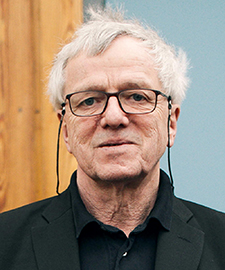
Stefan’s laboratory focused on understanding the molecular biology of cytokines. Through meticulous structure-function analysis approaches, he has not only defined the binding sites of Interleukin-6 (IL-6) and its two receptor subunits, Interleukin-6-receptor (IL-6R) and gp130, but also paved the way for potential breakthroughs in cytokine-based therapies.
Hi Stefan, Congratulations on winning the 2024 ICIS-BioLegend William E. Paul Award for Excellence in Cytokine Research. Please describe the broad focus of your research program that is being recognized by this award.
My research program is centered around the cytokine IL-6. I started working on IL-6 in the early 90 s. At that time, it was known that IL-6 binds to an IL-6 receptor and that there’s a second protein called gp130, which is needed for signaling. So, the IL-6 receptor itself is not signaling; it’s just binding. But the complex of IL-6 and IL-6 receptor then associates with gp130, which dimerizes and initiates intracellular signal transduction.
One of our first projects was to define the receptor binding sites. We knew that IL-6 displays species-specificity, in a way that human IL-6 binds to the human receptor, and mouse IL-6 binds to the mouse receptor. However, human IL-6 also binds to the mouse receptor, whereas mouse IL-6 does not bind to the human receptor.
We constructed chimeras of human and mouse IL-6 at the cDNA level by incorporating mouse IL-6 into the human molecule. When we tested these chimeras on the human receptor, we found a couple of chimeras that were not active, and we reasoned that this must be the binding side. This turned out to be true. We then went on to refine the binding site. As you probably know, IL-6 is a four-helical protein. So, we exchanged helices and further broke them down to a couple of amino acids.
We also measured the half-life of the receptor on the cell surface and found something very surprising, which, at first, we didn’t understand. When we pulse-chased the cells that expressed the human IL-6 receptor, we found that the receptor had disappeared entirely from the cell surface after a couple of hours. In the supernatant of the cells, we then discovered a smaller version of the receptor, which was still recognized by the antibody against the human receptor.
The only explanation for these data was that the receptor had been cleaved from the cell surface by a protease and rendered a soluble receptor molecule. That was very surprising because, at that time, only very few shed receptors had been identified.
By this time, we knew that the signaling receptor gp130 is present on all cells of the body. However, the IL-6 receptor is present on a limited subset of cells (hepatocytes, some epithelial cells, and a small number of leukocytes). Most cells in the body do not express the IL-6 receptor.
We next found that the shed receptor could still bind IL-6. This was not that surprising, but what was unexpected was that the cells expressing only gp130 and no IL-6 receptor could respond to the complex of soluble receptor plus bound to IL-6. Not to the receptor alone or IL-6 alone, but to the complex. Therefore, we hypothesized that there was a phenomenon that we called trans-signaling. Trans-signaling means one cell generates a soluble receptor, and a second cell, a completely different cell, binds the soluble receptor and IL-6 and responds to the cytokine. We followed up with a lot of experiments to see whether this was true or not. One of the first things we did was compare cells stimulated with IL-6 via the membrane-bound receptor with cells that lacked the membrane-bound receptor but were stimulated via the soluble receptor plus IL-6. We found that while both signaling mechanisms used the STAT-3 and MAP kinase signaling pathway, trans-signaling lasted much longer.
When the IL-6 receptor binds IL-6, it associates with a dimer of the ubiquitously expressed gp130 receptor subunit and initiates intracellular signaling. A typical IL-6 responsive cell expresses far fewer IL-6 receptors than gp130. That means when you stimulate this cell with IL-6, only very few gp130 molecules can signal or fire. In contrast, when you stimulate the cell with the soluble receptor plus IL-6, then all of the gp130s can fire or signal. Furthermore, we found that the soluble receptor is much less efficiently internalized than the membrane-bound receptor: the membrane-bound receptor disappears via internalization within 40 or 60 min, whereas the soluble receptor stays with the gp130 on the cell surface for 24 h. Together, these factors explain the higher amplitude and longer time course of IL-6 trans-signaling. So, as I said at that point, we hypothesized a process we termed trans-signaling. But when we reported this at meetings or wrote to editors and journalists, it met a lot of skepticism because it was unheard of that a soluble receptor would be an agonist. We repeatedly got the response that everybody knows soluble receptors are antagonists.
Clearly, we needed to undertake considerably more research to convince people that this was not an in vitro artifact but was happening in vivo. So, we did a couple of things that were very helpful. First, we generated a transgenic mouse that over-expressed the soluble human IL-6 receptor. Because of the species-specificity, this mouse has no phenotype because the human soluble IL-6 receptor cannot interact with the endogenous murine IL-6. We then injected human IL-6 into wild-type mice or soluble IL-6 receptor transgenic mice. This showed us that the mice became more sensitive to IL-6 and that the time course of the response was much, much longer. So, the soluble receptor kept IL-6 in the circulation and the responding cells were much more sensitive. This was consistent with a longer half-life of IL-6 bound to the soluble IL-6 receptor and with more gp130 molecules firing when being stimulated with the soluble receptor.
Second, we built a structural model of IL-6 bound to the soluble receptor (at that time, there was no structure available) and then estimated the distance from the COOH-terminus of the receptor to the NH2-terminus of IL-6 to be about 40 Å. Next, we constructed a fusion protein of IL-6 linked to IL-6 receptor by flexible amino acids. We called this designer protein, which could mimic trans-signaling, Hyper-IL-6. This was quite a success because our Hyper-IL-6 paper was published on the title page of Nature Biotechnology. So that gave us some public respect, so to speak.
Hyper-IL-6 and IL-6 were then tested for their ability to stimulate different cell types. We reasoned that if a cell responded to Hyper-IL-6 but not to IL-6 alone, this meant that the cell was dependent on trans-signaling for its response to IL-6. However, if a cell responded to IL-6 alone, this meant that it was signaling directly through the membrane-bound IL-6 receptor. Using this approach, we generated an atlas of cells that respond to IL-6 via trans-signaling versus cells that respond to IL-6 via classical signaling through the membrane-bound receptor. We also tested Hyper-IL-6 in vivo and uncovered some interesting phenomena. For example, we found that liver regeneration was dependent on the presence of the soluble receptor and was also greatly accelerated. We also saw that many stem cells, such as, for example, hematopoietic stem cells, were dependent on trans-signaling. In fact, Hyper-IL-6 could be used to expand hematopoietic stem cells. So, we proposed that Hyper-IL-6 is a tool for the culture of stem cells.
But then we realized that these experiments only address the potential of trans-signaling. They do not prove that trans-signaling occurs in vivo. It just says there’s a lot of potential for this kind of reaction, but it does not prove that it actually happens. So therefore, we made a second designer protein, soluble gp130Fc, which is essentially the extracellular portion of gp130 dimerized by adding the Fc portion of a human IgG1 antibody. We knew that the membrane-bound gp130 only binds IL-6 when the IL-6 receptor is present (i.e., it does not bind either IL-6 or the receptor alone). Therefore, we hypothesized that our soluble gp130Fc protein would preferentially, or perhaps exclusively, block trans-signaling but not classic signaling. When we tested this idea, the data were black and white. We could show very clearly that soluble gp130Fc selectively blocked trans-signaling.
We now had the tool with which to test trans-signaling in vivo. To further bolster the approach, we generated two strains of transgenic mice that overexpressed the soluble gp130Fc protein. The first transgenic mouse expressed soluble gp130Fc protein in the periphery, the second in the brain. Using these tools, we analyzed several mouse models of human diseases.
A first set of experiments was done with neutralizing anti-IL-6 or anti-IL-6 receptor antibodies, or in IL-6 knockout mice. This would allow us to determine whether the disease we were looking at was dependent on IL-6. In a second set of experiments, we used soluble gp130Fc protein or did the study in soluble gp130Fc transgenic mice. This experiment told us whether trans-signaling was involved.
Using this approach, we started to develop an understanding of trans-signaling and classic signaling. The first impression was that IL-6 trans-signaling is important for inflammation and cancer because, in all 25 models of human diseases analyzed, the disease could be attenuated by simply blocking trans-signaling. This was a very remarkable set of experiments.
Perhaps even more remarkable was that there were a lot of examples where the complete block of IL-6 by an antibody against IL-6 or IL-6 receptor or in an IL-6 knockout mouse was much worse for the mouse than just blocking trans-signaling. And from this, we learned that classic signaling can be protective and regenerative. One of the key experiments was with inflammatory bowel disease and colon cancer. We compared wt mice and IL-6 ko mice. As expected, IL-6 ko mice developed far fewer tumors. But unexpectedly, IL-6 ko mice were much more inflamed than wt mice. We repeated these experiments many times because, at first, we thought there was a mix-up. But it was really true. So, from this type of experiment, we learned that IL-6 signaling via membrane-bound receptors has a protective effect. And, as you probably know, the intestine is continually regenerating. So, when you block IL-6 completely, you also interfere with the necessary regeneration of the intestine. And when you only block trans-signaling, you don’t touch this regeneration response. Based on this, we started clinical trials with patients with inflammatory bowel disease.
The third impression we had from these experiments was that IL-6 trans-signaling is not needed in the unchallenged state. Mice that have no IL-6 trans-signaling because they overexpress soluble gp130Fc in the brain or periphery do not show any phenotype. They are completely normal and only show a phenotype when challenged with an inflammatory or tumor model.
This means that when you block IL-6 completely, you should see increased susceptibility to infection as a side effect. Indeed, we observe that people under treatment with neutralizing antibodies against the human IL-6R, which block both classic- and trans-signaling, are prone to more bacterial infections. You have to remember that therapies with biologics like the anti-IL-6 receptor are not only given for 2 weeks but rather lifelong. Therefore, a 5% to 10% increase in the susceptibility to bacterial infection is a significant concern for prolonged treatment.
We hypothesized that the soluble receptor and soluble gp130 are forming a buffer for IL-6. We knew that IL-6 binds to the soluble receptor with a medium–high affinity of around 1 nanomolar. But the complex of IL-6 and IL-6 receptor binds gp130 with a 100 times higher affinity of 10 picomolar. Therefore, whenever IL-6 is released, it will bind to the soluble IL-6 receptor in the circulation. This complex will then immediately bind to soluble gp130 in the circulation and will be neutralized. So, only if IL-6 exceeds a critical buffered concentration will you have a systemic response to IL-6.
We find this very interesting. During inflammation, IL-6 concentrations can easily increase a thousand-fold. In extreme situations, it even increases a million-fold, or six orders of magnitude. The soluble receptor can also increase, but only by a factor of 2 to 10. So, IL-6 goes up, let’s say, several 1000-fold, soluble receptor goes up 2–5, to 10-fold, but soluble gp130 stays the same. That means the molar concentration of soluble receptors is now higher than that of soluble gp130, and together with IL-6, it can lead to systemic trans-signaling. This is the kind of safety guard that the organism has, and only in extreme situations do you get this kind of trans-signaling, which now involves all the cells in the body.
There is very good evidence for this. People have found an SNP, a single-nucleotide polymorphism in the IL-6 receptor gene in which aspartic acid 358 is changed to alanine 358. The 358 aspartic acid or alanine is very close to the site where a protease cleaves the IL-6 receptor. We found that the alanine at this position elicits much better cleavage than the aspartic acid. So, when you have cells from a patient with alanine at this position, it sheds about twice as much IL-6 receptor as the one with aspartic acid. People with this SNP have 2-fold higher soluble IL-6 receptor levels in the blood. Consistent with this, genetic analysis revealed that these patients are protected from many inflammatory diseases. We interpreted this as being due to increased IL-6 receptor, which increases the capacity to buffer more IL-6 below the threshold when systemic trans-signaling occurs. So, we think this is a very nice confirmation of the buffer theory.
And very recently, with a group in Munich led by Professor Lichtenthaler, we found that gp130 is also subject to shedding, but not by the A disintegrin and metalloproteinase 17 protease, which is responsible for shedding of the IL-6 receptor, but a completely different enzyme, which is called β-site APP cleaving enzyme (BACE1). Incidentally, BACE1 is the beta-secretase that cleaves the Alzheimer’s protein. Alzheimer’s protein can be cleaved through a combination of 2 proteases: the beta-secretase cleaves outside the cell, and the gamma-secretase cleaves within the membrane. Together, they generate the A-beta peptide, which triggers the generation of Alzheimer’s plaques.
It turned out that we had BACE1 knockout mice in the laboratory. Using these mice, we found that the level of soluble gp130 is about half that observed in the wild-type mice. That suggests that the buffering capacity of soluble gp130 in the blood is regulated not only by the protease that cleaves the IL-6 receptor but also by a second protease that has been implicated in Alzheimer’s research. But now we have a new function for this protease. It also generates soluble gp130, which is involved in the buffering process.
We are now asking whether this buffer determines the overall efficacy of cytokine responses and whether this is a more general phenomenon.
Incidentally, we also know that the A disintegrin and metalloproteinase 17 protease that cleaves the IL-6 receptor also cleaves TNF alpha. As you know, TNF alpha is a membrane-bound cytokine that must be cleaved by a protease. Ligands of the EGF receptor are also cleaved by the same protease. So, it’s a very complex enzyme that governs 3 major pathways: the IL-6 pathway, the TNF pathway, and the EGF receptor pathway. Therefore, we made an animal model and found that this protease has a major role, not only in inflammatory bowel disease but also in colon cancer, metastasis in lung cancer, emphysema, and others. Consequently, we are developing specific inhibitors for this protease, which might have tremendous therapeutic potential.
So, it was a good patent, but this was probably not the right way to inhibit IL-6 activity. For the next step, we patented hyper-IL-6 for liver regeneration, or to expand hematopoietic stem cells or other stem cells. We also patented the gp130Fc protein, and we claimed that this protein can be used to specifically block trans-signaling but not direct signaling through IL-6 (the good side of IL-6).
We also patented a soluble gp130Fc proteins with improved binding affinity for the complex of IL-6 and IL-6 receptor.
We also made patents on other cytokines of the IL-6 family. You probably know that more than 8 other cytokines also use gp130, such as the ciliary neurotrophic factor (CNTF). CNTF uses a heterodimer of gp130 and the Leukemia inhibitory factor (LIF) receptor. Therefore, CNTF has one contact site for gp130 and a second contact site for the LIF receptor. We made a chimeric cytokine consisting of IL-6 with the inserted LIF receptor binding site of CNTF. So, we now had a cytokine, which required a receptor configuration not normally found in vivo. It needs the IL-6 receptor, one gp130, and the LIF receptor as a second signaling molecule. At that time, there was quite some fuss about CNTF. Regeneron tried to use it as a therapeutic for neurodegenerative diseases, but this failed—however, all of the patients who received the drug lost weight. Therefore, Regeneron performed a second trial with CNTF as a weight loss medication. Unfortunately, although this did work as a weight-loss drug—about 70% of the patients developed auto-antibodies against CNTF.
So, this was not a good drug, and Regeneron stopped the clinical trials. But then 1 researcher who was following this closely, Mark Febbraio from Australia, told me at a meeting we would need a CNTF that would not elicit auto-antibodies. I told him, “I have such a CNTF because we made a CNTF, which is almost entirely IL-6 and only has the binding site to the LIF receptor from CNTF.” And so, together with Mark Febbraio, we developed this. It was published in Nature a couple of years ago. It is a very powerful drug for patients with type-2 diabetes, and we are hopeful that it will end up in the clinic within the next few years. So, these were the major patents we produced. They all revolve around our structure-function and trans-signaling work.
I quickly realized that companies would listen to you, but they will usually not be willing to invest in your story because you are just a biochemist, or just a basic scientist. So, it was clear to me that I needed a clinical partner. In my case, it was Professor Schreiber from the University Hospital in Kiel. He is the director of Internal Medicine and immediately saw what could be done with this kind of protein. Fortunately, he had a lot of contact with companies and had already done many clinical trials for many companies. So, having him as a partner was a huge step forward. He found a company willing to invest in the project, so we gave them a license. Note that we didn’t sell it, but instead gave them a license. A second company, a Chinese company, also received a license. The bottom line is that it can be very frustrating when you have done what you think was beautiful science, and companies are unwilling to take it on.
My second thought about clinical work is that it is significantly slower than laboratory work. When you are a biochemist, you can typically do an experiment with an enzyme within a week. When you do the same experiment with animals, it takes a year. And when you do the same procedure with patients, it takes many years.
So, you have to learn to be patient—very, very patient. And that can be very demanding. It works better when you have good contact and a good exchange with a company. But this is also not always the case. Many companies tend to be very close-mouthed. So, you must be patient and accept that you are not much involved.
In our case, we obtained Good Manufacturing Practice (for the of drugs, which can be used in patients) material from a company and went through phase 1 clinical trials. As you know, phase 1 clinical trials are performed on healthy individuals, and you hope that no major adverse events will happen. This turned out to be the case, which led to phase 2 clinical trials. We performed 2 clinical trials in over 100 patients with inflammatory bowel disease, a smaller one in Kiel and a larger one in China. These clinical trials revealed excellent efficacy in terms of clinical response, clinical remission, and mucosal healing. We are on our way to phase 3 clinical trials.
Again, this takes a lot of time. There are many hurdles that you or the company have to overcome, but hopefully, this will eventually lead to the approval of our protein as a drug. By the way, the soluble gp130Fc protein now has a new name because the WHO assigns a name to a drug when you do phase two clinical trials. The new name is Olamkicept. You have no input into the name and no choice but to accept it. I find this quite interesting.
The university does not have enough money to do that. At that point, you will need corporate or industry help. The best is to get a clinical partner. But what is also very important is that you fully understand your story. You must be able to explain the story, not only to a specialist, but also to people who do not know too much about it. You must be ready to answer all critical questions, and for this, you really have to understand it yourself.
In the IL-6 field, we have seen some pleiotropy. So, IL-6 can bind, obviously, to the IL-6 receptor, but it can also bind to the CNTF receptor, for instance. And there are other binding crossings. For instance, IL-6 can also bind to the receptor portion of IL-27 and thereby elicit a completely different response.
I hypothesize that there must be a reason for all of this cross-reactivity with soluble receptors. It might be that for the organism, it’s easier to maintain a certain buffer at a constant level than to completely and precisely control the amount of a cytokine that is released. In other words, it might be a safety catch for a cytokine response. If this is true, it should be recognized and considered much more in therapies that involve cytokines.
I also believe that multi-targeting of cytokines might be very interesting. This approach has already been initiated, and a few examples have been published in this direction.
So, people should not get discouraged. I mean, you have failures every day, but this is normal. It doesn’t mean you are a bad scientist. The consequence has to be that you have to pursue, go, and go, and go. And don’t get disappointed, but get stronger by every failure. It sounds heroic, but this is exactly how you must do it.