




Abstract
The concept that the consumption of a diet rich in flavonoids can be associated with a reduced risk for cardiovascular disease is becoming increasingly accepted. In the present study we investigated the effects of the following four diets on blood pressure and cholesterol ester levels in hypercholesterolemic Golden Syrian hamsters: a high-fat, high-cholesterol diet (HFHC); a HFHC with 2% cranberry concentrate powder (HFHC+CE); a HFHC with 0.1% rutin (HFHC+Rutin); and a HFHC with 30 mg/kg vitamin E (HFHC+Vit.E). Diets were fed for either 12 or 20 weeks. Over the experimental period, heart rate and blood pressure measurements increased in the animals fed HFHC and HFHC+Vit.E; in contrast, these measurements were not increased in the animals fed HFHC+CE and HFHC+Rutin. Mesenteric and total abdominal fat were significantly lower in the animals fed HFHC+Rutin than in animals fed the other three diets. Ratios of plasma high-density lipoprotein cholesterol (HDL-C) to very-low-density lipoprotein cholesterol and of plasma HDL-C to low-density lipoprotein cholesterol were significantly higher in animals consuming HFHC+Vit.E than in animals fed the other three diets. Aortic cholesteryl ester levels were significantly lower in animals fed HFHC+CE, HFHC+Rutin, and HFHC+Vit.E at 20 weeks than in the animals fed HFHC. Fasting blood glucose concentrations were significantly lower in animals fed HFHC+Rutin and HFHC+Vit.E, and glucose clearance rates improved in animals fed HFHC+Rutin compared to animals fed the other three diets. Results obtained from this study support the concept that the chronic consumption of a flavonoid-rich diet can be beneficial with respect to cardiovascular health.
Introduction
D
Cranberries represent a flavonoid-rich food that has been relatively understudied with respect to vascular health. Although the potential value of cranberries for the prevention and treatment of urinary tract infection has been a subject of extensive research, 23 –26 there are relatively few studies on the potential effects of this food on vascular disease. Recent review articles 27,28 mentioned potential beneficial effects of cranberry consumption on vascular health, mainly attributing the observed effects to the antioxidant properties of cranberry constituents. Human studies have reported favorable effects of cranberry juice consumption on plasma antioxidant capacity and blood lipid parameters. 29 –31 Complementing the above, in vitro studies 32 suggest a link between cranberry consumption and increased low-density lipoprotein (LDL) receptor expression in hepatocytes.
In a recent pilot study conducted by members of our group we observed that the daily consumption of 120 g (approximately three servings) of sweetened dried cranberries over a 29-day period was associated with a reduction in circulating levels of oxidized LDL cholesterol in healthy human adults (data not shown). Given this finding, the present study was designed to further investigate the potential vascular protective effects of cranberry flavonols in an experimental animal model. The primary aim of the study was to investigate the effects of a high cranberry diet on blood pressure and cholesterol ester levels in the Golden Syrian hamster, an animal model that is characterized by hypercholesterolemia and a lipid metabolism that is similar to that in humans. 33 When fed a high-fat, high-cholesterol diet (HFHC), these hamsters demonstrate fatty streak accumulations, leading to development of arterial lesions that are similar to what develops in humans. 21,34 In addition, bile acid composition, the rate of hepatic cholesterol synthesis, and changes in plasma LDL cholesterol (LDL-C) levels in response to dietary cholesterol intake are remarkably similar in humans and the Golden Syrian hamster. 35,36
Materials and Methods
Animal model and diets
Male Golden Syrian hamsters (n = 120), 3 weeks old (weighing 30–40 g), were obtained from Charles River Laboratory (Wilmington, MA, USA) and housed individually in wire-bottomed cages on a 12:12-hour light–dark cycle in an environmentally controlled room (20–22°C, 60% relative humidity). The animals were fed a commercial laboratory diet (no. 5001, Ralston Purina, St. Louis, MO, USA) for 1 week, followed by HFHC for 2 weeks. HFHC was 20% fat (39.5% butter, 49.5% vitamin E-stripped soybean oil, 10.0% fish oil, and 1.0% cholesterol), 5% fiber (microcrystalline cellulose), 20% protein (casein), 49.9% carbohydrate (cornstarch), and 5.1% micro-nutrients (0.3%
The first group was given HFHC. The second group was fed HFHC supplemented with cranberry concentrate powder (NUTRICRAN-90; 2.0–3.8% total phenolics, 0.3–1.0% total anthocyanins; DECAS Botanical Synergies, Carver, MA, USA) at 2% of the diet, thus replacing 2% of the carbohydrate, and designated as the HFHC+CE diet. The 2% cranberry concentrate level was chosen as this amount of the concentrate powder provided, on a caloric basis, an amount of flavonoids that was similar to what was used in our pilot human trial where the subjects consumed 120 g/day sweetened dried cranberries. Individual flavonols, such as rutin or quercetin found in cranberries, 37 have been reported to improve cardiovascular parameters such as plasma lipid profile 38,39 ; therefore, 0.1% rutin was added to the third diet (HFHC+Rutin). Vitamin E supplementation has been shown to lower the incidence of fatty streak accumulation 40 ; therefore, as a positive control, 30 mg/kg vitamin E was provided to the final dietary group (HFHC+Vit.E) to observe its effects in comparison to the cranberry concentrate powder and rutin.
Food intake and body weight data were collected twice weekly. At the end of the 12- and 20-week periods, animals under anesthesia were killed by midline incision followed by diaphragm puncture, and blood and tissues were collected. The study protocol was approved by the Animal Care and Use Committee, U.S. Department of Agriculture Western Regional Research Center, Albany, CA, USA.
Heart rate and blood pressure
Baseline heart rate and blood pressure values were measured using a non-preheating, noninvasive blood pressure monitor for mice and rats (model MK-2000ST, Muromachi Kikai Co., Ltd., Tokyo, Japan) before the animals were randomized and assigned to the different dietary groups. The animals were anesthetized and kept on electrically warmed pads during these measurements. The same parameters were then measured at the end of the 12-week and 20-week treatments, respectively.
Tissue and plasma samples
Blood samples were collected in EDTA-treated syringes through cardiac puncture and centrifuged (1,500 g for 30 minutes at 4°C) to obtain plasma, aliquots of which were stored at −80°C until analysis. Livers were excised, perfused with saline to remove residual blood, blotted dry, weighed, then flash-frozen in liquid nitrogen (−196°C), and stored at −80°C. Mesenteric fat and retroperitoneal fat pads were removed and weighed. Heart and great vessels were removed from the chest cavity. Aortic arches were carefully dissected to ensure consistency in location and size. The dissected arches were cleaned in saline and stored in phosphate-buffered saline (pH 7.4) at 4°C until analyzed.
Plasma lipoprotein and cholesterol determination
Plasma lipoproteins were separated, and cholesterol was measured using high-performance liquid chromatography as previously described. 34
Aortic free and total cholesterol determination
Aortic cholesteryl ester (ChE) accumulation, induced by hyperlipidemia, is an early indicator of aortic atherosclerosis. Aortic arch tissue samples were removed from phosphate-buffered saline and added to a chloroform/methanol solvent mixture (2.5:1 vol/vol), vortex-mixed, and shaken at 25°C for 48 hours. The extraction mixture was decanted into a separate set of tubes and reduced to ∼1.5 mL at room temperature in a SpeedVac® concentrator (Thermo Electron Corp., Waltham, MA, USA) before addition of 1 mL of chloroform with 1% Triton X-100. This solution was evaporated to dryness. The lipid extract obtained was solubilized in 250 μL of distilled water by mixing on a vortex-mixer and placing in a shaking water bath at 37°C for 20 minutes. Aortic total and free cholesterol concentrations were determined enzymatically (Free Cholesterol C and Cholesterol E assay kits, Wako Bioproducts, Richmond, VA, USA), and aortic ChE was calculated as the difference between the total and free cholesterol. Aortic protein was determined on the basis of nitrogen content using combustion analysis (vario MACRO N analyzer, Elementar Americas, Inc., Mt. Laurel, NJ, USA).
Fasting glucose and glucose tolerance test (GTT)
Animals were fasted overnight, and a fasting blood sample was collected by tail bleed. Blood glucose concentrations were measured using a glucose meter (OneTouch® Ultra® blood glucose monitoring system, LifeScan, Inc., Milpitas, CA, USA). The animals were then given a 20% glucose solution in water (0.5 mL/100 g of body weight) by intragastric gavage. Blood glucose concentrations were measured at 15, 30, 60, and 120 minutes. A GTT was only conducted on the 12-week animals.
Statistical methods
Data are presented as mean ± SEM values. Statistical analysis was performed using StatView for Windows version 5.0.1 (SAS Institute Inc., Cary, NC, USA). Significant effect (P < .05) of treatment was determined using paired Student's t test or analysis of variance. Post hoc analysis was determined using Tukey's test.
Results
Food intake and body weight
Average daily food intake and body weight were similar among the groups (data not shown).
Organ weights
In the 12-week study, liver weight, and ratios of mesenteric fat, retroperitoneal fat, and total abdominal fat to body weight were similar among the groups (data not shown). In the 20-week study, the HFHC+Rutin group had a trend (P = .06) for lower mesenteric fat and demonstrated a significantly lower total abdominal (mesenteric + retroperitoneal) fat to body weight ratio compared to the HFHC group; however, no differences were observed among the groups in terms of retroperitoneal fat (Fig. 1). Liver weight to body weight ratios were significantly lower in the HFHC+CE and HFHC+Rutin groups than in the HFHC and HFHC+Vit.E groups (Fig. 1).
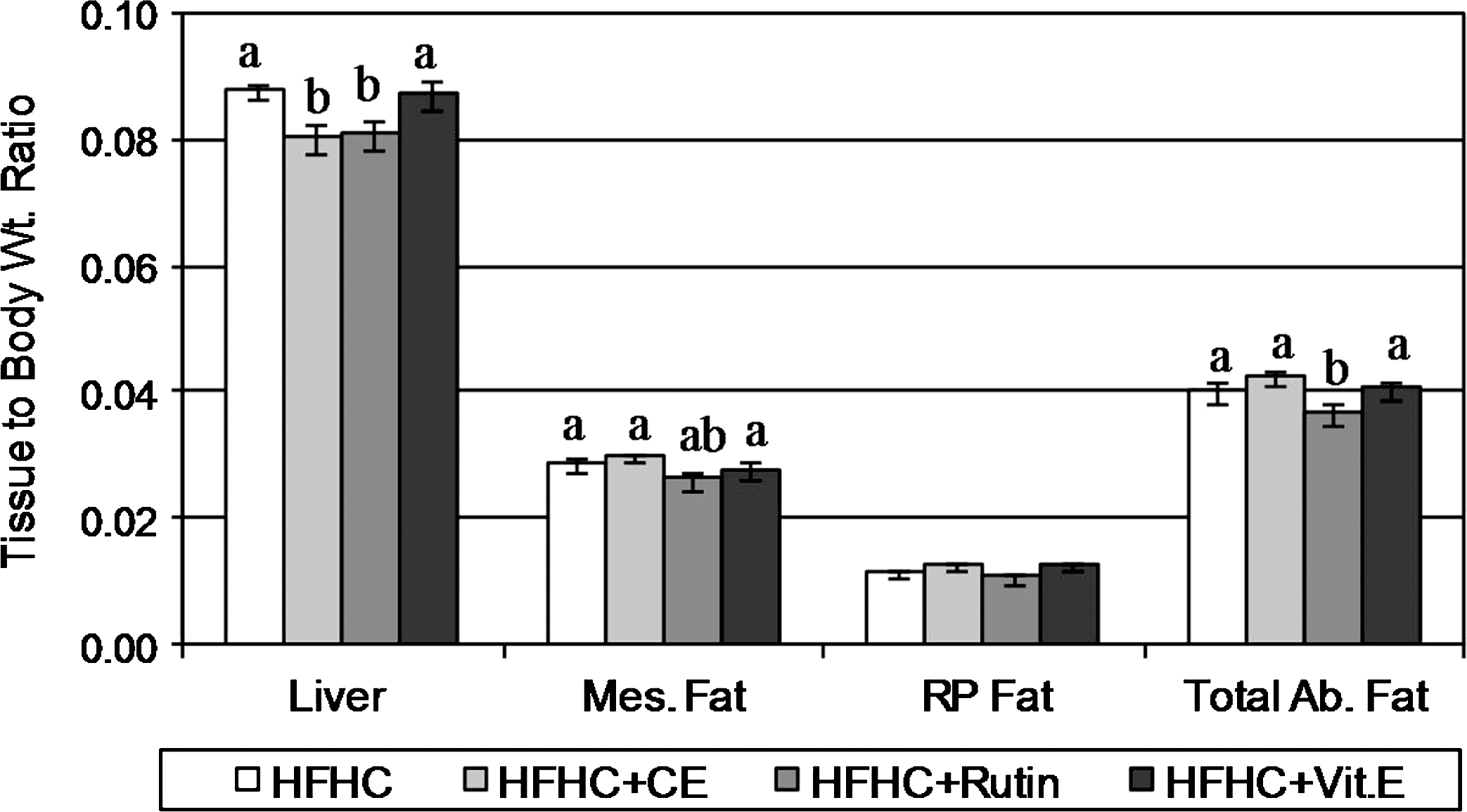
Tissue to body weight ratios in hamsters fed HFHC, HFHC+CE, HFHC+Rutin, and HFHC+Vit.E for mesenteric (Mes.), retroperitoneal (RP), and total abdominal (Total Ab.) fat. Data are mean ± SEM values (n = 15). Means without a common letter differ, P < .05. A trend (P = .057) for lower mesenteric fat in the HFHC+Rutin group is noted.
Heart rate and blood pressure
The average baseline heart rate was found to be 389 ± 7.9 beats/minute. In the 20-week study the heart rate of the HFHC+Rutin group was significantly lower (P = .03) than that of the HFHC group, whereas the lower heart rate of the HFHC+CE group did not reach statistical significance (P = .22). The heart rate in the 12-week study was similar among treatment groups (Fig. 2). Blood pressure values at 12 and 20 weeks were calculated as a percentage difference from baseline values (defined as 100%). Animals in the HFHC+CE and HFHC+Rutin groups in both the 12- and 20-week studies maintained blood pressure similar to baseline levels, whereas those in the HFHC and HFHC+Vit.E groups demonstrated a significant increase in blood pressure compared to baseline (Fig. 3).

Heart rate measured using a non-preheating, noninvasive blood pressure monitor (model MK-2000ST, Muromachi Kikai Co.) in hamsters fed HFHC, HFHC+CE, HFHC+Rutin, and HFHC+Vit.E in the 12- and 20-week studies. Data are mean ± SEM values (n = 8). Means without a common letter differ, P < .05. In the 20-week study, the HFHC+CE group demonstrated a P value of .22, whereas the HFHC+Rutin group demonstrated a P value of .03.
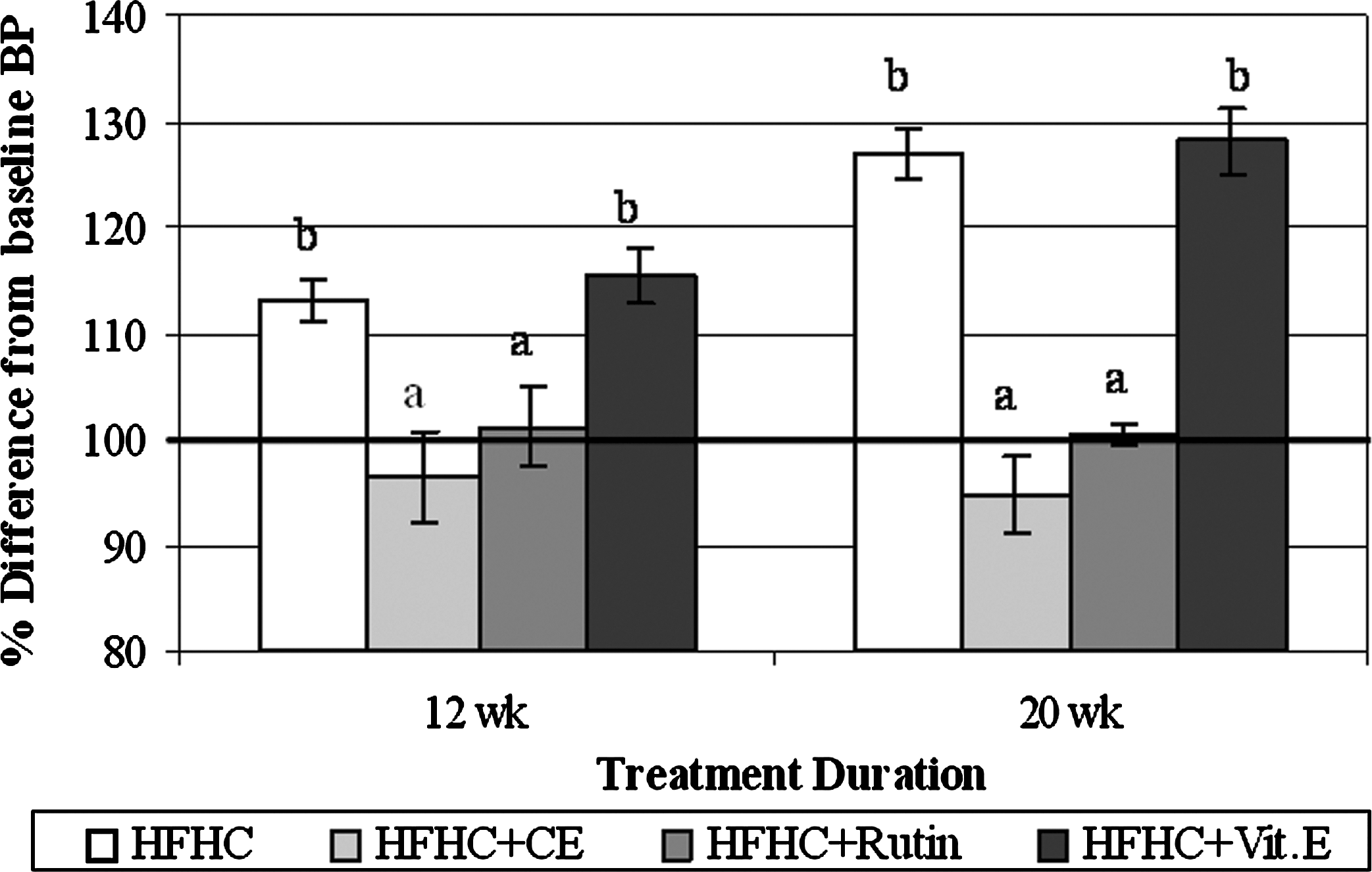
Blood pressure (BP) measured using a non-preheating, noninvasive blood pressure monitor (model MK-2000ST, Muromachi Kikai Co.) in hamsters fed HFHC, HFHC+CE, HFHC+Rutin, and HFHC+Vit.E in the 12- and 20-week studies. Data are mean ± SEM values (n = 8). Means without a common letter differ, P < .05. The HFHC+CE and HFHC+Rutin groups demonstrated maintenance of BP close to baseline values.
Plasma lipoprotein and cholesterol determination
In the 12-week study, plasma high-density lipoprotein cholesterol (HDL-C) to very-LDL cholesterol (VLDL-C) and LDL-C ratios were similar in the HFHC+CE and HFHC+Rutin groups compared to the HFHC group. These ratios, however, were found to be significantly higher in the HFHC+Vit.E group (Fig. 4). Plasma lipoprotein results were not obtained at 20 weeks as the animals were not fasted because of changed logistics in the animal care facility.

HDL-C to VLDL-C and HDL-C to LDL-C ratios as determined through high-performance liquid chromatography analysis in hamsters fed HFHC, HFHC+CE, HFHC+Rutin, and HFHC+Vit.E diets in the 12-week study. Data are means ± SEM values (n = 15). Means without a common letter differ, P < .05. The HFHC+Vit.E group demonstrated a significant difference from the other groups for both HDL-C to VLDL-C and HDL-C to LDL-C ratios.
Aortic free and total cholesterol determination
In the 12-week animals, aortic ChE accumulation, calculated as the difference between the total and free cholesterol, was significantly lower in the HFHC+Rutin and HFHC+Vit.E groups than in the HFHC and HFHC+CE groups (Fig. 5). After 20 weeks of treatment, the group consuming HFHC demonstrated a greater increase in ChE values compared to the increase observed in groups consuming HFHC+CE, HFHC+Rutin, or HFHC+Vit.E (Fig. 5).
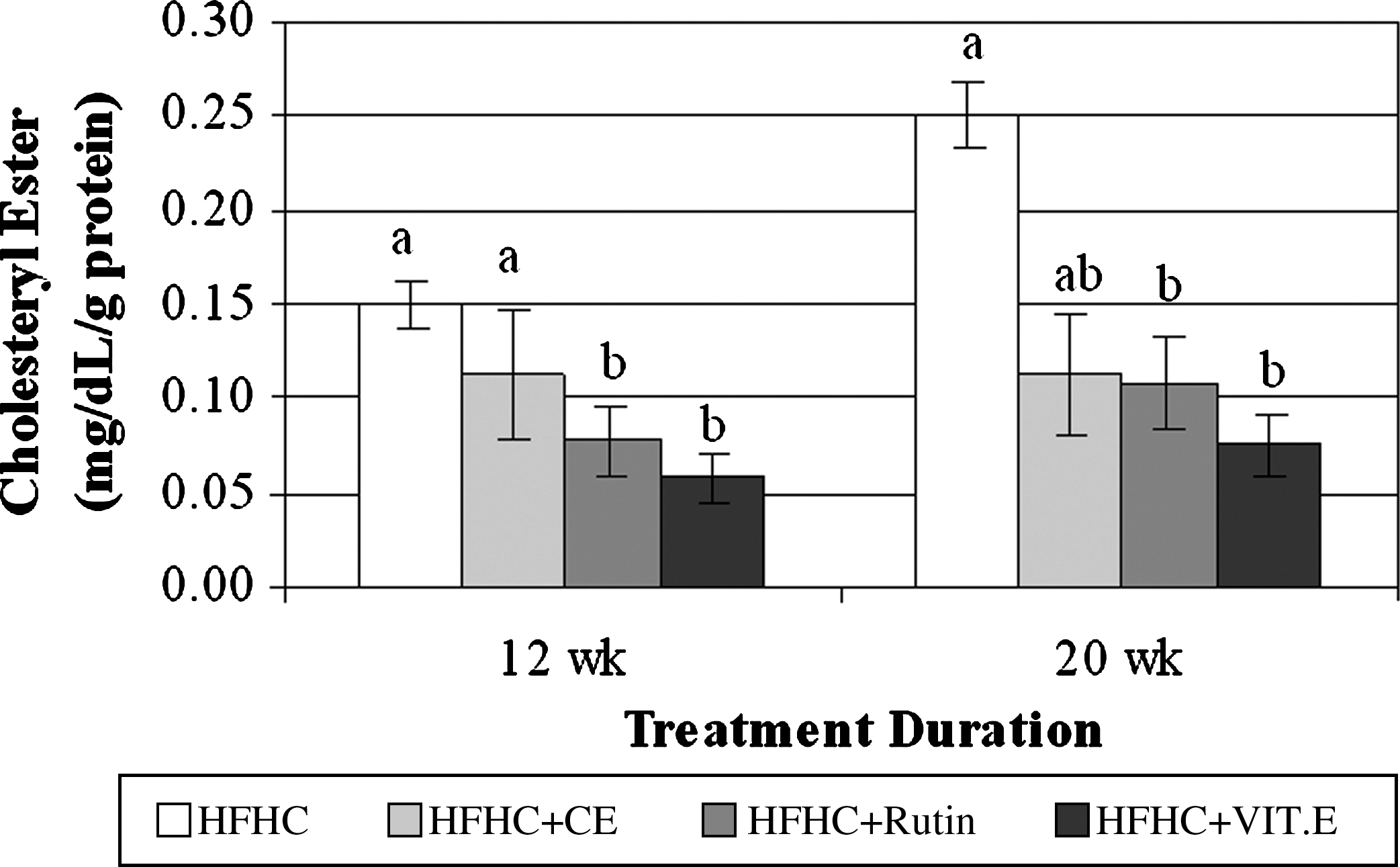
Aortic esterified cholesterol concentrations in hamsters fed HFHC, HFHC+CE, HFHC+Rutin, and HFHC+Vit.E in the 12- and 20-week studies. Data are mean ± SEM values (n = 15). Means without a common letter differ, P < .05. Esterified cholesterol was calculated as the difference between total and free cholesterol and was expressed relative to aortic protein content.
Fasting glucose and GTT
In the 12-week study, fasting glucose values tended to be lower in the HFHC+Rutin group (P = .07) and were significantly lower in the HFHC+Vit.E group (P < .05) than in the HFHC group (Fig. 6). An oral GTT was conducted at 12 weeks. Plasma glucose clearance was significantly higher in the HFHC+Rutin group at the 60-minute time point compared to the HFHC group (Fig. 7). Because of the spread of a bacterial infection common to hamsters, fasting blood glucose and oral GTT measurements were not conducted at the 20-week time point to avoid further distress to the animals.
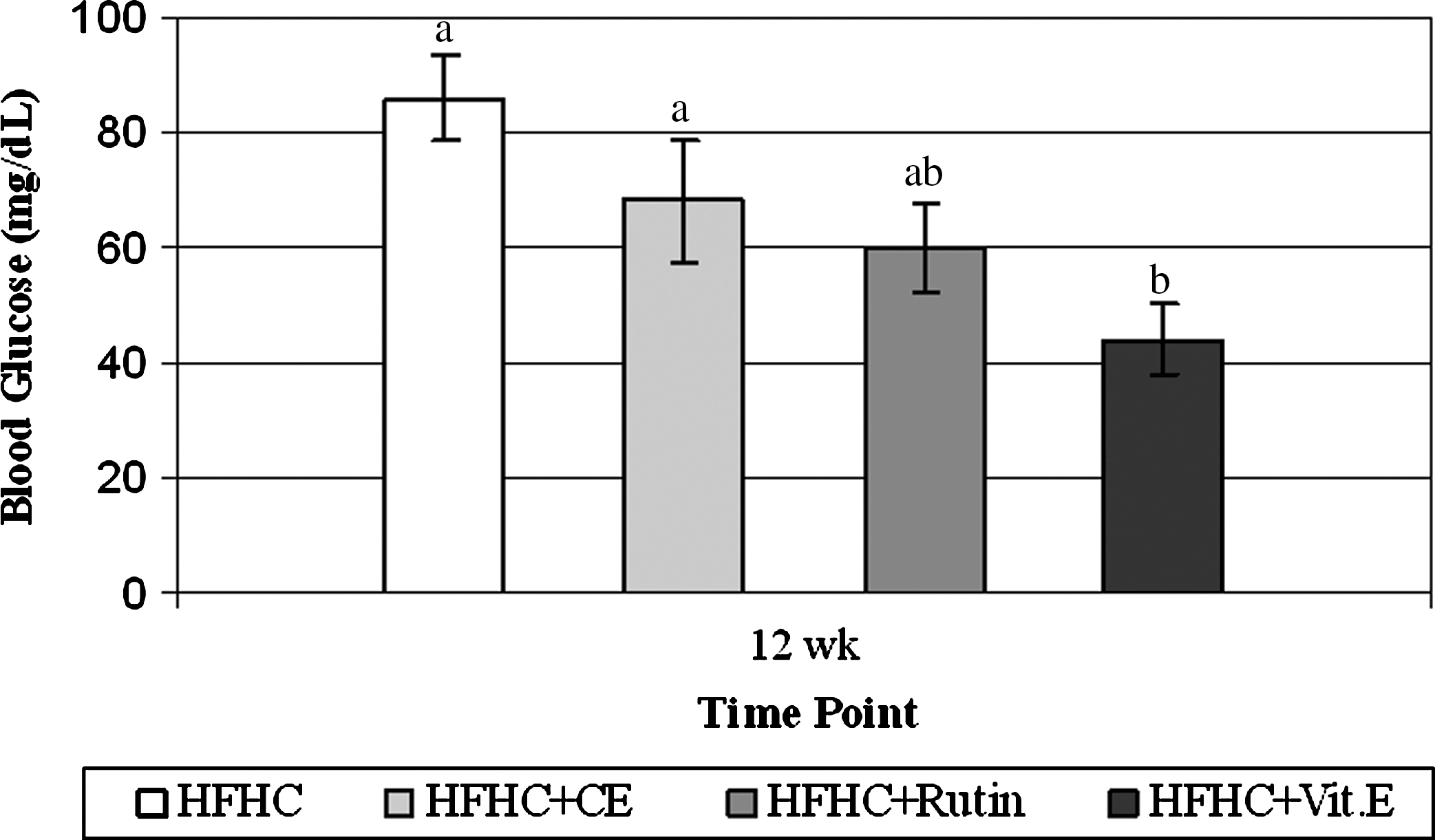
Fasting blood glucose determined using the LifeScan OneTouch Ultra blood glucose monitoring system glucose meter in hamsters fed HFHC, HFHC+CE, HFHC+Rutin, and HFHC+Vit.E in the 12-week study. Data are mean ± SEM values (n = 12). Means without a common letter differ, P < .05.

Oral glucose tolerance determined using the LifeScan OneTouch Ultra blood glucose monitoring system glucose meter in hamsters fed HFHC (♦), HFHC+CE (▪), HFHC+Rutin (▴), and HFHC+Vit.E (□) in the 12-week study. Data are mean ± SEM values (n = 9). Means denoted with an asterisk differ, P < .05. The HFHC+Rutin group glucose clearance was significantly different from the control group value at 60 minutes.
Discussion
In numerous epidemiological studies, high intakes of dietary flavonoids have been associated with a reduced risk for certain vascular diseases. 16,17 Given the diverse nature of the flavonoid family, it is reasonable to suggest that the mechanisms underlying the protective effects of flavonoids are multifactorial in nature. Few studies have investigated the potential vascular protective effects of cranberry consumption. Overall, research has focused on antioxidant capacity and blood lipid parameters as indicators for protection against oxidative stress that can start a cascade of events leading to atherosclerosis. Blood lipid panels in humans still remain a valuable clinical parameter in risk assessment for CVD, but plasma cholesterol levels, for example, are only one aspect and not necessarily the most sensitive indicator.
In order to assess parameters of cardiovascular health, we chose an accepted animal model for the development of atherosclerosis in humans, the hypercholesterolemic Golden Syrian hamster. In the current study, we evaluated the effects of cranberry (a flavonoid-rich food) consumption on blood pressure and esterified cholesterol concentrations in hamsters fed HFHC. Effects observed with the cranberry-supplemented diet were contrasted to those observed with supplementation with vitamin E and with rutin, a quercetin glycoside found in high concentrations in cranberries. 37 For all parameters measured, unless specified, data were collected at the two different time points of 12 and 20 weeks. We hypothesized that at 20 weeks the observed effects of supplemented diets on the parameters assessed would be more evident compared to the 12-week time point.
There were no significant differences among the groups in food intake or body weight at the 12- and 20-week time points (data not shown). However, the HFHC+Rutin group of 20-week animals demonstrated a significant decrease in total abdominal fat and also a strong trend for lower mesenteric fat (Fig. 1). The mechanism underlying reduced body fat following chronic rutin consumption is not yet known. This effect might be associated with its antioxidant activity as has been suggested in the case of certain other cranberry flavonols, like quercetin. 41 In addition to a general antioxidant effect, results from some in vitro studies suggest that adipocytes might have a specific receptor for flavonol uptake. 42 –44 Based on results from in vitro studies, a tea catechin, epigallocatechin gallate, has been proposed to induce apoptosis in mature adipocytes and inhibit lipid accumulation in maturing preadipocytes. 45 The extent to which this occurs in vivo and the extent to which other flavonoids might trigger this effect at physiologically relevant concentrations are unknown.
Although the correlation between hamster heart rate and blood pressure is not yet known, in humans higher heart rate has been shown to correlate to high blood pressure, which in turn is a pronounced risk factor for a variety of negative cardiovascular occurrences. 46 –49 This correlation must be thoroughly investigated and validated before it can be applied to other species. However, it is noteworthy that the heart rate of animals in the HFHC+Rutin group at the 20-week time point was significantly lower than the heart rate of animals in the HFHC group (Fig. 2). In addition, the heart rate patterns observed in the four groups in the 12- and 20-week studies closely resembled the observed blood pressure patterns. The blood pressure measurement technique used in this study has been validated, 50 and all animals were handled and treated equally. It is interesting that the HFHC and HFHC+Vit.E groups demonstrated a significant increase in blood pressure compared to baseline at both the 12- and the 20-week time points (Fig. 3). On the other hand, the HFHC+CE and HFHC+Rutin groups were able to maintain their blood pressure close to baseline. Although the precise mechanism responsible for maintenance of healthy blood pressure values among chronic flavonol consumption study groups is not yet known, supporting data and probable mechanisms behind the beneficial effects of flavonoid consumption on this parameter reported by others include increased nitric oxide synthesis and circulation leading to vasorelaxation. 20,51,52
The ratios of plasma HDL-C to VLDL-C and LDL-C, respectively, did not yield a significant difference in the HFHC+CE and HFHC+Rutin groups compared to the HFHC group at the 12-week time point (Fig. 4). These ratios were significantly higher in the HFHC+Vit.E group, thereby suggesting that chronic vitamin E consumption might provide a beneficial effect on cholesterol levels by increasing HDL-C concentration; this observation is in agreement with findings in other similar studies. 53,54 Rutin treatment has been reported to significantly reduce cholesterol levels in rats, and cranberry consumption has been reported to help increase plasma HDL-C concentrations in men. 39,55 The absence of a robust response in this study could be due to an inherent problem with being able to fast this animal model for a set period of time. Hamsters are capable of storing food in internal cheek pouches. 56 This allows them access to food even after the food cups have been removed from the cages, which might in part explain the variability in the results obtained. In order to assess a parameter uninfluenced by duration of the fast, we also measured aortic ChEs to evaluate the influence of different diets on ChE accumulation. 34,57 ChEs are associated with modified LDL and can be early indicators for the development of aortic atherosclerosis. 58 Unregulated and increased uptake of modified LDL by monocytes leads to excessive ChE accumulation, which can lead to foam cell formation, followed by fatty streak accumulation. 59 The HFHC+Rutin and HFHC+Vit.E groups from the 12-week study and the HFHC+CE, HFHC+Rutin, and HFHC+Vit.E groups from the 20-week study demonstrated significantly lower ChE levels than that observed in the HFHC group from both the 12- and 20-week studies (Fig. 5). These results suggest that the consumption of cranberry and rutin as well as vitamin E can reduce the rate of aortic ChE accumulation in this model. The mechanism(s) underlying this effect are yet to be defined.
Fasting blood glucose in the HFHC+Vit.E group in the 12-week study was found to be significantly lower compared to the HFHC group (Fig. 6); the HFHC+Rutin group tended to have lower glucose levels (P = .07). In the 12-week study, the HFHC+Rutin group demonstrated a significantly lower blood glucose value at 60 minutes after oral glucose administration compared to the HFHC group (Fig. 7). Further studies need to be conducted to identify the underlying mechanisms.
In conclusion, results obtained from this study support the concept that the chronic consumption of a flavonoid-rich diet is beneficial with respect to cardiovascular health and that cranberries might help prevent or delay the occurrence of cardiovascular events. Taken together, the results from the current study support the concept that diets rich in flavonoids can have a number of positive effects on parameters of cardiovascular health such as abdominal adiposity, blood pressure, cholesterol, and blood glucose.
Footnotes
Acknowledgments
We are grateful to Dr. Yun-Jeong Hong and the animal facility caretakers at the U.S. Department of Agriculture, Albany, CA, USA for their significant input to this study. We are also thankful to Decas Botanical Synergies for providing us with the cranberry concentrate powder. This work was supported in part by the Cranberry Institute and the Wisconsin Cranberry Board, Inc.
Author Disclosure Statement
No competing financial interests exist.