




Abstract
The fruits and leaves of Arbutus species are well known in folk medicine as antiseptics, diuretics, and laxatives in many parts of Turkey. Some chemical properties including pH, soluble solid content, titratable acidity, protein, moisture, ash, ascorbic acid, fructose, glucose, sucrose, total phenols, total antioxidant activity, and minerals were determined in fully matured Arbutus unedo L. and Arbutus andrachnae L. fruits collected from different sites of Çanakkale, Turkey in 2006 and 2007. Total soluble solids, titratable acidity, protein, moisture, and ash content of A. unedo and A. andrachnae berries were on average 16.0% and 14.0%, 0.4% and 0.6%, 2.38% and 3.77%, 47.21% and 38.21%, and 2.82% and 4.35%, respectively. The mean values of ascorbic acid were 270.50 mg/100 g for A. unedo and 140.30 mg/100 g for A. andrachnae, which suggested that Arbutus berries contain high amounts of vitamin C. In the strawberry tree fruits, fructose and glucose were determined to be the major sugars. The analysis showed that fructose and glucose occurred in concentrations of 24.09% and 19.09%, respectively. However, ripe A. andrachnae fruits contained small amounts of fructose (4.12%), glucose (2.73%), and sucrose (0.16%) detectable by high-performance liquid chromatography analysis. The general order of abundance of the minerals was K > Ca > P > Mg > Na in whole fruit of the strawberry tree. The chemical composition of Arbutus fruits indicates that the fruits are good sources of minerals and ascorbic acid and that they are high in phenolics and antioxidant capacity and low in soluble sugars, especially A. andrachnae. The data should be useful for research purposes and for compiling local food composition tables. In view of its chemical composition, the use of Arbutus fruits in some food products may be suggested.
Introduction
T
The strawberry tree berries are eaten as fresh fruit but are also processed into jam, fruit jelly, wine, spirits, and liqueur. 3,4 The fruits and leaves of both species are well known in folk medicine. 2 The physiological functions of Arbutus fruits may be partly attributed to their abundance of phenolics, vitamin C, and minerals. For example, phenolics possess a wide spectrum of biochemical activities, such as antioxidant, antimutagenic, and anticarcinogenic effects, as well as the ability to modify gene expression. 5 Numerous epidemiological studies have confirmed the significant relationship between the high dietary intake of phenolics and the reduction of cardiovascular and carcinogenic risk. 6 The formulation of preventive and healthy nutrition requires information about phenolic composition in plant foods.
The strawberry tree fruits are valued from a nutritional standpoint for their high mineral content and useful amount of vitamin C. Despite these desirable features the fruits are not extensively utilized in the world. There are few reports in the literature that have addressed the chemical composition of Arbutus fruits. Arbutus berries appear to be a good source of vitamins, namely, niacin, ascorbic acid, β-carotene, organic acids, total sugars, and tannins, according to Alarcao-E-Silva et al. 7 These compounds play an important role in determining nutritive value. The fruits are rich in important chemicals as reported by different researchers. Aromatic acids, flavonoids, iridoids, monoterpenoids, phenylpropanoids, sterols, and triterpenoids are the main classes of compounds that have been isolated from this species previously as pointed out by Carcache-Blanco et al. 8 Fructose and glucose among the sugars, fumaric and malic acids among the nonvolatile acids, and gallic acid among the phenolic acids were found to be major compounds contributing the taste of the fruits. 3 Vitamin C contents of selected Arbutus genotypes were reported to be between 124 and 243 mg/100 g of fresh fruit in the Northwest ecological condition of Turkey. 4 In a different study, 28 different fruits were analyzed for antioxidant activities, and A. unedo fruits were reported as being one of the greatest suppliers of antioxidant capacities. 9
Ash, crude oil, crude energy, crude fiber, crude protein, water-soluble extract, ether-soluble extract, alcohol-soluble extract, dimethyl sulfite, essential oil content, and minerals, including K, P, Ca, Na, and Fe, were reported by Özcan and Hacıseferoğulları. 10 In another report, composition and contents of flavonoids were determined in the leaves and fruits of this species. 11 According to the results obtained, the leaves are richer in flavonoids than fruits.
Besides their rich chemical composition, the trees of A. unedo trees can also grow successfully under varied soil and agroclimatic conditions.
The aim of the present work was to determine protein, moisture, ash, antioxidant activity, total phenolic content, soluble sugars, mineral composition, and ascorbic acid of ripe strawberry tree (A. unedo L.) fruits collected in the Northwestern regions of Turkey, in order to contribute to the improvement of the possible potential value of this minor fruit species as a useful food.
Materials and Methods
Sampling
Only fully matured, fleshy, red fruits were collected during November–October 2006 and 2007 from different sites of Çanakkale, Turkey, where they grow naturally, in the following areas: Merkez, Bayramiç, Çan, Lapseki, and Eceabat (Fig. 1). From each area, approximately 0.5 kg of fruits was randomly collected from healthy A. unedo and A. andrachnae trees in 2 consecutive years. The fruits were selected according to uniformity of shape and color. The fruits were transported directly in cold conditions to the Department of Horticulture, Faculty of Agriculture, Çanakkale Onsekiz Mart University, Çanakkale.
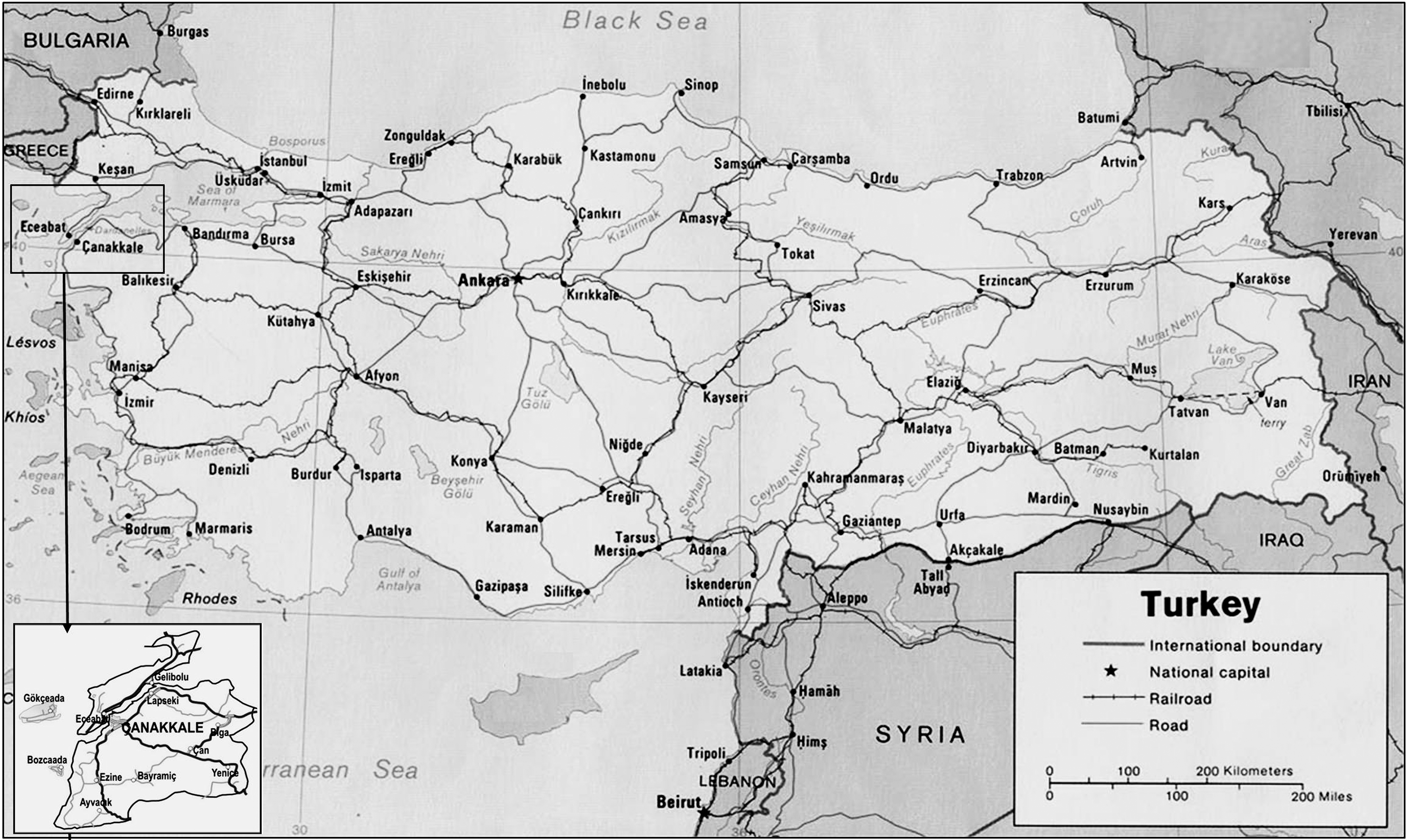
Sites of Çanakkale, Turkey, where Arbutus species grow naturally.
For analyses of moisture, pH, titratable acidity, and total soluble solids, fresh fruits were used. Analyses of antioxidant activity, total phenolics, soluble sugars, and ascorbic acid were performed with lyophilized powder or fresh fruit samples. The samples were dried at 60°C for 16 hours and ground to a fine powder using a blender. The powder samples were then stored in plastic bags in a refrigerator until used for protein, ash, and mineral analyses.
All chemicals were high-performance liquid chromatography (HPLC) or analytical grade and were purchased from Sigma (St. Louis, MO, USA) and Merck (Darmstadt, Germany).
Determination of some chemical properties
Moisture and ash contents were assayed by AOAC methods. 12 Nitrogen content was obtained applying the Kjeldahl method, and the protein content was calculated using a nitrogen factor of 6.25. The pH was determined by potentiometric measurement done at 22°C with a pH meter (WTW, Weilheim, Germany). Titratable acidity was determined by means of titration with 0.1 N NaOH until the pH was 8.1, expressing the results in g of anhydrous citric acid/100 g. 12 The content of total soluble solids was determined by a digital refractometer (model RA-250HE, Kyoto Electronics Manufacturing Co., Ltd., Kyoto, Japan) at 22°C. Ascorbic acid was determined by using 2,6-dichlorophenol indophenol dye and expressed as mg/100 g. 12
Analysis of sugars by HPLC
Ethanolic extracts of sugars were prepared from freshly harvested fruits. Fresh fruit samples (10 g) from 10 randomly chosen fruits from each sites were weighed, treated with liquid nitrogen for 5 minutes, and blended in the dark with 95% ethanol for 3–5 minutes, at the maximum speed of a blender. The homogenate was filtered through a Sep-Pak C18 cartridge (Millipore, Milford, MA, USA) and a Millipore filter (pore size, 0.45 μm) to remove interferences and particles, and the residue was washed three times with 80% ethanol. The filtrates were combined and adjusted to 5 mL/g of fresh weight with ethanol.
Sugars in fruit samples were determined by HPLC using a Waters (Milford) HPLC system with an integrator (Waters model 746), a pump (Waters model 600), a Rheodyne™ 7125i (IDEX Health & Science, Wertheim-Mondfeld, Germany) six-way injector with a 20-μL sample loop, and a refractive index detector (Waters model 2414). A column with a high-performance carbohydrate cartridge (particle size 5 μm, 4.6 × 250 mm) was used for the separation. The injection volume was 20 μL. HPLC elution was thermostatted at 23°C using a mixture of acetonitrile/water (70:30 vol/vol) at a flow rate of 0.9 mL/minute as the mobile phase.
Total antioxidant activity measurement
In the experiment, we used the method described by Re et al. 13 as described below: The total antioxidant activity values were expressed by the 6-hydroxy-2,5,7,8-tetramethylchroman-2-carboxylic acid (Trolox) equivalent antioxidant capacity (TEAC) test. In this assay, we measured the relative capacity of antioxidants to scavenge the 2,2′-azinobis(3-ethylbenzothiazoline-6-sulfonic acid) (ABTS) radical (ABTS.+) compared to the antioxidant potency of Trolox, which is used as a standard.
ABTS.+ was generated by mixing 7 mM ABTS diammonium salt solution with 2.45 mM K2S2O8 in the dark for 16 hours at room temperature. Before usage, the ABTS.+ solution was diluted with ethanol to an absorbance of 0.700 ± 0.010 at 734 nm. Filtered sample was diluted with ethanol so as to give 20–80% inhibition of the blank absorbance with 20 μL of sample. A 980-μL aliquot of ABTS.+ solution (absorbance of 0.700 ± 0.010) was read at 734 nm for 1 minute; after exactly 1 minute, 20 μL of sample was added and mixed thoroughly. Absorbance was continuously taken at every 6 seconds up to 7 minutes. Trolox (a vitamin E analog) standards of final concentration of 0–15 μM in ethanol were prepared and assayed under the same conditions.
The final TEAC value of the antioxidant compound was calculated by comparing ABTS.+ decolorization with Trolox, which gives a useful indication of the antioxidant potential of the fruit extracts.
Total phenolics
The amount of total phenolics in Arbutus samples was determined with the Folin-Ciocalteu reagent using the method of Spanos and Wrolstad. 14 To 50 mg of each sample (three replicates), 2.5 mL of a 1:10 dilution of Folin-Ciocalteau reagent and 2 mL of Na2CO3 (7.5%, wt/vol) were added and incubated at 45°C for 15 minutes. The absorbance of all samples was measured at 765 nm using a Shimadzu (Kyoto) model UV-1600 UV-VIS spectrophotometer. Results were expressed as mg of gallic acid equivalents (GAE)/g of dry weight.
Mineral composition
Total N contents were estimated by the Kjeldahl digestion procedure. 12 A Varian (Mulgrave, VIC, Australia) model Vista-pro inductively coupled plasma atomic emission spectrometer was used to determine mineral elements in Arbutus berries according to the previously reported method. 15 Operating conditions of the instrument were as follows: plasma power at 1,200 W; coolant gas flow at 15 L/minute; auxiliary gas flow at 1.5 L/minute; nebulizer pressure of 220 kPa; sample uptake rate at 1 mL/minute; and as three replicates. An external drift monitor (generally, a calibration standard solution) was used to correct for signal changes with time. Spectral lines used for determination of elements were selected experimentally. Tables of spectral data were used to identify the most sensitive wavelengths for each element. 16 The emission lines chosen were the most sensitive lines having no interferences from other elements in the group. Calibration was achieved using five synthetic multi-element standards, prepared using aliquots of the 1,000 ppm single element standard solutions.
Statistical analysis
All extractions and quantifications were carried out three times independently in both of the years. The results are mean ± SD values of fruit samples (for the two species) that were taken from five different sites. Analysis of variance of the data obtained was evaluated with SAS software (SAS Institute, Cary, NC, USA). Duncan's Multiple Range Test was used to determine the statistical significance of differences among the means.
Results and Discussion
The protein, moisture, and ash analysis of A. unedo and A. andrachnae fruits are presented in Table 1. Significant variation was found between the species surveyed. Protein and ash contents were lower in A. unedo than in A. andrachnae. The protein amounts were within the range from 1.94% to 2.81% (average, 2.38%) for A. unedo and within the range from 2.56% to 4.98% (average, 3.77%) for A. andrachnae. The mean moisture content was 47.21%, and the ash content ranged between 2.53% and 3.11% (average, 2.82%). For A. andrachnae, moisture and ash values were 38.21% and 4.35%, respectively.
Significant at the *5% and **1% level.
DW, dry weight; NS, not significant.
The mean values of ascorbic acid were 270.5 mg/100 g for A. unedo and 140.30 mg/100 g for A. andrachnae, which suggests that Arbutus berries contain high amounts of vitamin C. However, statistically significant variation was observed between the two species (Table 1). The content of ascorbic acid ranged from 163 to 378 mg/100 g (A. unedo) and from 84.96 to 195.64 mg/100 g (A. andrachnae). We observed that the results of ascorbic acid differed from one location to another. This might be due to the various conditions of investigated plants through genetic variation and ecological factors. Şeker et al. 4 reported that the average fruit weight ranged between 0.96 and 13.63 g among different A. unedo types and that vitamin C contents of selected individuals changed between 124 and 243 mg/100 g of fresh fruit in the Northwest ecological conditions of Turkey.
The sugar compositions of A. unedo and A. andrachnae fruits are given in Table 1. Large differences were observed between the two species. Fructose and glucose were identified as principal monosaccharides in the strawberry tree fruits. Fructose was found in highest quantities and identified as the major sugar in the analyzed A. unedo fruits, while sucrose was determined in lower amounts. In the fruit extracts the minimum and maximum ranges of fructose, glucose, and sucrose ranged from 18.76% to 29.46%, 14.51% to 23.66%, and 1.87% to 3.43%, respectively. In our experiment, ripe A. andrachnae fruits contained small amounts of fructose (4.12%), glucose (2.73%), and sucrose (0.16%) detectable by HPLC analysis. The sour taste of A. andrachnae fruits may be attributed to the organic acids and other organic components like phenolic compounds. The lower amount of sucrose in A. unedo berries can be explained by the decomposition effect of invertase during the ripening of some fruits. 17 Nielsen et al. 18 proposed that acid invertase is the main sucrose-cleaving enzyme during early development, whereas sucrose synthetase is responsible for the cleavage of sucrose during the late phase of growth until the fruits start to ripen. Fructose and glucose appeared to be the major sugars contributing to the sweet taste of A. unedo. Sucrose may be synthesized in the fruits during the early weeks of development, but at later stages it was enzymatically hydrolyzed to glucose and fructose when translocated to the fruit flesh.
The amount of total phenolic compounds ranged from 17.7 to 25.8 mg of GAE/g of dry material of strawberry tree berries (Table 2). The mean value for phenolics in A. andrachnae was 64.80 ± 11.42 mg of GAE/g, which is much higher than that of A. unedo. Some selected phenolics of A. unedo fruits have previously been separated, identified, and quantified using gas chromatography-mass spectrometry analysis by Ayaz et al. 3 According to their findings, gallic, protocatechuic, gentisic, p-hydroxybenzoic, vanillic, and m-anisic acids were detected in mature A. unedo fruits. Among them, gallic acid was the most predominant acid with levels of 10.7 mg/g of dry weight. In another experiment, Pawlowska et al. 19 identified anthocyanins and gallic acid derivatives as phenolic compounds in Arbutus fruits. From their results, Arbutus berries are an appreciable source of phenolic constituents. They identified the phenolic compounds in the fruits, which belonged to the classes of gallic acid derivatives, and flavonoids, which are the most active as antioxidants. According to our results, total phenolic compounds of strawberry tree fruits are higher than those of black currant (3–4 mg/g), blueberry (2.70–3.50 mg/g), strawberry (1.6–2.9 mg/g), and raspberry (2.7–3.0 mg/g), while they were lower than that of rose hips (73–96 mg/g). 20,21
Significant at the **1% level.
Antioxidant activities of Arbutus berry extracts are shown in Table 2. The TEAC values for A. unedo and A. andrachnae ranged from, respectively, 18.51 ± 5.94 to 47.52 ±5.28 μM Trolox equivalents. This study showed that Arbutus fruits are strong radical scavengers and can be considered as good sources of natural antioxidants. The antioxidative effect is mainly due to phenolic components, such as flavonoids, phenolic acids, and phenolic diterpenes. 22
Inductively coupled plasma atomic emission spectrometry allowed us to determine in Arbutus berries 24 minerals, many of which are needed for human health. Table 3 summarizes the results of mineral analysis of both species. Strawberry tree fruits contained large amounts of K, Ca, P, Mg, and Na. The K concentrations in the fruits ranged from 12,147.25 to 15,175.65 mg/kg. The berries can be considered as a K-rich food like banana, which was previously reported by Oliveira et al. 23 Calcium concentration ranged from 4,825.95 to 6,125.28 mg/kg in the analyzed fruit groups. Arbutus berries showed elevated Ca concentrations that are higher than most fruit crops. Thus, Arbutus berries could be identified as potential sources of calcium in human nutrition. This study shows that Arbutus fruits are a rich source of phosphorus. The P content of the fruits was determined as 4,554.91 mg/kg as a mean value. The study also shows the concentrations of Mg and Na in Arbutus berries are high. The amounts for K, Ca, P, Mg, and Na were already reported by Özcan and Hacıseferoğulları. 10 The mineral contents were generally lower for K and higher for Ca, P, Mg, and Na in our study. Differences could be related to genotype and environmental conditions. The Fe, B, Zn, and Mn contents were 21.17–27.18 mg/kg, 10.13–21.56 mg/kg, 11.07–13.64 mg/kg, and 11.25–12.04 mg/kg, respectively. Our findings on Fe, B, Zn, and Mn contents were close to the results obtained by Özcan and Hacıseferoğulları 10 with the exception of Fe content, which was reported to be lower than B content.
Significant at the *5% and **1% level.
NS, not significant.
The mineral composition of A. andrachnae berries is shown in Table 3. According to our findings, A. andrachnae fruits contained large amounts of K (9,853.52 mg/kg), Ca (7,196.83 mg/kg), P (3,246.78 mg/kg), Na (1,121.30 mg/kg), and Mg (872.72 mg/kg). These findings showed that the Arbutus genus could be identified as a rich source for those minerals. The Fe, Zn, Mn, and B contents were 61.46, 33.78, 27.68, and 23.53 mg/kg, respectively (Table 3).
The contents of some minerals, including As, Ba, Be, Cd, Ga, Li, Mo, Ni, Pb, and Ti, were very low. This could be the result of uncontaminated environmental conditions of sampling sites.
Conclusions
The chemical composition of Arbutus fruits indicates that the fruits are good sources of minerals and ascorbic acid and that they are high in phenolics and antioxidant capacity and low in soluble sugars, especially A. andrachnae. The data should be useful for research purposes and for compiling local food composition tables. In view of its chemical composition, the use of Arbutus fruits in some food and medicinal products may be suggested. The cultivation and utilization of the species are also recommended.
Footnotes
Author Disclosure Statement
No competing financial interests exist.