




Abstract
We evaluated the immunomodulatory activity of type-4 resistant starch (RS) in mesenteric lymph nodes (MLNs) using a rat model. Sixteen male Sprague-Dawley rats were fed either a cellulose diet or an RS diet (RSD) for 4 weeks. Serum immunoglobulin A levels, as well as the CD4+ T cell population and the ratio of CD4+/CD8+ T cells in the MLNs of rats, were significantly elevated by replacing cellulose with RS in the diet. The survival rate of concanavalin A (Con A)-stimulated MLN lymphocytes and interleukin-4 secretion from the Con A-stimulated MLN lymphocytes were significantly increased in rats fed RSD. These results indicate that type-4 RS might ameliorate allergic inflammation in the MLNs of rats through an increased CD4+ T cell population and enhanced differentiation of MLN lymphocytes into type-2 T cells.
Introduction
R
RS, especially type-2 and type-3 RS, has been reported to be more effective than cholestyramine as a cholesterol-lowering agent 2,3 and also to decrease serum triglyceride concentrations in rats. 4 These hypolipidemic effects of RS are caused by the colonic microbial community producing more short-chain fatty acids, particularly butyric acid, in the colon and feces compared to other types of dietary fibers in adults. 5 –7 In addition, Ferguson et al. 8 have reported that type-2 RS, characterized by high resistance to digestion by α-amylases, promotes carcinogen bioavailability and increases laxation and fecal bulking in rats. A diet high in natural type-2 RS from high-amylose cornstarch (also termed “maize starch”) increases fermentable substrates in the colon and up-regulates apoptosis during the initiation stage of colorectal cancer, which leads to the increased elimination of DNA-damaged cells that might otherwise progress to malignancy. 9 Chemically modified starch (type-4 RS) has also been shown to raise levels of large bowel short-chain fatty acids in rats through the release of esterified acids and fermentation of the starch. 10
Bakery products, such as bread, muffins, and breakfast cereals, can be prepared using RS. Cross-linked starches (type-4 RS) based on maize, tapioca, and potato have been useful in formulations requiring pulpy texture, smoothness, low pH storage, and high temperature storage. 11 Therefore, type-4 RS is increasingly used by the food industry to improve the physical properties of various food items, mainly moisture-free food products. Despite its wide usage in processed foods, there is a lack of information regarding the potential clinical and physiological effects of type-4 RS. The present study is aimed at evaluating the immunomodulatory activity of type-4 RS in mesenteric lymph nodes (MLNs) using a rat model. Immune cell populations in the MLNs, along with cytokines produced from concanavalin A (Con A)-stimulated MLN lymphocytes, were estimated as indices of intestinal immune function.
Materials and Methods
Reagents
All chemicals and reagents used in the study were of analytical grade. RPMI-1640 medium, 3-(4,5-dimethylthiazol-2-yl)-2,5-diphenyltetrazolium bromide (MTT), phosphate-buffered saline, and Con A were purchased from Sigma (St. Louis, MO, USA). Fetal bovine serum was purchased from GIBCO BRL (Grand Island, NY, USA). Penicillin and streptomycin were purchased from Invitrogen (Carlsbad, CA, USA). Total cholesterol, high-density lipoprotein (HDL) cholesterol, and triglyceride commercial kits were purchased from Bio Clinical System (Gyeonggi-do, Republic of Korea). Immunoglobulin E (IgE) and immunoglobulin A (IgA) enzyme-linked immunosorbent assay kits (ELISA) quantitation kits were purchased from Bethyl Laboratories (Montgomery, TX, USA). Rat interleukin (IL)-4 ELISA, phycoerythrin (PE) anti-rat CD4+, and biotin anti-rat CD8+ were obtained from Pharmigen (San Diego, CA, USA), and the rat interferon-γ (IFN-γ) ELISA kit was obtained from Endogen (Rockford, IL, USA). Streptavidin-fluorescein isothiocyanate (FITC) was purchased from BD (Franklin Lakes, NJ, USA).
Preparation of type-4 RS
Cornstarch (300 g) was dispersed in distilled water (450 mL) with vigorous stirring, and then 30 g of sodium sulfate was dispersed in the cornstarch solution. After all the sodium sulfate was completely dissolved, the dispersion was adjusted to a pH of 12 by adding 1 M NaOH solution and heating to 50°C. A mixture of sodium tripolyphosphate and sodium trimetaphosphate (99:1, vol/vol; total, 30 g) was added to this dispersion, and the dispersion was then stirred magnetically for 5 hours at a pH of 12 and 50°C. After the reaction, the dispersion was adjusted to a pH of 5 by adding 1 M HCl and washed with 3 L of distilled water in order to remove unreacted chemicals and salts. The entire dispersion was then dried at 45°C for 24 hours in a drying oven. The level of RS in the dried starch cake (<10% moisture content) as measured by the enzymatic-gravimetric method, as described previously, 12 was 92.6%.
Experimental animals and diets
Sixteen male Sprague-Dawley rats weighing 150–170 g were housed in a temperature (21 ± 2.0°C)- and humidity (50 ± 5%)-controlled room with on a 12-hour light/dark cycle and fed a commercial diet (Purina Rodent Chow, Purina, St. Louis) for 1 week. Following the adaptation period, rats were randomly divided into two groups and fed a cellulose diet (CD) or an RS diet (RSD). The CD was based on the AIN-93G rodent diet composition including cellulose (50 g/kg diet) as a source of dietary fiber. The RSD was identical to the CD except that it contained type-4 RS (phosphorylated cross-linked cornstarch) at the expense of cellulose (Table 1).
Mineral mixture for AIN-93 rodent diet.
Vitamin mixture for AIN-93 rodent diet.
Antioxidant added at 0.01 g/50 g of lipid.
Food intake and body weight were recorded every day and once a week, respectively. After 4 weeks of experimental feeding, rats were anesthetized with diethyl ether after an overnight fast. Blood was drawn from the abdominal aorta into a vacuum tube, and MLNs were removed aseptically for measurements of immune cell population and cytokine production. Serum was collected by centrifugation of blood samples at 4,000 g for 20 minutes at 4°C and was then stored at −70°C until the analysis. This study adhered to the Guide for the Care and Use of Laboratory Animals developed by the Institute of Laboratory Animal Resources of the U.S. National Research Council and was approved by the Institutional Animal Care and Use Committee of Yonsei University in Seoul, Republic of Korea.
Biochemical analysis
Serum concentrations of total cholesterol, HDL cholesterol, and triglyceride were determined enzymatically using commercial kits. Serum low-density lipoprotein + very-low-density lipoprotein (LDL+VLDL) cholesterol concentration was calculated by subtracting the HDL cholesterol concentration from the total cholesterol concentration. The serum IgE and IgA concentrations were determined using ELISA quantitation kits following the manufacturers' instructions.
Immune cell population in the MLN
MLNs were gently disrupted between two frosted glass slides into 3 mL of RPMI-1640 medium containing 10% heat-inactivated fetal bovine serum and 1 × 10⁵ units of penicillin and streptomycin. MLN lymphocytes were then passed through a wire mesh filter to obtain a single-cell suspension. Then, the cells were resuspended at 2 × 10⁶ cells/L in RPMI-1640 medium. MLN lymphocyte subsets were determined with FACScan™ flow cytometry (BD) by using a direct staining immunofluorescence technique, as previously described. 13 After addition of 500 μL of phosphate-buffered saline into the cell suspension, it was centrifuged at 2,000 g for 1 minute, and the cell pellets were resuspended with PE anti-rat CD4+ or biotin anti-rat CD8+. Streptavidin-FITC or streptavidin-PE was used as a secondary antibody.
MLN lymphocyte proliferation
MLN lymphocyte proliferation in 96-well plates was evaluated by the MTT colorimetric assay system, which measures the reduction of a tetrazolium component into an insoluble formazan product by the mitochondria of viable cells. 14 In brief, lymphocytes were obtained from MLNs and then washed three times with RPMI-1640 culture medium. The lymphocytes were then resuspended in RPMI-1640 medium containing 10% heat-inactivated fetal calf serum. They were then incubated with or without 25 μg/mL Con A in an incubator at 37°C in 5% CO2 for 44 hours. An MTT solution of 5 mg/mL was added to the cultures (10 μL of MTT solution/100 μL of medium), followed by the incubation in 5% CO2 at 37°C for 4 hours. Then, the supernatant was removed from each well and replaced with 100 μL of 0.04 M HCl/isopropanol. Following 20 minutes of incubation, an aliquot (20 μL) of 3% sodium dodecyl sulfate in H2O was added, and optical density was read on a universal microplate reader (model Elx 800, Bio-TEK Instruments, Winooski, VT, USA) at a wavelength of 570 nm.
IL-4 and IFN-γ secretion from MLN lymphocytes
The MLN lymphocytes isolated from each group were pooled and cultured in 3 mL of RPMI-1640 medium containing 10% fetal bovine serum. The cells were adjusted to 4 × 10⁶ cells/mL in a 12-well plate in a final volume of 100 μL. Cells were incubated at 37°C for 44 hours in the presence of 25 μg/mL Con A. IL-4 and IFN-γ levels secreted from the MLN lymphocytes in the culture medium were analyzed with rat IL-4 and rat IFN-γ ELISA kits, respectively.
Statistical analysis
Data are mean ± SEM values for eight rats. Statistical significance between two groups was analyzed by independent Student's t test and defined as P < .05.
Results
Feeding rats RSD for 4 weeks did not change final body weights or food efficiency ratios compared to those observed in rats fed CD. Food intake did not differ between groups. Rats fed RSD exhibited significantly lower serum levels of total cholesterol (12.6% decrease) and LDL+VLDL cholesterol (24.3% decrease) than rats fed CD. The serum IgA concentration was significantly elevated in rats fed RSD compared to CD rats, whereas the serum IgE level did not differ between the two groups (Table 2).
Data are mean ± SEM values of eight rats in each group.
P < .05, compared with the control group (CD).
Food efficiency ratio was calculated by dividing body weight gain (in g) by food intake for the experimental period (in g).
The population of CD8+ T cells in the MLNs of rats was not affected by diet. However, the CD4+ T cell population (24.9% increase) and the ratio of CD4+/CD8+ T cells (40% increase) in the MLN were significantly higher in rats fed RSD versus the CD rats (Fig. 1). The survival rate of Con A-stimulated MLN lymphocytes was significantly increased in rats fed RSD versus the CD rats (Fig. 2). The Con A-stimulated secretion of IL-4 from the MLN lymphocytes was significantly higher in rats fed RSD than in the CD rats (P < .01), whereas the Con A-stimulated IFN-γ secretion from the MLN lymphocytes was not affected by diet (Fig. 3).
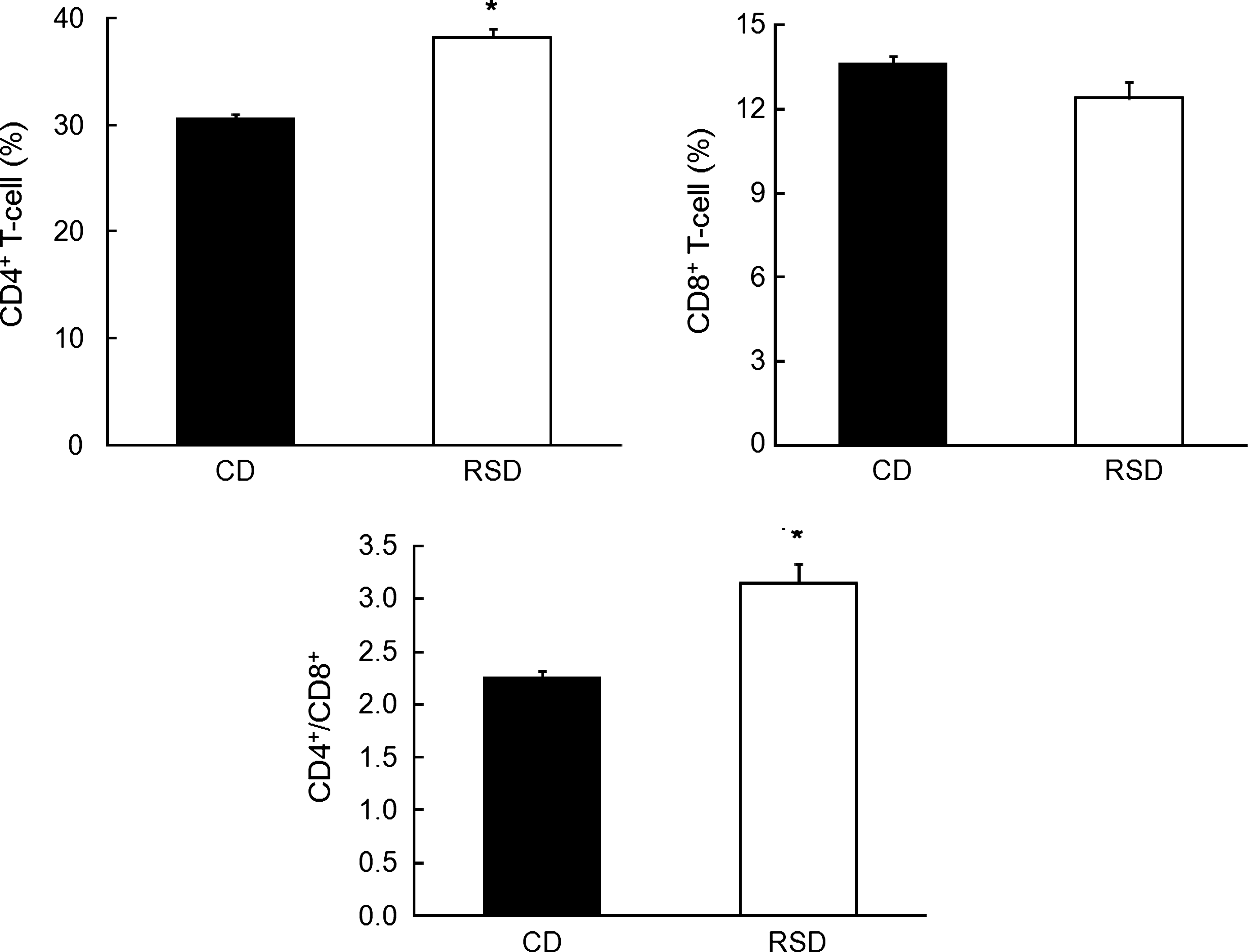
Effect of type-4 RS on populations of CD4+ and CD8+ T cells and the ratio of CD4+/CD8+ T cells in MLNs of rats fed experimental diets. Data are mean ± SEM values of eight rats, which were analyzed by independent Student's t test. *P < .05, compared with the CD rats.
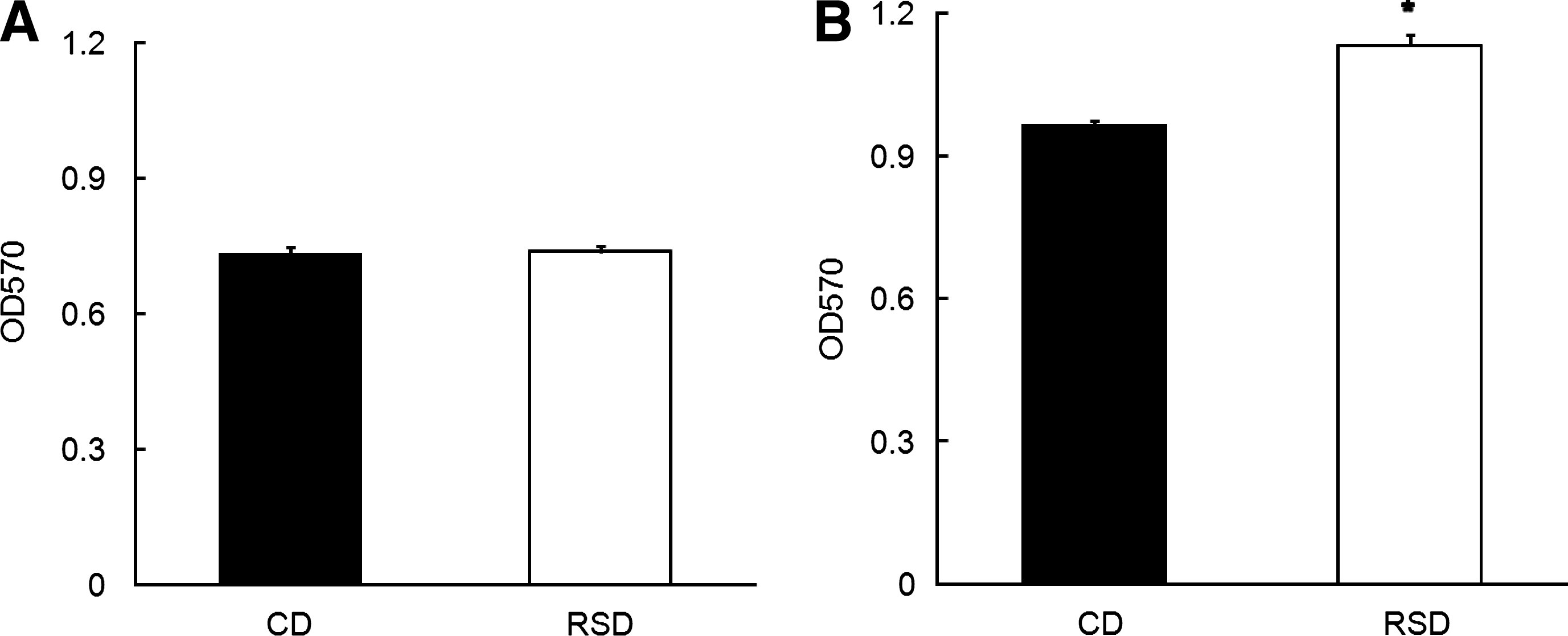
Effect of type-4 RS on lymphocyte proliferation in the (
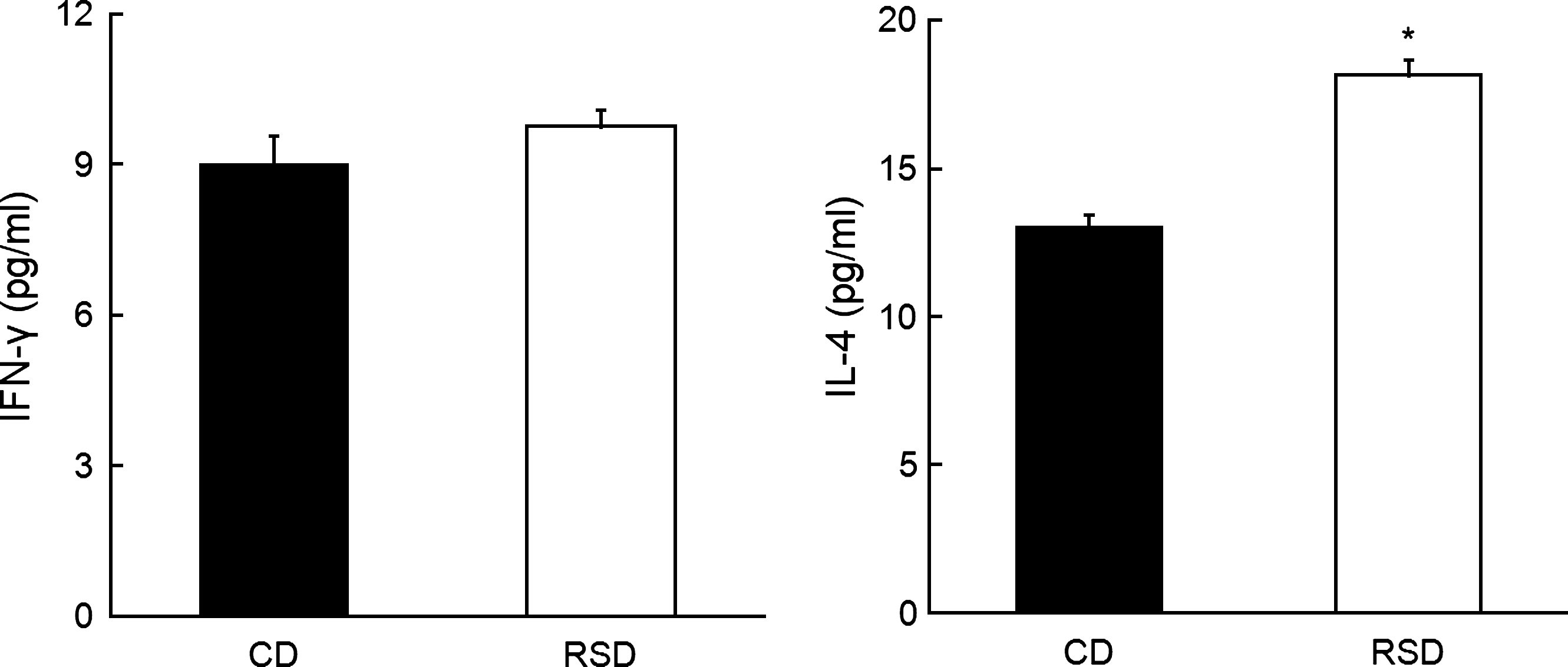
Effect of type-4 RS on Con A-stimulated IL-4 and IFN-γ secretions from MLN lymphocytes of rats fed experimental diets. Data are mean ± SEM values of eight rats, which were analyzed by independent Student's t test. *P < .05, compared with the CD rats.
Discussion
Type-4 RS comprises chemically modified starches, such as acetylated, hydroxypropylated, or phosphorylated cross-linked starches with chemical reagents to obtain resistance to enzymatic digestion. 15 Cross-linking carried out by sulfonate and phosphate groups between various starch molecules involves their hydroxyl groups, thus bringing resistance to amylolytic digestion of the starch molecules. 16 Type-4 RS has been prepared similarly from wheat, corn, waxy corn, high-amylase corn, oat, rice tapioca, mung bean, banana, and potato starches 11 with higher resistance to retrogradation, higher viscosity, and less susceptibility to acid and high temperature than their respective native starches.
In the present study, serum total cholesterol and LDL+VLDL cholesterol levels were significantly lower in rats eating diets in which cellulose, which was used as a source of dietary fiber, was replaced by type-4 RS. These hypocholesterolemic effects of type-4 RS observed in the present study are in line with previous reports using rodent models. Results of feeding trials of rats using either type-2 RS (raw potato starch) or type-4 RS (chemically modified starches from potato or tapioca starch) suggest that their cholesterol-lowering functions were due to the enhanced levels of the fecal output and fecal excretion of bile acids. 2,3,17,18 In addition, feeding a type-2 RS diet, in comparison to a guar gum diet, decreased the 3-hydroxy-3-methylglutaryl-coenzyme A reductase activity and increased acyl-coenzyme A cholesterol acyltransferase activity in the rat liver. 2,3 Although the mechanism for the lipid-lowering properties of cornstarch-based type-4 RS was not clarified by the present study, it would be expected to exert hypocholesterolemic effects by mechanisms similar to those reported previously for other types of RS.
Replacing cellulose in the diet with type-4 RS significantly increased serum IgA levels without changing the serum IgE concentration in rats. The gastrointestinal tract is one of the most common portals of entry for microbes or food allergens. Defense against antigens that enter by this route is provided by antibodies, largely IgA, which is the major class of antibody produced in mucosal lymphoid tissues and secreted through the mucosal epithelium into the lumens of the organ. 19 In mucosal secretions, IgA binds to antigens present in the lumen and neutralizes them by blocking their entry into the host. 20 IgA found in small amounts in blood plays a crucial role for the prevention of allergic reactions through the inhibition of allergen absorption, 21 whereas IgE is associated with type I hypersensitivity (immediate allergic) reactions. When one considers the response of IgA and IgE, it is likely that the type-4 RS tested in the present study may alleviate type I allergic reactions and up-regulate the intestinal immune response, but not the humoral immune response. Effects of RS on serum immunoglobulin levels have never been investigated, whereas soluble fibers increased serum IgA levels and decreased IgE levels in rats. 22,23
Lymphocytes in the intestinal mucosa first interact with antigens in the organized lymphoid tissue and are further differentiated and mature in the germinal centers of the lymphoid follicles. Fully differentiated lymphocytes rapidly leave the mucosa and migrate through the MLN and the thoracic duct to reach the systemic circulation. 24 T lymphocytes, the effector cells of cell-mediated immunity, consist of two subsets: helper T cells (also known as CD4+ T cells or Th cells) and cytotoxic T cells (also known as CD8+ T cells or Tc cells). In response to phagocytosed and intracellular microbes, CD4+ T cells differentiate into the Th1 subset, which produces IFN-γ and tumor necrosis factor-β, which activate phagocytes to destroy the infectious agent. In contrast, parasitic worms induce the differentiation of CD4+ T cells into Th2 cells, which produce IL-4, IL-5, IL-10, and IL-13, which are involved in strong antibody responses for the initial triggering of allergic inflammation. 25,26 In contrast with the pro-inflammatory effects, IL-4 also has prominent anti-inflammatory influences on mononuclear phagocytic cells. IL-4 inhibits antigen processing and down-regulates IL-1α, IL-1β, and tumor necrosis factor-α production. 27,28
The number and ratio of two main T lymphocyte subsets have become recognized as the most meaningful parameters for evaluating the state of immunomodulation and the homeostasis of the intrinsic immune system. 29 Dietary supplementation of pectin, a form of soluble dietary fiber, improved immune function by modulating the CD4+ population, CD4+/CD8+ ratio, and IFN-γ concentration in the MLN of rats, a phenomenon that was not observed for insoluble forms of dietary fiber, such as cellulose. 22 In the present study, dietary supplementation of type-4 RS derived from cornstarch significantly increased the CD4+ T cell population and the CD4+/CD8+ ratio in the MLN of rats. Lymphocytes isolated from the MLN of rats fed the diet containing type-4 RS instead of cellulose exhibited higher Con A-stimulated cell survival rates and secretion of IL-4, an anti-inflammatory cytokine specific for Th2 cells, along with unaffected IFN-γ production specific for Th1 cells. Taken together, these results suggest that type-4 RS might ameliorate allergic inflammation by IgA, which is thought to prevent antigen binding to the intestinal mucosa, and by IL-4, which is known to inhibit antigen processing and down-regulate IL-1α, IL-1β, and tumor necrosis factor-α production from the immune cells.
Footnotes
Acknowledgment
This study was supported by grant A060531 from the Korea Health 21 R&D Project, Ministry of Health & Welfare, Republic of Korea.
Author Disclosure Statement
C.B. and D.W. are employees of Samyang Genex. No competing financial interests exist for Y.S., Y.K., and T.P.