




Abstract
The aim of the present study was to compare the effect of Lactobacillus casei and a commercial mixed combination of fruit juice that included Garcinia mangostana fruit extract on body weight gain from 7 to 90 days of age, on the antibody response 23 days after vaccination against Newcastle disease virus (NDV), and on the mortality in fighting roosters. Fifty-four 7-day-old birds were randomly distributed into three groups (treated with L. casei, G. mangostana, and saline solution [LC, GM, and SS groups, respectively]) of 18 animals each; all birds were orally treated daily. At 60 and 90 days, the LC group showed the highest body weight gain compared with the other two groups (P<.01). The mean levels of antibody to NDV were significantly higher in the GM group compared with the LC and SS groups (P<.05). Throughout the study the percentages of mortality were 5.55%, 0%, and 22.22% for the LC, GM, and SS groups, respectively. The results indicate that L. casei and the commercial mangosteen dietary supplement intake, compared with the control group, induce beneficial effects in fighting roosters—L. casei on weight gain and the commercial mixed combination of fruit juice with G. mangostana fruit extract on humoral immune response—and both showed none or very low mortality.
Introduction
I
Lactobacillus casei and Garcinia mangostana offer the potential to be used as alternative methods for the control of infectious diseases of livestock. L. casei is a lactic acid bacterium that has been used as a nonspecific immunostimulant to stimulate the innate immune response 4 and generate protection in treated animals against different pathogenic agents, including viruses, 5 bacteria, 6,7 and parasites. 8 –11 With respect to chickens, it was demonstrated that the intraperitoneal inoculation of L. casei in broilers before infection with three species of Eimeria generated a protection similar to that obtained with a commercial vaccine. 12 In this connection, layer chickens fed an L. casei/dextran-supplemented diet showed enhanced humoral immune responses to bovine serum albumin, Newcastle disease virus (NDV), and infectious bronchitis virus. 13
Similarly, G. mangostana L. has been used in folk medicine as a fruit (mangosteen) for the treatment of different diseases. 14,15 Mangosteen fruit is a rich source of phenolic compounds such as xanthones, condensed tannins, and anthocyanins; 16 –18 however, studies on its effect on the immune response are scarce. 19 Recently, it was demonstrated in humans who ingested daily for a 30-day period a product containing G. mangostana had enhanced immune responses and improved overall health status. 20 In this context, to date no information has been published on the use of G. mangostana to increase the immune response in domestic animals.
On the other hand, the fighting rooster industry in Mexico is a very important economic activity that represents a mean annual value of 15,300 million Mexican pesos 21 (approximately 1.391 billion U.S. dollars). Besides, it is estimated that 2,529 million Mexican pesos (approximately 235.45 million U.S. dollars) are spent on food that generally is formulated for broilers and laying hens and not specifically for fighting roosters. 21
On the basis of previous findings, the present study was carried out to test the hypothesis that daily intake of L. casei and a commercial product containing xanthone-rich mangosteen (G. mangostana) juice in fighting roosters would improve body weight gain and the humoral immune response to a commercial NDV vaccine and reduce mortality.
Materials and Methods
Animals and diet
Fifty-four fighting chickens (7 days old), crosses of the Sweater, Kelso, Hatch, Roy Bready, and J.C. Allen lines, were used. Birds were vaccinated as follows: at 1 day of age against Marek disease virus, at 9, 16 and 37 days of age against NDV with “La Sota” strain, 22 and at 48 days of age against fowl pox. They were housed in pens separated with chicken wire at a constant temperature of 22°C and fed with a commercial diet. Water and food were provided ad libitum throughout the experiment. The feed conversion ratio was not determined.
Bacterial strain
L. casei ATCC7469 strain was aerobically cultured in De Man, Rogosa, and Sharpe broth (Merck, Darmstadt, Germany) at 37°C for 18 hours. Then, the microorganisms were centrifuged at 5,000 g for 10 minutes, and the precipitate was washed several times with sterile phosphate-buffered solution; later the organisms were killed by being placed in boiling water for 30 minutes, and the number of organisms in culture was adjusted to 109 colony-forming units/mL of phosphate-buffered saline. 8,9
G. mangostana
A commercial product that contains G. mangostana was used (XanGo™ juice, XanGo LLC, Lehi, UT, USA). According to the manufacturer, it contains G. mangostana purée from whole fruit, apple juice, pear juice, grape juice, pear purée, blueberry juice, raspberry juice, strawberry juice, cranberry juice, cherry juice, citric acid, natural flavor, pectin, and xanthan gum. One serving (for humans) equals 1 fluid ounce (30 mL), containing 13 calories, 0 calories from fat, 0 g of total fat, 0 mg of sodium, 3.2 g of total carbohydrate, 2.7 g of sugars, and 0 g of protein. The nutritional components of the mangosteen fruit are iron, fiber, calcium, vitamin C, potassium, vitamin B2, protein, catechins/tannins, phosphorus, sodium, vitamin B1, and niacin (
Assessment of anti-NDV antibodies
At 61 days of age the levels of anti-NDV antibodies were assessed in serum samples from each bird in the three groups, using the inhibition hemagglutination test in microplates. 23 The assay was carried out using 4 hemagglutinin units of NDV and double serum dilutions.
Assessment of body weight gain
The body weight of each bird (in g) was recorded individually at 7, 30, 60, and 90 days of age. The body weight gain was obtained by subtracting the individual bird's initial weight from its final weight.
Assessment of mortality
The birds were examined daily throughout the study. Whenever a death occurred this was recorded. When a chicken got sick it did not received treatment; it awaited death or recovery.
Experimental design
Fifty-four 7-day-old birds were randomly selected and allocated into one of three treatment groups. Each group had three replicates of six animals each. Birds in group LC received 1×10⁸ colony-forming units of L. casei orally in 0.1 mL of phosphate-buffered saline. Treatment was administered daily during the first 4 weeks and then once a week for the next 8 weeks. The chickens in group GM received orally a commercially available product containing G. mangostana (XanGo): per bird, 0.25 mL/day during the first 4 weeks and then 0.5 mL/day for the next 8 weeks. These quantities were estimated on the basis of the human 30 mL dose per day. The birds in group SS received orally physiologic saline solution: per bird, 0.25 mL/day during the first 4 weeks and then 0.5 mL/day for the next 8 weeks.
Statistical analyses
The body weight gain data were examined by analysis of variance. If differences in mean values were found, Tukey's test was used. Comparisons of anti-NDV levels were assessed by the Kruskal–Wallis test. 24
Results
Body weight gain
The group treated with L. casei (group LC) showed the highest body weight gain compared with groups treated with G. mangostana (group GM) and saline solution (group SS). This difference was significant at days 60 and 90 (P<.01) (Fig. 1). At day 90 the difference between groups LC and SS was 302.83 g (data not shown); similarly, the GM group showed an average body weight gain higher (83 g [data not shown]) than that observed in the SS group (P<.01) (Fig. 1).
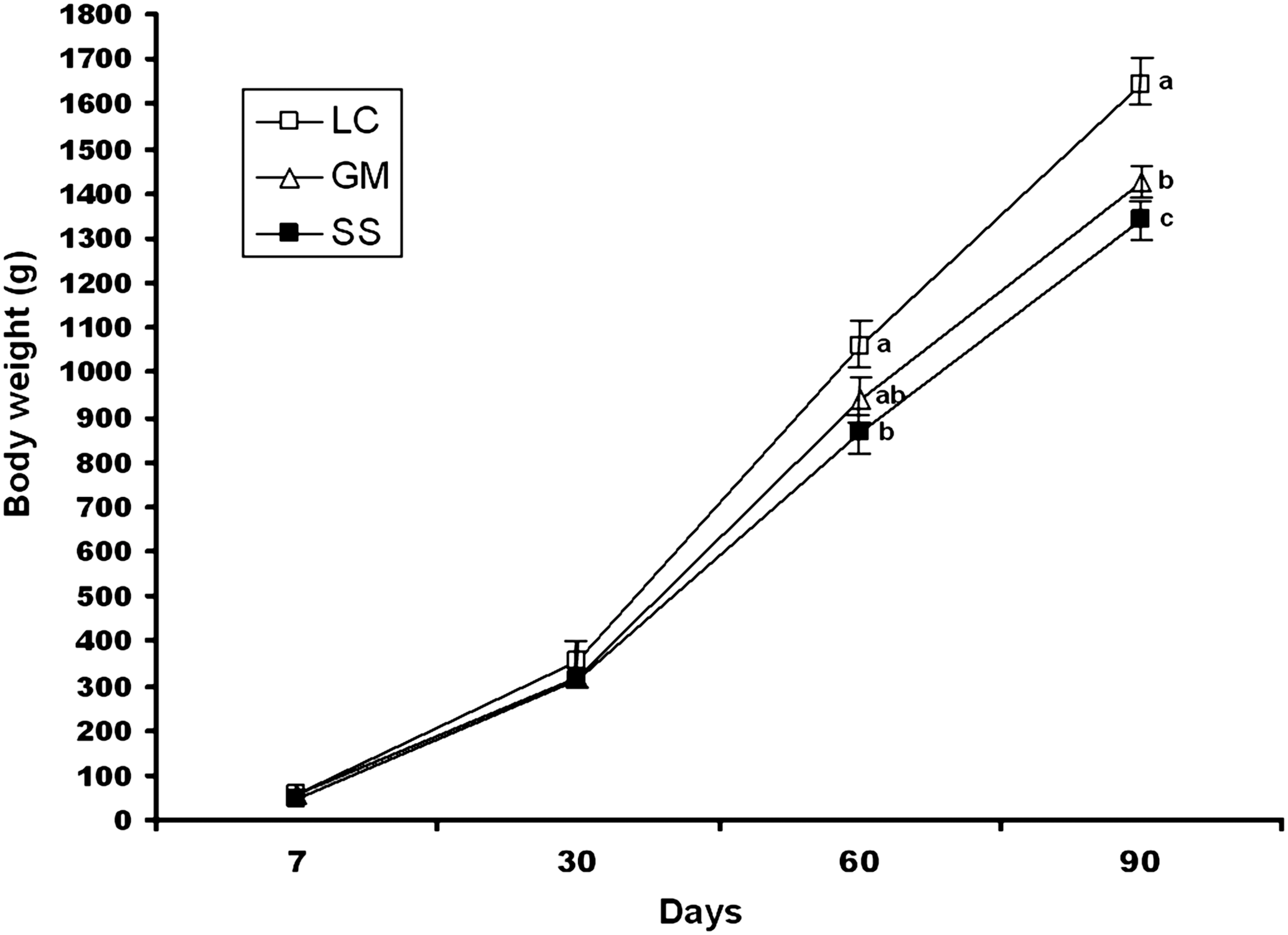
Body weight gain in fighting roosters treated orally with L. casei (LC), a commercial dietary supplement containing G. mangostana (GM), or saline solution (SS), at 7, 30 60, and 90 days of age. Each point represents the mean±SE (in g) for 17–18 birds. abcDifferent letters at points indicate a significant difference (P<.01).
Anti-NDV antibody levels
The average anti-NDV antibody levels were significantly higher (P<.05) at 23 days after inoculation with the third NDV vaccine dose in birds treated with G. mangostana (mean±SE, 2,659±727 hemagglutinin units) compared with the groups treated with L. casei (mean±SE, 1,964.7±476.5 hemagglutinin units) or saline solution (mean±SE, 1,300±304 hemagglutinin units) (Fig. 2).
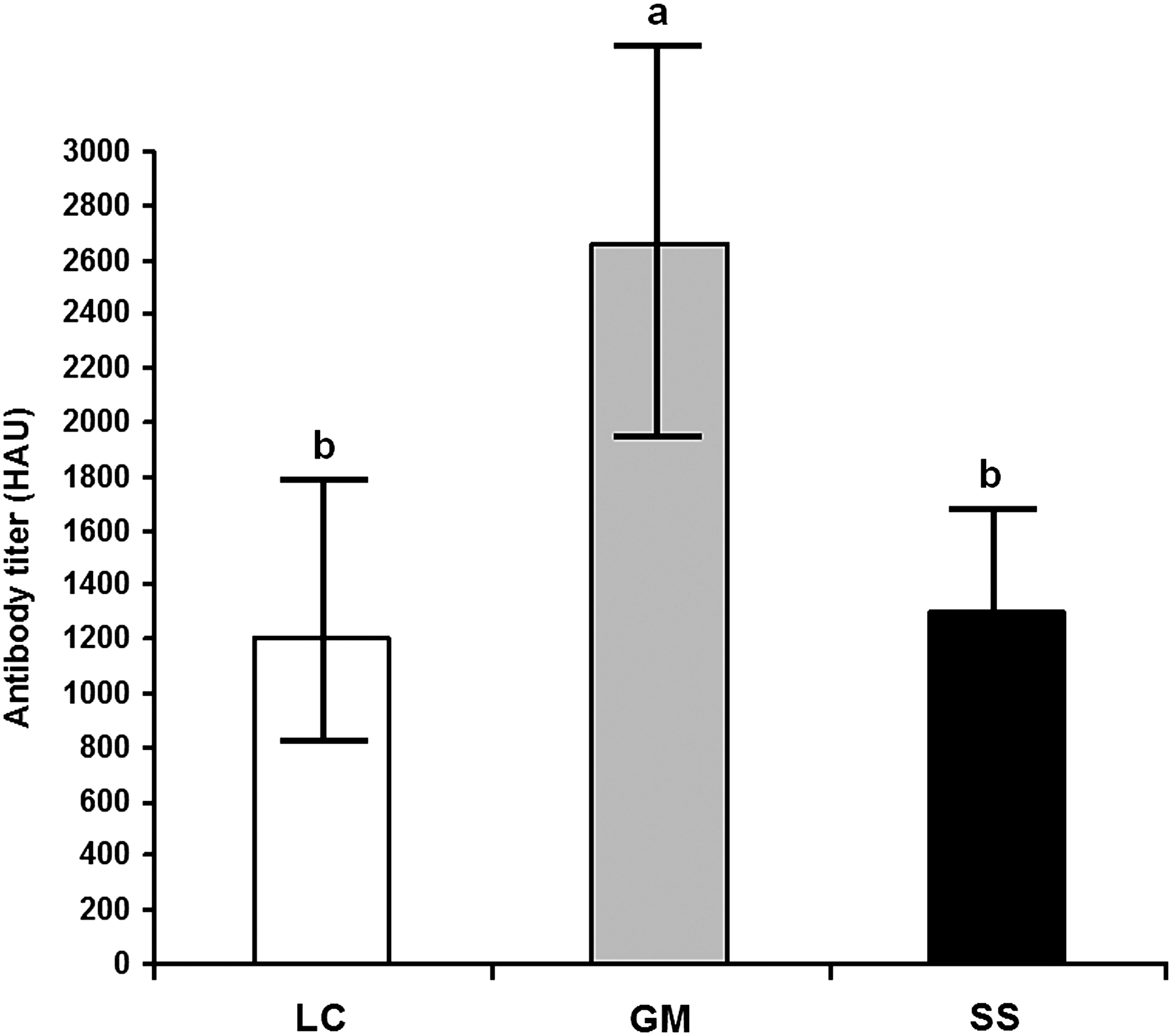
Anti–Newcastle disease virus antibodies in fighting roosters treated orally with LC, GM, or SS at day 23 after the third immunization with the vaccine against Newcastle disease virus. Each point represents the mean±SE (in hemagglutinin units [HAU]) for 17–18 birds. abDifferent letters at points indicate a significant difference (P<.05).
Mortality
The percentages of mortality observed throughout the study were 5.55%, 0%, and 22.22% for groups LC, GM, and SS, respectively (Fig. 3). It is noteworthy that in group LC one chick died at the beginning of the study, and the death was attributed to the handling. With respect to group GM, two chicks showed ascites (one at day 30 and the other at day 60); however, both birds recovered. In group SS, four roosters showed also ascites and died at the end of the experiment.
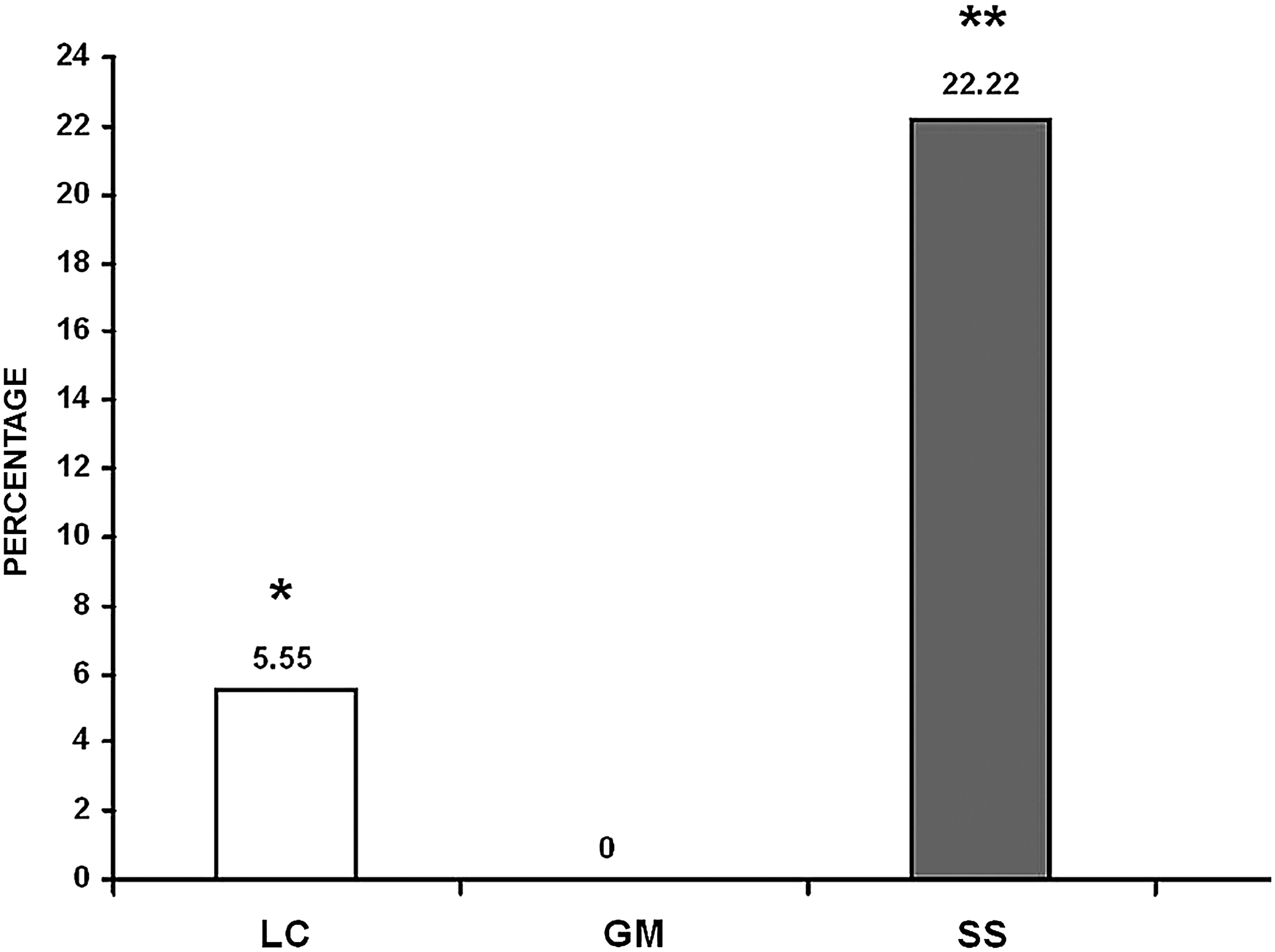
Percentage of mortality in fighting roosters treated orally with LC, GM, or SS. *A bird died at the beginning of the study (day 7), which was attributed to handling. **Four birds died at the end of the study.
Discussion
Body weight gain
It has been shown that supplementation with a mixture of probiotic microorganisms (Lactobacillus acidophilus, Streptococcus thermophilus, and Aspergillus oryzae) in broiler feed protects birds against experimental infection with Salmonella gallinarum and promotes body weight gain determined at 6 weeks of age. 7
In the present investigation the single oral daily administration of L. casei promoted a significant body weight gain in fighting roosters at 60 and 90 days in group LC compared with groups GM and SS. It must be pointed out that in other studies in which Lactobacillus species have been used for supplementing broilers' diets, generally they have been used as mixtures with other probiotic microorganisms 7,25,26 or in diets for laying chickens containing the immunostimulant dextran. 13 In the present research, a significant body weight gain was also observed in birds of group GM at 90 days compared with group SS. In this respect, there are no antecedents on the use of L. casei and G. mangostana for promoting body weight gain in fighting roosters. The results suggest that both treatments influenced favorably body weight gain in this kind of bird.
Other researchers did not observe significant differences for average body weight among treatments in layer chickens fed a diet containing dextran and lyophilized L. casei ssp. casei strain JCM 1134 at 68 days of age. 13 They did, however, note an enhanced humoral immune response in the birds following vaccination against bovine serum albumin, NDV, and avian infectious bronchitis. In another study in which viable L. casei was inoculated once by the intraperitoneal route in broiler chickens, it was shown that the treatment protected the birds against three Eimeria species and contributed to an acceptable weight gain; it was suggested that the route of L. casei administration influenced the protection observed and that the body weight was influenced as a consequence of that resistance. 12 In this context, Safalaoh 25 observed a significant final body weight gain, compared with control animals, in broiler chickens at day 42 fed a commercial food supplemented with a liquid formulation containing 12 probiotic microorganisms, including L. casei (strain ATCC7469), in drinking water. In a similar study, it was observed that a multistrain commercial probiotic administered to broiler chickens enhanced (P<.05) body weight gain. 26 On the basis of the previous studies it is noteworthy that the single administration of dead L. casei influenced body weight gain in birds not destined for human consumption observed in the present study.
Anti-NDV antibody levels
It has been demonstrated that supplementation of L. casei ssp. casei in dextran-fed laying chickens increases the humoral immune response to NDV and infectious avian bronchitis virus vaccines. 13 In the present study, the oral daily administration of L. casei to fighting roosters did not enhance the antibody levels to a NDV vaccine. Our results are similar to that observed in broiler chickens fed a multistrain probiotic containing L. acidophilus, L. casei, Enterococcus faecium, and Bifidobacterium bifidum; in that study the antibody responses to NDV and infectious bursal disease virus vaccination were not significantly different from those not receiving probiotics. 26 The differences between our results and those of Owaga et al. 13 concerning the increase of antibody response to NDV vaccine may be related to the fact that these researchers used dextran, which acts as an adjuvant, 27,28 and we did not.
In contrast, the treatment with the commercial dietary supplement containing G. mangostana juice induced a significant increase in the levels of antibodies to NDV vaccine compared with those antibody levels observed in the other two groups, which suggests that G. mangostana alone or in combination with the other components of the commercial product acted as an immunological adjuvant. This effect, however, must be clarified in further studies.
Up to the present there have been no published studies on the effect of G. mangostana juice on the immune function in animals; however, recent studies indicate that xanthones from the pericarp of mangosteen have anticancer effects through stimulation of natural killer cell activity 29 and that daily ingestion for 30 days of a commercial product containing G. mangostana juice by healthy human adults significantly enhanced immune responses (mean values for peripheral T-helper cell frequencies, increases in peripheral CD4+/CD8+ T-cell frequency, and serum complement C3 and C4 and interleukin-1α concentrations were significantly higher in the experimental group than in the placebo group). 20 These researchers suggested that the observed effects on immune function in humans who ingested the mangosteen juice were due to a combination of the substances in it. Other fruit components of the supplement like blueberry juice have been suggested to have health beneficial effects. 30 –32 Naringenin, a flavonoid in grapefruits and citrus fruits, has been reported to exhibit anti-inflammatory and antioxidant activities. 33,34
Those results support our findings in fighting roosters in which we observed a significant higher mean level of antibody to NDV in the group treated with the commercial dietary supplement containing G. mangostana compared with the mean levels of antibody to NDV obtained in groups LC and SS. In this respect, it has been indicated that condensed oligomeric tannins from some plants—such as mangosteen 16 —are potent stimulators of the innate immune response. 35 In this respect, the appropriate activation of the innate immune response gives rise to a more effective acquired immune response. 36,37
Mortality
With respect to mortality, it was observed that L. casei and G. mangostana treatments were superior to the control group. It may be argued that the mortality observed in this latter group may have been fortuitous; however, when we take into account the body weight gain and the enhancement of the humoral immune response, in this case to a vaccine (used as a model for antibody measurement), it is highly probable that the treatments with L. casei and the commercial dietary supplement containing G. mangostana had beneficial effects in the birds. Besides, although it is not a measurable parameter, the animals treated with L. casei showed more aggressiveness (a characteristic desirable in fighting roosters) than the animals in the other two groups (Table 1). This behavior may have been a consequence of a better health status caused by the treatment.
Aggressiveness was graded in arbitrary units as follows: ++, regular (birds attacked among themselves occasionally); +++, good (birds attacked among themselves frequently); ++++, excellent (birds attacked among themselves most of the time; it was necessary to separate them individually).
Conclusions
In conclusion, the results obtained in the present research showed that L. casei and a commercial mangosteen dietary supplement administered orally to fighting roosters had beneficial effects in this kind of bird and may be used as a reference for other studies; however, more control experiments are necessary to determine if the effect observed was due to the G. mangostana alone or to the combination of fruits used on the commercial product. There is also the need to carry out further studies to identify the component or components in L. casei and in G. mangostana responsible for the effects observed on body weight gain and on the immune function and also to elucidate the mechanisms activated by the bacterium and the fruit. Similarly, the results suggest the evaluation of combined L. casei and G. mangostana for the prevention of common infectious diseases of poultry and for the stimulation of body weight gain as an environmentally friendly strategy.
Footnotes
Author Disclosure Statement
No competing financial interests exist.