




Abstract
In European folk medicine, Salvia species have traditionally been used to enhance memory. In our previous study of 55 Salvia taxa, we explored significant anticholinesterase activity of cultivated S. fruticosa. In this study, we compared the inhibitory activity of dichloromethane, ethyl acetate, and ethanol extracts of 3 wild-grown samples and 1 cultivated sample of S. fruticosa against acetylcholinesterase and butyrylcholinesterase enzymes (which are associated with pathogenesis of Alzheimer's disease) by using the spectrophotometric Ellman method. Antioxidant activities were assessed by determining 2,2-diphenyl-1-picrylhydrazyl radical–scavenging activity, iron-chelating capacity, and ferric-reducing antioxidant power. The dichloromethane extract of the cultivated sample was then subjected to fractionation by using open column chromatography and medium-pressure liquid chromatography to obtain the most active fraction by activity-guided fractionation. All fractions and subfractions were tested in the same manner, and inactive subfractions were discarded. The essential oil of the cultivated sample was analyzed by gas chromatography–mass spectrometry.
Introduction
A
There is no cure for AD yet. Because pathogenesis of the disease has not been completely explained, only symptomatic treatment is available. The cholinesterase inhibitors used to treat AD, as well as myasthenia gravis and glaucoma, are the acetylcholinesterase-selective inhibitors donepezil and galanthamine (an herbal-originated alkaloid drug) and the dual acetylcholinesterase and butyrylcholinesterase inhibitor rivastigmine. 3 Because of the side effects of these agents, there is still a great need to discover new inhibitors of these 2 enzymes.
Salvia L. species have been traditionally used for memory enhancement in European folk medicine. 4 The genus, known as “adaçayi” among local people, consists of 95 species in Turkey. 5 The leaves of S. fruticosa are consumed as tea (1%–5% infusion) to treat simple disorders in Anatolian folk medicine. 6 The plant is also used as a spice and a tea in many countries. In our studies of the cholinesterase-inhibitory properties of Turkish Salvia species, we have screened 69 taxa of this genus. 7,8
This current study investigated the inhibitory activity of the dichloromethane, ethyl acetate, and ethanol extracts of 3 wild-grown samples and 1 cultivated sample of S. fruticosa against acetylcholinesterase and butyrylcholinesterase by using the spectrophotometric Ellman method. Because oxidative stress and metal accumulation are strongly associated with neurodegeneration, 9 antioxidant activities of the extracts were determined by 2,2-diphenyl-1-picrylhydrazyl (DPPH) radical–scavenging activity, iron-chelating capacity, and ferric-reducing antioxidant power (FRAP) tests. The dichloromethane extract of the cultivated sample was further subjected to an isolation procedure by using silica gel column chromatography and then medium-pressure liquid chromatography (MPLC) to obtain the most active fraction by activity-guided fractionation. The basic phytochemical nature of the most active subfraction was verified by using the nuclear magnetic resonance (NMR) technique. Moreover, the chemical composition of the essential oil of the plant obtained by hydrodistillation was identified by gas chromatography–mass spectometry (GC-MS) and tested in the same manner in activity tests.
Materials and Methods
Plant materials
In 2009, the cultivated sample of S. fruticosa (SFC) was grown in the experimental farm at Selçuk University, Konya, Turkey, by one author (Y.K.). The voucher specimen was preserved at the Herbarium of the Faculty of Pharmacy, Gazi University, Ankara, Turkey. The wild-grown samples of S. fruticosa were collected from different locations in Mugla, Turkey: the Kumluova village (SFW-1), the vicinity of Marmaris (SFW-2), and Bozbük Bay (SFW-3). The wild-grown plant materials were identified by one author, and the voucher specimens were deposited at the Plant Systematics Laboratory, Department of Biological Sciences, Middle East Technical University, Ankara, Turkey.
Extract preparation
The plant materials were dried at room temperature, protected from direct sunlight, and ground to fine powder in a mechanic grinder. According to a digital balance (Mettler Toledo AG245), the powdered materials weighed 10.0 g. They were then successively extracted with dichloromethane, ethyl acetate, and, finally, 75% ethanol. After filtration of each solvent, the organic phases were independently concentrated under vacuum by evaporation to dryness.
Determination of acetylcholinesterase and butyrylcholinesterase inhibitory activity
Acetylcholinesterase and butyrylcholinesterase inhibitory activities of the extracts were determined by using a modified version of the spectrophotometric method of Ellman et al. 10 Electric eel acetylcholinesterase (Type-VI-S, EC 3.1.1.7, Sigma) and horse serum butyrylcholinesterase (EC 3.1.1.8, Sigma) were used as the enzyme sources, and acetylthiocholine iodide and butyrylthiocholine chloride (Sigma) were used as substrates of the reaction. 5,5′-Dithio-bis(2-nitrobenzoic)acid (DTNB; Sigma) was used to measure the cholinesterase activity. All other reagents and conditions were the same as described in our earlier reports. 7,8
In brief, 140 μL of 0.1 mM sodium phosphate buffer (pH, 8.0), 20 μL of DTNB, 20 μL of sample solutions, and 20 μL of acetylcholinesterase/butyrylcholinesterase solution were added by multichannel automatic pipette (Gilson Pipetman) in a 96-well microplate and incubated for 15 minutes at 25°C. The reaction was then initiated by adding 10 μL of acetylthiocholine iodide/butyrylthiocholine chloride. The hydrolysis of acetylthiocholine iodide/butyrylthiocholine chloride was monitored by the formation of the yellow 5-thio-2-nitrobenzoate anion as a result of the reaction of DTNB with thiocholines, catalyzed by enzymes at a wavelength of 412 nm with use of a 96-well microplate reader (VersaMax; Molecular Devices). The measurements and calculations were evaluated by using Softmax PRO 4.3.2.LS software. Percentage of inhibition of acetylcholinesterase/butyrylcholinesterase was determined by comparing rates of reaction of samples relative to a blank sample (ethanol in phosphate buffer; pH, 8) using the formula (E−S)/E×100, where E is the activity of enzyme without the test sample and S is the activity of enzyme with the test sample. The experiments were done in triplicate. Galanthamine, the anticholinesterase alkaloid-type drug isolated from the bulbs of snowdrop (Galanthus species), was purchased from Sigma and was used as the reference sample.
Antioxidant activity
2,2-Diphenyl-1-picrylhydrazyl (DPPH) free radical–scavenging assay
The hydrogen atom or electron donation capacity of the corresponding extracts was computed from the bleaching property of the purple methanol solution of DPPH. The stable DPPH radical–scavenging activity of the extracts was determined by using Blois's method. 11 The samples and reference dissolved in ethanol (75%) were mixed with DPPH solution (1.5×10⁻⁴ M). The remaining DPPH amount was measured at 520 nm using a Unico 4802 ultraviolet–visible light double-beam spectrophotometer. The results were compared with those of gallic acid, which was used as the reference. Inhibition of DPPH, expressed as a percentage (I%), was calculated as follows: I%=[(Ablank −Asample )/Ablank ]×100, where Ablank is the absorbance of the control reaction (containing all reagents except the test sample), and Asample is the absorbance of the extracts/reference. Experiments were performed in triplicates, and the results are conveyed as mean values±standard error.
Fe2+-ferrozine test system for iron chelating
The ferrous ion-chelating effect of the extracts by Fe2+-ferrozine test system was estimated by using the method of Chua et al. 12 Accordingly, 740 μL of ethanol and the samples was incubated with 2 mM FeCl2 solution. The reaction was initiated by adding 40 μL of ferrozine solution to the mixture; the mixture was then left standing at ambient temperature for 10 minute. The absorbance of the reaction mixture was measured at 562 nm. The ratio of inhibition of ferrozine-Fe2+ complex formation was calculated as follows: I%=[(Ablank −Asample )/Ablank ]×100. The control contained only FeCl2 and ferrozine. Analyses were performed in triplicates and are expressed as mean values±standard error.
Ferric-reducing antioxidant power (FRAP)
We used the assay of Oyaizu 13 to test FRAP of the extracts and reference sample. One milliliter of different concentrations of the extracts, as well as chlorogenic acid as a reference, was added to 2.5 mL of phosphate buffer (pH, 6.6) and 2.5 mL of potassium ferricyanide. After incubation of the mixture at 50°C for 20 minutes, trichloroacetic acid (10%) was added. The mixture was shaken vigorously, and the solution was then mixed with distilled water and FeCl3 (0.1%, w/v). After 30 minutes of incubation, absorbance was read at 700 nm by using a Unico 4802 ultraviolet–visible light double-beam spectrophotometer. Analyses were performed in triplicate. An increase in absorbance of the reaction indicated an increase in reducing power of the extracts.
Activity-guided fractionation of the dichloromethane extract of SFC
Twenty-five grams of the dichloromethane extract of SFC was weighed precisely and applied to open column chromatography on silica gel 60 (63–200 μm; Merck). The gradient solvent systems consisted of mixtures of hexane, dichloromethane, and methanol, which afforded 49 fractions in total. After thin-layer chromatographic monitoring, these fractions were classified as Fr.1, Fr. 3–4, Fr. 5–7, Fr. 8–12, Fr. 13–18, Fr. 19–23, Fr. 24–29, Fr. 30–33, Fr. 34–38, and Fr. 49 (Fig. 1). Among these fractions, 3 g of Fr. 8–12, which was found to show the highest acetylcholinesterase inhibition, was again subjected to open column chromatography (silica gel 60); 95 subfractions were yielded with use of an elution system composed of mixtures of dichloromethane and methanol. The subfractions (coded A) were classified as follows: subfr.A 1–4, 5–7, 8–14, 15–19, 20–30, 31–42, 43–56, 57–63, 64–84, and 85–95 (Fig. 2). Subfr. A 1–4 (650 mg), the most active subfraction in enzyme inhibition tests, underwent further open column chromatography (silica gel 60) (Fig. 3). Thirty-four subfractions were yielded with use of an elution system consisting of mixtures of hexane, dichloromethane, and methanol. The subfractions (coded B) were combined as follows: subfr. B 1, 2, 3–5, 6–11, 12–19, 20–22, 23–24, and 25–34. Then, subfr.B 20–22 (65 mg) (Fig. 4) was subjected to MPLC, equipped with a column (Spectra/Chrom LC column, 30×1.5 cm) and a pump (Master Flex L/S Digital Economy Drive), on reversed-phase silica gel (LiChroprep RP-18, 25–40 μm; Merck), which afforded 30 more subfractions (coded M). Methanol and distilled water mixtures in various proportions were used in MPLC separation. After thin-layer chromatographic monitoring of the subfractions, they were classified as subfr. M 1–2, 3–6, 7–8, 9–12, 13–15, 16–19, 20–22, 23–26, 27, and 28–30 (Fig. 4).

Acetylcholinesterase and butyrylcholinesterase inhibitory activity (mean percentage±standard error) of open column chromatography fractions in the dichloromethane extract of cultivated Salvia fruticosa at 100 μg/mL. *Fr. 8–12 was selected for further analysis by activity-guided fractionation. AChE, acetylcholinesterase; BChE, butyrylcholinesterase; —, no activity.
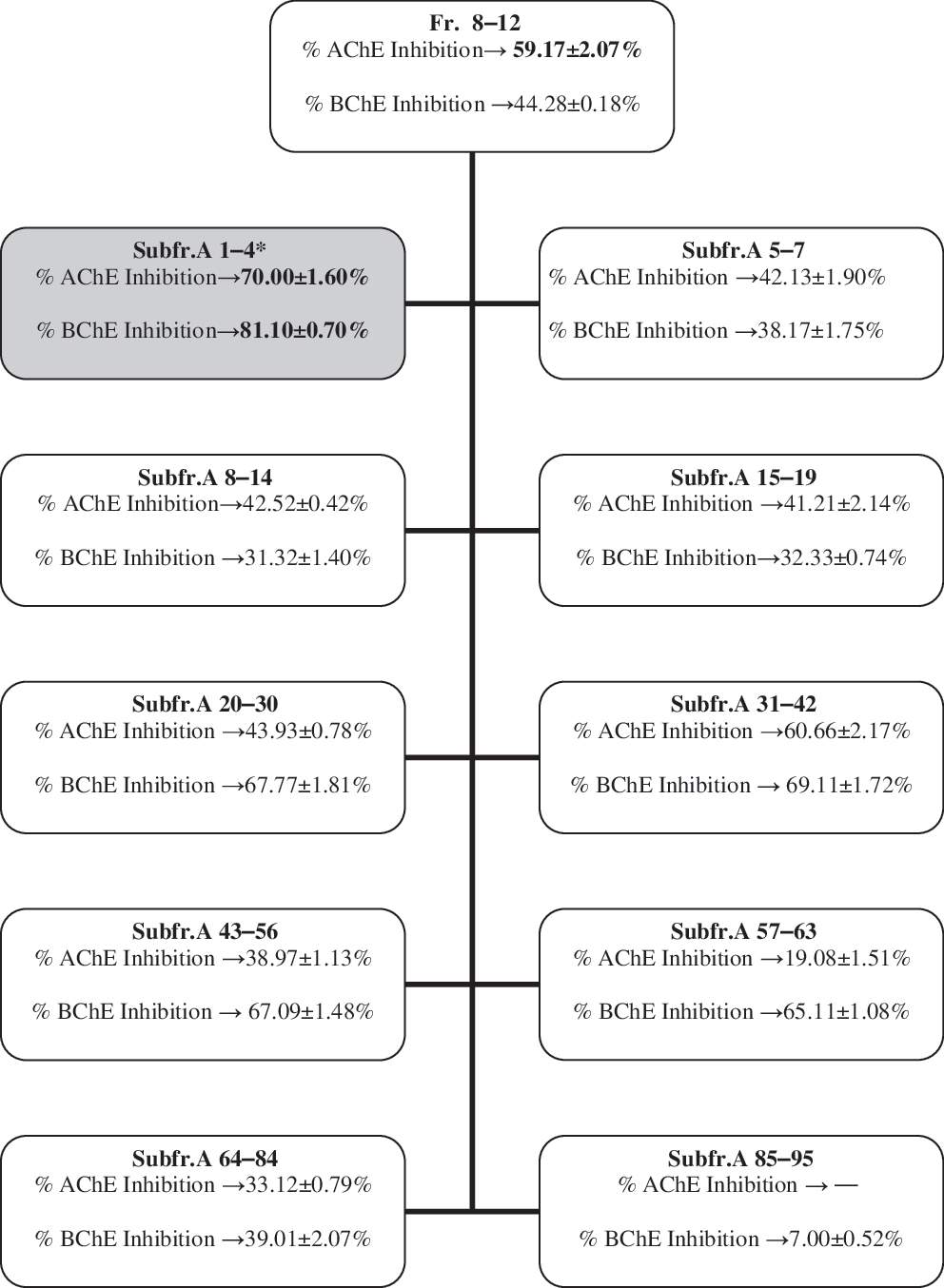
Acetylcholinesterase and butyrylcholinesterase inhibitory activity (mean percentage±standard error) of open column chromatography fractions in subfraction A of the dichloromethane extract of cultivated Salvia fruticosa at 100 μg/mL. *Subfr.A 1–4 was selected for further analysis by activity-guided fractionation.

Acetylcholinesterase and butyrylcholinesterase inhibitory activity (mean percentage±standard error) of open column chromatography fractions in subfraction A 1–4 at 100 μg/mL. *Subfr.B 20–22 was selected for further analysis by activity-guided fractionation.

Acetylcholinesterase and butyrylcholinesterase inhibitory activity (mean percentage±standard error) of medium-pressure liquid chromatography fractions in subfraction B 20–22 at 100 μg/mL. The shaded box represents the most active fraction.
After application of sequential chromatographic techniques according to activity-guided fractionation, the most active subfraction was found to be subfr.M 16–19. 1H-NMR spectrum of the subfraction was assessed in d-CHCl3 using a Varian Mercury 400, 400-mHz High Performance Digital FT-NMR Spectrophotometer.
Essential oil analysis of SFC by GC-MS
One hundred grams of the sample of SFC was weighed accurately and powdered mechanically. The powdered plant material was then exposed to hydrodistillation by using a Clevenger apparatus for approximately 2 hours, which led to isolation of essential oil with 2.5% yield (w/w).
Conditions for GC-MS were regulated as follows: GC analysis was carried out on Agilent 6890N Network GC system combined with flame ionization detector. The capillary column was Agilent 19091N-136 (HP Innowax Capillary; 60.0 m×0.25 mm×0.25 μm), the flow rate was 1.2 mL/min; the carrier gas was helium; the split ratio was 65:1; the injection volume was 1 μL; and the injector and flame ionization detector temperature was 250°C. Column temperature was kept at 60°C for 10 minutes. Later, a 4°C/min-ramp was applied to increase the temperature to 220°C; temperature was held at this point for 10 minutes. Finally, temperature was boosted to 240°C with a 1°C/min-ramp.
Results
We tested acetylcholinesterase inhibitory activity of the dichloromethane, ethyl acetate, and ethanol extracts of 3 wild-grown samples of S. fruticosa (SWF) as well as its cultivated sample (SFC) and essential oil to compare their activities to each other at 25, 50, and 100 μg/mL concentrations (Table 1). Among the extracts, the most active ones were the dichloromethane and ethyl acetate extracts of SFC (35.97%±0.54% and 35.78%±0.99%, respectively), and its essential oil showed even higher anti-acetylcholinesterase activity (49.12%±1.01%) at 100 μg/mL. All the extracts of the wild-grown species had a lower inhibitory effect than those of the cultivated species. Effects of the extracts of the wild-grown species also varied.
Values are expressed as means±standard error.
Not tested.
No activity.
Inhibition against acetylcholinesterase.
Inhibition against butyrylcholinesterase.
SFC, cultivated S. fruticosa; SFW, wild-grown S. sruticosa.
The essential oil of SFC showed 49.12%±1.01% inhibition against acetylcholinesterase at 100 μg/mL, and it was also tested against butyrylcholinesterase in the same manner. However, the essential oil was fairly active on this enzyme: Inhibition was 22.73%±0.22% at 100 μg/mL (Table 1).
All the extracts were assayed for their antioxidant potential in 3 test systems: DPPH radical–scavenging activity, iron-chelating capacity, and FRAP at 250-, 500-, and 1,000-μg/mL concentrations (Table 1). All extracts of SFC showed better scavenging activity against DPPH than did the SFW samples. The ethanol extract of SFC also showed greater activity on the FRAP test than did the ethanol extract of SFW. All extracts exerted low or no chelation effect on ferric ion. The dichloromethane and ethanol extracts of SFW-1 had lower DPPH radical–scavenging activity and FRAP activity at all tested concentrations. The essential oil of SFC showed a weak effect in all antioxidant tests (Table 3).
Values are expressed as mean±standard error.
—, no activity; FRAP, ferric-reducing antioxidant power; NT, not tested.
The essential oil of the SFC sample obtained by hydrodistillation was analyzed by GC-MS, and 99.89% of the oil was identified. The major component in the oil was 1,8-cineol (36.25%), followed by camphor (19.13%) and thujon (7.76%). The remaining components made up less than 7% of the sample and are listed in Table 2.
Calculated from flame ionization detector data.
Discussion
Salvia species have been used to prevent memory loss in European folk medicine, and a few studies have been performed to elucidate the active components of these species. One study reported that the essential oils of S. lavandulaefolia and S. officinalis had a strong anti-acetylcholinesterase effect, which may depend on the synergism between α-pinene and 1,8-cineol. 4,14 In that study, the ethanol extract of S. lavandulaefolia was active against acetylcholinesterase. In the current study, we were able to isolate the essential oils of just the SFC sample; we did not have sufficient SFW samples to obtain their essential oils. Therefore, we only tested the extracts of the SFW samples. The essential oil of SFC showed 49.12%±1.01% inhibition against acetylcholinesterase at 100 μg/mL. This inhibitory activity might be attributed to the high percentages of 1,8-cineol and α-pinene in the oil.
Another study tested the inhibitory effect of the essential oils obtained from S. fruticosa, S. lavandulaefolia, S. officinalis, and S. officinalis var. purpurea against butyrylcholinesterase and found they all displayed prominent butyrylcholinesterase inhibition in a time-dependent manner. 15 In contrast, we showed that the essential oil of SFC had a moderate effect on butyrylcholinesterase. These discrepant results might result from the phytochemical differences in the samples. In the earlier study, the monoterpenoids β-pinene and karene in the essential oil of S. fruticosa had slow inhibition against butyrylcholinesterase, whereas amounts of these compounds were low in our essential oil (Table 2). In our recent study, 16 we also showed that the ethanol extract of S. triloba (syn. S. fruticosa) displayed a remarkable antiamnesic effect on mice according to the passive avoidance test, as well as a strong in vitro inhibitory effect on acetylcholinesterase by using the Ellman method. The latter finding differs from our observations in the current study—here, all the ethanol extracts of the SFC and SFW samples were ineffective or had low activity. Again, the conflicting results might be due to a difference in the phytochemical contents.
We applied the active extract (the dichloromethane extract of SFC) to activity-guided fractionation, which was performed by combined successive chromatographic techniques (Figs. 1 –4). In this technique, inactive fractions and subfractions were discarded, and the most active fraction could be evaluated only by its 1 H-NMR spectrum in terms of phytochemical composition because of its inadequate amount. This fraction was not available for further evaluation. Thin-layer chromatography revealed 4 spots. The spots turned to purple on the chromatography plate after being sprayed with 5% H2SO4; this change may suggest the existence of terpenoid derivatives. Interpretation of 1 H-NMR data indicates the presence of many signals on the down and low fields of the spectrum (Fig. 5). Some aromatic signals also appeared between 6 and 7 ppm, which suggests the presence of some aromatic compounds. The remaining signals occurred between 0.80 and 4.8 ppm, indicating the possibility of terpenoid-type compounds.
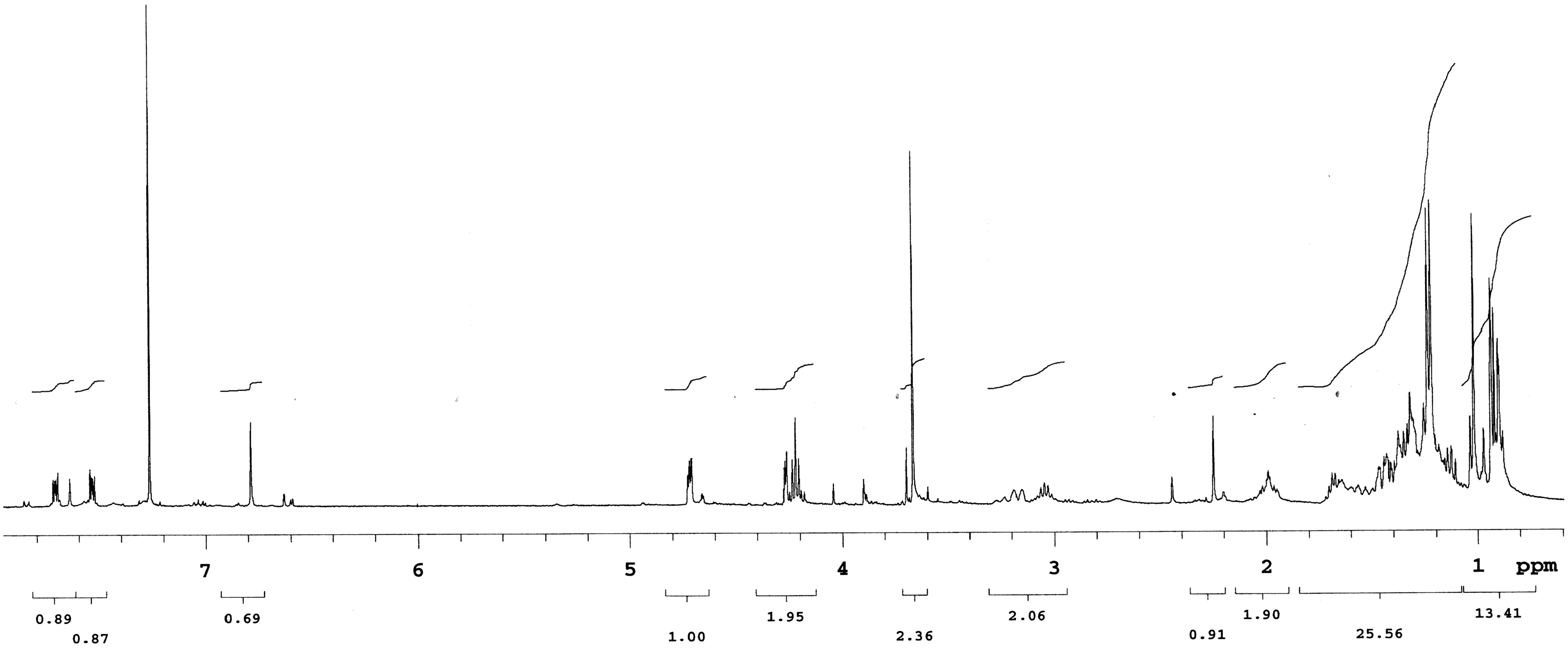
1H-nuclear magnetic resonance spectrum of subfraction M 16–19 (d-CHCl3).
In addition to the aforementioned monoterpenes, cholinesterase inhibitory activity of some diterpenoids, such as dihydrotanshinone and cryptotanshinone, isolated from the roots of S. miltihorrhiza has been reported to cause concentration-dependent inhibition. 17,18 The tanshinone derivatives have been effective for scopolamine-induced memory loss according to the passive avoidance test in mice. 19 Similarly, 2 triterpenes, salvin A and B, isolated from S. santolinifolia of Pakistani origin had potent inhibition against acetylcholinesterase according to the Ellman method as compared to the reference drug galanthamine. 20 In another study on plants traditionally used in Lebanon for neurologic diseases, 21 the ethyl acetate extract of S. fruticosa exerted low acetylcholinesterase inhibitory activity and showed moderate affinity toward γ-amino butyric acid–benzodiazepine receptors, which play a role in epilepsy.
On the other hand, several studies have reported antioxidant activity of S. fruticosa. For instance, the aqueous extract of S. fruticosa of Greek origin was tested by 2 antioxidant methods: β-carotene bleaching assay and oil stability index determination. 22 The extract displayed a mild effect in the β-carotene bleaching assay and had a strong oil stability index (13.1) compared with that of sunflower oil (8.7). This finding suggests its protective effect against lipid oxidation. In another study, 23 antioxidant activities of some Origanum species and 15 samples of S. fruticosa growing in Greece were compared with each other by using the rancimate and crocine tests; the S. fruticosa samples exhibited higher activity than the Origanum species in both tests. Other investigators tested the leaf and flower extracts of S. fruticosa growing in Turkey for their antioxidant activity. 24 The leaf extract caused 74.0% inhibition against hydroxyl radical and 96.2% scavenging activity against DPPH at 2.78 mg/mL, 24 which is in accordance with our data. Thus, earlier studies and our current study reveal that S. fruticosa may possess antioxidant activity when tested by different methods.
In our activity-guided fractionation procedure, we observed that as the fractionation steps progressed, the active subfractions showed higher activity. This might be explained by the fact that the active subfractions became cleaner and richer in active components and that the resulting higher amount of the active component led to better activity. Depending on the variation found in their bioactivities, our study also indicated that SFW samples are not suitable for preparation of herbal medicines and that the phytochemistry of these plants can be affected by many factors, such as rain, soil type, fertilization, and climate. Therefore, plants cultivated under optimized conditions should be preferred in making medicine.
In conclusion, we examined the dichloromethane, ethyl acetate, and ethanol extracts of the wild-grown and cultivated samples of S. fruticosa, as well as the essential oil of SFC, for their anticholinesterase and antioxidant activities. Activity-guided fractionation of the dichloromethane extract of SFC, which was more effective in anticholinesterase activity tests, prompted us to obtain the active subfraction with higher activity than the starting extract. 1 H-NMR interpretation of the active subfraction suggested the possible existence of terpenoid derivatives. The essential oil of SFC showed the best inhibitory activity against acetylcholinesterase, and the major components of this oil were 1,8-cineol, camphor, and thujon. It is more advantageous for S. fruticosa to have both anticholinesterase and antioxidant activities, and its standardized extract could be evaluated for further studies of AD treatment.
Footnotes
AcknowledgmentS
F.S.Ş. expresses gratitude to the Turkish Scientific and Technical Research Council (TÜBITAK) for the scholarship provided for PhD program. Financial support for the field trips was provided by Scientific and Technical Research Council of Turkey (TÜBITAK-TBAG-104T450).
Author Disclosure Statement
No competing financial interests exist.