




Abstract
Different species of the family Clusiaceae, including Rheedia longifolia, are used in folk medicine to treat inflammatory diseases. This family is largely distributed in tropical and subtropical areas of Brazil, but their chemical and pharmacological properties have been the subject of a few studies. In previous studies, we found that the aqueous extract from R. longifolia leaves presented important anti-inflammatory and analgesic activity. We investigated the chemical profile of R. longifolia and characterized the pharmacological effect of different chemically identified fractions in pharmacological models of neurogenic and inflammatory nociception. The pharmacological tests showed that oral treatment with aqueous crude extract and fractions of methanol extract of R. longifolia leaf induced a significant antinociceptive effect using von Frey filaments. In addition, the most polar fractions presented antinociceptive activity in a neurogenic model of nociception (capsaicin model). The chromatographic analysis indicated the presence of bisflavonoids in the fractions obtained from the methanol extract. These results suggest that bisflavonoids found in methanol-extracted fractions are involved in the inhibition of inflammatory and neurogenic nociception. It is important that the R. longifolia aqueous extract treatment inhibited ulcer formation induced by indomethacin, suggesting an anti-ulcerogenic activity closely associated with its analgesic effect.
Introduction
T
The aim of the present work was to investigate the chemical profile of methanol-extracted fractions obtained from R. longifolia and to characterize antinociceptive activity in models of neurogenic and inflammatory pain.
Materials and Methods
Plant material, extracts, and fraction preparations from R. longifolia leaves
Leaves of R. longifolia (Planch & Triana) were collected in the Rio de Janeiro Botanical Garden, Rio de Janeiro, Brazil, and a voucher specimen was deposited under the number RB-327826.
Dried and ground leaves were separated into two parts, with one part extracted by aqueous infusion and the other extracted by methanol with static maceration. The aqueous infusion was filtered and lyophilized to obtain the crude aqueous extract. After 10 days, the methanol extract was filtered and concentrated under reduced pressure to obtain the methanol extract. This extract was suspended in water:ethanol (9:1 vol/vol) and partitioned into R. longifolia methanol (RLM) fractions with hexane (RLMH), dichloromethane (RLMD), ethyl acetate (RLMAc), and butanol (RLMB). In addition to the four fractions mentioned above, a fifth fraction of wastewater (RLMAq) was also obtained.
High-performance liquid chromatography profiling of the extracts and fractions
The extracts and fractions were prepared at the Laboratory of Natural Products, Institute of Technology in Drugs, Oswaldo Cruz Foundation, Rio de Janeiro, Brazail. They were analyzed by high-performance liquid chromatography (model LC-10 ADVP, Shimadzu, Kyoto, Japan) with a diode array detector (SPDM 10AVP) and an auto injector (SIL-10ADVP). Analysis was performed on a Supelcosil™ LC18 (250×4.0 mm id; particle size, 5 μm) column (Sigma-Aldrich, St. Louis, MO, USA), and the following solvent system conditions with a flow rate of 1.0 mL/minute were used: (A) acetonitrile/H2O (75:25 vol/vol) and (B) 0.05% trifluoroacetic acid. The high-performance liquid chromatography was monitored at 254 nm.
Isolation of bisflavonoids
The ethyl acetate fraction was eluted through an Amberlite™ XAD™-2 (Dow Chemical, Midland, MI, USA) column using solvent mixtures of water/ethanol with ethanol percentages increasing from 30% to 100%. Chromatographic analysis of the material revealed the concentration of the phenolic compounds in the fraction eluted with 60% ethanol. This fraction, which was rich in phenols, was subjected to countercurrent chromatography in a Quattro CCC™ apparatus (Mk6 QuikPrep™ model, AECS-QuikPrep, Bridgend, South Wales, United Kingdom) equipped with four coils with a capacity of 125 mL each, coupled to a SPD-10AV UV-Vis detector (Shimadzu) and a fraction collector (model CF-1, Spectrum Chromatography, Houston, TX, USA) using CHCl3:methanol:H2O (7:13:8 by volume) as a solvent system. The fractions collected were monitored by thin-layer chromatography on silica gel aluminum-backed layers (Merck, Darmstadt, Germany).
Spectrometric analysis was used in the identification of the isolated compounds. 1H and 13C nuclear magnetic resonance spectra were acquired (model DRX 400 spectrometer, Bruker, Rheinstetten, Germany) at 400.13 and 100.61 MHz, respectively, with trimethylsilane as the internal standard.
Animals
Adult male Swiss Webster mice weighing 20–30 g and male Wistar rats weighing 200–300 g were obtained from the Animal Breeding Unit, Oswaldo Cruz Foundation and housed in the animal facilities of Pavilhão Lauro Travassos, Oswaldo Cruz Institute, Oswaldo Cruz Foundation with free access to food and water. All experimental protocols were approved (protocols L-002-08 and L-0260-05) by the Institutional Animal Welfare Committee.
Treatments
Animals were separated into at least five different subgroups with six animals in each subgroup: (1) the vehicle group received an oral administration of saline solution; (2) a positive control group received sodium diclofenac (50 mg/kg) intraperitoneally; and (3) three groups that received the crude aqueous extract of R. longifolia leaves or its fractions at 0.1 mg/kg, 1 mg/kg, or 10 mg/kg. The crude aqueous extracts of R. longifolia leaves or its fractions were dissolved in a sterile saline solution and orally administered. The fractions were first dissolved in 100 μL of dimethyl sulfoxide, and saline solution was added to bring the volume up to a total of 500 μL. In the capsaicin-induced pain model, morphine chlorhydrate (10 mg/kg i.p.) administration was used as an additional positive control. All experimental groups were treated and evaluated by an observer blinded to the experimental conditions.
Capsaicin pain model
All groups were stimulated with capsaicin solution (1.6 μg per paw) in the right hind paw (20 μL per paw) 1 hour after treatment. This model includes a reaction period of 5 minutes that is used to evaluate the neurogenic component of pain. After capsaicin injection, mice were individually housed, and then the amount of time the animal spent licking its paw was recorded. 4,11 –13
Carrageenan model of inflammatory pain in mice
All groups were stimulated with 300 μg of carrageenan (subcutaneously) per paw 1 hour after treatment. Mechanical hypersensitivity was assessed using a von Frey filament (0.6 g) at 1 and 3 hours after carrageenan exposure. 14 This model evaluates inflammatory pain that is characterized by the release of algogenic mediators during the inflammatory response initiated by carrageenan.
Indomethacin-induced gastric ulcer model in rats
Animals were separated into three groups (n=5) that received distinct substances orally: (1) a vehicle group that was treated with saline solution; (2) a positive control group that received indomethacin (20 mg/kg); and (3) a treatment group that received an aqueous extract of R. longifolia at 10 mg/kg 30 minutes after indomethacin. The animals were then euthanized after 6 hours. Their stomachs were dissected and cleaned, and the number of ulcers formed was counted.
Statistical analysis
Statistical significance was determined by a one-way analysis of variance, followed by Student's–Neuman–Keuls test (Prism 4, GraphPad, La Jolla, CA, USA). The results were considered significant for values of P≤.05.
Results
High-performance liquid chromatography profiling of the extracts and fractions
A sequential liquid–liquid partition of the methanol extract of R. longifolia using different organic solvents was used as a phytochemical strategy to separate and characterize its chemical constituents. This procedure allowed sufficient separation of the substances to facilitate the location of the active principles responsible for its activity.
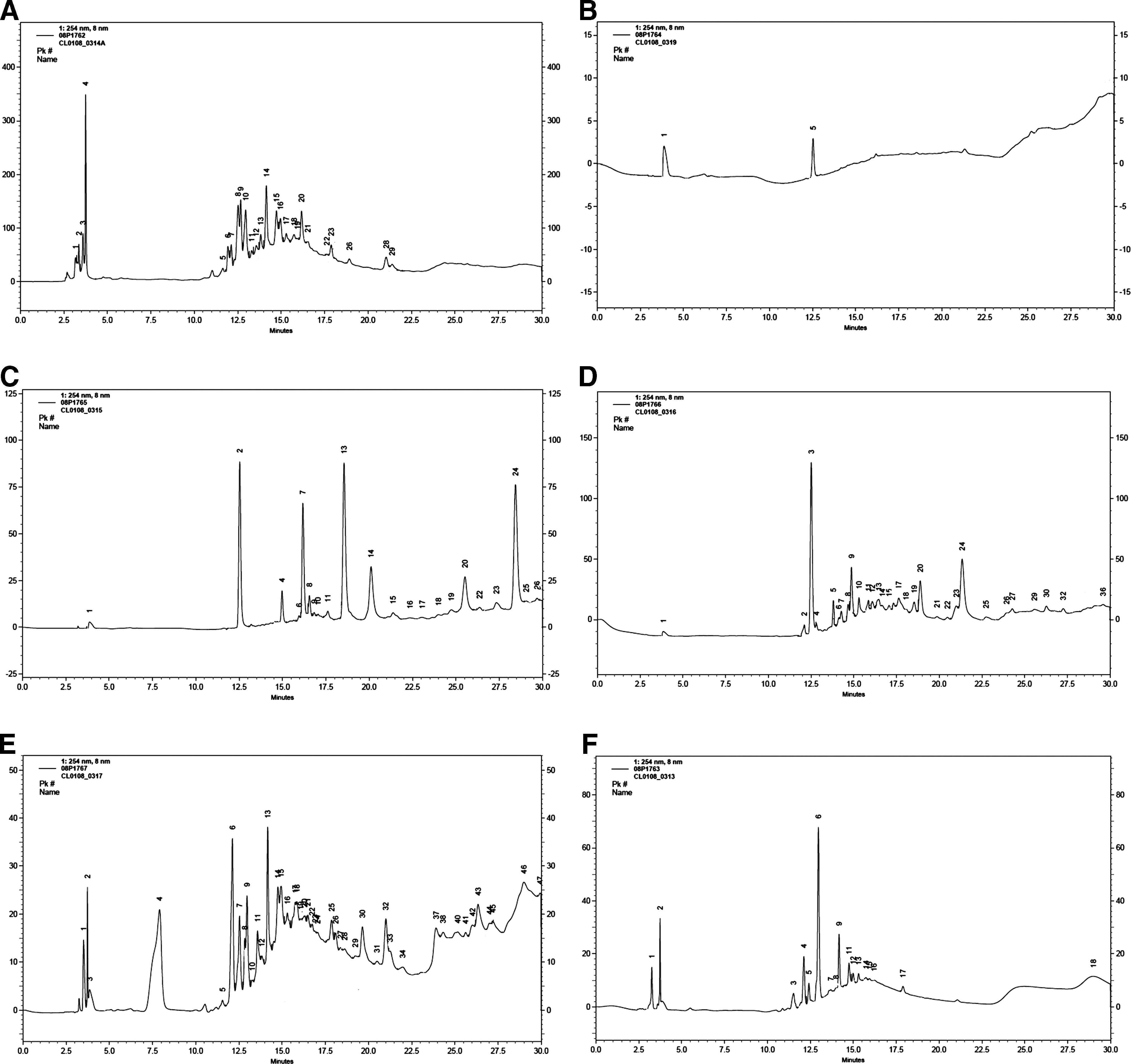
The high-performance liquid chromatography profiles of the crude aqueous and methanol extracts were acquired at 254 nm (Fig. 1). The chromatographic analysis indicated an important variation in the detected peaks, possibly due to a differentiated chemical profile in each fraction and extract. Figure 1A shows peaks in the region of aryl propanoids and phenolic compounds from the crude aqueous extract. Only two peaks in the region of the terpenes in the RLMH extract were observed (Fig. 1B) in an area where the triterpene fridelin was already isolated (data not shown). In the dichloromethane fraction RLMD (Fig. 1C) it is possible to observe the presence of classes of flavonoids and terpenes with the characteristic of being more polar.
High-performance liquid chromatograms of (
The other fractions found were rich in phenolic compounds, including the crude aqueous extract. It is noteworthy that the chromatographic analysis indicated that the ethyl acetate fraction, RLMAc (Fig. 1D), was also rich in flavonoids, which confirms the chemical characteristic of this genus. This fraction was subjected to countercurrent chromatography, and two bisflavonoids were isolated, one of which was identified as amentoflavone (Fig. 2) by spectroscopic analysis (namely, 1H and 13C nuclear magnetic resonance and ultraviolet spectroscopy). The other bisflavonoid isolate was identified during the process of structural elucidation. Comparison of our spectrometric data with previous literature confirmed the structure of amentoflavone. 15

Chemical structure of amentoflavone, a bisflavonoid isolated from the RLMAc fraction by countercurrent chromatography.
The butanol fraction, RLMB (Fig. 1E), presented a more complex profile than the others, which is a characteristic signature of the Rheedia genus because it produces substances with high polarity.
Analgesic activity in the capsaicin model in mice
Five fractions from the methanol extract were obtained and initially evaluated in the capsaicin model. Only the butanol fraction, RLMB (1 and 10 mg/kg), and the aqueous fraction, RLMAq (0.1, 1, and 10 mg/kg), significantly reduced the algogenic response evoked by capsaicin, suggesting an antinociceptive effect on neurogenic pain (Fig. 3E and F).
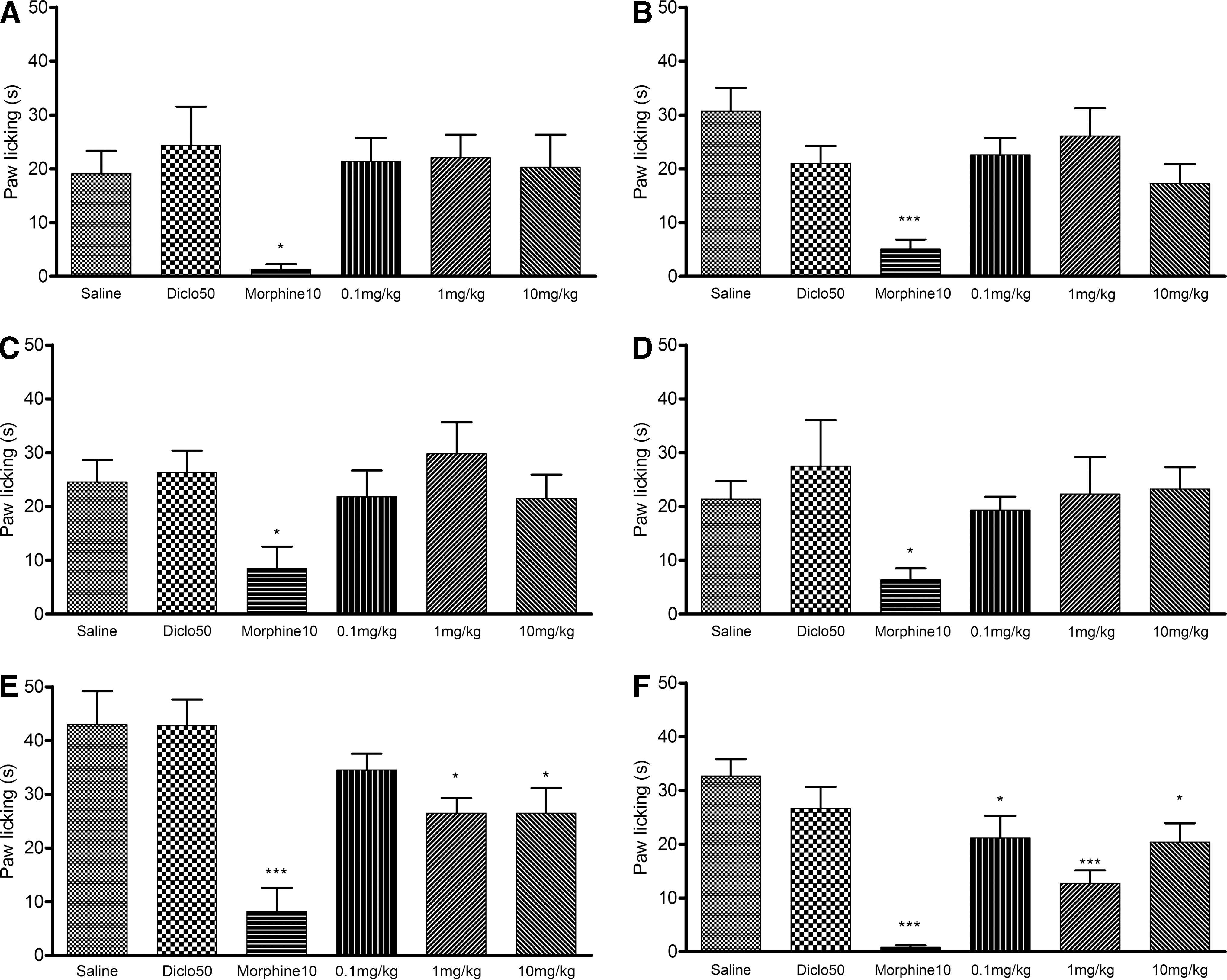
Different R. longifolia leaf fractions inhibit neurogenic nociception. The assay measures the time (in seconds) that the animal licks the injected paw following the intraplantar injection of capsaicin (1.6 μg per paw) into the right hind paw, measured over a 5-minute period. Three different doses of the (
Analgesic activity in the inflammatory pain model in mice
The injection of carrageenan (300 μg) in the right hind paw was performed to evaluate the antinoceptive effect of R. longifolia crude aqueous and methanol extract fractions on inflammatory pain.
A dose of 0.1 mg/kg R. longifolia crude aqueous extract produced a reduction of 55.1% and 35.2% of paw withdrawals at 1 hour and 3 hours, respectively. Doses of the aqueous extract at 1 mg/kg and 10 mg/kg reduced mechanical hypersensitivity by 49.3% and 25.4%, respectively, only after 3 hours (Table 1).
Data are mean±SD values (n=6 animals per group) of two independent experiments.
P<.01, ***P<.001.
All tested doses of RLMH had a significant analgesic effect 1 hour after carrageenan administration alone (Fig. 4A). All tested doses of RLMD, RLAc, RLMB, and RLMAq fractions of R. longifolia significantly inhibited mechanical hypersensitivity induced by carrageenan at both 1hour and 3 hours (Fig. 4B–E, respectively). The ethyl acetate fraction (10 mg/kg) induced the highest analgesic effects of 56.7% and 59.6% at 1 hour and 3 hours, respectively.
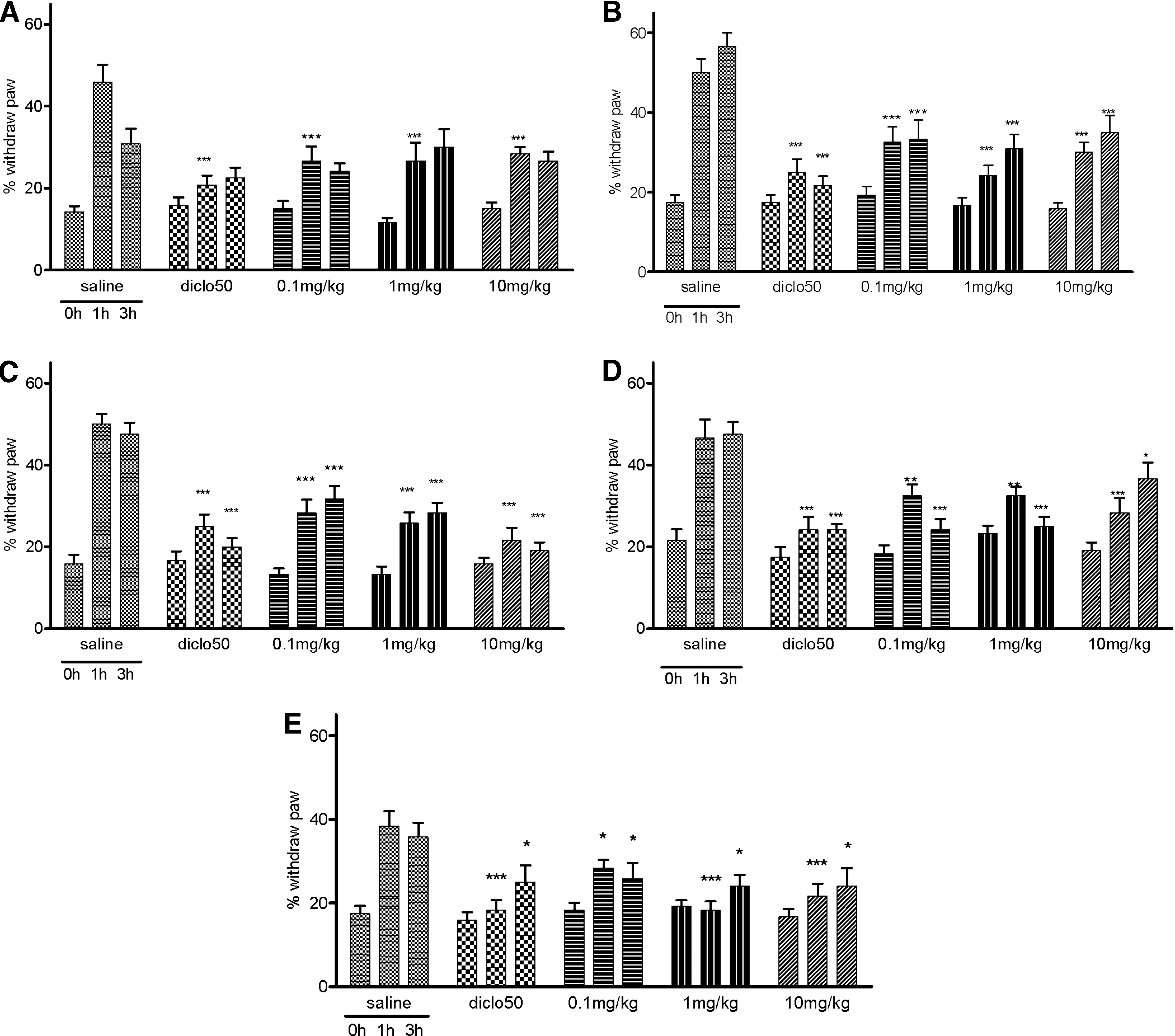
Different R. longifolia leaf fractions inhibit inflammatory nociception. The withdrawal response frequency was measured following 10 applications (duration of 1 second each) of von Frey hair (0.6 g), 1 hour and 3 hours after the injection of carrageenan (300 μg per paw) in the right hind paw. Three different doses of the (
Anti-ulcerogenic activity in rats
The effect of the crude aqueous extract of R. longifolia was evaluated on the gastrointestinal mucosa and on ulcers induced by indomethacin. The extract did not induce injury to the gastric mucosa, and it is interesting that the extract significantly inhibited the occurrence of gastrointestinal ulcers induced by indomethacin. These results suggest the involvement of different mechanisms of cyclooxygenase inhibition compared with the classical analgesic activity of anti-inflammatory drugs (Fig. 5).
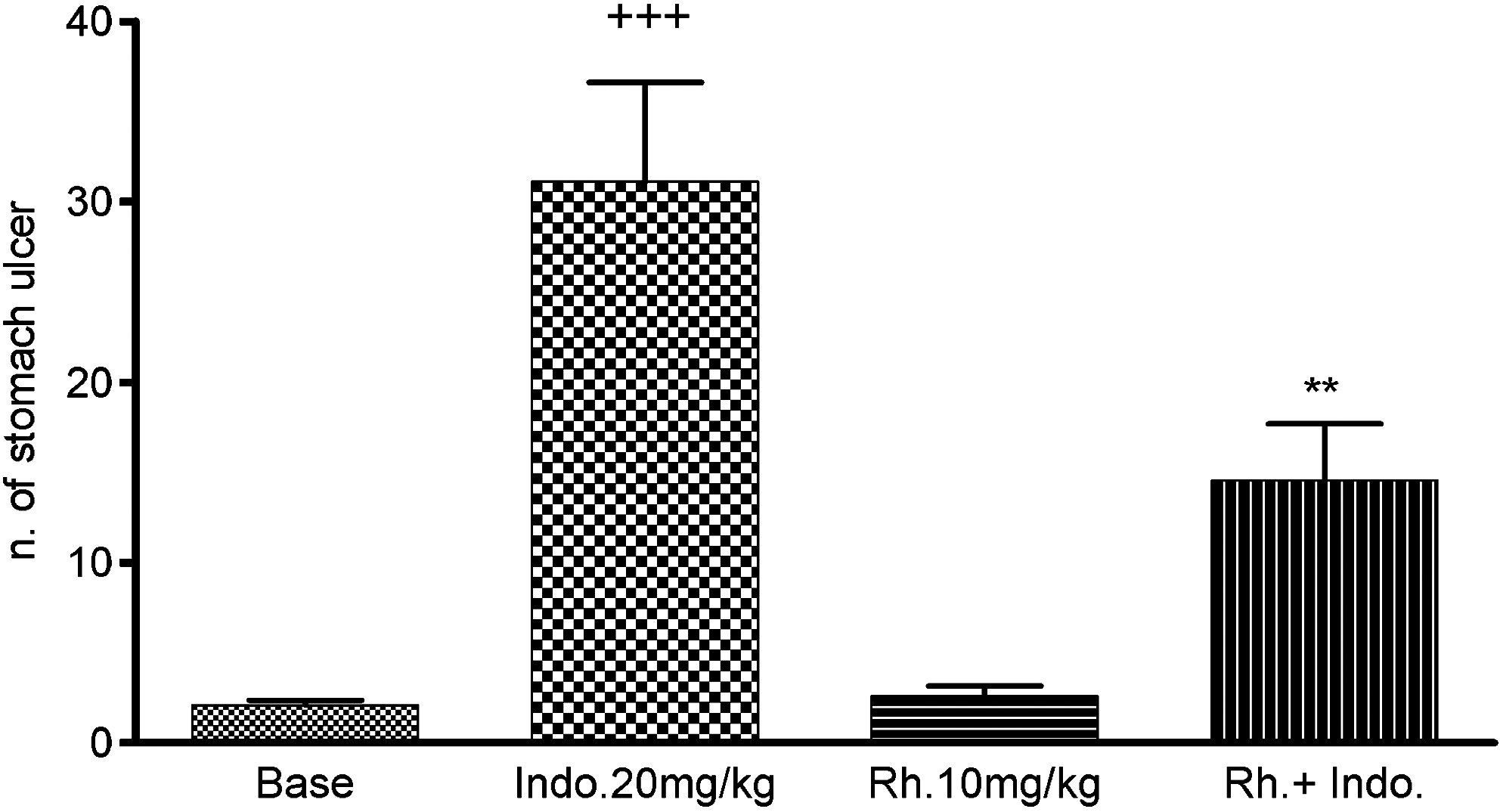
R. longifolia leaf aqueous extract inhibits the gastric lesions induced by indomethacin (Indo). The number of ulcerations in the gastric mucosa was measured 6 hours after Indo administration (20 mg/kg, p.o.). The aqueous crude extract (Rh) was given (10 mg/kg, p.o.) 30 minutes before Indo administration. Data are mean±SEM values of at least five animals. **P<.01 compared with the Indo group, +++ P<.001 compared with untreated animals (analysis of variance, Student's–Newman–Keuls multiple comparisons test).
Discussion
Several natural products with anti-inflammatory activity have been identified and isolated from plants, some of which are currently synthesized and available for commercial use.
Data on the bioactivity of the R. longifolia species are scarce. Previous results using the acetic acid writhing model, which is an unspecific, classical test used for the initial screening of compounds with potential analgesic activity, indicate the existence of substances with analgesic activity in the crude aqueous extract of the R. longifolia leaf. 10 These results paved the way for the present study to investigate the chemical profile of R. longifolia leaf extract compounds and to characterize their bioactivity. The analgesic effects of the aqueous extract and of the fractions from the methanolic extract were studied in several pain models to determine its possible action on inflammatory and neurogenic pain.
The Rheedia genus is characterized by the presence of triterpenes, steroids, coumaric acid, xanthones, and benzophenones, 1,4,6,7,16 but the chemical profile of the R. longifolia species has not yet been completely characterized. In this study, the chromatographic analysis of R. longifolia leaf crude aqueous and methanol extract fractions indicated an important variation in the class of compounds present in this species. The chromatographic profile of crude aqueous extract and ethyl acetate, butanol, and aqueous fractions showed peaks in the region of arylpropanoids and flavonoids. In fact, our discoveries allowed for the isolation of the bisflavonoid amentoflavone, which can be considered a chemical marker of the ethyl acetate fraction. Amentoflavone may be directly related to the bioactivity detected in this study based on previous reports of this compound in the literature. 17 –20 In an attempt to test the antinociceptive activity of the fractions using appropriate models, the capsaicin test was used to evaluate neurogenic pain. 4,11 –13,21,22 In this model, only the butanol (RLMB) (Fig. 3E) and the aqueous (RLMAq) (Fig. 3F) fractions significantly reduced the nociceptive response evoked by capsaicin. It is important to note that these two fractions presented signals in retention times ranging from 3.0 to 12.5 minutes, which is characteristic of the classes of substances mentioned above that may be related to the bioactivity of R. longifolia. Consistent with this hypothesis, several flavonoids have been described as biologically active. 23,24
In another pharmacological evaluation, we used a von Frey filament to test for analgesic activity on inflammatory pain induced by carrageenan. Carrageenan inflammation is characterized by an increase in vascular permeability due to histamine and serotonin release in the first hour of reaction. After the third hour, an intense edema is induced by prostaglandin action. 25,26 Our results showed that an inhibition of inflammatory nociception was obtained with all fractions. However, the dichloromethane and ethyl acetate fractions, compared with the other fractions, were more active in this model. This result shows the relevance of the different chemical classes in bioactivity. The two most efficacious fractions are predominantly composed of flavonoid compounds with an absence of arylpropanoids, suggesting that flavonoids are involved in antinociceptive effects in inflammatory pain.
It is interesting that only the butanol and aqueous fractions inhibited both neurogenic and inflammatory nociception. Of note is that these two fractions also presented differences in the retention time, a characteristic of arylpropanoids that is not observed in the dichloromethane and ethyl acetate fractions. This result suggests that the arylpropanoids group may be responsible for the inhibition of neurogenic nociception.
In addition, our results showed that the crude aqueous extract of R. longifolia leaves did not damage the gastrointestinal mucosa but inhibited the occurrence of gastric ulcer induced by indomethacin. This effect is extremely relevant considering that one of the most important side effects of many commercially available anti-inflammatory and analgesic drugs is gastrointestinal damage.
Finally, our results suggest that R. longifolia leaf crude aqueous extract and fractions from the methanol extract have important analgesic activity in inflammatory and neurogenic pain. This bioactivity is not harmful to the gastrointestinal mucosa, suggesting its low gastrointestinal toxicity. These results suggest that further study is needed to identify candidate molecules with analgesic and anti-ulcerogenic activity present in members of the family Clusiaceae.
Footnotes
Acknowledgments
The authors wish to thank the Oswaldo Cruz Institute for providing the necessary conditions to complete this research, and the Analytical Center of Far-Manguinhos and Ricardo Mello Reis, Roberto Magalhães Saraiva, Roberta Ghilosso Bortolini, and Antonio A. Fidalgo-Neto for helpful discussions and suggestions.
Author Disclosure Statement
The authors declare that they have no conflict of interest.