




Abstract
Momordica charantia fruits are used as a vegetable in many countries. From time immemorial, it has also been used for management of diabetes in the Ayurvedic and Chinese systems of medicine. Information regarding the standardization of this vegetable for its usage as an antidiabetic drug is scanty. There are many reports on its effects on glucose and lipid levels in diabetic animals and some in clinical trials. Reports regarding its mechanism of action are limited. So in the present review all the information is considered to produce some concrete findings on the mechanism behind its hypoglycemic and hypolipidemic effects. Studies have shown that M. charantia repairs damaged β-cells, increases insulin levels, and also enhance the sensitivity of insulin. It inhibits the absorption of glucose by inhibiting glucosidase and also suppresses the activity of disaccharidases in the intestine. It stimulates the synthesis and release of thyroid hormones and adiponectin and enhances the activity of AMP-activated protein kinase (AMPK). Effects of M. charantia like transport of glucose in the cells, transport of fatty acids in the mitochondria, modulation of insulin secretion, and elevation of levels of uncoupling proteins in adipose and skeletal muscles are similar to those of AMPK and thyroxine. Therefore it is proposed that effects of M. charantia on carbohydrate and fat metabolism are through thyroxine and AMPK.
Introduction
H
Diabetes is a chronic disorder of carbohydrate metabolism either due to absolute lack of insulin (insulin-dependent diabetes mellitus) or due to less production of insulin or high production of insulin with resistance (non–insulin-dependent diabetes mellitus). Failure of fat cell proliferation, mitochondrial function, and fat oxidation results in ectopic fat storage in skeletal muscle and liver that mediates insulin resistance associated with obesity. 1 Insulin resistance in diabetes induces hyperglycemia and hyperlipidemia, which in turn give rise to atherosclerosis and a wide range of other complications. 2,3 Elevated glucose levels lead to oxidative stress, which is the causative factor for the development of diabetes-related complications. 4 Management of diabetes with modern synthetic drugs is not very successful because of their side effects. Therefore there is a need for the development of an herbal drug that could impart holistic effects on the individual's physiological system to manage diabetes. Food materials and edible herbs having such properties could be the best alternative, and Momordica charantia is one of the vegetables known to possess such properties. Research conducted over the past 30 years indicates that fruit of this plant is a potent antidiabetic agent with soothing effects on other systems.
This plant is a vine grown in the tropics and subtropics and belongs to the Cucurbitaceae family. It bears tendrils and grows up to 5 m. Leaves are simple and alternate with four to seven deeply separated lobes, and flowers are separate and yellow in color. Fruits are oblong with a warty texture. The fruit is bitter in taste and used for various ailments, including diabetes. 5 More than 100 reports have described the hypoglycemic and hypolipidemic properties of the plant. Some reports have also described the antioxidant properties of the fruit. 6 Most of the pathological disorders of diabetes are mainly due to the oxidative stress generated by high glucose levels and glycated molecules, so the antioxidant effects of this plant along with other properties is a boon to people suffering from diabetes. Grover and Yadav 5 in their review described the various pharmaceutical effects of the plant, whereas Basch et al. 7 in their review emphasized aspects of its efficacy and safety. Many scientist have also reported on the mechanisms responsible for hypoglycemic and hypolipidemic effects. Therefore the present review aims to describe the possible mechanisms responsible for the hypoglycemic and hypolipidemic effects of the plant in diabetes based on available information.
Chemical Components Of M. Charantia Fruit
Several phytochemicals having hypoglycemic properties have been isolated from M. charantia fruit. These include glycosides (momordin, charantin), alkaloids (momordicin), and polypeptide p.
8
Charantin is composed of a mixture of sitoserol-β-
Effects Of M. Charantia On Hyperglycemia And Hyperlipidemia
There are numerous reports regarding the hypoglycemic properties of M. charantia in diabetic animals as well as in humans. Various types of extracts of M. charantia have been reported to reduce elevated glucose levels in diabetic rats. 14 –16 Ethanol extract of fruit pulp depressed the glucose levels in validated models of diabetic rat by 10–15% after 1 hour of administration at the dosage of 500 mg/kg of body weight. 17 Aqueous extract and alkaline chloroform extract reduced blood glucose levels after 1 hour of administration. 18 Fresh fruit extract, methanol extract, and water extract reduced blood glucose levels after half an hour of administration in diabetic rats and in glucose-induced hyperglycemic rats. 19 Extract also increased the levels of thyroxine, normalized the glucose levels, and maintained the normal lipid profile in diabetic rats kept on normal diet or fed on a high-fat, low-carbohydrate diet. 20,21 Long-term feeding of acetone extract of M. charantia fruit to alloxan-induced diabetic rats normalized the glucose level, and the effect was not reversed up to 15 days. 22 Ojewole et al. 23 reported the hypoglycemic and hypotensive effects of M. charantia whole-plant aqueous extract in rats. Treatment with extracts of M. charantia prevented hyperglycemia and hyperinsulinemia in fructose-fed rats. 24
Aqueous homogenized suspension of the vegetable pulp led to significant reduction (P<.001) of both fasting and postprandial serum glucose levels in 86% of non–insulin-dependent diabetes mellitus patients. 25 The fruit juice of M. charantia improved the glucose tolerance of 73% of the patients suffering from maturity-onset diabetes, whereas 27% failed to respond. 26
M. charantia reduced plasma and hepatic triglyceride content and tissue fat accumulation. 27,28 It also ameliorated the plasma and liver lipid parameters in diabetic rats kept on cholesterol-rich diet and high-fat diet. 29,30 M. charantia lowered plasma apolipoprotein B-100 and apolipoprotein B-48 levels in mice fed on a high-fat diet and modulated the phosphorylation status of the insulin receptor and its downstream signaling molecules. 21
Mechanisms Behind The Hypoglycemic And Hypolipidemic Effects
M. charantia, being an herb, has many constituents that affect the metabolism of glucose and lipid from various angles, and thus it imparts its holistic effects in maintenance of normal glucose and lipid levels. It returns the elevated or reduced glucose levels to normal, protects the individual from oxidative stress, and keeps the lipid profile to normal levels under normal feeding and fat-rich feeding. It thus protects the individual from pathophysiological disorders associated with diabetes. Review of maximum studies indicates that M. charantia affects the metabolism of these two nutrients broadly in two ways: extrapancreatic effects and pancreatic effects (Fig. 1).
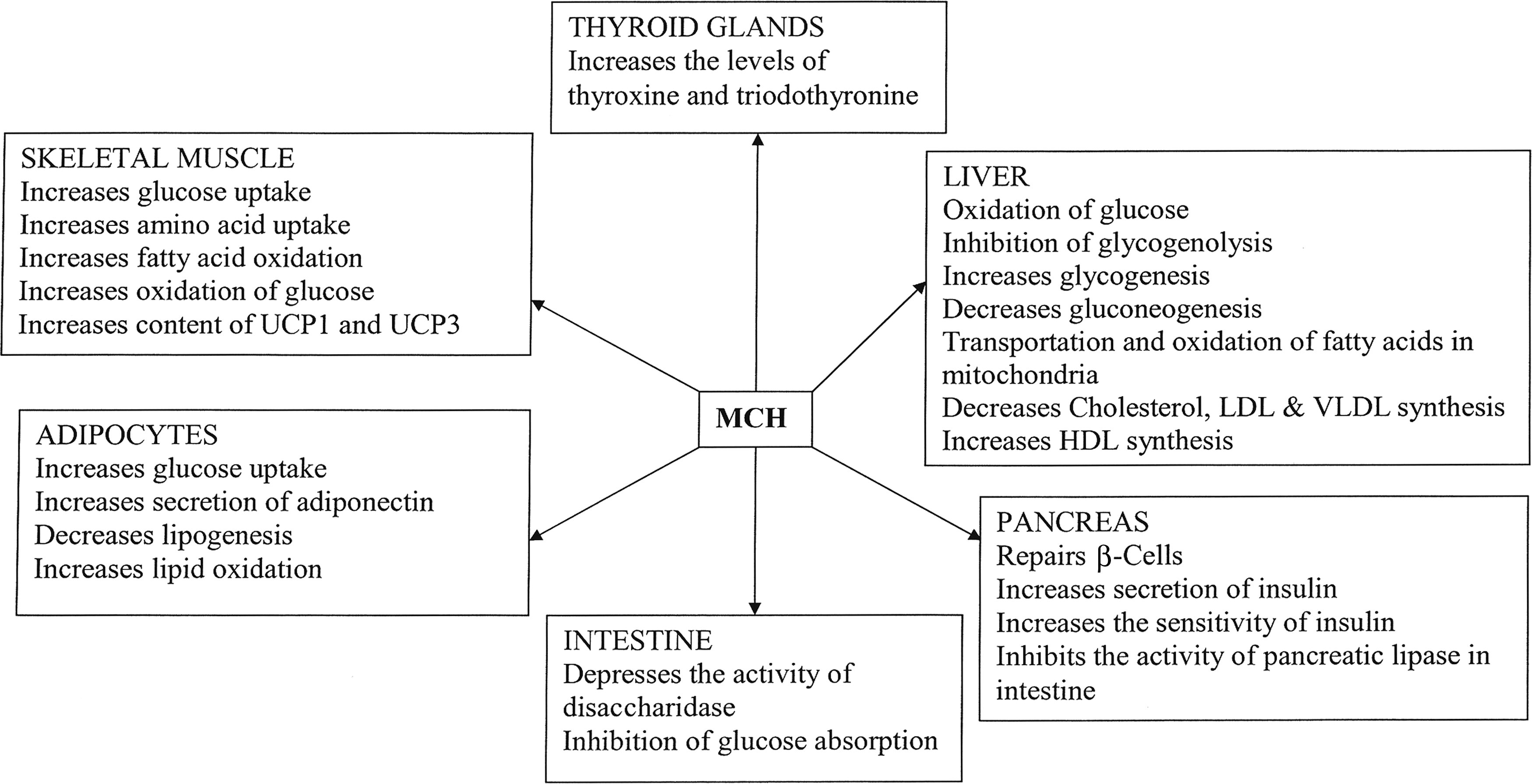
Effects of M. charantia (MCH) on different organs and tissues. HDL, high-density lipoprotein; LDL, low-density lipoprotein; UCP1 and UCP 3, uncoupling protein 1 and 3, respectively; VLDL, very-low-density lipoprotein.
Extrapancreatic effects
Effects of M. charantia on glucose absorption in the alimentary canal
Na+,K+-ATPase-dependent absorption of glucose in intestine is significantly greater in the diabetic condition compared with that without diabetes.
31
In vitro, M. charantia inhibited uptake of glucose by the everted intestine.
32
In vivo, daily oral administration of M. charantia juice to streptozotocin-induced diabetic rats significantly reduced the Na+/K+-dependent absorption of glucose by the intestinal mucosa.
33
The inhibition is probably because of inhibition of availability of ATP for the Na+,K+ pump, and the mechanism is not understood.
34,35
According to Dyer et al.,
36
there were increased levels of sodium glucose co-transporters (SGLT1) and the fructose transporter (GLUT5) in diabetic patients, and this leads to postprandial hyperglycemia. Glucosidase inhibitors are reported to prevent intestinal sugar transport in diabetic mice.
37
Glucosidase inhibitors like
Effects of M. charantia on glucose uptake
Oral administration of M. charantia water extract by KK-Ay diabetic mice for 30 days increased the rate of glucose uptake by the muscle cells by increasing the number of GLUTs and also their translocation. 43 Protein extract from the fruit pulp of M. charantia enhanced glucose uptake in C2C12 myocytes and 3T3-L1 adipocytes in vitro after 4 hours of incubation. 44 Water-soluble components of M. charantia enhanced the glucose uptake at suboptimal concentrations of insulin in 3T3-L1 adipocytes, which is accompanied by adiponectin secretion from adipocytes. 45 Adiponectin secretion leads to glucose uptake, β-oxidation of lipids, and triglyceride clearance. M. charantia standardized extract increased glucose uptake by the hemidiaphragm of diabetic rats, and the fresh juice increased the uptake of amino acids and glucose in L6 myotubes after 1 hour of incubation. 46 According to Yamaguchi et al., 47 the active ingredients of M. charantia—cucurbitane glycosides, momordicides, and their aglycones—increased the activity of AMPK, and AMPK resulted in an increase in the number of GLUT4 transporters and their translocation in cell membrane and thus mediates glucose uptake and fatty acid oxidation in both insulin-sensitive and insulin-resistant mice.
Effects of M. charantia on glucose and lipid metabolism
According to Rathi et al., 48 M. charantia increases glucose influx, improves the activity of hepatic glucokinase and hexokinase, and significantly increases the activities of phosphofructokinase and thus facilitates glucose oxidation. A significant accumulation of glycogen in liver and muscle tissue of treated diabetic rats has also been reported, possibly by the insulin-mimetic effects or because of increased insulin secretion. 49 In normal conditions phosphofructose kinase is the key regulator of glycolysis. If the activity of this enzyme is high, most of the glucose enters the glycolytic pathway, but if the activity of this enzyme is depressed, most of the absorbed glucose is converted to glycogen. However in the report by Rathi et al., 48 M. charantia stimulates both the glycolytic pathway as well as glycogen synthesis. This could possibly be attributed to various constituents present in M. charantia extract. Apart from increasing the glycogen content of liver, it has also been reported to inhibit glycogenolysis. 50 The suppression of key hepatic enzymes for gluconeogenesis—glucose-6-phosphatase and fructose-1,6-bisphosphatase—has been demonstrated. It also accelerates glucose metabolism through the pentose phosphate pathway. 51
M. charantia also inhibited lipogenesis by down-regulating lipogenic gene expression in adipose tissue of diet-induced obese mice 52 and enhanced lipid oxidation associated with mitochondrial uncoupling. 53 Ethyl acetate extract of M. charantia significantly raised acyl-coenzyme A (CoA) oxidase activity as well as its mRNA expression in H411EC3, a murine heptoma cell line. 54 M. charantia elevated the activities of carnitine palmitoyl transferase-1 and acyl-CoA dehydrogenase in liver and muscle mitochondria, elevated the transportation of long-chain fatty acids in mitochondria, and decreased the lipid content. It also increased uncoupling protein (UCP) 1 and UCP3 activities in skeletal muscle and the gastrocnemius muscle and the adiponectin level and reduced the adiposity. 53,55 M. charantia also influenced the expression of UCP. Because peripheral injection of adiponectin reduces adiposity and up-regulates the expression of mRNA for UCP1 in brown adipose tissue and UCP3 in skeletal muscle, 56 it appears that M. charantia works through adiponectin. This could further be supported by reduced adiponectin levels in obese/diabetic mice and humans. 57,58
Pancreatic effects
M. charantia maintains the normal glucose levels in diabetes by maintaining the structural integrity of the pancreas and also by regulating its functions like synthesis and release of hormones. It has also been reported to influence the sensitivity of insulin. Administration of ethanolic extract of the fruit pulp of M. charantia in neonatal streptozotocin-induced type 2 diabetic rats increased the islet size, total β-cell area, number of β-cells, and insulin levels compared with untreated diabetic rats. 49 Similar results were reported by Abdollahi et al. 59 with the administration of aqueous extract of the fruit in neonatally streptozotocin-induced diabetic rats. Acetone extract of M. charantia fruit affects different phases of recovery of β-cells of the islets of Langerhans and normalizes the functioning of β-cells. 60 Xiang et al. 61 investigated the reparative effects of boiling water extracts on HIT-T15 hamster pancreatic β-cells; in this study, 0.02% boiling water extract showed the highest cell proliferation rate of 45.6% on alloxan-damaged pancreas. The high-molecular-weight fraction of boiling water extract showed stronger effects in repairing alloxan-damaged cells than the low-molecular-weight fraction and later showed higher activity in increasing the insulin secretion of normal or damaged cells. Insulin secretagogue properties of M. charantia have also been reported by other scientists as well. According to Sirintorn et al., 44 protein extract from fruit pulp of M. charantia raised the plasma insulin concentration by twofold 6 hours after subcutaneous injection. This extract also increased insulin secretion in perfused rat pancreas within 5 minutes, and this effect was persistent up to 30 minutes of administration. The β-cell repairing activity might be due to the strong antioxidant potentials of M. charantia, as reported earlier. 6,62,63 Apart from these effects, M. charantia has also been reported to improve the sensitivity of insulin in hyperinsulinemic rats. Elevated levels of insulin due to high sucrose and fat feeding are brought back to normal by M. charantia in normal rats. It reduces the levels of insulin and also the resistance in diabetic KK-Ay mice after 3 weeks of oral administration and hence the normalization of elevated glucose levels. 44
Summary Of Mechanisms
M. charantia inhibits gluconeogenesis and accelerates the oxidation of glucose through the shunt pathway. It increases the glycogen content of the liver. It takes part in the recovery of damaged β-cells, stimulates the secretion process of insulin, and also enhances the peripheral sensitivity of insulin. 64 Enhancement in sensitivity could possibly because of many reasons like enhancement in the activity of AMPK, 12,65 inhibition of protein tyrosine phosphatase 1B activity in skeletal muscle, 66 increase in the number and translocation of GLUT4 receptors, and the increase in the rate of phosphorylation of insulin receptor substrate. 67,68 Studies of extrapancreatic effects on glucose and lipid levels suggest numerous mechanisms behind the effects. M. charantia inhibits the digestion disaccharides and absorption of monosaccharides by inhibiting the activities of disaccharidase and glucosidase, 69 induces adipose tissues to release adiponectin, and increases the activity of AMPK in cells. 12 AMPK acts as a metabolic switch and imparts insulinotropic effects, 65 enhances biogenesis of GLUT4 and its translocation and hence glucose uptake, 64 –66 inhibits cholesterol synthesis in liver by activating 3-hydroxy-3-methylglutaryl-coenzyme reductase, 66,67 and enhances transport of fatty acids in mitochondria and their oxidation. 63 Activation of AMPK could be directly or through adiponection and thyroxine as M. charantia has been reported to increase the levels of adiponectin 45 and thyroxine, 20 and these two hormones are reported to activate AMPK (Fig. 2). 71 –73 Adiponectin released after the stimulation from M. charantia also results in increased levels of UCP1 in skeletal muscles and UCP2 in adipose tissue in mitochondria. 53,55 These protein lead to the oxidation of fuel without any generation of ATP by electron-transporting proteins. Released energy is being used to elevate the body temperature, and ultimately it is dissipated. Thus M. charantia through AMPK enhances the transportation of substrates for oxidation in mitochondria, and adiponectin leads to oxidation without generation of ATP and thus keeps the glucose level at a normal value.
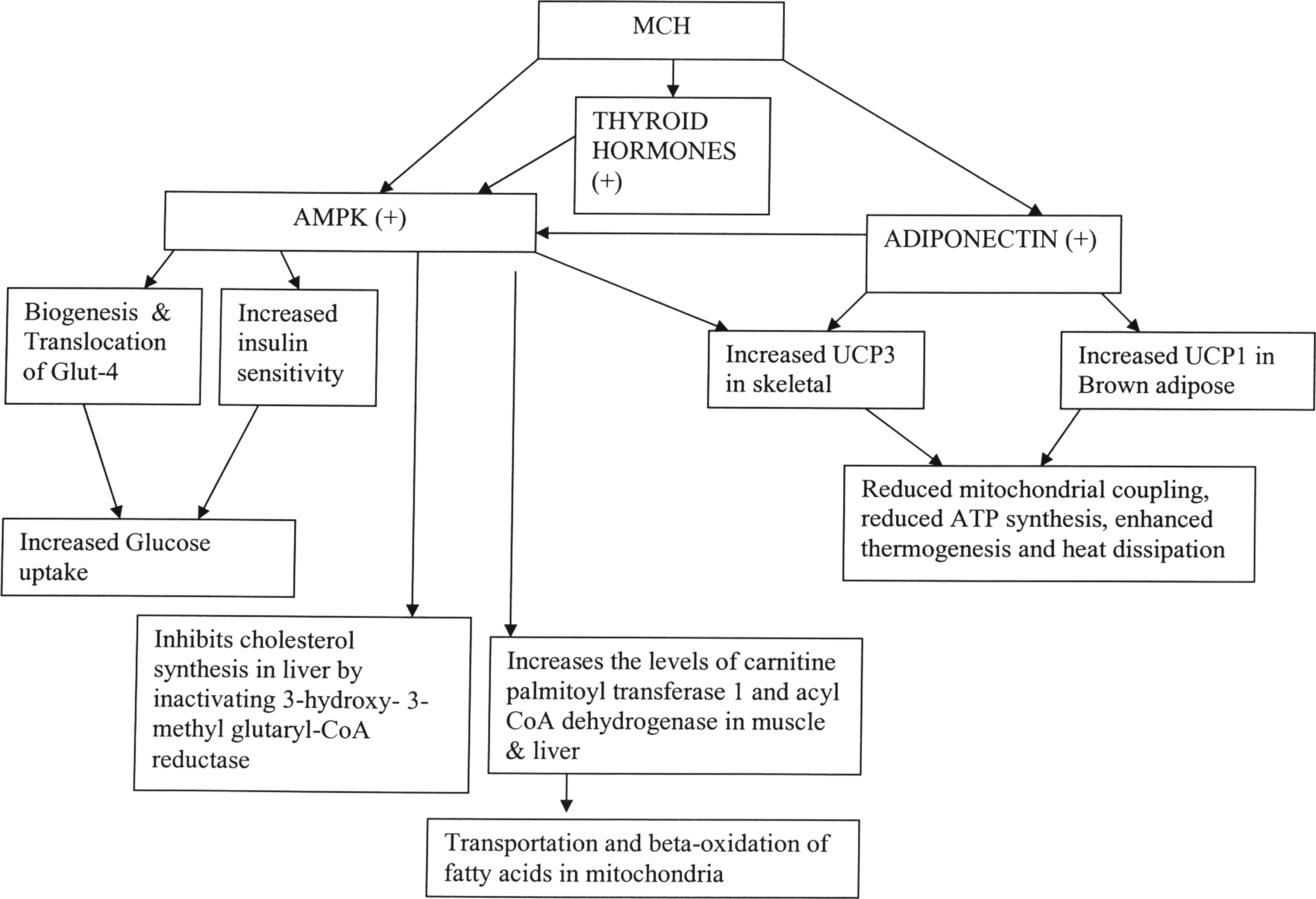
Possible mechanisms of effects of MCH on carbohydrate and fat metabolism. AMPK, AMP-activated protein kinase; CoA, coenzyme A; Glut-4, glucose transporter 4.
Future Directions
For effective use of M. charantia, each variety should be standardized for its chemical constituents, and constituents should be tested for their effects in diabetic animal models. Clinical studies are not enough to recommend this fruit for management of diabetes, although it is used as an antidiabetic vegetable in many Indian, Chinese, and African communities. Each variety of M. charantia should be tested clinically for the management of type 1 and type 2 diabetes, and its mechanism of action should be studied thoroughly.
Footnotes
Author Disclosure Statement
No competing financial interests exist.