




Abstract
Purified inulin from Dahlia tubers was partially hydrolyzed to form fructo-oligosaccharides by using citric or phosphoric acids (pH, 2.0–2.5) as mild acid catalysts. The ideal kinetic conditions to ensure a high yield of fructo-oligosaccharides relative to free fructose were a temperature range of 85°C–95°C, a hydrolysis time of 15–25 minutes, and a catalyst pH of 2.5. At the higher temperature and the longest hydrolysis time, an inversion of the product ratio occurred. Under these conditions, co-generation of hydroxymethylfurfural occurred, and it was eliminated by activated charcoal. Unlike in classic hydrolysis with hydrochloric or sulfuric acid, deionization of the actual hydrolysates was not necessary because the catalyst neutralization with common bases results in the formation of co-nutrients with alternative uses as foods or fermentation substrates. These whole hydrolysates can be advantageously added as nutraceuticals to carbonated beverages and acidic foods, such as soft drinks and yogurts.
Introduction
T
Although related, prebiotics are native or modified chemical entities (e.g., inulin and its enzymatic or acid derivatives, such as FOS), whereas probiotics are beneficial live microflora (e.g., bacteria from the genera Lactobacillus and Bifidobacterium that are biochemically able to ferment inulin or FOS to strategic short-chain fatty acids). Synbiotics are potentiated combinations of prebiotics and probiotics.
The role that inulin and FOS play in protecting against colon cancer is well established. 1 –7 In the bowel, these compounds are selectively fermented by the beneficial microflora Lactobacillus and Bifidobacterium to butyric, propionic, acetic, and lactic acids or short-chain fatty acids. The subsequent decrease in local colonic pH reduces the occurrence of tumors. 8 –11 FOS is usually obtained from inulin through enzymatic hydrolysis with endo-inulinases or mild acid (hydrochloric or sulfuric). The former process involves expensive catalysts, and the latter requires catalyst removal, as well as expensive anion exchange resins or precipitation of the sulfuric acid catalyst in an insoluble calcium sulfate form.
Here, we describe a simple, fast, and inexpensive procedure for the production of FOS with a degree of polymerization of 2–18 by using moderate heating, short reaction times, and mild pH ranges with innovative citric or phosphoric acid catalysts. An advantage of the proposed technique is that it does not require catalyst removal: Both citric and phosphoric acid (which are metabolic entities in the Krebs cycle) and several natural phosphorylated compounds (such as glucose-6-P, adenosine triphosphate, and DNA) may be considered safe and metabolically beneficial along with the released fructosaccharides. Furthermore, citric and phosphoric acids and their salts are used as GRAS (generally recognized as safe) acidulants in several foods and beverages, such as yogurts and soft drinks.
Materials and Methods
Inulin source, isolation, and purification
Dahlia species tubers (2 kg) were locally collected, washed, decorticated, sliced, and rapidly immersed in 20 L of boiling water buffered with a 50 mM sodium phosphate buffer at a pH of 7.0; this was done to avoid a phenol-oxydase reaction as well as any hydrolytic reaction. The boiled slices were pulverized in a Waring blender and heat-filtered through a double cheesecloth layer to remove cell debris, cellulose fibers, and any insoluble hemicellulose. The filtrate was kept in a refrigerator (4°C) for 72 hours to allow precipitation of the high-molecular-weight inulin fraction. The precipitate was freeze-dried (130 g; 65% yield relative to dry tubers), redissolved in warm water, and quickly filtered through a bed of diethylaminoethyl cellulose to remove the residual water-soluble acidic hemicellulose and most of the color. The warm, clear, filtered material was then percolated through a bed of activated charcoal and precipitated with acetone, and the slightly cream-colored supernatant was discarded. The dried, whitish powdered precipitate was taken as purified inulin, and its 13C nuclear magnetic resonance (NMR) spectrum was obtained in a Bruker apparatus (Avance model, 400 MHz; 9.4 T) after dissolution in δ-dimethyl sulfoxide.
Inulin hydrolysis and analysis
A 5% (w/v) suspension of purified inulin in distilled water was titrated with a 10% citric or phosphoric acid solution until the solution reached the desired pH in the range of 3.75–1.50. The vials were then immersed in a water bath at a temperature ranging from 75°C to 95°C for 5–25 minutes. Appropriate dilutions of the hydrolysates were used for thin-layer chromatography on silica gel 60 chromatoplates (Merck); isopropanol:ethyl acetate:water (5:2:1) was used as the mobile phase in 3 successive runs of 1/3, 2/3, and 3/3 of the front line, and hot, sulfuric orcinol was used as the chromogenic agent. The same dilutions were used for high-performance liquid chromatography (HPLC) on a Shimadzu LC-10 station, with a silica-NH2 column (Spectra Physics) and acetonitrile:water (70:30 v/v) used as the mobile phase at a flow rate of 1 mL/min and with a refraction index detector. The quantity of hydroxymethylfurfural (HMF), a reaction co-product, was estimated spectrophotometrically at 283 nm.
Statistical analysis
Results for the chromatographic or spectrophotometric determination of fructose, FOS, and HMF are expressed as mean values from triplicate assays. Variation coefficient values above 4% were not observed with the statistical software STATISTICA 6.0 (StatSoft).
Results
Inulin isolation and chemical characterization
Inulin can be easily obtained from Dahlia tubers with good yield (approximately 65% yield, dry tuber basis) and in a purified form. Other sources of inulin include chicory roots and yacón potato tubers. Figure 1 displays the 13C NMR spectrum of purified inulin obtained from Dahlia tubers. The chemical structure of the tubers is depicted in Figure 2.
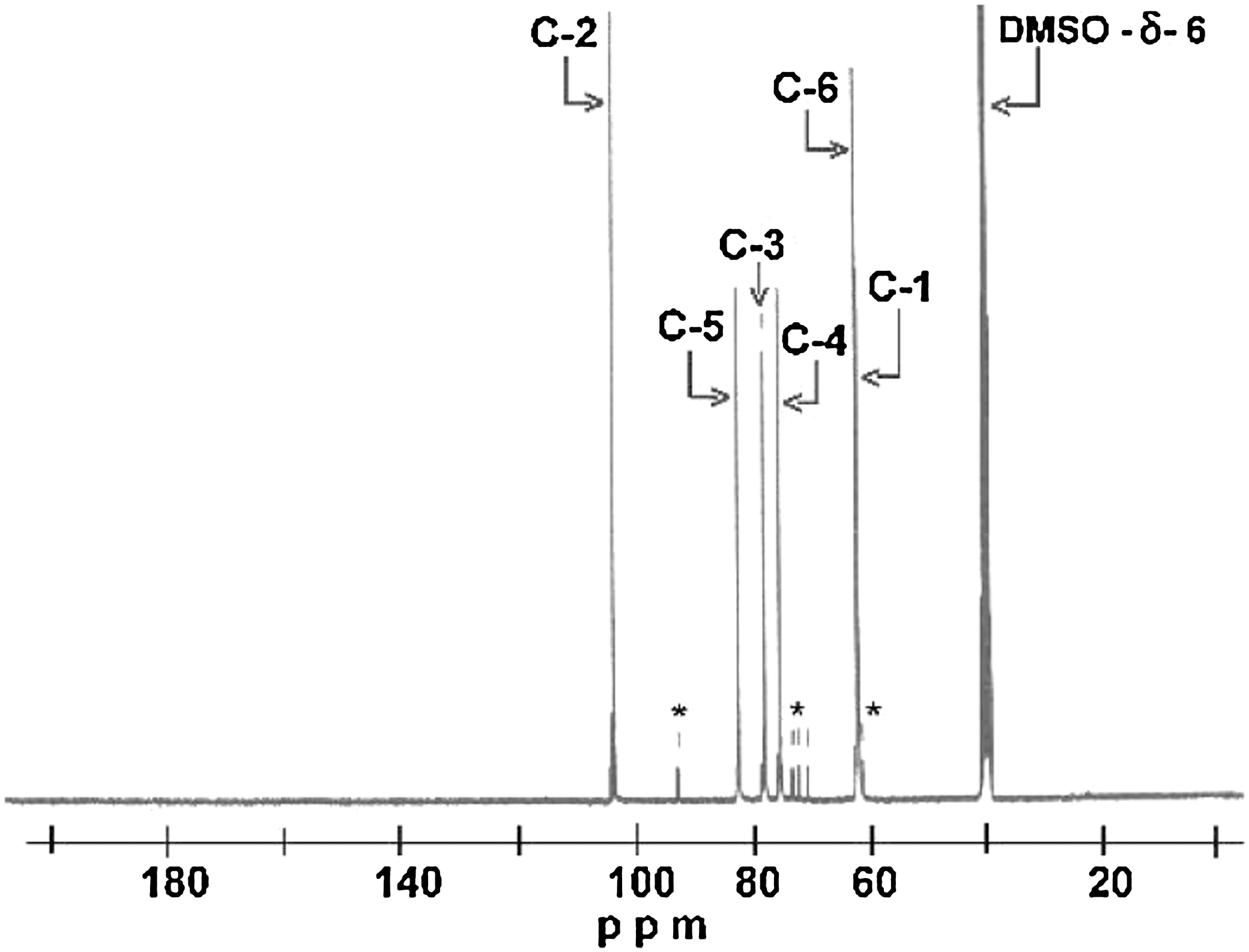
13C nuclear magnetic resonance spectrum of the purified inulin from Dahlia roots. *Minor signals arising from the single glucopyranose unit. DMSO, dimethyl sulfoxide.

Simplified structure of the inulin molecule.
Optimization of inulin hydrolysis to FOS and chromatographic characterization
Thin-layer chromatography and HPLC indicated a wide range of modulation in the qualitative profile of the hydrolysates. We studied the kinetic conditions of partial hydrolysis of inulin to determine those that result in greater FOS content than free fructose. Figure 3 shows the FOS (degree of polymerization, 2–9)–to–free fructose profile of inulin hydrolyzed with phosphoric acid (pH, 2.5) at 80°C for 15, 30, and 45 minutes. The qualitative profiles clearly indicate an initial dominance of FOS (hydrolysis time of 15 minutes) with a later increased presence of free fructose (hydrolysis time of 45 minutes). More acidic conditions (e.g., pH of 2.0) favored the less desired generation of free fructose and hence HMF. Milder acidic conditions (e.g., pH of 3.0) did not result in satisfactory inulin depolymerization, thus requiring larger reaction times or reaction temperature elevation. Thus, a pH of 2.5 was adopted as the preferred kinetically acid condition for both citric and phosphoric acid catalysts.

Thin-layer chromatographic analysis of the reaction products in the hydrolysis of inulin with phosphoric acid (pH, 2.5) for 15, 30, and 45 minutes at 80°C. DP, degrees of depolymerization; FOS, fructo-oligosaccharides.
When HMF is co-generated in amounts that may interfere with any additional fermentive applications of the citric or phosphoric acid hydrolysates, HMF can be easily eliminated by adsorption with activated charcoal (1%–2%). However, HMF in citric or phosphoric inulin hydrolysates may have additional beneficial effects in terms of inhibiting growth of harmful enteric microflora. For instance, the yeast Candida albicans, normally present in human gut, can experience overgrowth and provoke pathologic conditions, such as oropharyngeal thrush (candidiasis). Accordingly, honey from different botanical sources (e.g., Acacia, Brassica, Citrus, and Ziziphus species) may contain as much as 17.8–32.7 mg of HMF/kg. Zone inhibition (halo) of microorganism growth of bacteria (Escherichia coli, Staphylococcus aureus), yeast (C. albicans), and fungi (Aspergillus niger) by honeys is marked and may vary from 2.91 to 3.22 mm in the specific bioassay by using impregnated filter paper disks. 12 Furthermore, in the search for the beneficial effects of ingestion of FOS or HMF on the digestive tract (along with the inhibition of malefic bacteria growth), the variety of carcinogenic substances that this kind of colonic microflora produces and might be implicated are: fecapentaenes, nitrosamines, heterocyclic amines, and nitrated and polycyclic aromatic hydrocarbons. 13
HPLC, as shown in Figure 4, provides satisfactory resolution for FOS, with a degree of polymerization of 2–18. An almost uniform distribution of FOS was observed within this range.
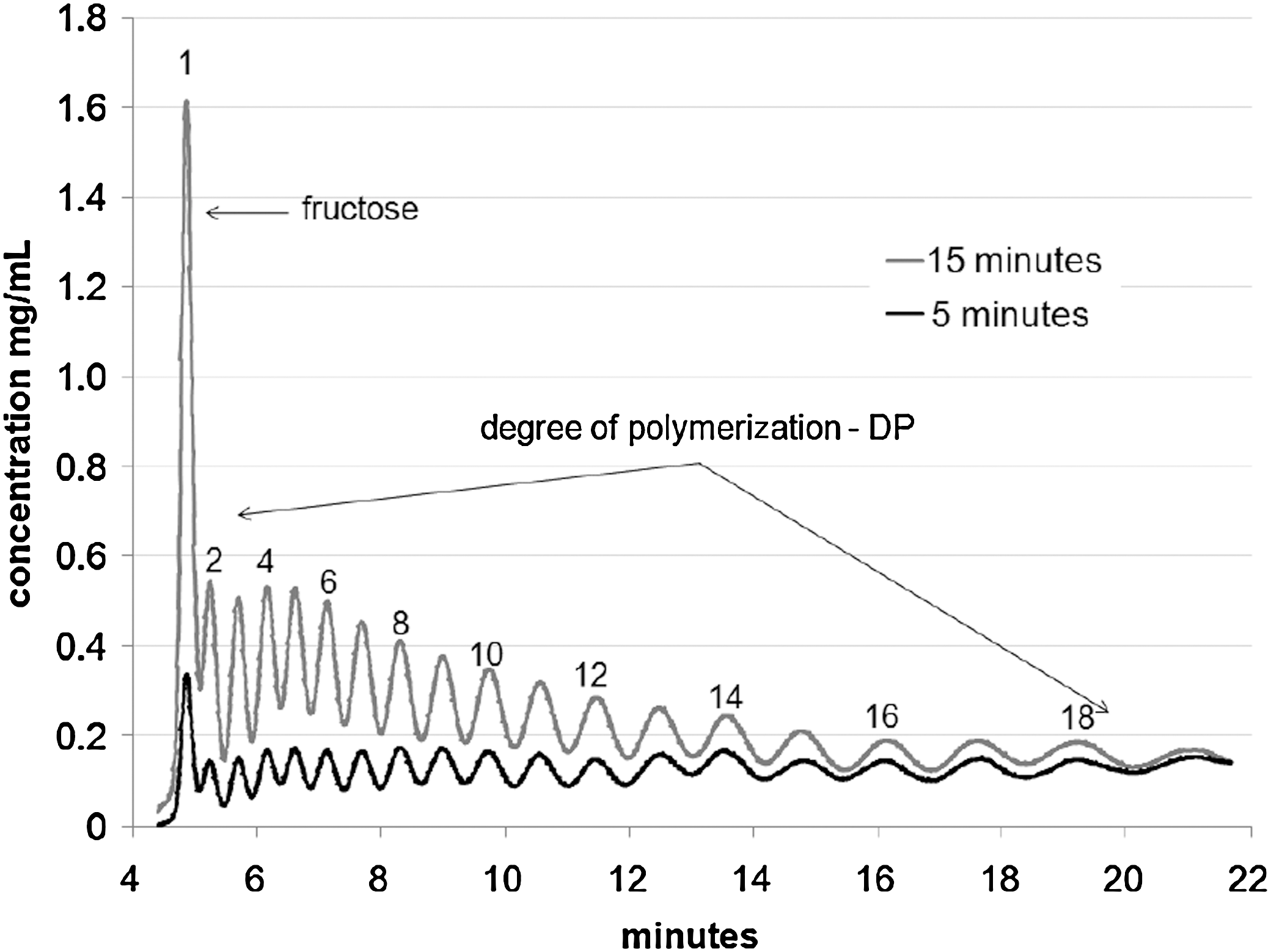
High-performance liquid chromatographic profile of fructo-oligosaccharides obtained by hydrolysis of inulin with citric acid at a pH of 2.5, a temperature of 85°C, and a reaction time of 5 or 15 minutes.
Mapping of several hydrolytic conditions with both catalysts led to the results shown in Figure 5. The conditions that cause greater FOS yields in citric acid hydrolysis are a pH of 2.5, a temperature of 95°C, and a reaction time of 15 minutes. In phosphoric acid hydrolysis, these conditions are a pH of 2.5, a temperature of 85°C, and a reaction time of 25 minutes.
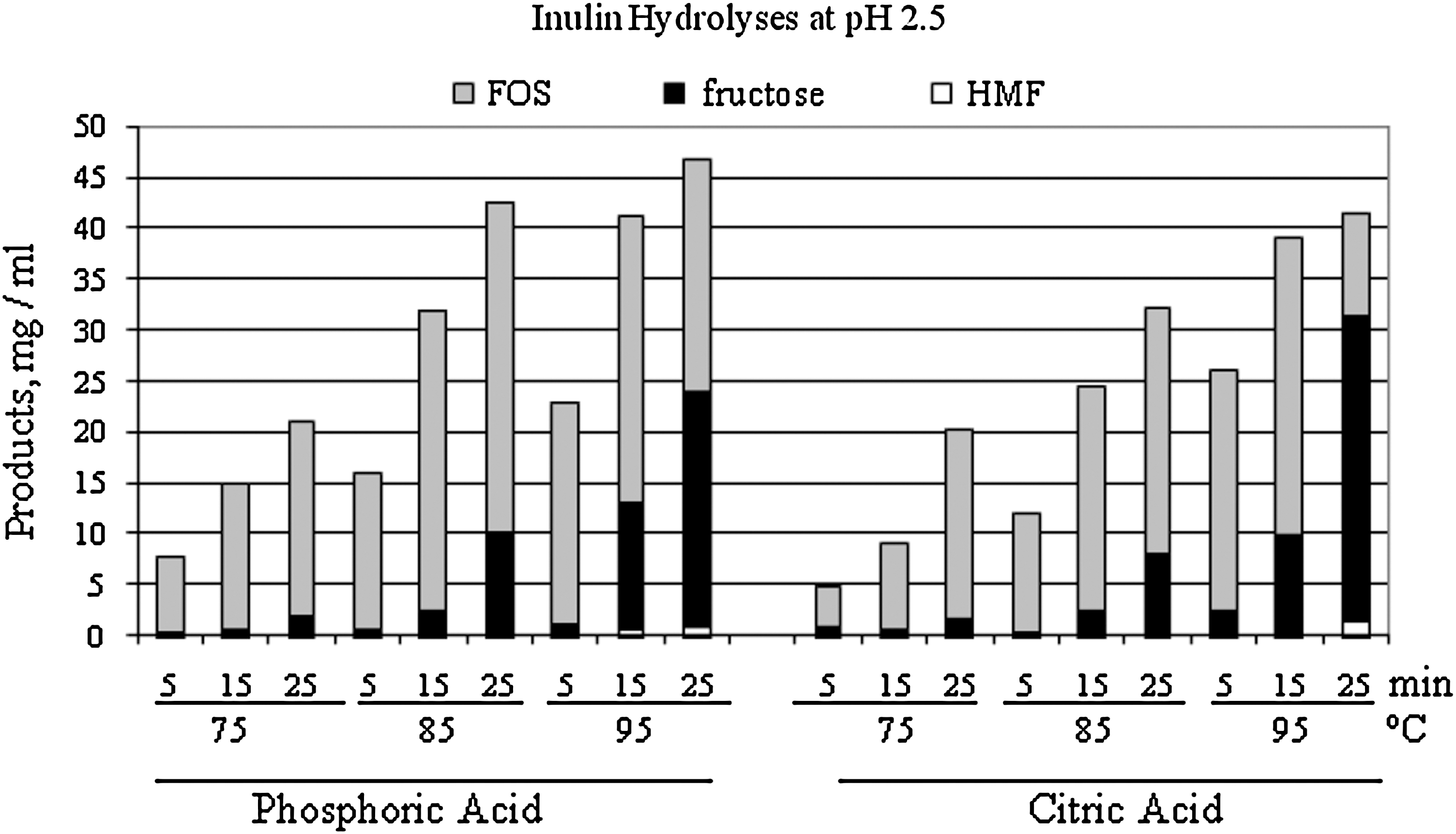
Comparative production of fructo-oligosaccharides and fructose from inulin from Dahlia, exploring the kinetic variables, time of reaction, and temperature, at a pH of 2.5.
Citric or phosphoric acids, as catalysts for inulin partial or total hydrolysis, are much less destructive to fructose than are hydrochloric and sulfuric acid, as determined by the reduced amount of HMF produced by the former acids (see Fig. 6 for the comparison between citric and hydrochloric acids.
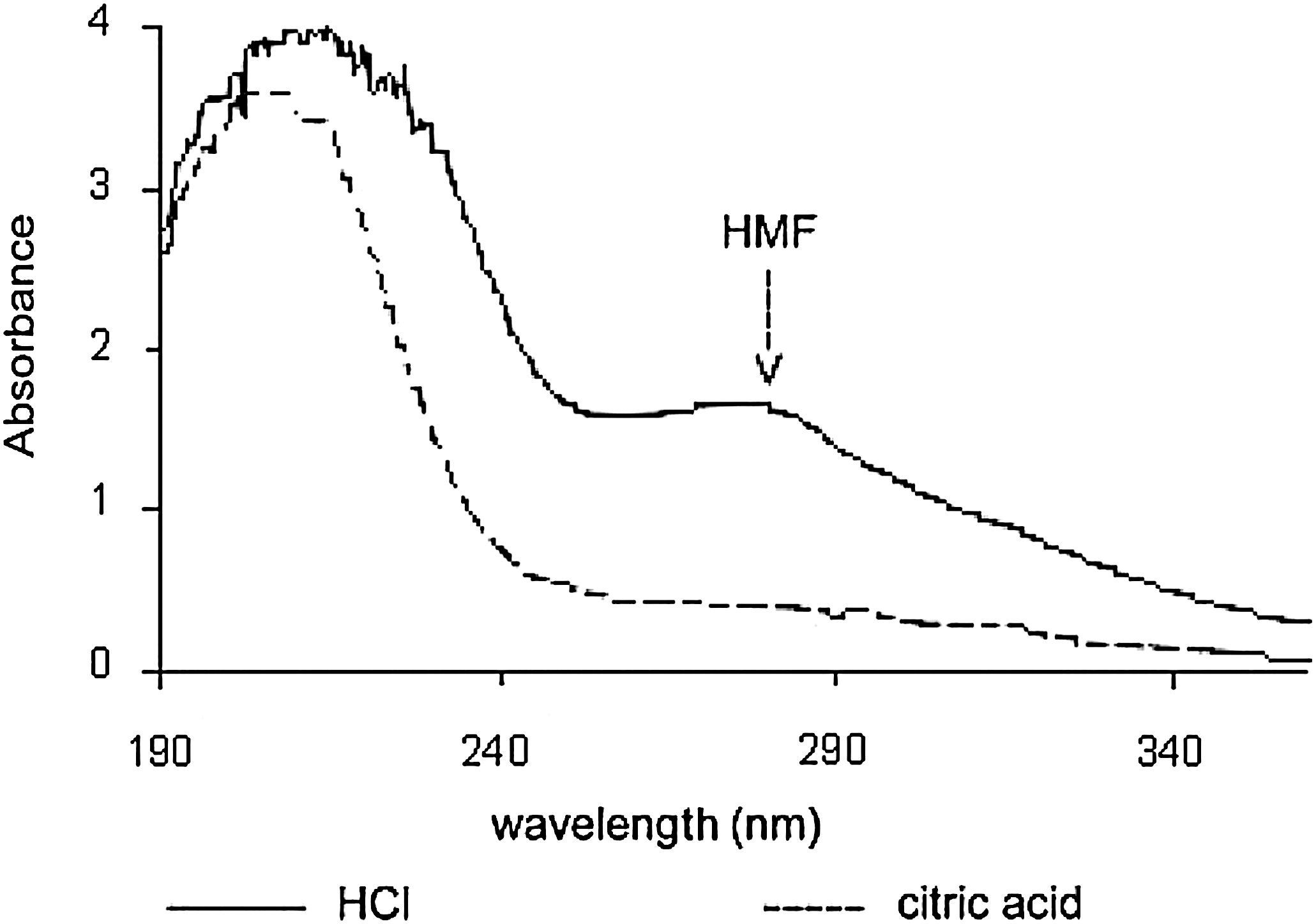
Ultraviolet spectrogram showing the detection of hydroxymethylfurfural in hydrochloric and citric acid hydrolysis at a pH of 2.0 for 10 minutes at 85°C. HMF, hydroxymethylfurfural.
FOS fermentation to short-chain organic acids
Citric or phosphoric acid partial hydrolysates can be easily fermented by probiotics such as Lactobacillus and Bifidobacterium if the low pH is adjusted to 5.0 with diluted ammonia and supplementation with de Man, Rogosa, and Sharpe medium. 14 Figure 7 shows the profile of the fermentation products when a phosphoric acid hydrolysate of inulin is subjected to inoculation with a mixture of Lactobacillus and Bifidobacterium. The presence of lactic and acetic acid is clearly seen.
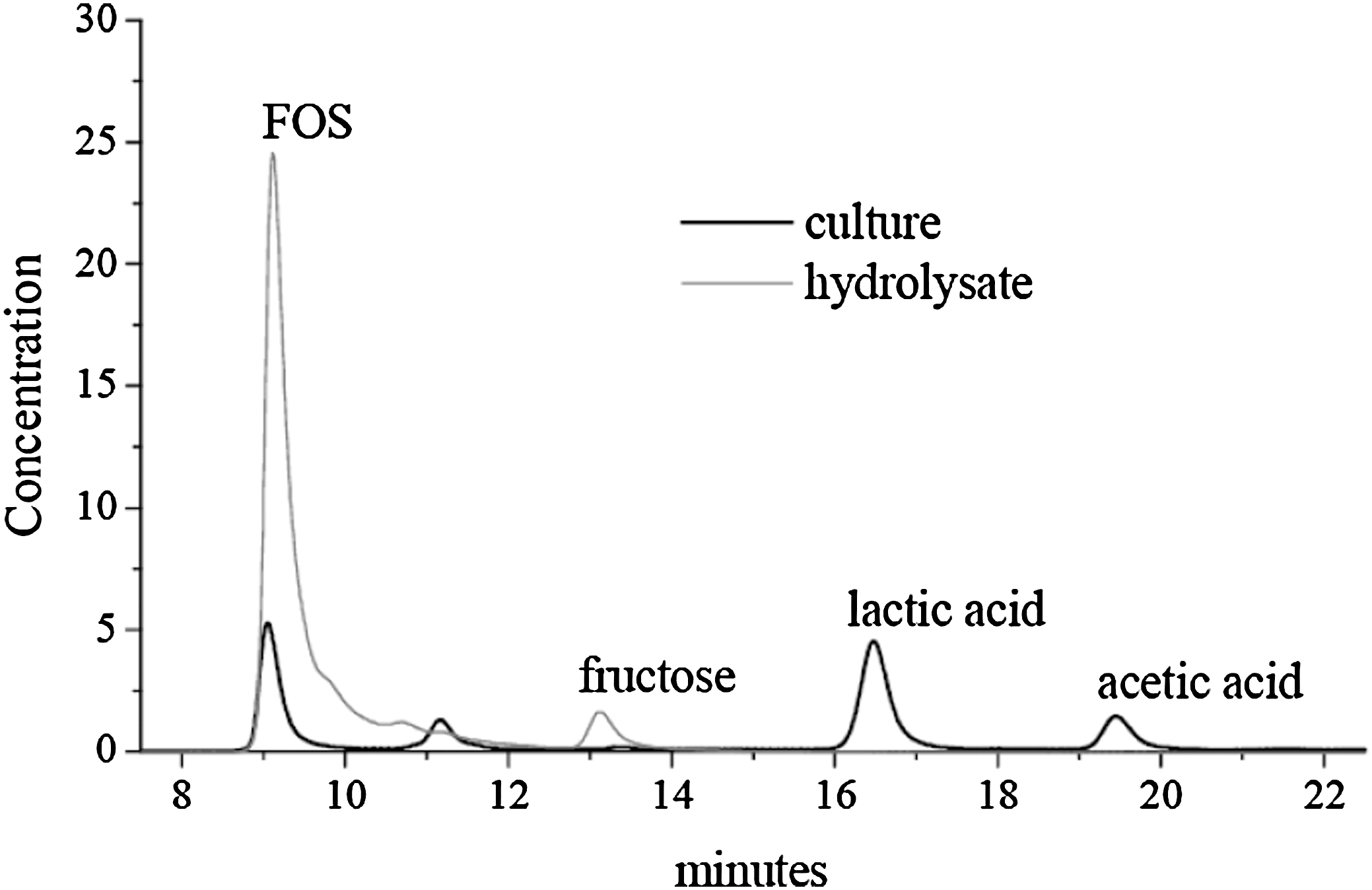
High-performance liquid chromatographic profiles of inulin phosphoric acid hydrolysate (pH, 2.5, at 85°C for 15 minutes) and the culture of the same hydrolysate after inoculation with a culture of Lactobacillus and Bifidobacterium.
Discussion
According to the 13C NMR analysis (Fig. 1), in addition to the 6 main signals that are attributed to fructose, 6 small signals are seen subjacent to the noise baseline and represent the single glucopyranose molecule. Hence, it can be concluded that the inulin obtained in our process has molecular integrity, as depicted in Figure 2.
We found that the most effective conditions for inulin hydrolysis—pH ranging from 1.50 to 1.75, temperature of 95°C, and reaction time greater than 25 minutes—can lead, in both citric or phosphoric hydrolyses, to fructose-enriched syrups. In the latter case, some co-generation of HMF is unavoidable. HMF is usually undesirable when fructo-syrups are used for fermentation because it inhibits yeast growth; however, in the high-value vinegar Acetto Balsamico di Modena, HMF is an important component of the flavor. 15
Under the optimized conditions for the production of FOS (degree of polymerization, 2–18), an almost uniform distribution of FOS was observed within this range (Fig. 4). Inter allia, the most useful pH for the production of FOS from inulin using citric or phosphoric acids catalysis was 2.5 (Fig. 5), provided the temperature range was 85°C–95°C and the hydrolysis time ranged from 15 to 25 minutes. Another clear advantage of citric or phosphoric hydrolyses for inulin as compared to stronger mineral acids is the less marked undesirable co-generation of HMF (Fig. 6).
As clearly indicated in Figure 7, the presence of partially neutralized citric or phosphoric acids in the FOS mixture created no inhibitory effect for the conversion of the whole inulin hydrolysates in short-chain organic acids. This is exactly the medical basis for using FOS in the diet to generate a metabolic condition for the prevention of colon cancer.
Pertinent questions could be raised concerning the direct utilization of short-chain fatty acids instead of, or in combination with, FOS. First, a distinction must be made with respect to the action of different short-chain fatty acids. For instance, 16 acetic acid favors the invasion of pathogenic Salmonella enterica into epithelial cells and consequent enteritis. Conversely, butyrate downregulates the pathogenicity of the island 1 gene expression of this bacterium. A 120-mM concentration of short-chain fatty acids reduces the colonizing counts of pathogenic E. coli O157:H7 and decreases the adhesion of Shiga toxin–producing bacterial species to colonic cells. Short-chain fatty acids such as butyric acid (and, to a lesser extent, proprionic acid) promote normal phenotypes in colonocytes and hence protect against diseases such as colitis and colorectal cancer.
Short-chain fatty acids are now available as dietary supplements in uncoated (powder or liquid solutions added to drinking water) or coated (with mineral or lipid carriers used for microencapsulation) formulations. When used as a food supplement, the acids are carried directly to the intestinal tract, where they alter the microflora population and improve the ratio between beneficial and pathogenic enteric bacteria. One inconvenience may arise from the marked taste of the volatile butyric acid; with butter, however, the flavor may be more acceptable because the acid is present in covalent association with glycerol.
For use in the human diet, polyhydroxyalkanoates would be an interesting alternative, from both an industrial and a medical standpoint, as a novel nutraceutical. PHAs may be obtained in good yields from several bacterial strains. Among them are probably a few with GRAS status or those at least known to be nonpathogenic. A PHA such as polyhydroxybutyrate is degraded in the gastrointestinal tracts of mammals into oligomers and monomers, thereby simplifying the bioavailability of the final metabolite of interest, butyric acid. 16
Finally, inulin or FOS association with short-chain fatty acids as a potentiated prebiotic preparation appears to have no medical restrictions, provided that pharmaceutical formulation involves encapsulation for the delivery of both type of compounds in the appropriate site from the intestinal tract. Other variations could be the symbiotic combination of short-chain fatty acids together with live lactobacteria or bifidobacteria. The efficacy of these dietary formulas remains unknown because a biochemical mechanism of feedback or product inhibition could arise if the availability of the final products (short-chain fatty acids) reduces the fermentation performance of the beneficial bacteria.
A final technical question concerns the chemical integrity of native inulin during its temporary transit in the digestive tract. Inulin is the more acid-labile form of natural polysaccharides because of the particular β-2→1-linked D-poly-fructofuranosidic linkages. It is well documented that inulin is at least somewhat hydrolyzed by gastric HCl (pH of approximately 2). 17 A more extensive inulin depolymerization results from the inulinase present in the ileum and proximal colon, and even more in the cecum. 18
Hence, polymeric inulin and its derived citric or phosphoric FOS have similar validity as prebiotics for prevention of colon cancer, with some advantage for the latter as a ready substrate for beneficial Lactobacillus and Bifidobacterium. Furthermore, maintenance of the mild acid catalysts, citric or phosphoric acid (or their partially neutralized salts), in the hydrolysate-based diet brings additional benefits from a nutritional and an energy standpoint.
Conclusions
Highly purified inulin was prepared from Dahlia tubers through buffered hot water extraction and pretreatment with diethylaminoethyl cellulose, activated charcoal, and acetone. This fructose polymer was efficiently and partially depolymerized with aqueous citric or phosphoric acid to release FOS, with a degree of polymerization ranging from 2 to 18, when the reaction pH was maintained at 2.5–2.0, the temperature was 80°C–90°C, and the hydrolysis time was 5–25 minutes. There is no need for catalyst removal in most industrial applications of the FOS syrups that are produced with citric or phosphoric acid. Instead, mild neutralization to a pH of 3.0–4.0 with common bases such as ammonia or sodium hydroxide is sufficient.
Footnotes
Acknowledgments
The funding obtained from CNPq (grant no. 310188/2009-1) and Fundação Araucária-SETI-PR (grant no. 53/2008) is gratefully acknowledged. The procedure described here has been subjected to national (INPI PI 0703206-4, July 9, 2007) and international (WO PCT 0000280803120703) patent requests.
Author Disclosure Statement
No competing of financial interests exist.