




Abstract
Dried fruits of Piper nigrum (black pepper) are commonly used in gastrointestinal disorders. The aim of this study was to rationalize the medicinal use of pepper and its principal alkaloid, piperine, in constipation and diarrhea using in vitro and in vivo assays. When tested in isolated guinea pig ileum, the crude extract of pepper (Pn.Cr) (1–10 mg/mL) and piperine (3–300 μM) caused a concentration-dependent and atropine-sensitive stimulant effect. In rabbit jejunum, Pn.Cr (0.01–3.0 mg/mL) and piperine (30–1,000 μM) relaxed spontaneous contractions, similar to loperamide and nifedipine. The relaxant effect of Pn.Cr and piperine was partially inhibited in the presence of naloxone (1 μM) similar to that of loperamide, suggesting the naloxone-sensitive effect in addition to the Ca2+ channel blocking (CCB)-like activity, which was evident by its relaxant effect on K+ (80 mM)-induced contractions. The CCB activity was confirmed when pretreatment of the tissue with Pn.Cr (0.03–0.3 mg/mL) or piperine (10–100 μM) caused a rightward shift in the concentration–response curves of Ca2+, similar to loperamide and nifedipine. In mice, Pn.Cr and piperine exhibited a partially atropine-sensitive laxative effect at lower doses, whereas at higher doses it caused antisecretory and antidiarrheal activities that were partially inhibited in mice pretreated with naloxone (1.5 mg/kg), similar to loperamide. This study illustrates the presence of spasmodic (cholinergic) and antispasmodic (opioid agonist and Ca2+ antagonist) effects, thus providing the possible explanation for the medicinal use of pepper and piperine in gastrointestinal motility disorders.
Introduction
P
Pepper has been reported to have antibacterial, 5 antihistaminic, 6 digestive enzyme stimulatory, gastric acid secretary, anti-androgenic, antioxidant, hypolipidemic, growth stimulatory, immune enhancing, and chemopreventive effects. 7 In addition, piperine has also been cited as possessing anti-asthmatic, 8 anti-inflammatory and anti-arthritic, 9 antihypertensive, 10 antitumor, 11 acyl-coenzyme A:cholesterol acyltransferase inhibitory, 12 antibacterial, 13 and analgesic 14 activities. Moreover, a recent review on pepper and piperine pooled its multiple biological activities, such as antioxidant, antiulcer, digestive enzyme stimulatory, gastric and bile acid secretory, gastric emptying inhibitory, antitumor, antimetastatic in lung tissues, antifertility, and antithyroid, inhibitory effect on drug metabolizing enzymes (cytochrome P450, aryl dehydrogenase, UDP-glucose dehydrogenase, etc.), and enhancement of the bioavailability of certain drugs, such as propranolol, amoxicillin, and cefotaxime. 7
To the best of our knowledge, no detailed study is available in support of a possible mechanism(s) for its medicinal use in constipation and diarrhea, except a preliminary investigation showing a nonspecific spasmolytic component in pepper. 15 However, there are a few studies on its main constituent, piperine, reporting the gastrointestinal-modulating effects; its stimulatory effect is considered to be mediated through the activation of sensory nerves, 16 and its usefulness in diarrhea is due to a nonspecific spasmolytic pathway. 17,18 There are some reports indicating that the effect of piperine on gastrointestinal function involves activation of capsaicin-sensitive neuronal mechanism and vanilloid (transient receptor potential vanilloid 1) receptors. 19,20
In this investigation, we provide the first evidence for the presence of gastrointestinal stimulatory activity in pepper mediated through the cholinergic pathway, which may explain its medicinal use in constipation and indigestion. We also provide here the first evidence that the mechanism underlying the antispasmodic activity of pepper and piperine is mediated through the activation of opioid receptors along with a known Ca2+ channel blocking (CCB) effect, thus providing a rationale for its medicinal use in gastrointestinal disorders, such as diarrhea. We also used in vivo models to evaluate the laxative, antidiarrheal, and antisecretory effects of pepper extract and commercially available piperine.
Materials and Methods
Plant material and preparation of the crude extract
The dried fruits of P. nigrum were purchased from a local market (Jouria Bazaar) of Karachi, Pakistan. A specimen has been preserved at the herbarium of the Natural Product Research Division, Department of Biological and Biomedical Sciences, Aga Khan University, Karachi, with the voucher number of Pn-F-06-07-72A. For extraction of the plant material, a previously described method was followed with some modification. 21 Plant material was soaked in 70% methanol for 3 days and filtered through muslin cloth and Whatman (Maidstone, UK) No. 1 filter paper simultaneously. This procedure was repeated three times, and all the filtrates were pooled and evaporated on a rotary evaporator (model RE-111, Buchi, Flawil, Switzerland) under reduced pressure (–760 mm Hg) to get the final extract. The yield of the thick blackish pasty-like mass was 7–8% (wt/wt). The dried extract was also subjected to various chemical tests to detect the presence of different phytochemical classes. Dilutions of the crude extract were made in distilled water/saline for experimentation.
Drugs and chemicals
Acetylcholine (ACh) perchlorate, atropine sulfate, nifedipine, potassium chloride, loperamide hydrochloride, naloxone, and piperine were purchased from Sigma-Aldrich Chemical Co. (St. Louis, MO, USA). Castor oil was purchased from Karachi Chemical Industries (Pvt.) Ltd. (Karachi). All the chemicals used were of analytical grade and dissolved in distilled water/saline except piperine and nifedipine, which were dissolved in 5% dimethyl sulfoxide and 3% Tween-80. The vehicle used for best solubility was found inert in the in vitro and in vivo experiments.
Animals
BALB/c mice (weighing 20–25 g) and adult rabbits (weighing 1.0–1.5 kg) of local breed and either sex were housed at the Animal House of Aga Khan University, maintained at 23–25°C. The animals were fasted for 24 hours following the start of the experiment but routinely were given tap water and standard diet. Experiments were performed with the rulings of the Institute of Laboratory Animal Resources, Commission on Life Sciences, National Research Council 22 and approved by the Ethical Committee of Aga Khan University.
In vitro experiments for spasmogenic and spasmolytic activities
The spasmogenic and spasmolytic activities of the plant materials were studied using isolated guinea pig ileum and rabbit jejunum preparations as described previously. 23 Respective segments 2 cm long were mounted in 10-mL tissue baths containing Tyrode's solution, aerated with carbogen gas (95% oxygen and 5% carbon dioxide), and maintained at 37°C. The composition of Tyrode's solution was 2.68 mM KCl, 136.9 mM NaCl, 1.05 mM MgCl2, 11.90 mM NaHCO3, 0.42 mM NaH2PO4, 1.8 mM CaCl2, and 5.55 mM glucose, pH 7.4. Intestinal responses were recorded using isotonic transducers coupled with student oscillograph/power lab data acquisition system. Each tissue was allowed to equilibrate for at least 30 minutes before the addition of any drug and then stabilized with a submaximal concentration of ACh (0.3 μM), and the bath fluid was subsequently replaced with normal Tyrode's solution before starting the experiment. The contractile effect of the test material was measured as the percentage of the effect produced by control drug (ACh). In order to characterize the stimulant effect of the test material, it was repeated in tissue pretreated with antagonist (atropine).
Rabbit jejunum is known to exhibit spontaneous rhythmic contractions considered suitable for the testing of relaxant (spasmolytic) activity directly, without the presence of an antagonist. To identify the possible presence of the opioid receptor-mediated spasmolytic effect in pepper and piperine, tissue was preincubated with naloxone (1 μM) to compare the responses on spontaneous contractions in its absence and presence. Moreover, jejunum was selected for the assessment of opioid receptor-gated responses because it is thought to contain μ-opioid receptors, and the concentrations of naloxone used were selected on the basis of previous investigation 24 and our own practice. For the possible involvement of CCB-like spasmolytic activity of the test substances, high K+ (80 mM) was added to the tissue bath, which produced a sustained contraction. Test material was then added in a cumulative fashion to obtain concentration-dependent inhibitory responses. The relaxation of intestinal preparations precontracted with high K+ was expressed as a percentage of the control response mediated by high K+. To confirm the CCB activity of the test substances, concentration–response curves of Ca2+ were constructed in the absence and presence of different concentrations of the test material in a Ca2+-free and K+-rich medium. 25
In vivo experiments
Laxative activity
The previously described method 26 was followed with slight modification. Mice (weighing 20–25 g) of either sex were starved for 24 hours with free access to water before starting the experiment. The animals were placed individually in cages lined with clean filter paper and were divided into nine groups (n = 6) separately for pepper extract and piperine. The first group received saline (10 mL/kg, p.o.) as a negative control. The second to fifth group received the crude extract of P. nigrum (Pn.Cr) (100–1,000 mg/kg) or piperine (1–30 mg/kg) orally. Carbachol (1 mg/kg, i.p.) was given to the sixth group. The last three groups were pretreated with atropine (10 mg/kg) 30 minutes before redetermining the effect of the plant materials (Pn.Cr [100 and 300 mg/kg] or piperine [1 and 3 mg/kg]) and carbachol. After 6 hours, feces production (total number of feces and total wet feces per group) in all animals was counted, and the percentage increase in wet feces relative to that of total fecal output was considered as the laxative effect.
Intestinal fluid accumulation
A previously studied method 19 was followed with some modifications. Overnight-fasted mice of either sex were housed in cages in 17 equally divided groups (n = 6) for two separate sets of experiments: seven groups for pepper extract, while the other 10 groups were allocated for piperine in the second set of experiments. The first two groups received saline in solubilizing vehicle (10 mL/kg, p.o.) and acted as the negative control in both sets of experiments. The third group, in one set of experiments, and the third and fourth groups, in the next set of experiments, received loperamide intraperitoneally as the positive control. The next two groups received Pn.Cr (500 and 1,000 mg/kg, i.p) or piperine (10 and 30 mg/kg, i.p.) in both sets of experiments. The other two groups in the first set of experiments, while the last four groups in the second set of experiments, were pretreated with naloxone (1.5 mg/kg, i.p.) 30 minutes before studying the effects of Pn.Cr or piperine and loperamide, respectively. One hour after the treatment, each animal received castor oil at 10 mL/kg, p.o., through a feeding needle except the animals of Group 1 in each set of experiments. Mice were sacrificed 30 minutes later by cervical dislocation, and whole intestine was isolated out and weighed with care, not allowing any intestinal fluid to leak out. The results were expressed as (P i/P m) × 1,000, where P i is the weight (in g) of the intestine and P m is the weight (in g) of the animal. Moreover, in another set of experiments, some of the groups were pretreated with naloxone (3 mg/kg, i.p.) to observe the effect of a higher dose of naloxone on the antisecretory activity of Pn.Cr or piperine or loperamide, but no significant change was observed. In this assay, we selected the doses of naloxone (1.5 and 3 mg/kg) by following the previous method 27 and the results of our initial study using different doses of naloxone (0.5, 1, 1.5, 2, 2.5, and 3 mg/kg).
Antidiarrheal activity
For the antidiarrheal assay, previously described methods 17,18 were followed with some modifications. On the basis of an earlier investigation 28 and the results from our initial experiments using different doses (0.5, 1, 1.5, 2, 2.5, and 3 mg/kg) of naloxone, we selected 1.5 and 3 mg/kg naloxone to observe the interaction with antidiarrheal effects of Pn.Cr, piperine, or loperamide. Mice (weighing 20–25 g) of either sex were fasted for 24 hours before starting the experiment. The animals were housed in individual cages and divided into 16 groups (n = 5 each) for two sets of experiment: seven groups for pepper extract, whereas the remaining nine groups were allocated for piperine in the second set of experiments. The first group received saline in solubilizing vehicle (10 mL/kg, p.o.) and acted as the negative control in both sets of experiments. The next two groups received pepper extract (500 and 1,000 mg/kg) or piperine (10 and 30 mg/kg) orally. The third group in one set of experiments and the third and fourth groups in the second set of experiments received loperamide, serving as the positive control. The remaining three groups in the first set of experiments, while the last four groups in the second set of experiments, were pretreated with naloxone (1.5 mg/kg i.p.) 30 minutes before to redetermine the effects of Pn.Cr (500 and 1,000 mg/kg) and loperamide (30 mg/kg) or piperine and loperamide (10 and 30 mg/kg) orally. One hour after the treatment, each animal received castor oil (10 mL/kg, p.o.) through a feeding needle. Similarly, some extra groups were pretreated with naloxone (3 mg/kg) before administration of the pepper extract, piperine, or loperamide. Afterward, the cages were inspected for the presence of the typical diarrheal droppings; the absence was noted as a positive result, indicating protection from diarrhea.
Statistical analysis
The data are expressed as mean ± SEM values (n = number of experiments) and the median inhibitory concentration (IC50) values with 95% confidence intervals. The χ2 test was applied to differentiate the results in the antidiarrheal activity assay. P < .05 is considered significantly different using one-way analysis of variance and/or unpaired t test. Concentration–response curves (CRCs) were analyzed by nonlinear regression using GraphPAD software (GraphPAD, San Diego, CA, USA).
Results
Phytochemical analysis
The crude extract of black pepper was found to contain alkaloids, anthraquinones, flavonoids, weak saponins, terpenes, and tannins, whereas tests for the presence of coumarins were negative.
Effect on guinea pig ileum
In guinea pig ileum (a quiescent preparation), Pn.Cr (1–10 mg/mL) and piperine (3–300 μM) caused a concentration-dependent spasmodic effect, reaching its maximum of 31 ± 2.4% (mean ± SEM) and 24.6 ± 1.8% of ACh (0.3 μM)-induced contractions, respectively. Pretreatment of tissue with atropine blocked the contractile effect elicited by Pn.Cr and piperine (Fig. 1).
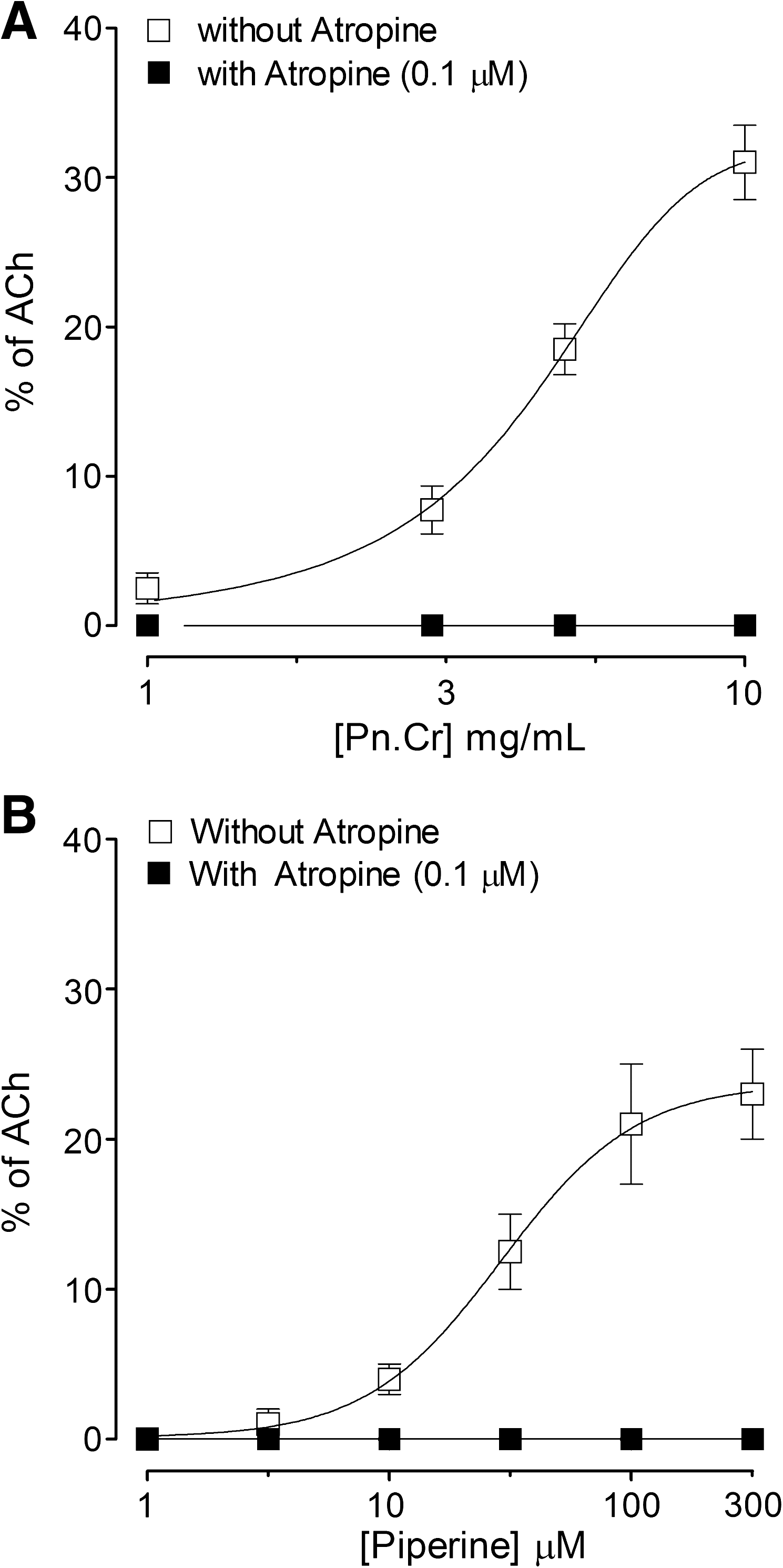
Concentration–response curves for the spasmogenic effect of (
Effect on spontaneously contracting rabbit jejunum
Pn.Cr caused a concentration-dependent inhibition when tested on spontaneous contractions with an IC50 value of 0.7 mg/mL (95% confidence interval, 0.4–1.1; n = 5). Piperine, an active constituent of black pepper, also caused concentration-dependent inhibition with an IC50 of 104.8 μM (88.5–124.1) (n = 4), similar to that caused by loperamide and nifedipine with respective IC50 values of 5.9 μM (4.7–7.3) (n = 5) and 0.3 μM (0.3–0.4) (n = 4) as shown in Figures 2 and 3. The inhibitory effect of Pn.Cr and piperine was significantly attenuated in the presence of naloxone (1 μM), with IC50 values of 1.4 (0.9–2.2) (n = 4) versus 0.7 mg/mL (0.4–1.1) (n = 5) and 685.3 (527.9–889.6) (n = 5) versus 104.8 μM (88.5–124.1) (n = 4), respectively, similar to that of loperamide with IC50 values of 33.7 (25.5–44.5) (n = 4) versus 5.9 μM (4.7–7.2) (n = 5), but the effect of nifedipine remained unaltered in the presence of naloxone as shown in Figure 3.
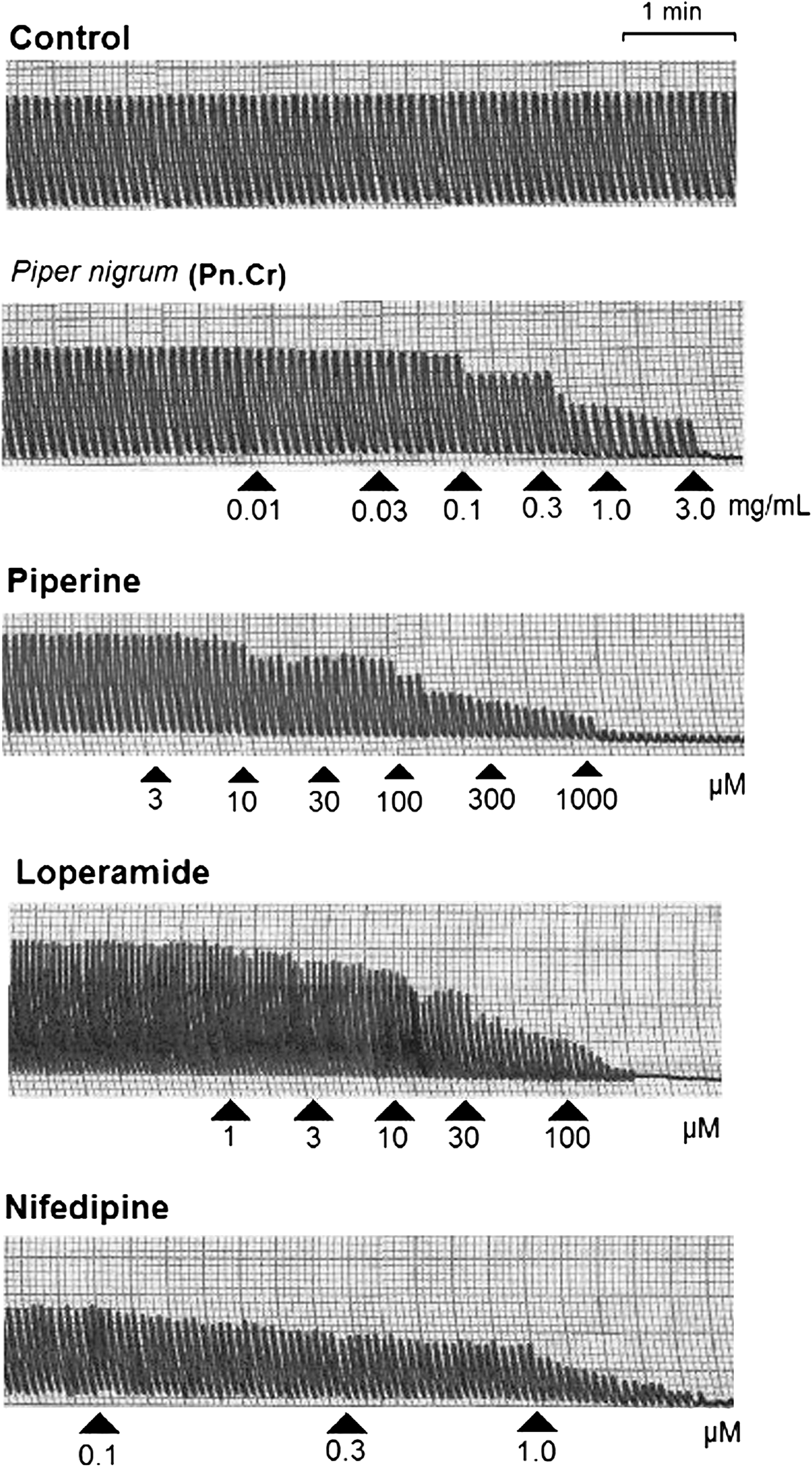
Tracings showing the antispasmodic effect of Pn.Cr, piperine, loperamide, and nifedipine on spontaneously contracting isolated rabbit jejunum preparations.
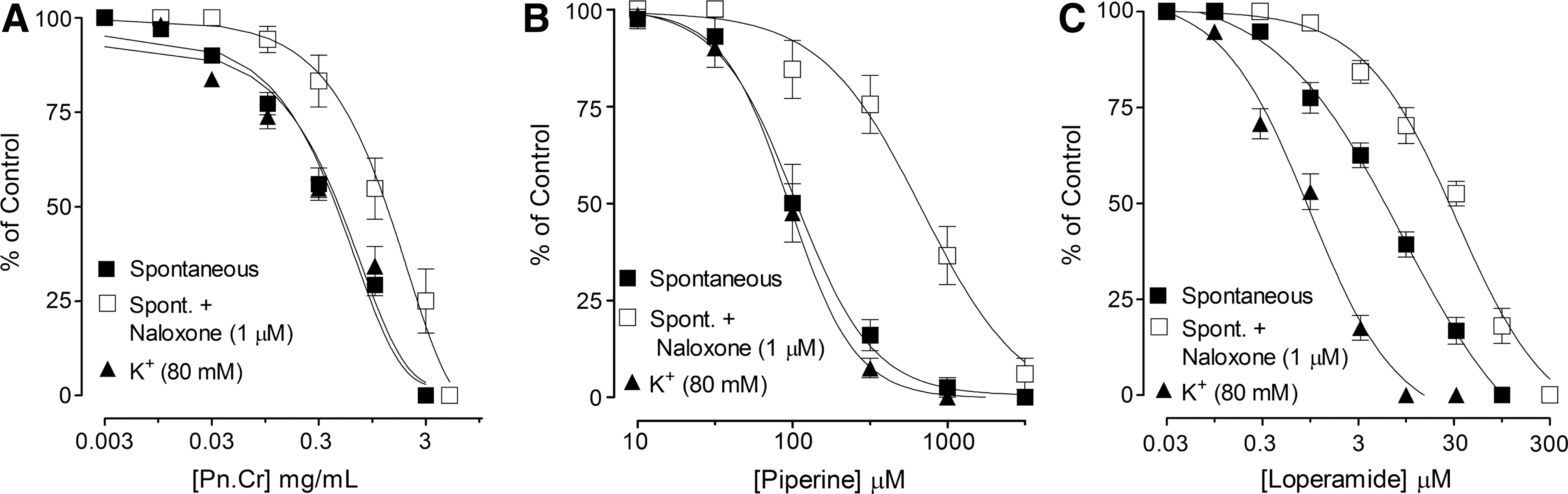
Concentration–response inhibitory effects of (

When tested against K+ (80 mM)-induced contractions, Pn.Cr and piperine inhibited contractions with IC50 values of 0.6 mg/mL (0.4–1.0) (n = 4) and 95.3 μM (85.8–105.8) (n = 5), respectively, similar to that caused by loperamide and nifedipine with respective IC50 values of 0.9 μM (0.7–1.2) (n = 4) and 0.04 μM (0.02–0.06) (n = 6) as shown in Figure 3. Pretreatment of tissue with Pn.Cr (0.03–0.3 mg/mL) or piperine (10–100 μM) caused a rightward nonparallel shift in the Ca2+ CRCs with suppression of maximum response, similar to loperamide (1–10 μM) and nifedipine (0.01–0.1 μM) as shown in Figure 4.
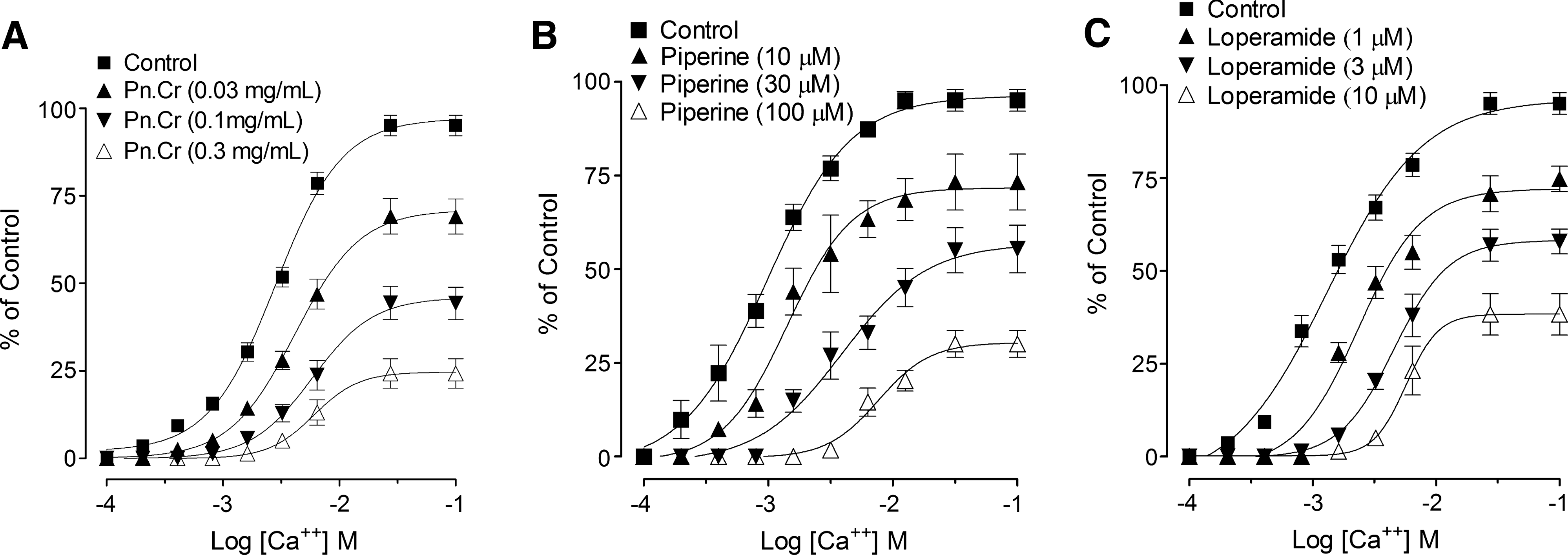
Concentration–response curves of Ca2+ in the absence and presence of increasing concentrations of (

Laxative effect
Pn.Cr produced 32% and 42.6% wet feces at 100 and 300 mg/kg, respectively. At higher doses (500 and 1,000 mg/kg), the production of wet feces was reduced to 17% and 12.4%, respectively. The positive control, carbachol, caused 47.1%, whereas the saline-treated group formed 10.5% wet feces. When Pn.Cr (100 and 300 mg/kg) was studied for its positive effect on wet feces in mice pretreated with atropine, the effect was attenuated to 11.2% and 24.1%, respectively, and that of carbachol to 20% as shown in Table 1.
Data are mean ± SEM values (n = 6). NS, not significant (P > .05 vs. saline).
By one-way analysis of variance followed by Dunnett's test or unpaired t test: *,† P < .05, **,†† P < .01, ††† P < .001, versus saline (* symbols) and without atropine († symbols).
In another set of experiments, piperine caused 24% and 46.6% wet feces at 1 and 3 mg/kg, respectively; no further increase in production of wet feces was observed at 10 and 30 mg/kg, whereas an increase in the mean defecation was seen at the dose of 10 mg/kg. Carbachol caused 49% of wet feces, while 8.3% wet feces were observed with saline. In mice pretreated with atropine (10 mg/kg), the effect of piperine (1 and 3 mg/kg) was markedly decreased to 17.6% and 10%, respectively, and that of carbachol to 19.3% as shown in Table 2.
Data are mean ± SEM values (n = 6). NS, not significant (P > .05 vs. saline).
By one-way analysis of variance followed by Dunnett's test or unpaired t test: *,† P < .05, **P < .01, ††† P < .001, versus saline (* symbols) and without atropine († symbols).
Intestinal fluid accumulation
In the enteropooling assay, castor oil caused a substantial increase (P < .001) in fluid accumulation in the small intestine of mice compared with that of the saline control ([P i/P m] × 1,000 value of 160 ± 7.9 vs. 115 ± 4), whereas the positive control, loperamide, at 10 mg/kg reduced (P < .001) the castor oil-induced fluid accumulation to 78 ± 2.1. Pn.Cr showed a dose-dependent reduction in castor oil-induced fluid accumulation at 500 and 1,000 mg/kg with respective (P i/P m) × 1,000 values of 143 ± 3 and 90 ± 2.6, similar to loperamide. In mice pretreated with naloxone (1.5 mg/kg), the antisecretory effect of Pn.Cr at 500 mg/kg was reduced to a (P i/P m) × 1,000 value of 130 ± 3.2 (P < .05), and the next higher dose (1,000 mg/kg) caused further reduction to the level of 75 ± 2.0 (P < .01) as shown in Figure 5. No significant change in the antisecretory activity of Pn.Cr was observed in mice pretreated with naloxone at a dose higher than 1.5 mg/kg (data not shown).

(
In a separate assay undertaken for piperine, castor oil caused a marked increase (P < .001) in fluid accumulation in the small intestine of mice compared with that of the saline control ([P i/P m] × 1,000, 142 ± 3.5 vs. 107 ± 2.7). Piperine (10 and 30 mg/kg) showed a dose-dependent antisecretory effect with respective (P i/P m) × 1,000 values of 120 ± 3.7 and 85 ± 2.1, similar to loperamide with respective (P i/P m) × 1,000 of 105 ± 2.5 and 75 ± 1.9 at 5 and 10 mg/kg, respectively. When studied in mice pretreated with naloxone (1.5 mg/kg), the inhibitory effect of piperine on fluid accumulation was attenuated with respective (P i/P m) × 1,000 values of 108 ± 2.4 versus 120 ± 3.7 (P < .05) and 70 ± 1.8 versus 85 ± 2.1 (P < .01), similar to loperamide (90 ± 2.4 vs. 105 ± 2.5, P < .01; and 60 ± 1.7 vs. 75 ± 1.9, P < .01) as shown in Figure 6. No clear change in antisecretory activities of either piperine or loperamide was observed in mice pretreated with higher concentrations (>1.5 mg/kg) of naloxone (data not shown).

(

Effect on castor oil-induced diarrhea in mice
Pn.Cr exhibited a dose-dependent antidiarrheal effect in terms of percentage protection against castor oil-induced wet feces. The castor oil-treated group showed wet feces in all the animals, while the animal groups pretreated with Pn.Cr at 500 and 1,000 mg/kg showed, respectively, 40% and 80% protection from diarrhea, similar to loperamide, which showed 100% protection at 10 mg/kg (P < .01). In animals pretreated with naloxone (1.5 mg/kg), the antidiarrheal effect of Pn.Cr at 500 was decreased by 20%, whereas a significant reduction of 40% was observed at 1,000 mg/kg, similar to loperamide (60%). The protection from diarrhea elicited by Pn.Cr or loperamide was not altered in mice pretreated with naloxone at a dose higher than 1.5 mg/kg (data not included).
Piperine showed a dose-dependent antidiarrheal effect. The castor oil-treated group showed diarrhea in all the animals, whereas groups pretreated with piperine at 10 and 30 mg/kg exhibited 60% and 100% protection, respectively, similar to loperamide. In animals pretreated with naloxone (1.5 mg/kg), piperine showed a 40% decrease in protection against diarrhea at 10 mg/kg, whereas a 60% reduction was observed at the dose of 30 mg/kg, and the pattern of activity was similar to that caused by loperamide, which showed a decrease of 40% and 60% at 10 and 30 mg/kg, respectively. There was no change in the antidiarrheal effect of piperine or loperamide when the test was performed in animals pretreated with the higher dose (>1.5 mg/kg) of naloxone (data not shown).
Discussion
In view of the culinary significance of black pepper and its medicinal use in gastrointestinal motility disorders, we studied pepper and its main constituent, piperine, for their possible gastrointestinal stimulant and relaxant activities. The pepper extract and piperine caused ACh-like contractions in guinea pig ileum as evidenced by its blockade with atropine, a muscarinic receptor blocker. 29 ACh, a neurotransmitter of the parasympathetic nervous system, is known to cause gastrointestinal stimulation through the activation of muscarinic receptors. 30 The observed effect of the pepper extract and piperine, similar to that of ACh, may explain the medicinal use of pepper in constipation.
The laxative effect of pepper extract and piperine was also tested in the in vivo assay on mice, in which they increased the production of wet feces in experimental animals similar to that caused by carbachol, a cholinergic agonist and intestinal stimulant. 30 Production of wet feces caused by both pepper extract and piperine was partially sensitive to atropine, which indicates that the laxative effect of pepper and piperine involves the additional mechanism to the cholinergic pathway. However, their stimulant effect in isolated gastrointestinal preparations was completely blocked by atropine, which may be explained by species differences 31 or an additional mechanism or mechanisms that may be involved, resulting in the release of a gastrointestinal stimulant mediator or mediators, which is not evident in the in vitro studies.
Pepper is often used as a spice to promote digestion and appetite and is considered an essential component served with soups because the spices are known for their positive influence on the activity of digestive enzymes. 32,33 Moreover, ACh is known to aid digestion partly through stimulation of salivary secretion and gastric acid release 34 ; thus, the presence of ACh-like activity in pepper extract may also provide a sound basis for its medicinal use as a digestive aid.
Isolated rabbit jejunum is a spontaneously contracting preparation that is considered useful to study the spasmolytic effect, as it does not require the use of an agonist to induce contractions. 35 Both pepper extract and piperine caused relaxation when tested on spontaneous contractions, like loperamide and nifedipine. Pretreatment of tissue with naloxone (1 μM) shifted the inhibitory CRCs of pepper extract and piperine to the right, similar to that exhibited by loperamide but not nifedipine, which indicates the presence of opioid-like spasmolytic activity in pepper and piperine like that of loperamide. It is well known that opioid agonists possess an inhibitory effect on gastrointestinal motility, whereas naloxone is a specific antagonist of opioid receptors. 36 In addition, opioids influence multiple body functions, including neurotransmitter release and different hormonal secretions. 37 Opioid receptors are distributed throughout the body; however, their presence in gastrointestinal smooth muscles 38 regulates gastrointestinal function. 39 Among opioid receptor subtypes, activation of the μ-opioid receptor indirectly acts on L-type Ca2+ channels and in turns regulates free cytosolic Ca2+, and the smooth muscle contractions are dependent on cytosolic Ca2+ concentrations in the cell. 40 Hence, a substance that interferes either directly through CCB or indirectly through μ-receptor activation inhibits intestinal motility. Because of the common influence of CCB and opioid (μ)-receptor stimulation on Ca2+ entry, pepper extract and piperine were tested on high K+-induced contractions, where they relaxed the contractions, like nifedipine. Furthermore, the CCB activity was confirmed by constructing the CRCs of Ca2+ in the absence and presence of increasing concentrations of pepper and piperine. Both of these caused concentration-dependent shifts in the CRCs of Ca2+ to the right with suppression of the maximum response similar to that caused by nifedipine, a known Ca2+ antagonist. These results led us to speculate on the existence of combination of naloxone-sensitive and Ca2+ antagonist activities in pepper and piperine similar to loperamide, which might be the possible explanation for their medicinal use in diarrhea, 1 –4 although an additional mechanism or mechanisms cannot be ruled out.
Pepper and piperine were tested for their possible antisecretory and antidiarrheal activities in the in vivo models. Interestingly, both of these inhibited the intestinal fluid contents and diarrhea induced by castor oil, whereas the inhibitory effects were attenuated in mice pretreated with naloxone (1.5 mg/kg), suggesting the involvement of opioid receptors. These effects were found to be qualitatively comparable to that of loperamide, a standard antidiarrheal agent, which is known to possess a dual inhibitory effect mediated through CCB and opioid agonist pathways. 41 Moreover, opioid receptor activation is also known to cause anti-transit effects in rodents. 39 Castor oil induces intestinal fluid accumulation and diarrhea by causing giant contractions of the transverse and distal colon because of its indirect effect through recinolic acid formation, which in turn brings changes in the transport of electrolytes and water. 42 Thus the inhibition of fluid accumulation and protection from castor oil-induced diarrhea indicate a strong antidiarrheal effect of pepper and piperine mediated possibly through multiple pathways. A significant inhibition of the antisecretory and antidiarrheal effects of pepper extract and piperine by naloxone at a lower dose (1.5 mg/kg) but not at higher doses (>1.5 mg/kg) is also consistent with the concept that naloxone has a modulating effect on gastrointestinal motility. 24,41
An earlier study 19 reported the involvement of a capsaicin-sensitive neuronal mechanism responsible for the antisecretory effects of piperine without the contribution of opioid receptors; in this study, the authors used naloxone at the dose of 2 mg/kg. We also found similar results for the antisecretory and antidiarrheal effects of both pepper and piperine in the presence of higher doses of naloxone (>1.5 mg/kg). Interestingly, these effects were observed to be partially sensitive when repeated in the presence of a lower dose of naloxone (1.5 mg/kg), which might be due to the dose-related dual (agonist/antagonist) effect of naloxone. 39 This ambiguity on the reported possible mode of action of piperine may be due to its direct effects on smooth muscle. 16 Our results showed the direct effect of piperine and its parent herb (black pepper) on smooth muscles, which demonstrates the presence of naloxone-sensitive activities in both pepper and piperine. This finding is also in accordance with the fact that CCBs and opioid agonists are antispasmodic, antisecretory, and antidiarrheal, 43 and loperamide is a good example possessing such a dual effect. 28,44 This study also supports the proposal that the reported analgesic activity of piperine 45 may be mediated in part by the involvement of opioid receptor activation along with Ca2+ channel blockade, as L-type Ca2+ channels are also known to participate in nociception. 44
`The phytochemical screening of pepper extract revealed the presence of different chemical classes with opposing activities, such as saponins with known spasmogenic effect 46 and terpenes (carvacrol, a terpenoid phenol) possessing spasmolytic activity. 47 Thus, it may provide an explanation for the medicinal use of pepper in gastrointestinal disorders.
Black pepper has been extensively studied for its chemical constituents, and the presence of hundreds of chemicals has been documented. 48 Pepper is reported to have volatile oil (1.0–2.5%), containing β-caryophylline, limonene, β-pinene, and sabinene, 49 alkaloids (59%), of which the major ones are piperine, chavicine, piperidine, and piperetine, alkamides, as retrofractamide C, pipernonaline, piperrolein B, and dehydropipernonaline with anti-obesity and antidiabetic effects, some isobutylamides (pellitorine, guineensine, pipercide, and retrofractamide A) with antimalarial activities, 50,51 and several different terpenoid phenols like carvacrol with known spasmolytic effect. 47 However, most of the pharmacological properties of black pepper are mediated through its principal alkaloid, piperine, which is present at levels of 1.7–7.4%. 52
Knowing the presence of spasmodic and spasmolytic activities in black pepper, a question arises about which type of activity dominates in the normal gastrointestinal status. However, the routine medicinal use of pepper as an appetizer to aid digestion points towards the dominant nature of the spasmodic component, although it is hard to specify with full confidence.
It is generally believed that natural products contain effect-enhancing and/or side effect-neutralizing combinations. 53 The co-existence of dual activity—gastrointestinal stimulant (cholinergic), and gastrointestinal relaxant (opioid receptor agonist and Ca2+ antagonist)—in pepper or piperine has merit; on one hand, it has efficacy in the treatment of both constipation and diarrhea, while on the other hand, the presence of spasmolytic constituents would offset the excessive gastrointestinal stimulant effect at higher doses, which can cause abdominal cramps commonly observed with chemical drugs at higher doses. 43 Interestingly, such combinations of laxative and antidiarrheal actions are commonly present in natural remedies. 23,53,54
Conclusion
This investigation concludes that the crude extract of black pepper and its main alkaloid, piperine, possess a combination of spasmodic activity, mediated through muscarinic receptors, and antispasmodic activity, dually mediated via opioid receptor activation and CCB activities. It may provide the possible insight into mechanisms explaining the medicinal use of P. nigrum in constipation, indigestion, and diarrhea. The presence of piperine may be the predominant factor contributing to the medicinal value of pepper in gastrointestinal motility disorders.
Footnotes
Acknowledgments
The study was carried out with the financial support from the Higher Education Commission, Government of Pakistan under the scheme of Distinguished National Professor research allowance.
Author Disclosure Statement
No competing financial interests exist.