




Abstract
The antioxidant activities of the ethanol (EtOH) extracts from the green seaweeds Enteromorpha compressa, Capsosiphon fulvescens, Chaetomorpha moniligera, and Ulva pertusa, as well as their solvent-partitioned fractions, were investigated, and their antioxidant activities were correlated with total phenolic and flavonoid contents. The EtOH extracts and their solvent-partitioned fractions showed 2,2-diphenyl-1-picrylhydrazyl (DPPH) and hydroxyl (OH•) radical scavenging activities with strong reducing ability. The most effective antioxidant properties were observed from the EtOH extracts of E. compressa and C. fulvescens. Among the solvent-partitioned fractions obtained with n-hexane, chloroform (CF), and ethyl acetate, the CF fractions from E. compressa and C. fulvescens exhibited higher radical scavenging activities and stronger reducing ability than other fractions. The OH• radical scavenging capacity and reducing power of these fractions were comparable to those of a positive control, α-tocopherol, at concentrations of 0.06–1.0 mg/mL. Total phenolic contents showed little correlation (r 2 = 0.22–0.42) with the antioxidant properties; however, significant correlation (r 2 = 0.73–0.96) was observed with flavonoid contents, implying that the flavonoid constituents contribute substantially to the antioxidant properties of the extracts. The overall results suggested that the green seaweeds (E. compressa and C. fulvescens), especially their CF fractions, could be good sources of natural antioxidants and of highly beneficial ingredients for healthcare products, such as nutraceuticals, supplements, and cosmeceuticals.
Introduction
R
Marine resources have attracted attention in the search for bioactive compounds that may be used for new medicinal and functional food ingredients. Approximately 8,000 species of marine algae have been identified and grouped into different classes, including brown, red, and green seaweeds. Recently, brown and red seaweeds have been reported to be rich sources of antioxidants, such as phylopheophylin in Eisenia bicyclis, phlorotannins in Sargassum kjellamanianum, fucoxanthin in Hijikia fusiformis, and chlorophyll analogs in Porphyra yezoensi. 9 –12 It has also been suggested that the antioxidant activity of the extract from the brown seaweed Sargassum pallidum might be related with its phenolic substrates, phlorotannins. 13 Ganesan et al. 14 also reported a relationship between the antioxidant activity and total phenolic content of extracts from various red seaweeds. Conversely, in a study of extracts from the brown seaweed Sargassum siliquastrum the total phenolic content of the extracts was not correlated with antioxidant activity. 15 These results imply that not only the total phenolic content, but also other constituents, might affect the antioxidant activity of extracts from marine algae. Yet, despite extensive research on the antioxidant potential of extracts from various types of algae, few studies have evaluated the antioxidant compounds in green seaweeds, which are ubiquitous, easily cultivated, and important natural resources. 16 In addition, little information is available on the relationships between the active compounds and antioxidant activity of green seaweeds.
The objective of this study, therefore, was to determine the antioxidant activity of the ethanol extracts and their various solvent-partitioned fractions from four different green seaweeds, including Enteromorpha compressa, Capsosiphon fulvescens, Chaetomorpha moniligera, and Ulva pertusa. The antioxidant activities of the extracts and solvent-partitioned fractions were correlated with the total phenolic and flavonoid contents.
Materials and Methods
Materials
Four green seaweeds (E. compressa, C. fulvescens, C. moniligera, and U. pertusa) were collected from the coast of Gangneung, Gangwon Province, Republic of Korea in March 2009. The seaweeds were washed with distilled water and air-dried at 60°C. The dried seaweeds were milled with a blender, passed through a sieve (clearance, <0.5 mm), and stored at −20°C until further use. 1,1-Diphenyl-1-picrylhydrazyl (DPPH), 2-deoxy-
Sample extraction and solvent-partitioned fractionation
The milled samples (50 g) were extracted twice with 95% ethanol (EtOH) (500 mL) at 60°C for 2 hours. After centrifugation (model 5810R centrifuge, Eppendorf, Hamburg, Germany) of the extracts at 18,500 g for 10 minutes at 24°C, supernatants were collected. EtOH extracts were obtained by concentrating the supernatants using a rotary evaporator and a vacuum dryer at 30°C. The EtOH extracts were dissolved in distilled water and then partitioned sequentially in three different solvents—n-hexane (HX), chloroform (CF), and ethyl acetate (EA)—to fractionate the polar and nonpolar compounds in the EtOH extracts. The resulting solvent fractions were evaporated until dry in a rotary evaporator to give the HX, CF, EA, and aqueous (AQ) fractions. The EtOH extracts and their solvent-partitioned fractions were stored in the dark at −20°C before analysis.
DPPH radical scavenging activity assay
The assays were performed according to a modified method described by Brand-Williams et al.
17
An aliquot of each sample (100 μL) was mixed with 100 μL of 0.1 mM DPPH (prepared with EtOH) followed by incubation for 30 minutes. The absorbance of each sample was read at 515 nm using a microplate reader (EL-800, BioTek Instruments, Winooski, VT, USA). The percentage of scavenged DPPH was calculated using the following equation:
where A c is the absorbance of the control (100 μL of EtOH with 100 μL of the DPPH solution) and A s is the absorbance of the sample. Vc and Ve standards were used as positive references.
OH• scavenging activity assay
These assays were carried out according to a method developed by Ren et al.
18
with some modification. An aliquot of each sample (200 μL) was incubated with a mixture of 100 μL of FeSO4 · 7H2O (10 mM), 100 μL of EDTA (10 mM), 500 μL of α-deoxyribose (10 mM), and 900 μL of sodium phosphate buffer (0.1 M, pH 7.4) at 37°C for 60 minutes. The reactions were terminated by addition of 1.0 mL of 2.8% trichloroacetic acid and 1.0 mL of 1.0% thiobarbituric acid, followed by heating in a boiling water bath for 15 minutes. After the samples were cooled, the absorbance was measured at 532 nm. The OH• scavenging activity of each sample was calculated with the following equation:
where A c is the absorbance of the control (200 μL of EtOH with the above reagent mixture) and A s is the absorbance of the sample. Ve standard was used as a positive reference.
Reducing power
The reducing power of the samples was determined by the method described by Oyaizu. 19 Aliquots of each sample (500 μL) were mixed with 500 μL of sodium phosphate buffer (0.2 M, pH 6.6) and 500 μL of 1% potassium ferricyanide, followed by incubation at 50°C for 20 minutes. After addition of 500 μL of 10% trichloroacetic acid, the mixtures were centrifuged at 12,000 g for 10 minutes, and supernatants (1.0 mL) were incubated in the presence of 1.0 mL of distilled water and 200 μL of 0.1% ferric chloride for 10 minutes. The absorbance was read at 700 nm. The result was expressed as a percentage of the activity shown by 0.01 mg/mL Vc.
Determination of total phenolic and flavonoid contents
The total phenolic content of the samples was determined using the Folin-Ciocalteu method, as described by Kahkonen et al. 20 An aliquot of each sample (100 μL) was diluted to 500 μL with distilled water. The diluted sample solutions were mixed with 250 μL of Folin-Ciocalteu reagent (1.0 M) and 1.25 mL of 12.5% (wt/vol) sodium carbonate and placed at room temperature for 40 minutes. The absorbance of each sample was read at 750 nm against a control (500 μL of distilled water and 1.5 mL of reagent mixture) and a blank (100 μL of sample dilution and 1.9 mL of distilled water). A standard curve was prepared using gallic acid, at a concentration range of 0.01–0.2 mg/mL, in distilled water, and total phenolic contents were expressed as mg of gallic acid equivalents (GAE)/g of EtOH extract or solvent fraction. The total flavonoid content of each sample was determined using the aluminum chelating method, as described by Ordonez et al. 21 An aliquot of each sample (500 μL) was mixed with 500 μL of 2% AlCl3 reagent and placed at room temperature for 60 minutes. The absorbance of each sample was measured at 420 nm and normalized to a control (500 μL of distilled water and 500 μL of the reagent) and a blank (500 μL of sample dilution and 500 μL of distilled water). A standard curve was prepared using quercetin at a concentration range of 0.002–0.05 mg/mL, in distilled water, and total flavonoid contents were expressed as mg of quercetin equivalents (QE)/g of EtOH extract or solvent fraction.
Statistical analysis
All experiments were performed in triplicate. Data are mean ± SD values. The comparison of quantitative variables was performed using analysis of variance, and the statistical significance of differences was calculated using Tukey's test. Linear regressions were performed to indicate the relationship between the total phenolic or flavonoid contents and the data from the antioxidant assays. Statistical analyses were performed with SAS version 9.2 (SAS Institute Inc., Cary, NC, USA).
Results and Discussion
Yields of EtOH extracts and solvent fractions
The yields of EtOH extracts and solvent-partitioned fractions from four green seaweeds are shown in Table 1. Among the four seaweeds, C. fulvescens had the highest yield of EtOH extract (14.8%), followed by E. compressa (13.4%), C. moniligera (10.4%), and U. pertusa (3.5%). These yields were significantly lower than those found previously for the 100% methanol extracts from the green seaweeds Caulerpa lentillifera (30.9%) and Caulerpa racemosa (26.7%). 22 However, the yields of the extracts in the present study were significantly higher than the 100% methanol extracts from the red seaweeds Euchema kappaphycus (2.9%), Gracilaria edulis (4.0%), and Acanthophora spicifera (5.0%) reported by Ganesan et al. 14 and comparable to the 70% EtOH extract from the brown seaweed S. pallidum (12.7%). 13 These considerable differences in the yields of EtOH extracts from various seaweeds might be due to species-specific differences as well as changes in extraction conditions, such as fluctuations in solvents, temperatures, and times. Among the solvent-partitioned fractions, the HX fraction from E. compressa produced the highest yield. On the other hand, for the other seaweeds, the AQ fraction exhibited higher yield than the other fractions. These results indicate that the EtOH extracts from the four green seaweeds could be different in both the composition and the ratio of their constituents. In studies of other types of seaweeds, the highest yield was obtained from the CF fraction in a 70% EtOH extract from a brown seaweed 13 and the AQ fraction from the 100% methanol extracts of red seaweeds. 23
Yield of the ethanol (EtOH) fraction was in wt/wt of dried seaweed, and yield of the solvent-partitioned fractions was in percentage of total EtOH extract.
AQ, aqueous; CF, chloroform; EA, ethyl acetate; HX, hexane.
DPPH radical scavenging activity
The antioxidant capacities of the EtOH extracts and solvent-partitioned fractions from four green seaweeds were evaluated by measuring their ability to scavenge DPPH radicals. DPPH has been used extensively as a free radical to evaluate antioxidant substances that reduce DPPH by donating hydrogen to form the non-radical DPPH-H. As indicated in Figure 1, the four EtOH extracts exhibited dose-dependent DPPH radical scavenging capacities from concentrations of 0.06 to 1.0 mg/mL. Among the four EtOH extracts, those from E. compressa and C. fulvescens were the most efficient DPPH radical scavengers, with greater than 75% DPPH scavenging capacity at concentrations of 1.0 mg/mL, which was comparable to the DPPH scavenging capacity of our positive controls, Vc and Ve. On the other hand, the EtOH extracts from C. moniligera and U. pertusa exhibited relatively weak DPPH scavenging capacities (less than 40%) at concentrations of 1.0 mg/mL. In previous studies of various seaweeds, further purification of the EtOH extracts by solvent partitioning was reported to be useful because the resulting solvent-partitioned fractions were more efficient in scavenging DPPH radical than their parent fractions. 13,14,23 A similar result was also observed in this study after the EtOH extracts were solvent-partitioned. As shown in Figure 1, with the exception of the AQ fraction, the solvent-partitioned fractions were more efficient DPPH radical scavengers than their parent fractions, a finding indicating that the most active antioxidant compounds were preferentially extracted by organic solvents. Among the organic solvent fractions, the CF fraction exhibited more efficient DPPH radical scavenging capacity than the other fractions because it showed a significant dose-dependent increase in the radical scavenging capacity up to 0.5 mg/mL. The highest DPPH scavenging activity was observed in the CF fraction obtained from E. compressa; however, the level of DPPH scavenging activity in this fraction was significantly lower than the activity of the positive controls, Vc and Ve. The CF fraction from E. compressa also exhibited lower DPPH scavenging activity (75.7% at 0.25 mg/mL) than the EA and dichloromethane fractions from the brown seaweed Ecklonia stolonifera. 24 However, the DPPH scavenging capacity of the CF fraction was considerably higher than those of methanol extracts (5.2–11.9% at 1.0 mg/mL) and their solvent-partitioned fractions (2.3–12.0% at 1.0 mg/mL) from the red seaweeds E. kappaphycus, G. edulis, and A. spicifera. 14 In addition, the DPPH scavenging activity of the CF fraction was generally comparable to those of natural antioxidants obtained from fruits, vegetables, and medicinal herbs. 25 –27
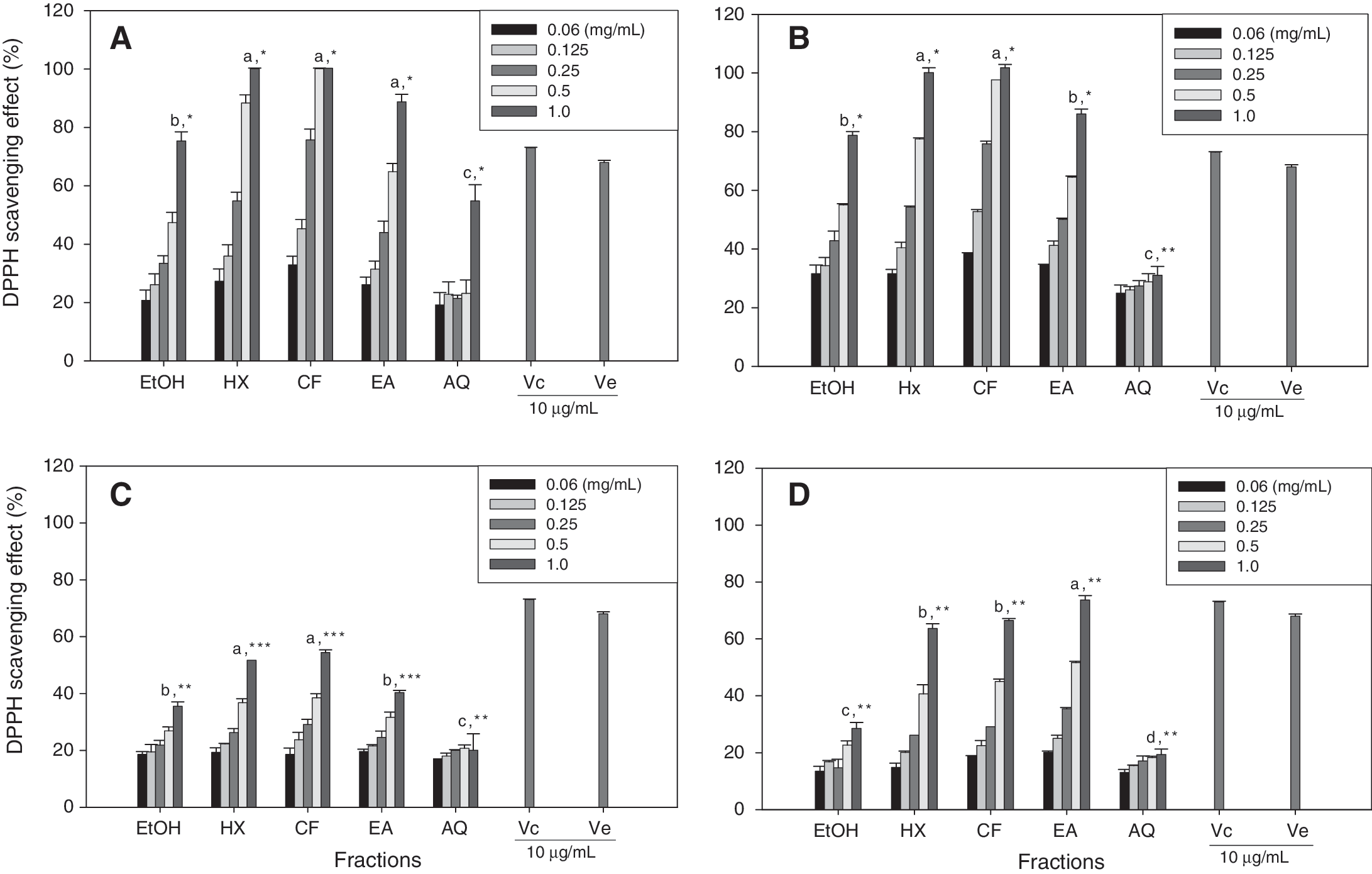
1,1-Diphenyl-1-picrylhydrazyl (DPPH) radical scavenging activity of EtOH extracts and solvent-partitioned fractions from four green seaweeds: (
OH• scavenging activity
The OH• scavenging activity of EtOH extracts and solvent-partitioned fractions from four green seaweeds was investigated by measuring their ability to prevent oxidative degradation of deoxyribose substrates. Among the EtOH extracts, the extract from E. compressa was the most efficient OH• scavenger, with greater than 50% OH• scavenging capacity at a concentration of 1.0 mg/mL. On the other hand, the EtOH extracts from C. fulvescens, C. moniligera, and U. pertusa exhibited relatively weak OH• scavenging capacities of less than 20% at concentrations of 1.0 mg/mL. When compared with a positive control, Ve, the EtOH extracts from E. compressa displayed a similar level of OH• scavenging activity at concentrations up to 0.5 mg/mL. As described above, the solvent-partitioned fractions had higher OH• scavenging capacity than the parent fractions, with the exception of the AQ fraction (Fig. 2). This indicates that most of the OH• scavenging compounds were preferentially extracted by organic solvents. Similar results were observed in the study of different types of seaweeds in which the AQ fraction was not as effective an OH• scavenger as the solvent extracts. 14,28 Among the organic solvent fractions, CF fractions from E. compressa and C. fulvescens were the most efficient OH• scavengers. The levels of OH• scavenging activities of these fractions were very close to those of the positive control, Ve.
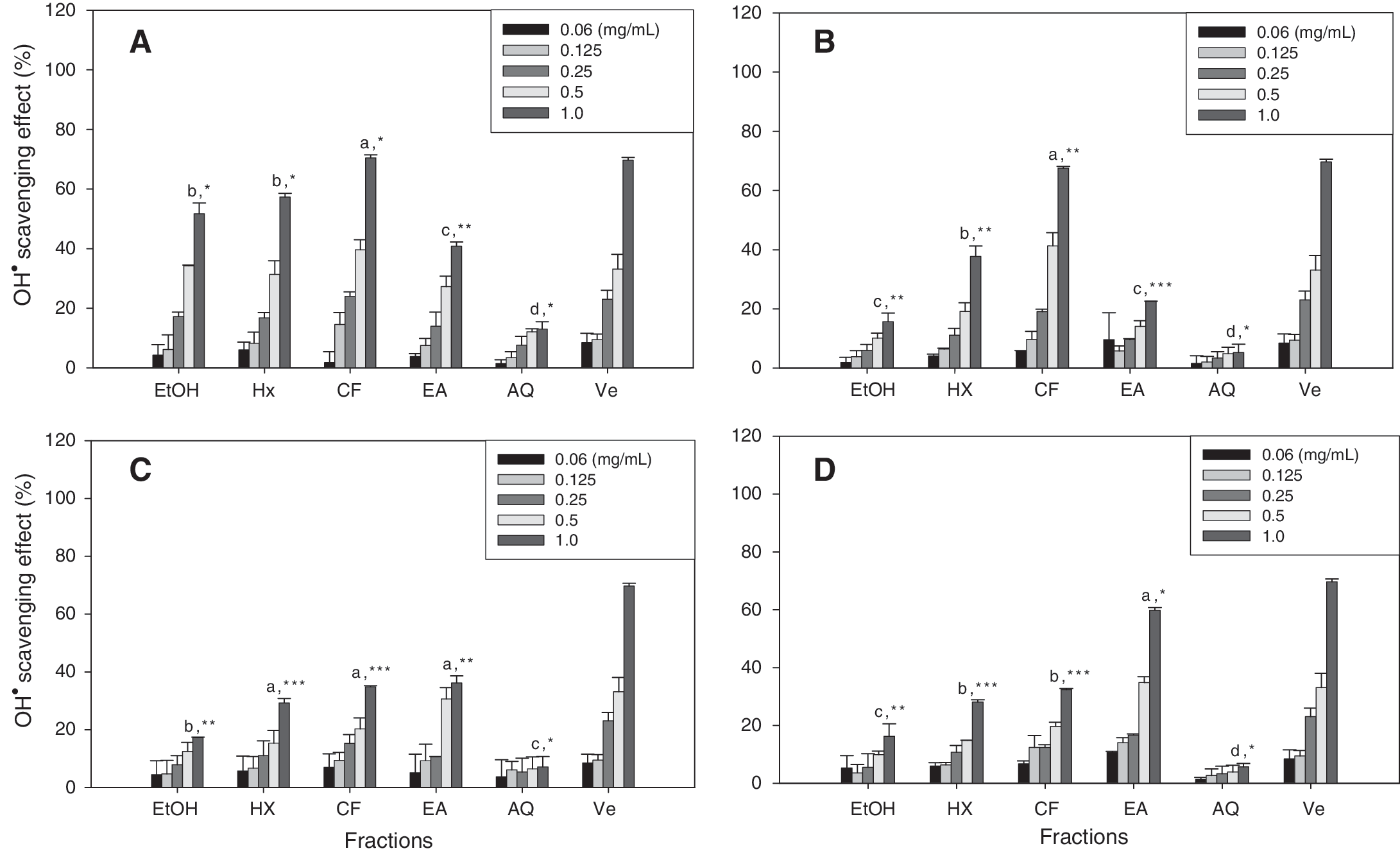
Hydroxyl radical (OH•) scavenging activity of EtOH extracts and solvent-partitioned fractions from four green seaweeds: (
Reducing power of crude extracts and solvent fractions
The reducing power of the EtOH extracts and solvent-partitioned fractions from four green seaweeds was determined by measuring the amount of reductones included in the samples. It has been reported that reductones could exert antioxidant activities by donating a hydrogen atom and breaking the free radical chains. 29,30 As shown in Figure 3, the EtOH extract from E. compressa exhibited considerably higher reducing power than those of other seaweeds in a dose-dependent manner. Compared to Vc, the reducing power of the E. compressa EtOH extract was significantly lower; however, the EtOH extract exhibited a similar level of reducing power as that of a positive control, Ve, even at a concentration of 0.06 mg/mL. The reducing power of the solvent-partitioned fractions was higher than their parent fractions, except for the HX and AQ fractions (Fig. 3), which indicated that the compounds with the strongest reducing power are moderately polar and do not fractionate with compounds that are nonpolar or strongly polar. A study of a red alga showed that the most potent antioxidant activity was observed in the EA fraction, which contained compounds with medium polarity. 23 As shown in Figure 3, the CF fraction obtained from E. compressa possesses the highest reducing power. The reducing power of this fraction was close to that of our positive control, Ve, even at concentrations less than 0.06 mg/mL. This result is in good agreement with the above results for DPPH and OH• scavenging activities in which the CF fraction from E. compressa was also the most efficient radical scavenger. It has been reported that the antioxidant activity of the extracts from various types of seaweeds might be correlated with their total phenolics 13,14 and phenolic compounds, such as flavonoids and tannins. 10,24 In the present study, the antioxidant activity of the EtOH extracts and fractions from green seaweeds were correlated with total phenolic and flavonoid contents.
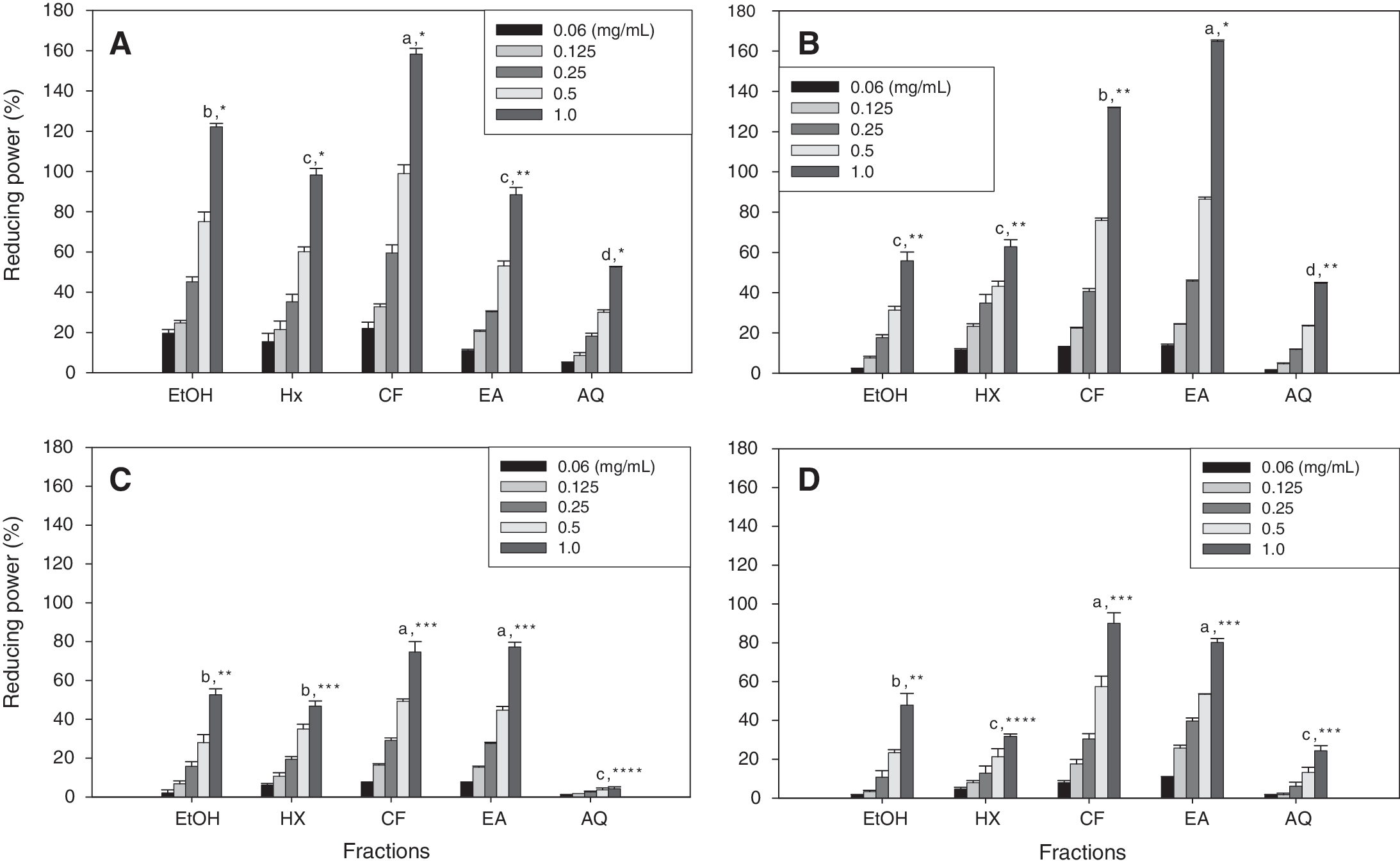
Reducing power of EtOH extracts and solvent-partitioned fractions from four green seaweeds: (
Total phenolic and flavonoid contents
As shown in Table 2, the total phenolic contents of the EtOH extracts ranged from 9.0 to 26.2 mg of GAE/g of sample, which were significantly higher than the values reported for the methanol extracts of red seaweeds (1.5–3.55 mg of GAE/g of sample) 14 but lower than those of the methanol extracts from a brown seaweed (51.0 mg of GAE/g of sample). 15 The total phenolic contents of the solvent-partitioned fractions ranged from 7.5 to 43.8 mg of GAE/g sample, with the CF and EA fractions containing higher levels of total phenolics than the HX and AQ fractions. It has been reported that there was a good correlation between the total phenolic content and antioxidant activity. 23,31 However, as shown in Figure 4, little correlation was observed between the DPPH (r 2 = 0.33) and OH• (r 2 = 0.22) scavenging activity or reducing power (r 2 = 0.42) and the total phenolic contents of the extracts and solvent-partitioned fractions. Lim et al. 15 also observed that the antioxidant activity of the extracts from S. siliquastrum was not directly correlated with their total phenolic contents. The extracts from another marine organism, Cucumaria frondosa (the sea cucumber), also exhibited little correlation (r 2 = 0.13) between antioxidant activity and total phenolic content but showed a significant correlation (r 2 = 0.73) between antioxidant activity and total flavonoid content. 32 These results imply that the considerable antioxidant activity from green seaweeds may be due to specific phenolic compounds, such as flavonoids, tannins, and phenolic acids, rather than the total phenolic content of the extracts. Therefore, the flavonoid contents of the extracts and solvent-partitioned fractions were investigated (Table 2). The contents of the EtOH extracts and solvent-partitioned fractions ranged from 27.4 to 131.1 mg of QE/g of sample and from 8.6 to 180.3 mg of QE/g of sample, respectively. As shown in Figure 5, a significant correlation is observed between the total flavonoid content and the scavenging activities of DPPH (r 2 = 0.73) and OH• (r 2 = 0.96) as well as the reducing power (r 2 = 0.79). This result suggests that the flavonoid content of an extract contributes considerably to the antioxidant properties of the extracts and solvent-partitioned fractions.
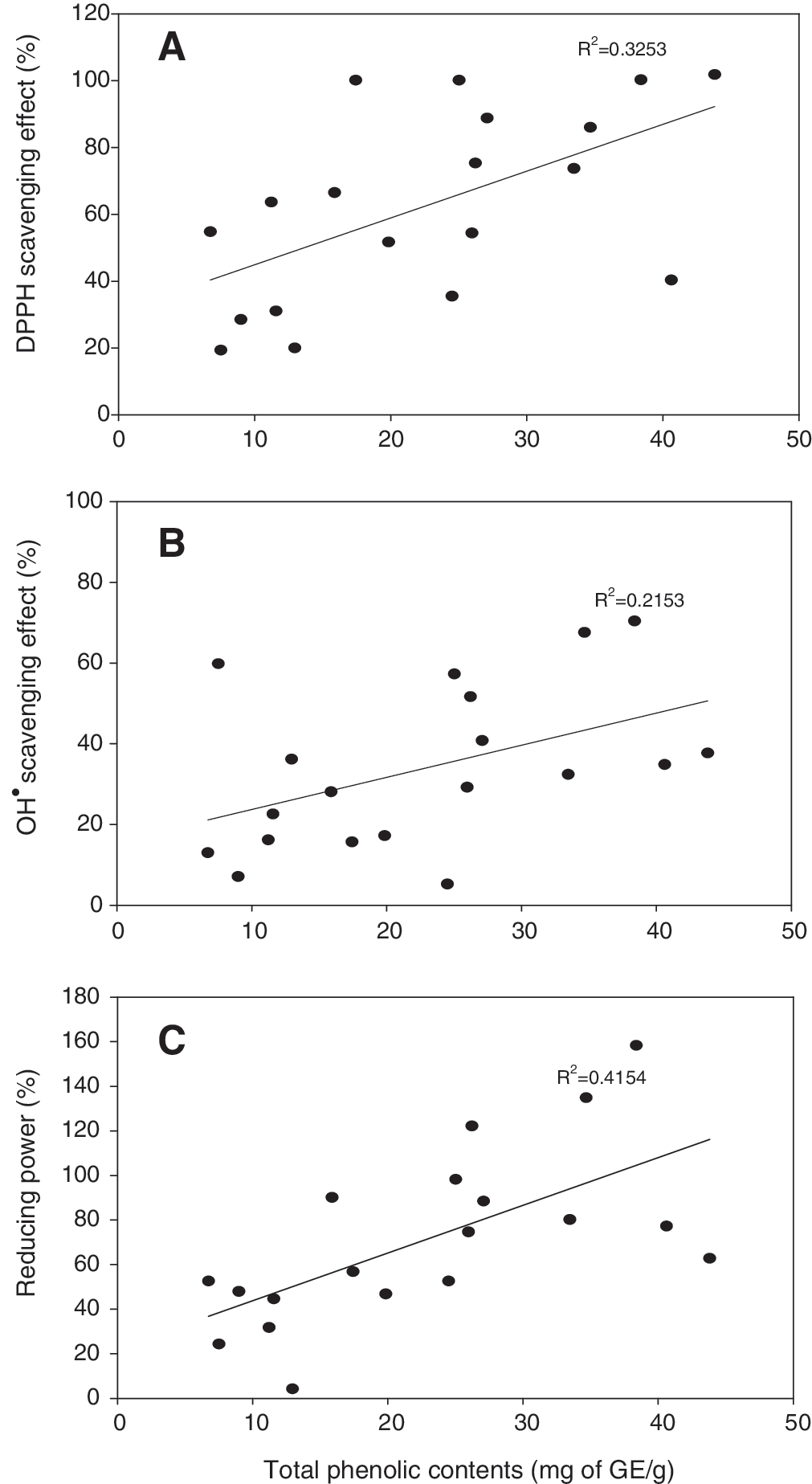
Relationship between antioxidant activities and phenolic contents of EtOH extracts and solvent-partitioned fractions from four green seaweeds: (
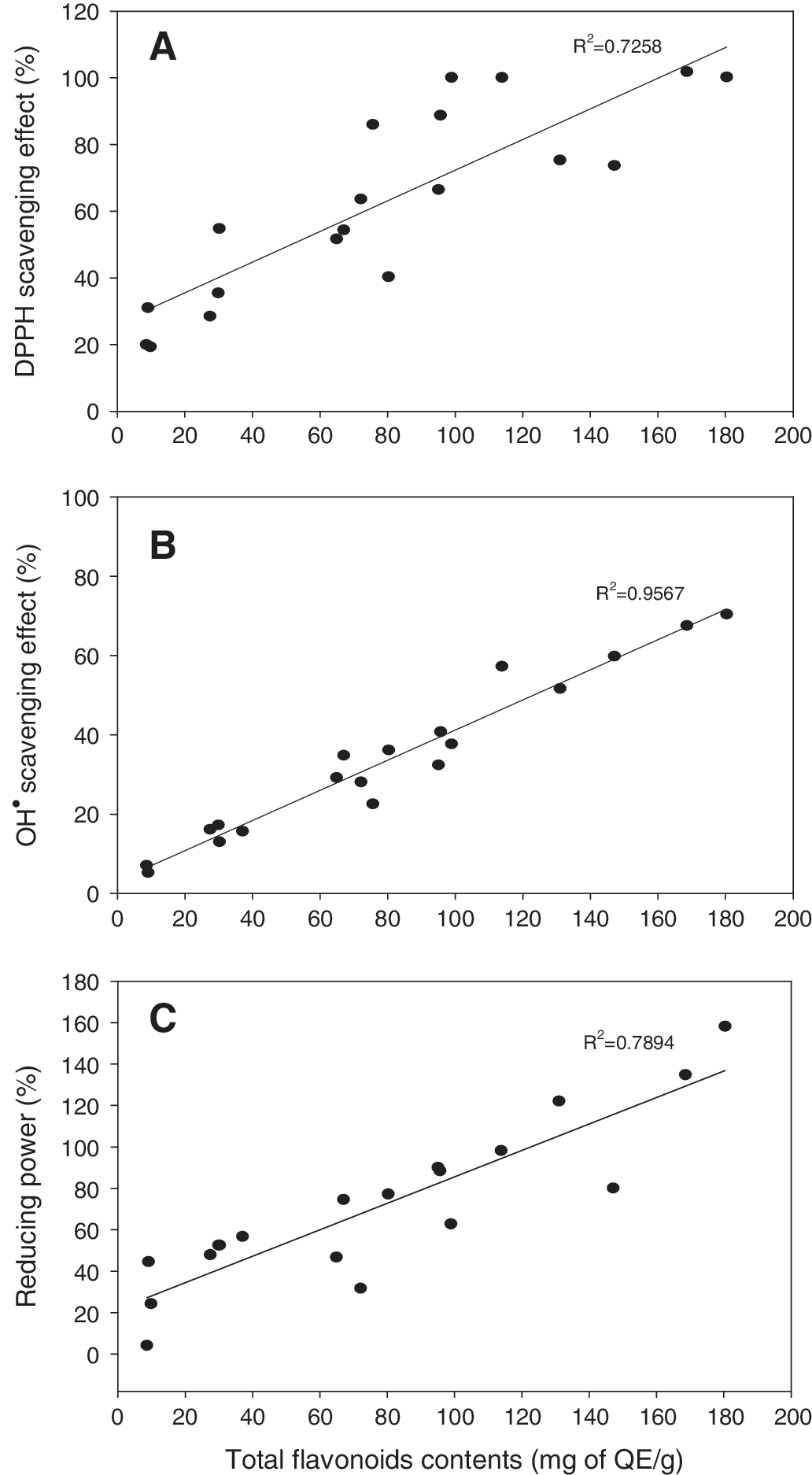
Relationship between antioxidant activities and flavonoid contents of EtOH extracts and solvent-partitioned fractions: (
In conclusion, the antioxidant activities of the EtOH extracts and their various solvent-partitioned fractions from E. compressa, C. fulvescens, C. moniligera, and U. pertusa were investigated, and their antioxidant activities were correlated with total phenolic and flavonoid contents. The EtOH extracts from E. compressa and C. fulvescens were the most efficient DPPH and OH• scavengers and exhibited strong reducing power. Among the solvent-partitioned fractions, the CF fractions had the most effective antioxidant activity, comparable to Ve. These extracts showed a strong correlation between their antioxidant properties and their flavonoid contents (r 2 = 0.73–0.96). The current study therefore suggests that the green seaweeds E. compressa and C. fulvescens could be good sources for obtaining natural antioxidants. The results also imply that these solvent fractions, especially the CF fraction, could deliver considerable antioxidant benefits to healthcare products, such as nutraceuticals, supplements, and cosmeceuticals. Currently, the structural identification of active components of the CF fractions from E. compressa and C. fulvescens is being carried out by further fractionation using various liquid chromatography systems and nuclear magnetic resonance.
Footnotes
Acknowledgment
This research was funded by the Ministry of Land, Transport and Maritime Affairs, Republic of Korea, under the project entitled “Development of Functional Ingredients and Products from Marine Resources for Improving Cognitive Ability.”
Author Disclosure Statement
No competing financial interests exist.