




Abstract
Diabetes-induced hyperglycemia increases formation of advanced glycation end products (AGEs) and metal-catalyzed production of free radicals. This study compared the antioxidant capacities of dark and light soy sauces of different brands and investigated their abilities to inhibit AGEs and whether their mechanism of action was pre- or post-Amadori or involved chelation of transition metals. The antioxidant capacities of soy sauces were compared using the 2,2′-azinobis(3-ethylbenzothiazoline-6-sulfonate) method and by measuring their total phenolic contents. Model proteins (lysozyme, albumin) were glycated using fructose with or without soy sauces with subsequent analysis of cross-linked AGEs by sodium dodecyl sulfate–polyacrylamide gel electrophoresis. The effect of soy sauces on pre- and post-Amadori inhibition of AGEs was investigated by measuring fructosamine and AGEs following reincubation of ribose-glycated (ribated) lysozyme, respectively. Dark soy sauces had higher antioxidant capacities and phenolic content and were more effective inhibitors of post-Amadori–derived cross-linked AGEs. However, light soy sauces were more effective at inhibiting fructosamine and had more potent metal chelation properties. This study reports the antiglycation properties of soy sauces, but further studies are required to determine the constituents responsible for this effect and whether soy sauce consumption can reduce oxidative stress and AGEs in diabetic subjects.
Introduction
D
Compounds that inhibit accumulation of tissue AGEs or can reduce glycation-induced oxidative stress may have therapeutic potential. To date, much attention has focused on pharmacological compounds with antiglycation properties. 4,5 However, several studies have focused on functional foods and natural products with combined antiglycation and antioxidant properties. 6 In this respect, soy sauce, a salt-rich dark-brown liquid seasoning produced from the fermentation of soybeans, wheat, and salt, has received attention because of its antioxidant properties. Soy sauces are used extensively in far Eastern cuisine and are widely available commercially. Several epidemiological studies have reported soy sauces to possess hypoallergic and antiallergic properties, 7 aspirin-like antiplatelet activities, 8 anticarcinogenic 9 and antimicrobial 10 activities, to inhibit angiotensin I converting enzyme, 11 and, of particular relevance to this study, to have antioxidant properties. 9,12,13 Indeed, it has been shown that dark soy sauce can inhibit serum lipid peroxidation and has antioxidant capabilities that are about 10 times more effective than red wine and 150 times more than vitamins E and C. 14
The antioxidant capacities of soy products have often been linked to their isoflavone content. 15 However, soy sauces have very low concentrations of isoflavones because the alcohol extraction process during production removes isoflavones. 16 In contrast, some studies have reported the presence of isoflavones, such as aglycones, ethers of dihydroxysuccinic acid (tartaric acid), 8-hydroxygenistein, daidzein, and genistein, in soy sauce. 9,17 Other studies have suggested that melanoidins are key components responsible for the antioxidant properties of soy sauces. For example, 4-hydroxy-2 (or 5)-ethyl-5 (or 2)-methyl-3(2H)-furanone, a principal component of soy sauce, has been reported to be responsible for its antioxidant activity. 9 Related compounds found in soy sauce, such as 4-hydroxy-5-methyl-3(2H)-furanone and 4-hydroxy-2,5-dimethyl-3(3H)-furanone, also possess antioxidant activity, with 4-hydroxy-2 (or 5)-ethyl-5 (or 2)-methyl-3(2H)-furanone being more potent than 4-hydroxy-5-methyl-3(2H)-furanone. 18 More recent work has identified 3-hydroxy-2-methyl-4H-pyran-4-one (maltol) as the key antioxidant in dark soy sauce. 19
Nicotianamine, a nonprotein amino acid and a metal ion chelator found in wheat, has also been detected in soy sauce and is believed to be an antioxidant. 20 The antioxidant properties of soy sauces may also be due to the presence of other amines, such as histidine, tyrosine, methionine, and tryptophan, produced by microbial proteolytic digestion during the fermentation process in the production of soy sauces. 12
Although there is information on the antioxidant properties of soy sauces, their abilities to prevent protein glycation and to inhibit the formation of AGEs have not been investigated.
In this study, we compared antioxidant capacities of dark and light soy sauces from different brands, including their phenolic contents, to determine which was the most effective. We also investigated the potential of soy sauces as inhibitors of protein glycation and in preventing the formation of cross-linked AGEs and explored whether this was at the pre- or post-Amadori stage.
Materials and Methods
Materials
Bovine serum albumin (BSA) (fraction V, essentially fatty acid free), lysozyme, fructose, and EDTA were purchased from Sigma-Aldrich Co. (Poole, United Kingdom). Acrylamide solution was obtained from Bio-Rad Laboratories (Hemel Hempstead, United Kingdom). Sodium dodecyl sulfate (SDS) was obtained from ICN Biomedicals Inc. (Aurora, OH, USA). Dialysis tubing with a molecular mass cutoff of 3.5 kDa was obtained from Pierce Chemical Co. (Rockford, IL, USA).
The soy sauces used were of Chinese and Malaysian origin. Light and dark soy sauces of four different brands—Amoy, Gold Plum, Yeo's, and Ayam—were investigated.
Antioxidant activity of dark and light soy sauces
The antioxidant activities of dark and light soy sauces were measured by the improved 2,2′-azinobis(3-ethylbenzothiazoline-6-sulfonate) (ABTS) radical method described previously. 21 The ABTS was dissolved in water (7 mM final concentration) and oxidized using 2.45 mM potassium persulfate for at least 16 hours in the dark to produce the radical monocation, ABTS•+. The ABTS•+ solution was diluted to an absorbance of 0.7±0.05 at 734 nm with water. Absorbance was measured 1 minute after initial mixing of 10 μL of 1% (vol/vol) light and dark soy sauces from four different brands or Trolox standards (0–0.015 mM) with 0.99 mL of ABTS•+ solution. Trolox was used as a reference standard. Antioxidant properties of soy sauces were expressed as Trolox equivalent antioxidant capacity (TEAC), calculated from at least three different concentrations of soy sauce tested in the assay that gave a linear response.
Total phenolic content of dark and light soy sauces
The total phenolic contents of the soy sauces were determined as described previously. 22 In brief, 2.5 mL of Folin–Ciocalteau reagent (diluted 10-fold) was added to 0.5 mL of 1% (vol/vol) ethanolic light and dark soy sauces from four different brands or ethanolic gallic acid standards (0–0.3 mg/mL) and then mixed with 2 mL of sodium carbonate (75 g/L). The absorbance at 765 nm was measured after 1 hour at room temperature. The total phenolic content of soy sauces was expressed as gallic acid equivalents.
In vitro glycation of proteins
Experiments were performed using a modified protocol as described previously. 6 BSA or lysozyme (10 mg/mL) was incubated in 0.25 M fructose with or without different concentrations of Gold Plum light and dark soy sauces in 0.1 M sodium phosphate buffer (pH 7.4) containing 3 mM sodium azide at 37°C for up to 1 week. Samples were stored frozen at −20°C before analysis.
Measurement of cross-linked AGEs
Cross-linked AGEs were assessed by SDS–polyacrylamide gel electrophoresis (PAGE) using 15% polyacryalamide gels followed by staining with Coomassie Brilliant Blue R.
23,24
Protein samples were diluted 1:10 in 0.05 M Tris-HCl buffer (pH 6.8) containing 15% (wt/vol) SDS, 1% (vol/vol) 2-mercaptoethanol, and 20% (vol/vol) glycerin and then boiled for 5 minutes. Samples containing 10 μg of protein were loaded into the wells followed by 2 μL of bromophenol blue and then subjected to electrophoresis using the mini-Protean® 3 apparatus (Bio-Rad Laboratories). Gels were stained in a solution containing 0.25% (wt/vol) Coomassie Brilliant Blue R, 50% (vol/vol) methanol, and 10% (vol/vol) acetic acid. Gels were destained in a solution containing 25% (vol/vol) methanol and 7% (vol/vol) acetic acid and then analyzed by GeneTool (Biotools, Inc., Edmonton, AB, Canada) image analysis software. The antiglycation properties of dark and light soy sauces were evaluated by determining the percentage of cross-linking calculated according to the formula:
Measurement of fructosamine
The effect of dark and light soy sauces on the formation of fructosamine was quantified by a colorimetric method using nitro blue tetrazolium as reported previously 25 and modified as follows: BSA (10 mg/mL) was glycated by 0.25 M fructose with or without 1% (vol/vol) Gold Plum dark and light soy sauces in 50 mM Tris-HCl buffer (pH 9.0) at 37°C for a defined period of time. Samples (30 μL) were added to 180 μL of nitro blue tetrazolium reagent (0.2 M carbonate buffer [pH 10.3] containing 0.574 mM nitro blue tetrazolium) at 37°C. The absorbance change at 490 nm in the interval 5–15 minutes after the start of the reaction was measured and compared with an in-house glycated BSA standard treated under the same conditions.
Amadorin activity of dark and light soy sauces
Amadorin activity was determined using a post-Amadori screening assay as described previously. 4 Amadori-rich proteins were prepared by reacting lysozyme (10 mg/mL) with 0.5 M ribose in 0.1 M sodium phosphate buffer containing 3 mM sodium azide (pH 7.4) at 37°C for 24 hours. Unreacted ribose was removed by dialysis against 4 L of 0.1 M sodium phosphate buffer (pH 7.4) at 4°C for 48 hours with five or six changes. The dialyzed ribated lysozyme was reincubated in the presence and absence of Gold Plum light and dark soy sauces at different concentrations in 0.1 M sodium phosphate buffer containing 3 mM sodium azide (pH 7.4) at 37°C for defined periods of time. The extent of post-Amadori–derived cross-linking was determined by SDS-PAGE and image analysis as described above. The extent of cross-linking in the presence of soy sauces was expressed as a percentage of that for ribated lysozyme incubated alone.
Ion chelating activities of dark and light soy sauces
The ferrous ion (Fe2+) chelating activity assay was followed according to a previously published procedure
26
with some modifications. A solution (200 μL) of EDTA (0–20 mg/mL) or Gold Plum light and dark soy sauces (0–20% [vol/vol]) dissolved in distilled water was mixed with methanol (740 μL) and 20 μL of 2 mM ferrous chloride. The mixture was shaken thoroughly and left at room temperature for 5 minutes. The reaction was initiated by addition of 40 μL of 5 mM ferrozine, mixed, and left for another 10 minutes to allow the residual ferrous ions to complex, forming a measurable purple-colored compound. The absorbance of the reaction mixture was measured at 562 nm against a blank. EDTA was used as a control. The chelating rate was calculated as a percentage of the control using the following formula:
Statistical analysis
Results are presented as mean±SD values of three separate determinations. Student's t test was used to ascertain the statistical significances between mean values of two continuous variables. A P value of <.05 was considered statistically significant.
Results
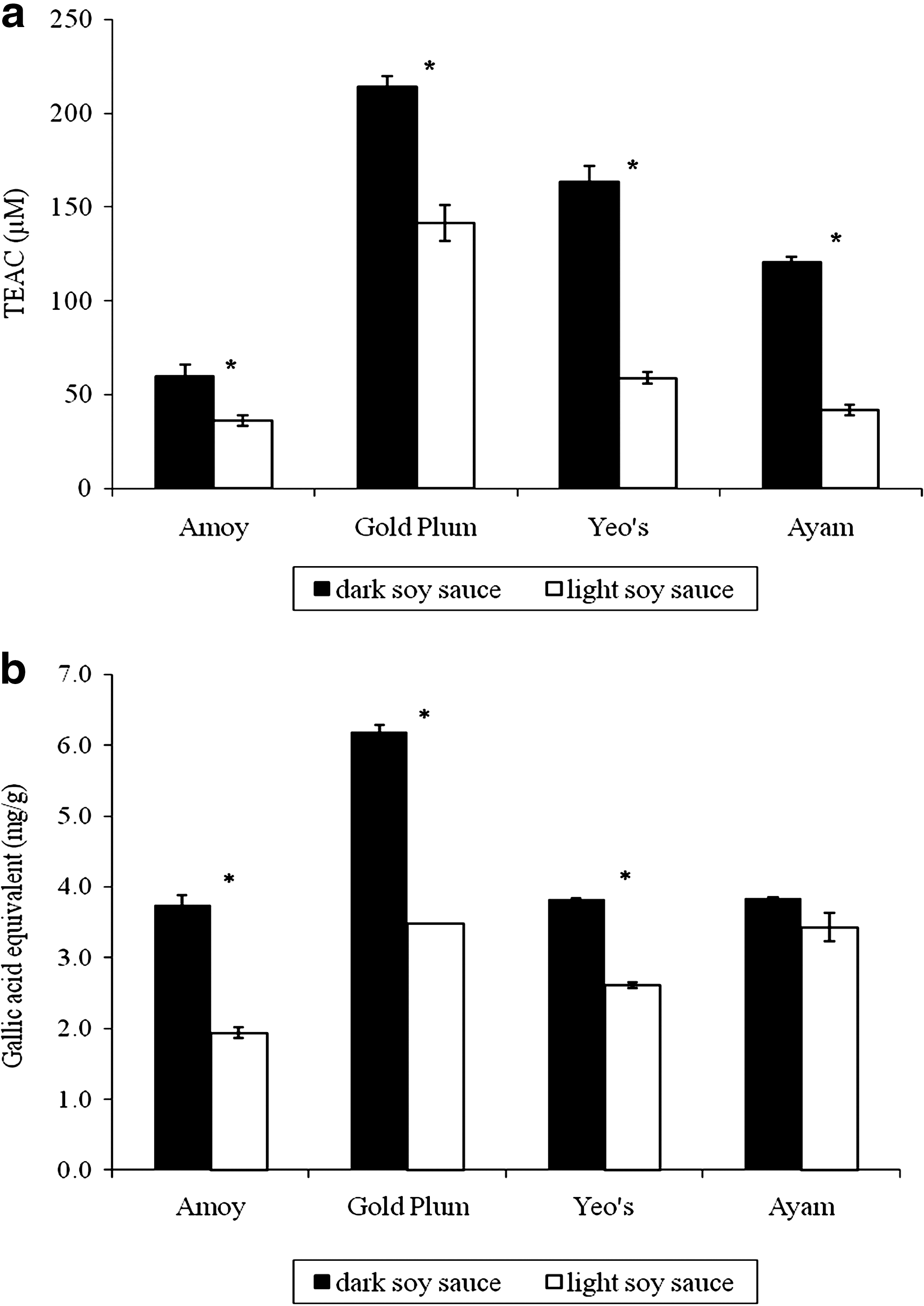
The antioxidant capacities of different brands of both 1% (vol/vol) dark and light soy sauces were measured and expressed as TEAC values. For all four brands, the dark soy sauces had significantly greater antioxidant capacity compared with the light types (Fig. 1a). Gold Plum had the greatest antioxidant activity, followed by Yeo's, Ayam, and finally Amoy.
(
The concentration of total phenolic compounds was determined for all four brands of sauce as shown in Figure 1b. The dark soy sauces had higher phenolic concentrations compared with the light ones, and this was significant for Gold Plum, Amoy, and Yeo's (P<.05) but not the Ayam brand. The Gold Plum soy sauces had the highest concentration of total phenolic compounds, followed by the Ayam, Yeo's, and Amoy brands of soy sauces. Because the Gold Plum brand of soy sauces had the most potent antioxidant capacity, they were used to study further the antiglycation properties of soy sauces.
Glycation of lysozyme by fructose caused formation of cross-linked AGEs detectable as protein dimers and trimers following their separation on SDS-PAGE gels (Fig. 2a and b). Both dark and light soy sauces of the Gold Plum brand inhibited formation of cross-linked AGEs as their concentration increased from 0% to 70% (vol/vol). Image analysis of the electrophoresis gels showed that this glycation-induced cross-linking of lysozyme was inhibited in a dose-dependent manner by both types of soy sauces with maximal inhibition of AGEs when using a 10% (vol/vol) concentration of soy sauce (Fig. 2c). The dark soy sauces proved more effective inhibitors of AGE-induced protein cross-linking compared with the light soy sauces.
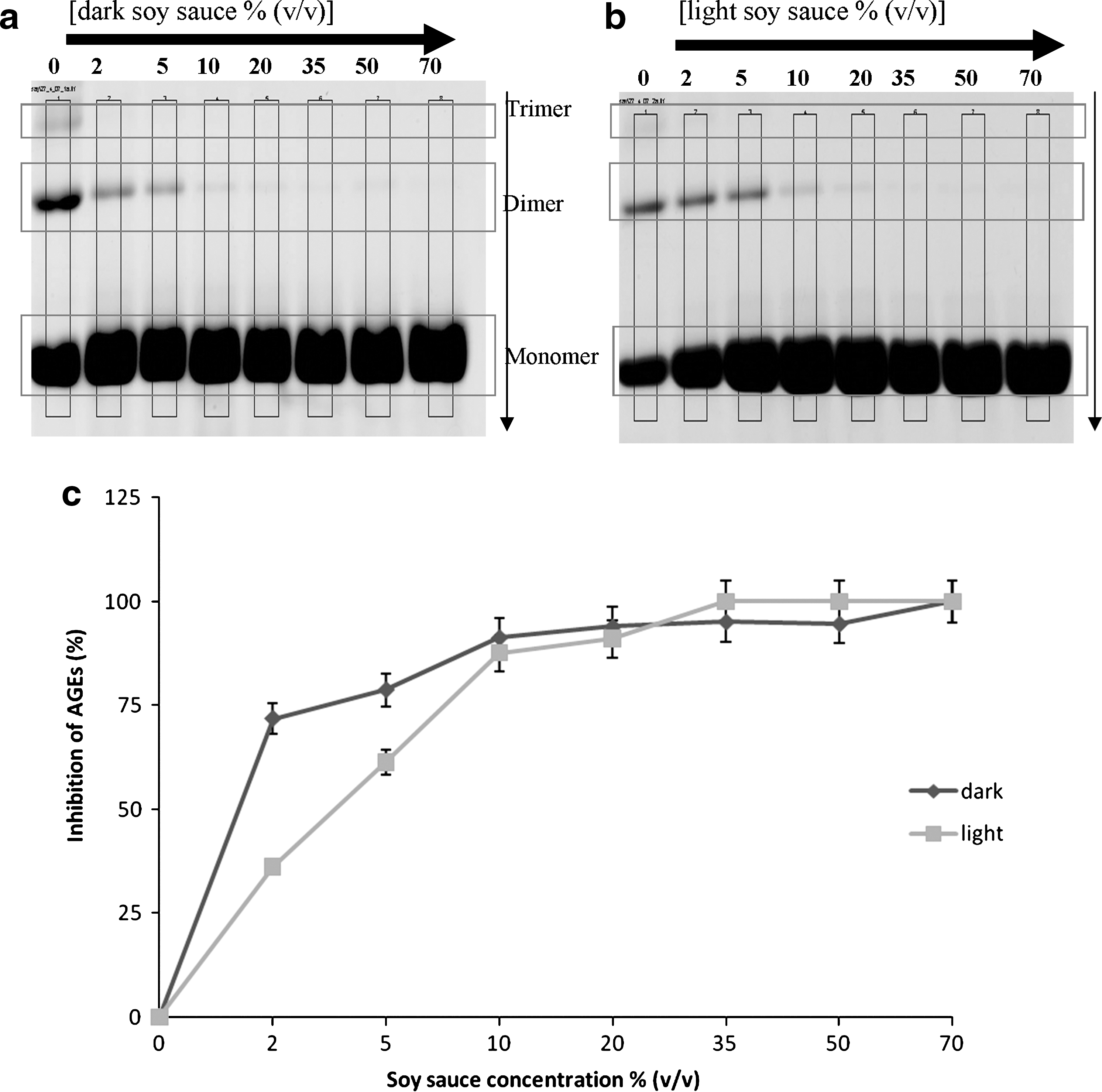
Photographs of gels after sodium dodecyl sulfate–polyacrylamide gel electrophoresis of cross-linked advanced glycation end products (AGEs) formed after glycation of lysozyme (10 mg/mL) by 0.25 M fructose for 7 days at 37°C in the presence of (
There was a time-dependent increase in the formation of fructosamine with maximal concentrations after 4 days under our conditions (Fig. 3). However, BSA incubated alone showed no increase in fructosamine and was used as a control. Although both types of Gold Plum soy sauces inhibited formation of fructosamine, the light soy sauce was more effective compared with the dark soy sauce.
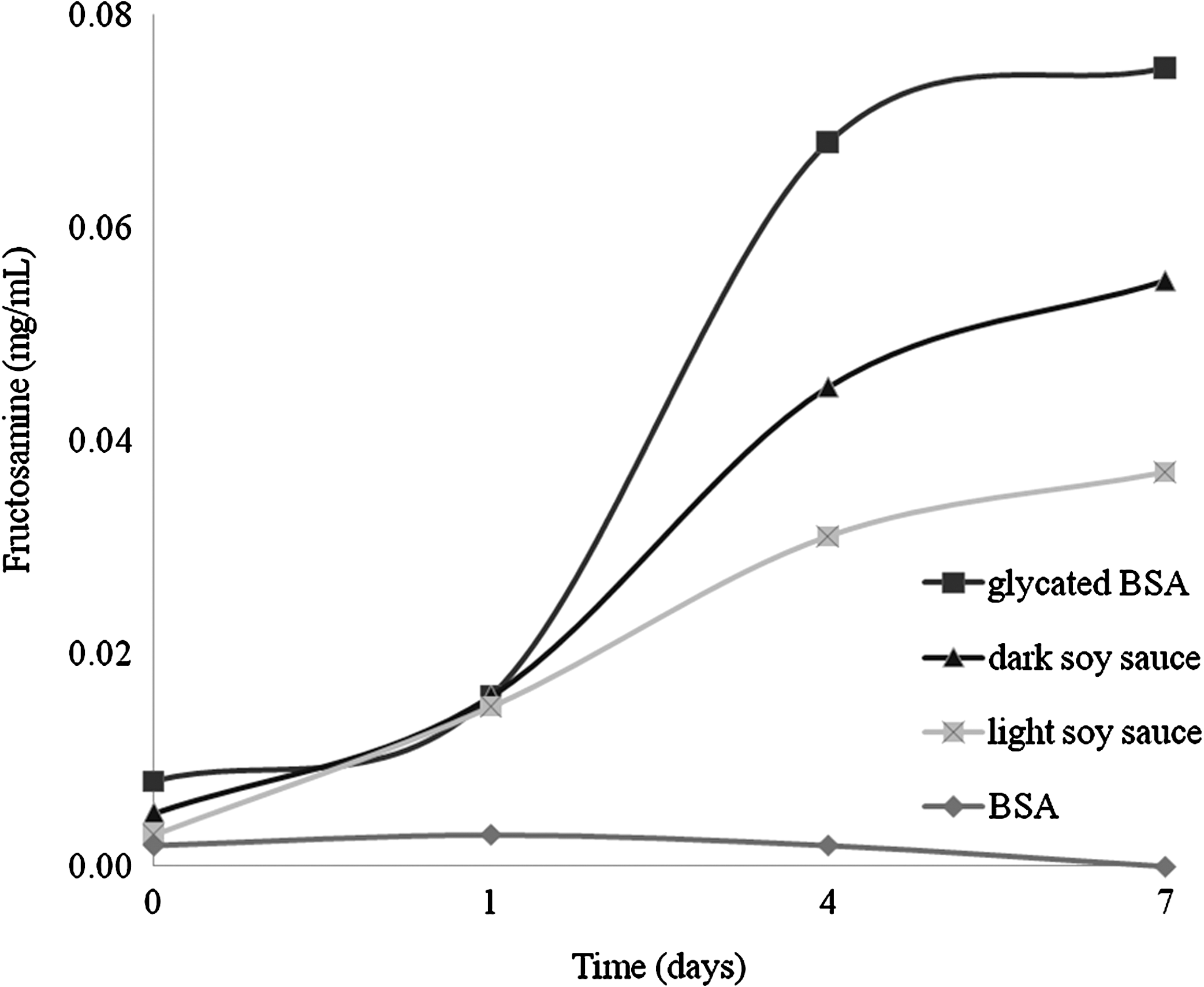
Fructosamine formation following glycation of bovine serum albumin (BSA) (10 mg/mL) with 0.25 M fructose at 37°C in the presence of 1% (vol/vol) Gold Plum dark and light soy sauces for different periods of time. The fructosamine produced by BSA alone was defined as the control. This experiment was repeated three times with similar findings, and a representative result is shown.
Amadori-rich lysozyme was prepared, and the effects of different concentrations (0–50% [vol/vol]) of Gold Plum soy sauces on cross-linked AGES derived via post-Amadori reactions were investigated over a period of 168 hours. The results are presented following scanning of the gels as shown in Figure 4. Lysozyme that had not been ribated showed no formation of cross-linked AGEs. Increasing concentrations of both dark (Fig. 4a) and light (Fig. 4b) soy sauces inhibited cross-linked AGEs formed by post-Amadori reactions with maximal inhibition after 50 hours. Furthermore, the dark soy sauces were more effective inhibitors of post-Amadori–derived cross-linked AGEs compared with the light ones. The inhibition of cross-linked AGEs (Fig. 2c) occurs at lower concentrations of soy sauces compared with those for cross-linked AGEs formed via post-Amadori reactions, which require high concentrations of soy sauces to have an inhibitory effect, suggesting that soy sauces largely act at the pre-Amadori stages.

Inhibition of post-Amadori cross-linked AGEs formed by reincubation of ribated lysozyme at 37°C in the presence of different concentrations of Gold Plum (
EDTA is a strong chelator of transition metals and was used as a positive control with maximum chelating rate at a concentration of only 0.1 mg/mL. In contrast to earlier findings, the Gold Plum light soy sauce proved a more effective chelator than the dark soy sauce when used at 10–20 mg/mL concentrations (Fig. 5).
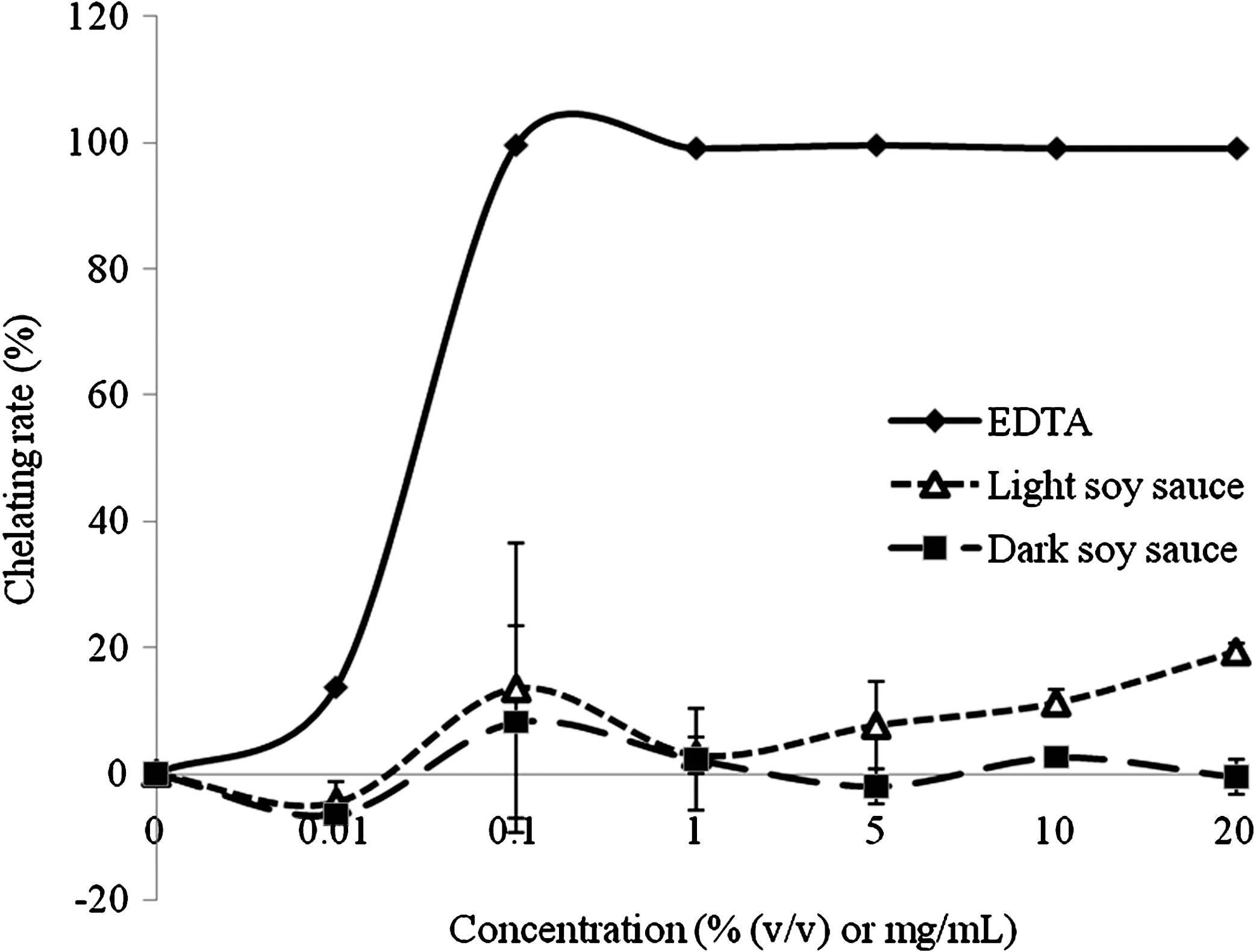
Percentage chelating rate for different concentrations of Gold Plum dark and light soy sauces. EDTA was used as the control. Data are mean±SD values of three independent experiments.
Discussion
This study confirms the antioxidant properties of both dark and light soy sauces. Dark soy sauces were found to be more potent antioxidants when compared with light soy sauces for all four different brands used. The presence of melanoidins in the dark soy sauces possibly accounts for their higher antioxidant activity, and this has been suggested by other workers. 12 However, wheat, which is fermented in the production of dark soy sauces, contains nicotianamine, and its presence may also account for the greater antioxidant activity found in our and other studies. In addition, dark soy sauces contain higher concentration of phenolic substances such as flavonoids and flavonols, which may also account for their higher antioxidant capacity. Previous studies have found that there is a positive correlation between amino acids and the phenol contents of sauces and the duration of fermentation. 27,28 The fact that light soy sauces are produced by a shorter fermentation period than the dark types supports the findings that the latter have a higher concentration of phenolic substances and therefore is consistent with their greater antioxidant capacity.
In this study, glycation methods have been used in vitro to investigate the protective effects of soy sauces on formation of AGEs. Glycation of proteins is a slow process in vivo, and usage of high concentrations of reactive sugars like fructose in vitro speeds up the reaction, increasing the formation of AGEs and allowing antiglycation mechanisms of putative compounds to be studied over shorter time periods. Such in vitro glycation procedures have been used to assess antiglycation properties of other substances. 6,29 Albumin is the major serum protein rich in amino groups from lysine and arginine residues and can be readily glycated both in vitro and in vivo. It is therefore often used to study the effects of early glycation products as in this study. However, albumin, because of its molecular size, is more prone to intramolecular as opposed to intermolecular AGE cross-linking during late glycation. Therefore albumin is not an appropriate model protein for studying the effects of AGE cross-linking, and instead lysozyme, a more compact protein, has been used in this study as it readily polymerizes following glycation. For the first time, this study reports the antiglycation properties of soy sauces in vitro, with dark soy sauces proving more effective inhibitors of cross-linked AGE formation. This could be attributed to their higher content of phenolic substances such as flavonoids. Indeed, dietary flavonoids and allied phenolic compounds prevent formation of AGEs and protect cultured human neuronal cells against oxidative stress in vitro. 30 Rutin and its metabolites have also been shown to prevent formation of the major AGEs carboxymethyllysine and argipyrimidine in vitro and proved as effective as the well-established antiglycation compound aminoguanidine. 31 However, the precise compound responsible for the antiglycative effects of soy sauces remains unknown and could be due to synergistic effects of several different constituents.
Furthermore, we found that soy sauces can act at the pre- or post-Amadori stage or at both stages but are more effective inhibitors of pre-Amadori reactions. For example, amine-containing nicotianamine and free amino acids in the sauces could compete with protein amino groups for sugar carbonyl groups, preventing the initial glycation reaction. Alternatively, amines could react with protein-bound carbonyl groups on glycated proteins or reactive dicarbonyl compounds and block their conversion to AGEs. 1 However, inhibition could possibly be a combination of both types of competition. Our studies demonstrate higher fructosamine formation during glycation in the presence of dark compared with light soy sauces. This could be because dark soy sauces are themselves richer sources of colored compounds or melanoidins than light soy sauces.
The formation of AGEs requires oxygen, and the various antioxidants present in soy sauces may offer a protective effect. Dark soy sauce had greater antioxidant activity but lower ion chelating activities compared with light soy sauces, and the reasons for this are unclear. Chelation of transition metals means they are not available to participate in autooxidative glycation and glyco-oxidation reactions capable of generating free radicals that accompany AGE formation during hyperglycemia. This has been demonstrated for compounds like EDTA. 32
Other investigators have presented evidence, although not always conclusive, for the beneficial effects of using fermented soybean products for preventing or delaying the onset of type 2 diabetes by improving insulin resistance and secretion (reviewed by Kwon et al. 33 ). Furthermore, consumption of soy protein and isoflavones has been reported to lower low-density lipoprotein cholesterol, and this may be of advantage in diabetic subjects who are prone to cardiovascular disease. 34
This study has demonstrated that soy sauces have combined antioxidant and antiglycation properties and could be of benefit as food supplements for diabetic subjects. However, any effects of soy sauces in vivo following their consumption will depend on how their components are absorbed and metabolized and then whether any will have a biological effect. Therefore, these preliminary studies in vitro need to be followed up with further studies conducted in vivo to study the effects of soy sauce consumption on blood and tissue AGEs and oxidative stress in diabetic subjects. Furthermore, it would be interesting to study AGEs in ethnic groups that consume different amounts of soy sauces in their diet to see whether increased consumption can reduce tissue AGEs in vivo.
Footnotes
Acknowledgments
We are grateful to Dr. Chris Smith for his valuable suggestions, advice, and assistance during the preparation of this manuscript. We would like to thank Tor Yip for his help with the illustrations.
Author Disclosure Statement
No competing financial interests exist for any of the authors.