




Abstract
The biological activities of garlic may be affected by different processing methods. This study, therefore, aimed to evaluate potential anticancer effects of different type of processed garlic extracts on WEHI-164 tumor cells in inbred BALB/c mice and correlate the tumor growth rates with some garlic constituents. In a preclinical trial 60 BALB/c mice were injected with WEHI-164 tumor cells and divided into six groups of 10 animals. Group 1 mice received 200 μL of saline, and groups 2–6 were injected intraperitoneally with fresh, microwaved, 3-month-old, leaves, and boiled garlic extracts, respectively, at 20 mg/kg/0.2 mL. Three weeks following tumor inoculation, the mean tumor size in garlic extract-treated groups was reduced with significant reductions observed in the fresh and microwaved extract groups compared with the control group (P<.05). The antioxidant capacity and the amounts of allicin, flavonoids, and phenolic compounds in differentially processed garlic were evaluated and correlated with their anticancer activities. There was a linear correlation between the amounts of allicin, flavonoids, or phenolic components derived from fresh, microwaved, 3-month-old, leaves, and boiled garlic and cancer growth prevention. In conclusion, garlic has anticancer activity against WEHI-164 tumor cells, and processing such as heating reduces its effect dramatically. The anticancer activities of different kinds of garlic are related to the level of allicin, flavonoids, and phenolic components. Therefore, fresh garlic has the highest content of bioactive components and the greatest anticancer efficacy.
Introduction
S
In recent years there has been increased interest in the onion family, particularly garlic (Allium sativum), for the treatment of cancer. A significant reduction in gastric cancer was reported with increased intake of Allium vegetables in a population-based, case-control study. 2 Likewise, an inverse correlation has been observed between fruit and vegetable intake and colon cancer risk. 3 Although there is credible evidence for an association between garlic consumption and decreased incidence of some cancers such as colon, prostate, esophageal, and laryngeal cancers, there is no reliable evidence for a relationship between garlic intake and a reduced risk of breast, lung, or endometrial cancer. 4
Among the members of the onion family, garlic has the highest concentrations of initial reaction products, making garlic much more potent than onions, shallots, or leeks. 5 Garlic has long been used as a vegetable possessing marked pharmacological potential, such as antibacterial, 6 antimicrobial, 7 antiplatelet, and antithrombotic activities, 8 –12 as well as anticancer properties. 13 –15
Garlic has a very strong flavor, and it is unpalatable in the raw state. People prefer to add it in food while cooking. 5 The phytochemicals responsible for the sharp flavor of garlic are produced when the bulb's cells are damaged. When the cell is broken by chopping, chewing, or crushing, enzymes stored in the cell vacuoles trigger the breakdown of several sulfur-containing compounds stored in the cell fluids. The resultant compounds are responsible for the sharp or hot taste and the strong garlic smell. Most of these compounds are unstable and continue to evolve over time. 5
Studies on garlic have disclosed that it produces many organosulfur compounds depending on the method of cooking, treatment, or preservation. 16 –18 These differences in preparation result in variations in its biological activity. Recently Kim and Kwan, 19 in an analysis using the Food and Drug Administration's evidence-based review, concluded that because of marked variability in the types of garlic preparations (such as whether the garlic is raw or cooked, whole or extracted, heated or not), which affect its chemical composition, more studies are needed to establish which kinds of garlic are more effective in the treatment of disease. This study, therefore, aimed to evaluate the anticancer effect of garlic on WEHI-164 tumor cells in inbred BALB/c mice and to correlate this effect with phenolic compounds and antioxidative activities from differently processed garlic extracts.
Materials and Methods
Chemicals
The following chemicals were obtained from Sigma Chemical Co. (St. Louis, MO, USA): 1,1-diphenyl-2-picrylhydrazyl, 2,2′-azino-bis(3-ethylbenzthiazoline-6-sulfonic acid), potassium persulfate, Folin–Ciocalteau reagent, gallic acid, and butylated hydroxyanisole. All reagents were of analytical grade.
Preparation of garlic extract
Fresh garlic was purchased from local growers from Esfahan, Iran, in April 2009, at the peak of their maturity but before losing their green leaves.
Fresh garlic leaves and fresh and 3-month-old cloves were separately chopped, crushed, and then left at room temperature for 30 minutes. The chopped fresh garlic was microwaved for 30 seconds or boiled for 30 minutes. All the above samples (fresh, microwaved, boiled, and 3-month-old garlic and garlic leaves) were macerated with 96% ethanol for 48 hours. The debris was removed by centrifugation at 200 g for 5 minutes. The supernatant was then filtered and rotary-evaporated at 40°C. The extracts were frozen and stored at −20°C. The frozen extracts were reconstituted with normal saline to prepare final concentrations for in vivo studies.
Evaluation of antioxidant activity
Antioxidant activity of the extract samples was determined using the ferric thiocyanate method.
20
In this method, 500 μg of each sample was dissolved in ethanol and added to a reaction mixture containing 2.88 mL of 2.5% linoleic acid and 9 mL of 40 mM phosphate buffer in a vial. The vials were incubated at 40°C for 96 hours. During incubation (every 12 hours), 0.1 mL of each vial was diluted with 9.7 mL of 75% ethanol, 0.1 mL of ammonium thiocyanate, and 0.1 mL of FeCl2. The absorbance of samples was measured at 500 nm, and the percentage inhibition (the capacity to inhibit the peroxide formation in linoleic acid) was determined using the following equation:
A high inhibition percentage indicates a high antioxidant activity. Ethanol within the sample and without reagents was used as the negative control.
Determination of total phenolic compounds
The amount of total phenolic compounds in the garlic extract was determined colorimetrically using the Folin–Ciocalteu reagent, by the method of Kim et al. 21 In brief, 5 mL of garlic extract or gallic acid (standard phenolic compound) was mixed with Folin–Ciocalteu reagent (1:10 diluted with distilled water) and aqueous Na2CO3 (4 mL, 1 M). The mixtures were allowed to stand for 15 minutes, and the total phenols were determined by colorimetry at 765 nm. A standard curve was prepared using 0, 50, 100, 150, 200, and 250 mg/L solutions of gallic acid in methanol:water (50:50, vol/vol). Total phenol values were expressed in terms of gallic acid equivalent (in mg/g). The experiment was repeated in triplicate.
Determination of total flavonoids
The amount of total flavonoids in the garlic extract was determined using the colorimetric method as described by Chang et al. 22 Thus, 0.5 ml of garlic extract or rutin (standard flavonoid compound) was mixed with 1.5 mL of methanol, 0.1 mL of 10% aluminum chloride, 0.1 mL of 1 M potassium acetate, and 2.8 mL of distilled water and left at room temperature for 30 minutes.
The absorbance of the reaction mixture was measured at 415 nm prepared using rutin solutions at concentrations of 25–500 ppm in methanol. The experiment was repeated in triplicate. Total flavonoids were expressed in terms of rutin equivalents (in mg/g).
Allicin determination
Allicin content was measured in fresh, microwaved, boiled, and 3-month-old garlic and garlic leaves as described by Miron et al.
23
with minor modification. In brief, 200 mg of extract was added to 1.0 mL (final volume) of 2-nitro-5-thiobenzoate (1.2×10⁻⁴ M) in 50 mM sodium phosphate and 1 mM EDTA (pH 7.2). The decrease in optical density at 412 nm was determined after a 30-minute incubation at room temperature. The concentration (C) of allicin was calculated according to the following equation:
ΔA 412 in the above formula is the decrease in optical density compared with the initial absorption at 412 nm.
Tissue culture medium
Dulbecco's modified Eagle's medium (obtained from Sigma, Munich, Germany) was supplemented as previously described.
24
In brief, 20 mM HEPES, 2 mM
Tumor cells
WEHI-164 fibrosarcoma (a 3-methycholanthrene-induced BALB/c fibrosarcoma) cells were obtained from the Pasteur Institute, Tehran, Iran. The cells were cultured in cell tissue culture medium in the Medical Plants Research Center, Shahrekord, Iran, and used throughout the study.
Animals
Six-week-old female BALB/c mice, with an average weight of 20±2 g, were purchased from the Razi Institute (Tehran) and maintained in the Shahrekord University of Medical Sciences animal house. Animals were housed at 22±2°C, with a light:dark cycle of about 14:10 hours, 25 and were kept under standard conditions and allowed free access to fresh water with a well-balanced diet. The experimental procedures used throughout this study were in compliance with the guidelines for the Care and Use of Animals and were approved by the Local Ethics Committee on Animal Experimentation of Shahrekord University of Medical Sciences.
In vivo antitumor study of garlic extract
The 100% metastasis dose (5×10⁵) of WEHI-164 cells was selected according to a previous publication 26 and used in the tumor growth study.
To test the effects of garlic extract on tumor growth, 60 BALB/c mice were injected with WEHI-164 and divided into six groups (10 per group). Simultaneously, group 1 mice received 200 μL of saline, and groups 2–6 were injected intraperitoneally with fresh, microwaved, 3-month-old, leaves, or boiled garlic extracts, respectively, at 20 mg/kg/0.2 mL. Three weeks following tumor inoculation, tumors were measured as two diameters at right angles. The interventions were blinded to the researcher who carried out the tumor measurements. The results were presented as mean±SE tumor area (in mm2), according to the following formula:
26
Results
Allicin contents of differently processed garlic extracts
The amount of allicin was found to be significantly higher in fresh garlic (15 μg/mL) extract compared with microwaved (9 μg/mL), 3-month-old (8 μg/mL), leaves (7 μg/mL), and boiled (1 μg/mL) garlic extracts (P<.001).
Flavonoids and phenolic compounds
The amounts of flavonoids (P<.001) and phenolic compounds (P<.05) were found to be significantly higher in fresh garlic extract compared with those in microwaved, 3-month-old, leaves, and boiled garlic extracts (Fig. 1).

Total phenolic and flavonoid components (in mg/mL) of differently processed garlic extracts. Total phenolic and flavonoid compounds were expressed as gallic acid and rutin equivalents, respectively. *P<.05, **P<.001 compared with aged, boiled, leaves, and microwaved garlic extracts.
Antioxidant capacity
The antioxidant capacity (the percentage of inhibition or the capacity to inhibit the peroxide formation in linoleic acid) was found to be significantly higher in fresh garlic extract (52.6%) compared with those in microwaved, 3-month old, leaves, and boiled garlic extracts, which were 31.9%, 25%, 15.3%, and 4.8%, respectively (P<.001).
Effects of differently processed garlic extract on local growth of WEHI-164 fibrosarcoma in BALB/c mice
Tumor growth was obvious in all groups of mice with WEHI-164 tumor cells. Tumor sizes in garlic extract-treated groups were reduced in all groups, with significant reductions in fresh and microwaved extract-treated groups compared with the control group (Fig. 2).
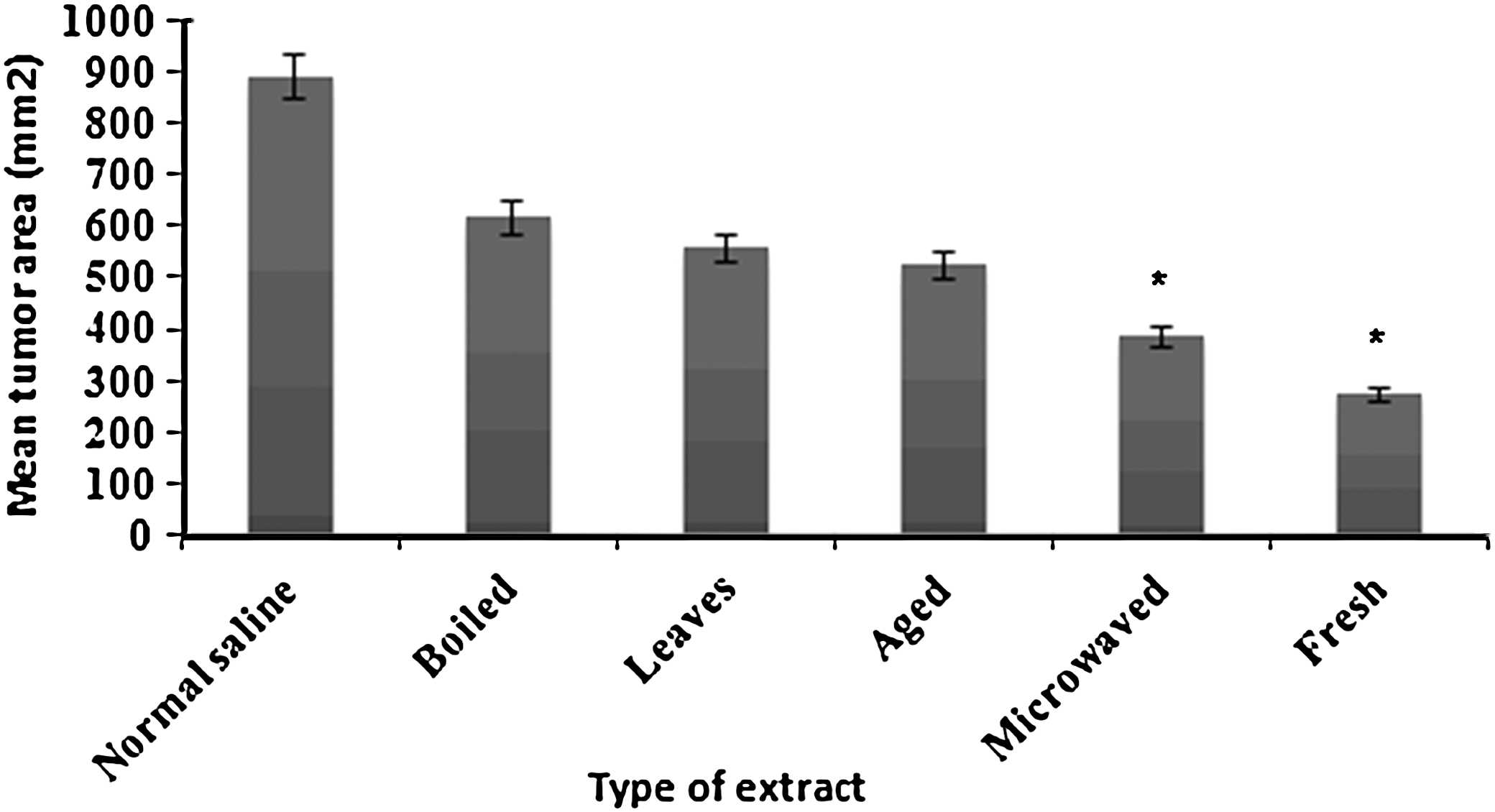
Effects of differently processed garlic extract on WEHI-164 tumor size. Data are mean±SE values from groups of 10 mice. *P<.05 compared with the normal saline control group.
Correlation between level of allicin, flavonoids, phenolic compounds, and antioxidant capacity and anticancer effects of different garlic extracts
The anticancer effects of different garlic extracts were assayed against WEHI-164 tumor cells. Results showed that there was a linear correlation between the amounts of allicin in ethanolic extracts and cancer growth preventive capacity (Fig. 3). Similarly, there were correlations between WEHI-164 tumor growth and the amount of flavonoids (Fig. 4), phenolic compounds (Fig. 5), and antioxidant activity (Fig. 6).

Correlation between tumor size and allicin contents of differently processed garlic extracts.
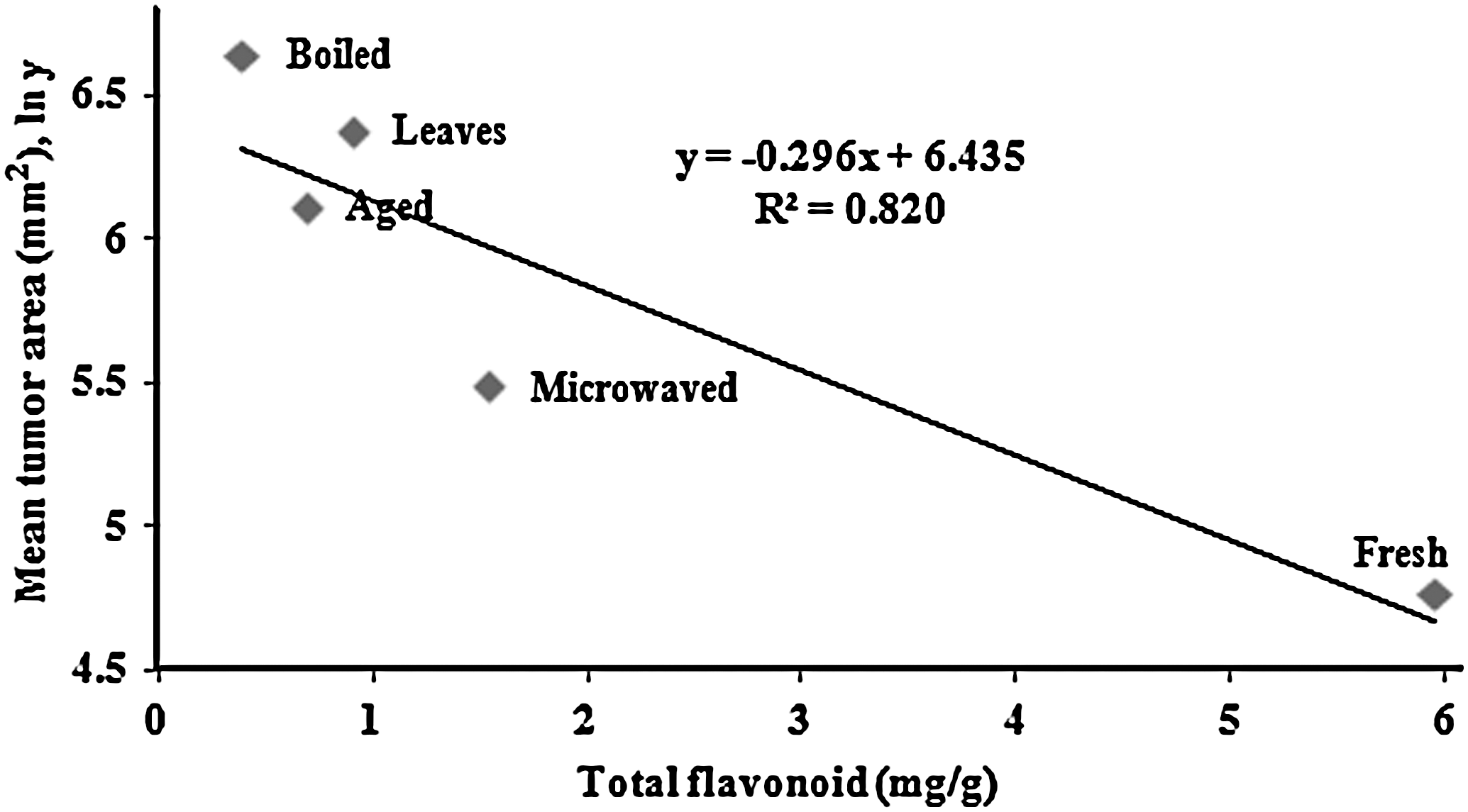
Correlation between tumor size and levels of total flavonoid compounds of differently processed garlic extracts.
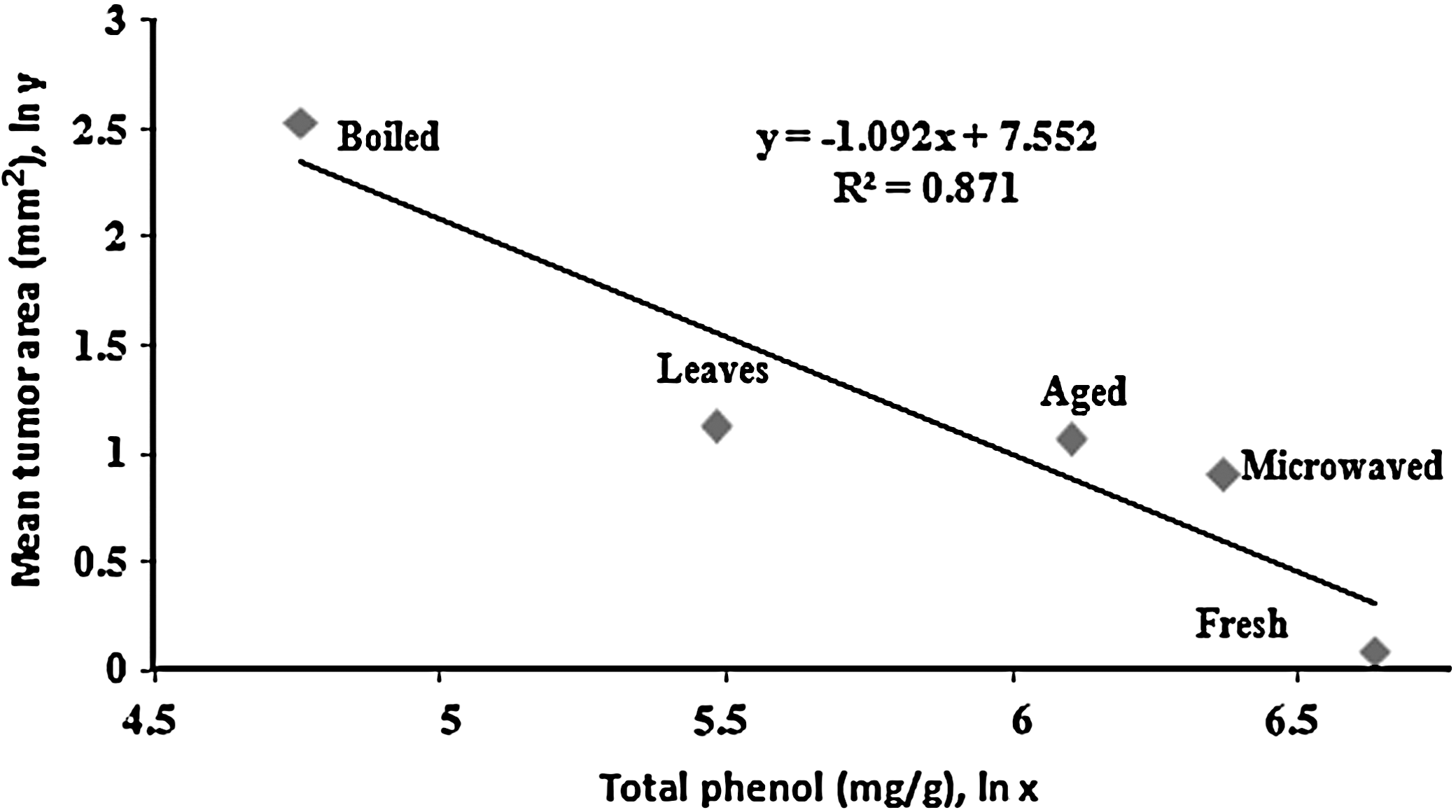
Correlation between tumor size and levels of total phenolic compounds of differently processed garlic extracts.

Correlation between tumor size and antioxidant activity of differently processed garlic extracts.
Discussion
This study demonstrated that raw garlic has anticancer activity on WEHI-164 tumor cells and that heat processing reduces its effectiveness dramatically. The anticancer activity of different kinds of garlic was correlated with the levels of allicin, flavonoids, and phenolic compounds and antioxidant activity of garlic.
Animal and cellular studies indicated that garlic and its components not only are able to inhibit chemically induced cancer but also suppressed growth of cancer cells in culture. 27 In clinical studies, this effect of garlic has been evidenced against some kinds of cancers. 28
The results of this study showed a high level of antioxidant activity for the examined extracts of garlic, with the highest level for the extract derived from fresh garlic. The free radical scavenging capacity has been considered the major biological activity of polyphenols. 29 It has been proposed that plant polyphenols can contribute to the health benefits associated with the consumption of fruit and vegetables; 30 the consumption of fruit and vegetables, rich in antioxidants, is associated with a lower incidence of certain types of cancer, although the molecular mechanism(s) involved are largely unknown. 31
It has been hypothesized that the efficacy of garlic and other botanical supplements for reducing cancer incidence may be related to their ability to correct suboptimal antioxidant status with an adequate dose of antioxidant nutrients. 32 The results of the present study have demonstrated a correlation between the level of antioxidant capacity and cancer protective activity of garlic extracts, and this further supports the above mentioned hypothesis.
It should be acknowledged, however, that the benefits of phytochemicals extend far beyond their antioxidant capabilities. 33,34 The anticarcinogenic effects of Allium vegetables, including garlic, are also attributed to organosulfur compounds. The main sulfur compound in intact garlic is alliin, 35 the odorless precursor of the organosulfur compounds. 36 –40 Processing of garlic bulbs such as crushing, cutting, or chewing releases a vacuolar enzyme, alliinase, that acts on alliin to give rise to odoriferous compounds, including allicin. Allicin and other thiosulfinates decompose to oil-soluble organosulfur compounds, including diallyl sulfide, diallyl disulfide, diallyl trisulfide, dithiins, and ajoene. 35
Garlic may target multiple pathways for its anticancer activities, including the angiogenic pathway, the intrinsic pathway for apoptotic cell death, and the cell cycle machinery. 41,42 Furthermore, experimental evidence suggests that garlic constituents may prevent chemically induced cancers by inhibiting carcinogen activation and enhancing detoxification of activated carcinogenic intermediates through the induction of some enzymes such as glutathione transferase and quinone reductase. 43 –46 Garlic-derived organosulfur compounds have been shown to possess nonenzymatic antioxidant activity. 47 These organosulfur compounds exhibit a differential effect on the activities of glutathione redox cycle enzymes in the liver, lung, and forestomach of A/J mice. 48
Diallyl sulfide and diallyl disulfide have been shown to inhibit N-acetyltransferase activity in a dose-dependent manner in a human colon cancer cell line. 49 Thus, it is reasonable to conclude that the induction of phase 2 enzymes, especially glutathione transferase, represents another potential mechanism to explain organosulfur compound-mediated prevention of chemically induced cancers. However, the relationship between the chemopreventive effects of organosulfur compounds and their effects on antioxidant enzymes is somewhat inconclusive.
The results of this study demonstrated that garlic has anticancer activity on WEHI-164 tumor cells. The anticancer activities of different kinds of garlic were correlated with the levels of allicin, flavonoids, and phenolic components.
However, because the bioavailability and efficacy of different constituents of garlic were not tested in the present study and the antioxidant potency of these components was not determined in the presence of gastric juice, a series of experiments need to be performed in order to confirm our observed results. This will be the focus of future investigation.
Footnotes
Acknowledgments
We gratefully acknowledge the financial support of the Shahrekord University of Medical Sciences, Shahrekord, Iran. The authors also are thankful for the technical assistance of members (particularly Mr. G. Mardani) of the Medical Plants Research Center and Cell and Molecular Research Center of Shahrekord University of Medical Sciences.
Author Disclosure Statement
No competing financial interests exist.