




Abstract
Orthosiphon stamineus Benth. (Lambiaceae) is an important plant in traditional folk medicine. This review is a comprehensive summary of the currently available chemical, pharmacological, and toxicological investigations as well as the traditional and therapeutic uses of this plant. Different in vitro and in vivo models have been addressed along with a survey of all phytochemicals identified in this plant, including flavonoids, terpenoids, and essential oils. Previous studies revealed that O. stamineus possesses several pharmacological activities, which are attributed to its phytochemical content. It was found that O. stamineus exhibits diuretic, hypouricemic, renal protective, antioxidant, anti-inflammatory, hepatoprotective, gastroprotective, antihypertensive, antidiabetic, antihyperlipidemic, antimicrobial, and anorexic activities. In conclusion, O. stamineus has wide traditional and pharmacological uses in various pathophysiological conditions. Therefore, it is an attractive subject for further experimental and clinical investigations.
Introduction
O
O. stamineus is a perennial herb. Its height is 0.3–1 m. The stem is four-angled, while the leaves are simple, lanceolate-like, elliptical or rhomboid, 2–4 cm wide and 4–7 cm long, and the flowers are white or pale lilac. They have stamens that extend from the corolla-tube with a length of 2 cm. 4
The herb grows in temperate and tropical areas such as India, Malaysia, China, Australia, and the Pacific. 5 According to both the floral and calyx colors, Orthosiphon sp. is classified into one of two varieties: 6 one with white flowers (white variety) (Fig. 1A) and the other with light purple flowers (purple variety) (Fig. 1B). The purple variety has more bioactive compounds than the white one. 6 However, most scientific investigations have used the white variety.
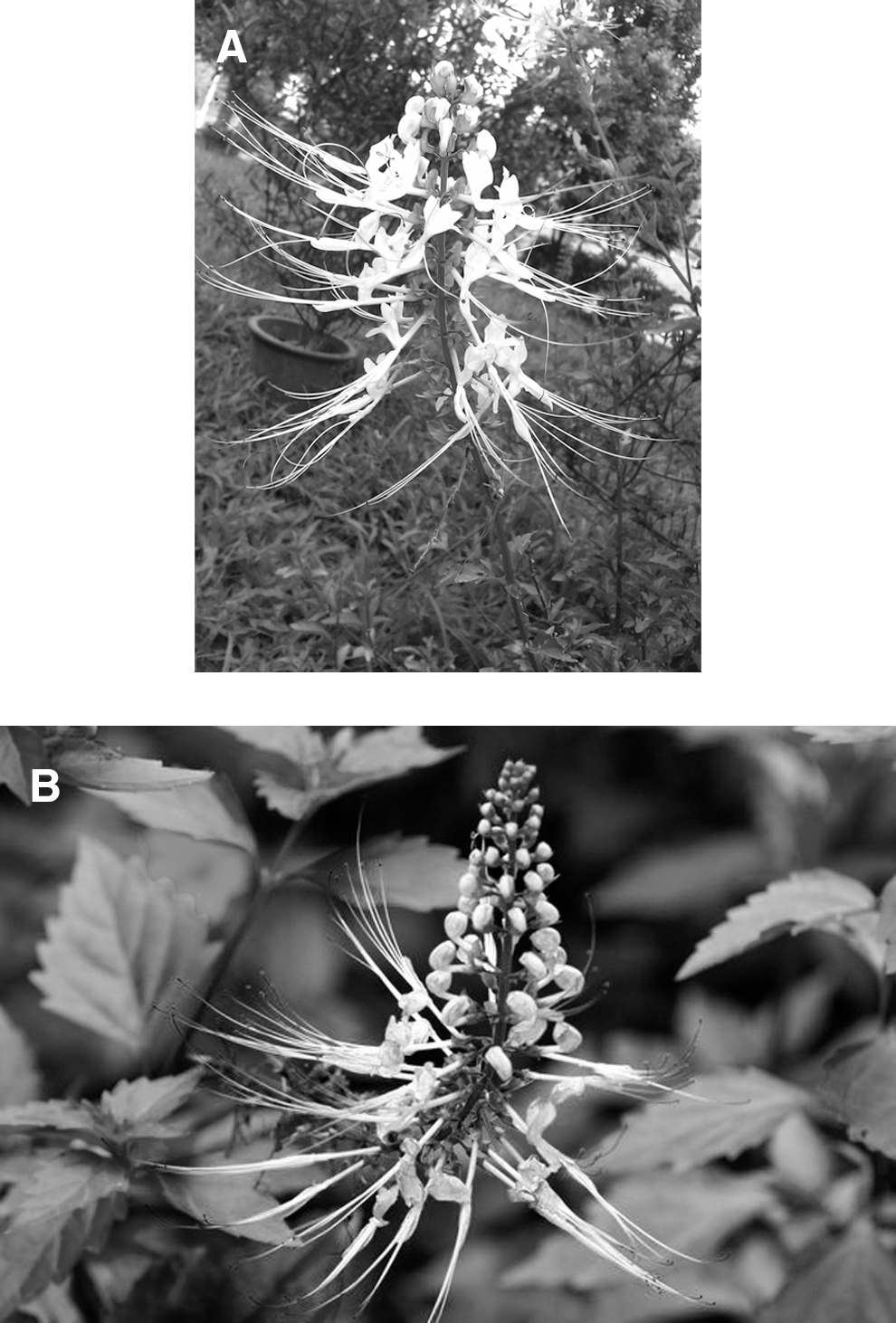
O. stamineus varieties:
There is substantial interest in O. stamineus, as evidenced by the volume of research devoted to it. Therefore, it is interesting to perform an up-to-date comprehensive review that correlates the phytochemical content of this plant with its traditional and folk medical uses.
Traditional Uses
O. stamineus is very popular in Southeast Asian folk medicine, where it is used extensively to treat rheumatoid diseases, diabetes, hypertension, tonsillitis, epilepsy, menstrual disorder, gonorrhea, syphilis, renal calculus, gallstone, lithiasis, edema, eruptive fever, influenza, hepatitis, and jaundice. 7 –11 Its leaves were introduced to Europe and Japan as a health tea. O. stamineus is very well known for its diuretic effect, which is stronger than most other natural diuretics. 1
Phytochemical Studies
Chemical screening has revealed the presence of three types of phytochemicals in various extracts of O. stameinus: polymethoxylated flavonoids, 12,13 phenylpropanoids (caffeic acid derivatives), 14,15 and terpenoids (mainly diterpenes and triterpenes). 16 –19 Appendix Table A1 presents most of the chemical constituents isolated from and/or detected in O. stamineus various extracts.
The most prominent flavonoids, isolated from the hydroalcoholic extract of O. stamineus leaves, are sinensetin, eupatorin, 3′-hydroxy-5,6,7,4′-tetramethoxyflavones,
20
–23
tetramethylscutellarein,
20
salvegenin, ladanein, vomifoliol, 7,3′,4′-tri-O-methylluteolin, and scutellarein tetramethylether.
12,17,24,25
Caffeic acid derivatives, such as caffeic acid, rosmarinic acid,
14,26
cichoric acid,
14
and 2,3-dicaffeoyltartaric acid,
26
are found in the aqueous extract of the plant. Furthermore, terpenoids like orthosiphols A–Z,
3,8,9,16,18,24,27
–29
staminols A–D,
9,17,27,29
orthosiphonones A–D,
28
–30
staminolactones A and B,
17,27
secoorthosiphols A–C,
3,29
norstaminols A–C,
3,9,17,31
siphonols A–E,
9,32
and many other diterpenes were also detected. Recently, seven triterpenes—namely, ursolic acid, oleanolic acid, betulinic acid, hydroxybetulinic acid, maslinic acid, α
Further investigations reported the presence of other classes of naturally occurring constituents like saponins, hexoses, chromene, and myo-inositol 14,17,35 and sterols like β-sitosterol. 17 Malterud et al. 35 reported the presence of flavonoids, phenols, carbohydrates, steroids, tannins, glycosides, terpenes, and saponins with the absence of alkaloids, gums, and mucilage in the methanolic extract of Indian O. stamineus.
Pharmacological Studies
Many investigations on O. stamineus have been conducted to justify its extensive traditional use. Here follows is a review of ethnopharmacological studies on the specific uses of O. stamineus.
Diuretic, hypouricemic, and anti-stone activities
A German study on the diuretic, saluretic, and uricosuric actions of 50% and 70% ethanol extracts of O. stamineus (700 mg/kg) in rats revealed that the diuretic effect of the 50% ethanolic extract was higher than that of the 70% ethanolic extract or furosemide. 14 It was characterized by higher absolute excretion of sodium and lower potassium wasting. Furthermore, the same 50% ethanol extract showed a relatively higher uricosuric effect. Overall, Olah et al. 14 concluded that as the hydrophilicity of the extract increases, its diuretic and uricosuric effects also increase. They attributed this to the abundance of polyphenols.
Another group of researchers used a modified Schneider's gel slide, image analysis, multivariate techniques of principal component analysis, and a self-organizing map to monitor the inhibition of calcium oxylate crystal formation by a 50% methanol extract of O. stamineus. 36 Arafat et al. 37 reported that oral administration of the hydroalcoholic extract of O. stamineus (500, 1000, or 2000 mg/kg) produced marked diuretic, natriuretic, kaliuretic, and hypouricemic effects in Sprague-Dawley rats using acute and chronic regimens.
Adenosine A1 receptors are involved in regulation of urine flow rate and absolute excretion of sodium. 38,39 It was found that O. stamineus induces diuresis and natriuresis through antagonizing adenosine A1 receptors. Furthermore, it was found that oral administration of an aqueous extract of O. stamineus (5 or 10 mg/kg) exhibited a dose-dependent diuretic activity characterized by minor increases in both sodium and chloride excretion and a marked increase in the absolute excretion of potassium. 40 On the other hand, it slightly raised serum blood urea nitrogen, creatinine, and glucose levels. However, the values were still within the normal range. 40 It is noteworthy to mention that this form of the extract is the most commonly used by people. Its diuretic effect is lower than that of furosemide and hydrochlorthiazide. Adam et al. 40 attributed the diuretic action of this water extract to the presence of active compounds that have both diuretic and vasodilator effects.
Anti-inflammatory, analgesic, and antipyretic activities
Both anti-inflammatory and analgesic activities of a standardized 50% methanol extract of O. stamineus were investigated in rat and mouse models. 41 It was found that oral administration of up to 1000 mg/kg of the extract produced an anti-inflammatory effect as manifested by a reduction in the hind paw edema in rats pretreated with carrageenan. The analgesic activity was demonstrated using the acetic acid–induced writhing test and formalin-induced licking test (late phase) in mice and rats. However, oral administration of the extract at up to 1000 mg/kg did not show any effect on the tail flick and hot plate tests in mice. Accordingly, Yam et al. 41 suggested that O. stamineus has anti-inflammatory and non-narcotic analgesic activities.
In another study, a 50% methanolic extract of O. stamineus was evaluated for its antipyretic activity. 22 The effect of O. stamineus extract on normal body temperature and yeast-induced pyrexia in Sprague–Dawley rats was investigated. Oral administration of the extract at 500 and 1000 mg/kg did not reduce the normal body temperature, but a significant alleviation of the pyrexia induced by yeasts was observed. The antipyretic effect persisted for up to 4 h following administration of the extract. It is interesting that Yam et al. 41 found that the antipyretic effect of the extract was comparable with that of paracetamol.
In one study, it was found that natural compounds isolated from O. stamineus inhibited nitric oxide (NO) production in rats. Although NO is an important signaling molecule, its excessive production triggers tissue damage and release of pro-inflammatory cytokines such as tumor necrosis factor, interferon, and interleukin-1.
42
NO inhibition was verified by using lipopolysaccharide-activated macrophage-like J774.1 cells.
18,32
Various nonselective NO synthase inhibitors were used, such as N
G-monomethyl-
In another study done by Yam et al., 44 the anti-inflammatory action and chemical constituents of fractionated chloroform extract were investigated. Different techniques were used to investigate the anti-inflammatory effect: anti-peritoneal capillary permeability, in vitro NO scavenging activity, and carrageenan-induced hind paw edema in rats. It was found that oral administration of the flavonoid-rich chloroform fraction at 500 and 1000 mg/kg reduced edema and NO and dye leakage to the peritoneal cavity. Phytochemical screening of the fraction revealed that it contains sinensetin, eupatorin, and 3′-hydroxy-5,6,7,4′-tetramethoxyflavone. Moreover, the extract fraction exhibited a significant in vitro NO scavenging action, suggesting that the extract possesses an anti-inflammatory property that is ascribed to its content of flavonoids. 44
Antioxidant, hepatoprotective, nephroprotective, and gastroprotective activities
Akowuah et al. 21 investigated the antioxidative potency of various fractions of O. stamineus extract using an in vitro model of 1,1-diphenyl-2-picrylhydrazyl scavenging. It was found that all the extracts had an antioxidant potency comparable to that of some standard antioxidants, including quercetin and butylated hydroxyanisole. The acetone extract exhibited greater activity than aqueous methanol, methanol, and chloroform extracts. 45
Yam et al. 46 demonstrated the antioxidant potency of a methanol extract of O. stamineus using 1,1-diphenyl-2-picrylhydrazyl radical scavenging, Fe3+-induced lipid peroxidation-inhibiting activities, and Trolox equivalent antioxidant capacity in vitro models. This potency was closely related to its hepatoprotective effect.
Hepatoprotective effects of the alcoholic extract of O. stamineus were screened by Yam et al.
46
(methanolic extract), Alshawsh et al.
47
(ethanolic extract), and Maheswari et al.
48
(methanolic extract) using rats models of
Interference of O. stamineus with liver metabolism is still under investigation. Han et al. 49 examined the effect of a 14-day oral administration of methanolic extract of O. stamineus leaves on hepatic Phase I and Phase II reactions in female Sprague–Dawley rats with streptozotocin (STZ)-induced diabetes. Aminopyrine, p-nitrophenol, and 1-chloro-2,4-dinitrobenzene were used as substrates to monitor cytochrome P450-mediated N-demethylase, UDP-glucoronosyl transferase, and glutathione S-transferase activities, respectively, in rat liver. It was observed that activity of both UDP-glucoronosyl transferase and glutathione S-transferase were increased after 14 days of extract feeding. 49
Nephroprotective effects of methanolic extract of O. stamineus (100 and 200 mg/kg) were investigated as well. In one study, it was tested against gentamicin-induced nephrotoxicity; renal functional parameters (serum creatinine, blood urea, and urinary protein) and renal damage manifested by histopathological sections were markedly alleviated in the extract-treated (100 and 200 mg/kg) renal failure rats. 50
The Malay traditional uses of O. stamineus in the treatment of gastric ailments are compelling reasons for investigating its possible gastroprotective effect. 51 The anti-ulcerogenic activity of a 50% methanol extract of O. stamineus leaves was assessed against ethanol-induced ulcers in male Sprague–Dawley rats. 51 Ulcer index, gastric mucosa histological changes, mucosal mucus secretion, and lipid peroxidation in gastric mucosa homogenate were traced using in vitro and ex vivo models. The study revealed a significant dose-dependent (125, 250, 500, and 1000 mg/kg) decrease in the ulcer index and gastric mucosal damage and lipid peroxidation along with an increase in mucus secretion. Accordingly, it was concluded that the extract possesses a gastroprotective property that is attributed to its ability to inhibit lipid peroxidation and stimulate gastric mucus secretion. 51
Hypoglycemic, hypolipidemic, and antihypertensive activities
Preliminary investigations were carried out by Mariam et al. 52 to evaluate the acute effects of aqueous O. stamineus extract on blood glucose levels in both normal and diabetic rats. It is interesting that it was found that oral administration of O. stamineus aqueous extract at 1000 mg/kg produced hypoglycemic and antihyperglycemic effects in normal and STZ-induced diabetic rats, respectively. 52
Mariam et al. 52 studied the effects of a 14-day oral treatment with an aqueous extract of O. stamineus on plasma glucose and lipid profiles in normal and STZ-induced diabetic male Wistar rats. They found that oral administration of the extract at 200–1000 mg/kg reduced plasma glucose levels in both euglycemic and hyperglycemic animals. The effect was close to that of glibenclamide. However, a weakness of the study was that the investigators used a positive control for the treatment of type 2 diabetes in a rat model of type 1 diabetes. Moreover, the team observed that the extract could have lowered the plasma triglyceride level in the diabetic rats without producing any change in cholesterol levels, but the extract significantly increased high-density lipoprotein-cholesterol concentrations.
In perfused rat pancreas, the extract did not increase insulin secretion in the absence of glucose but rather potentiated glucose-induced insulin secretion. Collectively, the findings of Mariam et al. 52 demonstrated that O. stamineus aqueous extract is effective as an antihyperglycemic agent and an antihyperlipidemic agent in diabetic rats.
Evidence for antihypertensive properties of O. stamineus is also described in the literature. For instance, in one study, methylripariochromene A was isolated from the leaves of O. stamineus, and its antihypertensive activity was investigated. 53 Methylripariochromene A (100 mg/kg) decreased systolic blood pressure and heart rate when it was injected subcutaneously in conscious male spontaneously hypertensive rats. It exhibited a concentration-dependent suppression of contractions induced by high potassium, phenylephrine, or prostaglandin F2α in endothelium-denuded rat thoracic aorta. Moreover, it showed a marked suppression of contractile force without a significant reduction in heart rate in isolated bilateral guinea pig atria (negative inotropic effect). Finally, it increased urine flow rate and absolute excretion of sodium, potassium, and chloride for 3 h after oral administration to saline-preloaded fasted rats. These findings indicate that methylripariochromene A of O. stamineus possesses an antihypertensive properties characterized by vasodilation, decreased cardiac output, and diuresis.
Shibuya et al. 54 tested the vascular effects of two diterpenes isolated from a water decoction of Javanese O. stamineus, namely, neoorthosiphols A and B, using endothelium-denuded rat thoracic aorta. They demonstrated a concentration-dependent suppression of contractions induced by high potassium (50% inhibitory concentration [IC50]=10.5 and 41.6 μg/mL, respectively) and phenylephrine (IC50=41.6 and 42.6 μg/mL, respectively) in rat aorta.
Antiproliferative, cytotoxic, and antiangiogenic activities
It is noteworthy that the antiproliferative, cytotoxic, and anti-angiogenic activities of O. stamineus and its isolated components have been investigated extensively. Stampoulis et al. 27 found that the methanol extract of O. stamineus leaves exhibits a cytotoxic activity against liver–metastatic colon 26-L5 carcinoma cells. Upon fractionation, the chloroform fraction showed the strongest activity. Separation by silica gel column chromatography followed by preparative thin-layer chromatography procedures revealed the presence of five diterpenes, namely, staminol A and orthosiphols F–I (50% effective dose=61.7, 51.6, 89.7, 56.7, and >100 μg/mL, respectively, against colon 26-L5 carcinoma cells), which possibly contribute to the cytotoxic activity of the methanol extract of O. stamineus. In another study by the same research group, three highly oxygenated staminane-type diterpenes were isolated from O. stamineus, namely, staminolactones A and B and norstaminol A. They showed mild cytotoxic activities against highly malignant liver–metastatic colon 26-L5 carcinoma cells. 31 Investigations of Vietnamese O. stamineus revealed the presence of numerous bioactive compounds, including orthosiphols F–H and J, staminols A and B, staminolactones A and B, norstaminol A, staminolactones A and B, norstaminol A, sinensetin, 5-hydroxy-6,7,3′,4′-tetramethoxyflavone, salvigenin, tetramethylscutellarein, vomifoliol, aurantiamide acetate, rosmarinic acid, caffeic acid, oleanolic acid, ursolic acid, betulinic acid, and β-sitosterol. These compounds showed a substantial cytotoxic potential against highly malignant liver–metastatic murine colon 26-L5 carcinoma cells. By contrast, orthosiphols A, B, D, E, and K–Q, norstaminone A, neoorthosiphol A, nororthosiphonolide A, and orthosiphonone A isolated from Myanmar O. stamineus showed mild to weak antiproliferative activities toward highly malignant liver–metastatic colon 26-L5 carcinoma and human HT-1080 fibrosarcoma cell lines. 18,28
Awale et al. 3 further studied the possible cytotoxic activity of compounds isolated from Japanese O. stamineus towards highly malignant liver–metastatic murine colon 26-L5 carcinoma 55 and human HT-1080 fibrosarcoma cell lines. Norstaminolactone A, norstaminols B and C, secoorthosiphols A–C, and orthosiphols R–T showed selective dose-dependent activity toward the murine colon 26-L5 carcinoma cell line but with a relatively different order of potency. Among these compounds, norstaminolactone A (IC50=2.16 and 27.9 μg/mL against colon 26-L5 carcinoma and HT-1080 fibrosarcoma, respectively) showed the most potent antiproliferative activity. 3
Anti-angiogenesis is one target of cancer treatments 56,57 that are included in conventional chemotherapy programs. There is current interest in using natural anti-angiogenic compounds instead of synthetic drugs like bevacizumab (Avastin®; Genentech). Sahib et al. 58 investigated the anti-angiogenic activity of different extracts obtained from Malaysian O. stamineus. They demonstrated that the methanolic extract of O. stamineus possessed the highest anti-angiogenic activity in rat aortic assay followed by the chloroform, petroleum ether, and water extracts, in descending order. It is suggested that the anti-angiogenic effect is due to the extract's antioxidant potency. One of the possible explanations for this is that the decrease in free radical turnover activates a gene called hypoxia responsive element gene. This in turn triggers release of vascular endothelial growth factor or transforming growth factor α, the key cytokines in angiogenesis. 59
A methanolic extract from O. stamineus has been found to enhance the anticancer efficacy tamoxifen, an estrogen receptor antagonist. The extract by itself does not exert any appreciable effect. 58 In experimental settings, it was found that the antiproliferative activity of tamoxifen towards MCF-7 hormone-sensitive breast cancer cells was raised by fivefold when it was co-administered with the extract. 58 Overall, O. stamineus synergistically enhanced the activity of tamoxifen against hormone-responsive breast cancer cells in vitro. Therefore, it is suggested to be useful as an adjuvant for treating metastatic breast cancer.
The anti-apoptotic and antioxidant activities of O. stamineus aqueous-methanolic extract and its fractions were researched by Abdelwahab et al. 60 Results showed that the ethyl acetate fraction had the highest total phenolic content and antioxidant activities, whereas the chloroform fraction had the highest flavonoid content. Cell death induced by H2O2 was dose-dependently inhibited by pretreatment with the ethyl acetate fraction. O. stamineus not only increased the expression of Bcl-2, but also decreased Bax expression and ultimately reduced H2O2-induced apoptosis. These findings collectively indicated that the anti-apoptotic effect of O. stamineus might be ascribable to its antioxidant and phenolic compounds contents. 60
Antisebum activity
It has been found that O. stamineus possesses remarkable capabilities to reduce the oily appearance of skin owing to its ability to decrease the activity of 5α-reductase enzyme that triggers sebum secretion and inhibits synthesis of squaline (an important constituent of sebum). 61 Vogelgesang et al. 61 observed that an oil/water cosmetic formula containing 2% O. stamineus leaf extract could visibly reduce the oily appearance of skin as well as the size of pores, thus leading to a significant improvement of complexion and radiance.
Antibacterial activity
There is increasing interest in using natural antibacterial compounds, such as extracts of spices and herbs for preserving food, due to consumer demand for chemical-free foods. 62 Plant extracts, especially herbs and spices, are rich in phenolic secondary metabolites, and some have antimicrobial activity. 63 Extracts of O. stamineus from Malaysia were tested for antimicrobial activities against selected foodborne bacteria in vitro 64 using a disc diffusion assay. The 50% methanol extract of O. stamineus exhibited variable antibacterial action against Bacillus subtilis, Bacillus cereus, Staphylococcus aureus, Listeria monocytogenes, Escherichia coli, Vibrio parahaemolyticus, Salmonella enteritidis, Salmonella typhimurium, and Klebsiella pneumoniae, with the highest growth inhibitory action against V. parahaemolyticus, a bacterium that causes mild gastroenteritis in humans upon consumption of contaminated seafood. The effective inhibition of V. parahaemolyticus growth by O. stamineus methanol extract and its most potent fraction was confirmed by testing for minimum inhibitory concentration and minimum bactericidal concentration; they had comparable inhibition to that of 5% lactic acid, a natural food preservative. This is likely due to the high concentration of rosmarinic acid found in the O. stamineus extracts, which seemed to have significant antibacterial and free radical scavenging activities. 64
Weight reduction
O. stamineus is commonly used in a powder combined with green tea for an anti-obesity effect. The anorexic and fat-burning effects of O. stamineus ethanolic extracts (450 mg/kg) were evaluated by Son et al., 65 who found that O. stamineus can reduce food intake and visceral fat mass. Oral feeding of the extract for 2 weeks elevated expression of the appetite regulatory peptides, proopiomelanocortin and decreased neuropeptide Y in the hypothalamus. They are involved in appetite regulation. Proopiomelanocortin is an anorexigenic peptide, whereas neuropeptide Y is orexigenic. Moreover, it was found that the extract elevated leptin mRNA expression in adipose tissue. Leptin is the most prominent lipostatic signal messenger. It induces proopiomelanocortin expression and decreases neuropeptide Y in hypothalamus. These results suggest that O. stamineus has anorexic and can therefore induce endogenous fat-burning machinery. 65
Toxicological Studies
Several studies investigated the possible toxic effects of orally administered O. stamineus extract in rats. Toxicity was evaluated by measuring the 50% lethality dose, side-cage observation, and the analysis of some biochemical parameters. 23,66 –68
During the experiment, no lethality, adverse manifestations, or delayed toxic effects were seen at a dose of up to 5 g/kg. It is surprising that, in one study, liver hypertrophy along with a peculiar significant drop in hepatic transaminase enzymes were observed at the end of the study. 49 Despite that, the authors suggested that O. stamineus methanol extract is practically nontoxic, and the 14 days of 5g/kg feeding is regarded as within the nonobservable adverse effect level. However, the increase in liver size in the absence of any significant changes in liver enzymes is questionable and warrants further investigation. 67
Recently, genotoxicity of O. stamineus has been evaluated by Muhammad et al. 68 using the Salmonella/microsome mutation and the mouse bone marrow micronucleus assays. The Salmonella/microsome assay (TA97a, TA98, TA100, and TA1535; plate incorporation method) was performed in the presence or absence of extrinsic metabolic activation (S9 mixture). Results showed that at doses up to 5000 μg per plate, the aqueous extract of O. stamineus was not toxic to Salmonella test strains and did not increase the number of revertant colonies over the background incidence. Moreover, in the mouse bone marrow assay, the extract did not alter the polychromatic:normochromatic erythrocyte ratio, nor did it increase the incidence of micronucleated polychromatic erythrocytes. No overt toxicity or changes in CYP1A and 2B9/10 activities were noted. Therefore, Muhammad et al. 68 concluded that the use of O. stamineus in traditional medicine poses no genotoxic risk.
Conclusions
All of the pharmacological studies conducted on O. stamineus confirmed its medicinal benefits. It exhibits potent antioxidant and anti-inflammatory effects. However, the diverse pharmacological activities of O. stamineus extracts and isolated phytochemicals have only been assayed in vitro using animal models, which may or may not be applicable to humans. There are gaps in the studies conducted so far; these gaps need to be bridged in order to exploit the full medicinal potential of this herb. However, the low toxicity of O. stamineus extracts combined with its identified phytochemicals (phenolics, flavonoids, terpenoids, organic acids, and essential oils), their use as nutraceutical and medicinal (leaves, stems) agents, and its historical use in traditional formulations (infusions, decoctions, tinctures) establish O. stamineus as a very important part of our biodiversity.
Footnotes
Author Disclosure Statement
No competing financial interests exist.
| Compound | Class | Examples on sources | References |
|---|---|---|---|
| Sinensetin | Flavonoid | Isolated from the chromatographed ethanol fraction of the aerial parts of Okinawa, Japan O. stamineus methanol extract | Takeda et al. 24 (1993) |
| Isolated from the methanol extract of the aerial parts of Vietnamese O. stamineus | Tezuka et al. 17 (2000) | ||
| Detected in the hydroalcoholic leaf extract of O. stamineus from Germany | Olah et al. 14 (2003) | ||
| Isolated from various extracts of the leaves and adjacent stems of O. stamineus from The Netherlands | Yuliana et al. 39 (2009) | ||
| Found in the hydroalcoholic leaf extract of Malaysian O. stamineus | Akowuah et al. 21 (2004) | ||
| Akowuah et al. 45 (2005) | |||
| Yam et al. 41 (2008) | |||
| Yam et al. 22 (2009) | |||
| Mohamed et al. 23 (2011) | |||
| Eupatorin | Flavonoid | Isolated from the methanol extract of the aerial parts of Vietnamese O. stamineus | Tezuka et al. 17 (2000) |
| Detected in the hydroalcoholic leaf extract of O. stamineus from Germany | Olah et al. 14 (2003) | ||
| Isolated from various extracts of the leaves and adjacent stems of O. stamineus from The Netherlands | Yuliana et al. 39 (2009) | ||
| Found in the hydroalcoholic leaf extract of Malaysian O. stamineus | Akowuah et al. 21 (2004) | ||
| Akowuah et al. 46 (2005) | |||
| Yam et al. 41 (2008) | |||
| Yam et al. 22 (2009) | |||
| Mohamed et al. 23 (2011) | |||
| 3′-Hydroxy-5,6,7,4′-tetramethoxyflavone | Flavonoid | Found in the hydroalcoholic leaf extract of Malaysian O. stamineus | Pietta et al.
20
(1991) |
| Akowuah et al. 45 (2005) | |||
| Yam et al. 41 (2008) | |||
| Yam et al. 22 (2009) | |||
| Mohamed et al. 23 (2011) | |||
| Isolated from various extracts of the leaves and adjacent stems of O. stamineus from The Netherlands | Yuliana et al. 39 (2009) | ||
| Tetramethylscutellarein | Flavonoid | Isolated from the methanol extract of the aerial parts of Vietnamese O. stamineus | Tezuka et al. 17 (2000) |
| Isolated from various extracts of the leaves and adjacent stems of O. stamineus from The Netherlands | Yuliana et al. 39 (2009) | ||
| Salvegenin | Flavonoid | Isolated from the chromatographed ethanol fraction of the methanol extract of the aerial parts of Okinawa, Japan O. stamineus | Takeda et al. 24 (1993) |
| Isolated from the methanol extract of the aerial parts of Vietnamese O. stamineus | Tezuka et al. 17 (2000) | ||
| Ladanein, vomifoliolm | Flavonoid | Isolated from the methanol extract of the aerial parts of Vietnamese O. stamineus | Tezuka et al. 17 (2000) |
| Pillion | Flavonoid | Isolated from various extracts of the leaves and adjacent stems of O. stamineus from The Netherlands | Yuliana et al. 39 (2009) |
| 7,3′,4′-Tri-O-methylluteolin | Flavonoid | Isolated from the methanol extract of the aerial parts of Vietnamese O. stamineus | Tezuka et al. 17 (2000) |
| Scutellarein tetramethylether (5,6,7,4′-tetramethoxyflavone) | Flavonoid | Isolated from the chromatographed ethanol fraction of the methanol extract of the aerial parts of Okinawa, Japan O. stamineus | Takeda et al. 24 (1993) |
| 5-Hydroxyl-6,7,3′,4′- tetramethoxyflavone | Flavonoid | Isolated from the methanol extract of the aerial parts of Vietnamese O. stamineus | Tezuka et al. 17 (2000) |
| 6-Hydroxy-5,7,4′-trimethoxyflavone | Flavonoid | Isolated from the methanol extract of the aerial parts of Vietnamese O. stamineus | Tezuka et al. 17 (2000) |
| 5,6-Dihydroxy-7,4′-dimethoxyflavone | Flavonoid | Isolated from various extracts of the leaves and adjacent stems of O. stamineus from The Netherlands | Yuliana et al. 39 (2009) |
| Caffeic acid | Polyphenol | Isolated and/or detected in the hydroalcoholic leaf extract of O. stamineus from Germany | Sumaryono et al.
26
(1991) |
| Isolated from the methanol extract of the aerial parts of Vietnamese O. stamineus | Tezuka et al. 17 (2000) | ||
| Rosmarinic acid | Polyphenol | Isolated from the chromatographed ethanol fraction of the methanol extract of the aerial parts of Okinawa, Japan O. stamineus | Sumaryono et al.
26
(1991) |
| Isolated and/or detected in the hydroalcoholic leaf extract of O. stamineus from Germany | Takeda et al. 24 (1993) | ||
| Isolated from the methanol extract of the aerial parts of Vietnamese O. stamineus | Tezuka et al. 17 (2000) | ||
| Found in the hydroalcoholic leaf extract of Malaysian O. stamineus | Akowuah et al. 45 (2005) | ||
| Yam et al. 41 (2008) | |||
| Yam et al. 22 2009 | |||
| Cichoric acid | Polyphenol | Detected in the hydroalcoholic leaf extract of O. stamineus from Germany | Olah et al. 14 (2003) |
| 2,3-Dicaffeoyltartaric acid | Polyphenol | Isolated from the hydroalcoholic leaf extract of O. stamineus from Germany | Sumaryono et al. 26 (1991) |
| Aurantiamide acetate | Dipeptide | Isolated from the methanol extract of the aerial parts of Vietnamese O. stamineus | Tezuka et al. 17 (2000) |
| Orthosiphol A, orthosiphol B | Diterpene | Isolated by repeated silica gel chromatography from dichloromethane extract of Japanese O. stamineus | Masuda et al. 16 (1992) |
| Isolated from the methanol extract of the aerial parts of Taiwanese O. stamineus | Nguyen et al. 29 (2004) | ||
| Orthosiphol C | Diterpene | Isolated by repeated silica gel chromatography from dichloromethane extract of Japanese O. stamineus | Masuda et al. 16 (1992) |
| Orthosiphol D | Diterpene | Isolated from the chromatographed ethanol fraction of the methanol extract of the aerial parts of Okinawa, Japan O. stamineus | Takeda et al. 24 (1993) |
| Isolated from the methanol extract of the aerial parts of Myanmar O. stamineus | Awale et al. 19 (2002) | ||
| Isolated from the methanol extract of the aerial parts of Taiwanese O. stamineus | Nguyen et al. 29 (2004) | ||
| Orthosiphol E | Diterpene | Isolated from the chromatographed ethanol fraction of the methanol extract of the aerial parts of Okinawa, Japan O. stamineus | Takeda et al. 24 (1993) |
| Isolated from the methanol extract of the aerial parts of Myanmar O. stamineus | Awale et al. 19 (2002) | ||
| Orthosiphol F, orthosiphol G | Diterpene | Isolated from the chromatographed chloroform fraction of the methanol extract of the aerial parts of Vietnamese O. stamineus | Stampoulis et al. 31 (1999) |
| Isolated from the methanol extract of the aerial parts of Vietnamese O. stamineus | Tezuka et al. 17 (2000) | ||
| Orthosiphol H | Diterpene | Isolated from the chromatographed chloroform fraction of the methanol extract of the aerial parts of Vietnamese O. stamineus | Stampoulis et al. 31 (1999) |
| Isolated from the methanol extract of the aerial parts of Vietnamese O. stamineus | Tezuka et al. 17 (2000) | ||
| Isolated from the methanol extract of the aerial parts of Indonesian O. stamineus | Awale et al. 9 (2003) | ||
| Orthosiphol I | Diterpene | Isolated from the chromatographed chloroform fraction of the methanol extract of the aerial parts of Vietnamese O. stamineus | Stampoulis et al. 31 (1999) |
| Isolated from the methanol extract of the aerial parts of Vietnamese O. stamineus | Tezuka et al. 17 (2000) | ||
| Orthosiphol J | Diterpene | Isolated from the methanol extract of the aerial parts of Vietnamese O. stamineus | Tezuka et al. 17 (2000) |
| Orthosiphol K | Diterpene | Isolated from the methanol extract of the aerial parts of Myanmar O. stamineus | Awale et al. 18 (2001) |
| Isolated from the methanol extract of the aerial parts of Indonesian O. stamineus | Awale et al. 9 (2003) | ||
| Isolated from the methanol extract of the aerial parts of Taiwanese O. stamineus | Nguyen et al. 29 (2004) | ||
| Orthosiphol L | Diterpene | Isolated from the methanol extract of the aerial parts of Myanmar O. stamineus | Awale et al. 18 (2001) |
| Orthosiphol M | Diterpene | Isolated from the methanol extract of the aerial parts of Myanmar O. stamineus | Awale et al. 18 (2001) |
| Isolated from the methanol extract of the aerial parts of Indonesian O. stamineus | Awale et al. 9 (2003) | ||
| Isolated from the methanol extract of the aerial parts of Taiwanese O. stamineus | Nguyen et al. 29 (2004) | ||
| Orthosiphol N | Diterpene | Isolated from the methanol extract of the aerial parts of Myanmar O. stamineus | Awale et al. 18 (2001) |
| Isolated from the methanol extract of the aerial parts of Indonesian O. stamineus | Awale et al. 9 (2003) | ||
| Isolated from the methanol extract of the aerial parts of Taiwanese O. stamineus | Nguyen et al. 29 (2004) | ||
| Orthosiphol O | Diterpene | Isolated from the methanol extract of the aerial parts of Taiwanese O. stamineus | Nguyen et al. 29 (2004) |
| Orthosiphol P, orthosiphol Q | Diterpene | Isolated from the methanol extract of the aerial parts of Myanmar O. stamineus | Awale et al. 19 (2002) |
| Orthosiphol R, orthosiphol S, orthosiphol T | Diterpene | Isolated from the chromatographed chloroform fraction of the methanol extract of the aerial parts of Okinawa, Japan O. stamineus | Awale et al. 3 (2002) |
| Orthosiphol U, orthosiphol V, orthosiphol W | Diterpene | Isolated from the methanol extract of the aerial parts of Indonesian O. stamineus | Awale et al. 8 (2003) |
| Orthosiphol X, orthosiphol Y | Diterpene | Isolated from the methanol extract of the aerial parts of Indonesian O. stamineus | Awale et al. 8 (2003) |
| Isolated from the methanol extract of the aerial parts of Taiwanese O. stamineus | Nguyen et al. 29 (2004) | ||
| Orthosiphol Z | Diterpene | Isolated from the methanol extract of the aerial parts of Indonesian O. stamineus | Awale et al. 8 (2003) |
| 6-Hydroxyorthosiphol B, 7-O-deacetylorthosiphol B | Diterpene | Isolated from the methanol extract of the aerial parts of Indonesian O. stamineus | Awale et al. 9 (2003) |
| 3-O-Deacetylorthosiphol I | Diterpene | Isolated from the methanol extract of the aerial parts of Indonesian O. stamineus | Awale et al. 9 (2003) |
| Isolated from the methanol extract of the aerial parts of Taiwanese O. stamineus | Nguyen et al. 29 (2004) | ||
| 2-O-Deacetylorthosiphol J | Diterpene | Isolated from the methanol extract of the aerial parts of Indonesian O. stamineus | Awale et al. 9 (2003) |
| Isolated from the methanol extract of the aerial parts of Taiwanese O. stamineus | Nguyen et al. 29 (2004) | ||
| 14-Deoxo-14-O-acetylorthosiphol Y | Diterpene | Isolated from the methanol extract of the aerial parts of Taiwanese O. stamineus | Nguyen et al. 29 (2004) |
| Orthosiphonone A | Diterpene | Isolated from chloroform fraction of the water decoction of the leaves of Javanese O. stamineus | Ohashi et al. 30 (2000) |
| Isolated from the methanol extract of the aerial parts of Myanmar O. stamineus | Awale et al. 19 (2002) | ||
| Isolated from the methanol extract of the aerial parts of Taiwanese O. stamineus | Nguyen et al. 29 (2004) | ||
| Orthosiphonone B, orthosiphonone C, orthosiphonone D | Diterpene | Isolated from chloroform fraction of the water decoction of the leaves of Javanese O. stamineus | Ohashi et al. 30 (2000) |
| 2-O-Deacetylorthosiphonone A | Diterpene | Isolated from the methanol extract of the aerial parts of Taiwanese O. stamineus | Nguyen et al. 29 (2004) |
| Methylripariochromene A | Benzopyrane | Isolated from the leaves of Indonesian O. stamineus | Matsubara et al. 53 (1999) |
| Found as a major constituent in the water decoction of the leaves of Javanese O. stamineus | Ohashi et al. 30 (2000) | ||
| Staminol A | Diterpene | Isolated from the chromatographed chloroform fraction of the methanol extract of the aerial parts of Vietnamese O. stamineus | Stampoulis et al. 27 (1999) |
| Isolated from the methanol extract of the aerial parts of Vietnamese O. stamineus | Tezuka et al. 17 (2000) | ||
| Isolated from the methanol extract of the aerial parts of Indonesian O. stamineus | Awale et al. 9 (2003) | ||
| Staminol B | Diterpene | Isolated from the methanol extract of the aerial parts of Vietnamese O. stamineus | Tezuka et al. 17 (2000) |
| Isolated from the methanol extract of the aerial parts of Indonesian O. stamineus | Awale et al. 9 (2003) | ||
| Staminol C, Staminol D | Diterpene | Isolated from the methanol extract of the aerial parts of Taiwanese O. stamineus | Nguyen et al. 29 (2004) |
| Staminolactone A, staminolactone B | Diterpene | Isolated from the methanol extract of the aerial parts of Vietnamese O. stamineus | Stampoulis et al. 27 (1999) |
| Tezuka et al. 17 (2000) | |||
| Secoorthosiphol A | Diterpene | Isolated as extremely minor constituents from the methanol extract of Japanese O. stamineus | Awale et al. 3 (2002) |
| Secoorthosiphol B, Secoorthosiphol C | Diterpene | Isolated as extremely minor constituents from the methanol extract of Okinawa, Japan O. stamineus | Awale et al. 3 (2002) |
| Isolated from the methanol extract of the aerial parts of Taiwanese O. stamineus | Nguyen et al. 29 (2004) | ||
| Nororthosiphonolide A | Diterpene | Isolated from the methanol extract of the aerial parts of Myanmar O. stamineus | Awale et al. 19 (2002) |
| Isolated from the methanol extract of the aerial parts of Taiwanese O. stamineus | Nguyen et al. 29 (2004) | ||
| Norstaminolactone A | Diterpene | Isolated from chromatographed chloroform fraction of the methanol extract of the aerial parts of Okinawa, Japan O. stamineus | Awale et al. 3 (2002) |
| Norstaminol A | Diterpene | Isolated from the methanol extract of the aerial parts of Vietnamese O. stamineus | Stampoulis et al. 31 (1999) |
| Tezuka et al. 17 (2000) | |||
| Isolated from the methanol extract of the aerial parts of Indonesian O. stamineus | Awale et al. 9 (2003) | ||
| Norstaminol B, norstaminol C | Diterpene | Isolated from chromatographed chloroform fraction of the methanol extract of the aerial parts of Okinawa, Japan O. stamineus | Awale et al. 28 (2002) |
| Norstaminone A | Diterpene | Isolated from the methanol extract of the aerial parts of Myanmar O. stamineus | Awale et al. 18 (2001) |
| Neoorthosiphonone A | Diterpene | Isolated from the methanol extract of Chinese O. stamineus | Awale et al. 43 (2004) |
| Neoorthosiphol A | Diterpene | Isolated from the chloroform fraction of the aqueous extract of the leaves of Javanese O. stamineus | Shibuya et al.
54
(1999) |
| Isolated from the methanol extract of the aerial parts of Myanmar O. stamineus | Awale et al. 18 (2001) | ||
| Isolated from the methanol extract of the aerial parts of Indonesian O. stamineus | Awale et al. 9 (2003) | ||
| Neoorthosiphol B | Diterpene | Isolated from the chloroform fraction of the aqueous extract of the leaves of Javanese O. stamineus | Shibuya et al.
54
(1999) |
| Isolated from the methanol extract of the aerial parts of Indonesian O. stamineus | Awale et al. 9 (2003) | ||
| Isolated from the methanol extract of the aerial parts of Taiwanese O. stamineus | Nguyen et al. 29 (2004) | ||
| Siphonol A, siphonol B, siphonol C, siphonol D, siphonol E | Diterpene | Isolated from the methanol extract of the aerial parts of Indonesian O. stamineus | Awale et al.
9
(2003) |
| Orthochromene A | Diterpene | Isolated from chloroform fraction of the water decoction of the leaves of Javanese O. stamineus | Ohashi et al. 30 (2000) |
| Ursolic acid, oleanolic acid, betulinic acid | Triterpene | Isolated from the methanol extract of the aerial parts of Vietnamese O. stamineus
|
Tezuka et al.
17
(2000) |
| Hydroxybetulinic acid, maslinic acid, α |
Triterpene | Isolated from the chromatographed chloroform fraction of the methanol extract of the leaves of Malaysian O. stamineus | Hossain and Ismail 33 (in press) |
| Hexanal, trans-2-hexanal, 1-octen-3-ol, 3-octanol, heptenal, 4-heptenal, trans,trans-deca-2,4-dienal, β-cyclocitral, safranal, cis-2-octenal, decanal | Alkyl aldehyde | Detected in the fractionated methanol extract of the hydrodistilled essential leaves and stem oils of Malaysian O. stamineus | Hossain et al. 34 (2008) |
| cis-3-Hexen-l-ol, Hexan-1-ol, trans -2-(cis)-6-Nonadienale | Alkyl alcohol | Detected in the fractionated methanol extract of the hydrodistilled essential leaves and stem oils of Malaysian O. stamineus | Hossain et al. 34 (2008) |
| Benzaldehyde, phenylacetaldehyde | Aromatic aldehyde | Detected in the fractionated methanol extract of the hydrodistilled essential leaves and stem oils of Malaysian O. stamineus | Hossain et al. 34 (2008) |
| 2-pentenyl furan, 2-amylfuran, perillen | Alkyl epoxide | Detected in the fractionated methanol extract of the hydrodistilled essential leaves and stem oils of Malaysian O. stamineus | Hossain et al. 34 (2008) |
| Acetophenone, cis-linalool oxide, 2,6,6-trimethyl-2-cyclohexe-l,4-dione | Aromatic ketone | Detected in the fractionated methanol extract of the hydrodistilled essential leaves and stem oils of Malaysian O. stamineus | Hossain et al. 34 (2008) |
| trans,trans-Octa-3,5-dien-2-one, trans,cis-octa-3,5-dien-2-one | Alkyl ketone | Detected in the fractionated methanol extract of the hydrodistilled essential leaves and stem oils of Malaysian O. stamineus | Hossain et al. 34 (2008) |
| Undecan, tridecane, 2-methylnaphthalene, dodecane | Alkan hydrocarbon | Detected in the fractionated methanol extract of the hydrodistilled essential leaves and stem oils of Malaysian O. stamineus | Hossain et al. 34 (2008) |
| Camphor, menthone, δ-terpineol, isomenthone, borneol, cittonellol, carvone, geranyl acetone, damascenone, trans-linalool oxide, linalool, bornyl acetate, limonene, 1,8-cineol, p-cymene, β-pinene, camphene, α-pinene | Monoterpene | Detected in the fractionated methanol extract of the hydrodistilled essential leaves and stem oils of Malaysian O. stamineus | Hossain et al. 34 (2008) |
| Methylchavicol | Aromatic epoxide | Detected in the fractionated methanol extract of the hydrodistilled essential leaves and stem oils of Malaysian O. stamineus | Hossain et al. 34 (2008) |
| Naphthalene | Aromatic hydrocarbon | Detected in the fractionated methanol extract of the hydrodistilled essential leaves and stem oils of Malaysian O. stamineus | Hossain et al. 34 (2008) |
| trans-Anethol | Phenolic ether | Detected in the fractionated methanol extract of the hydrodistilled essential leaves and stem oils of Malaysian O. stamineus | Hossain et al. 34 2008) |
| Isobornylacetate | Alkyl ester | Detected in the fractionated methanol extract of the hydrodistilled essential leaves and stem oils of Malaysian O. stamineus | Hossain et al. 34 (2008) |
| 1-Methylnaphthalene | Aromatic hydrocarbon | Detected in the fractionated methanol extract of the hydrodistilled essential leaves and stem oils of Malaysian O. stamineus | Hossain et al. 34 (2008) |
| α-copaene, β-Bourbonene, β-elemene, cis-caryophyllene, β-carryophyllene, α-cubebene, γ-elemene, α-humulene, germacrene D, α-Muuiolene, δ-Cadinene, Germacrene B, caryophyllene oxide, hexahydrofamesyl acetone | Sesquiterpene | Detected in the fractionated methanol extract of the hydrodistilled essential leaves and stem oils of Malaysian O. stamineus | Hossain et al. 34 (2008) |
| Eugenol, methyleugenol | Phenyl propanoid | Detected in the fractionated methanol extract of the hydrodistilled essential leaves and stem oils of Malaysian O. stamineus | Hossain et al. 34 (2008) |
| β-Ionone, dehydroionone | Cyclic hydrocarbon | Detected in the fractionated methanol extract of the hydrodistilled essential leaves and stem oils of Malaysian O. stamineus | Hossain et al. 34 (2008) |
| β-Sitosterol | Sterol | Isolated from the methanol extract of the aerial parts of Vietnamese O. stamineus | Tezuka et al. 17 (2000) |