




Abstract
Four randomized, blind, placebo-controlled clinical trials were pooled to study the general effects of oral consumption of Lycium barbarum at 120 mL/day, as a standardized juice, GoChi® (FreeLife International, Phoenix, AZ, USA). A questionnaire consisting of symptoms graded 0–5 was given to the participants. For each question, the score changes in the questionnaire between pre- and postintervention were summarized by the standardized mean difference and associated SE to perform the meta-analysis. The change was also characterized into a binary outcome, improved or not, to derive odds ratio (OR) and associated SE derived by a binary outcome using the Mantel–Haenszel method. The meta-analysis and heterogeneity were evaluated with the R program using the rmeta package. Statistical significance was set at 5%. In total, 161 participants (18–72 years old) were included in the meta-analysis. Compared with the placebo group (n=80), the active group (n=81) showed significant improvements in weakness, stress, mental acuity, ease of awakening, shortness of breath, focus on activity, sleep quality, daydreaming, and overall feelings of health and well-being under a random effects model. A fixed effects model showed additional improvements in fatigue, depression, circulation, and calmness. The OR indicated significantly higher chance to improve fatigue, dizziness, and sleep quality. Three studies had statistically significant heterogeneity in procrastination, shoulder stiffness, energy, and calmness. The present meta-analysis confirmed the various health effects of L. barbarum polysaccharides–standardized L. barbarum intake found in the previous randomized, double-blind, placebo-controlled human clinical trials and revealed it resulted in statistically significant improvements in neurological/psychological performance and overall feelings of health and well-being compared with the placebo group under both the fixed and the random effects models of the R program.
Introduction
L
Evidence-based human clinical studies in support of the “super food” concept have yet to be well established. A MEDLINE (U.S. National Library of Medicine, National Institutes of Health, Bethesda, MD, USA) search did not find appropriate clinical studies for L. barbarum on general well-being except for our recent randomized, double-blind, placebo-controlled studies. 2,4 –6 Furthermore, quality control or standardization of most of the L. barbarum fruit juices in the market has not been established except for the GoChi® (FreeLife International, Phoenix, AZ, USA) brand, which is standardized for its main active constituents, L. barbarum polysaccharides (LBP). Our recent clinical studies showed that daily consumption of L. barbarum for 14–30 days significantly increased subjective feelings of general well-being and improved neurological/psychological performance and gastrointestinal functions, 2 –4 increased endogenous antioxidant capacities, 5 enhanced immune activities, 4 and stimulated energy expenditure in humans. 6 More evidence-based clinical research is needed to substantiate the various effects of L. barbarum.
Meta-analysis is an appropriate statistical analysis for clinical studies and can be used for complementary and alternative medicine. 9 –11 Although we have conducted four similar randomized, placebo-controlled, blind studies in humans, 2 –6 the sample sizes were moderate, and some of the variables failed to reach statistically significant levels. Thus, we performed a meta-analysis using the data from all these four studies in order to determine if the orally consumed L. barbarum juice can improve general feelings of well-being in healthy adults.
Materials and Methods
L. barbarum and placebo preparation
A description and the standardization procedures of the LBP-standardized L. barbarum fruit juice (GoChi; lot numbers ASA07120 and ASA07351) were previously described. 2 In brief, it is standardized to contain a content of LBP equivalent to that found in at least 150 g of fresh fruit, the amount customarily consumed in traditional Chinese medicine. 1,12 The juice was processed in an aseptic manner and kept refrigerated before use at 2–8°C.
Placebo control material (lot number A198) matched the color, flavor, and taste of GoChi in a formulation of sucralose (10 mg), artificial fruit flavor (30 mg), citric acid (60 mg), and caramel color (12 mg) in 30 mL of purified water and was packaged in the same container; however, it provided no nutritional value or LBP.
Identification of clinical trials
We searched MEDLINE for studies published in any languages from 1966 to April 2011 using as search terms “Lycium barbarum,” “Lycium,” or “goji.” The search was restricted to studies of human participants. However, this MEDLINE search did not find appropriate clinical studies for L. barbarum on general well-being except for our recent randomized, double-blind, placebo-controlled studies. 2,4 –6 Four randomized, blind, placebo-controlled clinical trials of at least 2 weeks in duration were pooled to study the general effects of L. barbarum. Study participants needed to be healthy subjects, 18 years of age or older, and without any evidence of heart, liver, lung, or kidney disease, allergies to L. barbarum or other fruit juice, pregnancy or breast feeding, treatment for any immune, liver, or kidney-related conditions, anticoagulant therapy with warfarin (Coumadin®; Bristol-Myers Squibb, New York, NY, USA), or any acute or chronic medical or psychiatric condition.
Study population
In total, 161 subjects participated in the studies, of whom 69% were women. Subjects were randomly assigned to either the L. barbarum treatment group (n=81; average age, 32.2 years) or placebo control (n=80; average age, 30.5 years). All subjects were fully informed of the purpose of the study and signed Human Subjects Informed Consent forms approved by the Internal Review Board at FreeLife International under the Helsinki Declaration. No participant was pregnant during the study based upon the standard urine pregnancy test. In most of the studies, several dropouts occurred in both groups because of missing intake for several days over a holiday weekend, relocation, and other personal issues during the trial, but none of them was related to research samples or study. No statistical differences between the placebo and the L. barbarum groups were found in these dietary background parameters, including smoking. All subjects kept similar dietary background during washout, study, and follow-up periods monitored by their food diary. The averages for length of L. barbarum consumption history and the consumption of soda, coffee, tea, alcoholic beverages, and cigarette use for the L. barbarum and the placebo groups were not statistically different between the groups. 2 –6
Study design
Following enrollment in the trial, all participants were given at least 2 weeks up to 2 months for a washout period, during which time they were to discontinue use of any L. barbarum or L. barbarum–containing foods, if any, dietary supplements, energy drinks, or green tea, and this was continued throughout the study. Following the washout period, subjects were randomly assigned to either the L. barbarum or the placebo group. All subjects were given a medical exam, and physical measurements in body weight, body mass index, total body fat content, blood pressure, and heart rate were assessed. Moreover, background information regarding dietary habits, smoking, and disease history was recorded for each participant. All subjects were then administered a written questionnaire consisting of 46 items for which the subjects provided a rating in a scale of 0–5. The questionnaire consisted of 30 physical and psychological fatigue-related symptoms, such as fatigue, feelings of physical weakness, short-term memory, mental acuity, and sleeping status, nine gastrointestinal questions, four musculoskeletal questions, and three cardiovascular questions. For each of the four studies, a higher score indicated a worse feeling. The questionnaire was given to all study participants pre- and postintervention of L. barbarum or placebo. Subjects consumed 120 mL of L. barbarum or placebo each morning after a meal for a period of 14–30 days. We established the dosage by following the daily amount of L. barbarum fruit customarily consumed in traditional Chinese medicine. 12 All participants were monitored daily to ensure full compliance with the protocol. At the end of the intervention period, subjects were again given a medical exam, morphometric data were recorded, and the questionnaire was completed again by each participant. Individuals administering the physical exam or questionnaire were blinded as to the treatment conditions, and the treatment codes were not broken until the study was completed.
Data abstraction
The scores in all four trials listed in Table 1 were analyzed for changes between pre- and postintervention of L. barbarum or placebo. All four trials indicated there was no statistically significant difference in each question between the two groups before intervention. The change in score between pre- and postintervention was calculated for each participant, with a negative change indicating improvement. A meta-analysis 13 was performed to evaluate the general effects of L. barbarum, and a test of heterogeneity was conducted to evaluate whether there was heterogeneity across the studies. When heterogeneity was detected, the result based on a random effects model was used to evaluate the effects of L. barbarum; otherwise, the result based on a fixed effects model was used. We adopted two approaches in defining the efficacy of each trial. In one approach we computed an effect size from between-group difference in mean change outcome values, divided by the pooled SD, and applied a correction factor 13 to adjust for bias due to small samples for each trial. For changes in scores, standardized mean differences, treatment effect size, and the associated SEs were calculated to perform the meta-analysis. In the other approach we calculated the number of improved participants for both placebo and L. barbarum groups as binary outcomes (improved or not) and then derived an odds ratio (OR) to summarize the efficacy of each trial, where the placebo group was the reference group (i.e., an OR of greater than 1 indicated improvement in general feeling after L. barbarum intervention). The OR and the associated SEs were calculated, and the Mantel–Haenszel method was used to perform a meta-analysis. In addition, forest plots were generated to visualize the effects across studies.
Study design A was a randomized, placebo-controlled, double-blind manner without crossover, and B was a randomized, placebo-controlled, single-blind manner without crossover.
Data analysis
All analyses were completed using the R statistical program version R 2.15.0 where the rmeta package library was used to perform the meta-analysis. We calculated the Q statistic 14 to test the trial heterogeneity and pooled effect sizes using both fixed and random effects models. For the efficacy defined using mean change, an inverse weighted method was used to pool effect sizes. For the efficacy defined using the OR, a Mantel–Haenszel method was used to pool effect sizes. Study 1 and Study 2 were performed with exactly the same questionnaire, whereas Study 3 was done with some core questions extracted from Study 1 and Study 2 with some questions added. In Study 4, three selected questions from Study 1 and Study 2 were used based upon the previous studies, but as individual raw data had not been obtained, the results were evaluated by OR only. Therefore, some questions overlapped within three or four studies, and some were based upon two studies. The significance level was set at 5%.
Results
Rationale and significant relevance of the statistical analysis
Although meta-analysis is an appropriate statistical analysis for complementary and alternative medicine as shown in the previous studies, 9 –11 evidence-based human clinical studies in support of L. barbarum on general well-being have yet to be well established as a MEDLINE search did not find appropriate clinical studies. Thus, the present meta-analysis has important meaning for the evidence-based efficacy of L. barbarum.
In total, 161 participants were included in the present meta-analysis: 80 in the placebo group and 81 in the L. barbarum group. For both fixed and random effects models, the pooled effect size, the associated 95% confidence interval, and the P value were reported along with each individual trial's effect size and the 95% confidence interval. For the heterogeneity test, only the P value was reported to decide whether there were heterogeneities across the selected trials. Tables 2 –4 present the results. In Table 2, the analysis included questions common to only Studies 1 and 2. In Table 3, questions common to Studies 1–3 were included in the analysis. In Table 4, all four studies were included in the analysis. These statistical analyses show that an intake of L. barbarum for 14–30 days significantly improved general well-being.
Values were adjusted for small sample size using the formula of Lipsey and Wilson. 13 Boldface indicates significance; the significance level was set at 5%.
Fixed, fixed effects model; Random, random effect model; CI, confidence interval; SMD, standardized mean difference (i.e., treatment effect size, which is equal to [mean difference between placebo and active]/SD).
Values were adjusted for small sample size using the formula of Lipsey and Wilson. 13 The significance level was set at 5%.
For the efficacy defined using the odds ratio (OR), a Mantel–Haenszel method was used to pool effect sizes.The significance level was set at 5%. Placebo was the reference group.
In addition, a forest plot was generated to graphically visualize some of the efficacies, such as overall health benefits (Fig. 1), fatigue reduction (Fig. 2), and sleep quality improvement (Fig. 3) from all selected trials simultaneously. These forest plots show significant improvements on these effects (Figs. 1 –3).

Effect of L. barbarum intervention on overall health benefits analyzed in raw data (change from pre- to postintervention) from three studies. An effect size was computed from between-group difference in mean change outcome values, divided by the pooled SD, and a correction factor was applied to adjust for bias due to small samples for each trial. For changes in scores, standardized mean differences, treatment effect size, and the associated SEs were calculated to perform the meta-analysis. Data are presented as means with 95% confidence interval. Sources: Study 1, Amagase and Nance; 2 Study 2, Amagase and Nance; 6 and Study 3, Amagase et al. 3
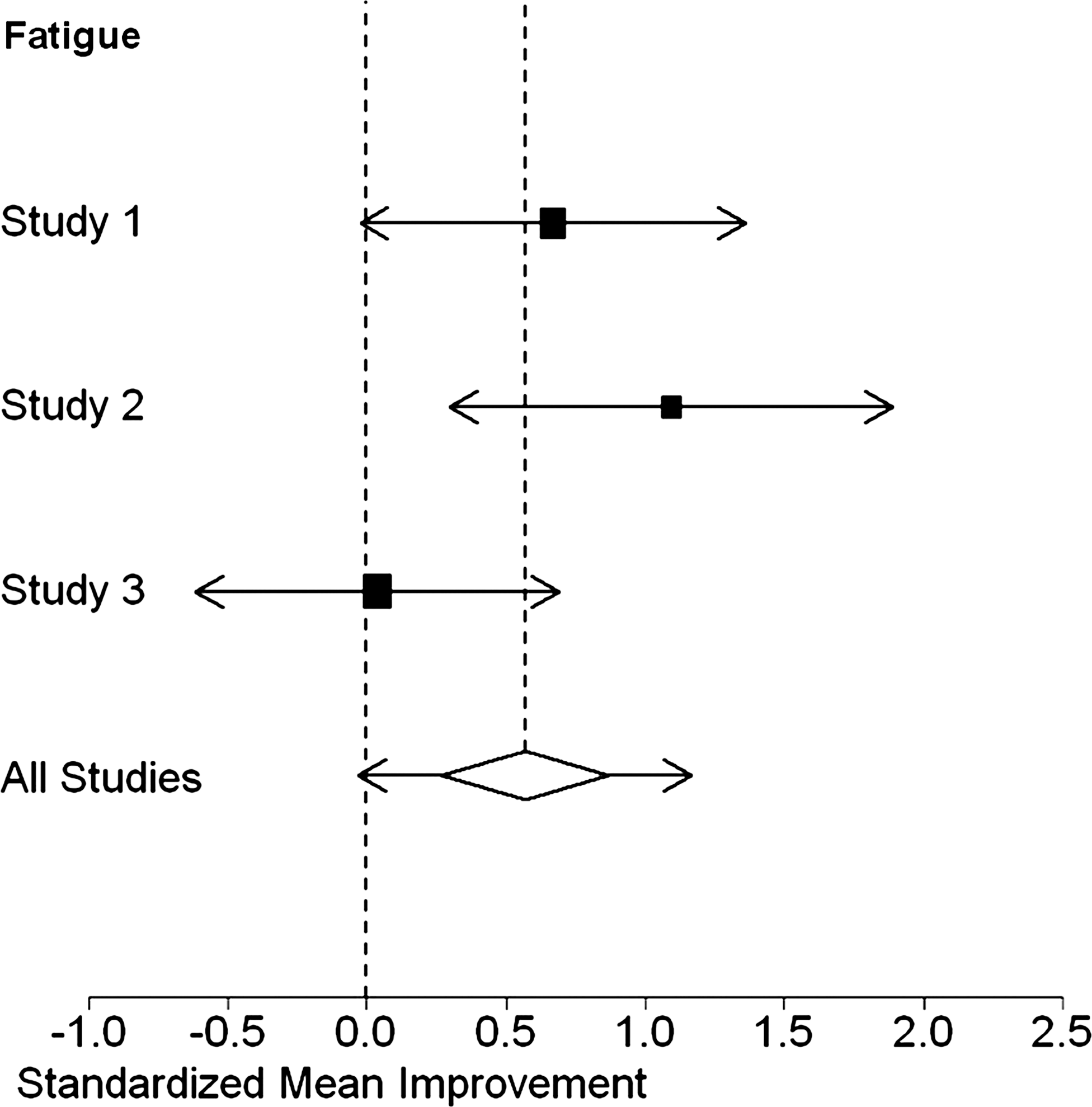
Effect of L. barbarum intervention on fatigue analyzed in raw data (change from pre- to postintervention) from three studies. An effect size was computed from between-group difference in mean change outcome values, divided by the pooled SD, and a correction factor was applied to adjust for bias due to small samples for each trial. For changes in scores, standardized mean differences, treatment effect size, and the associated SEs were calculated to perform the meta-analysis. Data are presented as means with 95% confidence interval. Sources: Study 1, Amagase and Nance; 2 Study 2, Amagase and Nance; 6 and Study 3, Amagase et al. 3
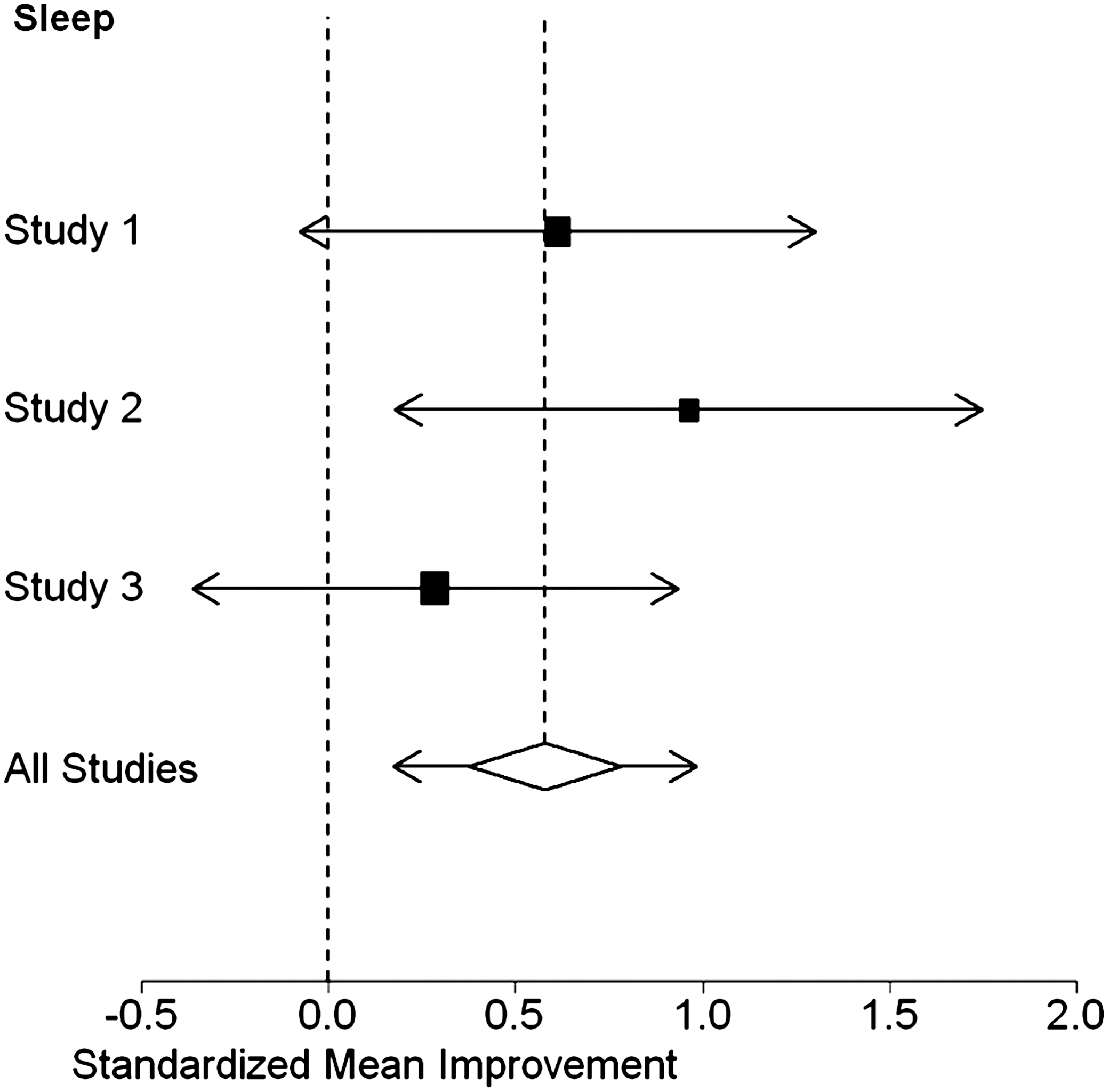
Effect of L. barbarum intervention on sleep analyzed in raw data (change from pre- to postintervention) from three studies. An effect size was computed from between-group difference in mean change outcome values, divided by the pooled SD, and a correction factor was applied to adjust for bias due to small samples for each trial. For changes in scores, standardized mean differences, treatment effect size, and the associated SEs were calculated to perform the meta-analysis. Data are presented as means with 95% confidence interval. Sources: Study 1, Amagase and Nance; 2 Study 2, Amagase and Nance; 6 and Study 3, Amagase et al. 3
Clinical significance of the effect of L. barbarum
Table 2 and 3 shows the standardized difference in improvement between placebo and active (active-placebo). A positive number indicates active performs better in improvement compared with placebo. Based on the heterogeneity test, all three studies had statistically significant heterogeneity in calmness, energy, procrastinatation, and shoulder stiffness (Tables 2 and 3). Hence, the result based on a random effects model, which accounts for heterogeneity among the three studies, was more appropriate for those questions. Under a random effects model, none of those questions had statistically significant improvement for the L. barbarum group (a lower score postintervention compared with preintervention). For the other questions that did not have statistically significant heterogeneity among the three studies, the result based on a fixed effects model was used to evaluate the improvement for the L. barbarum group. Under a fixed effects model, the L. barbarum group had statistically significant improvements in fatigue, weakness, depression, stress, mental acuity, awake, shortness of breath, focus on activity, circulation, sleep, daydream, and overall feelings of well-being compared with the placebo group (Tables 2 and 3). When only considering improved or not, the L. barbarum group had a statistically significant higher chance of improvements in fatigue, dizziness, and sleep compared with the placebo group based on a Mantel–Haenszel meta-analysis (Table 4).
Discussion
The individual clinical studies analyzed in the current meta-analysis were small, but each randomized, placebo-controlled, blind human clinical study has indicated various improvements by daily consumption of L. barbarum. 2 –5 The present meta-analysis suggested that, relative to a placebo control group, daily consumption of L. barbarum produces significant changes in the subjective rating of feelings of general well-being, including fatigue, weakness, depression, stress, mental acuity, awake, shortness of breath, focus on activity, circulation, sleep, daydream, calmness, and overall health benefits. These significant effects were consistent among the analyzed studies and with the prescribed uses of L. barbarum as practiced in traditional Asian medicine. Furthermore, previously published experimental studies have shown that the L. barbarum possesses a same range of biological activities. 1,2 The results of this meta-analysis were consistent with historical knowledge on the actions of L. barbarum.
Although a detailed mechanism of L. barbarum has yet to be fully clarified, orally consumed L. barbarum has been shown to increase antioxidant capacities in in vivo studies in both humans and murines. In humans, L. barbarum has been shown to increase endogenous superoxide dismutase and glutathione peroxidase and to reduce lipid peroxidation (as indicated by decreased malondialdehyde). 5 In mice, L. barbarum significantly reduced skin photodamage induced by an acute solar-simulated ultraviolet irradiation indicated by inflammatory edema of the sunburn reaction in a dose-dependent manner and acted against suppression induced by the mediator, cis-urocanic acid, measured by the contact hypersensitivity reaction. Antioxidant activity in the skin was demonstrated by the significant protection by orally consumed L. barbarum against lipid peroxidation induced by ultraviolet A radiation. Furthermore, two known inducible endogenous skin antioxidants, heme oxygenase-1 and metallothionein, were found to be involved in the photoimmune protection. The results suggest that consumption of this juice could provide additional photoprotection for susceptible humans. 15
The antioxidant effects of L. barbarum may be associated with mechanisms underlying the physiological effects of L. barbarum reported in our previous study with regard to sleep quality. For example, alterations in the metabolism of reactive oxygen species result from prolonged sleep deprivation. 16 Also, other observed effects reported for L. barbarum may be mediated by its antioxidant effects. Individual LBP 17,18 have shown various effects, including antioxidant activities. In vitro studies have shown that LBP significantly inhibited mitochondrial lipid peroxidation induced by oxygen radicals 18 and protected the fluidity of the mitochondrial membrane. 19 A study on red blood cells showed that although oxygen radicals significantly damaged the shape of the red blood cells, the addition of L. barbarum prevented the damage and left the shape of the red blood cell intact. 19 Thus, one of the mechanisms of action of LBP may be a direct effect in protecting membranes from oxygen radical damage. The structure of the LBP molecule may be necessary for its antioxidant effects. The glycoconjugates (one of the constituents of LBP) inhibited low-density lipoprotein peroxidation while their glycans showed no effects on low-density lipoprotein peroxidation. 17,18 LBP may exert its effects in additional ways, acting as bioactive fiber or prebiotics, helping probiotic bacteria to synthesize and release antioxidants and inhibit inflammation. 20 Thus, the gastrointestinal effects may contribute some antioxidant actions within the gastrointestinal tract, prior to absorption. Because free radical oxidation plays a role in various diseases and symptoms, 21 L. barbarum may be useful in preventing or reducing these oxidation-related conditions, disease, and aging. As elderly people demonstrate age-associated decreases in glutathione peroxidase and superoxide dismutase levels, 22 L. barbarum fruit juice may have anti-aging effects that are consistent with the traditionally recognized effects of L. barbarum.
In the psychological and neurological area, L. barbarum and LBP have been shown to protect neurons in animal models of neurodegenerative disease, and the neuroprotection was independent of the antioxidant activity of LBP. Neurons were protected against dithiothreitol-induced lactate dehydrogenase release, increased caspase-3 activity, and the cytotoxicity of fibrillar Aβ fragments and the phosphorylation of c-Jun N-terminal kinase-1. 23,24 These same models are used to analyze age-related neurodegenerative diseases. The results reported for L. barbarum support the anti-aging properties claimed by traditional Asian medicine and may be related to the psychological and neurological effects found in the present meta-analysis. We believe there may be additional actions of L. barbarum on the neuroendocrine system based on our recent clinical study observation. 25
L. barbarum is reported in several in vivo animal studies to be neuroprotective against the loss of retinal ganglion cells in glaucoma 26 or age-related macular degeneration. 27 However, our studies with healthy volunteers did not show any changes in visual acuity.
As with any meta-analysis of observational studies, there is a limitation in this meta-analysis. Although the studies enrolled in this meta-analysis used the same L. barbarum preparation, the number of studies is relatively small. All of the studies relied on self-evaluated subjective symptoms, which may have led to some underestimation of the true associations. Nevertheless, the positive association remained when we evaluated the efficacies of L. barbarum in various areas in humans. Intake of L. barbarum may be useful even for different ethnic populations based on this meta-analysis. Further detailed analysis is necessary to investigate whether there are any differences in the impact of L. barbarum intake in different ethnic groups.
Conclusions
The present meta-analysis confirmed the various health effects of LBP-standardized L. barbarum intake found in the previous randomized, double-blind, placebo-controlled human clinical trials and revealed it resulted in statistically significant improvements in neurological/psychological performance and overall feelings of health and well-being compared with the placebo group under both the fixed and the random effects models of the R program. The L. barbarum group had a statistically significant higher chance of improvements indicated by OR in fatigue, dizziness, and sleep quality compared with the placebo. Three studies had statistically significant heterogeneity in procrastination, shoulder stiffness, energy, and calmness. The data suggest that further research is needed to confirm and extend knowledge of the potential effects of L. barbarum on human health.
Footnotes
Acknowledgments
The authors thank Kathleen Fry, M.D., former President of the American Holistic Medical Association, for her supervision of a part of the clinical trials. George Y.C. Wong, Ph.D., at Beth Israel Medical Center is also thanked for his critical review of the research questionnaire. All sources of financial support came from FreeLife International, the manufacturer and marketer of GoChi juice.
Author Disclosure Statement
H.A. is an employee of FreeLife. C.-H.P.H. is an independent academic statistician, financially supported by FreeLife for this meta-analysis service. D.M.N. is a member of an independent scientific advisory board to FreeLife.