




Abstract
Advanced glycation endproducts and oxidative stress contribute to the pathogenesis of diabetic complications. The total phenolic content (TPC), antioxidant, and antiglycation properties of crude ethanolic extracts of 10 common culinary herbs and spices from Mauritius were investigated in vitro. Fluorescence at 370 nm/440 nm was used as an index of albumin glycation. Allium sativum had the highest TPC (3.1 mg GAE/mL), whereas Allium cepa L. showed the highest radical scavenging capacity (72%) and Zingiber officinale had the most potent ferric-reducing antioxidant power (FRAP; 2.99 mg AAE/mL). In contrast, Thymus vulgaris and Petroselinum crispum had the most potent antiglycation activity with IC50 values of 21.8 and 200 mg/mL, respectively. There was no significant correlation between TPC (r=0.001), FRAP (r=0.161), and the antiglycation activity (r=0.034) for the extracts studied. Therefore, the results showed that antiglycation properties of plant-derived extracts cannot always be attributed to their phenolic content or antioxidant potential.
Introduction
A
The present study investigated the potential of crude extracts of local culinary herbs and spices to inhibit glucose-mediated glycation in vitro. The experimental investigation aims to study the potential for nutritional compounds with antiglycation properties as future perspectives for prevention of AGEs in vivo. Any antiglycation activity of food plants might suggest a possible role in targeting ageing and diabetic complications and will provide baseline data for further studies. We also compared the antioxidant capacities of the extracts, including their total phenolic content (TPC) to establish correlation, between any observed antiglycation and antioxidant activities. To our knowledge, this is the first study that has endeavored to study the possible relationship of common culinary herbs and spices with respect to their TPC, antioxidant, and antiglycation activities.
Material and Methods
Chemicals
Bovine serum albumin (BSA; Fraction V, fatty acid free, low endotoxin), D-glucose, sodium azide, phosphate-buffered saline (PBS), aminoguanidine, urea, trichloroacetic acid, Folin-Ciocalteu's phenol reagent, 2,2-diphenyl-2-picrylhydrazyl hydrate (DPPH), ascorbic acid, gallic acid, anhydrous sodium carbonate, ethanol, methanol 100%, iron(III) chloride 6-hydrate, potassium ferricyanide, potassium dihydrogen phosphate, and dipotassium hydrogen phosphate were purchased from Sigma-Aldrich (St. Louis, MO, USA).
Plant materials and preparation of extracts
Culinary herbs and spices were purchased from a local market. Ten commercially available herbs and spices were tested; namely, garlic (Allium sativum), ginger (Zingiber officinale), thyme (Thymus vulgaris), parsley (Petroselinum crispum), curry leaves (Murraya koenigii Spreng), peppermint (Mentha piperita L.), turmeric (Curcuma longa L.), onion (Allium cepa L.), green onion scallion, coriander (Coriandrum sativum L.), and a local commercial mixed spice used traditionally in Mauritius comprising of cloves (Syzygium aromaticum L.), holy fruit leaves (Aegle marmelos), banyan leaves (Ficus bengalensis), and bitter gourd (Momordica charantia). The survey was limited to products that are widely available to the public and are in routine use for daily food cooking in Mauritius. Fresh culinary herbs and spices were grounded into a paste and 5 g of the latter were extracted with ethanol (50%) at a mass to volume ratio of 1:10 (g/mL) at room temperature (28°C±2°C) for 1 week. The extracts were centrifuged at 1000 g for 10 min to remove precipitate.
In vitro glycation
Albumin-derived AGEs were measured using fluorometry as described by Matsuura et al. 6 Briefly, 1 mg/mL of fatty acid-free BSA was incubated with D-glucose (200–400 mM)±100 μL of herb or spice extracts in 0.2 M potassium PBS (pH 7.4 containing 0.01% sodium azide) at 37°C for defined time periods. Aliquots of the reaction mixture were removed at weekly intervals and fluorescent AGEs were assessed by their emission at 440 nm following excitation at 370 nm using a spectrofluorimeter (F-7000 FL) as described previously. 7 The reactions were stopped by adding 10 μL of 1 g/mL tricholoroacetic acid and after 10 min the mixture was centrifuged at 10,000 g. The precipitate was redissolved in alkaline PBS and quantified for the relative amount of fluorescent AGEs as described above. Complete inhibition of fluorescent AGEs was assumed to occur when fluorescence was inhibited to that of albumin in the absence of glucose, which was used as a negative control. Aminoguanidine and urea (both at 20 mM) were included as positive controls.
Measurement of antiglycation activity
The fluorescence produced in the presence of BSA and glucose was represented as 100% glycation, which is the same as 0% inhibition in the absence of tested extracts and controls. Any sample giving fluorescence equal to the fluorescence of BSA/glucose implied that there was no inhibition of glycation, whereas any sample giving fluorescence lower compared with BSA/glucose indicated that there was inhibition of glycation by the extract present. As described by Chen et al.,
8
the percentage inhibition of glycation of each of the control and plant extract has been calculated as follows:
Effect of different concentrations of extract on formation of fluorescent AGEs
The inhibitory activity of the extracts on fluorescent AGEs was further confirmed in the concentration-dependent studies. In these experiments, extracts of thyme, parsley, and a commercial mixed spice at various concentrations (10, 7.5, 5.0, and 2.5 mg/mL) were incubated with BSA and glucose at 37°C for 2 weeks. Additionally, the formation of glycation was monitored for 12 weeks and any correlation was established for the glycation activity over time. Thereafter, the reaction was stopped as described above.
Determination of TPC
The TPC in extracts was determined using the Folin-Ciocalteu's colorimetric method according to Katalinic et al. 9 Samples of extracts (0.1 mL) and 0.5 mL of the Folin-Ciocalteu's phenol reagent (diluted 10 times) were mixed with 0.4 mL of 7.5% sodium carbonate for 1 h and absorbance was measured at 765 nm using a Perkin-Elmer spectrophotometer. Standards of gallic acid were used to calibrate the method and results expressed as milligrams of gallic acid equivalents per mL (mg GAE/mL). Each assay was performed in triplicate.
Determination of the radical scavenging ability using the 2,2-diphenyl-2-picrylhydrazyl hydrazyl hydrate assay
Radical scavenging activity of the extracts against stable DPPH was determined spectrophotometrically using the method of Brand-Williams et al. 10 Briefly, different plant extracts were placed in cuvettes with a 0.1 mM methanolic solution of DPPH. Different concentrations of the extracts were added to the DPPH and ascorbic acid was used as control. The decrease in absorbance at 515 nm was determined after 30 min. The absorbance of the DPPH radical without an antioxidant, that is, control, was also measured. The experiments were carried out in triplicate and the results expressed as a percentage of the control.
Ferric-reducing antioxidant power
The ferric-reducing antioxidant power (FRAP) assay was used as described by Benzie and Strain. 11 The FRAP assay measures the change in absorbance owing to the formation of a blue colored FeII-tripyridyltriazine compound from a colorless oxidized FeIII form by the action of electron-donating antioxidants. Briefly, 0.5 mL of extracts was added to 1 mL of 0.2 M phosphate buffer, pH 6.6 and 1 mL potassium ferricyanide (0.01 g/mL). The mixtures were incubated at 50°C for 20 min, after which 1 mL of 0.1 g/mL tricholoroacetic acid was added. A 1-mL aliquot of the mixture was taken and mixed with 1 mL water and 0.5 mL of 0.01 g/mL FeCl3. The absorbance at 578 nm was measured after 30 min. Ascorbic acid was used as a positive control and results were expressed in milligrams of ascorbic acid equivalents per milliliter (mg AAE/mL).
Statistical analysis
Results were presented as mean±S.D. Difference between groups and percentage inhibition of fluorescent AGEs was compared using the unpaired t-test with the one-tailed test. Correlations between variables were quantified by the correlation factor r. Correlation and linear regression analysis was performed using Microsoft Excel 2007 (Redmond, WA, USA). In each analysis, P<.05 was considered statistically significant.
Results
Fluorescent AGEs formed by glycation of BSA with 200 and 400 mM glucose were significantly higher (P<.05) compared to BSA incubated alone (negative control) as shown in Figure 1. Aminoguanidine inhibited formation of fluorescent AGEs in BSA glycated at both 200 and 400 mM glucose (P<.05) as shown in Figure 1, and was therefore used as a positive control. Based on these observations, screening for antiglycation activity among the 10 culinary herbs and spices was performed by glycation of BSA with 200 mM glucose and the concentration-dependent studies with both concentrations.
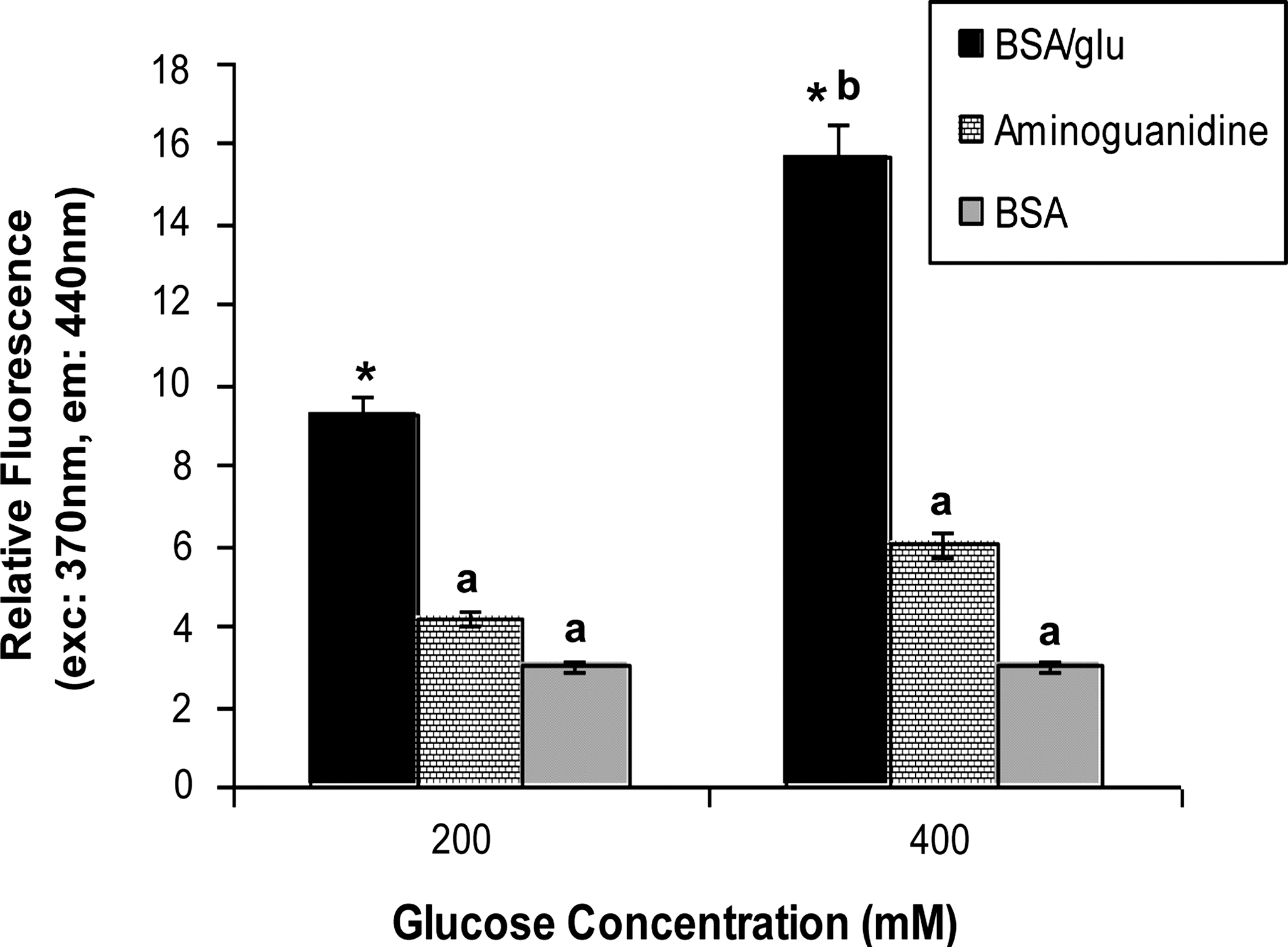
Effect of different glucose concentrations on formation of fluorescent advanced glycation endproducts (AGEs). Results are presented as mean±S.D. (n=3). *Values significantly higher (P<.05) compared to the control (bovine serum albumin [BSA] alone) in same group. aValues significantly lower (P<.05) compared to BSA and glucose (glu) in each group. bValues significantly higher (P<.05) than when incubated with 200 mM glucose.
Effect of different extracts on formation of fluorescent AGEs
The amount of fluorescent AGEs formed were significantly (P<.05) dependent on the concentration of glucose used and the period of incubation. Most of the 10 extracts were found to inhibit glucose-derived fluorescent AGEs as depicted in Table 1. Urea, which was previously reported to be a potent inhibitor of glycation, was found to inhibit fluorescent AGE formation for the first 4 weeks, whereas aminoguanidine reduced AGE formation (r=0.987) for the whole incubation period (i.e., 12 weeks). When glycation inhibition was monitored over 12 weeks, the correlation coefficients for the extracts tested were as follows: garlic (r=0.465), ginger (r=0.374), thyme (r=0.831), parsley (r=0.808), curry leaves (r=0.690), peppermint (r=0.638), turmeric (r=0.598), onion (r=0.409), scallion (r=0.177), and coriander (r=0.411). The correlation coefficient demonstrated that inhibition of glycation could be sustained over the period of 12 weeks for some of the extracts; namely, thyme, parsley, curry leaves, and peppermint when compared to the positive control aminoguanidine.
Percentage inhibition of fluorescent AGEs following glycation of bovine serum albumin with 200 mM glucose in the presence of 10 culinary herb and spice extracts in 0.2 M phosphate-buffered saline, pH 7.4 at 37°C. Fluorescent AGEs were measured after 2, 4, 8, and 12 weeks. Results are presented as means±S.D (n=3).
Values significantly different (P<.05) from the control in each group.
AGEs, advanced glycation endproducts.
Effect of different concentrations of extracts on fluorescent AGE formation
Extracts of thyme, parsley and a local commercial mixed spice were found to inhibit the formation of fluorescent AGEs at different glucose concentration (Figs. 2 and 3). However, the inhibitory activity of a mixture of thyme and parsley (1:1 [v/v]) was less significant compared with the respective extracts. The correlation coefficient for thyme was (r=0.982), parsley (r=0.408), commercial mixed spice (r=0.949), and mixture of thyme and parsley (r=0.522). At 200 mM glucose, the IC50 values were 21.8 mg/mL for thyme, 200 mg/mL for parsley, 15.2 mg/mL for commercial mixed spice, and 39.2 mg/mL for a mixture of thyme and parsley (1:1 [v/v]), indicating that thyme is a more potent inhibitor of glycation than parsley.

Inhibition of fluorescent AGEs by graded concentrations of extracts.
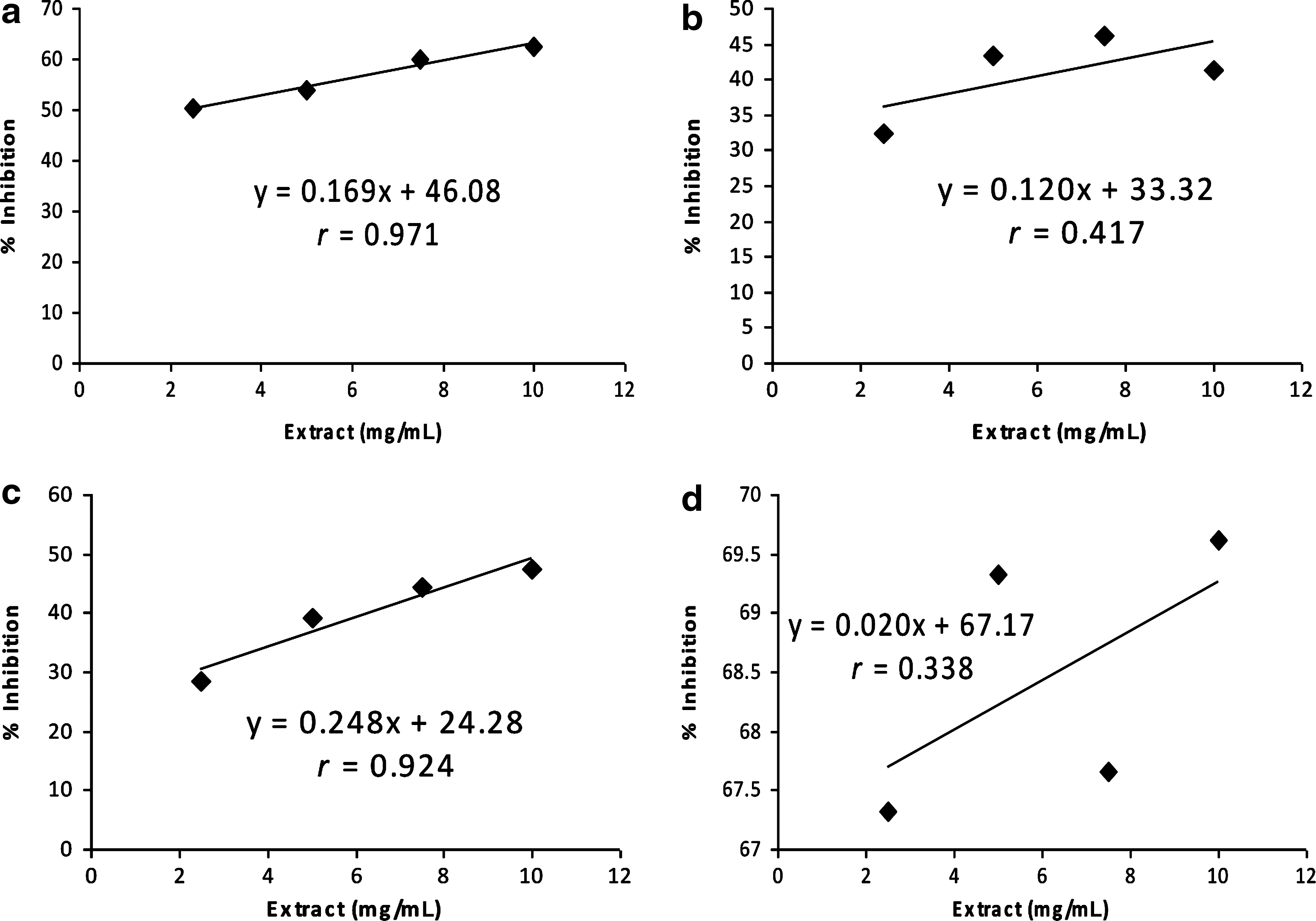
Inhibition of fluorescent AGEs by graded concentrations of extracts.
At 400 mM of glucose, the IC50 values were 2.3 mg/mL for thyme, 13.9 mg/mL for parsley, 5 mg/mL for commercial mixed spice, and 10.4 mg/mL for a mixture of thyme and parsley (1:1 [v/v]). The correlation coefficient for thyme was (r=0.971), parsley (r=0.417), commercial mixed spice (r=0.924), and mixture of thyme and parsley (r=0.338). Thus, thyme was found to be a better inhibitor of glycation than parsley at different glucose concentrations as its IC50 value was significantly (P<.05) lower in both cases. However, it was found that the commercial mixed spice was a very potent inhibitor of glycation at both glucose concentrations with correlation coefficients of r=0.949 at 200 mM and r=0.924 at 400 mM glucose. No synergistic effect was observed when thyme and parsley were mixed in equal volumes.
Phenolic content of extracts of different herbs and spices
A wide range of phenolic concentrations were observed (Fig. 4). Extracts having the highest phenolic content were garlic (3.1 mg GAE/mL), thyme (2.7 mg GAE/mL), curry leaves (2.6 mg GAE/mL), and ginger (2.3 mg GAE/mL). The average phenolic contents were parsley (1.6 mg GAE/mL), onion (1.5 mg GAE/mL), peppermint (1.5 mg GAE/mL), and scallion (1.3 mg GAE/mL), whereas turmeric (1.0 mg GAE/mL) and coriander (0.1 mg GAE/mL) had the lowest contents. Hence, among the 10 selected extracts, the phenolic content from highest to lowest was as follows: garlic > thyme >curry leaves > ginger > parsley > onion > peppermint > scallion > turmeric > coriander.
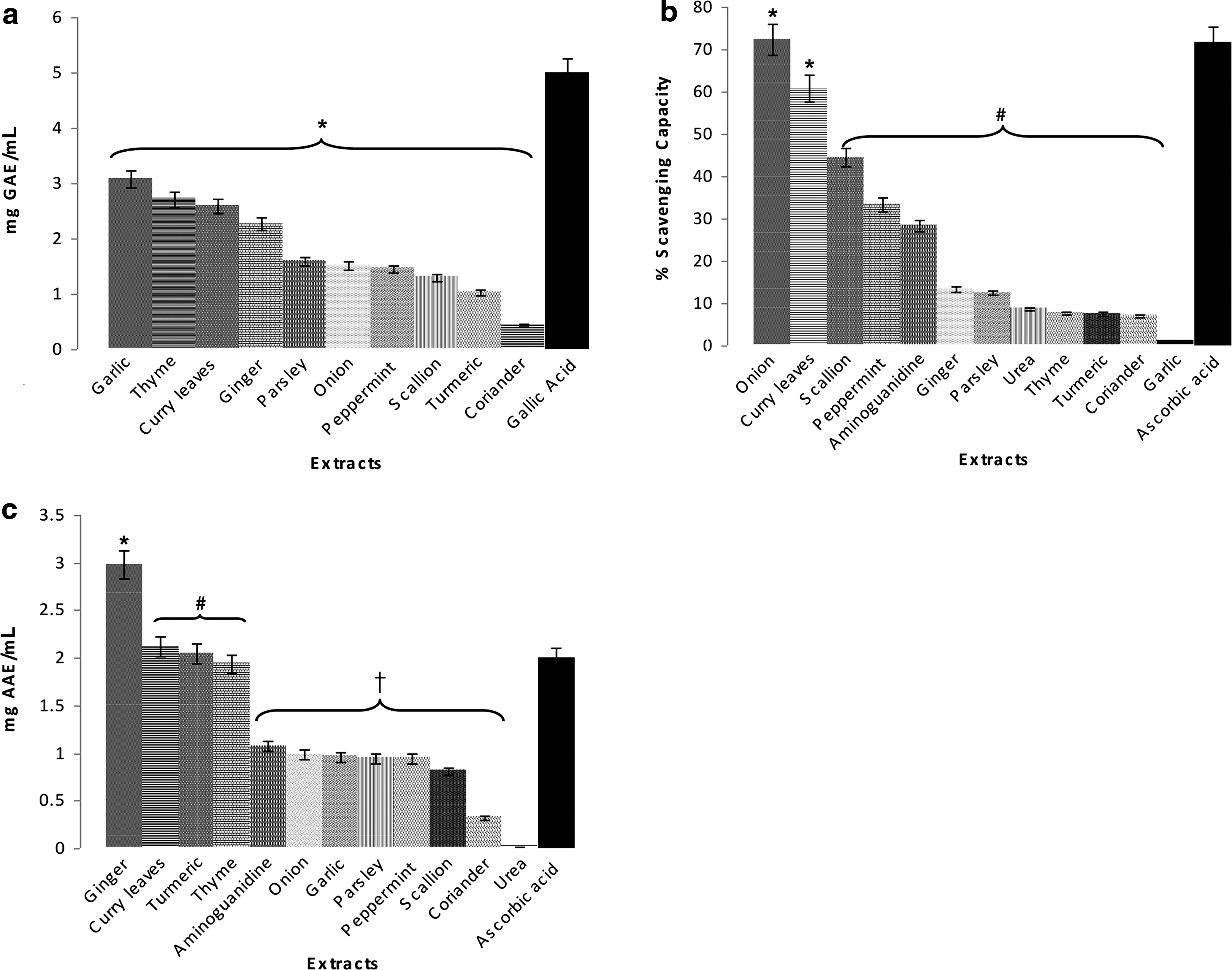
Phenolic content
DPPH-radical-scavenging capacity of extracts of different herbs and spices
Onion and curry leaves were found to depict similar DPPH radical scavenging activities as the positive control, ascorbic acid. The DPPH scavenging capacity for the 10 extracts from highest to lowest was in the order of onion (72%) > curry leaves (61%) > scallion (44%) > peppermint (33%) > ginger (13%) > parsley (13%) > thyme (8%) >turmeric (8%) > coriander (7%) > garlic (1%). Aminoguanidine, the established antiglycation compound had an average scavenging capacity of 28%, whereas urea had a lower scavenging capacity of only 9% (Fig. 4B).
FRAP of extracts of different herbs and spices
The FRAP of different plant extracts is shown in Figure 4C. Among the 10 extracts tested, the strongest antioxidant property as depicted by the FRAP assay was observed in ginger, which was significantly (P<.05) more potent than the positive control, ascorbic acid. On the other hand, curry leaves, turmeric, and thyme gave similar activities to ascorbic acid. The antioxidant activity of the extracts was in the order of ginger (2.99 mg AAE/mL) > curry leaves (2.12 mgAAE/mL) > turmeric (2.04 mg AAE/mL) > thyme (1.94 mg AAE/mL) > onion (0.99 mg AAE/mL) > garlic (0.96 mg AAE/mL) > parsley (0.94 mg AAE/mL) > peppermint (0.93 mg AAE/mL) > scallion (0.81 mg AAE/mL) > coriander (0.32 mg AAE/mL).
Relationship between TPC, scavenging capacity, free radical antioxidant potential, and antiglycation ability of different extracts
The TPC, antioxidant,. and antiglycation potentials of the extracts were expressed as relative percentage capacity and presented in Figure 5. The correlation coefficient between TPC and DPPH was found to be r=0.001 (Fig. 5a). A very weak correlation of r=0.161 was observed between TPC and FRAP (Fig. 5b). Also, a weaker correlation coefficient of r=0.034 (Fig. 5c) appeared between TPC and the antiglycation capacity of the extracts investigated. Comparison between the antiglycation potential and FRAP revealed a correlation coefficient of r=0.002 (Fig. 5d), whereas the relationship between antiglycation and DPPH had a correlation coefficient of r=0.133 (Fig. 5e).
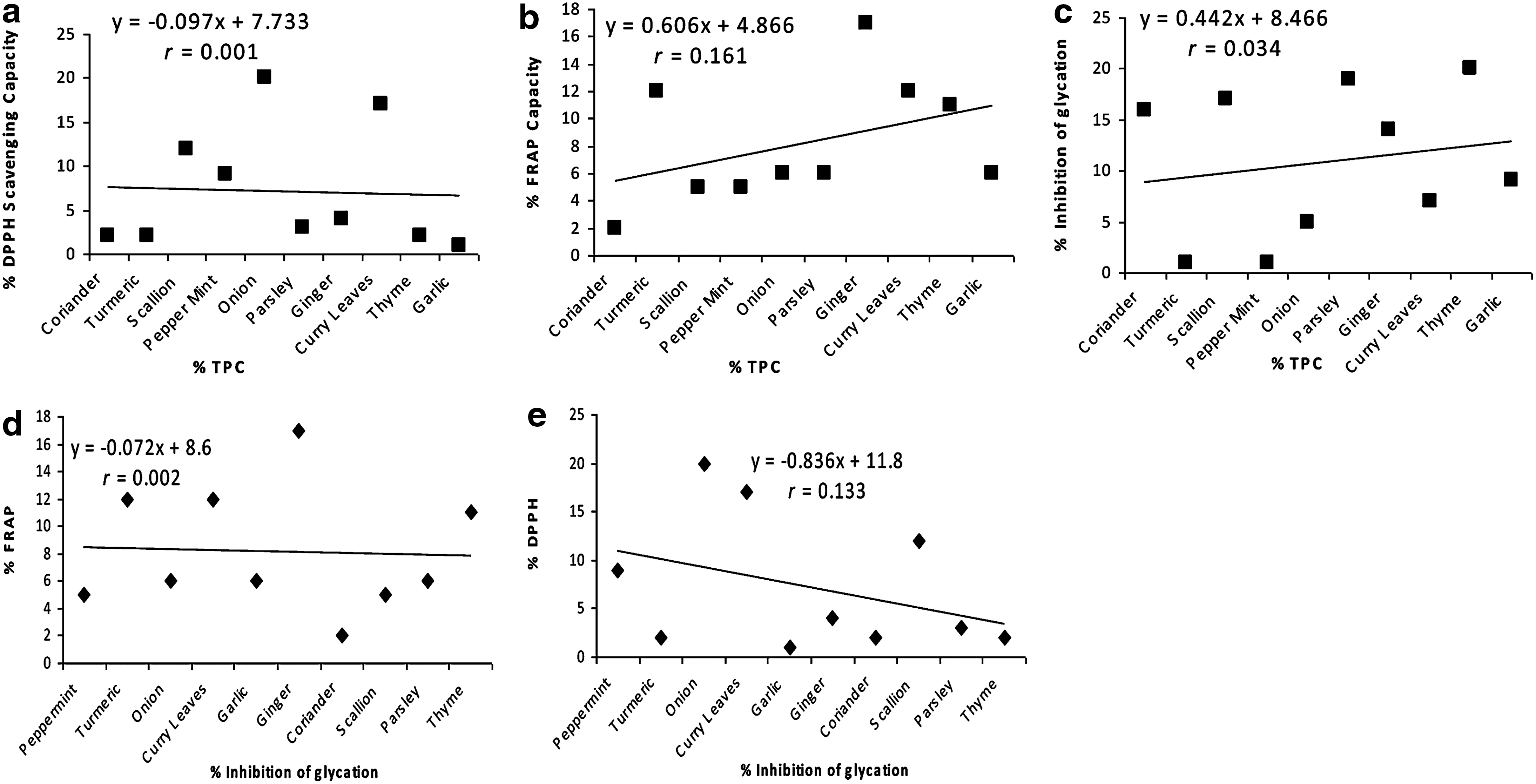
Correlation between phytochemical properties:
Discussion
In the present study, garlic extracts have been found to inhibit glycation significantly. Interestingly, aged garlic has been reported to possess antiglycation properties in vitro, 12 which tend to complement results amassed from the present study. Conversely, with extracts of curry leaves, peppermint, and turmeric, no significant inhibitory effect could be detected at the start. Besides, onion was found to be among the least potent inhibitor of glycation, whereas the most potent inhibitors were thyme, parsley, peppermint, curry leaves, and coriander; according to their average percent inhibition. These data suggest that culinary herbs and spices are prospective antiglycation agents, thus justifying further investigations of the active ingredients in these food plants.
In relation to the antioxidant potential, it was found that aminoguanidine and urea possess some radical scavenging activity with the former being more potent. Interestingly, it was found that parsley, ginger, onion, curry leaves, scallion, and peppermint had a relatively higher scavenging capacity. The FRAP assay showed that all of the extracts had some antioxidant capacity. Previous reports on the relationship between the TPC and antioxidant capacity demonstrated both a linear correlation between TPC and the antioxidant capacity and also no correlation in other cases. 13 Thus, depending on the plants under investigation, a linear correlation can be established between TPC and antioxidant capacity and also in other cases no relationship. Indeed, it was reported by Aquil et al., 14 that among the 12 traditionally used Indian medicinal plants, a fair correlation between free radical scavenging activity and TPC was observed for only 9 plants, whereas no such relationship was observed for 3 plants. Nonetheless, our results showed no significant correlation between the TPC, antioxidant capacity, and antiglycation potential, at least for the culinary herbs and spices investigated under the test conditions.
Currently, there is a growing interest in the antioxidant and anti-inflammatory capacities of phenolic compounds and in their use in the prevention or treatment of chronic inflammatory diseases. Antiglycation and antioxidant agents may retard the process of AGE formation by preventing further oxidation of Amadori products and metal-catalyzed glucose oxidation. In fact, inhibitors of AGEs that have antioxidant activity may act as preventive agents against diabetic complications. Our work has revealed that the antioxidant capacity and the TPC of the extracts studied did not contribute significantly to the inhibition of fluorescent AGEs. However, a plethora of investigations tend to suggest that the abilities to inhibit the formation of AGEs is closely related to the abilities of the antioxidant properties of the plant extracts to scavenge radicals formed during the Maillard reaction, which forms the basis of glycation. Interestingly, in the current work, some extracts that were found to possess antioxidant properties were also found to possess antiglycation potential. It can be suggested that the antioxidant properties of these spices might to some extent, justify the observed antiglycation properties similar to the mode of action of aminoguanidine, although a direct correlation was not recorded.
However, it can be argued that the antiglycation capacity was separate from the antioxidant potentials as no direct correlation was found. This can be explained by the fact that AGEs are formed from different pathways, including lipid peroxidation, acetol, and Namiki and Wolff pathways, which involve diverse precursors and intermediate molecules. The underlying inhibitory mechanisms of AGE inhibitors from these extracts could therefore act through different ways, for example, by blocking sugar attachment to proteins, exerting effects at early stages of glycation inhibiting formation of Schiff base, blocking the formation of intermediate Amadori products, attenuating glycoxidation and oxidative stress through trapping or scavenging some intermediates, including reactive dicarbonyls, free radicals, and nitrogen species, produced in the process of glycation and breaking down formed AGE cross links. Also antioxidants might be involved in inhibiting formation of nonfluorescent AGEs.
Findings from this study tend to indicate the potential of some dietary components to prevent and/or inhibit protein glycation. Such dietary components could reduce formation of endogenous AGEs in vivo, thus reducing the likelihood of developing diabetic complications or reducing their progression. It was found that there was no direct correlation between the antioxidant capacity and antiglycation potential suggesting that the two might act through different pathways. Certainly, more studies related to the structure of these dietary adjuncts and the reaction mechanisms are required to understand their antiglycation effects.
Footnotes
Acknowledgments
We are grateful to the University of Mauritius and the Tertiary Education Commission, Mauritius, for financial support.
Author Disclosure Statement
No competing financial interests exist.