




Abstract
Feijoa sellowiana Berg var. coolidge fruit juice was studied in vivo for the anti-inflammatory activity by carrageenin-induced paw edema test and in vitro for the effects on superoxide anion release from neutrophils in human whole blood. The fruit juice was analyzed by the high-performance liquid chromatography method, and quercetin, ellagic acid, catechin, rutin, eriodictyol, gallic acid, pyrocatechol, syringic acid, and eriocitrin were identified. The results showed a significant anti-inflammatory activity of F. sellowiana fruit juice, sustained also by an effective antioxidant activity observed in preliminary studies on 1,1-diphenyl-2-picrylhydrazyl (DPPH) test. In particular, the anti-inflammatory activity edema inhibition is significant since the first hour (44.11%) and persists until the fifth hour (44.12%) of the treatment. The effect on superoxide anion release was studied in human whole blood, in the presence of activators affecting neutrophils by different mechanisms. The juice showed an inhibiting response on neutrophils basal activity in all experimental conditions. In stimulated neutrophils, the higher inhibition of superoxide anion generation was observed at concentration of 10−4 and 10−2 mg/mL in whole blood stimulate with phorbol-myristate-13-acetate (PMA; 20% and 40%) and with N-formyl-methionyl-leucyl-phenylalanine (FMLP; 15% and 48%). The significant reduction of edema and the inhibition of O2 − production, occurring mainly through interaction with protein-kinase C pathway, confirm the anti-inflammatory effect of F. sellowiana fruit juice.
Introduction
F
Literature data on F. sellowiana report many activities: antibacterial, 7,10,11 analgesic, anti-inflammatory, 12 antiulcer, 13 anticancer, 14 –16 and bone mineralization enhancing. 17
Rossi et al. 18 demonstrated the anti-inflammatory activity of Feijoa fruits on the nitric oxide pathway, but no data are present on the effects of this fruit on superoxide anion release from neutrophils.
An inflammatory stimulus, like carrageenan, can alter the neutrophil membrane and produce highly reactive oxygen species (ROS), such as superoxide anion. 19
The neutrophils are highly involved in the initial phases of the inflammation and are able to generate highly ROS, such as superoxide anion, hydrogen peroxide (H2O2), hydroxyl radical, and hypochlorous acid. 20
The superoxide anion O2 − is a very dangerous species produced by neutrophils since it is quickly transformed in H2O2, a toxic compound subsequently converted into the more toxic hypochlorous acid by neutrophil myeloperoxidase. 21
The various biological effects of F. sellowiana fruit and the antioxidant polyphenols that we determined by high-performance liquid chromatography (HPLC) methods in preliminary studies prompted us to investigate its possible immunomodulatory activity on different cellular pathway, possibly related to anti-inflammatory properties.
The aim of this study, therefore, was to evaluate in vivo the anti-inflammatory activity of F. sellowiana fruit by carrageenan-induced paw edema test and in vitro the effects on superoxide anion release from neutrophils in human whole blood, in the presence of several activators affecting neutrophils by different mechanisms.
Materials and Methods
Plant material
The analysis was carried out on F. sellowiana Berg (Myrtaceae) fruits, var. coolidge, grown in Sicily (Professional State Institute for Agriculture, Milazzo, Messina, Italy), stored at −20°C until utilization. A voucher specimen was deposited in the Herbarium of the SCIFAR Department at the University of Messina.
Sample preparation
Aliquots of 60 g of Feijoa fruit were mixed through Ultra-Turrax (Ika Werk), centrifuged at 2235 g, for 20 min, at 15°C (Avanti Centrifuge J 25; Beckman Coulter) and then decanted, obtaining about 20 mL of juice.
To remove mucilage, 8 mL of juice heated in a water bath at 40°C, added with methanol (1:4) to promote mucilage precipitation, and finally centrifuged at 1118 g for 15 min at 15°C.
The supernatant was evaporated in rotary vacuum (Buchi V-800) to remove methanol. Aliquots of 0.5 mL of samples were introduced in cartridges SPE column (Bond Elut C18; Varian, Inc.), previously rinsed with 2.5 mL of methanol and 5 mL of H2O, and 2 mL of H2O was added for sugar elimination. Finally, the purified extract was eluted with 2.5 mL of methanol and 50 μL of H2O. The elute was evaporated to dryness under a stream of nitrogen. The yield was of 10 mg/mL of starting juice.
HPLC analysis
Chemicals
Acetonitrile and methanol HPLC grade were purchased from Fluka (Sigma Aldrich), and ortho-phosphoric 85% acid from Carlo Erba Reagenti SpA. High-quality water was obtained by a Milli-Q water purification system (Millipore Corporation).
Flavonoids and phenolic acids (ellagic acid, gallic acid, syringic acid, catechin, eriodictyol, eriocitrin, pyrocatechol, quercetin, rutin), used as standards, were purchased from Extrasysnthèse and Fluka (Sigma Aldrich).
Analytical method
A Spectra System® Gradient Pumps 4000 Menus liquid chromatograph (Thermo Separation Products), equipped with Vacuum Membrane Degasser SCM 1000 and a Rheodyne valve 8125 (loop 20 μL) (Redwood Drive), was used. Liquid chromatograph was coupled to a Photodiode Array Detector Spectra System UV6000 LP (Thermo Separation Products) working in the range of 220–450 nm. Chromatographic data were processed with a ChromQuest Chromatography Workstation (ThermoQuest Italia S.p.A.).
Analyses were carried out at room temperature on a Zorbax ODS-SS (10 mm×3 mm) connected with a reversed-phase Thermo Scientific Hypersil Gold (5 μm, 250 mm×4.6 mm; Superchrom).
Chromatographic separation was carried out using three eluents—A, water–phosphoric acid 0.3% (v/v); B, methanol; C, acetonitrile—in a linear gradient program, as shown in Table 1. The flow rate was 0.9 mL/min.
Qualitative analysis was carried out comparing the chromatographic behavior and the UV spectra of the components with pure standards under the same chromatographic conditions. Detection was carried out at UV absorption wavelength of the single components. Unidentified components were considered polyphenols on the basis of UV spectra. Peak purity was established carefully by studying the DAD data of all the peaks of interest. Figure 1 shows a typical chromatogram.
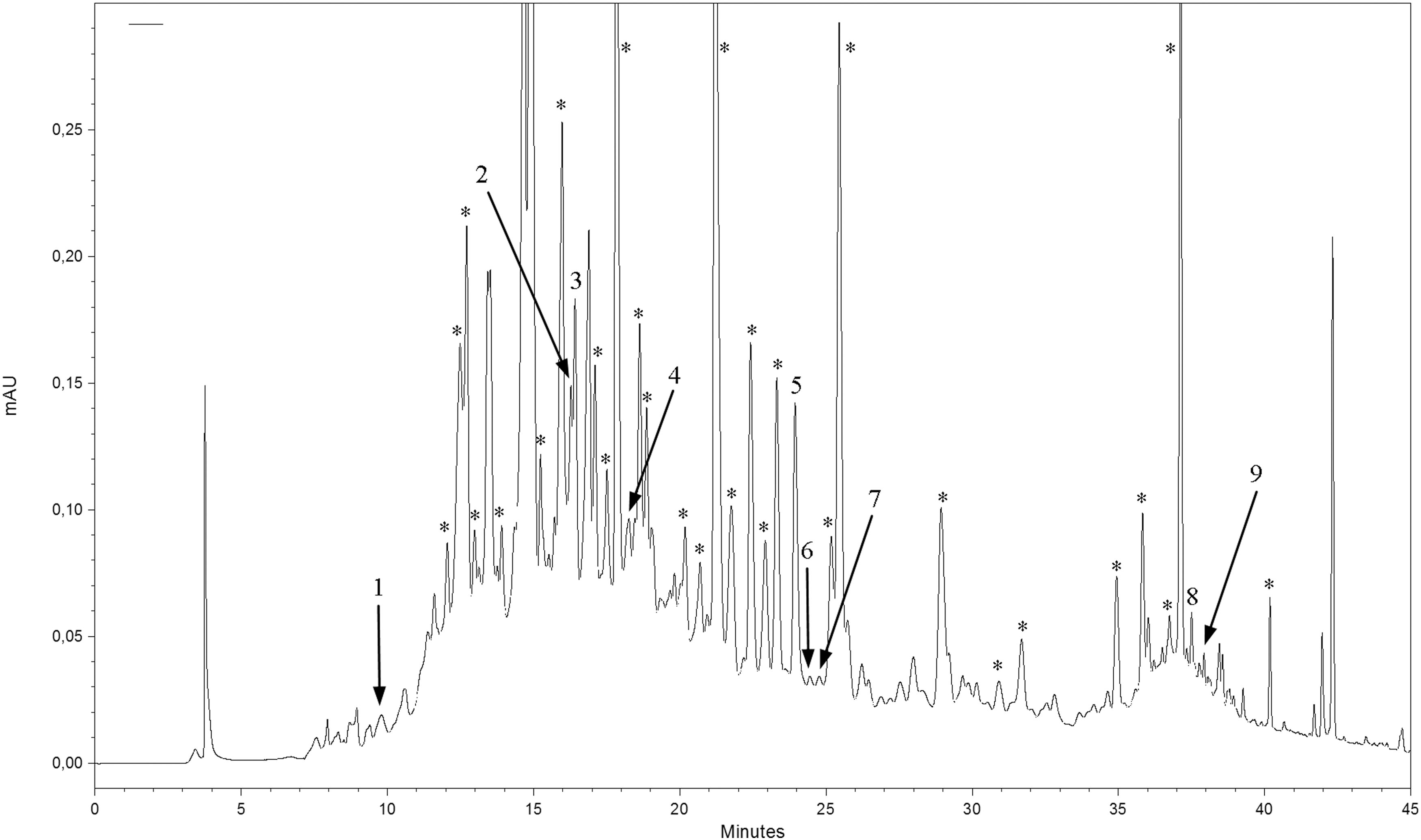
High-performance liquid chromatography of Feijoa sellowiana juice. 1, gallic acid; 2, pyrocatechol; 3, catechin; 4, syringic acid; 5, ellagic acid; 6, rutin; 7, eriocitrin; 8, eriodictyol; 9, quercetin; *, unidentified polyphenols. For chromatographic conditions, see HPLC analysis.
Antioxidant activity
Radical scavenging activity of F. sellowiana juice was assayed according to Ohinishi et al. 22 An ethanol 1,1-diphenyl-2-picrylhydrazyl (DPPH; Sigma-Aldrich) solution (0.1 mM) was mixed with different concentration of the juice (5, 10, and 15 μg/mL). The optical density change at 517 nm was measured 10 min later with a spectrophotometer (model UV-1601; Shimadzu). The scavenging activity was measured as the decrease in absorbance of the samples versus DPPH standard solution. The mean value was obtained from triplicate experiments. Results were expressed as percentage activity, and mean inhibiting concentrations (IC50) were calculated using the Litchfield and Wilcoxon test. 23
In vivo test: anti-inflammatory activity
Animals
Adult male Wistar rats (180–200 g) (Harlan) were used. They were kept in standardized conditions (temperature 22°C±2°C; humidity 60%±4%; natural lighting), fed with a standard diet (S. Morini Mill rat GPL), and water was provided ad libitum. In all experiments, rats were divided into groups of 10 animals each. Animal care was in compliance with Italian regulations on protection of animals used for experimental and other scientific purposes (D:M: 116192), as well as with the EEC regulations (O.J. of E.C.L. 358/1 12/18/1986).
Carrageenan-induced paw edema in rats
Animals were divided into three groups, night fasted, and treated by gavage in the morning: Group I (control) received only the vehicle, 3 mL of water, for 15 days. Group II (reference drug) received 3 mL of water, for 15 days; on the 15th day, 1 h after the last administration, the rats received indomethacin (5 mg/kg in water 0.5 mL/100 g bw.) Group III (treatment) received F. sellowiana fruit juice (30 mg/die) suspended in 3 mL of water for 15 days.
On the 15th day, 1 h after the last administration, edema was induced, in the right hind paw of each rat, by a subplantar injection of 0.05 mL of a 1% carrageenan suspension (BDH)
24
in all groups of animals. Paw volume was measured by a water plethysmometer (7150; Ugo Basile) before the treatment (V
0) and 1, 2, 3, 4, and 5 h after carrageenan injection (V
1). The increase in volume was taken as the volume of edema and was determined for each rat. The percentage inhibition of edema, in treated animals versus control, was calculated as follows:
In vitro test: superoxide anion release assay
Reagents
The following chemicals, N-formyl-methionyl-leucyl-phenylalanine (FMLP), phorbol-myristate-13-acetate (PMA), zymosan, sodium phosphate buffer (PBS), NaCl, MgCl2, superoxide dismutase (SOD), cytochrome C, glucose, CaCl2, were purchased from Sigma-Aldrich. All solvents used were of HPLC grade (99.9%) and obtained from J.T. Backer (Mallinckrodt Backer).
Superoxide anion release assay
The anti-inflammatory activity of Feijoa juice was evaluated on neutrophils basal activity through the superoxide anion release assay. 25 The test was carried out on human venous blood withdrawn from healthly adult volunteers and moved to test tubes containing 10 UI/mL of heparin. Aliquots of 2 mL of whole blood were added to different final concentrations (10−2, 10−4, 10−6, and 10−8 mg/mL) of Feijoa juice and preincubated for 60 min in Dubnoff bath at 37°C under shaking (80 hits/min). The blood samples were then submitted to stimulation with Zymosan, FMLP, and PMA and compared with no stimulated samples. The controls were treated under the same experimental conditions but without Feijoa juice preincubation.
To estimate O2 − release through the SOD-inhibitable reduction of cytochrome C assay, 0.4 mL of Krebs-Ringer phosphate buffer (KRP) and 1.5 mg of cytochrome C were added to plastic test tubes. In half of these tubes, 50 μg of SOD was added, whereas the other half was treated with 0.5 μg of Zymosan or 0.5 μg of FMLP or 1 μg PMA.
In all tubes, 0.1 mL of blood, treated and not treated with Feijoa juice, was added, and the final volume of reaction mixture was 0.5 mL. The reaction went on for 30 min at 37°C under shaking and finally stopped with 2 mL of cold KRP (4°C). The tubes were centrifuged at 202 g for 5 min at 15°C, and the cell-free supernatants were spectrophotometrically analyzed. 26 The absorbance measured at 550 nm was expressed as the ratio between the difference of average absorbance in samples tested with and without SOD and the extinction coefficient for reduced cytochrome C corresponding to 0.0245. The analysis was carried out in triplicate, and the results were expressed as nmoles of O2 −/106 granulocytes, on the basis of total and differential counts of white blood cells.
Statistical analysis
Data obtained were analyzed by unpaired Student's t-test. P-value<.05 versus control was accepted as significant.
Results
HPLC analysis
Quercetin, ellagic acid, catechin, rutin, eriodictyol, gallic acid, pyrocatechol, syringic acid, and eriocitrin were identified and determined on Feijoa fruit juice. Total content of unidentified polyphenols was calculated as mg gallic acid equivalent/kg of sample, 27,28 on chromatogram registered at 280 nm. Among the identified phenolic components, respectively, catechin, ellagic, and pyrocatechol are present in highest quantities. Total content of identified and unidentified compounds was 6.8 g/kg.
Antioxidant activity
The juice of F. sellowiana showed to be an effective radical scavenger. Actually, it inhibited DPPH formation by 53.18% at a concentration of 6.31 μg/mL (SD±1.15) (IC50).
Anti-inflammatory activity in carrageenan-induced paw edema in rats
In the experimental model of Winter et al., 24 the juice inhibits plantar edema in rats. The activity was significant since the first hour (44.11%) and persists until the fifth hour (44.12%). The effect was highly significant when compared with the control group (Table 2).
P<.05.
Superoxide anion release assay
The effects of F. sellowiana fruit juice on basal production of O2 − by not stimulated neutrophils, in human whole blood, are reported in Figure 2. It is possible to observe that the lowest concentration (10−8 mg/mL) stimulates significantly O2 − production (60%), instead the highest concentration (10−2 mg/mL) presents an opposite behavior, with an O2 − inhibition statistically significant (70%).
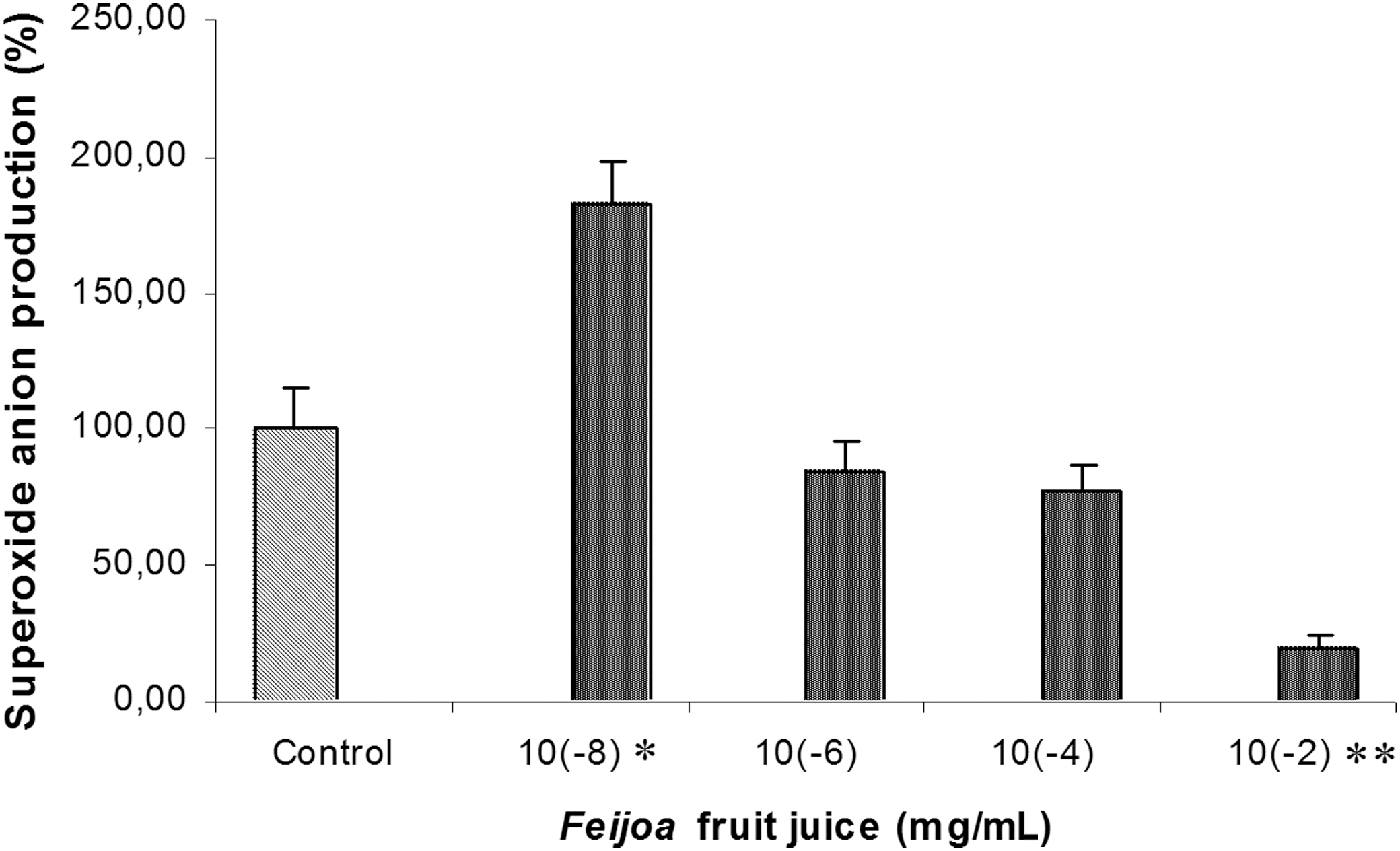
Effect of F. sellowiana fruit juice on superoxide anion produced by whole blood neutrophils not stimulated. *P<.05, **P<.001.
The effects of Feijoa juice, on basal production of O2 − by neutrophils in human whole blood stimulated for 30 min with Zymosan, PMA, and FMLP, are shown in Figures 3 –5.
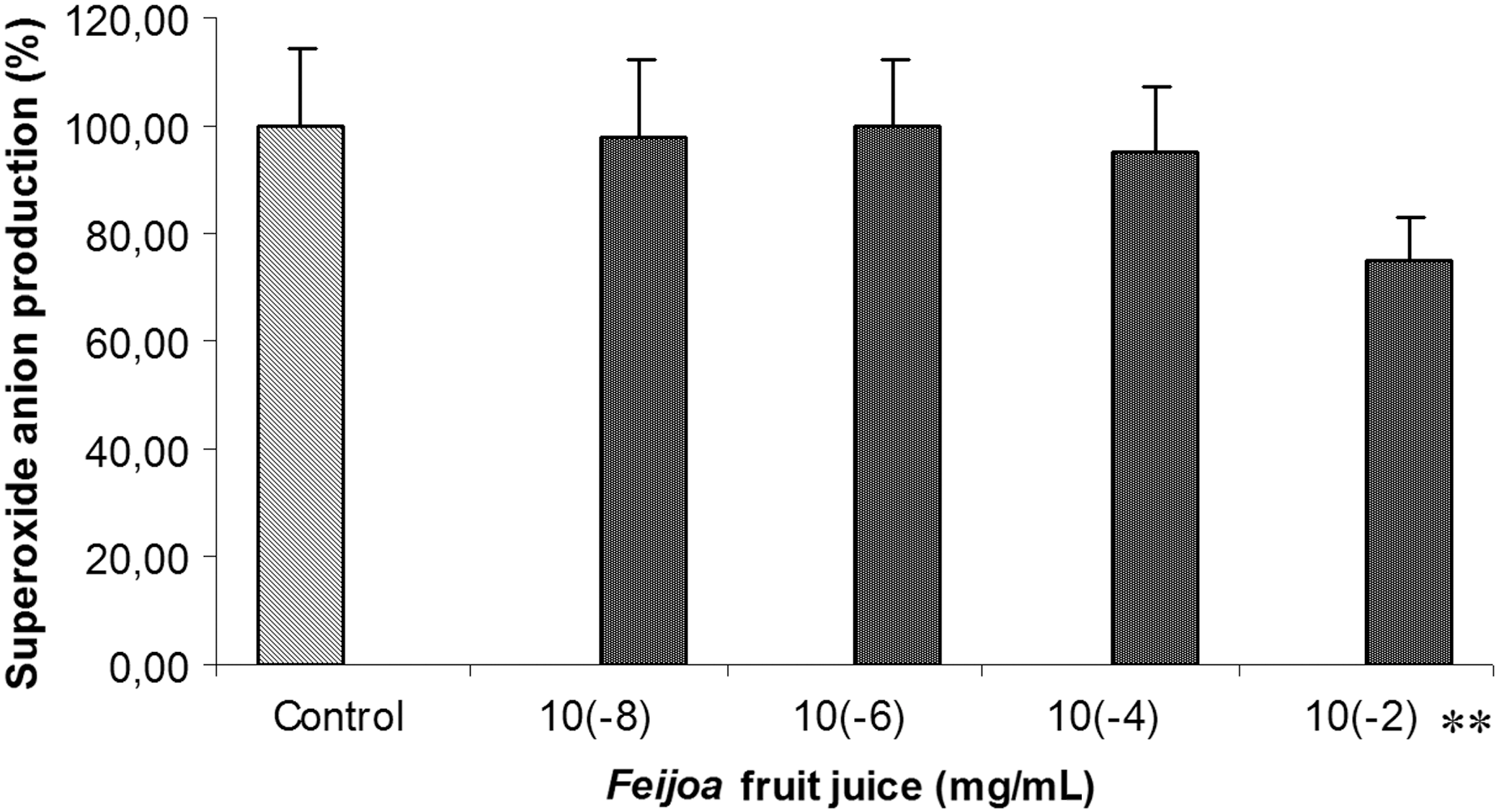
Effect of F. sellowiana fruit juice on superoxide anion produced by whole blood neutrophils stimulated with Zymosan. **P<.001.
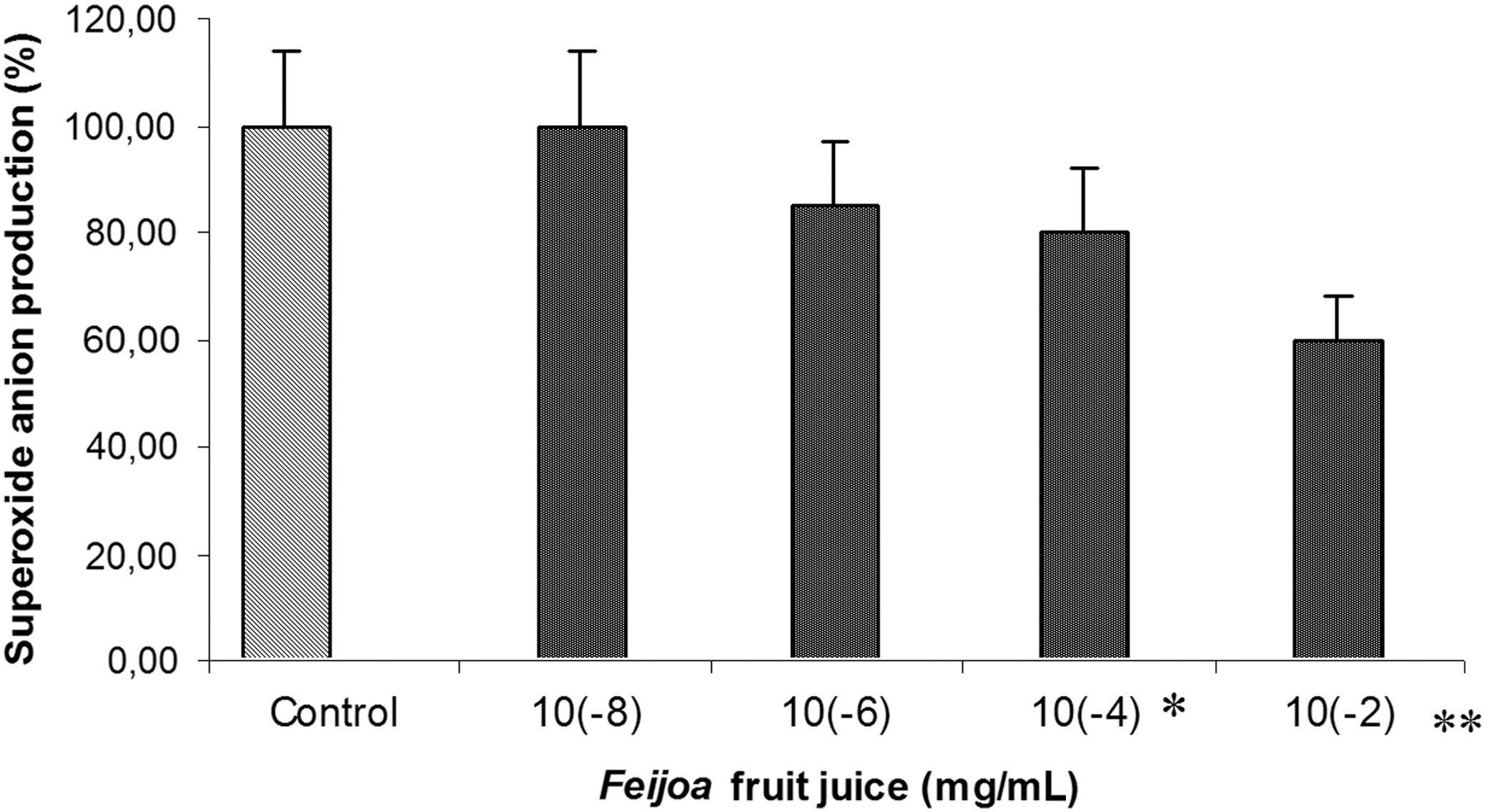
Effect of F. sellowiana fruit juice on superoxide anion produced by whole blood neutrophils stimulated with phorbol-myristate-13-acetate (PMA). *P<.05, **P<.001.

Effect of F. sellowiana fruit juice on superoxide anion produced by whole blood neutrophils stimulated with N-formyl-methionyl-leucyl-phenylalanine (FMLP). *P<.05, **P<.001.
In the presence of Zymosan (Fig. 3), the highest concentration (10−2 mg/mL) of the purified juice presented a statistically significant inhibiting activity on superoxide anion production (25%).
In the presence of PMA, the highest concentrations of Feijoa juice (10−4 and 10−2 mg/mL) induced a decrease of superoxide anion production statistically significant of 20% and 40%, respectively (Fig. 4).
In the presence of FMLP, the highest concentrations (10−4 and 10−2 mg/mL) of juice determined a statistically significant inhibitory effect on superoxide anion production of 15% and of 48%, respectively (Fig. 5).
The data of treated and untreated whole blood showed an inhibitory effect by highest concentrations of Feijoa fruit juice on superoxide anion production.
Discussion
F. sellowiana fruit juice showed both in vivo and in vitro anti-inflammatory effects. In the Winter test, carrageenan produces an acute local inflammatory response, as a result of a synergism between various inflammatory mediators, enhancing vascular permeability and/or increasing blood flow, 28 –31 and induces inducible nitric oxide synthase overexpression involved in the pathogenesis of many diseases. 18 In these experimental conditions, the fruit juice obtained by F. sellowiana showed anti-inflammatory activity, with a significant reduction of edema from the first to the fifth hour of treatment, possibly correlated with an inhibition of all different steps and chemical mediators of inflammation. In the acute inflammation process, the neutrophil infiltration and the activated polymorphonuclear cells produce a great amount of free radical species, which can cause further damage to inflamed tissues. 28,32,33
HPLC analysis shows that F. sellowiana fruit juice contains many polyphenol substances, such as quercetin, ellagic acid, catechin, rutin, eriodictyol, gallic acid, pyrocatechol, syringic acid, and eriocitrin. It is well documented that these substances possess scavenging abilities against free radicals and active oxygen species. 34 These active principles, potential metal chelators, are responsible for the antioxidant properties showed in the DPPH scavenging test. 35 Besides many literature data quote that polyphenols are involved in the anti-inflammatory activity. 36 In the superoxide anion release assay, the purified juice of F. sellowiana fruit at the lowest concentration (10−8 mg/mL) stimulates the O2 − production by unactivated neutrophils. This stimulant effect could depend on the physical presence of juice, as observed in previous studies 37,38 and on the bioactive compounds present in Feijoa fruits, which could act on O2 − release in a dose-dependent manner. Therefore, it is possible to speculate that these polyphenol compounds become effective on superoxide anion inhibition when present in higher concentration (Feijoa juice>10−6).
Our data are in accord with that of others, 39 who attribute to polyphenols the inhibitory effect of Feijoa fruit on the oxidative metabolism of phagocytes in different experimental conditions. Sometime, antagonistic effects are observable for the presence of flavonoids with different chemical structure. 40
Numerous flavonoids, in fact, influence the function of enzymatic systems critically involved in the immune response and in inflammatory process generation, especially in the transduction of cellular activation signals. 39,41
Rossi et al. 18 attribute the inhibiting activity of F. sellowiana on NO production in the presence of a high content of flavones and stearic acid in the fruit. For the presence of polyphenols with high scavenger effects, the aqueous extract of Fejioa fruits is also able to inhibit polymorphonuclear leukocyte. 7 To assess the cellular mechanism of superoxide anion generation inhibition and understand if the inhibitory effect of juice is due to an extracellular receptor blockade of phagocytosis or to an intracellular action on the protein kinase C or oxidase subsequently activated, several activators affecting neutrophils by different way were used. Zymosan, a stimulating factor produced by Saccharomyces cerevisiae spores, induces the phagocytosis process in neutrophils activating membrane-binding phospholipase C (PLC), through binding of G-protein to complement receptors on neutrophils cell surface. PLC activates the hydrolysis of phosphatidylinositol 4,5 bisphosphate (PIP2) into inositol 1,4,5-trisphosphate (IP3) and diacylglycerol, which activates the PKC responsible for NADPH-oxidase activation. 42
The purified juice of Feijoa, at the most elevated concentration, shows an inhibiting effect on the production of O2 −, due to extracellular block of receptors during the phagocytosis or to intracellular inhibition of protein kinase C or oxidase.
Using a soluble stimulating substance, PMA, a synthetic analog of 1,2 diacylglycerol, which acts only at intracellular level activating directly the protein kinase C and NADPH oxidase, we observed a statistically significant dose-dependent inhibiting effect of Feijoa juice at the concentration of 10−4 and 10−2 mg/mL. These data confirm that bioactive compounds of Feijoa juice with inhibiting effects on O2 − act at intracellular level on enzymatic systems of neutrophils involved in superoxide anion formation.
Further confirmation was provided using another stimulating agent, the FMLP, a soluble molecule that acts on a specific G protein-dependent receptor activating on PLC, which stimulates the phosphatidylinositol 4,5-bisphosphate and generates inositol trisphosphate and diacylglycerol with consequently increase of Ca2+ intracellular and protein kinase C activation. The FMLP shows the inhibiting effect at same concentration of PMA.
Since the inhibiting effects after stimulation with PMA or FMLP are quantitatively comparable, it is possible to conclude that the activity of the purified juice of F. sellowiana is applied to the protein kinase C or the enzymes that it activates.
In conclusion, in human whole blood, the condition that most closely approximates the in vivo, F. sellowiana fruit juice shows a good inhibitory effect on neutrophils superoxide production, the main cells are involved in acute inflammation, and a good immunomodulatory effect on the cellular immune response.
Footnotes
Aknowledgment
The authors are grateful to the Professional State Institute for Agriculture, Milazzo, Messina, for providing with plant material.
Author Disclosure Statement
No competing financial interests exist.